The 5 Best Waterfall Hiking Trails in Mariposa County
If my Yosemite South Entrance guide covered the quieter Wawona corridor, this is the main event: Yosemite Valley’s five most iconic Waterfall Hiking Trails in Mariposa, each reached by a genuinely different kind of trail. Start at the Mariposa County trail guide for the complete picture across both guides.
Disclosure: Please note that some of the links below are affiliate links and at no additional cost to you, I may earn a commission. Know that I only recommend hiking gear I personally stand behind; when you use my affiliate links, it helps me run this blog and keep all of this content free of charge for readers (like you).
All five trails here are open right now, but timing matters more in this guide than almost anywhere else on this site; several of these waterfalls can slow to a trickle, or stop entirely, by late summer.
Key takeaways
- The highest-search-volume trail in this entire project: Yosemite Falls, North America’s tallest waterfall, in three dramatic tiers.
- The classic soaking hike: Vernal Fall via the Mist Trail, a granite staircase climbing directly through the spray.
- Recently and genuinely improved: Bridalveil Fall, reopened in 2023 after a four-year renovation, now with new boardwalks.
- The blink-and-you’ll-miss-it entry: Ribbon Fall, one of the tallest single-drop waterfalls in North America, flowing only a few weeks each spring.
- The quiet one: Illilouette Fall, seen by a fraction of the crowds who see the valley’s more famous falls.
- Dog policy varies sharply here too, Bridalveil welcomes leashed dogs; Yosemite Falls and the Mist Trail don’t allow pets at all.
Yosemite Falls Trail (Upper Yosemite Fall)
Trailhead access: Camp 4, Yosemite Valley
This historic trail, built between 1873 and 1877, starts near the Camp 4 climbers’ campground. No pets or bicycles are allowed on the trail.
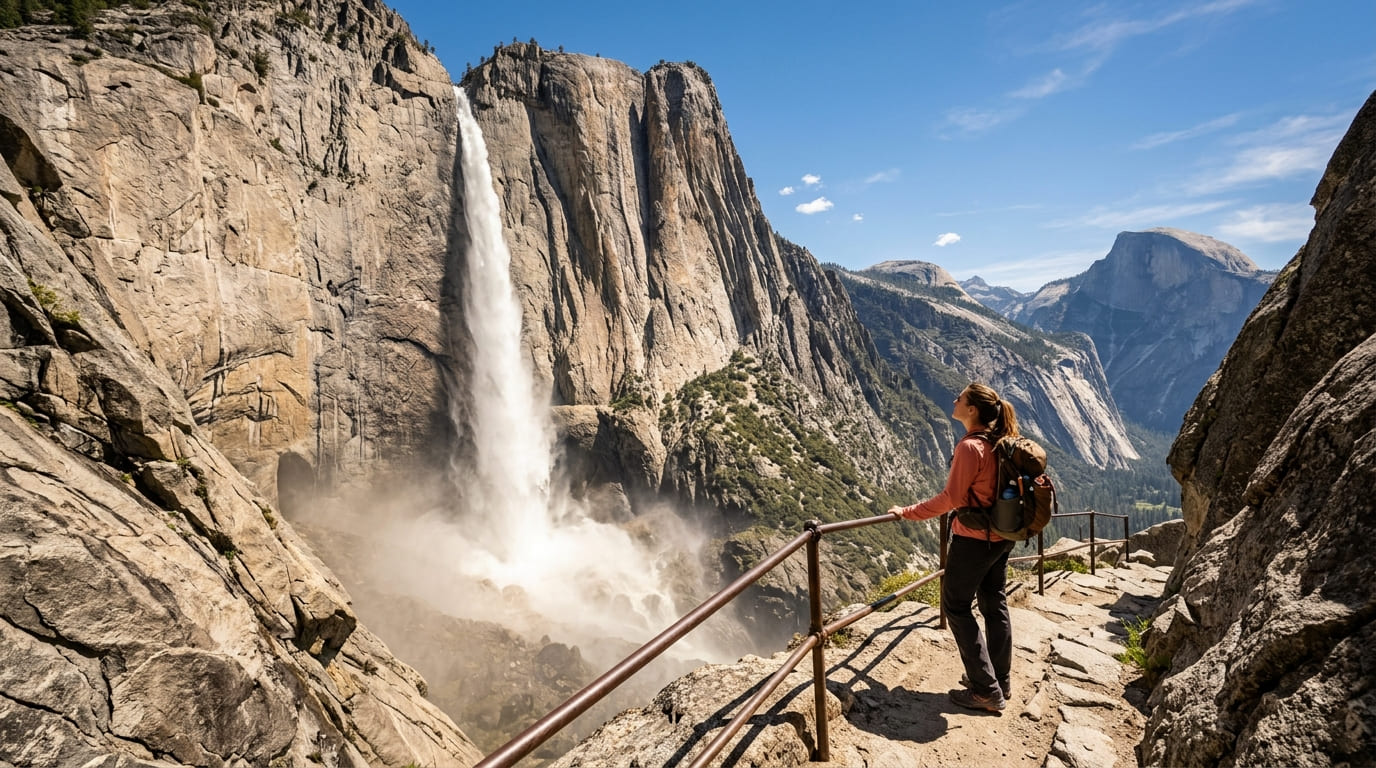
What you’ll see: North America’s tallest waterfall in three dramatic tiers
Yosemite Falls drops 2,425 feet total across three sections: the 1,430-foot Upper Yosemite Fall, the 675-foot Middle Cascades, and the 320-foot Lower Fall, making it the tallest waterfall in North America.
The full push to an overlook at the very top runs about 7.2 miles round trip with 2,700 feet of gain per the National Park Service (other sources cite closer to 6.7 miles and 3,238 feet), typically taking 6 to 8 hours. Columbia Rock, at 2 miles round trip with 1,000 feet of gain, makes a solid shorter turnaround with genuine valley views.
Best time to hike Yosemite Falls Trail: May and June for peak snowmelt flow
Flow peaks in late spring; by August, the waterfall is typically low or completely dry, so timing genuinely matters here more than at almost any other trail in this guide. This is also one of the busier trails in the valley.
Vernal Fall via the Mist Trail
Trailhead access: Happy Isles, Yosemite Valley
The Mist Trail begins at Happy Isles, also the starting point for the John Muir Trail. No pets are allowed on this trail either.
What you’ll see: a granite staircase climbing directly beside a 317-foot waterfall
It’s about 3 miles round trip with 1,000 feet of gain to the top of Vernal Fall, much of it on stone steps carved directly into the cliff beside the falls, during high spring flow, you will get genuinely wet from the spray.
Hikers wanting more can continue to Nevada Fall, extending the round trip to about 7 miles with 1,900 feet of gain, or descend via the John Muir Trail as a loop. Worth knowing: the section directly under Vernal Fall typically closes in winter due to ice.
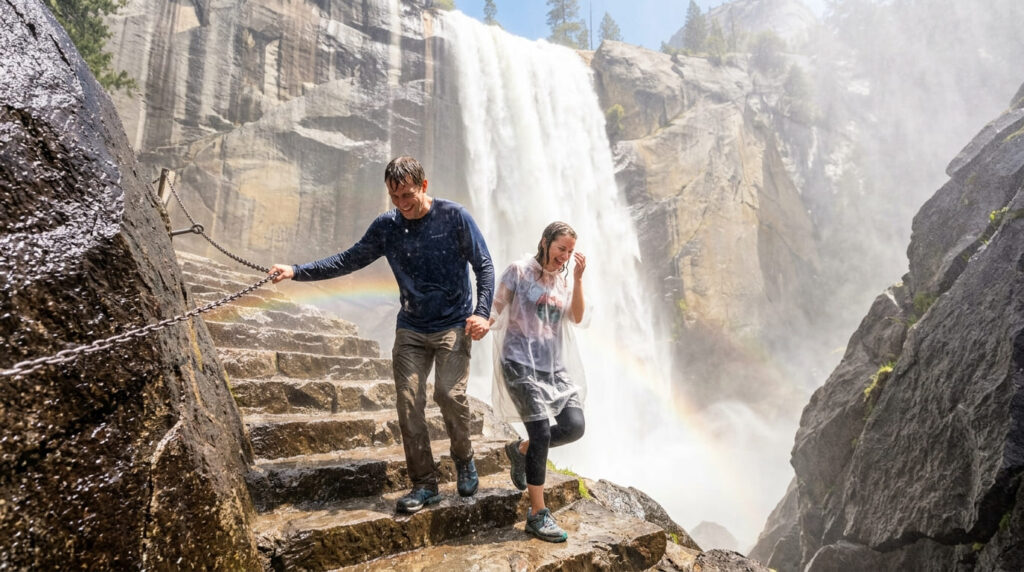
Best time to hike the Mist Trail: spring for maximum spray, sturdy footwear year-round
Spring delivers the trail’s namesake soaking experience at its fullest, but the granite steps stay slick regardless of season, read my terrain hazards guide before tackling this one in anything but dry, sturdy footwear.
Bridalveil Fall Trail
Trailhead access: a dedicated lot on Wawona Road, dogs allowed on leash
Park at the Bridalveil Fall parking area directly off Wawona Road. Reopened in fall 2023 after a four-year renovation, this trail now has new boardwalks and ADA-accessible viewing platforms, a genuine improvement over the pre-2019 version, and current visitor reports describe excellent condition. Leashed dogs are welcome here, unlike the two trails above.
What you’ll see: a 620-foot waterfall often blown sideways by wind
It’s a short, mostly paved 0.5-mile round trip with about 80 feet of gain to a viewing platform at the base. The Ahwahneechee people believed the falls were home to a protective spirit, and that inhaling the mist improved one’s chances of marriage, a specific piece of history behind the more commonly repeated “wind-blown bridal veil” naming story.
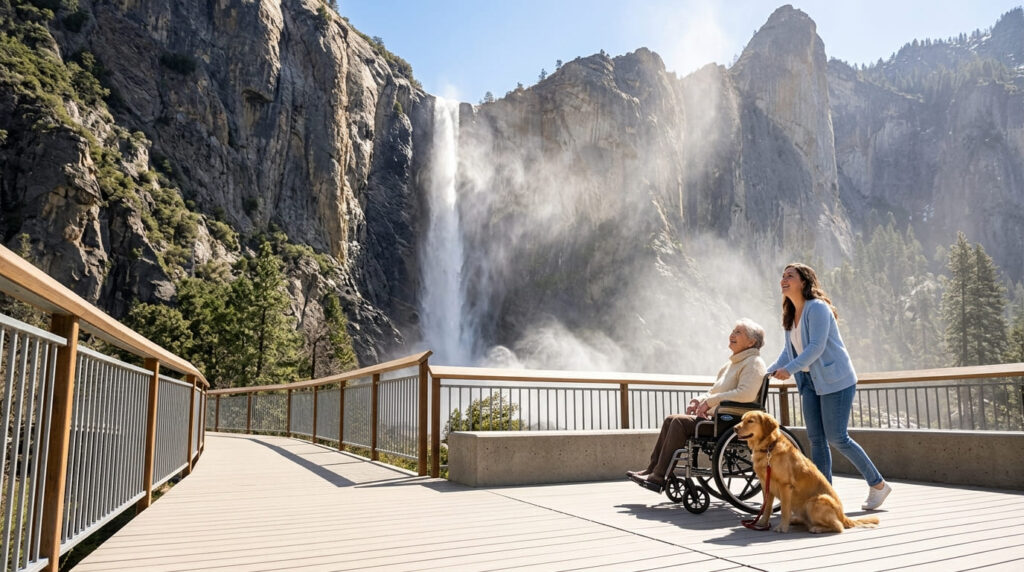
Best time to hike Bridalveil Fall: year-round, though flow diminishes by late summer
This trail’s short, paved, low-effort profile keeps it accessible nearly any time of year, even as the waterfall’s own flow naturally drops off in the driest months.
Ribbon Fall Vista Trail
Trailhead access: a roadside pullout along the Yosemite Valley Loop Road
This is the most understated access point in this entire guide, a turnout with a distant view rather than a developed trailhead.
What you’ll see: one of the tallest single-tier waterfalls in North America
Ribbon Fall drops roughly 1,600 feet in a single, uninterrupted tier, among the tallest such drops in North America, but it flows for only a brief window each spring, drying up faster than any other waterfall in this guide.
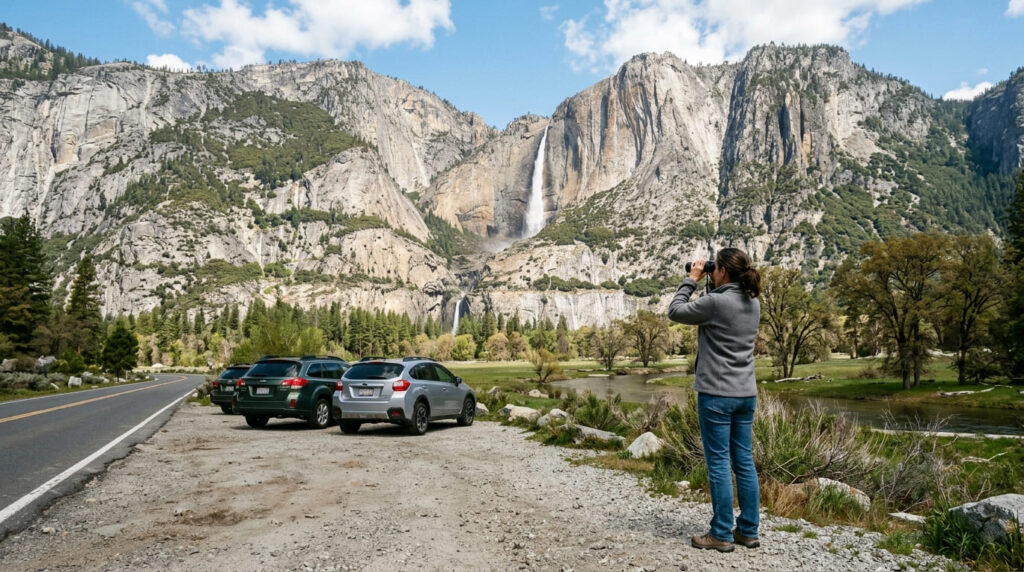
Best time to hike Ribbon Fall Vista: a narrow April-to-May window
This is the single most time-sensitive entry in this entire guide, miss the window and there may be nothing to see at all.
Illilouette Fall Trail (via the Panorama Trail)
Trailhead access: Glacier Point, via a separate seasonal road
Unlike every other waterfall in this guide, this one starts at Glacier Point, reached via its own scenic road that closes seasonally, typically through winter and into spring.
What you’ll see: a little-visited waterfall along a high overlook route
Illilouette Fall drops about 370 feet into its own canyon, visible from the Panorama Trail a few miles from Glacier Point, seen by a fraction of the visitors who see Yosemite’s more famous valley-floor falls. Unlike Ribbon Fall’s brief window, Illilouette flows year-round, though like every waterfall in this guide, it runs lower by late summer.
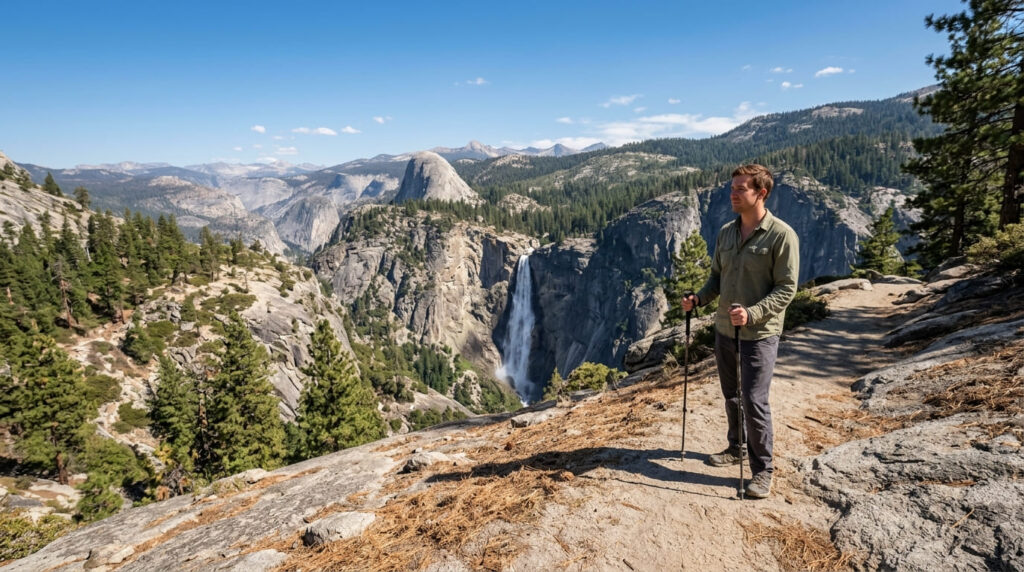
Best time to hike Illilouette Fall: late spring, once Glacier Point Road opens
Glacier Point Road’s own seasonal closure is the real determining factor here, check current road status before planning a trip specifically around this waterfall.
Which of these five to hike first
If you only do one, Yosemite Falls or the Mist Trail both deliver the classic Yosemite Valley experience, in very different ways, one a long climb, the other a soaking staircase. If you’re short on time or energy, Bridalveil Fall’s newly renovated trail is the easiest genuine payoff in the park. And if timing works out, Ribbon Fall’s brief spring window is worth chasing specifically because so few visitors ever see it flowing.
Frequently asked questions
Is Yosemite Falls the tallest waterfall in North America?
Yes, at 2,425 feet total across its three tiers, it’s the tallest waterfall in North America.
How tall is Vernal Fall?
317 feet, reached via a roughly 3-mile round trip on the Mist Trail’s granite steps.
Why is it called Bridalveil Fall?
Its thin, wind-blown spray pattern resembles a bride’s veil; the Ahwahneechee people separately believed the falls were home to a protective spirit.
Does Ribbon Fall flow year-round?
No, it flows for only a brief window each spring and is dry the rest of the year, making it the most time-sensitive waterfall in this guide.
Is Illilouette Fall crowded?
No, it’s genuinely one of the quietest named waterfalls in Yosemite Valley, seen by only a fraction of the visitors who see the more famous falls nearby.
What is the best month to see Yosemite’s waterfalls at peak flow?
May and June, when snowmelt runs highest, by August, several of the falls in this guide, especially Ribbon Fall and Yosemite Falls, can be low or completely dry.