Best Hiking Shoes for California Trails: Complete Buyer’s Guide
The best hiking trail shoes for California depend almost entirely on which California trails you’re hiking in: desert, Sierra granite, and coastal trail all demand different things from your feet, and no single shoe does all three well. I’ve spent four-plus years cataloging trails across this state and testing footwear against exactly that range of terrain, and the short version is this: figure out your terrain first, then shop, not the other way around. A shoe that’s perfect for a summer scramble in Joshua Tree can be the wrong call entirely for a snowmelt creek crossing in the Sierra, even though both are technically “California hiking.”
Disclosure: Please note that some of the links below are affiliate links and at no additional cost to you, I may earn a commission. Know that I only recommend hiking gear I personally stand behind; when you use my affiliate links, it helps me run this blog and keep all of this content free of charge for readers (like you).
Key takeaways:
- Hiking shoes, hiking boots, and trail running shoes each suit a different combination of terrain, pack weight, and ankle support; no single type is objectively best.
- Desert trails favor lightweight, breathable footwear; Sierra granite favors stiffer soles and real ankle support; coastal trails favor quick-drying, non-waterproof options.
- Waterproofing is a trade-off, not a free upgrade; it adds protection but also weight, heat retention, and dry time.
- A proper fit (thumb-width of space at the toe) prevents more problems than any specific brand does.
- Most hiking shoe midsoles lose real cushioning by 400–500 miles, even if the outsole still looks fine.
Hiking shoes vs. hiking boots vs. trail running shoes: which do you need?
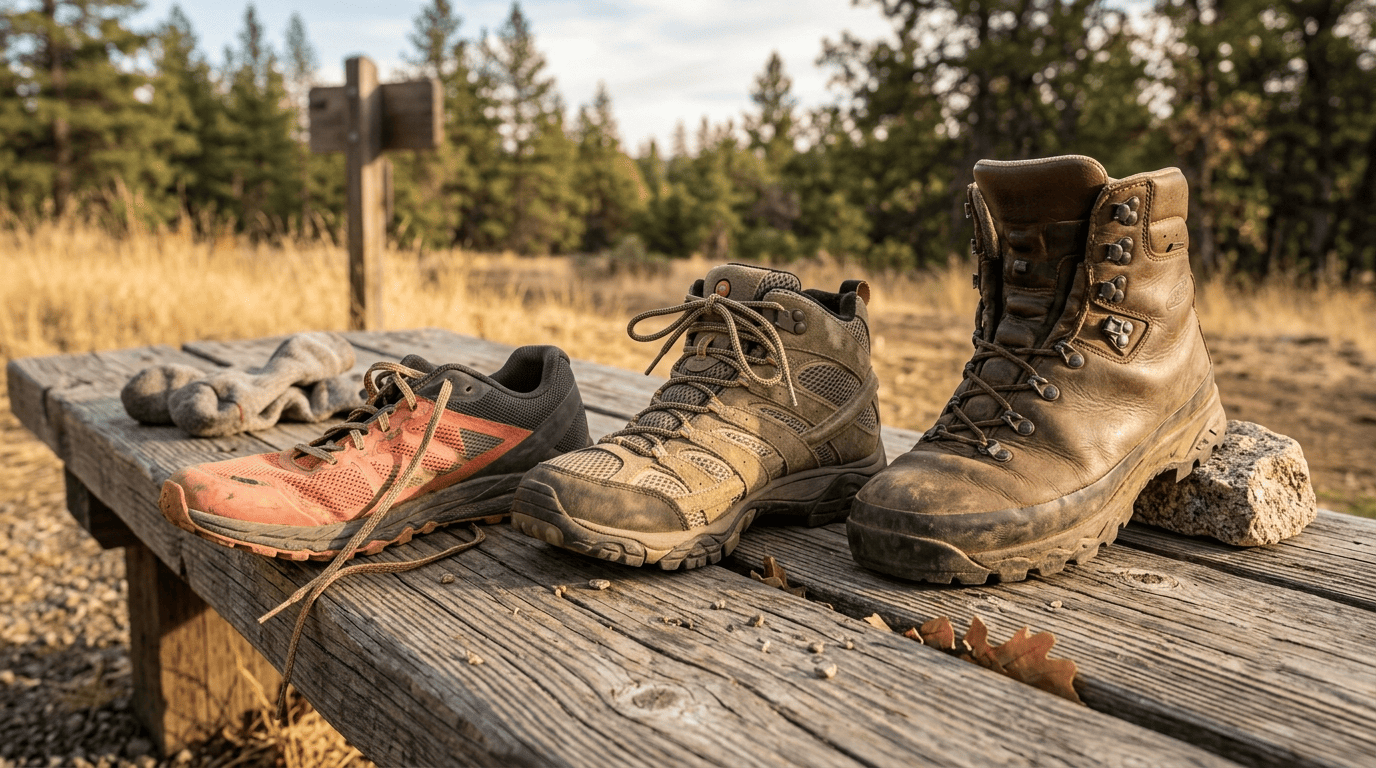
All three categories can get you down the same trail; the real differences are ankle support, weight, and how much structure you get underfoot. None of the three is universally “better”; the right choice depends on your pack weight, the terrain, and honestly, how your ankles have held up on similar trails before.
| Trail running shoes | Hiking shoes | Hiking boots | |
|---|---|---|---|
| Ankle support | None | Low | Moderate to high |
| Weight | Lightest | Light-moderate | Heaviest |
| Sole stiffness | Flexible | Moderate | Stiff |
| Best for | Fast, light day hikes, easy-moderate terrain | Most day hikes, moderate terrain | Heavy packs, technical terrain, cold or wet conditions |
When to choose hiking boots over shoes for California terrain
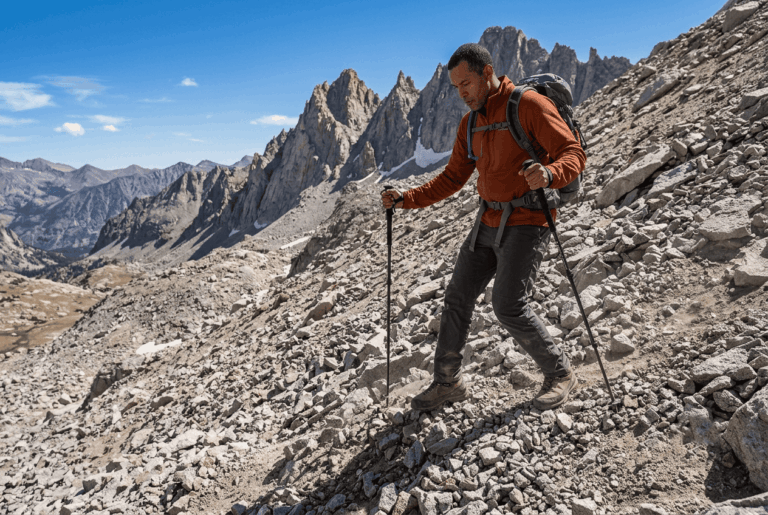
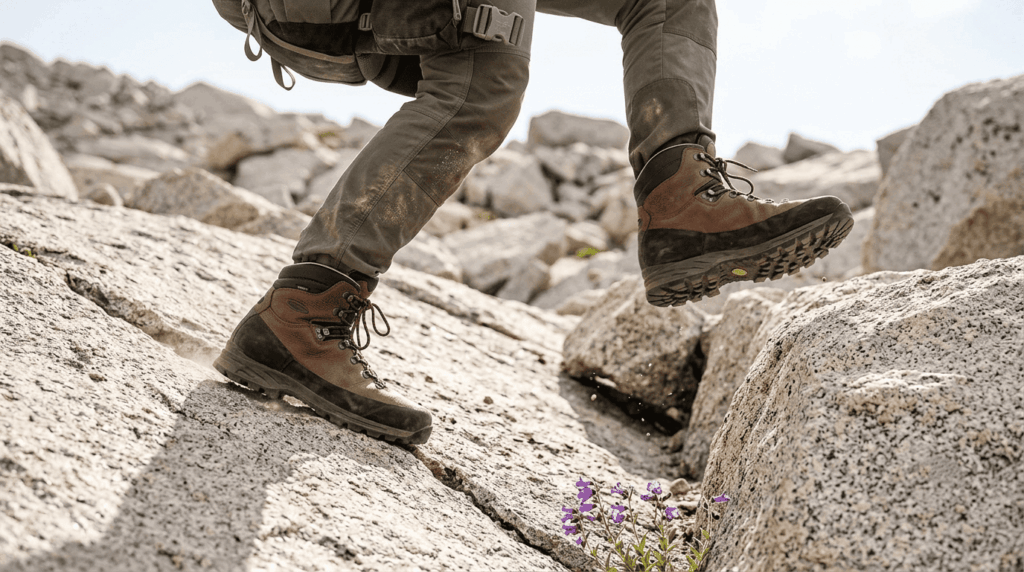
Boots earn their extra weight on technical granite scrambles, when you’re carrying a loaded overnight pack, or on rocky Sierra terrain where a rolled ankle is a real risk. If your trip doesn’t involve any of those three, a boot is often more support than you actually need, and the extra weight and heat retention become a real cost with nothing to show for it.
Are trail running shoes good for hiking California trails?
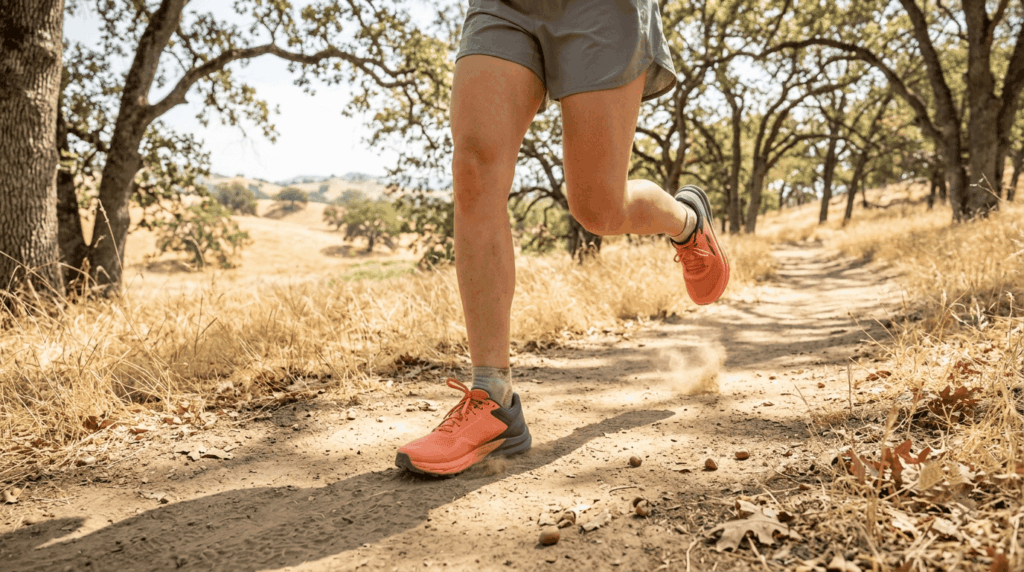
Yes, for day hikes on easy-to-moderate, well-maintained trails, plenty of experienced hikers use trail runners exclusively, and the weight savings genuinely make a difference over a long day. Where they fall short is heavy pack weight and technical, off-trail terrain, since the flexible sole and absent ankle support that make them fast also make them less stable under load. If you’re mostly hiking maintained singletrack without a full overnight pack, don’t assume you need something heavier just because it’s marketed as a “hiking shoe.”
What’s the difference between hiking shoes and trail running shoes?
Hiking shoes generally have a stiffer sole (better for rocky terrain and edging on rock), a more durable upper built to survive years of abrasion, and a lower heel-to-toe drop philosophy that varies by brand. Trail running shoes prioritize cushioning and a more flexible, ground-feel sole built for moving fast rather than carrying weight, and their uppers tend to be lighter and less abrasion-resistant as a trade-off for that weight savings.
Key features to look for in hiking shoes for California’s terrain
Traction and outsole design: what matters on California’s granite, sand, and mud
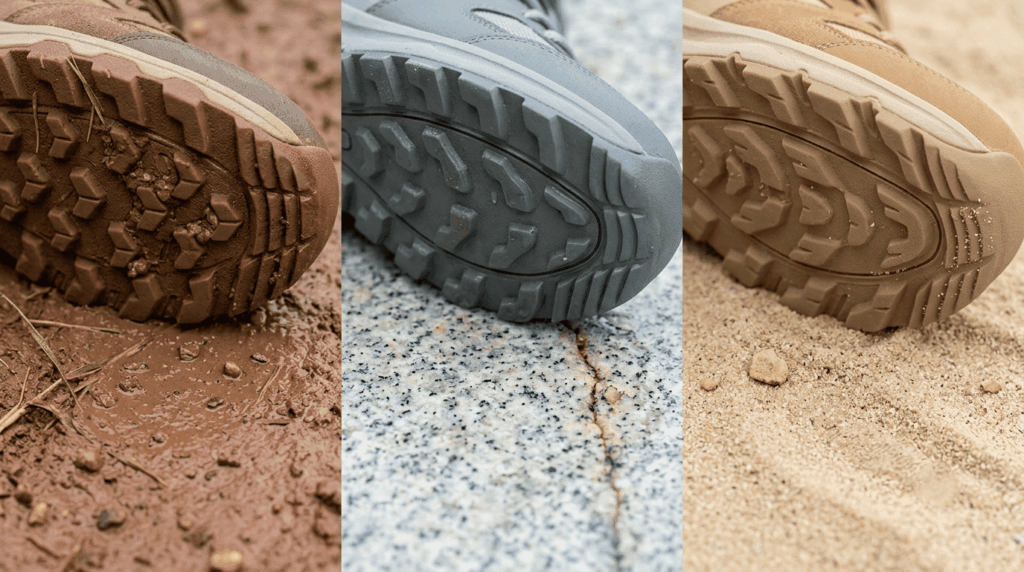
Vibram is the outsole brand you’ll see most often, though Salomon (Contagrip) and a few others make their own compounds. What actually matters more than the brand name is lug depth and pattern: deeper, multidirectional lugs grip mud and loose dirt better, while a smoother, stickier rubber compound grips wet granite slab better than aggressive lugs do. Sand splits the difference; deep lugs can actually work against you by scooping and holding loose sand, so a moderate lug pattern with good sideways bite tends to perform best on dune and desert-wash terrain.
Waterproof vs. breathable hiking shoes for California trails: when to choose each
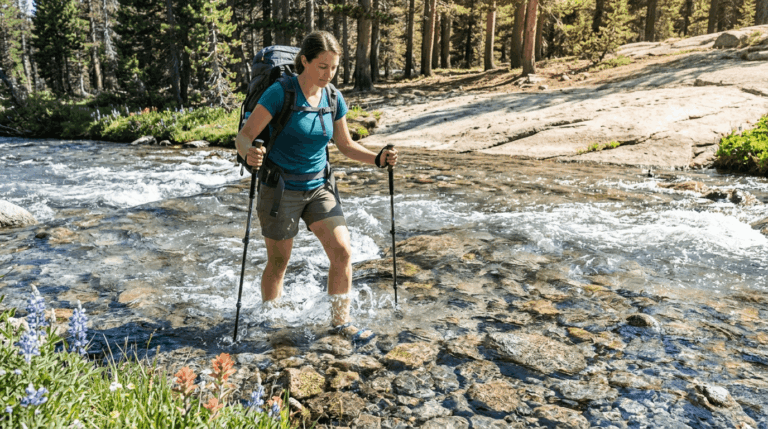
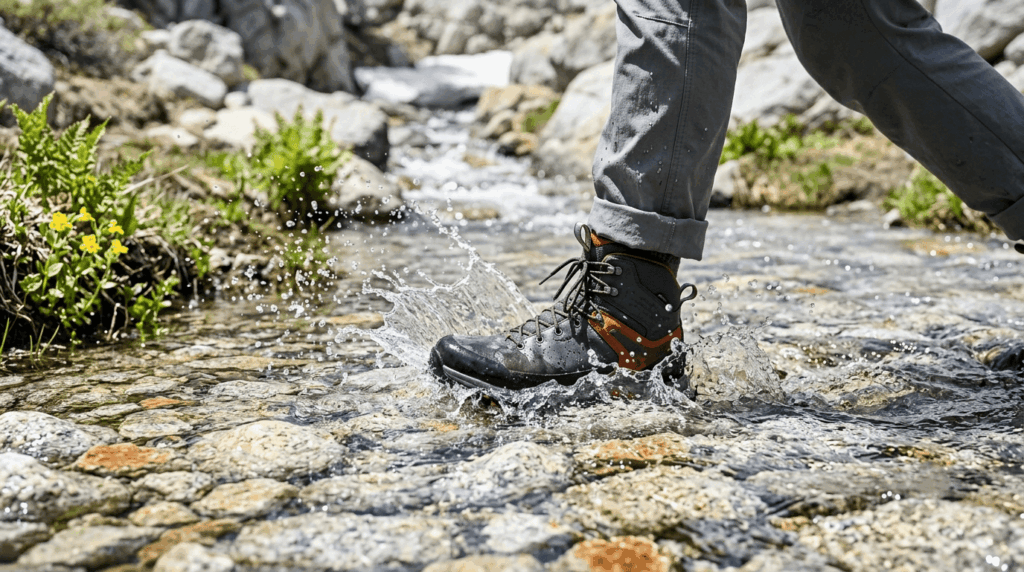
Gore-Tex and similar waterproof membranes are worth it for Sierra stream crossings, shoulder-season snow, and coastal fog and rain, but they trade away breathability and dry time, which is a real liability in desert heat where a wet, non-waterproof shoe actually dries and cools faster.
Once water gets over the top of a waterproof shoe (which happens at any real creek crossing), the membrane that was keeping water out now keeps it in, and you’re stuck hiking in a soggy shoe for the rest of the day. My rule: waterproof for the Sierra and coast, breathable mesh for the desert.
Fit, toe box, and break-in: how to choose the right size hiking shoe
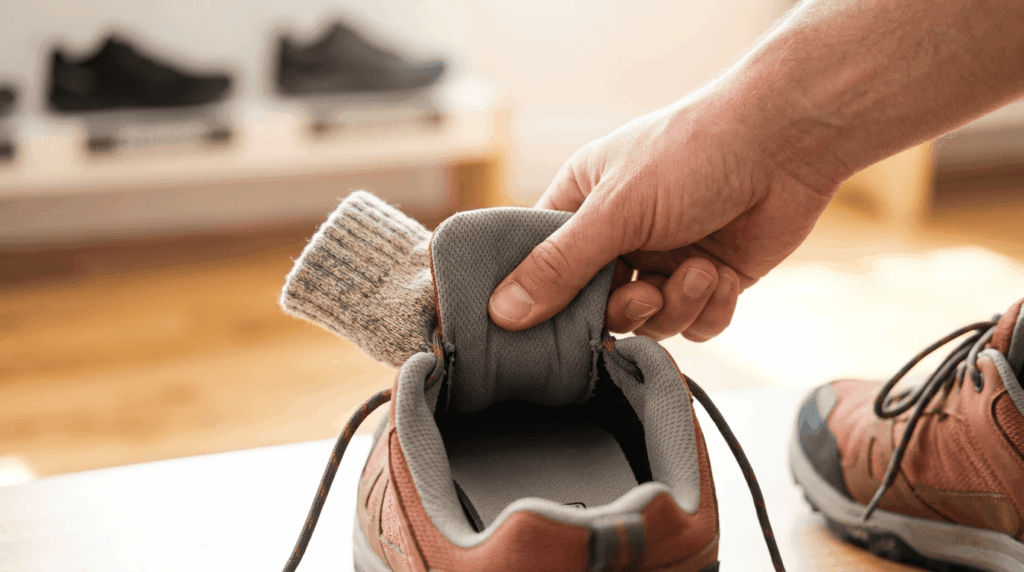
Leave a thumb’s width of space between your longest toe and the front of the shoe. Downhill sections push your foot forward, and too little room there is the single biggest cause of lost toenails on long descents. Try shoes on in the afternoon, when your feet are naturally more swollen, and wear the socks you’ll actually hike in when you try them on. Expect at least a short break-in period, even with shoes marketed as “no break-in required”; a few short walks before a long trail day will reveal hot spots, and you can still return the shoe.
Best hiking shoes for California’s desert trails
Top desert hiking shoe picks for California: lightweight and breathable
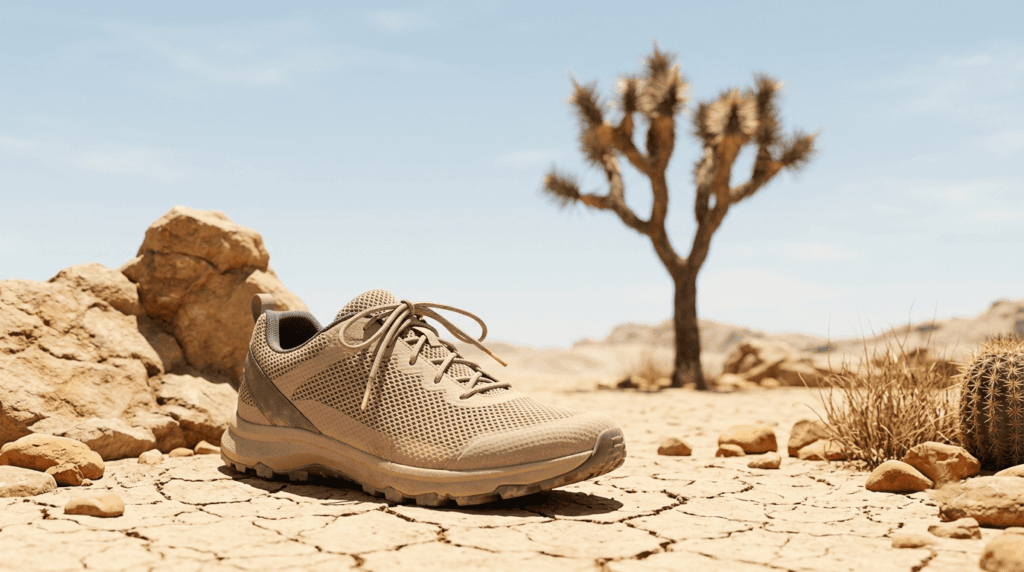
Desert trails, Joshua Tree, Death Valley, the Mojave, reward lightweight and breathability over waterproofing, since heat management matters more than staying dry, and there’s rarely standing water to protect against in the first place.
| Shoe | Type | Approx. price | Why it works for desert |
|---|---|---|---|
| Salomon X Ultra 5 | Hiking shoe | ~$150+ | Lightweight, breathable mesh version of Salomon’s top-rated all-rounder |
| Merrell Moab Speed 2 | Hiking shoe | ~$175+ | Breathable mesh upper, roomy toe box, well-reviewed for hot-weather comfort |
| Brooks Cascadia 19 | Trail running shoe | ~$120+ | Lightweight trail-runner crossover with solid cushioning for long, hot miles |
All three skip the waterproof membrane on purpose; in desert heat, a shoe that breathes and dries fast beats one that’s technically dry but cooking your feet inside.
Best hiking shoes for California’s Sierra Nevada and mountain trails
Top mountain hiking shoe and boot picks for California’s Sierra trails
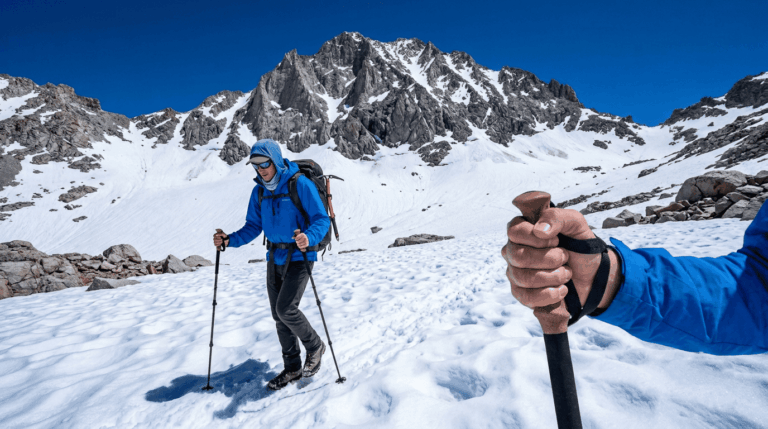
Sierra granite, talus, and stream crossings call for more structure underfoot than a desert trail does, along with real waterproofing for snowmelt season, which typically runs from late spring into early summer at higher elevations.
| Shoe/boot | Type | Approx. price | Why it works for the Sierra |
|---|---|---|---|
| Scarpa Zodiac Plus GTX | Hiking boot | ~$320-400 | Stiff, supportive, Gore-Tex; built for exactly this kind of technical granite and talus terrain |
| La Sportiva TX4 Evo | Approach shoe | ~$190 | Vibram Megagrip with a climbing zone at the toe — excels on slab and scrambling terrain |
| Salomon Quest 5 GTX | Hiking boot | ~$240 | Stiff, supportive backpacking boot for heavy packs and multi-day Sierra trips |
The Zodiac Plus and Quest 5 both lean toward multi-day backpacking use; if you’re doing shorter Sierra day hikes without a heavy pack, the lighter TX4 Evo is worth trying first before spending on a full backpacking boot.
Best hiking shoes for California’s coastal and multi-surface trails
Coastal trails mix sand, wet rock, tide-pool scrambling, and the occasional boardwalk, which makes a dedicated waterproof boot more of a liability than a help. Saltwater and fully waterproof membranes don’t dry out fast enough between sections, and a boot that stays damp all day is worse than a shoe that dries in an hour. Trails like the Lost Coast or the bluffs around Point Reyes will soak your feet at some point regardless of what you’re wearing, so plan around quick drying rather than trying to stay perfectly dry.
A breathable, quick-drying hiking shoe, the same non-GTX Salomon X Ultra 5 or Merrell Moab Speed 2 recommended for desert trails, works well here too, and handles the mixed surfaces without trapping moisture against your feet all day. Rinse sand and salt out at the first opportunity; both accelerate wear on stitching and outsole glue faster than dirt does.
Hiking shoe care and longevity: getting the most from your investment
Rinse mud and salt off after every hike and let shoes air dry away from direct heat; a heater vent or car dashboard feels like a shortcut but breaks down glue and midsole foam over time. Re-treat waterproof uppers with a spray-on treatment every few months if you’re hiking regularly, since factory waterproofing wears off well before the shoe itself does, especially on the flex points around the toe.
Most midsoles lose meaningful cushioning by 400–500 miles even if the outsole still has tread left, so track your mileage if you hike often. A resole extends the outsole’s life, but it doesn’t restore a dead midsole, and hiking on a compressed midsole is a real contributor to foot and knee fatigue on longer days.
Buying the right shoe for your terrain the first time is cheaper than buying the wrong one twice, which is really the whole argument for matching footwear to terrain instead of just buying whatever’s rated highest overall.
If you’re building out the rest of your gear list, our hiking safety guide covers the Ten Essentials that go along with the right footwear, and matching your shoe choice to a trail’s difficulty rating is worth doing before you buy, not after.
Frequently asked questions: hiking shoes for California trails
Are trail running shoes good for hiking in California?
Yes, for day hikes on easy-to-moderate, well-maintained trails, they fall short mainly on heavy pack loads and technical, off-trail terrain where the flexible sole and lack of ankle support become real limitations.
What is the difference between hiking shoes and trail running shoes?
Hiking shoes have a stiffer sole and more durable upper built for rocky terrain and long-term abrasion; trail running shoes prioritize cushioning and a flexible, ground-feel sole built for speed.
Should hiking shoes be waterproof for California trails?
It depends on terrain: waterproof is worth it for Sierra stream crossings and coastal rain, but a breathable, non-waterproof shoe is usually the better call for desert heat.
How should hiking shoes fit to prevent blisters?
Leave a thumb’s width of space at the toe, try shoes on in the afternoon when feet are more swollen, and expect a short break-in period even on shoes marketed as ready to wear.
What are the best hiking shoes for Yosemite?
A stiffer-soled boot or approach shoe with real waterproofing, like the Scarpa Zodiac Plus GTX or La Sportiva TX4 Evo, handles Yosemite’s granite and stream crossings better than a lightweight desert-style shoe, especially on granite slab routes like the Mist Trail or Half Dome’s subdome approach.
How long do hiking shoes last before they need replacing?
Most midsoles lose meaningful cushioning by 400–500 miles, even if the outsole tread still looks fine, so mileage, not just visible wear, is the better replacement signal. Keeping a rough mileage log, even an informal one, will tell you more than a glance at the tread.