California Hiking Gear Checklist: Everything You Need Before Hitting the Trail
The gear list that works for a shaded coastal stroll will get you in real trouble on an exposed Sierra ridge, and the reverse is just as true: an overloaded pack on an easy loop is its own kind of mistake. There’s no single “hiking gear Checklist” that fits every California trail, but there is a reliable core that scales up or down depending on where you’re headed. Here’s exactly what to pack, and why each item earns its spot.
Disclosure: Please note that some of the links below are affiliate links and at no additional cost to you, I may earn a commission. Know that I only recommend hiking gear I personally stand behind; when you use my affiliate links, it helps me run this blog and keep all of this content free of charge for readers (like you).
Key takeaways
- Your checklist should change with trail type and season, not stay fixed; a desert day hike and a Sierra overnight share almost nothing beyond the Ten Essentials.
- The Ten Essentials system covers 10 categories, not 10 items: navigation, sun protection, insulation, illumination, first aid, fire, repair kit, nutrition, hydration, and emergency shelter.
- Most day hikers need 2 L of water minimum, climbing to 3–4 L for desert heat or longer routes.
- Daypacks run 15–25 L; overnight packs run 35–50 L. Buying too big encourages overpacking, which shows up as knee and shoulder strain later.
- Bear canisters are required for overnight backcountry trips in specific California zones (all of Yosemite, Desolation Wilderness, Lassen Volcanic, parts of Sequoia/Kings Canyon), but never for a day hike.
- A satellite communicator earns its weight the moment you lose cell signal, which happens fast across the Sierra backcountry and much of the desert.
Why your gear checklist changes depending on California trail type and season
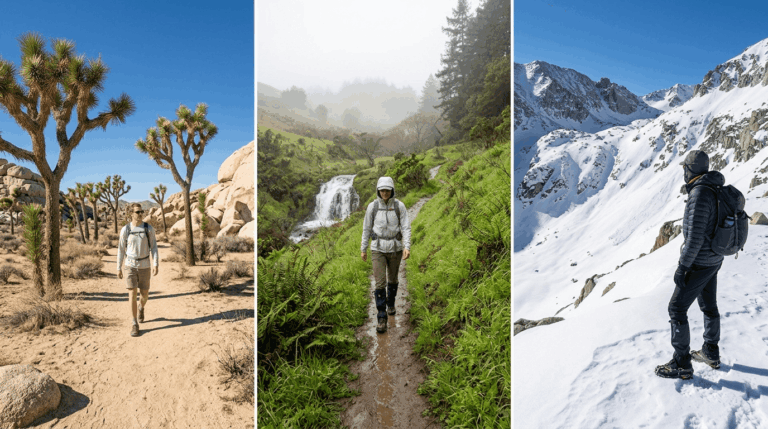
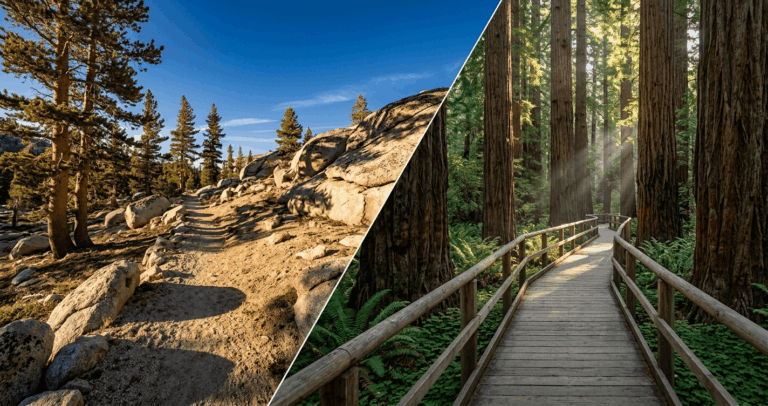
A single “universal” gear list is how people end up carrying a rain shell across Death Valley in August, while our outdoor holiday gift selection helps you find the right equipment for any condition. California’s range of terrain means the right kit depends far more on where and when you’re hiking than on a generic list ever could. As of July 2026, that gap matters most right now between coastal fog-belt trails and inland heat; the same weekend can call for a fleece on one trail and a sun hoodie on another two hours away.
Day hike gear vs. overnight backpacking gear: key differences
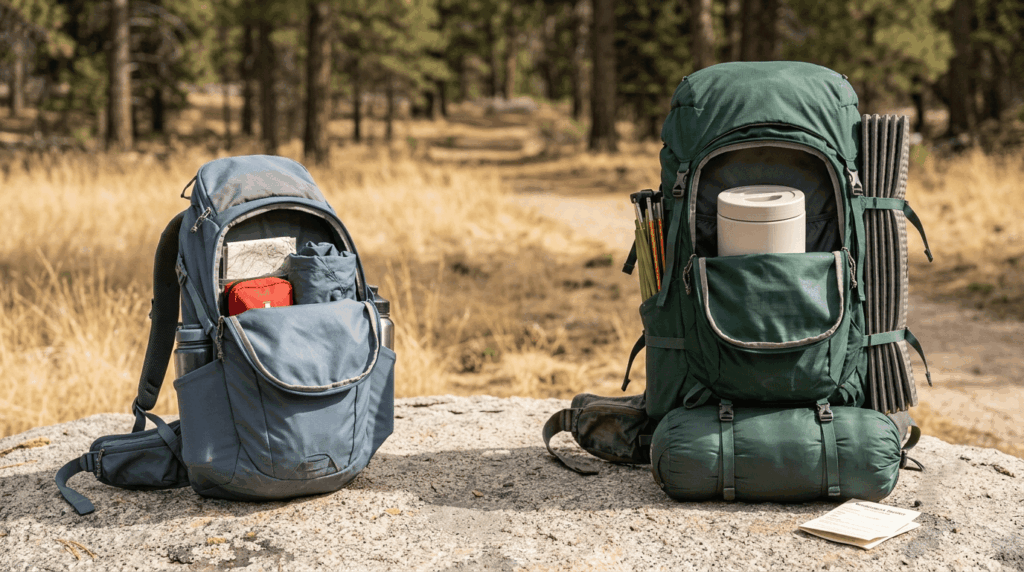
Day hikes need the Ten Essentials, enough water for the distance, and a way to get help, nothing more. Overnight trips add a shelter system, a sleeping bag rated for the elevation, a stove or cold-soak food plan, a permit if the trail requires one, and, in specific Sierra zones, a bear canister. The jump from day pack to overnight pack is less about “more gear” and more about an entirely different category of gear, food storage, and shelter, specifically, where new backpackers most often either overpack out of anxiety or underpack out of inexperience.
The 10 essentials: your non-negotiable California hiking gear list
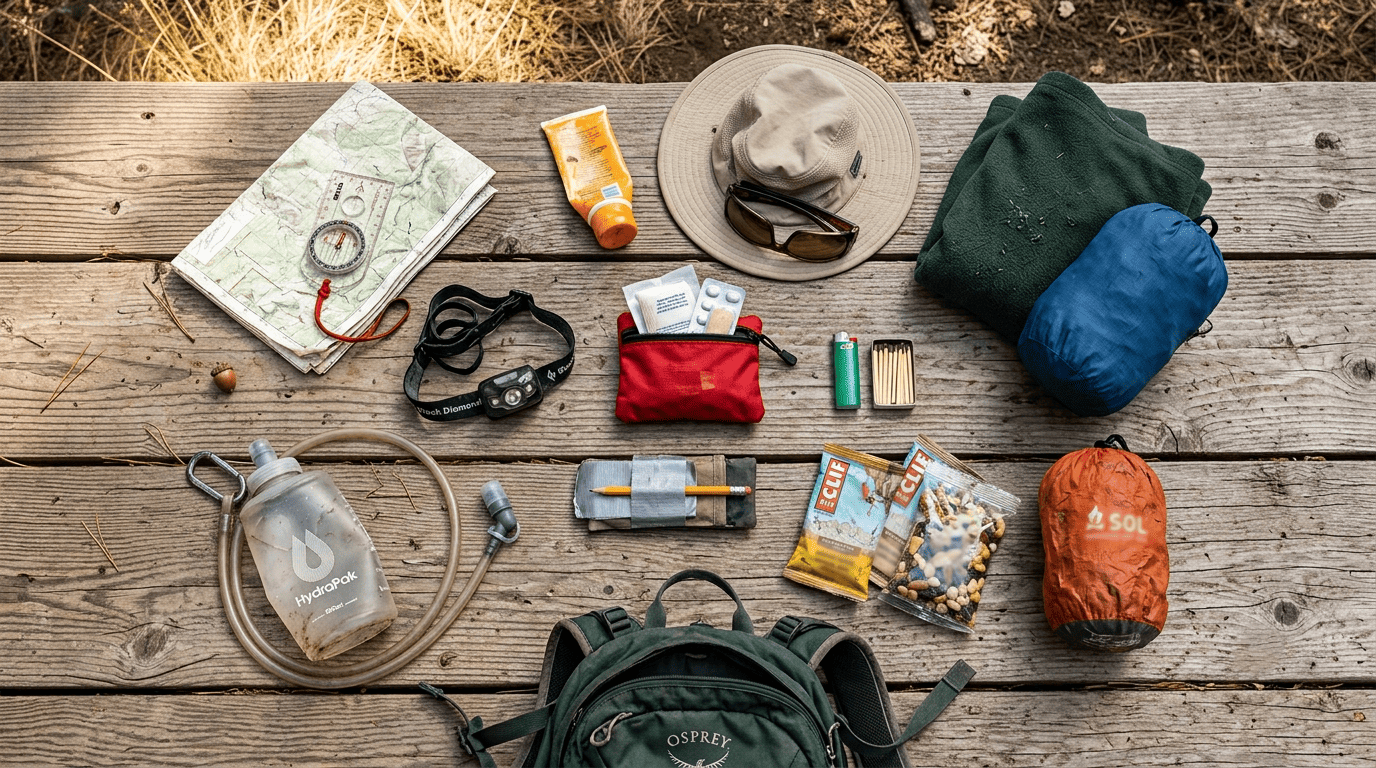
The Ten Essentials system, developed by The Mountaineers and used as the standard reference by search-and-rescue teams, groups survival gear into 10 categories rather than 10 specific items, which is what makes it scale from a short loop to a multi-day trip. Skipping a category doesn’t save meaningful weight; it just moves the risk from “inconvenient” to “genuinely dangerous” if something goes wrong.
Navigation tools: maps, compass, and GPS for California trails
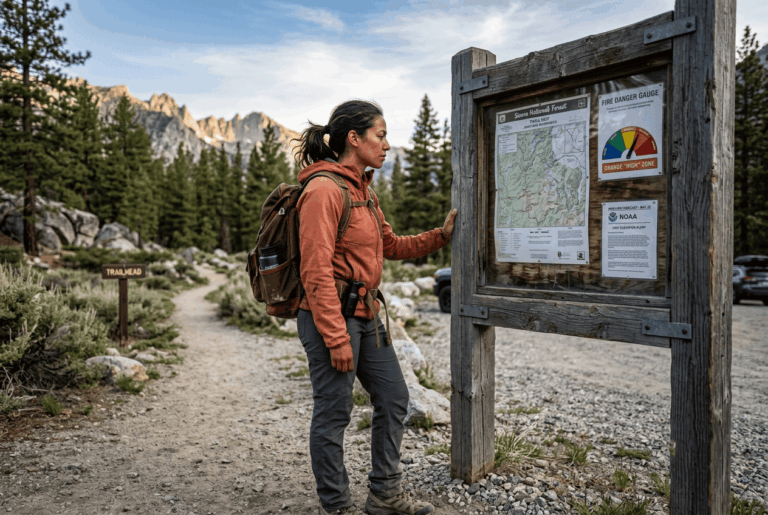
A downloaded offline map (AllTrails, Gaia GPS) covers most day hikes, but a paper topo map and baseplate compass are the backup that doesn’t die when your phone battery does. Don’t treat your phone as your only navigation tool on anything beyond a short, well-marked trail. Cold weather and heavy GPS use both drain a phone battery far faster than normal use. Check our best hiking apps deep-dive for more detail.
Sun protection gear for California’s high-UV environments
SPF 50+ sunscreen, UPF-rated clothing, a wide-brim hat, and UV-blocking sunglasses matter more in California than most places, since elevation amplifies UV exposure; a Sierra trail at 9,000 ft delivers meaningfully more UV than the same latitude at sea level. Lip balm with SPF is the item people forget most often and regret most on exposed, all-day routes, especially on snow or granite where reflected UV adds to direct exposure.
Insulation: layering for California’s unpredictable trail weather
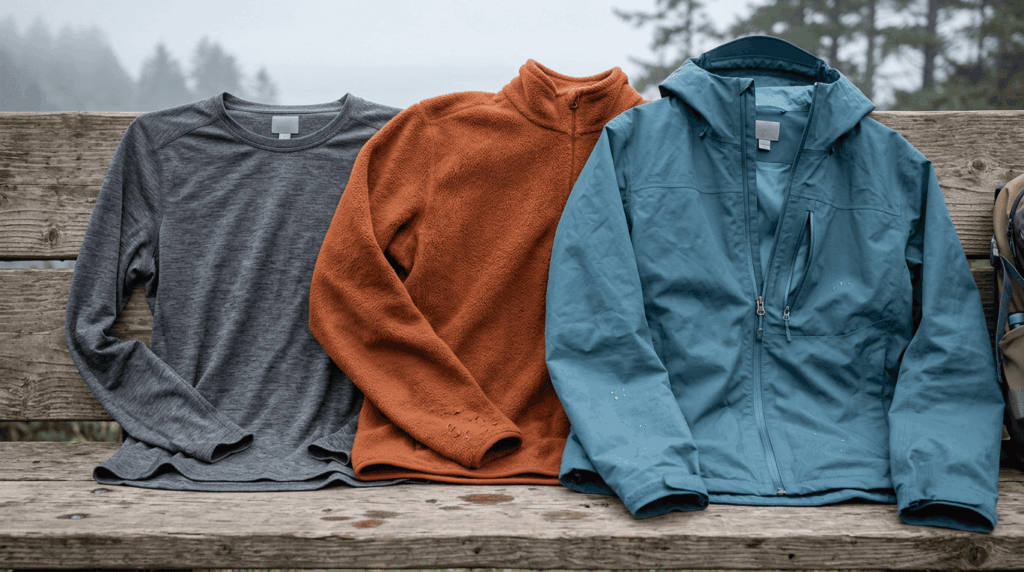
A three-layer system covers nearly every California condition: a moisture-wicking base layer, an insulating mid layer (fleece or light down), and a waterproof-windproof shell. Pack the shell even on a forecast that looks clear, mountain and coastal weather both shift faster than a morning forecast accounts for, and a shell weighs little enough that leaving it behind saves almost nothing.
Illumination: headlamps and backup lighting for California hikes
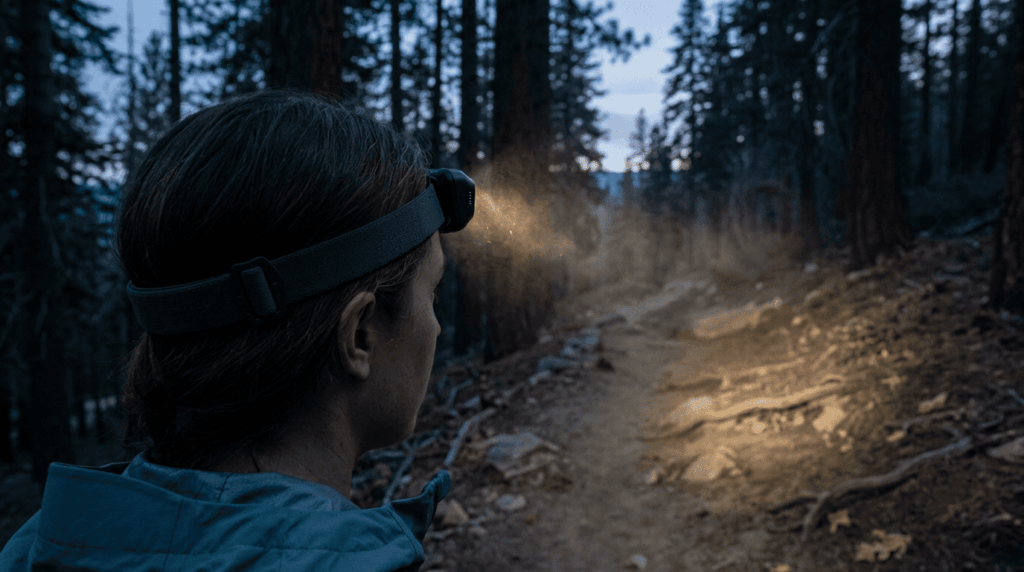
A headlamp belongs in every pack, even for a hike you’re certain will end before dark, since injuries and route-finding delays are exactly what turn a day hike into a hike that ends after sunset. Look for at least 100 lumens for genuine emergency use, a red-light mode to preserve night vision, and carry backup batteries rather than assuming a single charge will last the whole trip.
First aid kit: what to include for California trail emergencies
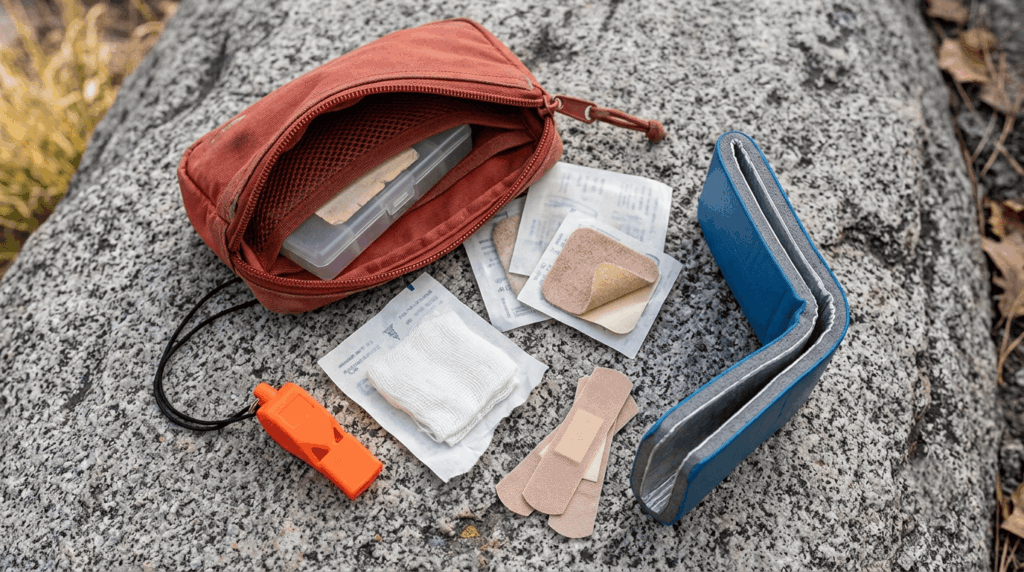
A functional kit covers blister care (moleskin or blister pads), a few gauze pads and wound closure strips, a SAM splint for sprains, any personal medication (an EpiPen if you carry one), and a whistle for signaling. Pre-built kits are a fine starting point, but check that yours actually has blister supplies; it’s the single most common trail injury and the most commonly missing item from off-the-shelf kits.
Hydration gear: water bottles, bladders, and filters for California
Hydration gear is where a lot of hikers under-prepare, since California heat and elevation both increase water loss faster than a flat, shaded trail would suggest.
How much water capacity do you need for California trail distances?
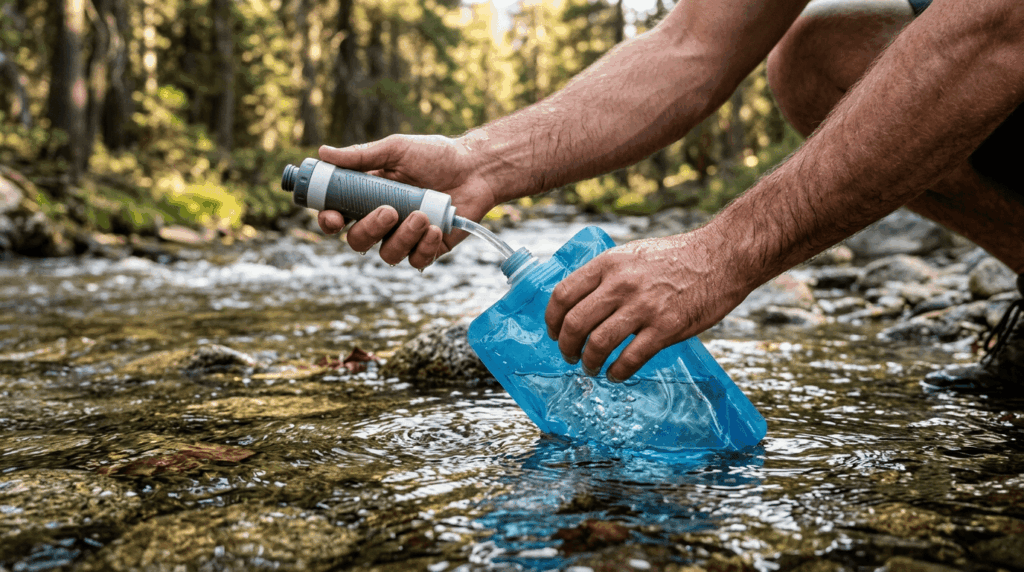
Most day hikes call for a 2 L minimum, climbing to 3–4 L for desert routes, long mileage, or hot-weather hiking. A hydration bladder makes sipping constantly easier than a bottle does, though a bottle is simpler to monitor at a glance, many hikers carry both, using the bladder for steady sipping and the bottle as a visible backup gauge. If your route crosses a reliable water source, a lightweight filter like a Sawyer Squeeze lets you carry less and refill instead of hauling every ounce from the trailhead. For more information, see our water crossings and hazards guide.
Footwear, poles, and load-bearing gear for California trails
The gear that touches your body the most, pack, poles, and shoes, is also where fit matters more than spec sheets. See our best hiking shoes deep-dive for a fuller picture.
How to choose the right daypack size for a California hike
A 15–25 L pack fits a full day’s Ten Essentials plus food and layers; overnight trips need 35–50 L for a shelter system and multiple days of food. Buying bigger “just in case” backfires more often than it helps, since extra volume tends to get filled with weight you didn’t need. Look for a back panel with real ventilation channels. California heat makes this a bigger factor here than it would be in a cooler climate, and a poorly ventilated back panel turns into a sweat-soaked problem by mile three.
Are trekking poles worth it for California’s varied terrain?
Yes, for most hikers, and especially on descents, where poles measurably reduce knee strain, and on river crossings or loose terrain hazards, where they add real stability. Brands like Black Diamond and Leki are widely used and easy to find; the deciding factor is usually collapsed length for packing and grip comfort over hours, not brand loyalty. Use the wrist strap properly, hand up through the bottom, not just gripping the top, so the strap bears some load instead of your grip alone, which matters more than most first-time users expect over a long descent.
Emergency and safety gear every California hiker should carry
This is the category most hikers skip, right up until they need it, and it’s the one that matters most once cell signal disappears.
When do you need a satellite communicator for California hiking?
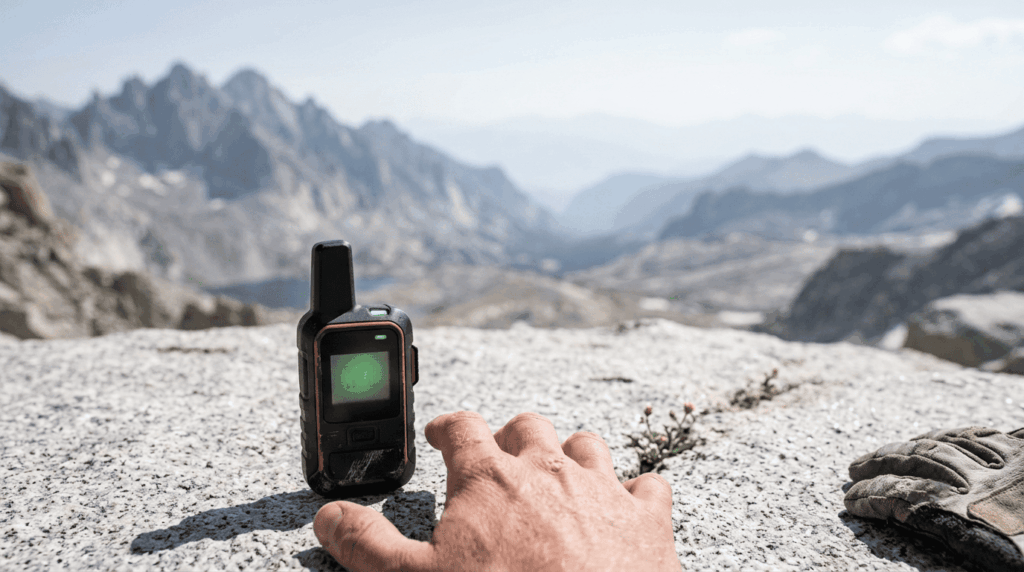
Anywhere cell signal isn’t guaranteed, which covers most of the Sierra backcountry and large stretches of California’s desert wilderness. A Garmin inReach offers two-way messaging plus SOS on a subscription plan, a SPOT device offers simpler one-way check-ins and SOS at a lower cost, and a PLB (personal locator beacon) is SOS-only with no subscription, a solid minimum option for occasional backcountry hikers who don’t want an ongoing monthly cost. Any of the three beats has nothing once you’re truly out of range, and the cost difference between them matters far less than actually carrying one.
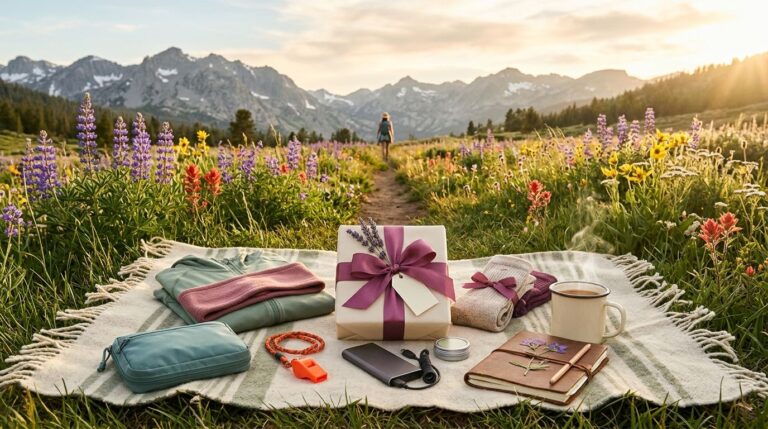
None of this gear needs to be expensive or elaborate to work; it needs to match the specific trail and season in front of you. If you are shopping for present ideas including specialized gifts for female hikers, our curated guide on gear gifts for outdoor lovers covers plenty of field-tested options. Start with the Ten Essentials on every hike, scale hydration and emergency gear to how remote you’re going, and let the trail’s difficulty rating guide how seriously you take the rest of the list.
Frequently asked questions about California hiking gear
What should I bring on a hiking trail in California?
At minimum, the Ten Essentials: navigation, sun protection, insulation, illumination, first aid, fire, repair kit, nutrition, hydration, and emergency shelter, plus enough water for the distance and conditions.
What should I wear on a California hiking trail?
Moisture-wicking base layers, a packable insulating layer, and a waterproof shell, even if the forecast looks clear. Sturdy footwear matched to the terrain and sun protection round out the basics.
Do I need a bear canister when hiking in California?
Only for overnight backcountry trips in specific zones, all of Yosemite, Desolation Wilderness, and the Lake Tahoe Basin, Lassen Volcanic National Park, and parts of Sequoia and Kings Canyon, among others. Day hikes never require one; check your specific permit area before an overnight trip, since requirements are enforced and citations for non-compliance are real.
What size backpack do I need for a day hike?
15–25 L comfortably fits the Ten Essentials, food, and layers for most day hikes. Go toward the higher end if you’re carrying extra water or camera gear.
Are trekking poles necessary for hiking in California?
Not strictly necessary, but genuinely useful, they reduce knee strain on descents and add stability on loose terrain or river crossings. Beginners on flat, easy trails can comfortably skip them.
What first aid items should I always carry on a California hike?
Blister care, gauze and wound closure strips, a SAM splint, any personal medication, and a whistle. Blister supplies specifically are the item most hikers regret not packing, since a single hot spot ignored early can end a hike hours before fatigue or distance ever would.