
How Much Water You Actually Need on a California Trail (and Why Electrolytes Aren’t Optional)
Most hikers get hydration wrong in one of two opposite directions on California trails: they don’t drink enough in the heat, or they drink plenty of plain water and skip electrolytes entirely, which creates a different problem. I’ve researched trail conditions across this state’s deserts, coastline, and high Sierra for years, and hydration mistakes are one of the most common and most preventable reasons hikers end up needing help. Managing water and electrolytes for hiking in California is crucial, and this guide breaks down exactly how much water to carry by distance and temperature, when electrolytes matter more than water itself, and how altitude changes the math.
Disclosure: Please note that some of the links below are affiliate links and at no additional cost to you, I may earn a commission. Know that I only recommend hiking gear I personally stand behind; when you use my affiliate links, it helps me run this blog and keep all of this content free of charge for readers (like you).
Key Takeaways
- Dehydration and hyponatremia are opposite problems, and both are real risks on California trails: too little water hurts you, but too much plain water without sodium can too.
- One liter per hour of hiking is my baseline in heat, more on exposed desert trails, less on a mild coastal morning.
- Altitude increases your water loss even when you don’t feel thirsty: Sierra Nevada elevation blunts your thirst signal while increasing water loss through faster breathing.
- Electrolytes matter as much as water on a long, hot hike: cramping and nausea are often a sodium problem, not a water problem.
- Never drink from a California stream without treating it first, Giardia doesn’t care how clear the water looks.
- Drink on a schedule, not when you feel thirsty: thirst lags behind your actual fluid deficit, especially at elevation.
Why Hydration Is a Life-or-Death Issue on California’s Trails
California pairs two conditions that amplify dehydration risk more than almost anywhere else in the country: serious heat in the deserts and interior valleys, and serious altitude in the Sierra Nevada. Either one alone increases your fluid needs. Together, on a long Sierra summer hike that starts hot and climbs high, they compound.
I don’t think hikers underestimate water on purpose, I think they underestimate how fast the deficit builds. By the time you feel genuinely thirsty, you’re often already behind on fluids, and catching back up mid-hike is harder than staying ahead of it from the start.
Dehydration and Hyponatremia: The Two Opposite Hydration Dangers on California Trails
Dehydration is the hazard everyone’s heard of: not enough fluid, leading to fatigue, dizziness, dark urine, and eventually heat illness. Hyponatremia is the one people miss, it happens when you drink large amounts of plain water without replacing sodium, diluting your blood sodium to dangerous levels. It’s rarer than dehydration, but it shows up specifically in hikers who “did everything right” by drinking constantly on a long, hot trail without ever touching an electrolyte source.
My rule: if you’re drinking more than about a liter an hour for several hours straight, you need sodium in that mix, not just water. Confusion, nausea, and swelling that don’t fit a simple dehydration picture are the warning signs to take seriously.
How Much Water Should You Carry on a California Hike?
There’s no single correct number, it depends on distance, temperature, and elevation gain, and treating every hike like it needs the same two liters is how people end up short on a hot day.
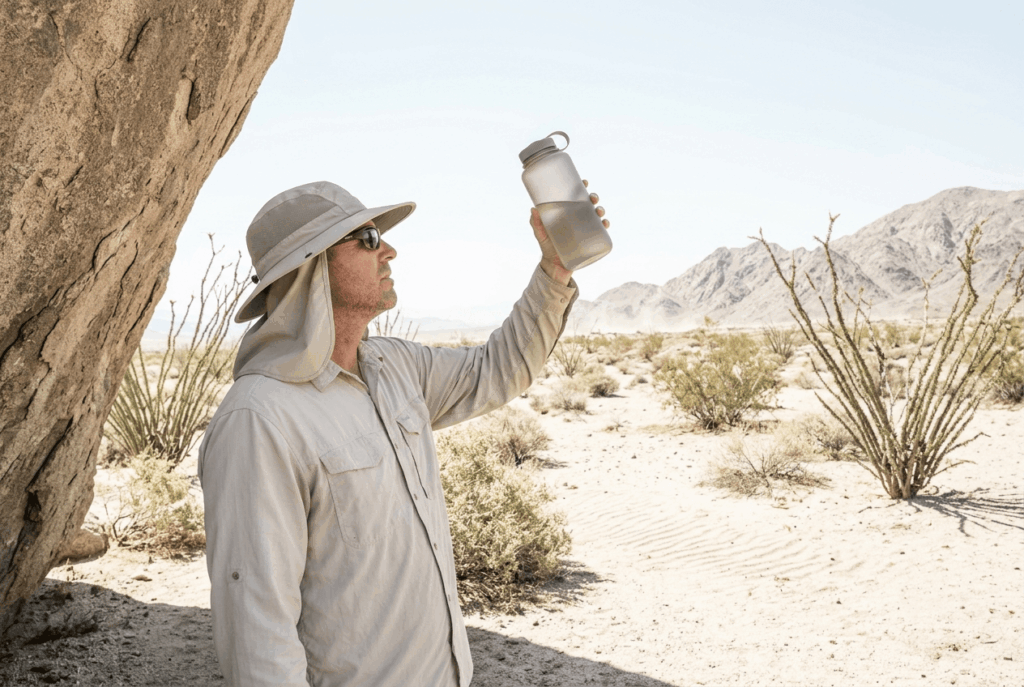
Water Needs by Hike Length and Temperature: A California-Specific Guide
| Hike length | Mild (under 70°F) | Hot (70–90°F) | Extreme heat (90°F+) |
|---|---|---|---|
| 2–4 mi (short) | 1 L | 1.5 L | 2 L |
| 5–8 mi (moderate) | 1.5–2 L | 2.5–3 L | 3–4 L |
| 9–14 mi (long) | 2.5–3 L | 4 L | 5 L or more |
| Overnight/multi-day | Plan around water sources | Plan around water sources | Plan around sources plus an extra reserve |
Treat these as a floor, not a ceiling, add more for significant elevation gain, a heavier pack, or a slower pace than you expect.
How Altitude Changes Your Hydration Needs in the Sierra Nevada
Elevation increases your water loss two ways: you breathe faster and lose more moisture with every breath, and your thirst response gets blunted, so you feel less thirsty than your body actually is. This combination is exactly why hikers underdrink at altitude, the signal that normally tells you to reach for your bottle simply doesn’t fire as reliably above about 8,000 ft (2,438 m).
My rule above that elevation: drink on a fixed schedule rather than waiting for thirst, since thirst is genuinely not a reliable indicator once you’re that high.
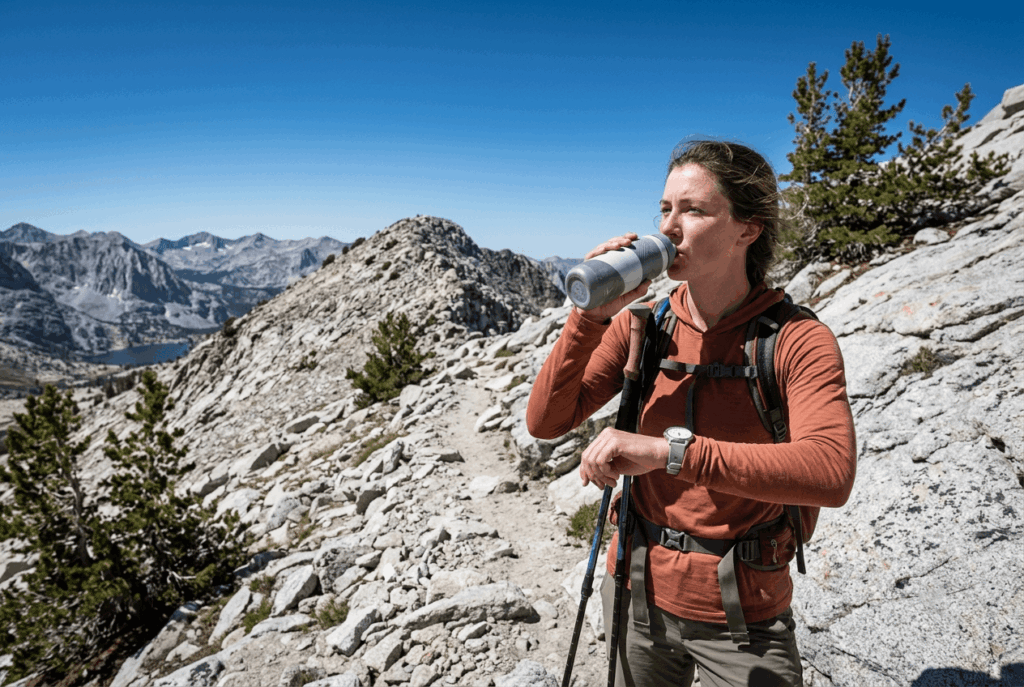
Electrolytes on California Trails: Why Water Alone Isn’t Enough in Heat
Sweat carries sodium, potassium, and magnesium out of your body along with water, and on a long, hot California trail, that loss adds up to something water alone can’t fix. Plain water rehydrates volume; electrolytes restore the balance your muscles and nerves actually run on.
Signs of Electrolyte Imbalance on a California Hike: What to Watch For
Cramping is the most common early sign, especially in calves and hamstrings on a long climb. Nausea, headache, and a kind of foggy confusion that doesn’t clear up after a water break are the next-level signs, and they’re often mistaken for simple dehydration when the real problem is sodium.
My honest take: if you’ve been drinking steadily and still feel worse, not better, that’s usually your cue to add electrolytes rather than more plain water.
Best Electrolyte Products for California Trail Hikers: Tablets, Powders, and Foods
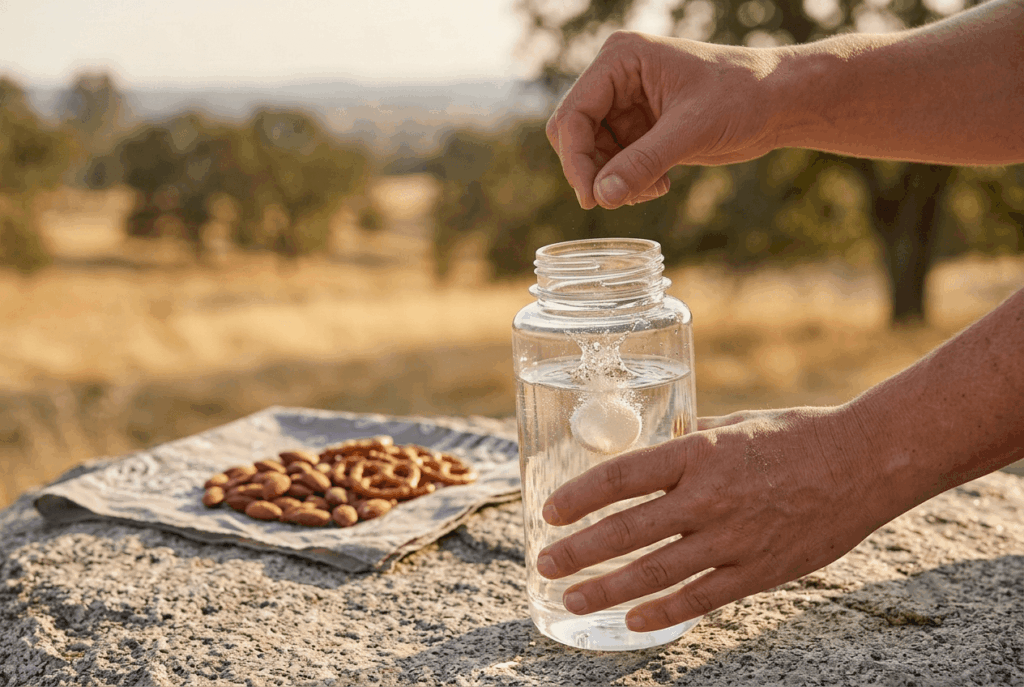
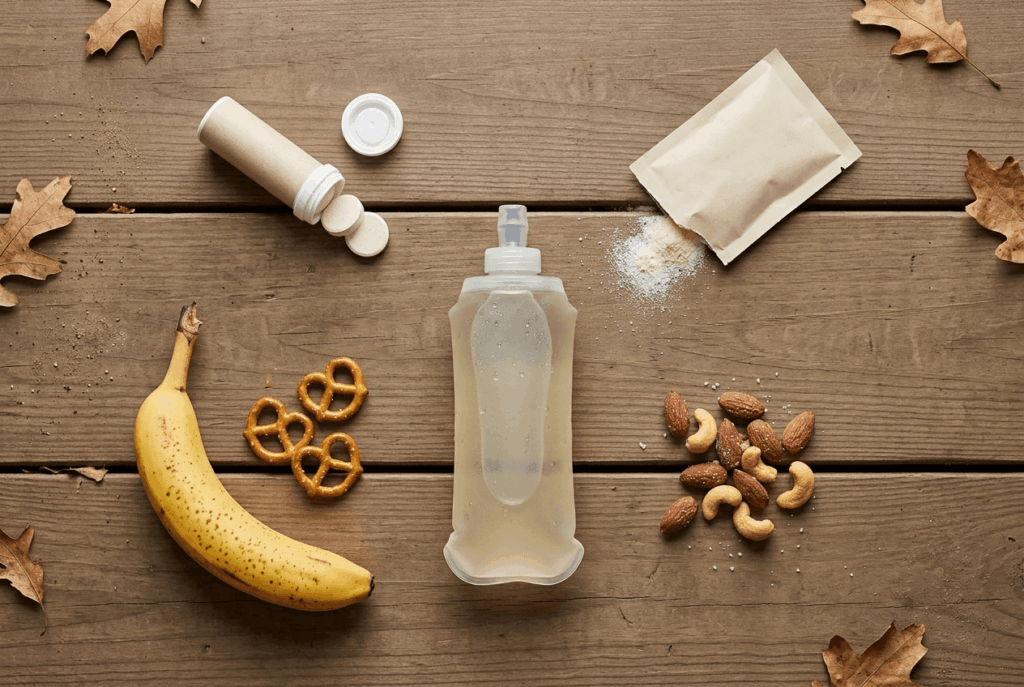
Nuun tablets are my go-to for a lighter sodium dose on a moderate day, easy to carry, easy to dissolve in a bottle refill. LMNT and Skratch Labs both carry a heavier sodium load, which I’d reach for specifically on a long desert or high-heat day where sweat loss is heaviest. Liquid IV works fine too, though I find the sugar content higher than I want for an all-day carry.
Salted nuts, pretzels, and a banana cover a good chunk of this need through food alone, and I always pack at least one of them regardless of whether I’m also carrying tablets.
Finding and Treating Water on California Trails
Knowing where you can refill changes how much you need to carry from the trailhead, especially on longer routes where carrying every liter you’ll ever need isn’t realistic.
How to Find Water Sources on California Trail Routes
Route-specific water reports exist for popular corridors, the John Muir Trail and PCT sections through the Sierra both have seasonal water reports worth checking before a trip, since source reliability shifts through the season as smaller creeks dry up. AllTrails reviews often mention current water conditions too, which is a useful cross-check against an official report that might be a few weeks old.
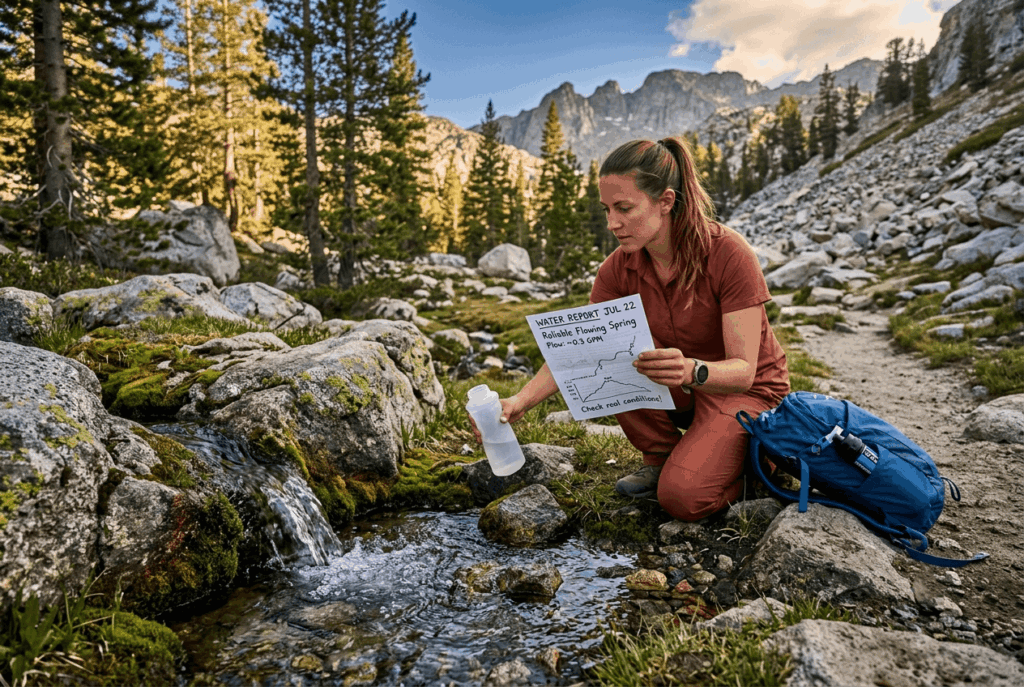
Water Filtration vs Purification Tablets vs UV Treatment on California Trails
A squeeze filter like the Sawyer Squeeze or Katadyn BeFree removes Giardia and bacteria and is what I carry on most Sierra trips, light, fast, no waiting. Purification tablets work as a reliable backup when a filter fails, though the taste is a fair trade-off for reliability. A UV pen like a SteriPen is fast but needs clear water and functioning batteries, which makes it a secondary option rather than my primary one.
I’ve gone deeper on filtration methods, Giardia risk, and specific gear picks in the water hazards guide, worth reading before any trip with river crossings or backcountry refills.
Hydration Timing and Strategy for Multi-Hour California Hikes
Drink before you’re thirsty, not after, thirst lags your actual deficit by the time it kicks in, especially at elevation or in dry heat where sweat evaporates before you notice it. I aim for small, steady sips every fifteen to twenty minutes rather than large gulps every hour, which keeps your body absorbing fluid instead of sloshing through it all at once.
Caffeine’s mild diuretic effect isn’t significant enough to worry about on a normal hike, so don’t skip your morning coffee over it. Alcohol is a different story, it actively works against hydration and has no place on a hot trail day.
Water and electrolytes sound like the most basic part of hiking prep, and that’s exactly why they get skipped. My honest take after years of researching trail conditions here: more hikers get hurt by getting this basic math wrong than by any dramatic wildlife encounter. Carry more than you think you need, add sodium once you’re sweating heavily, and drink on a schedule instead of waiting to feel thirsty.
If you’re building out your full kit, I’ve covered hydration bladder and bottle capacity in the hiking gear checklist, and the heat-specific side of this, recognizing heat exhaustion versus heat stroke, is covered in detail in the weather hazards guide.
Frequently Asked Questions: Water and Electrolytes for California Hiking
How much water should I bring on a day hike in California?
Use one liter per five miles as a baseline in mild temperatures, and roughly double that in heat above 90°F (32°C). A 5–8 mile hike on a hot day should have you carrying 2.5 to 3 liters minimum.
What are the best electrolyte drinks for hiking in hot weather?
LMNT and Skratch Labs both carry a heavier sodium dose suited to serious sweat loss on long, hot days, while Nuun works well for lighter, more moderate hikes. Salted nuts or pretzels are a solid food-based backup either way.
Is it safe to drink from streams in California without a filter?
No, even the clearest-looking alpine stream can carry Giardia, and there’s no visual way to tell a safe source from an unsafe one. Always filter or purify, regardless of how remote or clean the water looks.
What happens if you get dehydrated on a California trail?
Early symptoms include fatigue, headache, and dark urine, progressing to dizziness, confusion, and eventually heat illness if untreated. It compounds fast in desert heat, which is exactly why staying ahead of it matters more than catching up later.
Do I need more water when hiking at high altitude in the Sierra Nevada?
Yes, altitude increases water loss through faster breathing while also blunting your thirst signal, so you’ll need more than you feel like you need. Drink on a schedule above about 8,000 ft (2,438 m) rather than waiting until you’re thirsty.
What is hyponatremia and how can hikers avoid it?
Hyponatremia is dangerously low blood sodium from drinking large amounts of plain water without replacing electrolytes, and it’s most common on long, hot hikes where people drink constantly but skip sodium entirely. Add electrolyte tablets or salty food to your water intake once you’re sweating for several hours straight.