Leave No Trace Principles: The California Hiker’s Environmental Code
Leave No Trace in California is a set of seven principles for minimizing your impact on wild places and on California’s heavily trafficked trails. Yosemite alone sees millions of visitors a year; practicing them isn’t optional etiquette; it’s what keeps these places from being loved to death. I’ve spent four-plus years cataloging trails across this state, and the difference between a trail that’s held up for decades and one that’s eroding into a wide, braided scar usually comes down to whether visitors actually followed these principles, not how remote or protected the trail technically is on paper.
Disclosure: Please note that some of the links below are affiliate links and at no additional cost to you, I may earn a commission. Know that I only recommend hiking gear I personally stand behind; when you use my affiliate links, it helps me run this blog and keep all of this content free of charge for readers (like you).
This guide breaks down all seven, specifically as they apply to California terrain, rules, and permits, not the generic version you’d get from a national brochure.
Key takeaways:
- Leave No Trace started as a 1960s USFS educational campaign and became a formal nonprofit, the Leave No Trace Center for Outdoor Ethics, in 1994.
- The seven principles cover planning, durable surfaces, waste disposal, leaving natural/cultural objects, campfires, wildlife, and consideration for other visitors.
- WAG bags are mandatory, not optional, for both day and overnight use in the Mount Whitney Zone.
- Removing rocks, artifacts, or plants from federal land isn’t just discouraged, it’s often illegal under federal law.
- Standard wildlife viewing distance is 25 yards for most animals, 100 yards for bears and other predators.
What is Leave No Trace, and why does it matter in California?
Leave No Trace (LNT) is a framework of seven principles, developed and maintained by the nonprofit Leave No Trace Center for Outdoor Ethics (LNT), designed to minimize the physical and social impact of outdoor recreation.
California’s trail volume makes this especially urgent, a single principle ignored by one hiker is a rounding error, but multiplied across millions of annual visitors to places like Yosemite, Joshua Tree, and the Lake Tahoe basin, it’s the difference between a healthy trail corridor and a degraded one.
The principles were never meant to be a rigid rulebook; they’re a framework that adapts to local conditions, which is exactly why applying them thoughtfully in California, with its deserts, alpine terrain, and coastline all in one state, looks different than applying them in, say, the Appalachians.
The history of Leave No Trace: from USFS program to global standard
The concept traces back to a 1960s U.S. Forest Service educational campaign responding to a boom in outdoor recreation, refined through the 1970s and ’80s alongside NPS and BLM input as wilderness managers realized that regulation alone wasn’t changing visitor behavior, education was needed too.
In 1994, those efforts formalized into the Leave No Trace Center for Outdoor Ethics, a 501(c)(3) nonprofit headquartered in Boulder, Colorado, built on a memorandum of understanding between the USFS, NPS, BLM, and the National Outdoor Leadership School (NOLS).
The number of principles fluctuated through the 1990s as the framework was refined, and by 1999 it settled into the seven still used today. REI, the Boy Scouts and Girl Scouts, and California state parks have all since adopted LNT as their standard outdoor ethics curriculum, and it’s now taught internationally, well beyond its U.S. federal-land origins.
The 7 Leave No Trace principles: applied to California hiking trails
Principle 1: plan ahead and prepare, what it means for California hikers
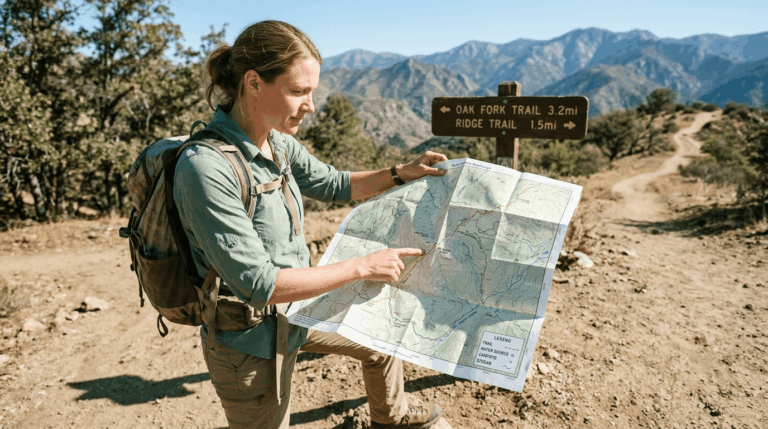
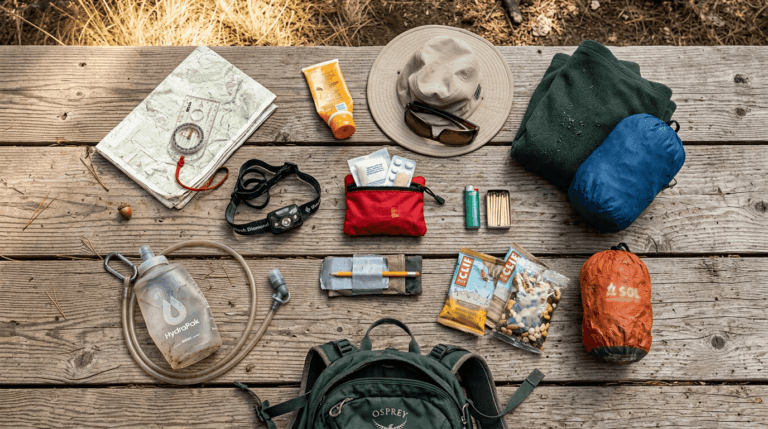
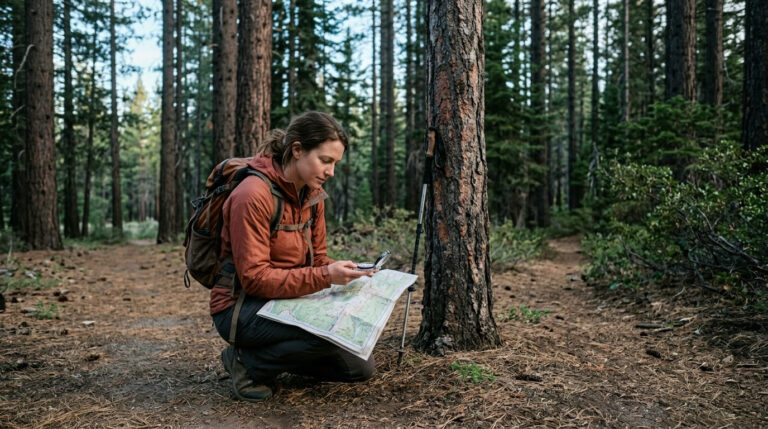
Research current regulations before you go, check CAL FIRE restrictions, confirm wilderness permit requirements through Recreation.gov, and pack gear appropriate for actual conditions rather than what the calendar suggests.
Poor preparation is a leading cause of resource damage, not just personal risk: underprepared hikers are the ones most likely to cut switchbacks, camp somewhere they shouldn’t, or make poor decisions under pressure once conditions turn against them. Consult our hiking safety guide before heading out.
Principle 2: travel and camp on durable surfaces in California
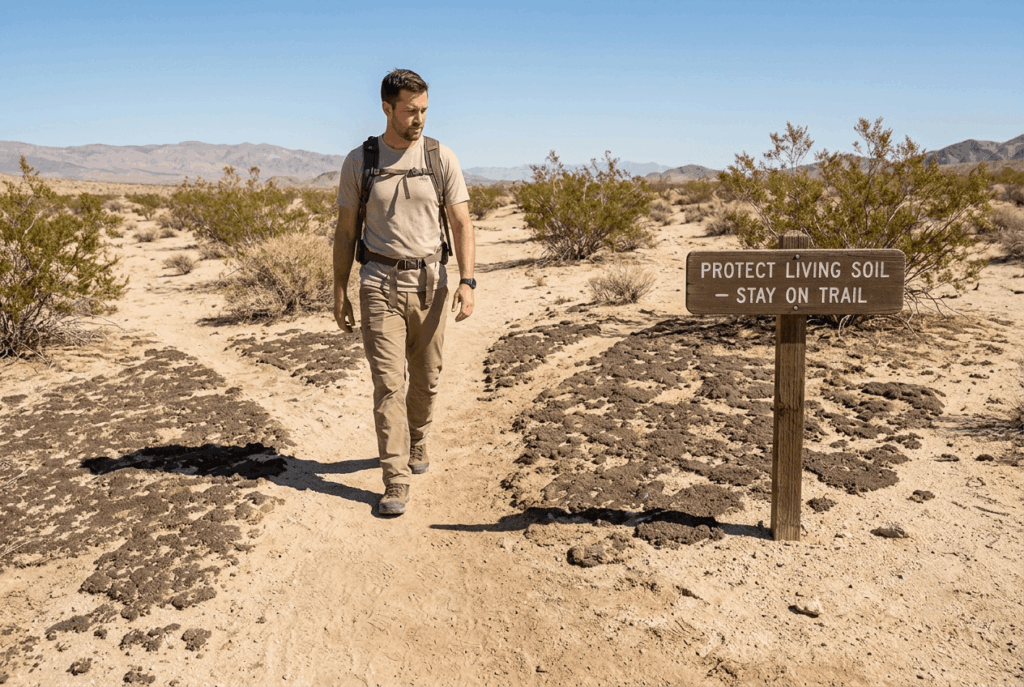
Stay on the established trail, especially across cryptobiotic soil in California’s deserts and delicate alpine meadows in the Sierra, both of which can take years or decades to recover from a single set of off-trail footprints, cryptobiotic soil crusts in particular can take 50+ years to regenerate once crushed.
When camping, choose rock, sand, or gravel over vegetation, and stay at least 200 ft from water sources, trails, and other campsites so you’re not expanding the footprint of an already-established site. Review desert and mountain terrain hazards for details on these fragile soil layers.
Principle 3: dispose of waste properly on California trails
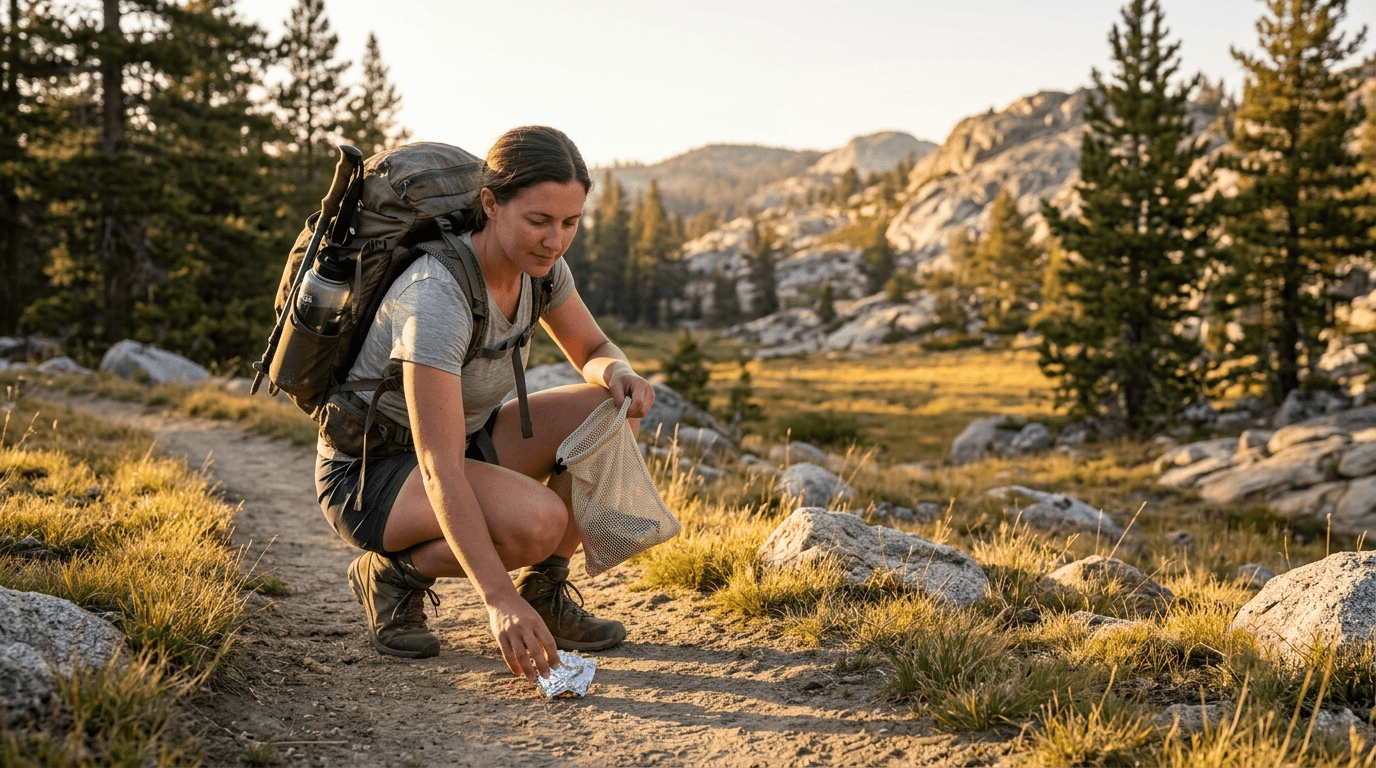
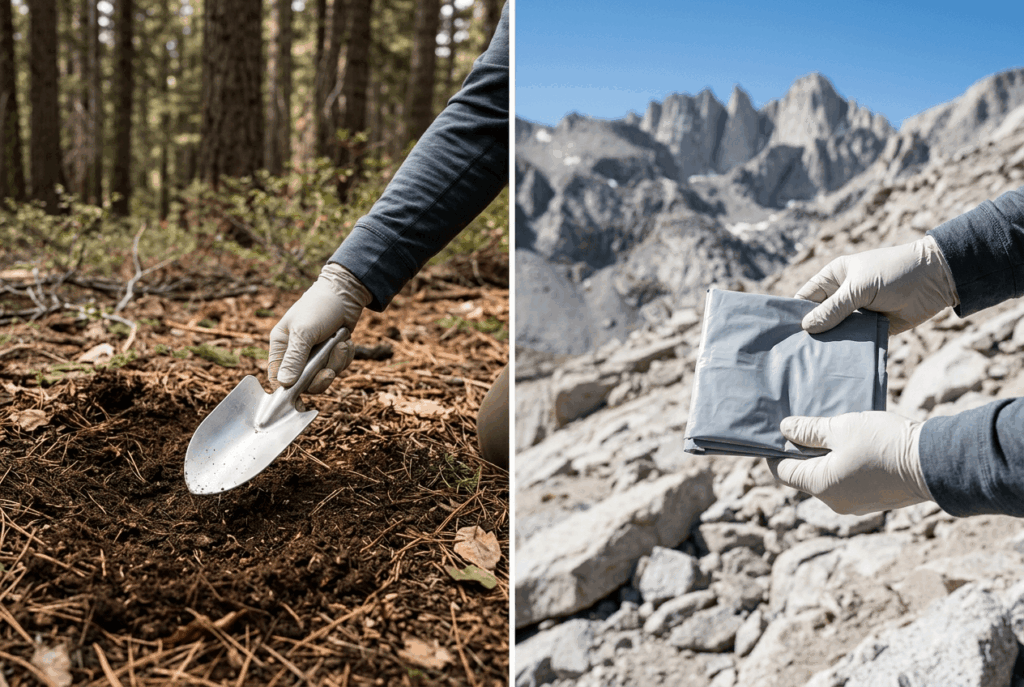
Pack out all trash, always. For human waste, dig a cathole 6–8 inches deep, at least 200 ft from water, trails, and campsites, except in the Mount Whitney Zone, where WAG bags are mandatory for both day and overnight use due to the area’s rocky soil and extreme foot traffic; catholes aren’t permitted there at all. Grey water from dishwashing should be scattered well away from any water source too.
Principle 4: leave what you find, California’s rules on natural and cultural objects
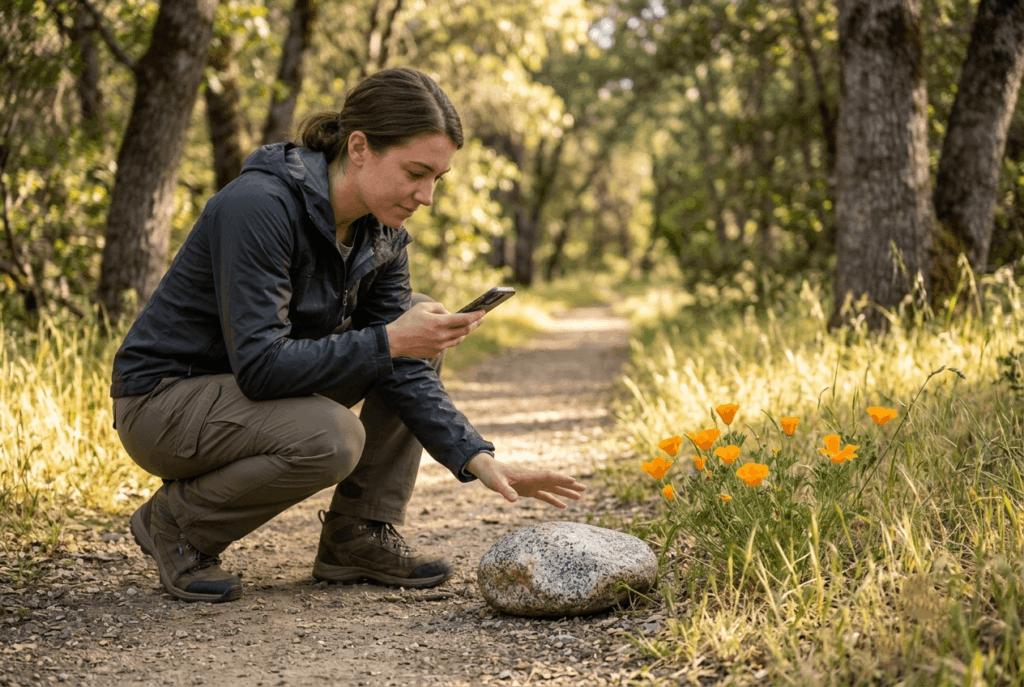
Removing archaeological or cultural objects from federal land is a federal crime under the Archaeological Resources Protection Act, not just a courtesy violation, and penalties can include real fines and jail time depending on the object’s value and significance.
Plant picking is restricted across most California wilderness areas, including wildflowers that might seem abundant enough to spare a few.
On the “pocket rock” debate, taking a single small rock home, the honest answer is that it’s technically discouraged everywhere and outright illegal in national parks specifically, even though enforcement for one small rock is inconsistent; the principle exists because “just one” scales badly across millions of visitors doing the same thing.
Principle 5: minimize campfire impacts on California trails
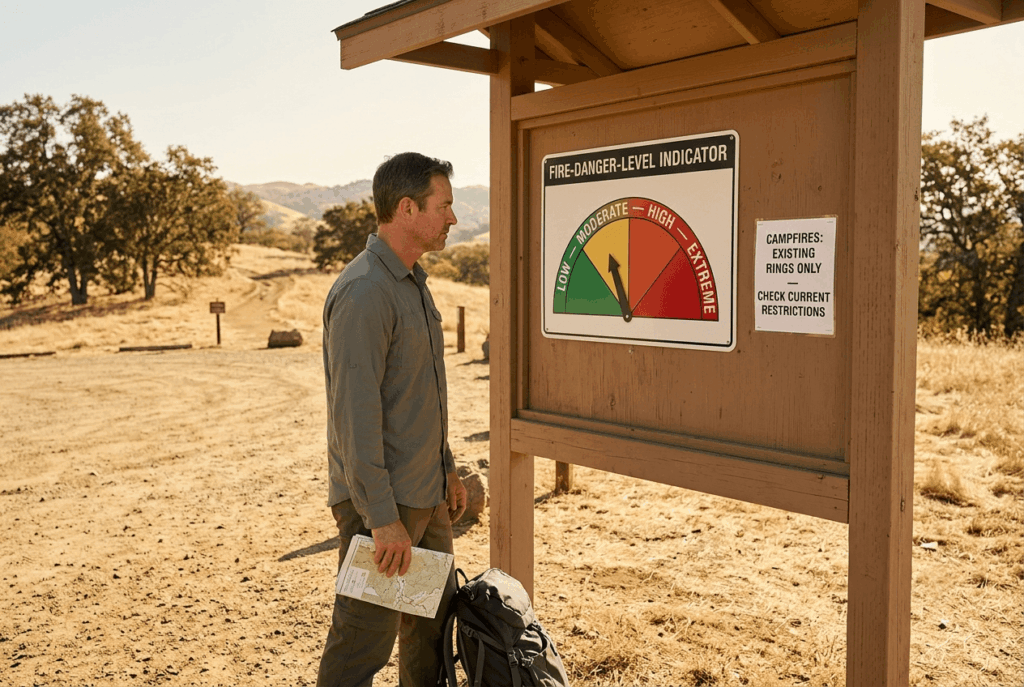
Check current fire restrictions before assuming a campfire is allowed, CAL FIRE, the NPS, and the USFS all post active restriction levels that shift fast during dry years, sometimes within days of a red flag warning.
Many high-Sierra wilderness areas ban fires entirely above roughly 10,000 ft year-round regardless of the current restriction level, since wood regenerates too slowly at that elevation to sustain any fire use without long-term damage to the sparse tree cover.
Where fires are allowed, use an existing fire ring rather than building a new one, keep it small, and make sure it’s fully out, cold to the touch, before you leave. These high-country regulations are detailed in our high-elevation hiking guide.
Principle 6: respect wildlife on California’s hiking trails
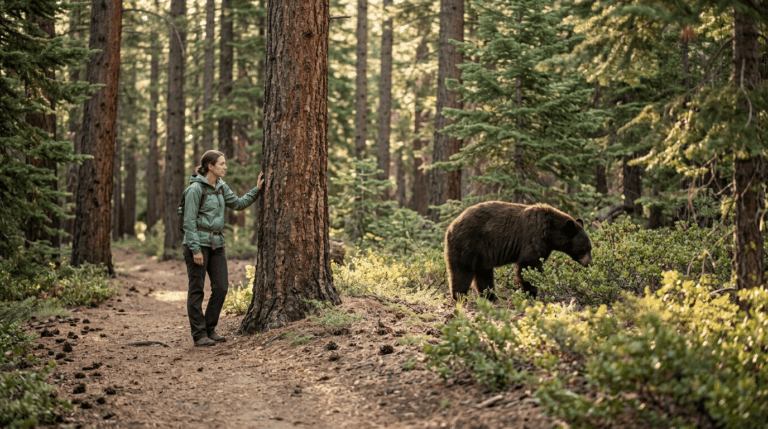
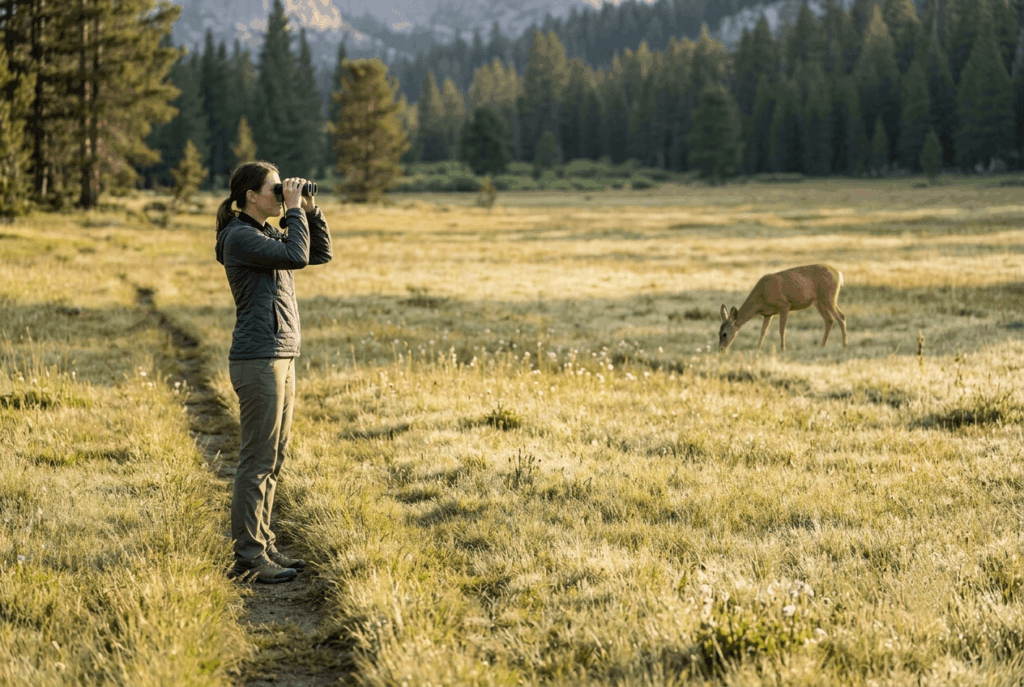
Keep at least 25 yards from most wildlife and 100 yards from bears and other predators, if an animal changes its behavior because of you, whether that’s stopping its feeding, lifting its head, or moving away, you’re already too close and should back off further.
Feeding wildlife is illegal in national parks, not just discouraged, since habituated animals end up euthanized or relocated once they become a safety problem for later visitors.
Store food in bear boxes or bear canisters where required rather than assuming your car or tent is sufficient, California black bears are notorious for breaking into vehicles that look “secure” to a human.
Principle 7: be considerate of other visitors on California trails
Keep noise down, especially around speakers and phone calls, let natural sound carry, and remember that sound travels much further in quiet backcountry than it does anywhere in daily life.
Yield appropriately on the trail, keep dogs under control, and choose a campsite with real distance from other groups rather than the first flat spot you see. For the fuller etiquette breakdown, including right-of-way rules and group size norms, see our trail etiquette guide.
Leave No Trace certification and education resources in California
Formal training exists at several levels: the free online Awareness course for casual learners, in-person Trainer courses for group leaders, and the intensive multi-day Master Educator course for those planning to teach LNT professionally, all offered through Leave No Trace’s network of partners, including REI, the PCTA, and Sierra Club chapters across California.
Most casual hikers don’t need certification, reading and applying; supplementing your knowledge with essential wilderness ethics and trail guides along with applying the seven principles covers the vast majority of real-world impact, but if you lead group trips, run a youth program, or work seasonally for a land management agency, the Trainer course is a worthwhile time investment and often required for the role.
How to teach Leave No Trace to children on California hiking trails
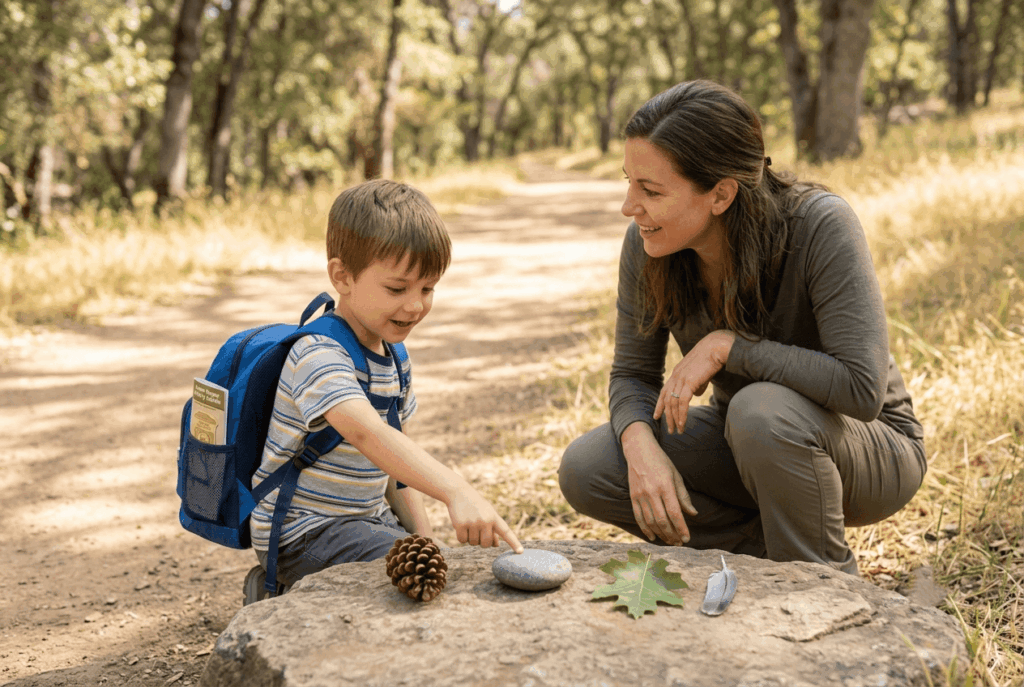
Make it concrete and game-like rather than a lecture: a “trash scavenger hunt” where kids spot (without touching) litter for an adult to collect, a “footprint tracking” game about staying on trail, or a simple “would you l
eave this or take it” sorting activity with natural objects. NPS’s Junior Ranger program builds LNT concepts directly into its badge activities at most California national parks, kids complete an activity booklet and earn a badge, with several activities tied explicitly to outdoor ethics.
The PCTA also runs youth volunteer programs that combine hands-on trail work with LNT education for older kids and teens, which tends to land better than any classroom version of the same material.
Frequently asked questions: Leave No Trace in California
How do hiking trails impact the environment in California?
Trails concentrate foot traffic into a managed corridor, but poor practices, off-trail travel, improper waste disposal, campfire damage, still cause real soil compaction, erosion, and wildlife disturbance, which is exactly what Leave No Trace principles are designed to minimize.
Can I pick wildflowers on California hiking trails?
Generally no, most California wilderness areas restrict picking plants, and in national parks it’s explicitly prohibited; leaving flowers in place lets other visitors enjoy them and lets the plant complete its natural cycle.
Is it illegal to take rocks from a California national park?
Yes, removing natural or cultural objects, including rocks, from national park land is prohibited, and cultural/archaeological objects are additionally protected under federal law with real legal penalties.
Can I have a campfire while backpacking in California?
Only where current fire restrictions allow it and only in an existing fire ring, check CAL FIRE and the managing agency’s current restriction level before your trip, since rules can change within days during fire season, and fires are banned entirely above roughly 10,000 ft in much of the high Sierra.
What are the Leave No Trace rules for dogs on California trails?
Keep dogs leashed where required, under control at all times, and pack out their waste just like your own, pet waste left on trail still contaminates water and disturbs wildlife.
How do I dispose of human waste when hiking in California’s wilderness?
Dig a cathole 6–8 inches deep at least 200 ft from water, trails, and campsites in most areas, except the Mount Whitney Zone, where WAG bags are legally required for all waste, with no cathole option available.