California Trail Wildlife: What Bears, Mountain Lions, Rattlesnakes, and Ticks Actually Do When You Meet
Yes, there are bears, mountain lions, rattlesnakes, and ticks on California trails, and no, that doesn’t mean you’re likely to have a dangerous encounter with any of them. The real risk isn’t the animals showing up; it’s not knowing what to do in the thirty seconds after they do. I’ve researched trail conditions across every zone in this state, and the hikers who get hurt are almost never the ones who saw a bear. They’re the ones who ran, or fed one, or reached down to move a rock without looking first. Knowing how to handle wildlife hazards on California trails is the ultimate key to staying safe out there.
Disclosure: Please note that some of the links below are affiliate links and at no additional cost to you, I may earn a commission. Know that I only recommend hiking gear I personally stand behind; when you use my affiliate links, it helps me run this blog and keep all of this content free of charge for readers (like you).
Key Takeaways
- Black bears are common in the Sierra Nevada and coastal ranges, but attacks are exceptionally rare: the real risk is losing your food to one, not being attacked by one.
- Mountain lion attacks are almost statistically nonexistent: California has confirmed roughly 21 attacks since 1986, with three fatal, you’re far more likely to be hurt driving to the trailhead.
- Rattlesnakes are the wildlife hazard most likely to actually bite you: stay alert around sun-warmed rocks and trail edges in spring and fall.
- Ticks are the most common wildlife encounter of all, and the easiest to prevent: a 60-second post-hike check catches nearly everything.
- Never run from a bear or mountain lion: running triggers a chase instinct in both animals, back away instead.
- Bear canisters are required, not optional, in parts of Yosemite and Sequoia–Kings Canyon wilderness, check your permit before you pack food.
Understanding California’s Trail Wildlife: What You Might Encounter and Where
California’s wildlife risk isn’t evenly spread across the state, and knowing the geography changes how you prepare. Black bears cluster in the Sierra Nevada and the northern coastal forests. Mountain lions range almost everywhere there’s deer habitat, including coastal ranges close to cities. Rattlesnakes favor the drier foothills and deserts. Ticks show up in damp brush nearly statewide.
My rule: match your prep to your specific trail’s region, not to a generic “California wildlife” checklist. A Mojave desert hike and a Marin headlands hike carry almost entirely different wildlife risk profiles.
Which California Regions Have the Highest Wildlife Encounter Risk?
| Animal | Where you’re most likely to see it | Real risk level |
|---|---|---|
| Black bear | Sierra Nevada, Sequoia–Kings Canyon, Tahoe basin | Low for attacks; high for food/gear raids |
| Mountain lion | Coastal ranges, Sierra foothills, near deer habitat statewide | Extremely low |
| Rattlesnake | Foothills, deserts (Anza-Borrego, Joshua Tree), sun-warmed rock | Moderate, the most likely actual bite risk |
| Western black-legged tick | North Coast, Bay Area, Sierra foothills, shaded brush | High encounter rate; low but real Lyme disease risk |
| Coyote | Nearly all zones, including urban-adjacent trails | Low |
Black Bears on California Hiking Trails: How to React and Stay Safe
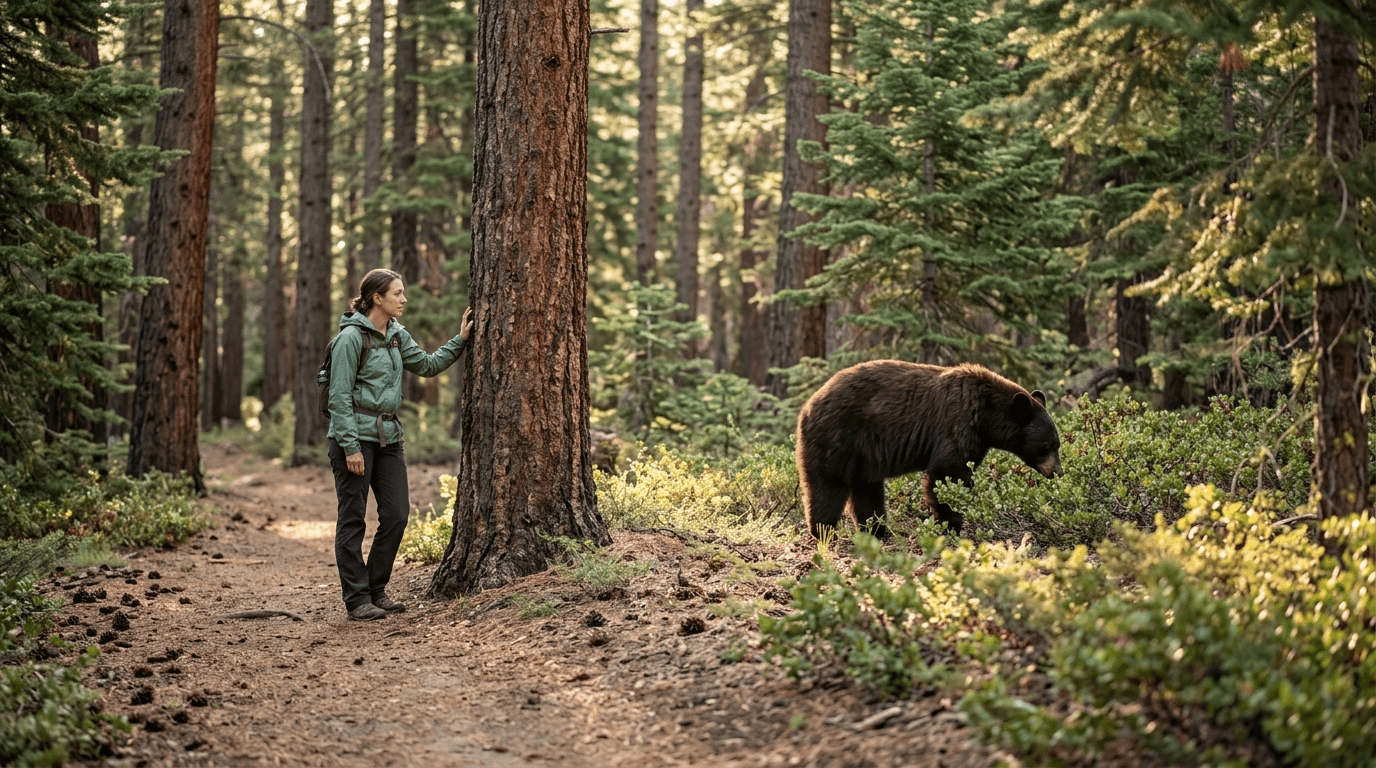
California has black bears, not grizzlies, an important distinction, because the two species require different responses if one gets close. Black bears are typically food-motivated rather than territorial, which means most negative encounters trace back to a bear associating hikers with an easy meal, not to genuine aggression.
I’ve had a handful of bear sightings over the years, and every single one ended the same way: the bear wanted my food, not me. Treat that as the operating assumption, and most of your bear risk disappears before it starts.
How to Store Food and Scented Items on California Trails with Bears
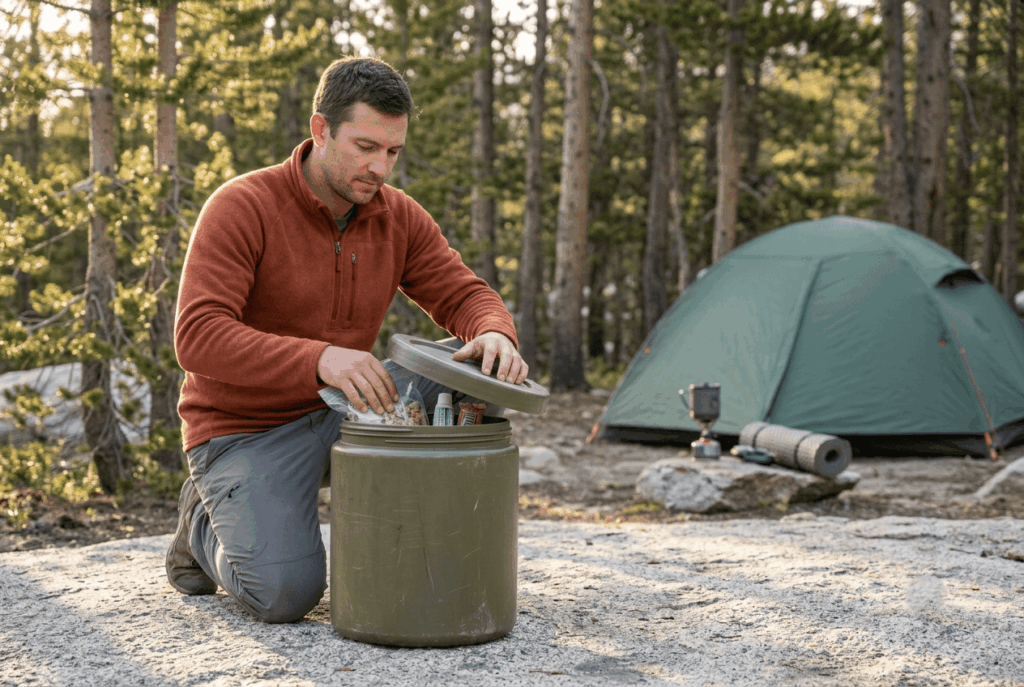
A hard-sided bear canister is required, not optional, for overnight trips in parts of Yosemite and Sequoia–Kings Canyon wilderness, check your specific permit, since the requirement varies by zone. Where a canister isn’t mandatory, a bear box at the trailhead or campsite is your next-best option.
Store anything scented, food, toothpaste, sunscreen, trash, the same way, since bears don’t distinguish between a granola bar and a tube of lip balm in your pack. I never keep so much as a wrapper in my tent; it’s a small habit that removes almost the entire reason a bear would approach camp.
What to Do During a Black Bear Encounter on a California Trail
Make noise, appear as large as possible, and back away slowly, never run. Running can trigger a chase response even in an otherwise disinterested bear, and you cannot outrun one.
Most encounters are with a curious bear that wants distance, not a fight; it will usually leave once it confirms you’re not food and not worth the trouble. If a bear stands its ground or approaches after you’ve backed away and made noise, that’s the rare aggressive case, group up, keep making noise, and use bear spray if you’re carrying it.
Mountain Lions on California Trails: Awareness, Prevention, and Response
Mountain lions (puma concolor) live across most of California wherever deer do, which includes coastal ranges close to major cities, not just remote backcountry. My honest take: this is the wildlife hazard I worry about least, and the one hikers ask me about most, which tells you something about fear versus actual risk.
How Likely Is a Mountain Lion Encounter on a California Trail?
Since 1986, the California Department of Fish and Wildlife (CDFW) has confirmed roughly 21 verified mountain lion attacks on humans statewide, and only three of those were fatal. For comparison, that’s a smaller number than the mountain lions killed in vehicle collisions most years. Sightings are more common than attacks by a wide margin, and a sighting alone isn’t a dangerous encounter, it’s just a mountain lion doing what mountain lions do.
I’m not dismissing the risk; a fatal attack did happen in El Dorado County in 2024, the state’s first in twenty years. But calibrated against the numbers, this isn’t a reason to avoid California trails. It’s a reason to know the response if it ever happens.
What to Do If You Encounter a Mountain Lion on a California Trail
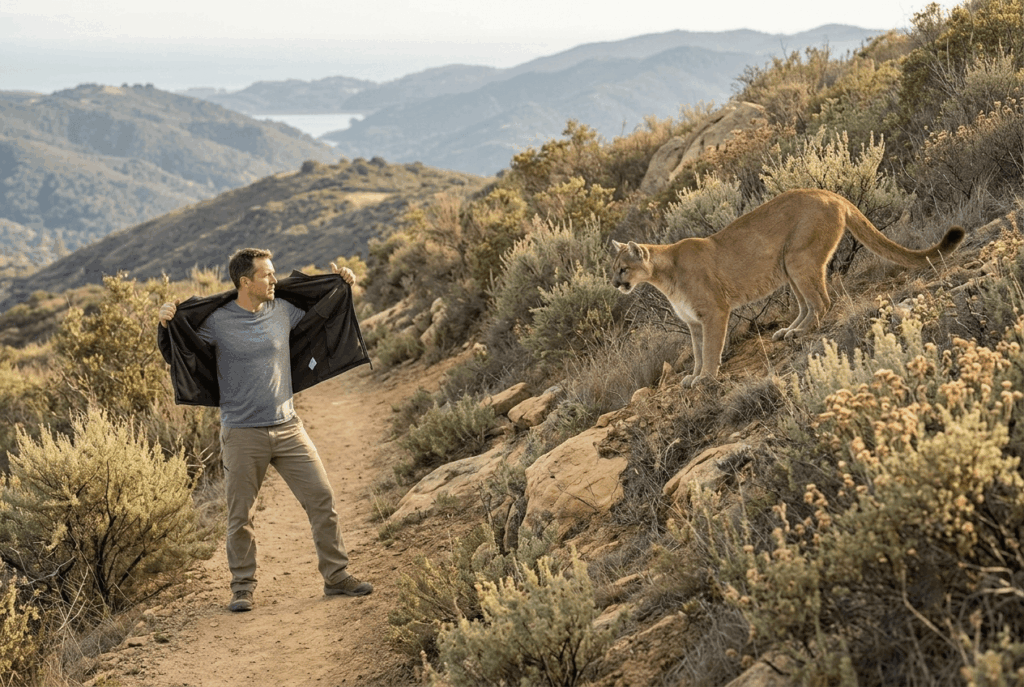
Do not run and do not crouch down, both can trigger a chase or pounce instinct. Face the animal, make yourself look as large as possible by raising your arms or a jacket, speak loudly and firmly, and back away slowly while maintaining eye contact.
CDFW guidance is direct on this point: if a mountain lion attacks, fight back. People have successfully fought off mountain lions using rocks, sticks, and even bare hands, since these cats don’t expect prey to resist.
Rattlesnakes on California Trails: Identification, Avoidance, and Bite Response
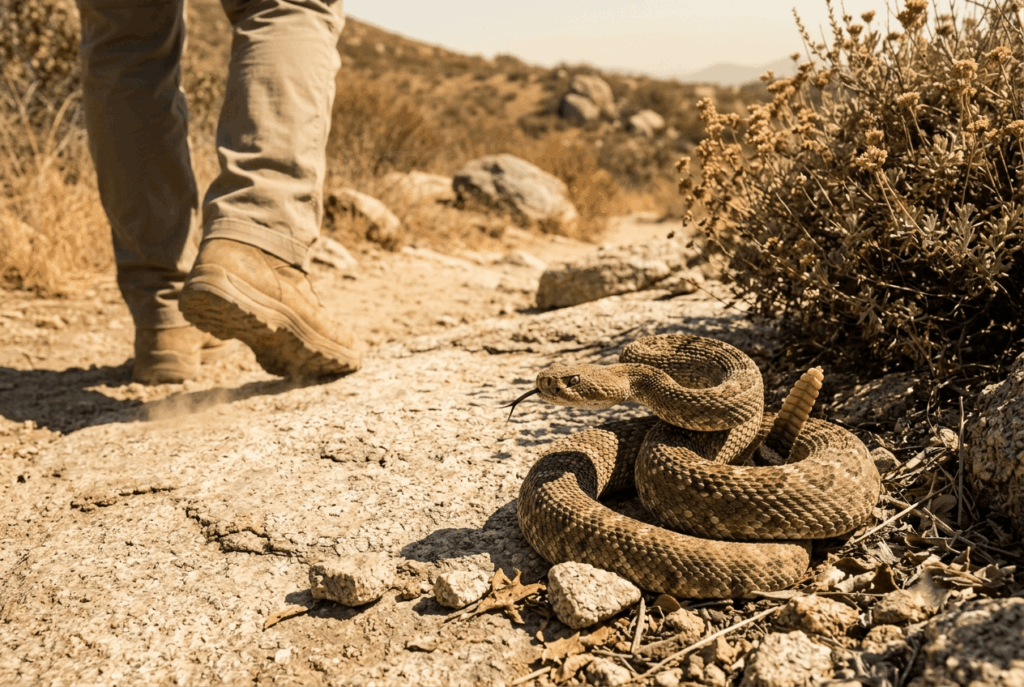
Rattlesnakes are the wildlife hazard I’d rank as the actual highest bite risk on California trails, not because they’re aggressive, but because they’re common, well-camouflaged, and easy to startle at close range. California is home to seven native rattlesnake species, and while identification matters less in the moment than avoidance does, all of them deliver a venomous bite that needs immediate medical attention.
When and Where Are Rattlesnakes Most Active on California Trails?
Spring and fall are peak activity seasons, when daytime temperatures sit in the range rattlesnakes prefer for basking on sun-warmed rocks and trail edges. In peak summer heat, they shift toward dawn and dusk activity instead, avoiding the hottest midday hours the same way smart hikers do.
My rule on any foothill or desert trail: watch where you place your hands and feet, especially near rock piles, logs, and trail-edge brush, and never step over a log or rock without looking at what’s on the other side first.
Rattlesnake Bite First Aid: What to Do (and What Not to Do) in California
If someone is bitten, keep them calm and still, remove any rings or tight clothing near the bite before swelling starts, and call 911 or get to a hospital immediately, antivenom is the only real treatment. Keep the bitten limb at or slightly below heart level if possible.
Do not cut the wound, do not attempt to suck out venom, and do not apply a tourniquet, all three are outdated myths that make outcomes worse, not better. The single correct action is getting the person to definitive medical care as fast as safely possible.
Ticks and Lyme Disease Risk on California Hiking Trails
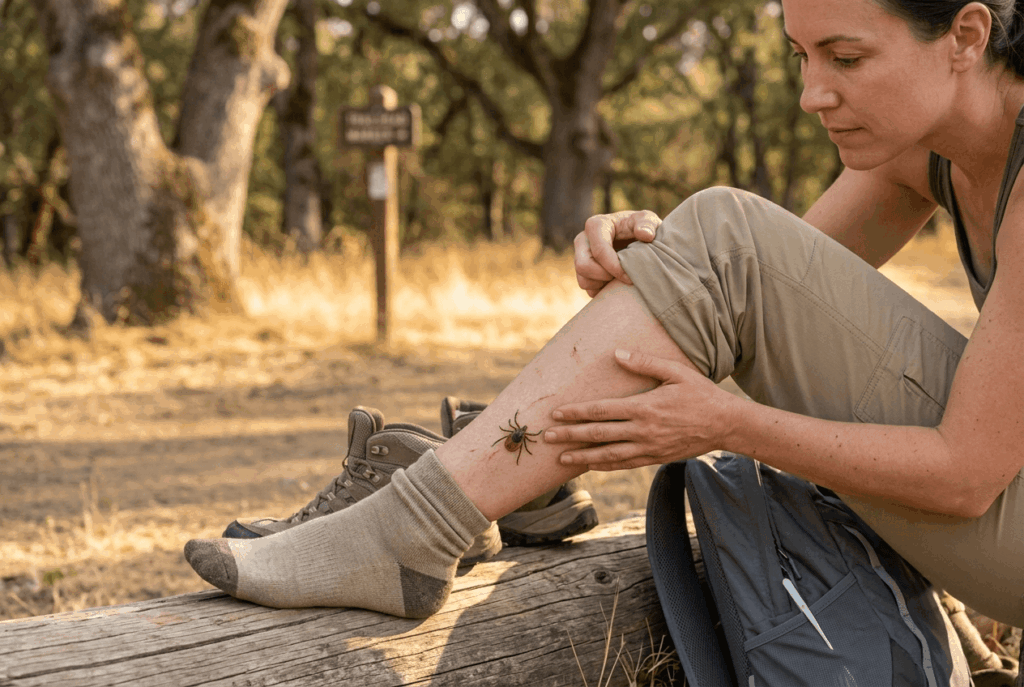
Ticks are, statistically, the wildlife hazard you’re most likely to actually encounter on a California trail, even though they get the least attention. The Western black-legged tick is the species that matters here, since it’s the one capable of transmitting Lyme disease, and it’s been documented in the vast majority of California’s fifty-eight counties.
Where in California Are Ticks Most Common on Hiking Trails?
The North Coast, the greater Bay Area, and the Sierra Nevada foothills carry the highest tick density in the state, particularly in shaded, moist brush and oak woodland. Mendocino County stands out specifically, infection rates in nymphal ticks there have been measured as high as 41% in some studies, well above the statewide average.
Southern California and desert trails carry meaningfully lower tick risk, though it’s never zero. Wherever you’re hiking, DEET or permethrin-treated clothing plus long pants tucked into socks cuts your exposure substantially.
How to Remove a Tick After a California Hike: Step-by-Step
Use fine-tipped tweezers, grip the tick as close to your skin as possible, and pull straight up with steady, even pressure, don’t twist, and don’t use a match, petroleum jelly, or nail polish, which are all outdated myths that can make things worse. Clean the bite site with soap and water or an antiseptic once the tick is out.
Watch the area for the next several weeks for an expanding rash or flu-like symptoms, and see a doctor if either appears; a tick generally needs to be attached for 24 hours or more to transmit Lyme disease, which is exactly why a same-day check matters so much.
Other Wildlife Hazards on California Trails: Coyotes, Wasps, and More
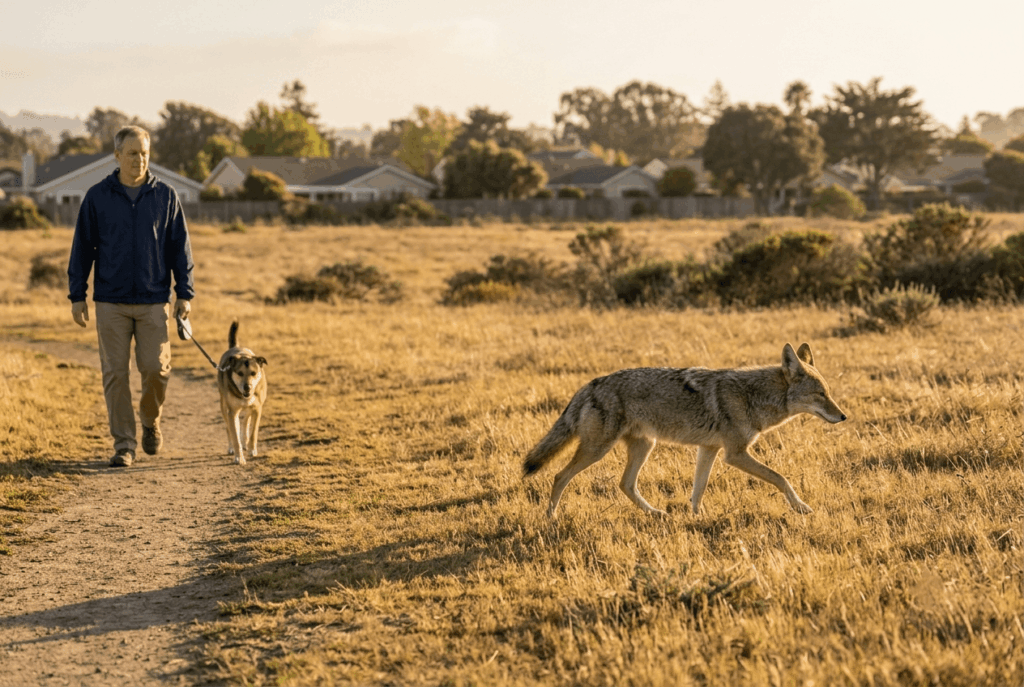
Coyotes are common on California trails, including urban-adjacent ones, but they’re generally shy around humans and rarely pose a direct threat unless food is involved, never feed one, and keep small dogs leashed. Wasp nests along trail edges are a real late-summer hazard; if you disturb one, move away quickly rather than swatting.
In Southern California’s deserts, watch where you place hands and feet around rock crevices for black widow spiders and scorpions, both of which deliver a painful but rarely dangerous sting or bite to a healthy adult.
Bears, mountain lions, rattlesnakes, and ticks all sound dramatic in the abstract, but the actual pattern is consistent: know the animal’s real behavior, don’t run, don’t feed it, and check yourself for ticks every single time. That’s most of the risk handled before you even leave the trailhead.
If you’re planning a trip around river crossings or afternoon storms instead of wildlife, I’ve covered those in the water hazards guide and the weather hazards guide. And if getting turned around on an unmarked junction worries you more than any animal does, the navigation hazards guide is worth a read before your next trip.
Frequently Asked Questions: Wildlife Hazards on California Trails
Are there bears on California hiking trails?
Yes, black bears are common in the Sierra Nevada, Sequoia–Kings Canyon, and the Tahoe basin, though attacks on hikers are rare. Most bear problems come from food storage mistakes, not aggressive encounters.
What should I do if I encounter a mountain lion while hiking in California?
Don’t run or crouch, face the animal, make yourself look large, speak firmly, and back away slowly. If it attacks, fight back with anything available; people have successfully fought off mountain lions before.
How common are rattlesnakes on California trails?
Rattlesnakes are common in foothill and desert terrain, especially around sun-warmed rocks in spring and fall. They’re the wildlife hazard most likely to actually bite a hiker, though bites are rarely fatal with prompt treatment.
Do I need bear spray when hiking in California?
It’s optional for day hikes in most areas, since California’s black bears are far less confrontational than grizzlies, but it’s a reasonable extra layer for backcountry camping in bear-dense zones like Yosemite’s high country. Check whether your specific permit area requires a canister regardless.
How do I check for ticks after hiking in California?
Check scalp, behind ears, armpits, waistband, and behind knees within a few hours of finishing your hike, since ticks generally need 24 hours attached to transmit Lyme disease. Shower soon after your hike, it helps wash off unattached ticks before they find a spot to bite.
What wildlife is most dangerous to hikers in California?
By actual incidence, rattlesnakes and ticks cause more real harm than bears or mountain lions, even though the big animals get more fear and attention. Statistically, you’re safer around a mountain lion than around an unnoticed tick.