Mental Health Benefits of Hiking: Why California Trails Reduce Stress & Anxiety
The mental health benefits of hiking aren’t just a feeling you get after a good trail day; they show up in measurable brain activity and stress hormone levels within minutes of stepping onto a trail. I’ve spent four-plus years cataloguing trails across California, and the pattern I notice constantly is that people describe the same mental shift after a hike, something also explored in various inspirational hiking literature and guidebooks: quieter thoughts, less edge, more room to breathe.
Disclosure: Please note that some of the links below are affiliate links and at no additional cost to you, I may earn a commission. Know that I only recommend hiking gear I personally stand behind; when you use my affiliate links, it helps me run this blog and keep all of this content free of charge for readers (like you).
That’s not a coincidence; it’s backed by real research out of Stanford and the University of Michigan, among others, and California’s range of landscapes happens to be an especially good lab for it. This guide walks through what the research actually shows and how to use California’s specific terrain to get the most out of it.
Key takeaways:
- A 2015 Stanford study found a 90-minute nature walk measurably reduced rumination and calmed the brain region linked to it, compared to an urban walk.
- Cortisol (your primary stress hormone) drops fastest in the first 20 to 30 minutes outdoors, according to University of Michigan research, meaning even a short hike counts.
- Hiking helps manage anxiety and low mood, but it’s a complement to therapy and medication, not a replacement for either.
- California’s varied biomes, redwood forest, coastline, and alpine each stimulate a slightly different restorative response.
- Both solo and group hiking offer real, distinct mental health benefits; neither is objectively “better.”
Why nature and hiking have a measurable impact on mental health
This isn’t just a “nature is nice” claim; it’s one of the more well-studied areas in environmental psychology, and hiking sits at the intersection of two things researchers already know help mental health independently: moderate exercise and time in nature. Some of this traces back to the biophilia hypothesis, the idea that humans have an innate, evolved pull toward the natural world, but the more useful evidence for a hiker is the newer research measuring what nature exposure actually does to stress hormones and brain activity in real time.
The science behind nature’s effect on the brain: key research findings
In 2015, Stanford researcher Gregory Bratman and colleagues had participants take a 90-minute walk either in a natural setting or an urban one, then measured brain activity. The nature-walk group showed reduced activity in the subgenual prefrontal cortex, the region tied to rumination, the looping negative self-talk associated with anxiety and depression risk, while the urban-walk group showed no such change. That’s a real, physical difference, not just a mood self-report.
Why California’s diverse landscapes amplify mental health benefits
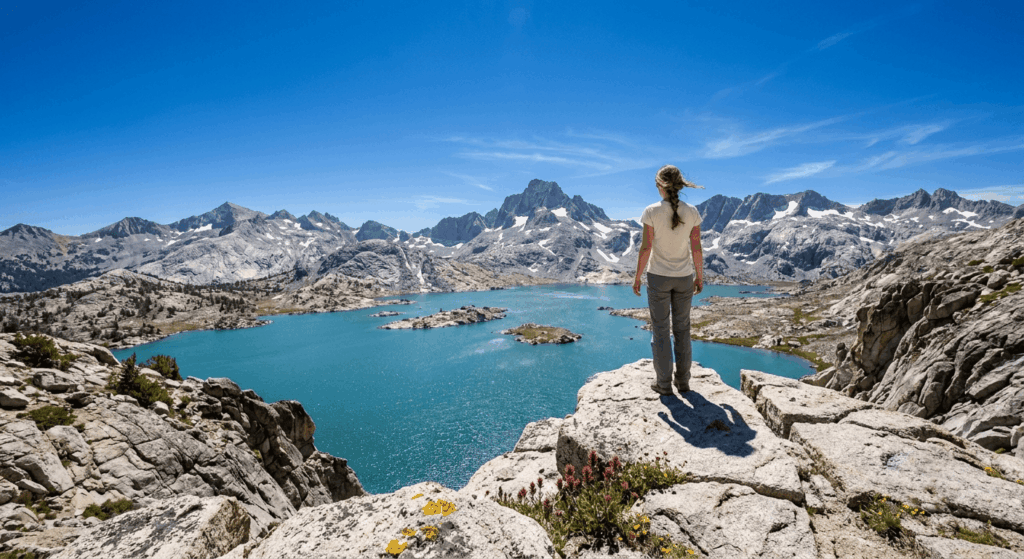
Different environments seem to drive different restorative effects, and California happens to offer nearly all of them within a few hours’ drive of most residents. Matching the landscape to what you actually need from a hike, calm, awe, or quiet is worth as much thought as picking the mileage:
| California landscape | What it stimulates | Backed by |
|---|---|---|
| Redwood and forest trails | Phytoncides, filtered light, quiet | Shinrin-yoku (forest bathing) research |
| Coastal trails | Rhythmic wave sound, open horizon | “Blue space” research on water and calm |
| High-Sierra alpine trails | Scale, vastness, awe | Awe research linking vast views to reduced self-focus |
None of these is objectively “best”; a stressful week might call for a quiet redwood loop, while a stuck, ruminating mood might respond better to the scale of an alpine view.
Stress reduction: how hiking lowers cortisol and calms the nervous system
What happens to your stress hormones during a California hike?
University of Michigan research found that cortisol drops fastest in the first 20 to 30 minutes of a “nature experience,” with the sharpest decline happening in that initial window before the rate of improvement slows. For a broader look at getting your mind and body ready for the trail, you can review this guide on how to prepare physically and mentally for hiking.
In practice, that means you don’t need a 10-mile day to get a real stress-hormone benefit; a short, unhurried trail walk in the first half hour is doing real physiological work. Alongside the cortisol drop, moderate outdoor exercise shifts your nervous system out of the sympathetic “fight or flight” state and toward the parasympathetic state associated with rest and digestion, which is part of why a hike’s calm tends to linger well after you’re back at the trailhead.
How forest bathing on California’s redwood and forest trails reduces stress
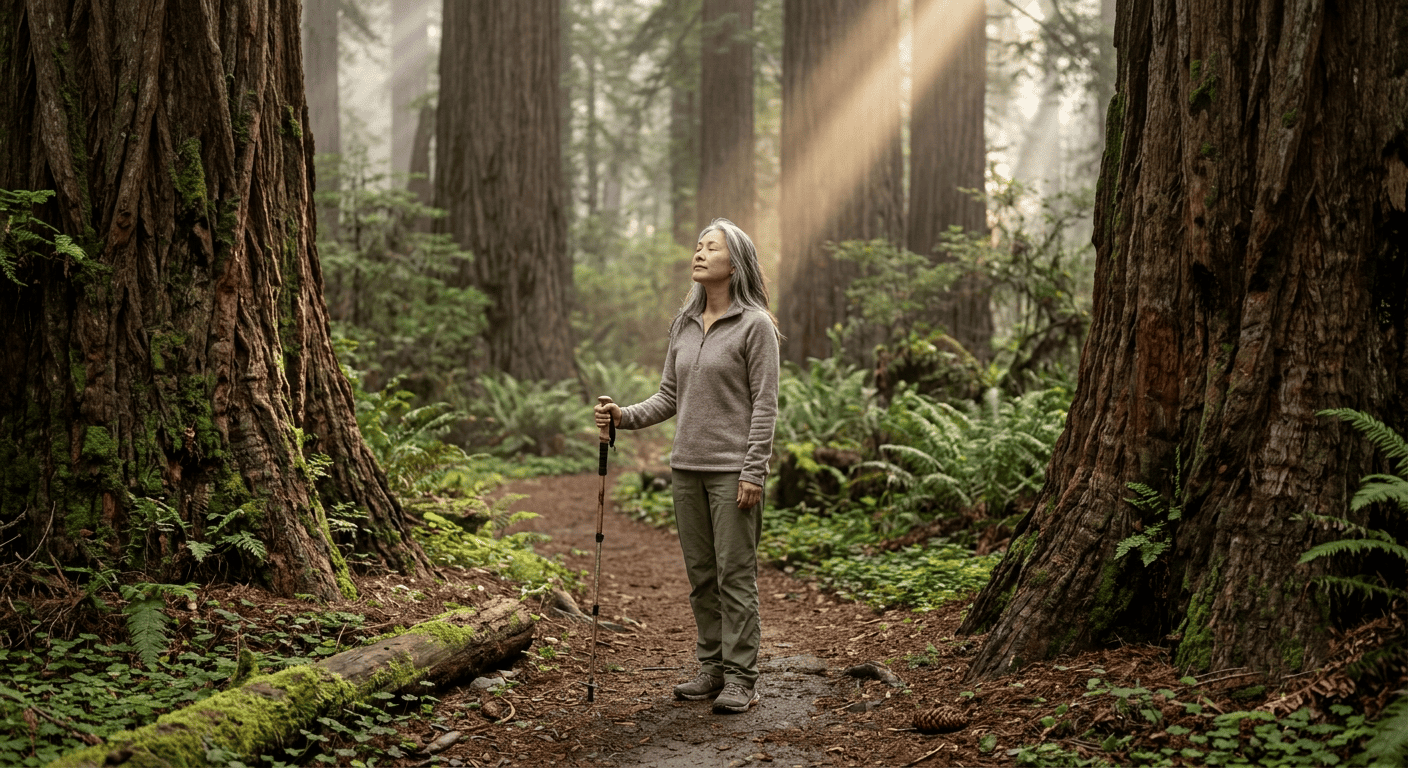
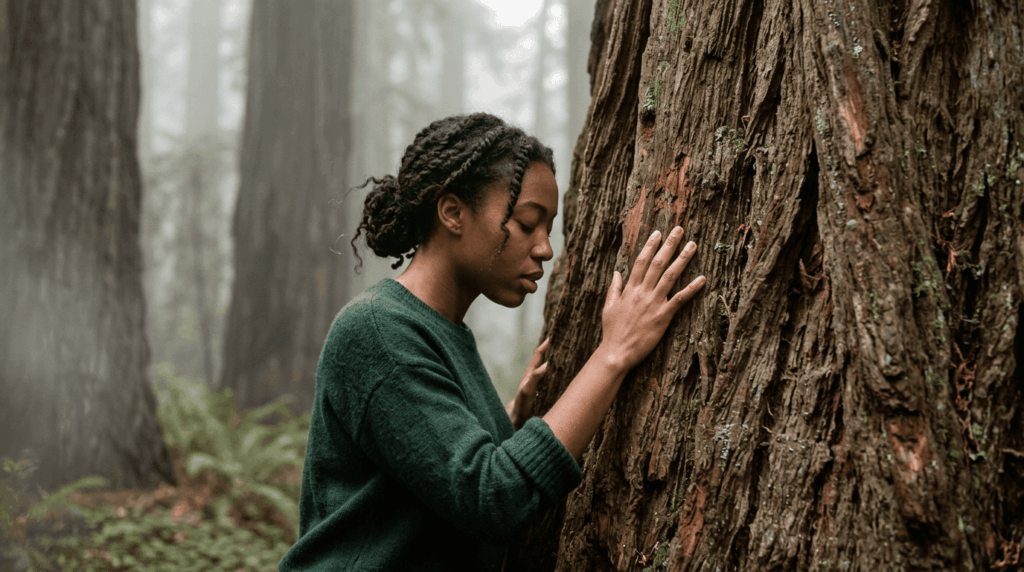
Shinrin-yoku, or forest bathing, started as a public health practice in Japan in the 1980s and has since built a real research base: trees release airborne compounds called phytoncides, and time spent breathing them in has been linked to lower cortisol and blood pressure in Japanese studies. You don’t need a formal practice to get the benefit; walking slowly and unplugged through a redwood grove like Muir Woods or Humboldt Redwoods is functionally the same thing.
Anxiety and depression: how hiking helps manage symptoms
How hiking interrupts anxiety and rumination cycles
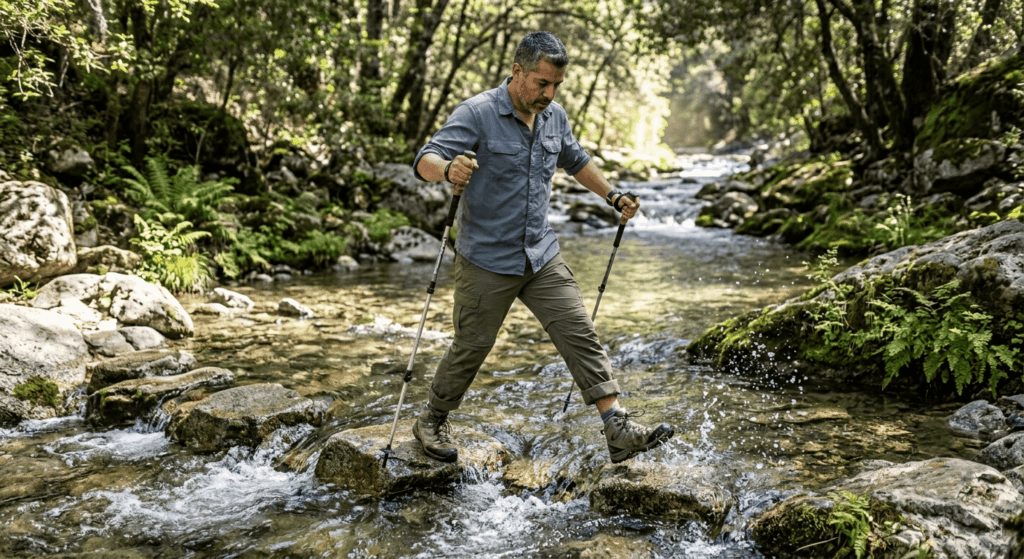
Anxious thought loops tend to run on a brain circuit called the default mode network, the same system active when your mind wanders and self-referential worry takes over. Hiking pulls your attention onto the trail itself: footing, junctions, the next switchback, which activates a task-focused mode of attention that competes with that network for the same mental bandwidth rumination usually claims. That’s part of why a hike can feel like relief even when nothing about the underlying stressor has changed: you’re not suppressing the worry so much as occupying the circuit it runs on. Endorphin release from the physical exertion adds a separate, more familiar mood lift on top.
Trail hiking as a complement to therapy and depression treatment
Exercise, including hiking, has real evidence behind it as a mood booster, and outdoor exercise adds nature’s separate benefits on top. That said, hiking is a complement to professional care, not a substitute for it. If you’re managing diagnosed anxiety or depression, or considering hiking in place of therapy or medication, talk to your doctor or therapist first. The two work well together; one isn’t a replacement for the other.
Mindfulness, focus, and cognitive restoration on California trails
Why hiking in nature restores mental focus better than urban walks
Psychologists Rachel and Stephen Kaplan’s attention restoration theory holds that focused, effortful attention, the kind city environments demand constantly, from traffic to notifications to sidewalk navigation, gets fatigued over the course of a day, while natural environments draw what they called “soft fascination”: interest that requires no effort and lets that fatigue recover. A trail’s shifting terrain, light, and sound give your attention somewhere to rest without asking anything of it, which is a fundamentally different kind of engagement than an urban walk past storefronts and traffic still competing for your focus.
Creative thinking and problem solving after a California trail hike
Here’s the honest nuance: a well-known Stanford study found walking itself boosts divergent, creative thinking by roughly 60% compared to sitting, and the effect showed up indoors on a treadmill almost as strongly as outdoors. So a hike’s creativity boost is partly just “you’re walking,” stacked on top of nature’s separate calming effects. Either way, if you’re stuck on a problem, trail time is a legitimately evidence-backed move.
Social connection and loneliness: hiking as community building
How group hiking on California trails builds genuine social bonds
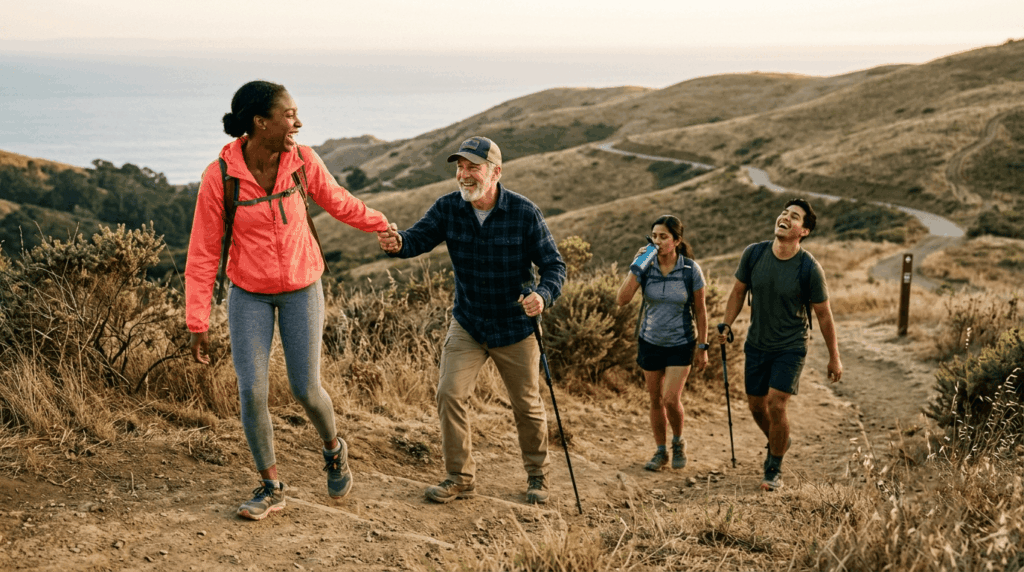
Shared physical effort tends to build trust faster than sitting and talking does; it’s a big part of why hiking clubs and group meetups are so common across California, from the Sierra Club’s long-running local outings program to casual weekend meetups and county park programs. The shared discomfort of a climb, the built-in conversation gaps on switchbacks, and the shared payoff at a viewpoint all do social-bonding work that’s harder to replicate sitting across a table. If you’re looking for a group, “hiking groups near me” and “hiking club near me” are both well-searched, well-served terms with active local results almost anywhere in the state.
Solo hiking for mental clarity: why being alone on a trail is therapeutic
| Solo hiking | Group hiking | |
|---|---|---|
| Works best for | Self-reflection, decompression, autonomy | Connection, accountability, shared experience |
| Primary benefit | Full attentional rest, no social effort | Bonding, motivation, safety in numbers |
| Consideration | Tell someone your plan; skip primitive trails alone if inexperienced | Match pace and goals with the group beforehand |
Neither is “better” for mental health; they serve different needs, and plenty of hikers benefit from rotating between both. If solo hiking is new to you, our hiking safety guide covers the float-plan and preparation basics worth doing before you go alone.
Sleep, energy, and emotional resilience gains from regular trail hiking
How regular hiking on California trails builds long-term emotional resilience
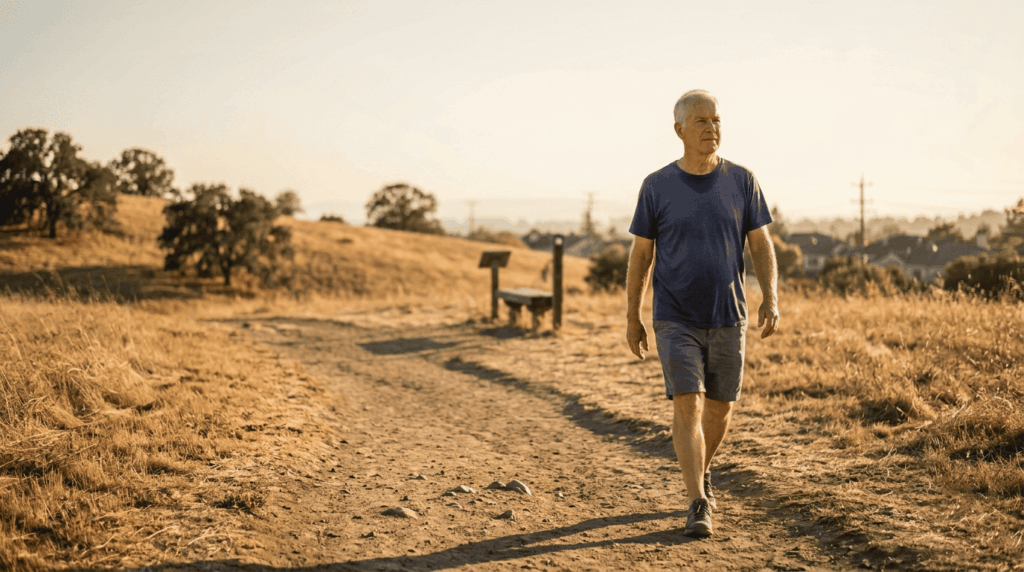
The mental health benefits of a single hike are real but temporary; the bigger gains come from repetition. Regular time on trail is associated with better sleep quality, partly from the physical exertion itself, and partly from daylight exposure helping regulate your circadian rhythm, along with steadier energy and what researchers call stress inoculation: repeated, manageable stress (like a climb) building your capacity to handle unrelated stress later. I’d rather see someone hike a short local loop most weeks than save it all for one big trip a year; consistency seems to matter more than any single hike’s intensity or distance.
If you’re new to building a regular habit, our beginner’s guide to hiking trails is a good starting point, and matching a trail’s difficulty to your actual fitness keeps a hike restorative instead of one more source of stress.
None of this requires a big production. The research keeps pointing to the same modest, repeatable formula: get outside, keep it unhurried, and do it more often than once a year.
Frequently asked questions: mental health benefits of hiking
Is hiking good for anxiety and depression?
Yes, evidence supports hiking as a genuine mood and stress benefit, but it works best alongside professional treatment, not instead of it, for diagnosed conditions.
How long should I hike to improve my mental health?
Research points to real stress-hormone benefits starting in the first 20–30 minutes outdoors, so even a short hike counts; longer or more frequent hikes build on that.
Is solo hiking or group hiking better for mental health?
Neither is universally better; solo hiking offers attentional rest and reflection, group hiking offers connection and accountability, and many hikers benefit from both.
Does hiking in California’s national parks have extra mental health benefits?
The scale and biodiversity of parks like Yosemite or Redwood National and State Parks can amplify awe and restorative effects, but any real nature exposure, even a local trail, produces measurable benefits.
Can hiking help with burnout and workplace stress?
Yes; regular nature breaks are linked to lower cortisol and better attentional recovery, both of which are directly relevant to burnout.
What is forest bathing and how does it work?
Forest bathing (Shinrin-yoku) means slow, unhurried, unplugged time in a forest; research links it to lower cortisol and blood pressure, likely tied in part to airborne compounds trees release called phytoncides.