How to Train for a Difficult California Hike Like Half Dome or Mount Whitney
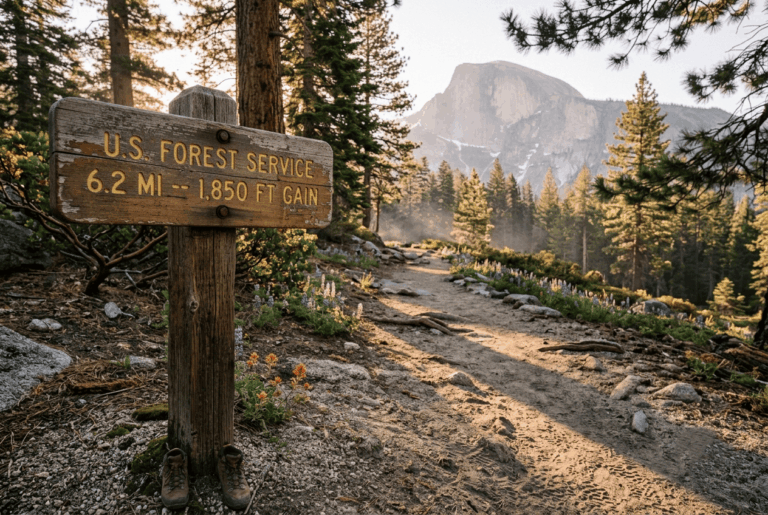
Every year I hear some version of the same story: someone secures a Half Dome permit or wins the Mount Whitney lottery, feels great about it for about a week, and then realizes they have three months to learn how to train for a Difficult Hike and get their body ready for 4,800 or 6,100 feet of elevation gain in a single day. The good news is that’s plenty of time, if you use it correctly. I’ve written before about how difficulty is actually calculated on a trail: elevation gain, terrain, and altitude stacking on top of distance, and both of these trails sit near the top of that scale for a reason.
Disclosure: Please note that some of the links below are affiliate links and at no additional cost to you, I may earn a commission. Know that I only recommend hiking gear I personally stand behind; when you use my affiliate links, it helps me run this blog and keep all of this content free of charge for readers (like you).
This guide is the training plan I wish more people had before attempting either one, or anything else in that same range.
Key takeaways before we dive in:
- 8–12 weeks is a realistic training runway for a hike on the scale of Half Dome or Mount Whitney, starting from a moderate general fitness baseline.
- Elevation gain is trainable even at sea level; stairs and hills substitute reasonably well for mountain climbing.
- Fitness alone doesn’t substitute for altitude acclimatization; they’re separate physiological demands, and both matter.
- The most common training mistake isn’t undertraining; it’s ramping up too fast and getting injured before the hike.
Building a Training Timeline
How Many Weeks Out to Start Training
For someone starting from a moderate general fitness baseline, you exercise somewhat regularly but don’t currently hike anything close to 4,000+ feet of gain, 8 to 12 weeks is a realistic, honest runway for a trail on the scale of Half Dome or Mount Whitney.
Less than that and you’re relying heavily on raw willpower on the day; more than that and you risk losing motivation before you even get there, or peaking too early and losing fitness in the final weeks before your permit date.
If you’re the kind of hiker chasing trails like these specifically, our peak bagging guide covers the broader category of summit-focused hikes this training approach applies to; the timeline below works just as well for a lesser-known Sierra summit as it does for the two most famous ones.
Worth timing against the real world here too: Half Dome’s preseason permit lottery runs in March for the whole hiking season, and Mount Whitney’s lottery runs February 1 through March 1 with results out by mid-March. For full details on the application process, check out our Yosemite reservation and permit guidelines.
If you find out in mid-March that you’re hiking in early June, that’s roughly 10-12 weeks, right in the sweet spot this timeline assumes, and honestly a big part of why this training window works so cleanly for both trails. The NPS Half Dome permits page has the current lottery dates if you’re planning around this.
A Sample Weekly Training Structure
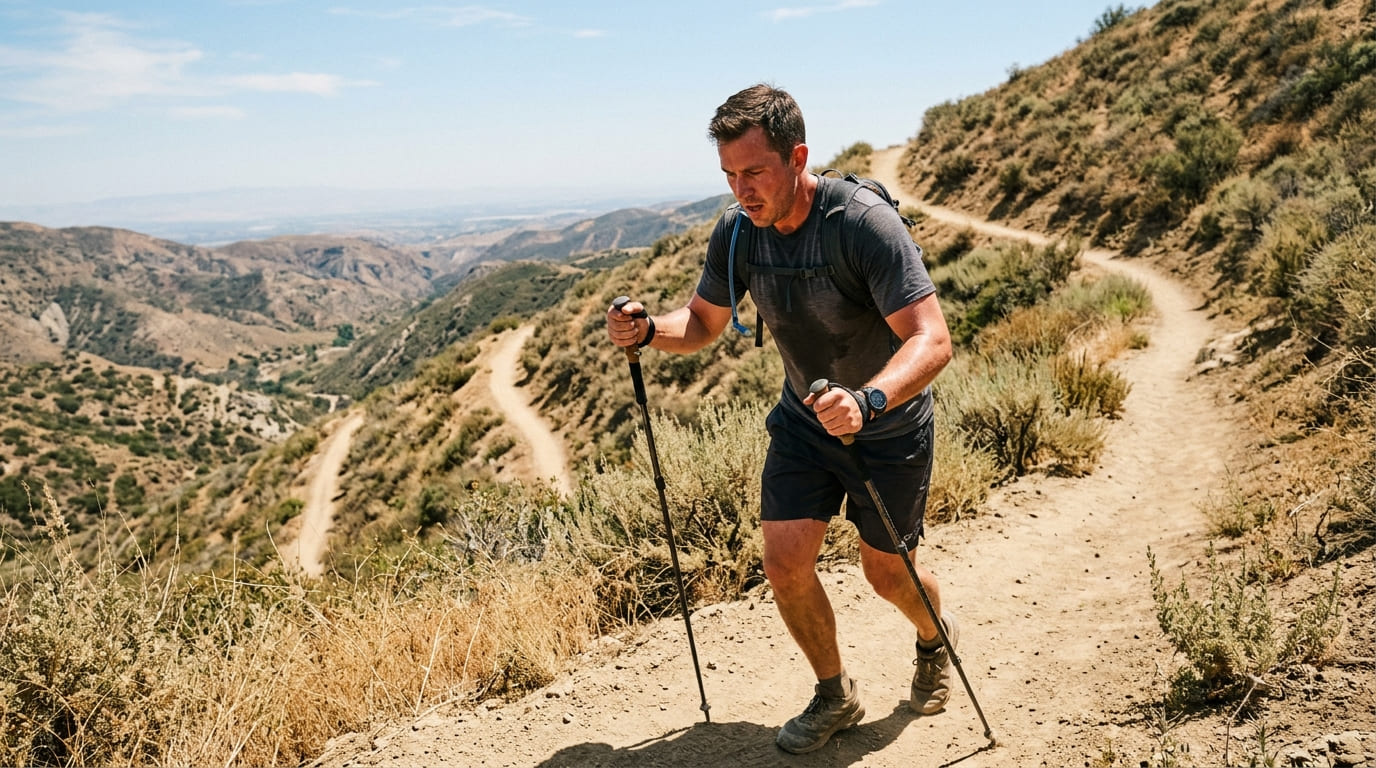
The framework that works for most people: two to three shorter conditioning hikes or cardio sessions per week (45–90 minutes, moderate effort), plus one longer, harder “training hike” each week that’s deliberately uncomfortable.
That longer hike should progressively build toward your target trail’s distance and elevation profile, not the full distance immediately, but climbing steadily closer to it over the weeks.
A rough shape for a 10-week block: weeks 1-3 focus on consistency and base building at moderate distances, weeks 4-7 progressively stack on distance and elevation gain toward roughly 70-80% of your target trail’s numbers, and the final two to three weeks taper down significantly rather than cramming in one more hard effort right before the trail.
That taper matters more than people expect; showing up tired from your own training is a common and entirely avoidable way to underperform on the day.
Elevation and Altitude-Specific Training
Training for Elevation Gain When You Live at Sea Level
Not having easy access to real mountain elevation gain isn’t the obstacle people assume it is. Stair climbing, stadium repeats, and repeated hill sessions are effective substitutes; they load the same muscle groups (quads, glutes, calves) through the same range of motion as sustained mountain climbing, even if the view is a lot less interesting.
If you can get to a stadium, tall parking structure, or steep local hill and repeat it for 30-45 minutes with a pack on, you’re building real climbing-specific fitness, and a stair machine at a gym works reasonably well too if that’s all you have access to.
What these substitutes don’t replicate is the sheer duration; a single mountain descent can last hours and hammer your quads through eccentric loading in a way that 45 minutes of repeats doesn’t, so build in at least a few long training days even if the elevation gain is modest, purely to prepare your legs for hours of continuous descent.

Altitude Acclimatization Strategies
This is the piece that fitness alone can’t replace, and it’s the mistake I see most often in strong, well-trained hikers who still get hit hard by altitude.
Acute acclimatization to a given altitude takes your body 3–5 days, according to CDC guidance on high-altitude travel, and spending 2–3 nights around 8,000–9,000 feet before pushing higher is protective against acute mountain sickness.
Mount Whitney’s summit sits at 14,505 feet; Mount Langley, covered in our guide to high-elevation hiking in the Sierra Nevada, reaches 14,032 feet.
Neither cares how many stadium stairs you’ve climbed; a fit hiker with zero altitude exposure can still get seriously ill above 10,000 feet, while someone less fit but properly acclimatized often does better.
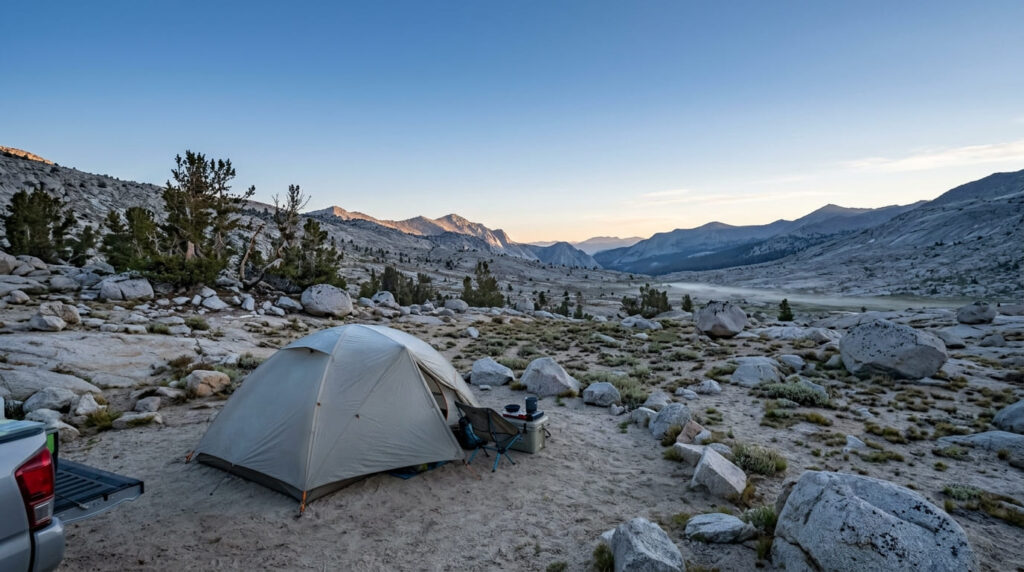
If your schedule allows it, spending a night or two car camping at elevation in the days before your attempt is one of the highest-value things you can do that has nothing to do with your gym routine.
Building Load-Bearing Endurance
Training with a Weighted Pack
An unloaded day hike and a loaded multi-day trek are different physical demands, and this matters enormously if your target is something like our John Muir Trail planning guide rather than a single-day push.
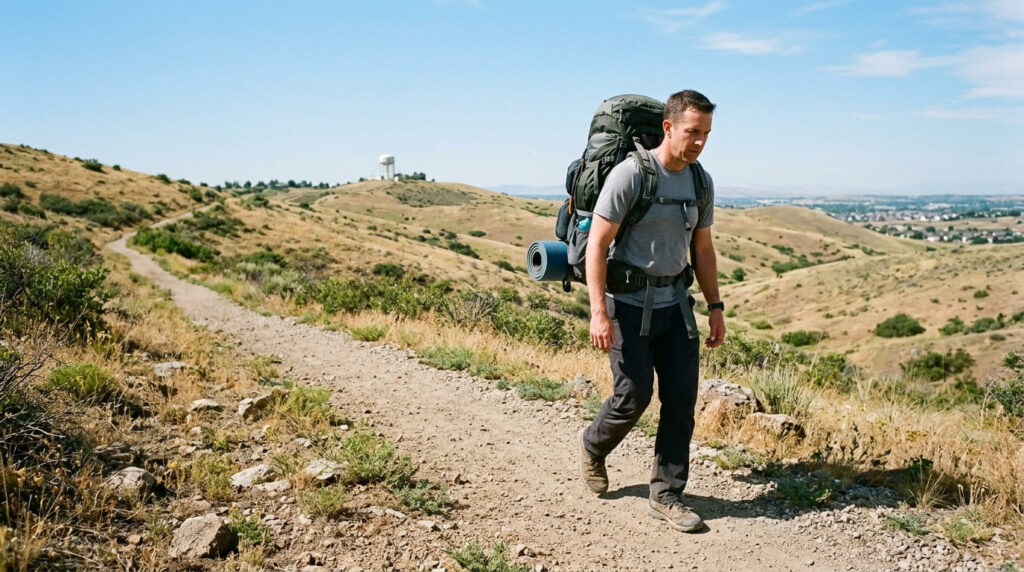
The general progression that holds up across rucking and military load-carriage research: start around 10% of your body weight, and build toward 15–20% over 8–12 weeks as your joints and connective tissue adapt; those adapt more slowly than your cardiovascular fitness does, which is exactly why rushing this part causes more injuries than rushing anything else in a training plan.
Whether you are building your own training kit or shopping for outdoor gift ideas for men, remember that a poorly fitted pack makes all of this worse regardless of how sensible your weight progression is; a pack that sits too low or swings around concentrates stress on your shoulders and lower back in ways a properly fitted one with a real hip belt doesn’t, so don’t skip getting the fit checked before you start loading it up.
Change one variable at a time. If you’re adding weight this week, don’t also add distance; alternate which one you’re pushing, and back off both if you notice sharp pain, poor sleep, or your form breaking down on the later miles of a session. That’s your body flagging that the current load is outpacing what your tissue can currently handle, not a sign to push through.
Common Training Mistakes
Ramping Up Mileage Too Fast
This is the single most common way a training plan gets derailed, and it usually isn’t from a single bad decision; it’s a string of small ones that compound.
Rather than chasing a fixed weekly percentage increase, the more defensible principle is to keep your single longest hike within roughly 30% of your recent maximum; a much bigger jump than that is where injury risk climbs sharply, according to sports-science research on training-load spikes.
Strength training two sessions a week is one of the more evidence-backed tools for preventing overuse injuries in endurance athletes generally, and it’s worth adding to a hiking training plan even though it doesn’t look like hiking at all; stronger connective tissue and stabilizing muscles handle the repetitive pounding of a long descent noticeably better than cardio fitness alone provides.
If a niggling pain changes your gait, lingers past the first mile, or gets worse as a hike goes on, that’s a stop signal worth listening to.
One skipped training hike has never derailed a plan, but pushing through a developing injury regularly does, and it’s the single most common reason I hear about someone showing up to their permit date injured rather than simply undertrained.
The honest bottom line: 8-12 weeks of consistent, progressively harder training with real elevation gain, a properly built-up pack weight if you’re going multi-day, and an altitude plan will put you in a completely different position than showing up undertrained. None of it needs to be complicated; it just needs to happen on the calendar, not just in your head.
Frequently asked questions about training for a difficult California hike
How to train for hiking the Appalachian Trail?
The same core principles apply regardless of which trail you’re targeting: build a progressive weekly mileage base, include a weighted pack if you’re backpacking rather than day-hiking, and give yourself 8-12+ weeks depending on your starting fitness. The Appalachian Trail’s specific demand is sustained daily mileage over months rather than a single hard day, so endurance consistency matters more there than peak single-day effort.
Do you need to train for Half Dome?
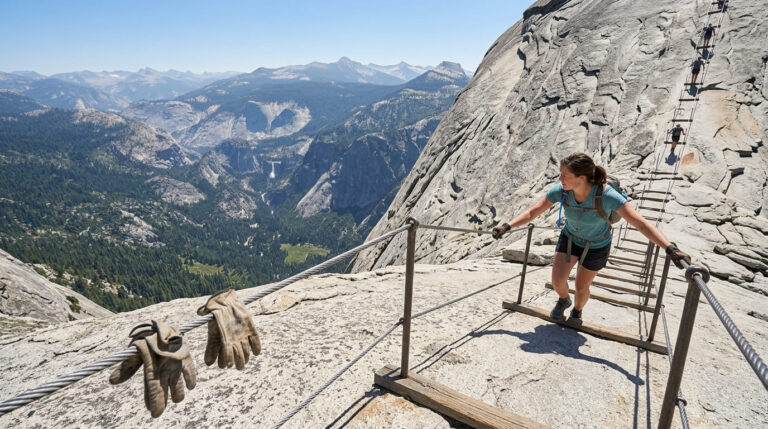
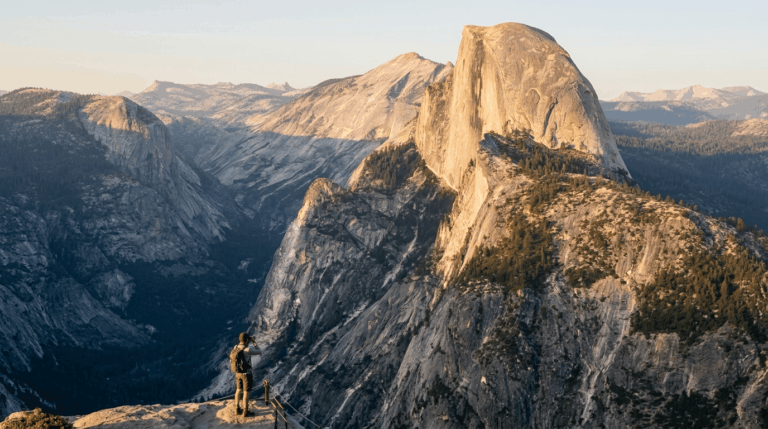
If you’re not already regularly hiking 8+ miles with several thousand feet of elevation gain, yes. Half Dome’s roughly 14-16 miles round trip with about 4,800 feet of gain, plus the exposed cable section near the summit, is a serious undertaking that regularly catches undertrained hikers off guard; it’s not a casual add-on to a Yosemite trip.
How fit do you need to be for Mount Whitney?
Fit enough to comfortably complete a 15+ mile day with significant elevation gain before you even attempt it. Whitney is roughly 22 miles round trip with about 6,100 feet of gain, at altitude the entire way. Most people who struggle on Whitney aren’t undertrained in the gym sense; they’re undertrained specifically on long days on their feet.
Can you train for altitude without visiting a mountain?
Not really, not physiologically; actual acclimatization requires time at altitude, and there’s no substitute training method that replicates it. What you can do without a mountain nearby is build the cardiovascular and muscular fitness that makes the *non-altitude* parts of the hike easier, which leaves more of your capacity available to handle the altitude itself when you get there.
Is running a good substitute for hike training?
It’s a solid complement for cardiovascular fitness, but not a full substitute. Running builds aerobic capacity efficiently, but it doesn’t replicate the specific demands of sustained downhill impact, uneven terrain, or carrying pack weight over hours, all of which are different from flat road running and worth training separately.
What should you eat while training for a big hike?
Nothing exotic, consistent, adequate calories to support the training load, with enough protein to support the muscle and connective-tissue adaptation you’re asking for. On your longer training hikes specifically, practice eating and drinking the way you plan to on the trail, since race day is the wrong time to discover a food doesn’t sit well with you at altitude or exertion.