Social & Community Impact of Hiking Trails Across California
Hiking trails in California do a lot more than get people outside, they anchor small-town economies, get maintained by thousands of unpaid volunteer hours, and sit at the center of a real, ongoing conversation about who actually has access to the outdoors. I’ve spent four-plus years cataloging trails across this state, and the community impact of hiking trails is easy to miss if you only think about mileage and views. This is the part of the trail system you don’t see from the trailhead: the economics that keep a mountain town running through the off-season, the volunteer crew that rebuilt the switchback you walked past, and the access gap that decides whether a kid two towns over ever sees a trail at all.
Disclosure: Please note that some of the links below are affiliate links and at no additional cost to you, I may earn a commission. Know that I only recommend hiking gear I personally stand behind; when you use my affiliate links, it helps me run this blog and keep all of this content free of charge for readers (like you).
Key takeaways:
- California’s outdoor recreation economy generated $81.5 billion in 2023, the largest of any state, according to the U.S. Bureau of Economic Analysis.
- Small trail towns like Bishop, Mammoth Lakes, and Idyllwild depend heavily on hiking tourism for local business revenue.
- Trails are maintained largely by volunteers, through groups like the California Conservation Corps, Sierra Club trail crews, and the NPS Volunteers-In-Parks program.
- Outdoor access isn’t distributed evenly across California communities, which is exactly what organizations like Latino Outdoors and Outdoor Afro, both with deep California roots, were built to address.
- Research links park proximity directly to physical activity and better health outcomes, with the effect strongest in underserved communities.
How hiking trails drive economic growth in California’s trail towns
How much does hiking tourism contribute to California’s economy each year?
In 2023, California’s outdoor recreation economy generated $81.5 billion in value added, more than any other state, according to the U.S. Bureau of Economic Analysis’s Outdoor Recreation Satellite Account. That figure covers all outdoor recreation, not hiking alone, since there’s no separate hiking-only breakout in the federal data, but hiking and trail-based tourism are a meaningful share of it, especially in mountain and coastal counties where trips, travel, lodging, and gear spending make up the bulk of the economic activity. A single popular trailhead can support a disproportionate number of local jobs, gear shops, cafes, shuttle drivers, and short-term rentals, relative to the size of the town around it.
Trail towns: how small California communities benefit from trail access
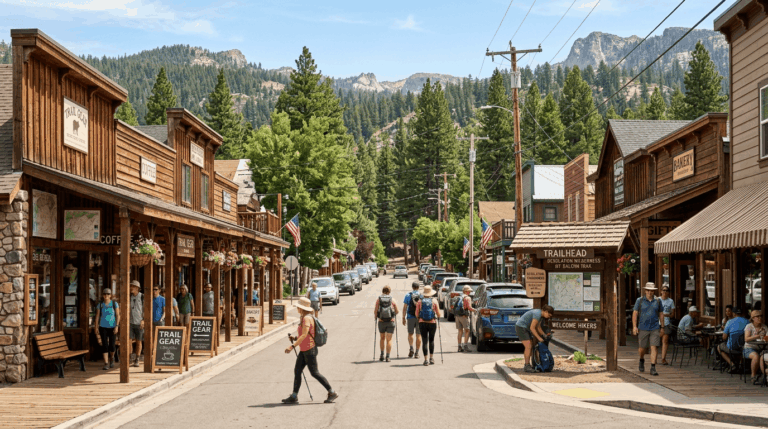
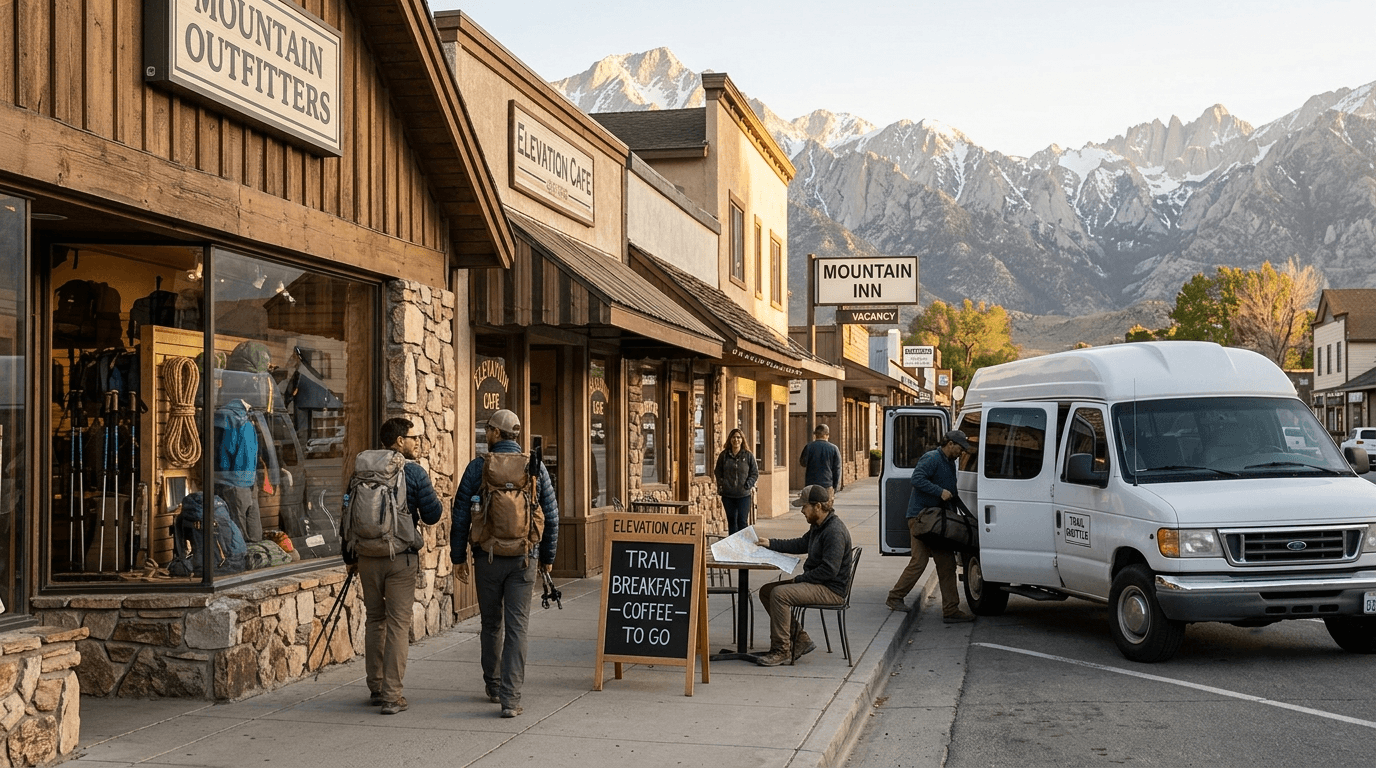
A trail town is a small community whose local economy leans heavily on hikers passing through, lodging, gear shops, restaurants, and shuttle services built around trail access rather than any other industry. Unlike a big-park gateway town with year-round infrastructure, most California trail towns run on a tighter seasonal cycle tied directly to snowmelt, fire season, and permit windows.
| Trail town | Region | Primary trail draw |
|---|---|---|
| Bishop | Eastern Sierra | Gateway to the John Muir Wilderness and Sierra backcountry |
| Lone Pine | Eastern Sierra | Base camp for Mount Whitney |
| Mammoth Lakes | Eastern Sierra | Alpine day hikes and trail-adjacent tourism year-round |
| Idyllwild | San Jacinto Mountains | PCT resupply town and San Jacinto access |
| Julian | San Diego County | Volcan Mountain and historic mountain-town tourism |
Lose the hikers passing through, and these towns lose their primary reason for existing as a destination for outside visitors, which is part of why trail funding, permit policy, and access decisions matter well beyond the trail corridor itself. Search behavior backs this up directly: “Mammoth Lakes hiking trails” and “Idyllwild hiking trails” are both searched thousands of times a month, right alongside the same towns’ lodging and dining queries, proof that for these communities, trail interest and tourism interest are effectively the same search.
Environmental stewardship: how trail communities protect California’s wilderness
How do California’s hiking trails impact the environment?
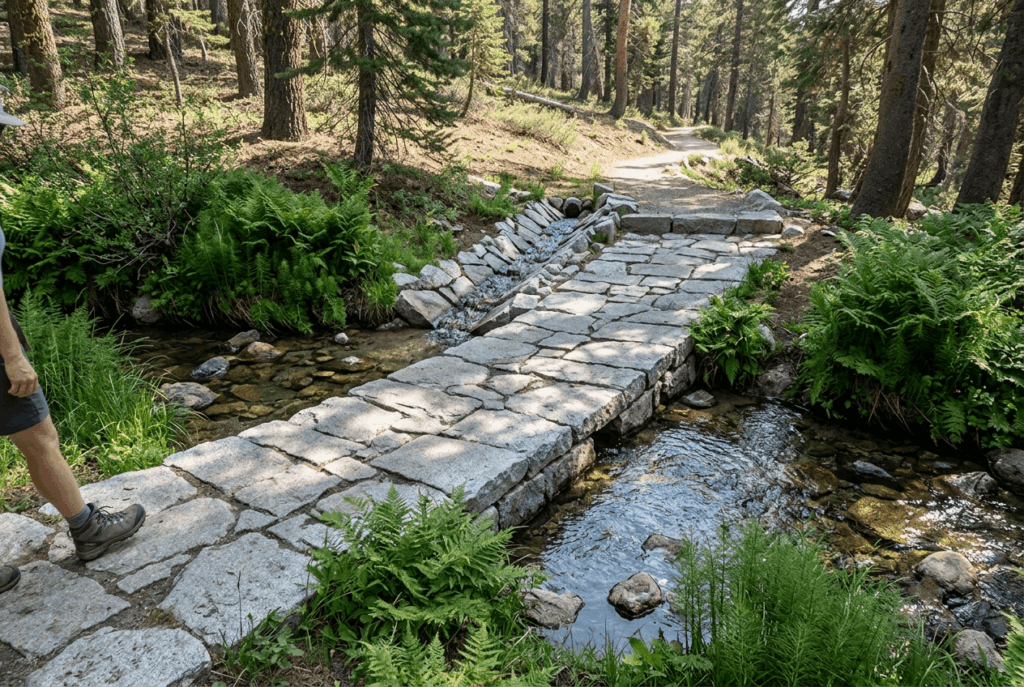
Trails aren’t environmentally neutral, a maintained path still means compacted soil, altered water flow, and a permanent human corridor through wildlife habitat. The honest framing is that trails concentrate impact rather than eliminate it: a single well-built, well-signed trail channels foot traffic into one erosion-managed corridor instead of hikers wandering cross-country and trampling a much wider area or braiding new social trails around obstacles. That’s why trail design (contour routing, proper drainage, hardened stream crossings) and Leave No Trace practices at scale matter as much as whether a trail exists at all, a poorly built trail can do more ecological damage than no trail, while a well-built one can actually reduce the footprint of the same visitor volume.
California’s trail volunteer organizations: who maintains your trails
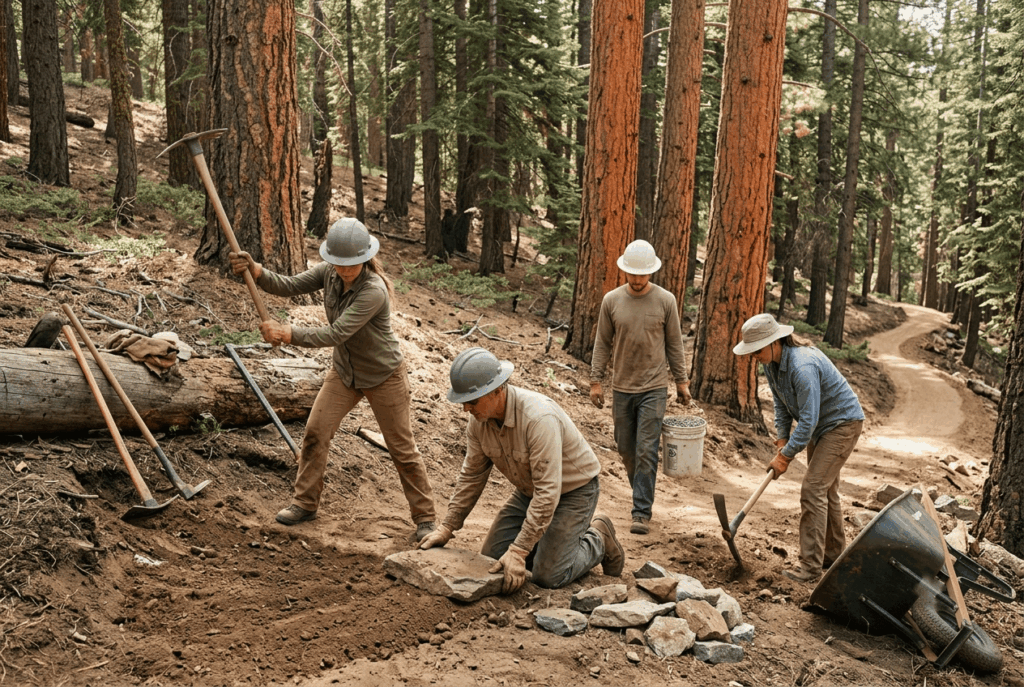
Almost no trail in California stays usable without volunteer labor. The California Conservation Corps puts young adults to work on trail crews statewide as paid conservation service, combining job training with real trail-building output. Sierra Club chapters run some of the most active volunteer trail-maintenance crews in the state, organizing weekend work parties that handle everything from brush clearing to full reroutes, alongside REI’s community grants that fund local trail days and gear donations for volunteer groups. On federal land, the NPS Volunteers-In-Parks (VIP) program is the formal structure behind much of the trail work you’ll see happening in national parks, coordinating everything from single-day cleanups to multi-week backcountry crews. If a trail feels well maintained, a volunteer crew, not a paid contractor, is almost certainly why.
Social equity and trail access: who gets to hike in California?
Urban trail access in California: closing the green space gap
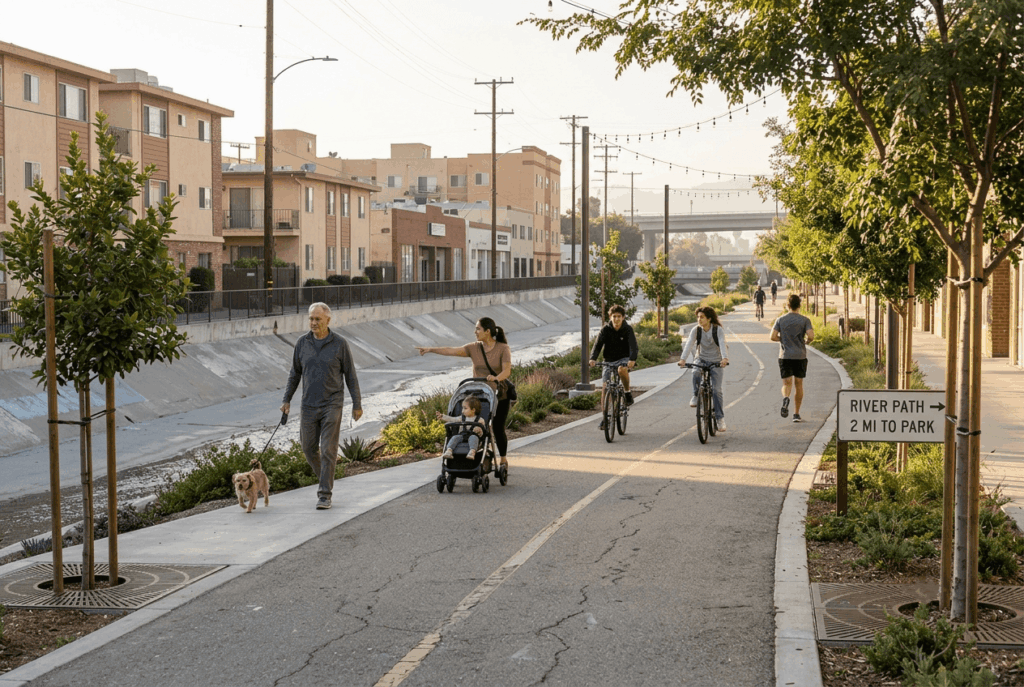
Not every Californian lives near a trailhead, and access skews heavily toward wealthier and less diverse neighborhoods in much of the state, the same pattern shows up in most large U.S. states, but it’s especially visible in a state where the “iconic” trails are concentrated in far-away mountain regions. Urban trail systems are one direct response: the LA River Trail is slowly converting a concrete flood channel into usable green space through some of Los Angeles’s most park-poor neighborhoods, the Bay Trail rings San Francisco Bay with a shared-use path reaching dozens of Bay Area cities regardless of income level, and the Sacramento River Parkway brings genuine trail access into the capital region without requiring a drive to the mountains. None of these replace a Sierra backcountry trip, but they close the gap for daily, low-barrier access, which matters more for regular physical activity than an annual big trip does.
Programs bringing underrepresented communities to California’s trails
Several of the country’s leading outdoor-equity organizations either started in California or have a major presence here. Outdoor Afro was founded in Oakland in 2009 and has grown into the nation’s largest network connecting Black communities to outdoor leadership and recreation, running everything from day hikes to leadership training. Latino Outdoors grew out of the Bay Area with a mission to make Latino communities feel ownership over public lands, not just visitors to them, and now coordinates outings across multiple California regions. GirlTrek, a national walking-based public health movement with roughly a million members, has an active California presence built around neighborhood walking teams rather than backcountry trips. Brown People Camping functions more as a digital storytelling campaign than a hiking group, using shared photos and stories to normalize people of color in outdoor spaces rather than organizing formal outings. Together, these groups address a real, well-documented gap rather than a hypothetical one.
Health equity: the public health role of accessible trail networks
How proximity to hiking trails affects community health outcomes in California
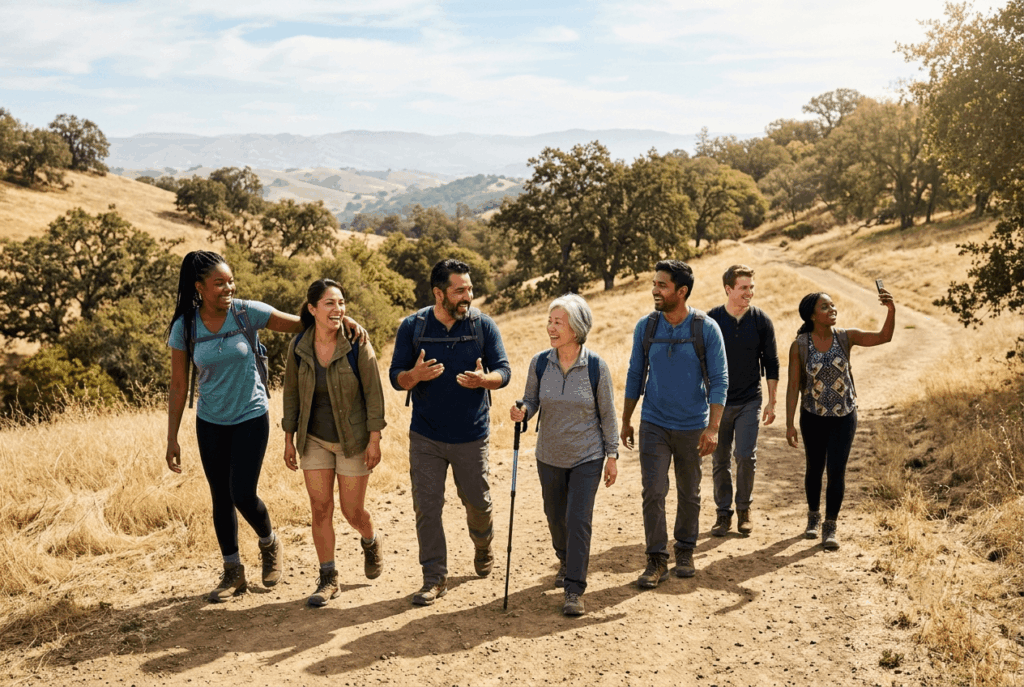
A 2025 study using wearable-device data across 53 U.S. cities found that a 10% increase in park accessibility was linked to about 107 more daily steps per person, and the effect was strongest among elderly, Black, and Latino residents, and among people who were otherwise less active. That’s a direct, measured link between trail and park access and physical activity, concentrated in exactly the communities that tend to have the least access to begin with. Broader research on green space and health backs this up: proximity to parks and trails is consistently associated with more physical activity and better self-reported health, even after accounting for income and other neighborhood factors. Framed that way, expanding trail access isn’t just a recreation issue, it’s a public health one, with the biggest gains concentrated in the neighborhoods that currently have the least access.
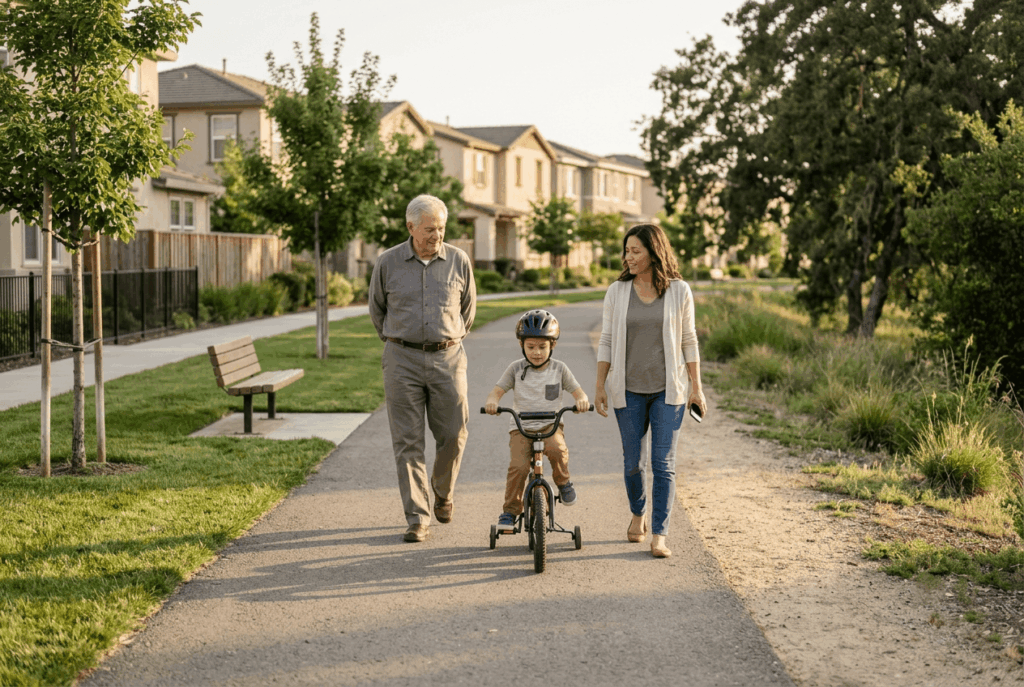
If you’re building a regular hiking habit as part of that picture, our beginner’s guide to hiking trails and mental health benefits guide cover the getting-started and wellness sides of this same story.
Frequently asked questions: community and social impact of hiking trails
How do hiking trails impact the environment in California?
Trails do have an environmental footprint, compacted soil, habitat crossing, altered drainage, but a well-built trail concentrates that impact into one managed corridor instead of hikers spreading damage across a wider area off-trail.
Who builds and funds hiking trails in California?
A mix of public agencies (NPS, USFS, California State Parks) and nonprofit or volunteer labor, including the California Conservation Corps, Sierra Club trail crews, and grant funding from organizations like REI, actually builds and maintains most trail mileage.
How can I volunteer to help maintain California hiking trails?
Start with the NPS Volunteers-In-Parks program for national park land, your local Sierra Club chapter’s trail crew schedule, or your regional land trust or county parks department for local trail days.
What organizations promote outdoor access for underrepresented communities?
Outdoor Afro, Latino Outdoors, GirlTrek, and Brown People Camping are among the most established, with Outdoor Afro and Latino Outdoors both having deep California roots.
How do hiking trails help small towns in California’s mountains?
Towns like Bishop, Lone Pine, Mammoth Lakes, and Idyllwild depend on hikers passing through for lodging, gear, food, and shuttle revenue, trail access is often the core of the local economy, not a side benefit.
Are California’s hiking trails equally distributed across communities?
No, trail and park access skews toward wealthier, less diverse areas, which is the gap that urban trail projects and outdoor-equity organizations are actively working to close.