Swimhiking in California: Trails That Combine Hiking & Swimming
Every hiker has stumbled on a lake or swimming hole mid-trail and jumped in on a whim. Swimhiking in California is the deliberate version of that, a route planned around the water, not just interrupted by it, and it’s exactly the kind of trip California’s terrain was built for. Alpine lakes, river gorges, and coastal pools all sit within reach of a real trail here, but the water that makes swimhiking appealing is also colder and more dangerous than it looks. Here’s how to actually do it right, from picking the right environment to the safety rules that matter more than most guides mention.
Disclosure: Please note that some of the links below are affiliate links and at no additional cost to you, I may earn a commission. Know that I only recommend hiking gear I personally stand behind; when you use my affiliate links, it helps me run this blog and keep all of this content free of charge for readers (like you).
Key takeaways
- Swimhiking is planned, not incidental, the route, gear, and swim spots are mapped ahead of time, unlike stumbling on a creek mid-hike.
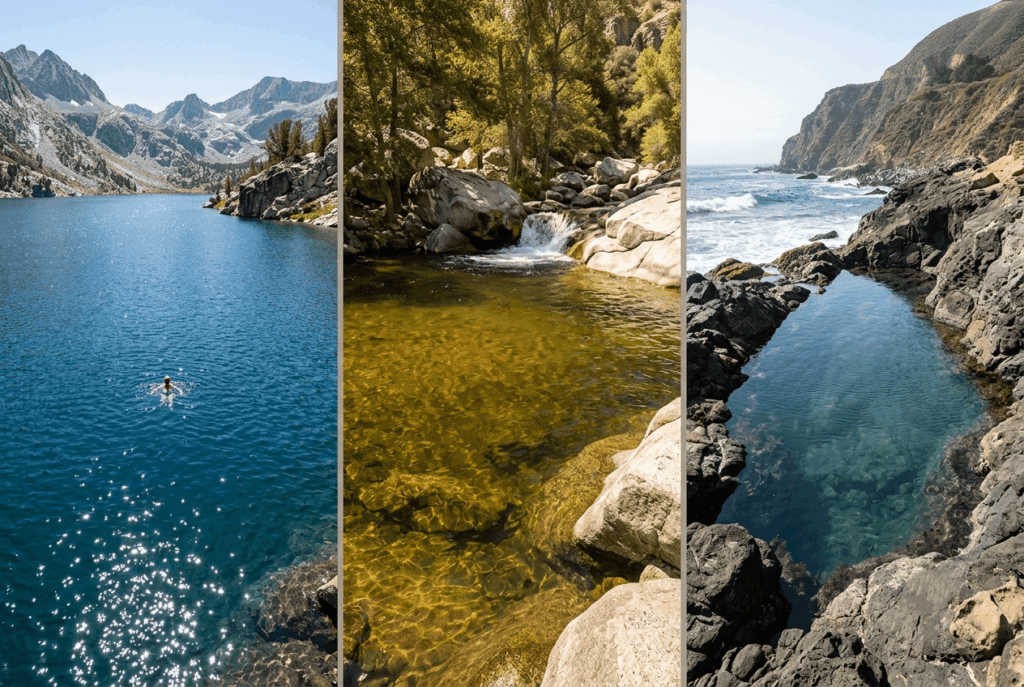
- California has three distinct swimhiking environments: high Sierra alpine lakes, river gorges, and coastal tide pools, each with its own water temperature and risk profile.
- Cold water shock is the real danger, not distance, water below about 59°F can trigger an involuntary gasp reflex and cut your breath-holding ability to seconds, even for strong swimmers.
- Many high Sierra lakes stay in the 45–58°F range even in August, cold enough to matter no matter how hot the trail felt getting there.
- Not every scenic pool is safe or legal to swim in, Yosemite’s Emerald Pool, just above Vernal Fall, is explicitly closed due to a documented history of fatal current incidents.
- Check California’s official HABs portal before swimming in any lake, since harmful algal blooms can make water look fine while carrying real toxins.
What is swimhiking? The trail activity that combines hiking and swimming
Swimhiking pairs a real hiking route with intentional swimming stops, a planned water leg, not a happy accident. It’s a well-established outdoor discipline in parts of Scandinavia, where lake-dotted terrain made it a natural fit, and it’s steadily growing in California, where the terrain variety makes it unusually easy to build a route around.
How swimhiking differs from regular hiking near water
Regular hiking treats water crossings as obstacles to get past; swimhiking treats them as the destination. That distinction changes your planning entirely, you’re choosing routes for their swim spots, packing gear for wet sections, and timing your trip around water temperature and conditions rather than just trail mileage. If you’re new to planning routes, the backpacking vs. day hiking guide covers the fundamentals that apply to any California outdoor trip format.
Why California is perfect for swimhiking: lakes, rivers, and coastal pools
Few states offer alpine, river, and coastal swimming within a single day’s drive of each other, and California’s geography makes swimhiking genuinely varied rather than a one-note activity.
California’s three swimhiking environments: alpine lakes, river gorges, and coastal trails
High Sierra alpine lakes, many above 9,000 ft, such as Horseshoe Lake in the Mammoth Lakes basin offer the classic swimhiking experience but run cold even in peak summer; this is the highest-payoff, highest-risk environment of the three.
River gorges like the Kings River and Kern River warm up considerably by midsummer and offer a gentler entry point, while northern swim spots like the chilly plunge pools featured in our Northern California waterfall swimming guide provide a refreshing reward on warm days.
Coastal tide pools and coves along Big Sur and the Marin coast add a completely different, saltwater version of the same idea, with their own tidal timing to plan around rather than elevation or season.
Essential swimhiking gear for California trails
Swimhiking’s gear list is a hiking kit with a water-specific layer added on top, not a wholesale replacement. The hiking gear checklist covers the full base kit to start from.
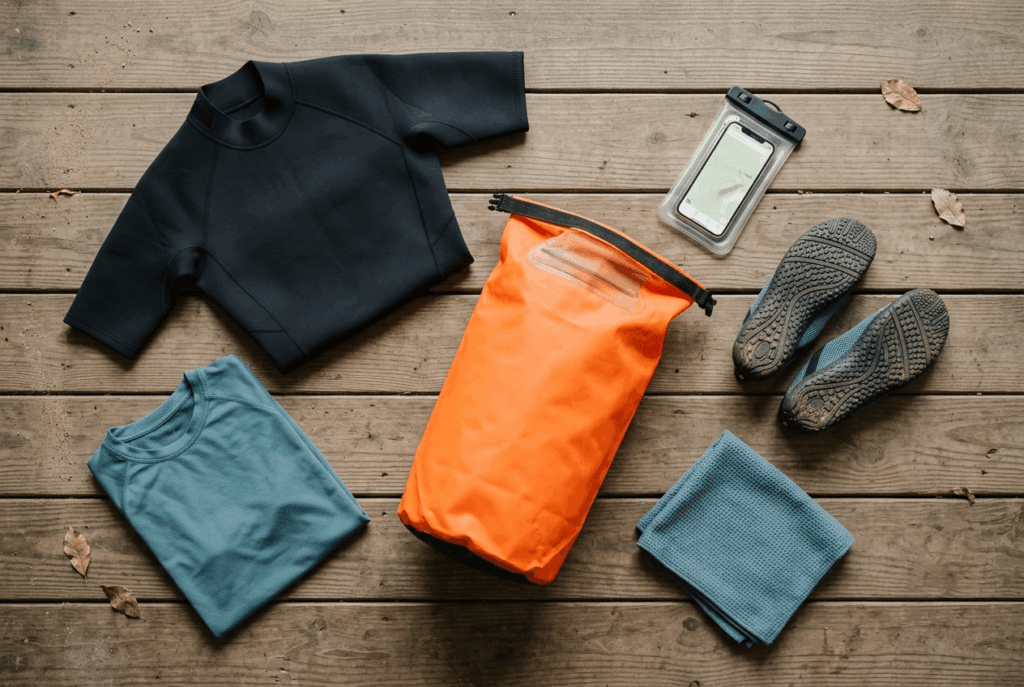
What to wear for swimhiking in California: wetsuit vs. rash guard vs. board shorts
Sierra alpine lakes are cold enough, even in August, that a thin wetsuit or at least a rash guard is worth the extra pack weight. Coastal water temperature varies by region and season, so a rash guard is often sufficient, while river gorges, genuinely warm by midsummer, are the one environment where board shorts alone are a reasonable choice.
How to protect your gear when swimhiking: dry bags and waterproof cases
A 10-20 L dry bag covers a dry change of clothes and any electronics; a separate waterproof phone case is worth the redundancy given how often phones double as navigation and emergency communication on trail. Water shoes beat sandals for river and coastal entries with uneven or sharp bottoms, and a quick-dry pack material saves you from hiking out in soaked gear.
Safety rules for swimhiking in California
This is where swimhiking’s biggest risks actually live, and none of them are obvious from the trail.
Cold water shock and hypothermia risk when swimhiking in California’s alpine zones
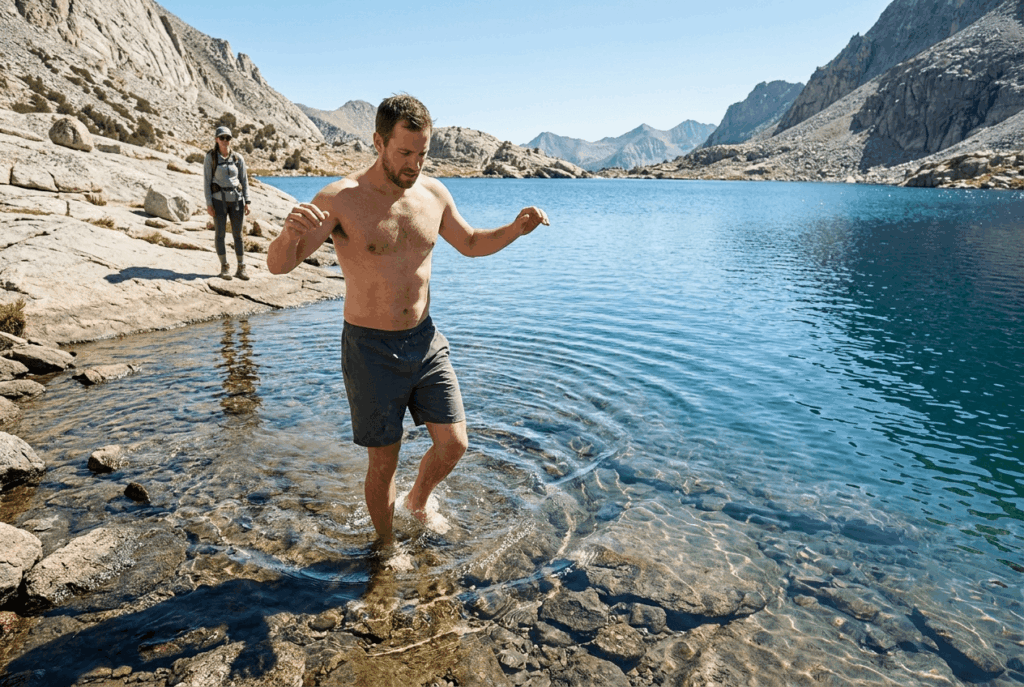
Water below roughly 59°F can trigger cold water shock, an involuntary gasp reflex that cuts your breath-holding capacity from the usual 60–90 seconds down to just a few, followed by swim failure as your muscles lose function within about 10 minutes.
Many high Sierra lakes stay in the 45–58°F range even in August, cold enough to matter regardless of how strong a swimmer you are or how hot the hike in felt.
Ease in gradually rather than jumping, and never swim alone in an alpine lake, cold water shock affects strong swimmers just as much as weak ones, and there’s no visible warning before it hits. River and stream hazards, including undercurrents, are detailed in the water hazards guide.
Harmful algal blooms on California lakes: when not to swimhike
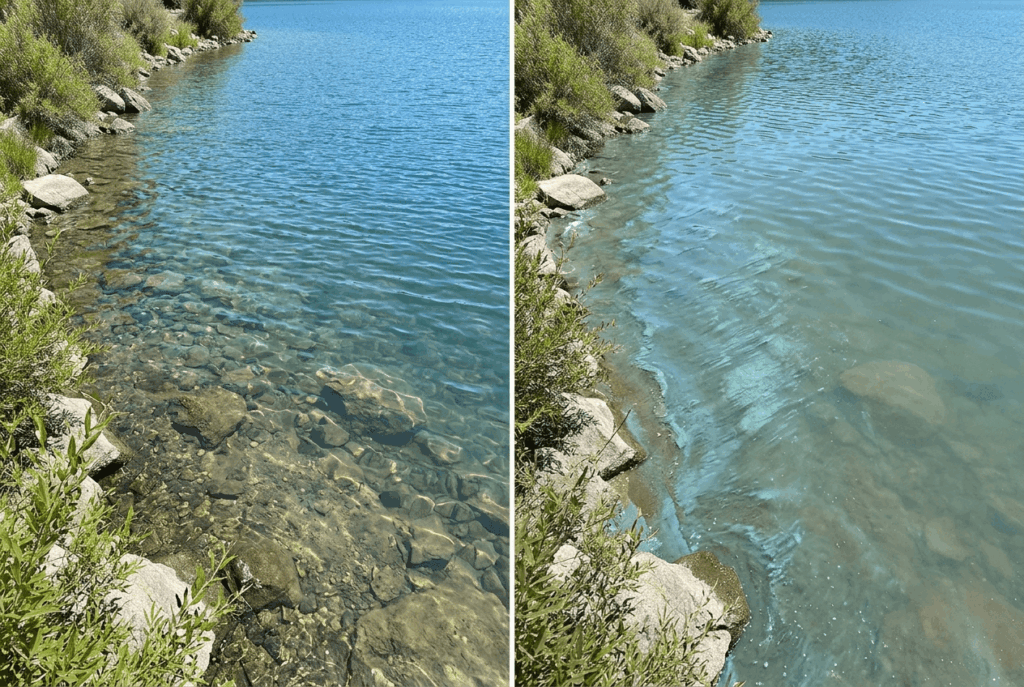
Cyanobacteria, commonly called blue-green algae, can bloom in California lakes and produce toxins that cause skin, throat, and gastrointestinal symptoms, and there’s no reliable way to tell a toxic bloom from harmless algae just by looking at it.
Check California’s official HABs portal, run by the CA Water Boards, for current reported blooms before you commit to a specific lake, and skip swimming entirely if you see visible scum, discoloration, or a strong odor.
Dogs are especially vulnerable, since they’re more likely to drink affected water or lick algae out of their fur afterward, keep them out of any water you’re uncertain about.
Best swimhiking routes in California
Best alpine lake swimhiking routes in the Sierra Nevada
Rae Lakes in Kings Canyon, Thousand Island Lake in the Ansel Adams Wilderness, and Lake Sabrina in Inyo County all pair a real backcountry hike with genuine alpine swimming, check permit and wilderness access requirements on Recreation.gov before you go, since several of these sit inside quota-controlled zones.
Best river gorge and coastal swimhiking routes in California
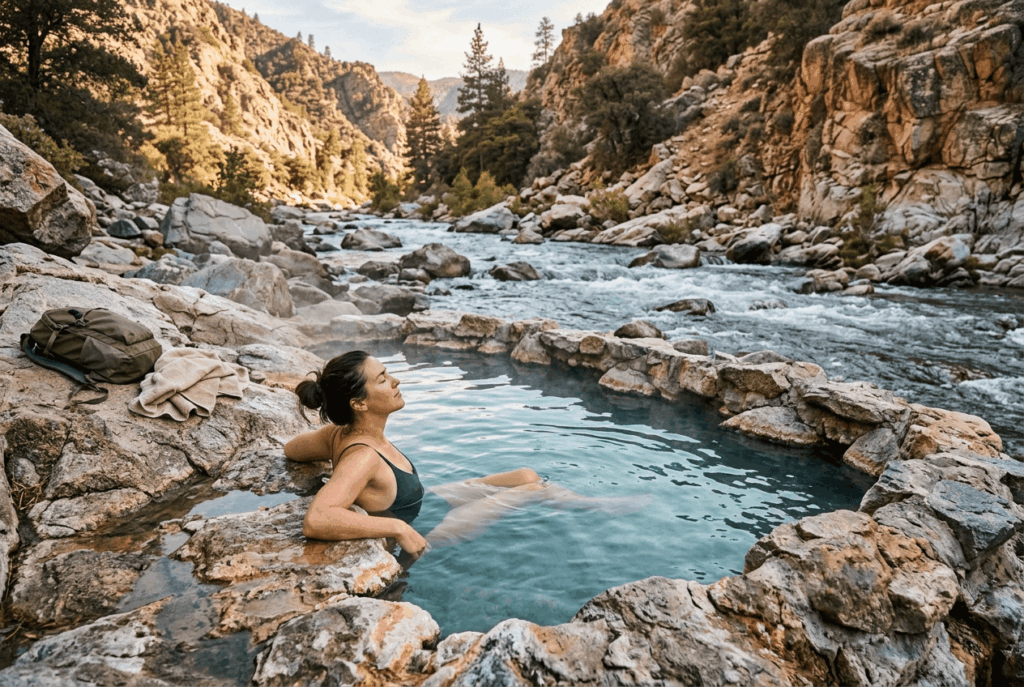
The Kern River Hot Springs hike in Kern County combines swimming with actual hot springs, Pfeiffer Big Sur State Park offers accessible hiking trails with swimming holes along the Big Sur coast, and trips focusing on Lake Isabella swimming spots add open-water reservoir options to your itinerary, and Falls Creek Canyon in Tuolumne County rounds out a strong river-gorge option away from the coast’s tidal timing constraints.
Swimhiking etiquette and Leave No Trace rules for California’s water trails
Keep soap and sunscreen out of any natural water source, both disrupt aquatic ecosystems even in small amounts, and a quick rinse before swimming matters more than most people assume. Give shoreline-nesting birds real distance during nesting season, pack out every scrap of waste the same way you would on any trail, and respect posted swim-area limits in ecologically sensitive zones, since those limits usually exist for a documented reason.
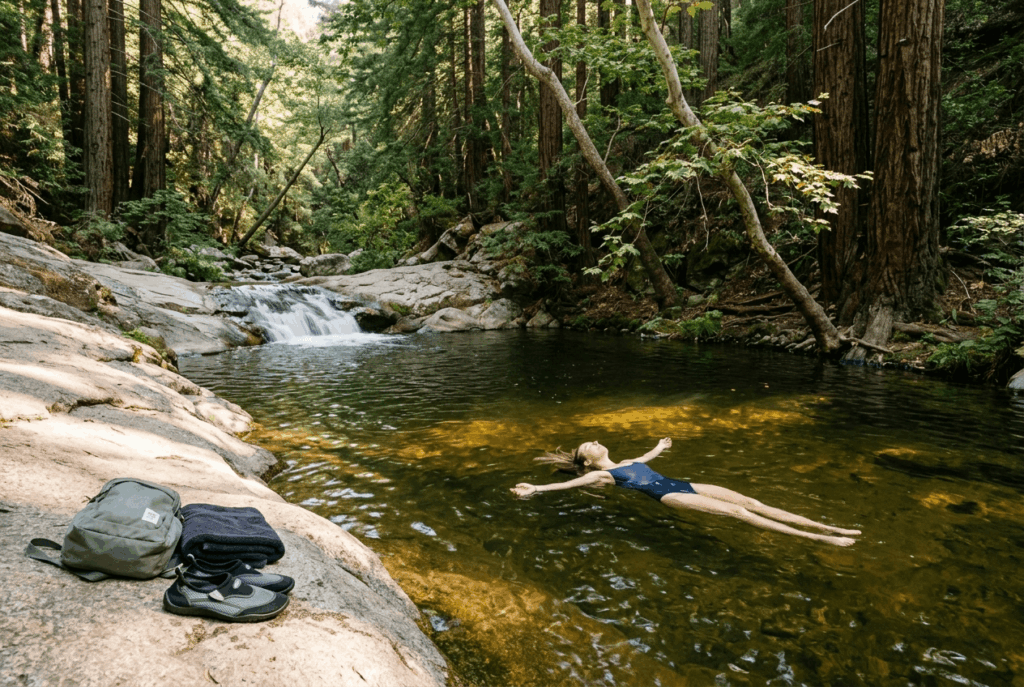
Swimhiking rewards the planning it asks for, a mapped route, weather-appropriate gear, and real respect for cold water and current, in exchange for one of the best ways to actually cool off on a California trail. Pick your environment, check the water conditions before you go, and treat the swim leg with the same seriousness you’d give any other water crossing.
Frequently asked questions about swimhiking in California
What is swimhiking and how do you do it?
Swimhiking is hiking a route planned specifically around intentional swimming stops, lakes, rivers, or coastal pools, rather than treating water as an obstacle. Start with a route that has a known, safe swim spot, and pack water-specific gear alongside your usual hiking kit.
Can you swim in Sierra Nevada lakes while hiking?
Yes, in most cases, though water stays cold even in summer, often 45–58°F at higher elevations, so cold water shock is a real risk regardless of swimming ability. Check specific wilderness area rules, since a few sensitive lakes do restrict swimming.
Do I need a wetsuit for swimhiking in California?
For high Sierra alpine lakes, a thin wetsuit is genuinely worth carrying given how cold the water stays even in August. For warmer river gorges or coastal swims, a rash guard or board shorts are often enough.
Are California lakes safe to swim in during summer?
Most are, but harmful algal blooms are a real and growing risk in some lakes, especially in warm, nutrient-rich water later in summer. Check California’s official HABs portal before swimming in any lake with visible scum, discoloration, or an unusual odor.
What are the best hike-and-swim routes in California?
Rae Lakes and Thousand Island Lake for high Sierra alpine swimming, the Kern River Hot Springs hike for a warmer river option, and Pfeiffer Big Sur State Park for accessible coastal hiking trails with swimming holes.
Is it legal to swim in California’s national park lakes?
Generally yes, in most designated areas, Yosemite’s Merced River in the Valley is a popular, permitted example. Specific hazardous zones are explicitly closed, though: Emerald Pool and the Silver Apron just above Vernal Fall are marked off-limits due to a documented history of fatal current incidents, and those closures should be taken seriously regardless of how calm the water looks.