Hiking with Dogs in California, Best Trails & Leach Rules
Yes, you can bring your dog hiking in California, but where depends entirely on which agency manages the trail, and the rules genuinely surprise people who assume “public land” means “dog-friendly.” I’ve spent four-plus years cataloging trails across this state, and the pattern I see constantly is hikers showing up at a national park trailhead with a leashed dog, only to learn dogs aren’t allowed past the parking lot. This guide covers exactly where you stand, legally and practically regarding dog-friendly hiking trails, before you load up the car.
Disclosure: Please note that some of the links below are affiliate links and at no additional cost to you, I may earn a commission. Know that I only recommend hiking gear I personally stand behind; when you use my affiliate links, it helps me run this blog and keep all of this content free of charge for readers (like you).
Key takeaways:
- Dogs are generally banned from national park trails, allowed on-leash on most USFS and many state park trails, and welcome on most county and regional park trails.
- California’s standard leash law caps leash length at 6 feet in most parks, with real off-leash exceptions in specific counties.
- Foxtail grass, rattlesnakes, and hot pavement are the three hazards that catch trail dogs off guard most often.
- A dog pack should never carry more than about 25% of your dog’s body weight.
- You’re required to pack out your dog’s waste on every California trail, no exceptions.
Can you bring your dog hiking in California? The short answer
Mostly, yes, but “California trails” isn’t one set of rules. It’s at least four different rulebooks depending on who manages the land, and assuming national-park-style restrictions apply everywhere (or vice versa) is the single most common mistake I see dog owners make.
Which California parks allow dogs on hiking trails, and which don’t
National Park Service (NPS) land is the most restrictive, dogs are banned from nearly all trails, limited to paved roads, campgrounds, and a handful of specific paved paths. U.S. Forest Service (USFS) land is the most permissive, generally allowing leashed dogs on the great majority of trails. California State Parks varies significantly by individual park and trail. County and regional parks, East Bay Regional Park District, Marin County Open Space District, and similar, tend to be the most dog-friendly of all, often with real off-leash options.
Why dogs are banned from most national park trails in California
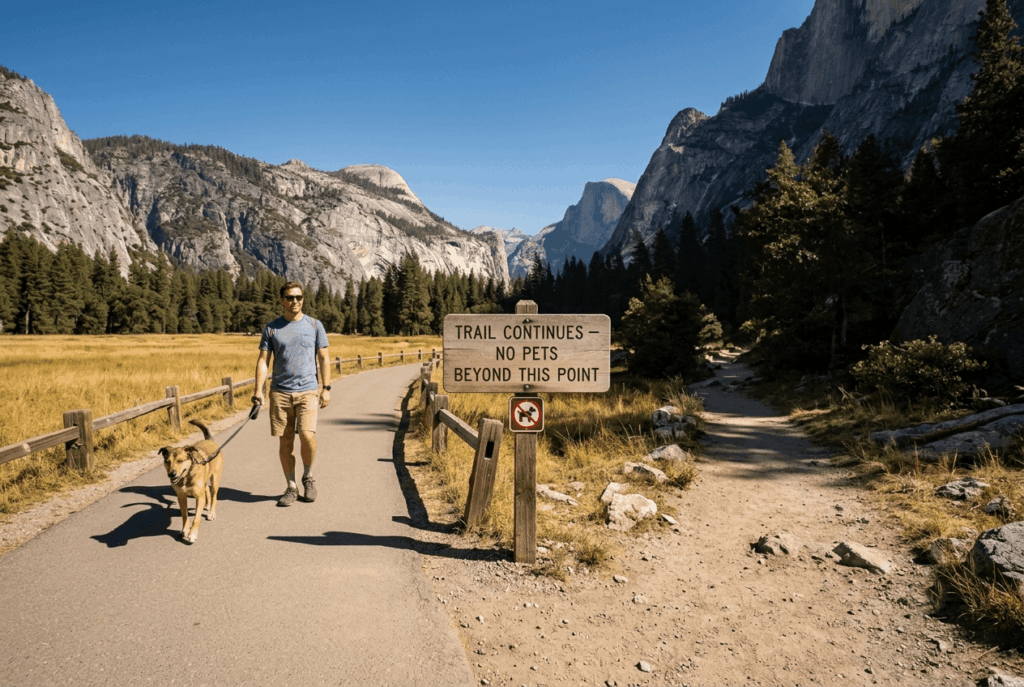
The restriction isn’t arbitrary: dog scent and presence can habituate coyotes and mountain lions to associate trails with easy encounters, and ground-nesting birds are especially sensitive to disturbance from off-trail sniffing. NPS also points to disease transmission risk between domestic dogs and wildlife. Yosemite is the clearest example, leashed dogs are welcome on paved roads, bike paths, and a few specific routes like the Wawona Meadow Loop and Lower Yosemite Fall Loop, but they’re banned from the Mist Trail, Mariposa Grove, and essentially all unpaved wilderness trails.
California leash laws on hiking trails: what you’re legally required to do
Leash requirements by park type: NPS vs. state parks vs. county parks
| Park type | Leash requirement |
|---|---|
| National Park Service (NPS) | 6 ft max where allowed at all (mostly paved areas only) |
| California State Parks | Leash required on most trails; varies by park |
| USFS (national forest) | Leash generally required near others; more relaxed on remote trail |
| County/regional parks | 6 ft leash in developed areas; off-leash often allowed in open space |
Off-leash hiking areas in California: where your dog can run free
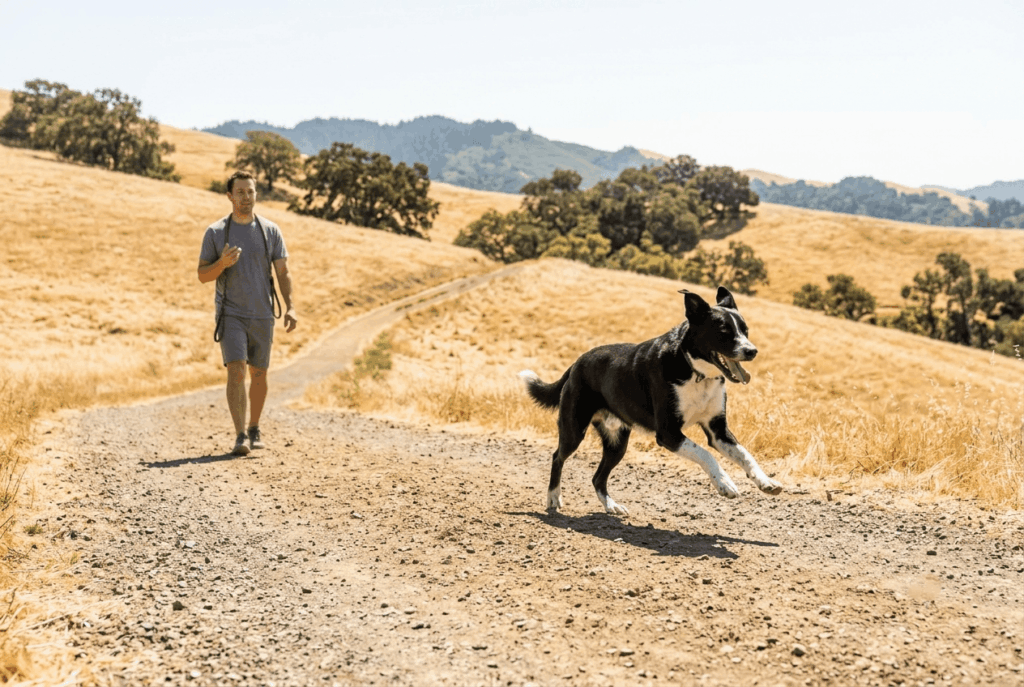
Real off-leash hiking exists, but it’s more specific than “off-leash parks” makes it sound. East Bay Regional Park District allows dogs off-leash in undeveloped, open-space areas of its parks under voice control, though dogs must be leashed within about 200 feet of any trailhead, parking lot, or developed area. Marin County Open Space District preserves commonly allow off-leash use on fire roads specifically, while dogs must stay leashed on narrower signed trails within the same preserve, it’s a fire-road-versus-trail distinction, not a whole-preserve rule. Always check individual preserve pages before assuming a “dog-friendly” label means fully off-leash everywhere.
Dog safety on California hiking trails: hazards to know before you go
Rattlesnake and wildlife hazards for dogs on California trails
Dogs are bitten by rattlesnakes more often than humans are, largely because they investigate with their nose and paws at exactly the height a snake strikes. Keep dogs leashed and on-trail in brushy or rocky terrain during warm months, and if you’re hiking somewhere with a real rattlesnake population, a rattlesnake-avoidance training class is a legitimate investment. Mountain lions can also key in on dogs specifically, since a dog’s size and movement pattern can trigger prey response in ways a standing adult human doesn’t. Read more about wildlife hazards on California trails.
Foxtail grass: California’s most dangerous hidden hazard for trail dogs
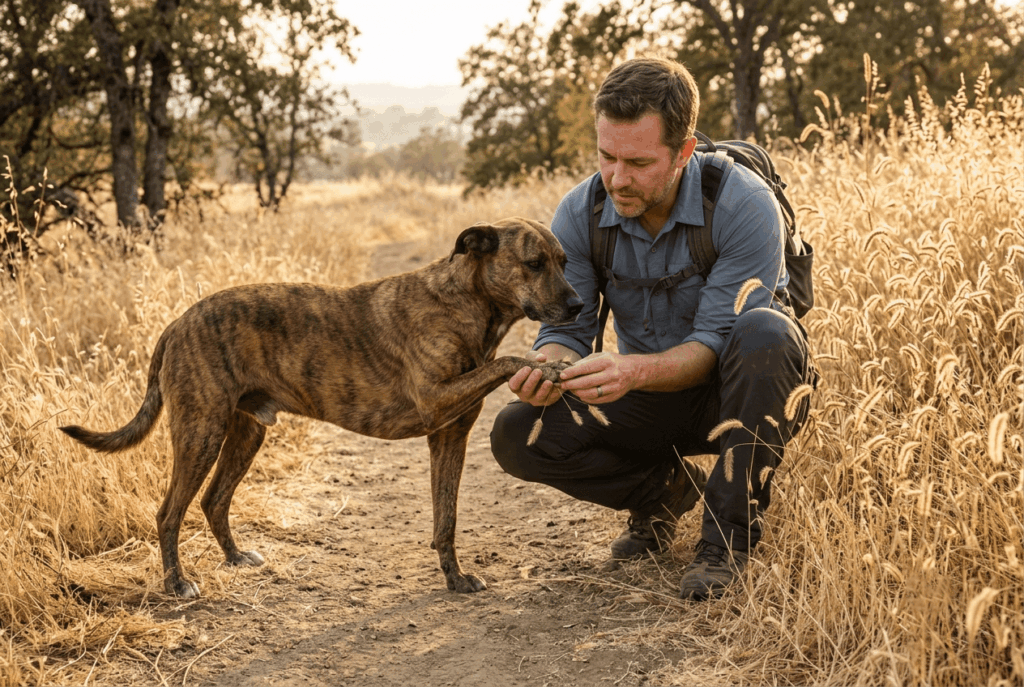
Foxtails are barbed, arrow-shaped seed heads common in dry California grasses, and they’re genuinely dangerous, the barbs are designed to migrate one direction only, meaning one that enters a paw, ear, or nose can keep working its way further in rather than falling out. Peak season is late spring through dry summer, right when grass dies back and seed heads harden. Check paws, ears, between toes, and around the nose and eyes after every hike during foxtail season, and see a vet quickly if your dog starts head-shaking, limping, or sneezing repeatedly afterward.
Heat and paw safety for dogs on California trails
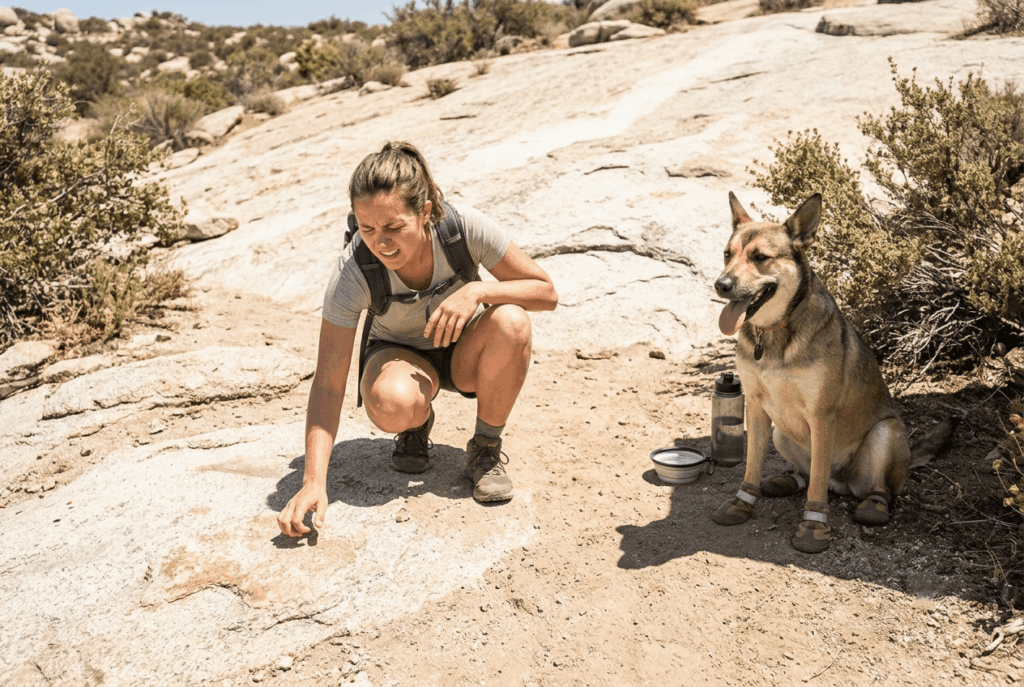
Pavement and exposed rock can run significantly hotter than the air temperature, hot enough to burn paw pads well before a day feels dangerously hot to you. If you can’t hold the back of your hand on the trail surface for five seconds, it’s too hot for your dog’s paws. Hike early morning or evening in hot months, stick to shaded or dirt trail surfaces over asphalt, and consider dog booties for exposed granite or desert trail sections in peak summer. Understanding seasonal hazards will help you plan around the safest seasons for your dog.
Essential gear for hiking with your dog in California
What to pack in your dog’s trail kit for a California hike
Beyond water and a collapsible bowl, pack high-calorie treats for longer hikes, paw wax or booties for hot or rough terrain, fine-tipped tweezers for foxtails and ticks, and basic first aid supplies sized for your dog. A visible ID tag and a registered microchip matter more on trail than at home, since a spooked dog can cover ground fast in unfamiliar terrain.

Dog packs and gear carriers: should your dog carry its own equipment?
A fit, conditioned dog can carry a dog backpack, but keep total load, pack plus contents, under about 25% of their body weight, and less for young, senior, or less-fit dogs. Introduce the empty pack at home and on short walks before a real trail day, since a dog encountering pack weight and balance for the first time on a long hike is set up for a bad experience.
Best dog-friendly hiking trails in California by region
Best dog-friendly trails in the Bay Area and Northern California
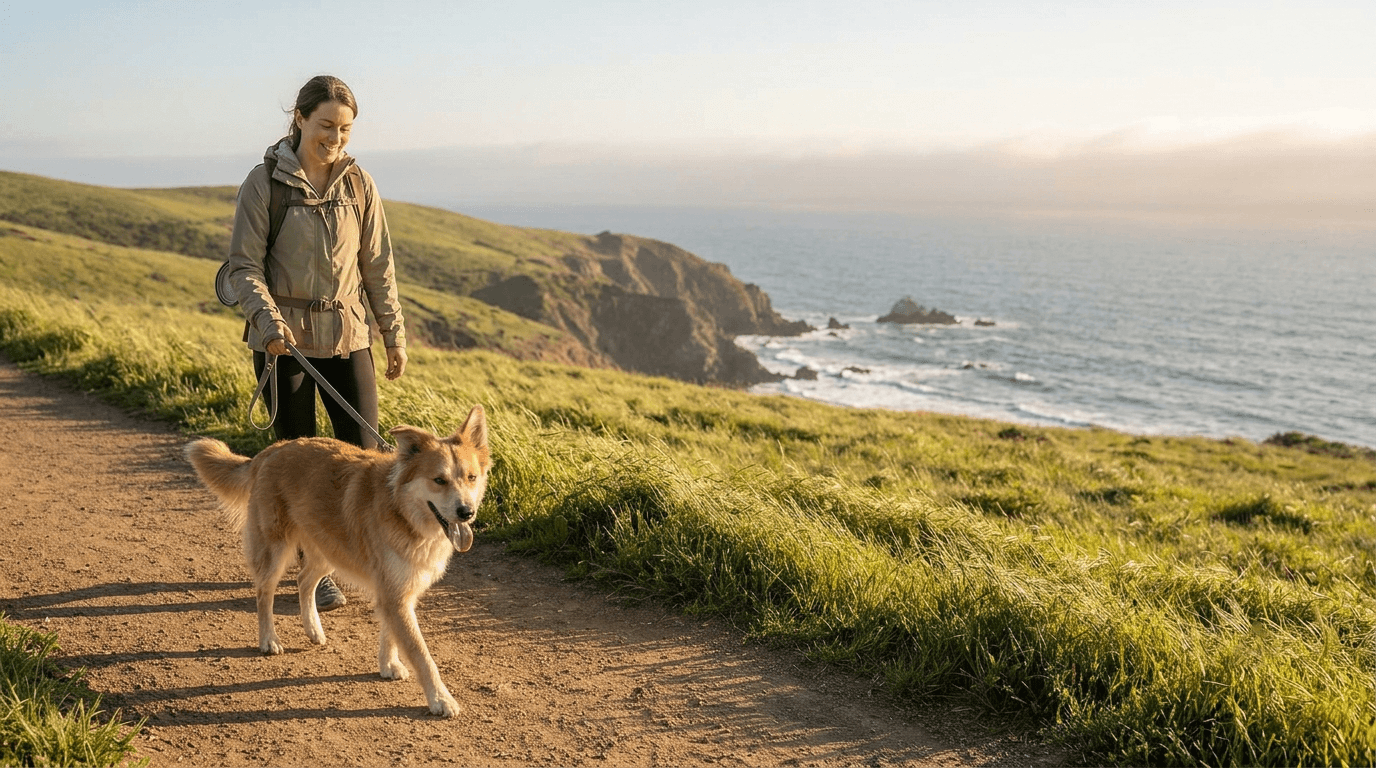
The Bay Area has an unusually dog-friendly trail network relative to the rest of the state. Marin Headlands and Mount Tamalpais fire roads offer real off-leash options alongside leashed singletrack, Point Reyes allows dogs on select beach and trail sections (check current designations before you go, since these shift seasonally for wildlife protection), and Humboldt Redwoods offers leashed access to old-growth terrain. East Bay Regional Park District’s Point Isabel Regional Shoreline is one of the most popular dedicated off-leash destinations in the entire region.
Best dog-friendly trails in Southern California and the deserts
Runyon Canyon in Los Angeles is one of the state’s most popular off-leash hikes; designated off-leash zones cover more than half the park, making it a genuine social destination for dog owners, not just a workout. Charmlee Wilderness Park and the Santa Monica Mountains offer leashed dog access with real coastal views. Anza-Borrego allows dogs on some trails but only really works for dogs in winter, since summer desert heat is dangerous well before it feels that way to a person. Joshua Tree, by contrast, only allows dogs on paved roads and in campgrounds, not on any of the park’s actual trails.
Dog trail etiquette in California: being a responsible trail dog owner
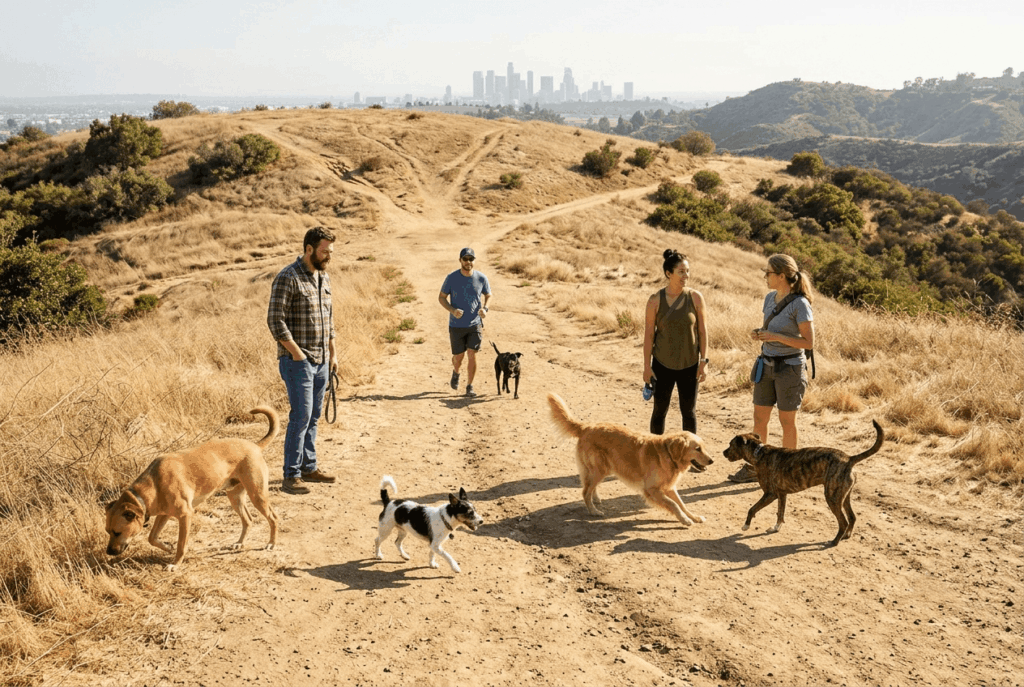
Ask before letting your dog approach another hiker or dog, not everyone on the trail is comfortable with an off-leash greeting, and some dogs (and some people) have real reasons to keep distance. Yield the trail when you can, keep dogs off cryptobiotic soil and sensitive desert vegetation, and keep a taut leash on narrow trail sections with drop-offs. Review the full trail etiquette guide before your next trip.
Do you have to pick up dog waste on California hiking trails?
Yes, on every trail in the state, no exceptions, dog waste left on trail contaminates watersheds and spreads parasites to wildlife faster than most owners realize. Pack it out even where there’s no visible trash can; leaving a bagged pile “to grab on the way back” is exactly how it gets left behind.
If you’re new to hiking with your dog, our beginner’s guide to hiking trails covers the trail basics that apply whether or not you’re bringing a dog, and matching a trail’s difficulty rating to your dog’s fitness is worth doing with the same care you’d use for yourself.
Frequently asked questions: hiking with dogs in California
How do I find dog-friendly hiking trails in California?
Check the managing agency directly, county and regional park websites like East Bay Regional Park District or Marin County Open Space District list dog policies per trail, which is more reliable than assuming based on the park’s general reputation.
What hiking trails allow dogs in California?
Most USFS trails, many county and regional park trails, and select California State Parks trails allow leashed dogs; national park trails are the major exception, with only a few paved routes open to pets.
Why are dogs not allowed on some California hiking trails?
Mainly wildlife protection dog scent and presence can disturb ground-nesting birds and habituate predators like coyotes and mountain lions to associate trails with easy encounters, alongside general habitat disturbance from off-trail sniffing.
Can dogs hike in Yosemite National Park?
On a limited basis, leashed dogs are allowed on paved roads, bike paths, and a few specific routes like the Wawona Meadow Loop and Lower Yosemite Fall Loop, but not on the Mist Trail, in Mariposa Grove, or on unpaved wilderness trails.
What dangers should I watch for when hiking with my dog in California?
Rattlesnakes, foxtail grass (especially late spring through summer), hot pavement and paw burns, and dehydration are the most common real hazards for trail dogs in this state.
How much water does a dog need on a hike in California?
A reasonable baseline is about half an ounce to an ounce of water per pound of body weight for a moderate hike, more in heat, bring extra rather than cutting it close, since a dehydrated dog can’t tell you it needs more.