Winter Hiking in California: How to Read Which Trails Are Safe and Which Aren’t
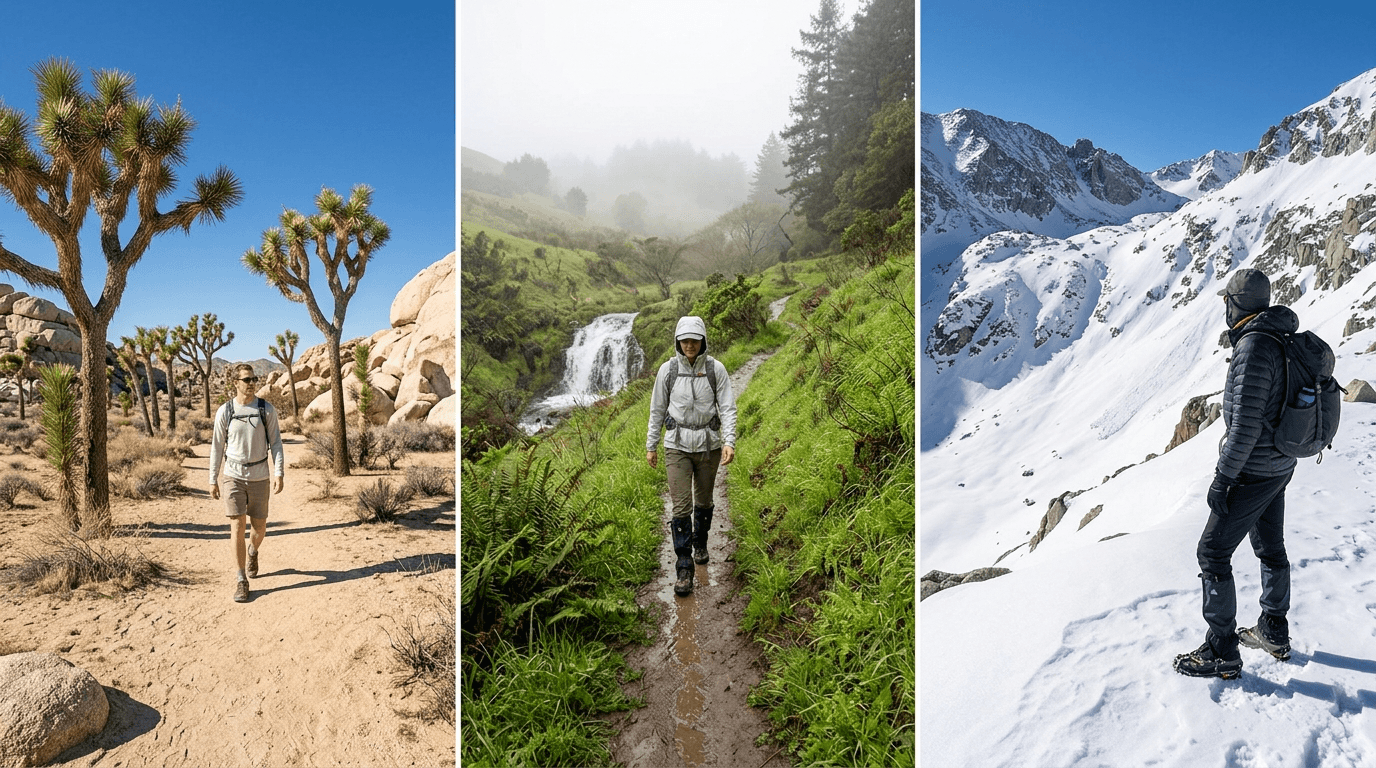
Winter hiking in California isn’t one season; it’s three completely different ones depending on where you go. The desert is at its absolute best right now, the coast barely notices winter at all, and the Sierra Nevada turns into terrain that can kill you if you treat it like a summer trail. The trick to winter hiking in California isn’t toughing out the cold; it’s knowing which of those three categories your trailhead falls into before you park the car.
Disclosure: Please note that some of the links below are affiliate links and at no additional cost to you, I may earn a commission. Know that I only recommend hiking gear I personally stand behind; when you use my affiliate links, it helps me run this blog and keep all of this content free of charge for readers (like you).
Key takeaways
- Winter splits California into three zones: desert (peak season), coast (mild year-round), and Sierra Nevada (expert-only without avalanche training).
- Traction decision: microspikes for packed snow and moderate ice, crampons for steep technical ice, snowshoes for deep unconsolidated snow; they’re not interchangeable.
- Daylight, not cold, is the real limiter. Some Northern California trailheads see sunset by 4:45 pm in December; plan your turnaround time before you plan your mileage.
- Ice outlasts snow. Shaded, north-facing switchbacks hold ice for hours or days after everything else on the same trail has melted off.
- Joshua Tree and Death Valley are winter’s reward, not a consolation prize; both parks are objectively better hiking in December than in July.
Why winter hiking in California is both rewarding and uniquely dangerous
Empty trails, clear light, and dramatic snow on peaks you’ve only seen bare- winter is when California’s trails look their best and feel their most remote. It’s also when the margin for error shrinks the most: a twisted ankle that’s a minor inconvenience in July becomes a hypothermia risk in January, and the crowds that would normally help you aren’t there. Review the seasonal hazards guide for a comprehensive month-by-month breakdown of California trail risk.
Which California regions can you hike in winter and which should you avoid?
Desert trails (Joshua Tree, Death Valley, Anza-Borrego) hit their best conditions of the year in winter, with daytime highs in the 50s and 60s instead of triple digits. Coastal trails stay hikeable year-round, though you’ll trade sun for fog and mud. The Sierra Nevada is where I’d pump the brakes; above the snow line, you’re in avalanche terrain and need real winter travel skills, not just a warmer jacket. For specific park insights, our Yosemite cold-weather trail tips provide essential details on navigating the park’s winter landscape.
Essential winter hiking gear for California trails
Cold-weather gear only works if it matches the actual hazard in front of you. Buying crampons for a trail that only needs microspikes is wasted weight; showing up to an icy switchback with neither is how people get hurt. If you are shopping for presents, our guide to thoughtful gear gifts for female hikers covers plenty of field-tested ideas. Match your gear to the actual hazard in front of you.
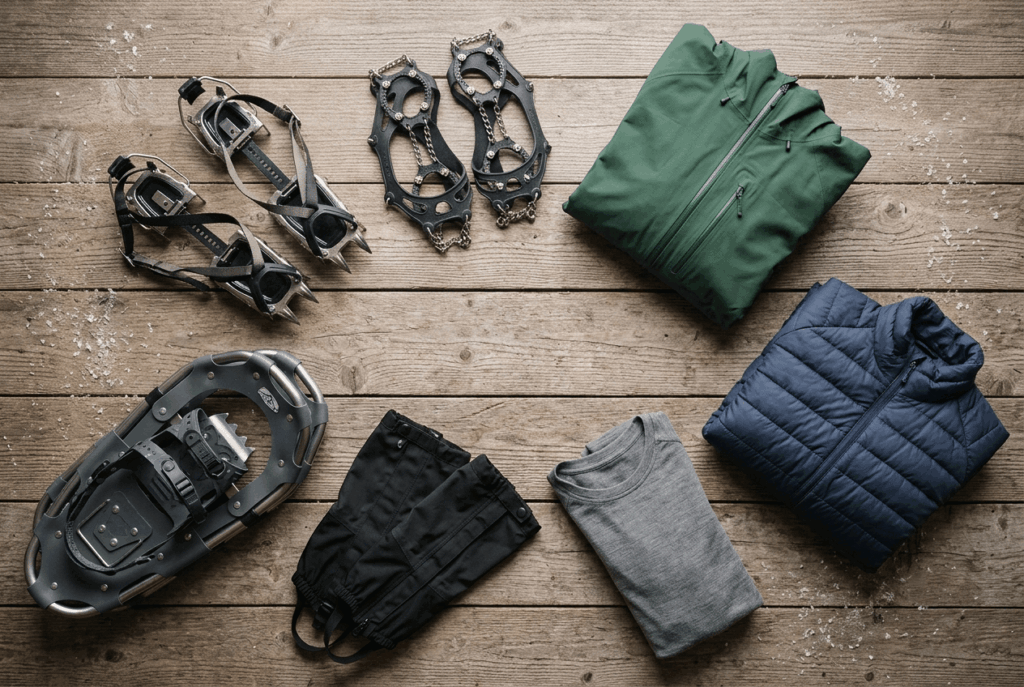
Microspikes vs crampons vs snowshoes: choosing the right traction for California winter trails
| Traction type | Best for | Not for |
|---|---|---|
| Microspikes | Packed snow, moderate ice, most maintained trails | Steep technical ice, deep powder |
| Crampons | Steep, hard ice and technical alpine terrain | Casual trail use, overkill and awkward on dirt |
| Snowshoes | Deep, unconsolidated snow where you’d otherwise post-hole | Packed trails or icy surfaces |
My rule: if you can kick a boot heel into the snow and leave a clean print, microspikes are enough. If the surface is glassy and won’t take a boot print at all, you need crampons and the skills to use them. See the high-elevation hiking guide for more on traction gear specific to Sierra snowfields.
Layering for winter hiking in California: base, mid, and shell explained
A moisture-wicking base layer (merino or synthetic, never cotton) keeps sweat off your skin, an insulating mid layer traps heat, and a waterproof-windproof shell blocks California’s wetter storms. I lean towards synthetic over down for the mid layer on any trail with real rain risk; down that gets wet loses almost all its insulating value, and NorCal storms don’t always cooperate with your rain jacket.
Gaiters for winter hiking in California: when are they necessary?
Low gaiters earn their keep the moment you’re walking through fresh snow or brushy, wet undergrowth; they keep snow and debris out of your shoes without you noticing. High gaiters become worth the extra bulk once you’re post-holing through deep, unconsolidated snow, where without them every step packs snow down into your boot.
Understanding California winter trail hazards
The hazards aren’t evenly distributed. Ice and post-holing show up almost anywhere with elevation and shade; avalanche risk is specific to the Sierra Nevada backcountry and doesn’t apply to the desert or the coast at all.
Avalanche awareness for California winter hikers: when does it matter?
Avalanche risk is a Sierra Nevada backcountry concern, not something you need to think about on a Joshua Tree scramble or a Bay Area fire road. Slopes between roughly 30° and 45°, convex rolls, and lee sides of ridges are the classic danger zones. If you’re heading into Sierra backcountry terrain, check the daily advisory from the Sierra Avalanche Center (covering the greater Tahoe area) or the Eastern Sierra Avalanche Center (covering the Mammoth Lakes region) before you go, and carry a beacon, probe, and shovel if your route crosses avalanche terrain at all.
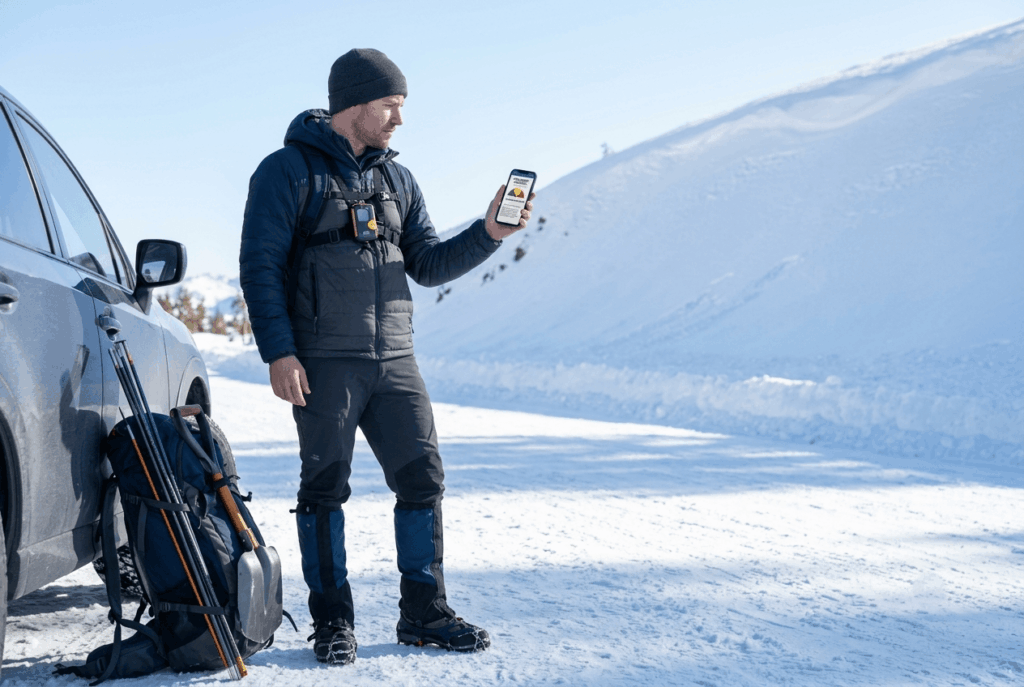
Ice on California trails: how to identify and navigate frozen switchbacks safely
Shaded, north-facing switchbacks are the trap: they can hold ice long after every sunny stretch on the same trail has melted clean. My rule is to put microspikes on before the ice starts, not after the first slip; fumbling with straps on a narrow icy shelf is exactly when a fall happens. Review the terrain hazards guide for a broader overview of technical trail hazards in California.
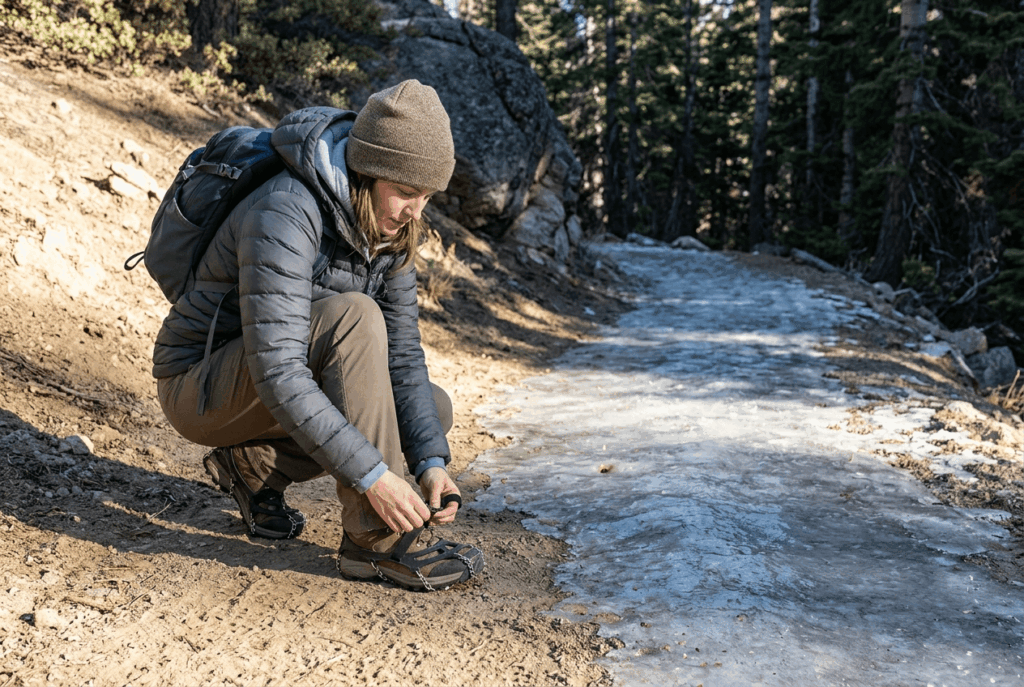
Winter hiking in California’s desert: the best season in the desert
This is the flip side of the whole conversation: winter isn’t a hardship mode for California’s deserts; it’s peak season. Joshua Tree and Death Valley are genuinely better hikes in December than in July, when summer heat makes the same trails dangerous rather than dramatic.
Best winter desert hiking destinations in California
Joshua Tree National Park hits its stride from November through March, with daytime temperatures that make full-day hikes comfortable instead of risky. Death Valley’s optimal window runs December through February, before spring heat returns. Anza-Borrego adds a bonus: January-through-March hikes often line up with the desert’s wildflower bloom. As of 2026, Joshua Tree and Death Valley both charge the standard $30 per-vehicle entrance fee (good for seven days); confirm current fees on Recreation.gov or the NPS website. An America the Beautiful Pass covers entrance fees at both parks and is worth the investment if you’re planning multiple park visits.
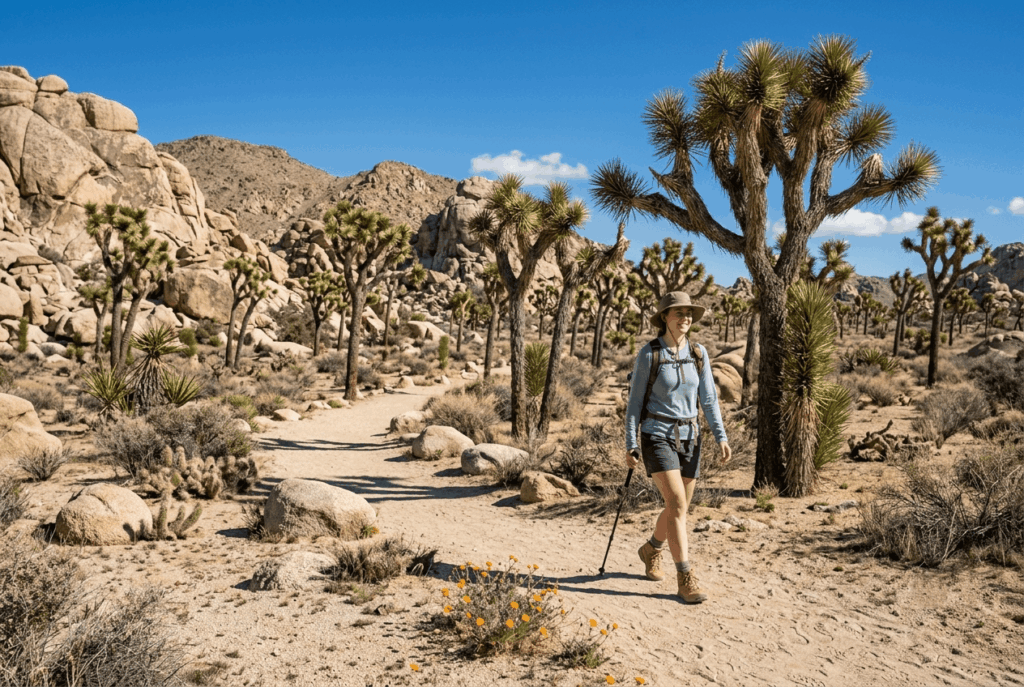
What to wear and bring for desert winter hiking in California
Don’t let daytime warmth fool you into skipping layers; desert nights and even shaded mornings can drop to freezing. I still carry the same water volume I would in summer; winter desert air is dry enough that dehydration sneaks up on you even at cooler temperatures. See the water and electrolytes guide for hydration planning in any season.
Winter hiking in California’s coastal and Bay Area trails
Coastal trails are the easiest winter category in the state; most are hikeable year-round, and a handful genuinely improve once the rain starts.
Bay Area winter hiking: why the rainy season brings out the best trails
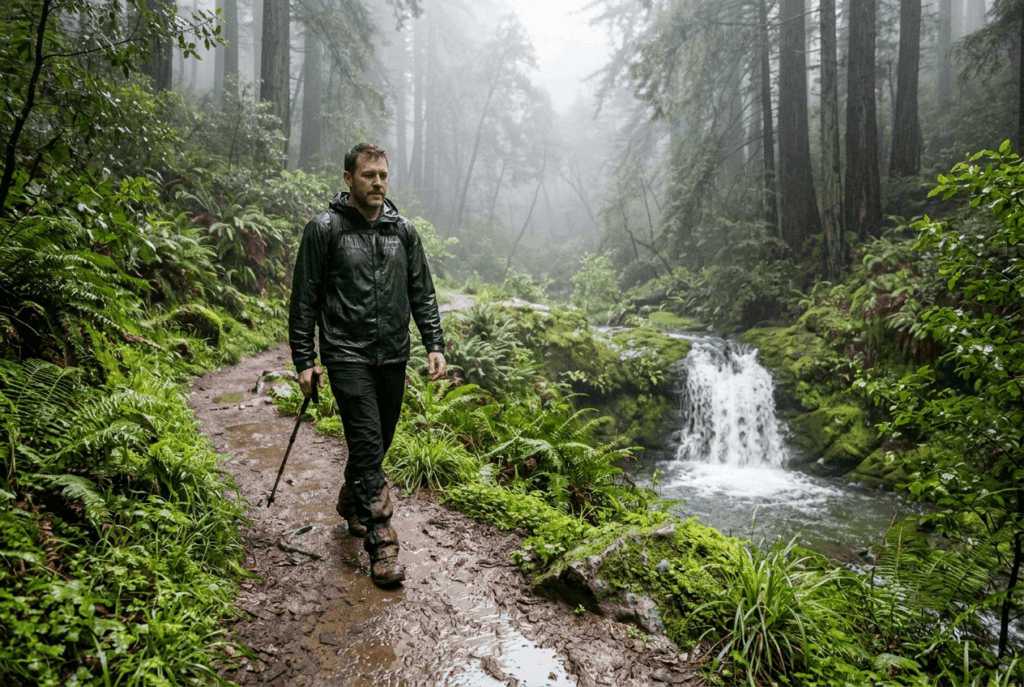
Winter rain turns Bay Area hills green almost overnight, and waterfalls that are a trickle in September run full by January. Point Reyes National Seashore and Muir Woods both hold up well in winter, though redwood trails get slick, and I’d bring gaiters for the mud more than the cold. Point Lobos, further south near Monterey, is genuinely uncrowded in winter compared to its packed summer parking lots. For the best coastal waterfall viewing during these months, see the best waterfall hikes guide.
Navigation and daylight management for California winter hikes
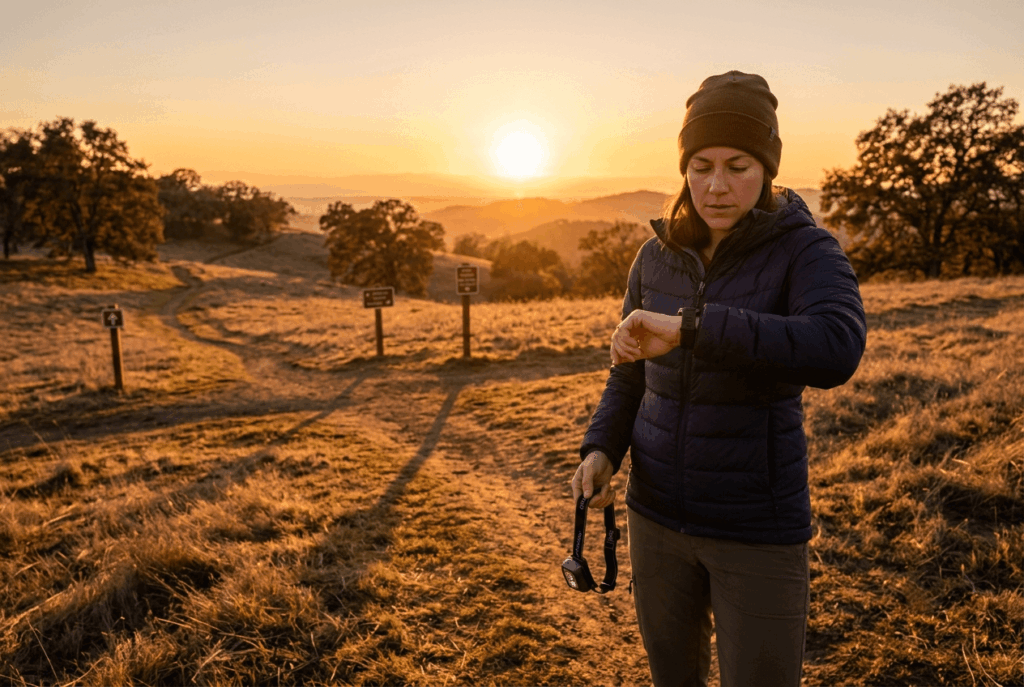
Cold gets the blame, but daylight is usually the thing that actually ends a winter hike early. Some Northern California trailheads see sunset as early as 4:45 pm in December; plan around that number, not around how you feel at the trailhead.
How to plan your winter hike around California’s short daylight hours
Calculate your turnaround time before you start walking, not when you start feeling tired: know your sunset time, subtract an hour for margin, and work backward to figure out your latest acceptable turnaround point. Carry a headlamp on every winter hike regardless of your planned finish time; plans slip, and being caught on a trail after dark without one turns a minor delay into a real problem. The navigation hazards guide covers navigation tool redundancy in detail.
Best winter hiking trails in California by region
Desert winter hiking trails in Southern California
Ryan Mountain Trail in Joshua Tree, the Zabriskie Point loop in Death Valley, and Borrego Palm Canyon in Anza-Borrego all deliver big desert payoff without extreme mileage, solid picks if winter is your only shot at these parks.
Coastal and forest winter hiking trails in Northern California
Tomales Point in Point Reyes, the redwoods of Muir Woods, and the coastal bluffs of Point Lobos all hold up well through the rainy season, and each gets noticeably quieter once summer crowds thin out.
Winter hiking in California rewards people who match their trail choice to the season instead of fighting it. Head to the desert while it’s at its best, treat the coast as your reliable year-round option, and only take the Sierra Nevada on once you’ve got real winter travel skills; our high-elevation hiking guide is a good next stop if that’s the direction you’re heading. Get that region-matching right, and when you are looking for winter outdoor gear recommendations, winter stops being the season you wait out and becomes the one you plan for.
Frequently asked questions about winter hiking in California
Are trail runners usable for winter hiking in California?
On dry desert or coastal trails, yes, trail runners work fine. Once ice or deep snow enters the picture, you’ll want a boot that pairs with microspikes and keeps your feet drier than a mesh trail shoe can manage.
Do I need microspikes for winter hiking in California?
Only if you’re hiking somewhere with elevation and shade, like Sierra foothills or shaded canyon trails; desert and most coastal hikes rarely need them. Check trail reports for ice before you decide to leave them in the car.
What are the best hiking trails in California in winter?
Joshua Tree and Death Valley lead the list since winter is genuinely their best season, followed by Point Reyes and Muir Woods for a milder coastal option. All four stay comfortable and largely ice-free through the winter months.
Is Joshua Tree National Park good for hiking in winter?
Yes, winter is Joshua Tree’s peak hiking season, with daytime temperatures in the 50s and 60s that make full-day routes comfortable instead of risky. Summer heat is what actually limits hiking here, not winter cold.
What should I wear for hiking in snow in California?
A moisture-wicking base layer, an insulating mid-layer (synthetic if rain is likely), and a waterproof-windproof shell, plus microspikes and gaiters if the trail has real snow or ice. Skip cotton entirely; it holds moisture and cools you down fast.
Is there avalanche risk on California hiking trails in winter?
Yes, but only in Sierra Nevada backcountry terrain; it’s not a concern on desert or coastal trails. Check the Sierra Avalanche Center or Eastern Sierra Avalanche Center forecast before any Sierra backcountry route in winter.