Cross-Country Skiing vs Hiking in the Sierra Nevada: What to Know
When comparing Cross-Country Skiing vs Hiking, both activities often use the same Sierra Nevada terrain the same meadows, forest roads, and ridge routes just at completely different times of year and under completely different conditions. I’ve spent four-plus years cataloging trails across this state, and the trail-to-ski-route conversion genuinely surprises people the first time they realize their favorite summer meadow loop is the same groomed track they skied in February. Deciding between the two isn’t really about which activity is “better”; it’s about matching the season, your fitness goals, and your budget to the right one. This guide compares them directly: effort, gear, cost, and where to actually go.
Disclosure: Please note that some of the links below are affiliate links and at no additional cost to you, I may earn a commission. Know that I only recommend hiking gear I personally stand behind; when you use my affiliate links, it helps me run this blog and keep all of this content free of charge for readers (like you).
Key takeaways:
- Many Sierra Nevada summer hiking trails become winter cross-country ski routes once snowpack builds; the same terrain, a different experience entirely.
- XC skiing burns more calories per hour than hiking (roughly 600–1,000 vs. 400–550) due to full-body engagement, but it has a real technique learning curve hiking doesn’t.
- A basic XC setup runs $300–800 to buy or $25–40/day to rent; hiking gear is generally cheaper to get into.
- Royal Gorge, Tahoe XC, Yosemite’s Badger Pass Nordic Center, Mammoth’s Tamarack Cross-Country Ski Center, and Bear Valley are all confirmed open for the current season.
- Low-snow years and shoulder-season conditions are when hiking wins outright; you can’t ski a trail with no snow on it.
What is cross-country skiing, and how does it use the same terrain as hiking?
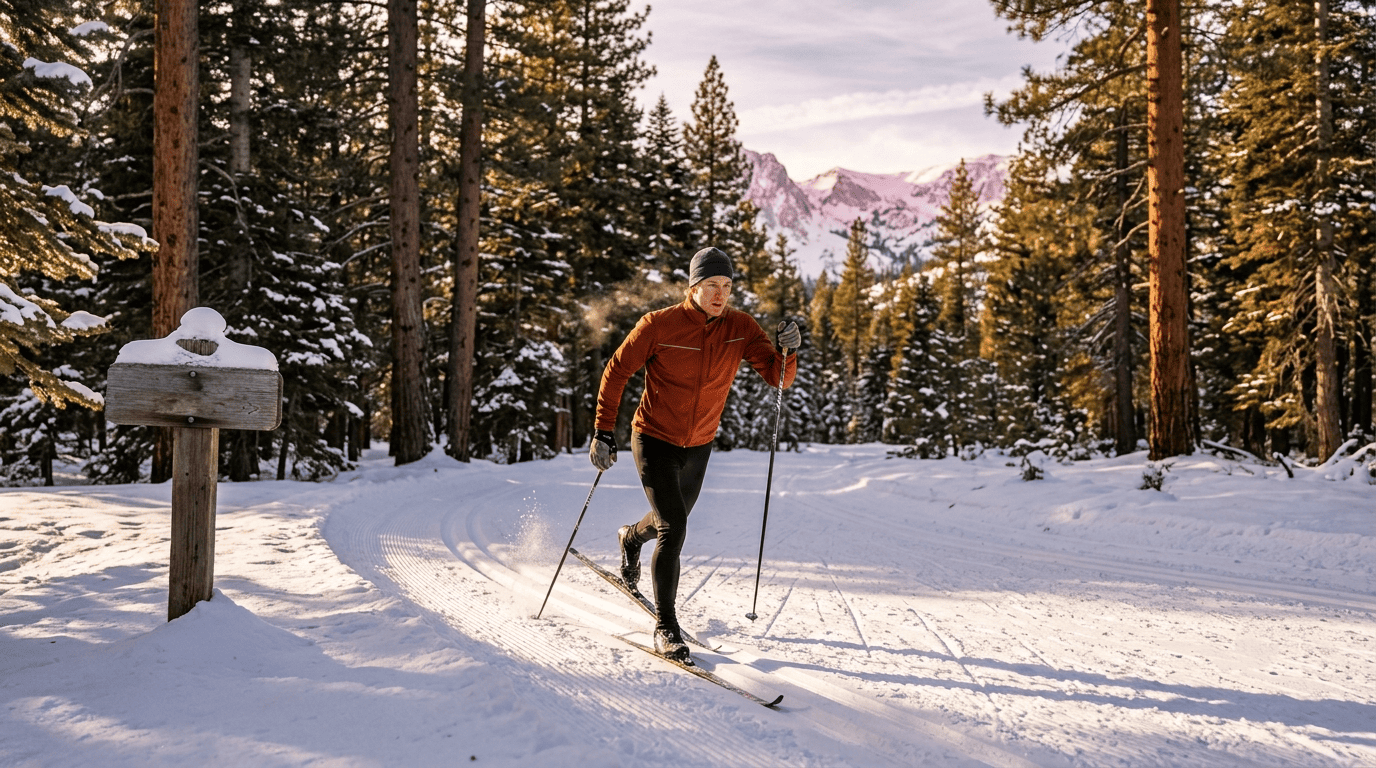
Cross-country (XC or Nordic) skiing uses skis and poles to travel across snow-covered terrain under your own power, no lift required, on trail systems that frequently sit directly on top of summer hiking corridors.
Classic vs. skate skiing: the two styles of cross-country skiing in California
Classic skiing uses a diagonal-stride motion in set parallel tracks and is the more beginner-friendly of the two styles, since the tracks do some of the balance work for you. Skate skiing looks more like ice skating on skis, uses a V1/V2 push technique on a wider groomed surface, and demands considerably more balance and fitness before it feels controlled. Most people spend a season or two comfortable on classic gear before trying to skate ski well.
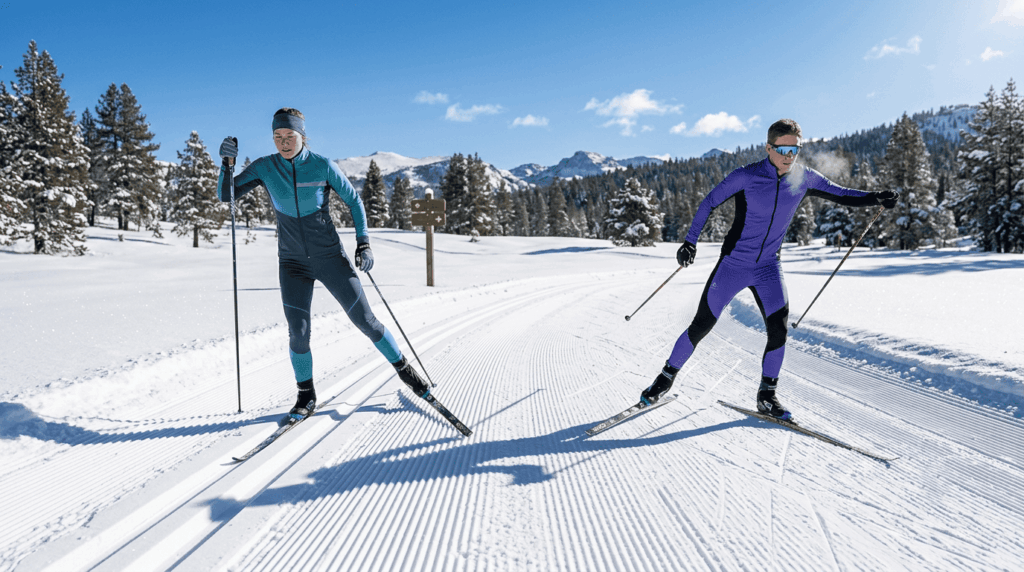
Most California Nordic centers groom for both styles side by side on the same trail network, so you’re not locked into one or the other at a given location, and you can switch between them as your skill develops.
How Sierra Nevada summer hiking trails become cross-country ski routes in winter
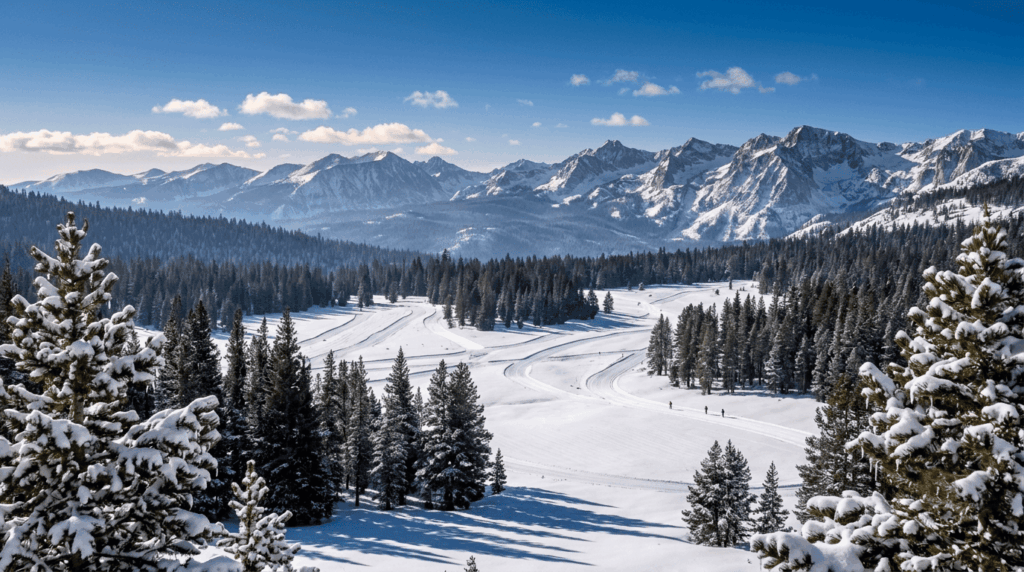
The same meadow you hiked across in July, the same forest road you walked in September under a few feet of snowpack, both become groomed or ungroomed ski routes with a completely different feel. Trail junctions, water crossings, and trailhead parking all still exist under the snow, but they’re navigated entirely differently: wider turns, no loose rock to watch for, and a much greater dependence on current snowpack and grooming schedules than a summer hike ever requires.
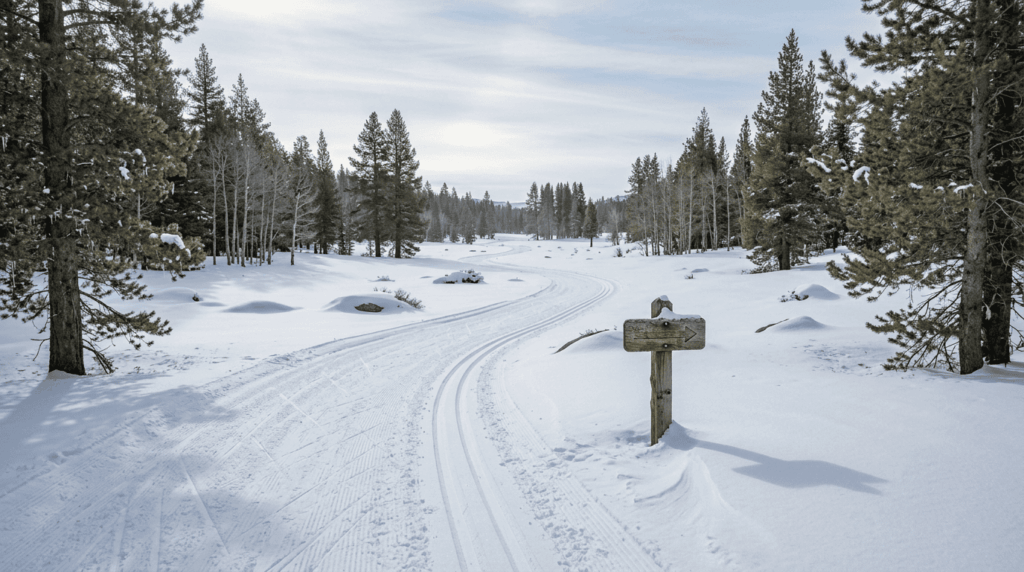
A trail that took two hours to hike in August might take considerably longer or shorter to ski in January, depending entirely on snow conditions that change week to week. If you choose to hike rather than ski in winter, review our winter hiking guide to learn which trails remain safe and accessible on foot.
Physical demands: cross-country skiing vs hiking in the Sierra Nevada
Calorie burn and cardiovascular intensity compared
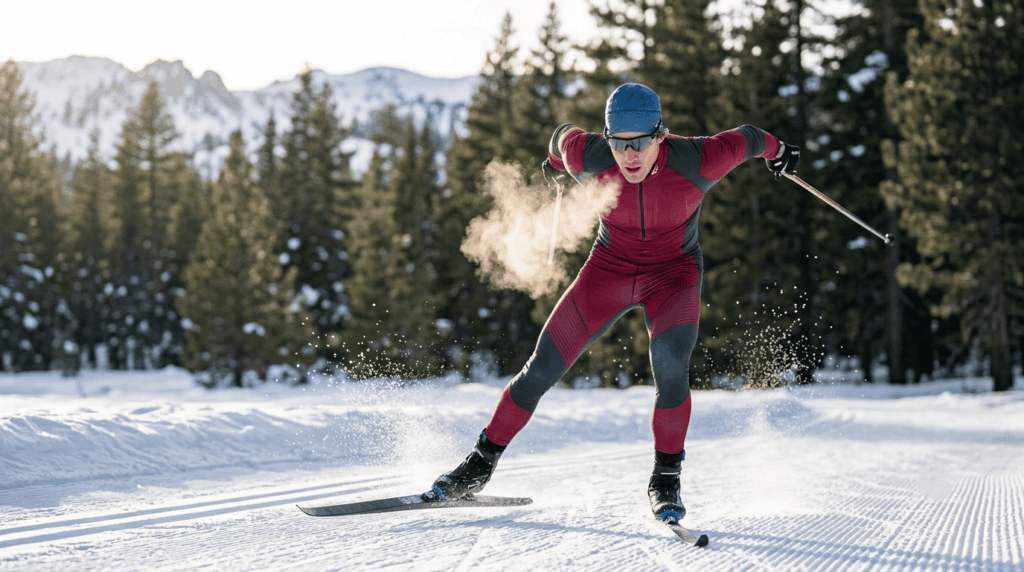
XC skiing burns roughly 600-1,000 calories per hour, meaningfully more than hiking’s roughly 400-550, mostly because skiing engages your upper body (poling) and core alongside your legs in a way walking simply doesn’t. It’s often cited as one of the highest calorie-burn aerobic activities available precisely because so little of your body is idle while you’re doing it, and it tends to push your heart rate toward VO2 max faster than a comparable hiking pace would. If pure cardiovascular training is your goal for the winter months, skiing has a real edge over hiking the same distance.
Technique barrier: why XC skiing has a steeper learning curve than hiking
Hiking requires no technique training; you already know how to walk, and the only real skill is pacing yourself and reading terrain. XC skiing requires balance on a sliding surface, pole timing, and weight transfer that most beginners need 2-3 lessons to get comfortable with before a groomed trail stops feeling like a fight against your own equipment. That’s not a reason to skip it, but it is a reason not to plan your first attempt as a long point-to-point tour start with an hour on flat, groomed classic terrain at a Nordic center rather than heading straight for a backcountry route.
Gear comparison: what you need for each activity in California
Cross-country skiing gear costs vs hiking gear costs in California
| Buy | Rent (per day) | |
|---|---|---|
| Cross-country skiing | $300–800 (skis, boots, bindings, poles) | $25–40 at most Tahoe, Yosemite, and Mammoth centers |
| Hiking | $150–300 (boots, pack, layers) | Rarely rented; buy-once gear |
Renting is the smarter starting point for XC skiing specifically, since a full setup is a real investment for an activity with a genuine learning curve. Try it a few times on rentals before buying anything, and don’t assume the entry-level gear at a big-box store will perform like what a Nordic center rents. You can find entry-level cross-country skis and ski boots if you decide to buy.
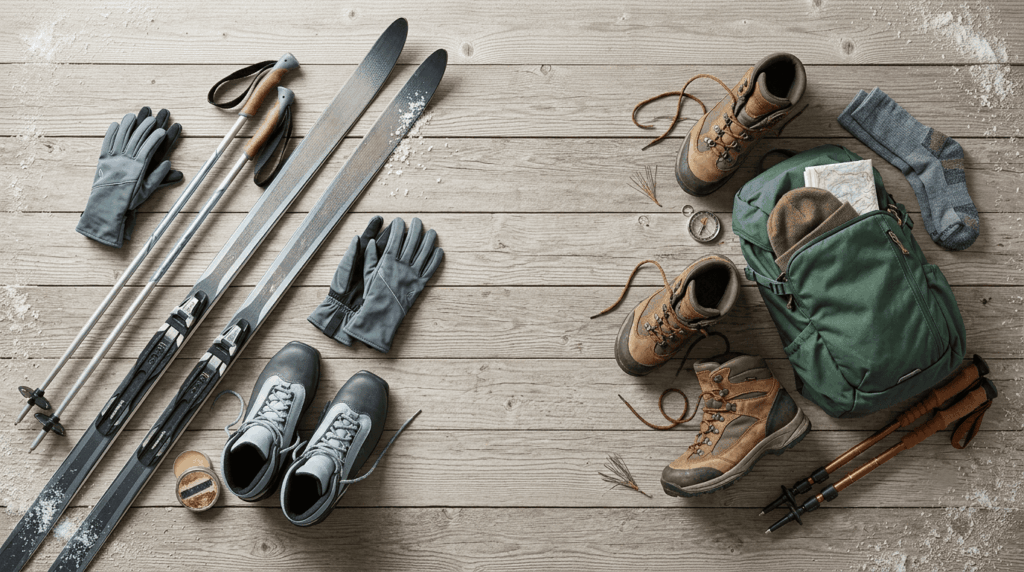
Hiking gear, by contrast, is generally a one-time purchase that works across nearly every trail you’ll hike for years, which is part of why it has a lower effective cost over time even before accounting for skiing’s ongoing trail-pass or day-pass fees. See our hiking gear checklist for details on must-have outdoor gear.
Best locations for cross-country skiing and winter hiking in the Sierra Nevada
Top cross-country skiing destinations in California
| Location | Trail network | Notable for |
|---|---|---|
| Royal Gorge (Soda Springs) | ~200 km, ~90 km groomed | Largest XC trail network in North America |
| Tahoe XC (Tahoe City) | ~50+ km | Nonprofit-run, strong beginner programs |
| Badger Pass Nordic Center (Yosemite) | Access to ~90+ mi of terrain | Historic Nordic school, guided backcountry tours |
| Tamarack Cross-Country Ski Center (Mammoth Lakes) | ~19+ mi groomed | High-elevation basin views, free public-access trail |
| Bear Valley Cross Country | ~65 km | Reliably early season and late-closing snowpack |
When hiking is better than skiing in the Sierra Nevada
Low-snow years choose for you: you can’t ski a trail with no snow on it, and hiking simply reclaims that terrain by default, sometimes for an entire season if snowpack stays thin. Spring melt does the same thing seasonally, turning ski routes back into muddy but walkable trails well before summer officially starts. Higher elevation terrain above what most Nordic centers groom is really its own category, better suited to experienced backcountry skiers or snowshoers than either casual activity in this comparison.
And budget matters here too: hiking is close to free once you own basic gear, while skiing carries ongoing trail-pass or rental costs most seasons, which adds up over a winter of regular outings in a way a well-worn pair of hiking boots simply doesn’t.
Safety differences between XC skiing and winter hiking in California
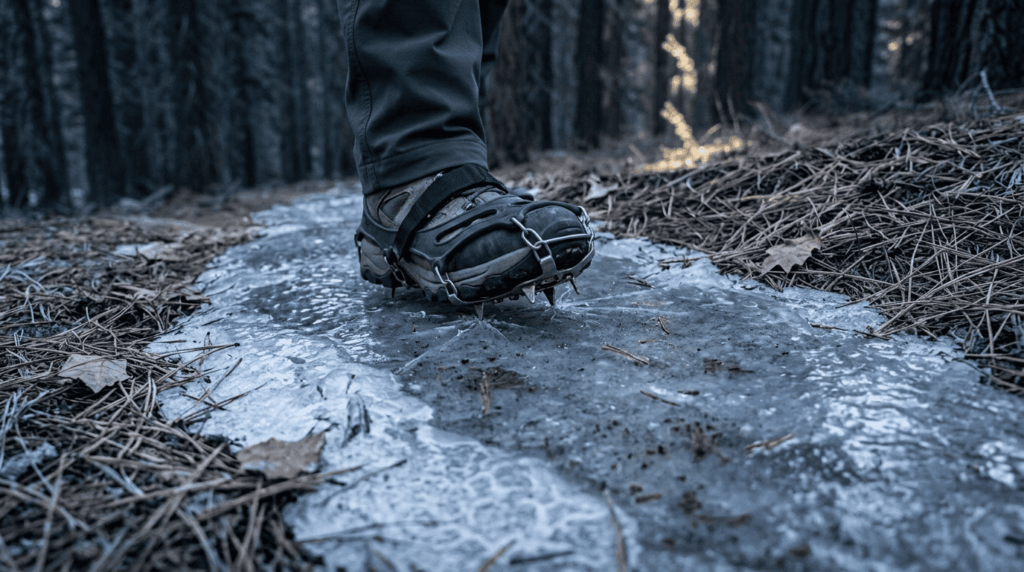
XC skiing’s specific risks include tree wells (dangerous pockets of loose snow around tree bases that can trap a skier who falls in headfirst near the trunk, especially in deep, fresh snow), departing groomed trails into ungroomed backcountry without avalanche training, and cold injury from wet gloves or boots that stay damp for hours. Winter hiking’s risks lean toward ice underfoot on shaded trail sections; microspikes are worth carrying well before you think you’ll need them, and shorter daylight windows cut a trip closer than a summer schedule would suggest.
Both activities share the same core need for avalanche awareness if you’re heading into ungroomed backcountry terrain, and both demand more layering discipline than a mild-weather summer hike ever does, since getting wet from sweat or snowmelt in freezing temperatures is a real hypothermia risk either way. Read our terrain hazards guide for winter avalanche and tree well safety.
If you’re building your broader winter skill set, our hiking safety guide covers the preparation basics that carry over into cold-weather trips, and understanding trail difficulty ratings is still useful groundwork even once snow changes how a route actually feels underfoot.
Frequently asked questions: cross-country skiing vs hiking in the Sierra Nevada
Is cross-country skiing harder than hiking in the Sierra Nevada?
In terms of technique, yes, skiing has a real learning curve; hiking doesn’t, though once you’re past the beginner stage, both activities scale in difficulty based on terrain and distance.
Where can I go cross-country skiing near Lake Tahoe in California?
Tahoe XC in Tahoe City and Royal Gorge near Soda Springs are the two most established options, both offering groomed trails, rentals, and lessons for beginners.
Can beginners go cross-country skiing in California?
Yes, most major Nordic centers, including Tahoe XC, Royal Gorge, and Mammoth’s Tamarack Center, offer beginner lessons and classic-ski rentals specifically suited to a first attempt.
Does cross-country skiing burn more calories than hiking?
Yes, generally XC skiing’s roughly 600–1,000 calories per hour outpaces hiking’s roughly 400–550, mainly due to the added upper-body and core engagement from poling.
Where can I rent cross-country skis in California?
Royal Gorge, Tahoe XC, Yosemite’s Badger Pass Nordic Center, and Mammoth’s Tamarack Cross-Country Ski Center all offer on-site rentals, typically in the $25–40 per day range.
When is cross-country skiing season in the Sierra Nevada?
Typically, December through March at most established Nordic centers, though exact opening and closing dates shift year to year based on snowpack, always check current conditions before a trip.