The 5 Best Hiking Trails in Trinity Alps Wilderness, From Turquoise Glacial Lakes to the Range’s Highest Peak
California’s second-largest wilderness area deserves its own dedicated guide, and these five hiking trails in Trinity Alps Wilderness cover its signature terrain: granite basins, glacial lakes, and one demanding push to the range’s highest summit.
Disclosure: Please note that some of the links below are affiliate links and at no additional cost to you, I may earn a commission. Know that I only recommend hiking gear I personally stand behind; when you use my affiliate links, it helps me run this blog and keep all of this content free of charge for readers (like you).
In short: Canyon Creek Lakes is the trail everyone means when they picture the Trinity Alps, Stuart Fork is the multi-day commitment for two of the most strikingly colored lakes in California, and Grizzly Lake is the one to save for when you’re ready for a hard day beneath the range’s tallest peak.
Key takeaways
- The classic introduction: Canyon Creek Lakes Trail: waterfalls and granite-basin lakes beneath the wilderness’s most photographed peaks, widely considered the best first hike here.
- The multi-day showpiece: Stuart Fork Trail: Emerald and Sapphire Lakes, both strikingly turquoise from suspended glacial rock flour.
- The range’s toughest payoff: Grizzly Lake Trail: a glacial lake below Thompson Peak, the Trinity Alps’ highest point at just over 9,000 ft.
- The quiet alternative: Boulder Creek Lakes Trail: comparable granite-lake scenery with a fraction of Canyon Creek’s foot traffic.
- The remote multi-lake cluster: Caribou Lakes Trail: a full-day or overnight trek to a basin beneath the range’s northern peaks.
- A wilderness permit is only required for overnight stays here, not day hiking, which is worth knowing before you assume every trail in this guide needs one.
Canyon Creek Lakes Trail
Trailhead access and parking at the Canyon Creek Trailhead
The single most popular entry point into the entire Trinity Alps Wilderness, near Junction City. A free wilderness permit is required only if you’re staying overnight; a California Campfire Permit is needed separately for any stove or fire use.
What you’ll see: waterfalls and granite-basin lakes beneath the wilderness’s signature peaks
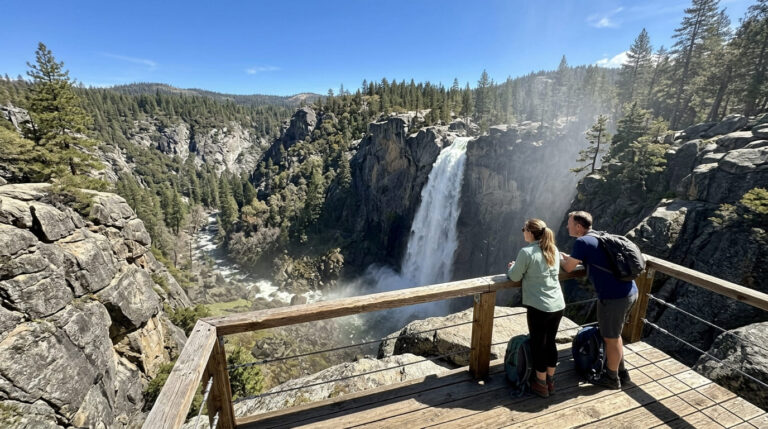
A well-maintained, easy-to-follow trail runs about 15 miles round trip, passing multiple named waterfalls before reaching two lakes set beneath towering granite peaks, widely considered the single best introduction to this entire wilderness, and busy enough on summer weekends to prove it.
Best time to hike Canyon Creek Lakes: summer for full lakes, early fall for fewer crowds
This trail’s outsized popularity makes early fall, once summer crowds thin but before cold sets in, an appealing alternative to peak-season timing.
Stuart Fork Trail to Emerald and Sapphire Lakes
Trailhead access and parking at the Stuart Fork Trailhead, near Trinity Alps Resort
A separate wilderness entry point from Canyon Creek Lakes, starting just past the Trinity Alps Resort near Weaverville; the same overnight permit rule applies here.
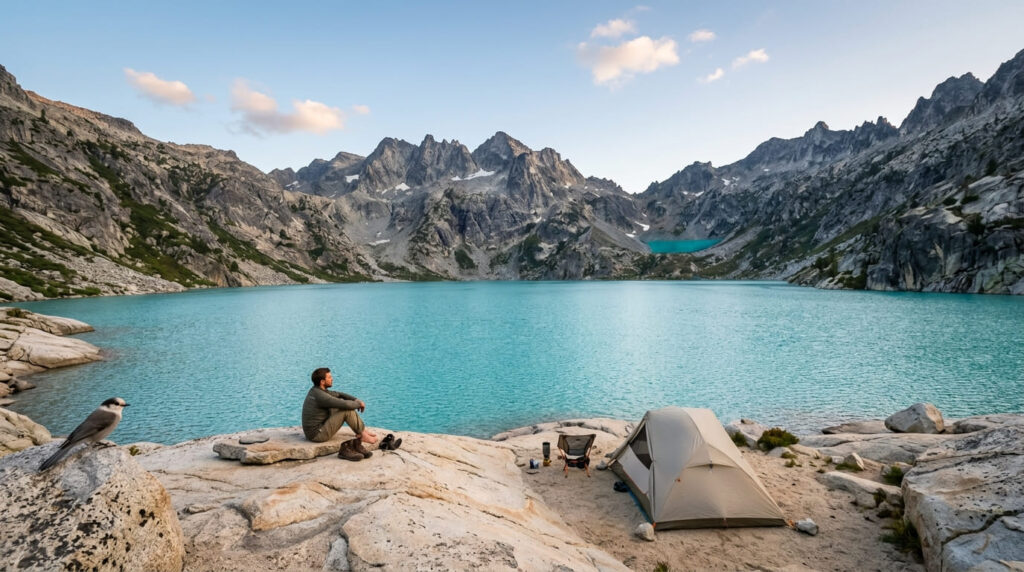
What you’ll see: two strikingly turquoise lakes beneath Sawtooth Peaks
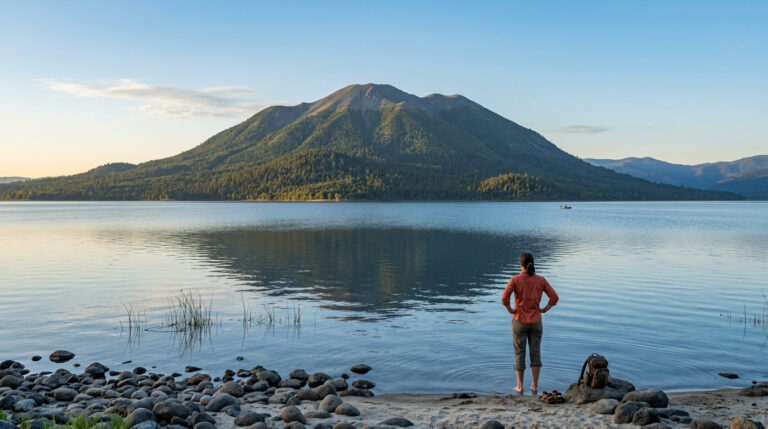
The Stuart Fork Trail runs about 13 miles one-way (roughly 25 to 27 miles round trip) to Emerald and Sapphire Lakes, both renowned for a vivid turquoise color caused by fine glacial rock flour suspended in the water. Sapphire Lake sits about 300 ft above and southwest of Emerald Lake, and at 200 ft deep, it’s the deepest lake anywhere in the Trinity Alps.
Best time to hike Stuart Fork Trail: a long summer day or overnight trip
Given the distance involved, this is more often backpacked over two or three days (using Morris Meadow, 9 miles in, as a first-night stop) than attempted as a single day, though ambitious day hikers do take it on.
Grizzly Lake Trail
Trailhead access and parking at the China Gulch Trailhead
The standard, most established approach to Grizzly Lake, confirmed across multiple independent trip reports, making it a demanding wilderness trailhead, with the same free overnight permit rule as the rest of this guide.
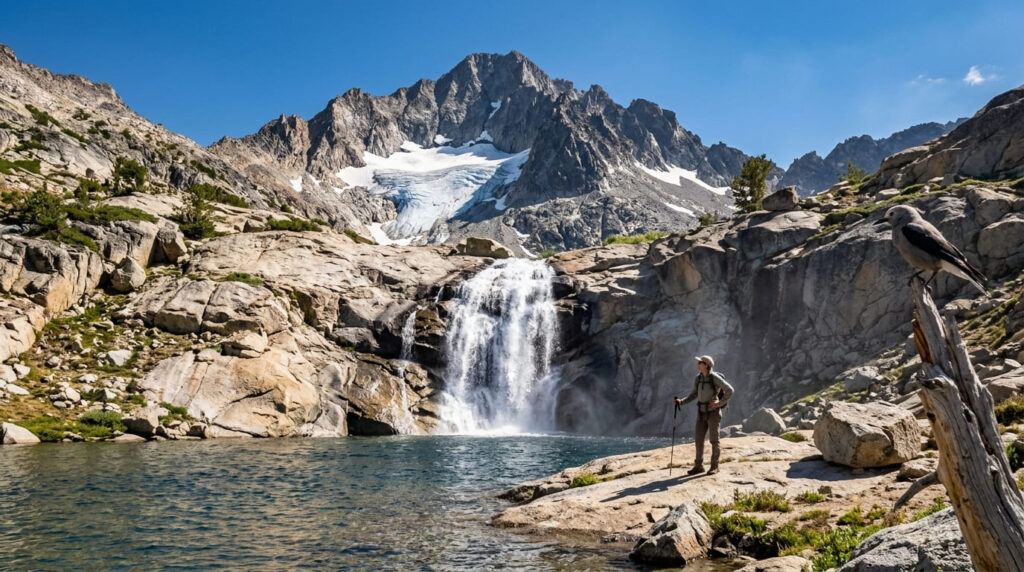
What you’ll see: a glacial lake below Thompson Peak, the Trinity Alps’ highest point
A roughly 15.5-mile round trip with about 5,170 ft of elevation gain leads past a dramatic 70-ft waterfall to Grizzly Lake, sitting directly below Thompson Peak (9,001 ft), the highest summit in the entire Trinity Alps Wilderness, with a genuine glacier visible on its north face. This is the single most physically demanding, highest-payoff trail in this entire guide.
Best time to hike Grizzly Lake: midsummer only, one of the wilderness’s hardest trails
Steep, rocky terrain and elevation gain make this trail’s difficulty, not exaggerated; midsummer is the only window for most hikers to attempt it safely.
Boulder Creek Lakes Trail
Trailhead access and parking near the Canyon Creek Trailhead area
A less-trafficked alternative reached from the same general trailhead area as Canyon Creek Lakes, offering a quieter option within the same wilderness.
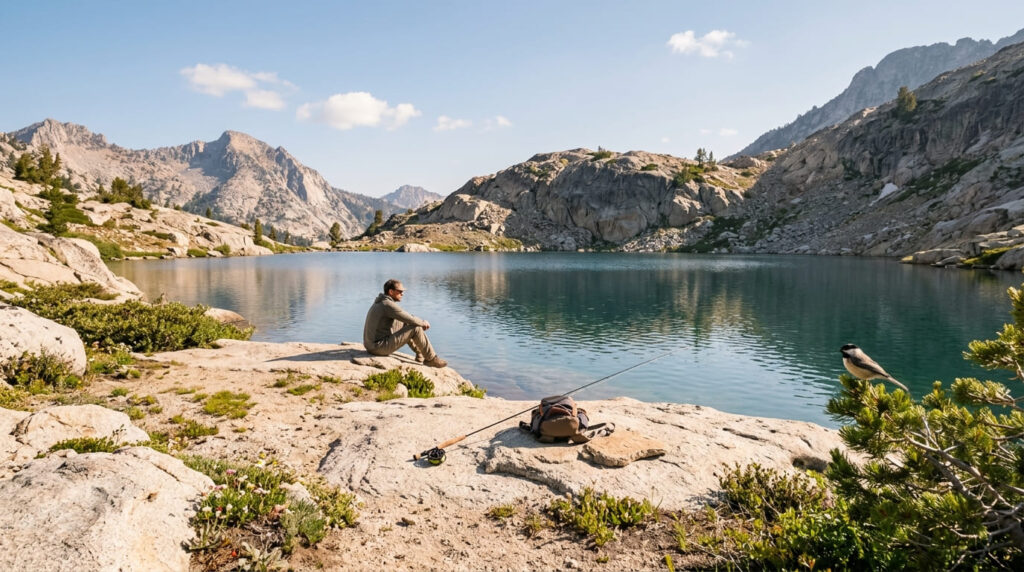
What you’ll see: a quieter chain of granite lakes away from the busier trails
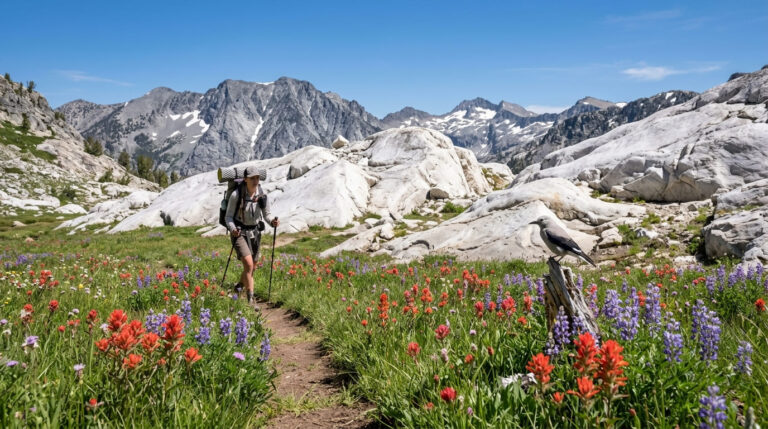
Comparable granite-basin scenery to Canyon Creek Lakes, with a fraction of the foot traffic, making it a strong pick for hikers who want the Trinity Alps’ signature look without the crowds.
Best time to hike Boulder Creek Lakes: summer through early fall
The same general seasonal window as the rest of this wilderness applies here, with early fall again offering a quieter alternative to peak summer visitation.
Caribou Lakes Trail (via Big Flat)
Trailhead access and parking at Big Flat
A trailhead requiring a somewhat longer access drive than the other entries in this guide, beginning near Big Flat Campground.
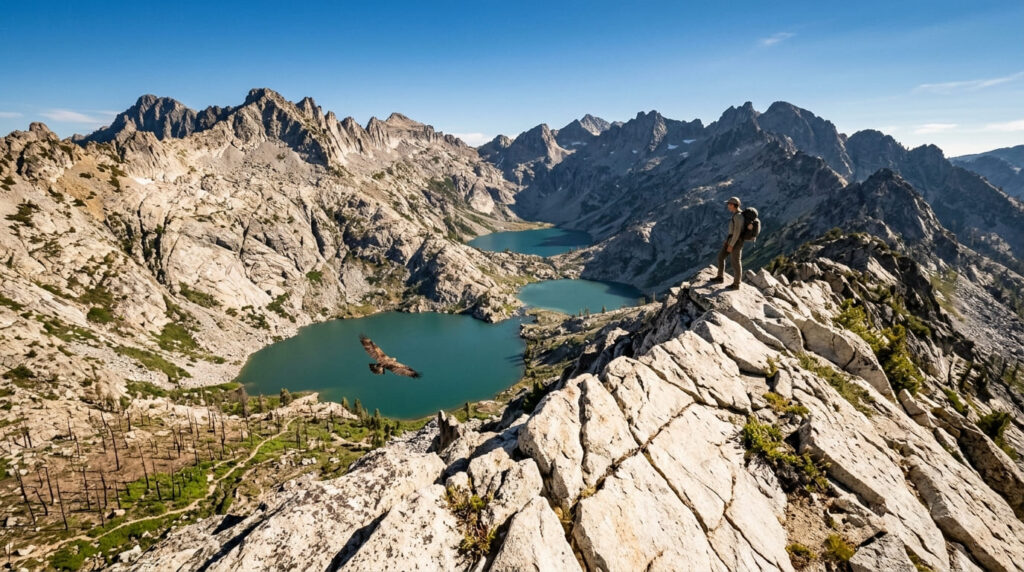
What you’ll see: a cluster of lakes beneath the Trinity Alps’ northern peaks
A demanding roughly 20-mile round trip (about 4,300 ft of gain) climbs through a large burn-scarred section before reaching the Lower Caribou, Snowslide, and Upper Caribou Lakes, with sweeping views from atop Sawtooth Ridge: a remote, multi-lake destination closing out this guide’s Trinity Alps coverage.
Best time to hike Caribou Lakes: a full-day summer trip or overnight
The distance and elevation gain here make this a full-day commitment at minimum, with many hikers opting to camp at the lakes rather than attempt a single very long day.
The trail I’d start with
If you’ve only got one trip into this wilderness, make it Canyon Creek Lakes: it’s the trail that best represents everything the Trinity Alps are known for, without demanding a multi-day commitment. Boulder Creek Lakes is the natural alternative once Canyon Creek feels too crowded, and Stuart Fork is worth planning as a backpacking trip rather than rushing as a day hike. Save Grizzly Lake and Caribou Lakes for when you’re ready for this wilderness’s hardest terrain.
For the non-wilderness reservoirs and accessible lakes elsewhere in this county, my Trinity County lake trails guide covers that deliberately different, easier terrain next. My Trinity County hiking guide rounds out everything else the county offers.
Frequently asked questions
Is Canyon Creek Lakes the most popular Trinity Alps trail?
Yes, widely considered so; its combination of waterfalls, accessible distance, and dramatic granite-basin lakes makes it the most-visited entry point into this entire wilderness.
Why are Emerald and Sapphire Lakes turquoise?
Fine glacial rock flour (sediment ground extremely fine by glacial action) stays suspended in the water and scatters light in a way that produces the strikingly vivid turquoise color both lakes are known for.
Is Thompson Peak the highest point in the Trinity Alps?
Yes, at 9,001 ft; it’s the tallest summit anywhere in the wilderness, with Grizzly Lake sitting directly below it.
Is Boulder Creek Lakes a good alternative to Canyon Creek Lakes?
Yes, it offers comparable granite-lake scenery within the same wilderness, with considerably less foot traffic than the more famous Canyon Creek Lakes.
How many lakes are at Caribou Lakes?
At least three named lakes (Lower Caribou, Snowslide, and Upper Caribou) form the core of this remote basin beneath the wilderness’s northern peaks.
Do you need a permit to hike in the Trinity Alps Wilderness?
Only for overnight stays. A free, self-issue wilderness permit is required to camp, available at Forest Service offices in Weaverville and elsewhere; day hiking any trail in this guide doesn’t require one.