The Environmental Impact of Hiking Trails in California: What the Science Actually Says
Hiking trails do have an environmental cost, erosion, wildlife disturbance, vegetation loss are all real. But the more useful question isn’t whether trails cause impact, it’s whether a trail causes less impact than the alternative, which is hikers spreading out across the landscape with no trail at all. Most of the time, a well-built trail is the smaller of two evils, not a neutral choice, and understanding the Environmental Impact of Hiking Trails in California changes how you think about every rule from “stay on the trail” to permit quotas.
Disclosure: Please note that some of the links below are affiliate links and at no additional cost to you, I may earn a commission. Know that I only recommend hiking gear I personally stand behind; when you use my affiliate links, it helps me run this blog and keep all of this content free of charge for readers (like you).
Key takeaways
- A hardened trail concentrates impact in one place instead of spreading it across fragile ground, that’s the core trade-off behind “stay on trail.”
- Erosion is the biggest physical impact, and California’s steep terrain, intense rain events, and fire-scarred slopes make it worse here than in gentler landscapes.
- Wildlife impact is often behavioral, not physical, food-conditioned bears and nesting disturbance do more long-term damage than footsteps do.
- Cryptobiotic soil in California’s deserts can take 50 to 250 years to recover from a single off-trail footstep.
- Permit systems like Half Dome’s 300-a-day cap exist because unmanaged crowding causes measurably more damage than the same number of hikers spread across a season.
Do hiking trails harm California’s wilderness areas?
Yes, but not in the way people usually mean it. A trail is a deliberate concentration of impact, compacted soil, cleared vegetation, a fixed line through the landscape, in exchange for keeping that impact off everywhere else. The honest framing isn’t “hiking trails are bad” or “hiking trails are harmless,” it’s that a trail trades a small, permanent, well-understood impact for a much larger, unpredictable one.
The difference between trail impact and off-trail impact in California
An established trail concentrates damage on a hardened surface that’s built to take it; off-trail movement disperses that same damage across ground that usually isn’t. Cryptobiotic soil, alpine meadows, and active nesting areas all recover far more slowly from scattered footsteps than a maintained trail recovers from heavy daily traffic. This is the actual argument behind “stay on the trail,” and it holds up: trail impact is the lesser evil, not a non-impact. Practicing proper trail etiquette ensures you remain on designed surfaces.
Soil erosion: the primary environmental impact of hiking trails in California
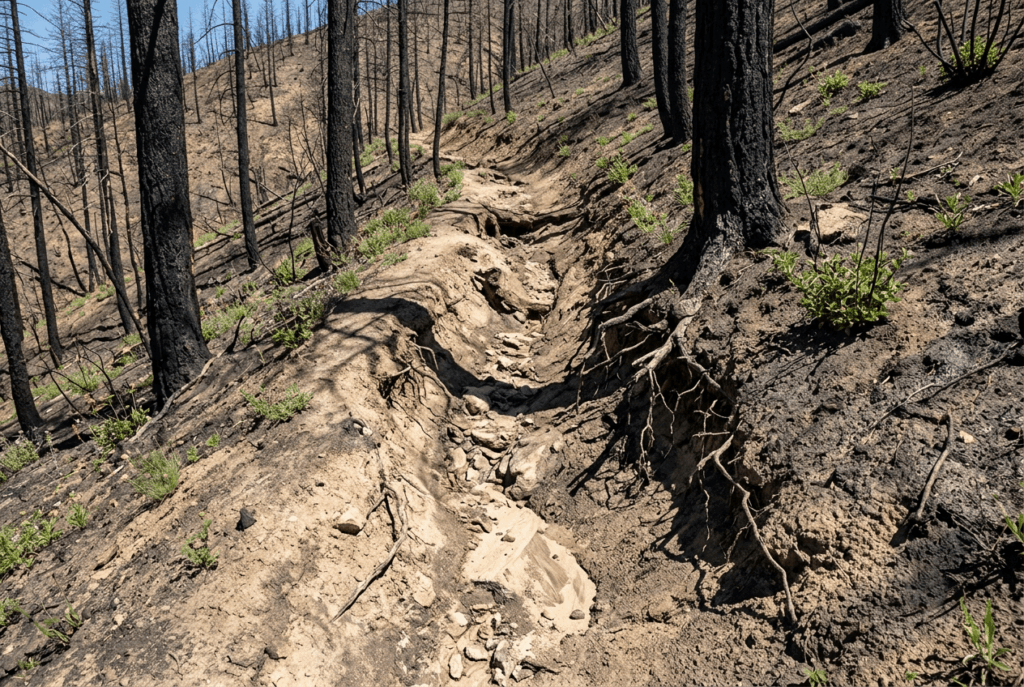
Erosion is the most visible and most persistent impact a trail causes, water finds the compacted, vegetation-stripped tread and channels along it, cutting deeper with every storm.
How California’s steep terrain and heavy rainfall accelerate trail erosion
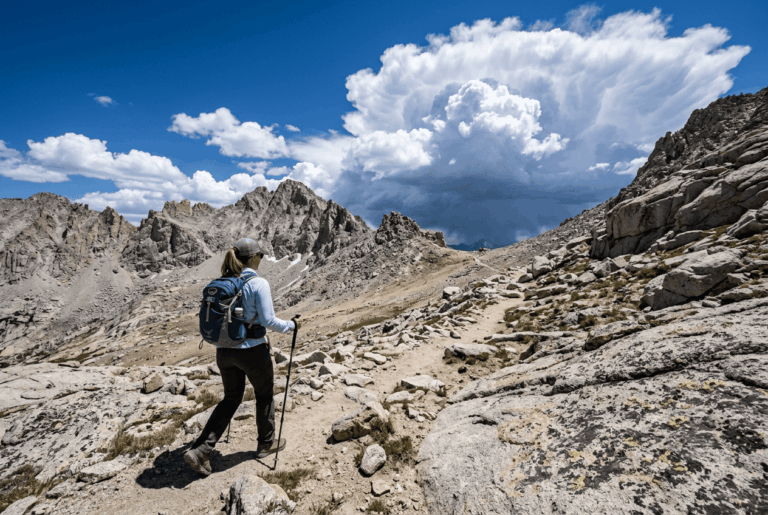
Sierra Nevada trails on 15–30% grades are already erosion-prone before you add California’s atmospheric river storms, which can dump more rain on already-saturated soil than gentler, steadier rain patterns ever would. Fire-scarred slopes make it worse still: burned soil often becomes hydrophobic, repelling water instead of absorbing it, which sends runoff straight down a trail tread at a volume the original design never accounted for. Read about mountain terrain washouts and slopes in our terrain hazards guide.
Trail design solutions that minimize erosion in California’s wilderness
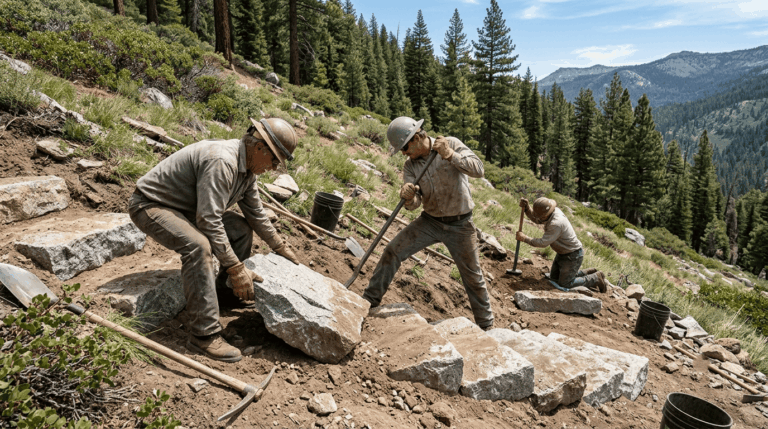
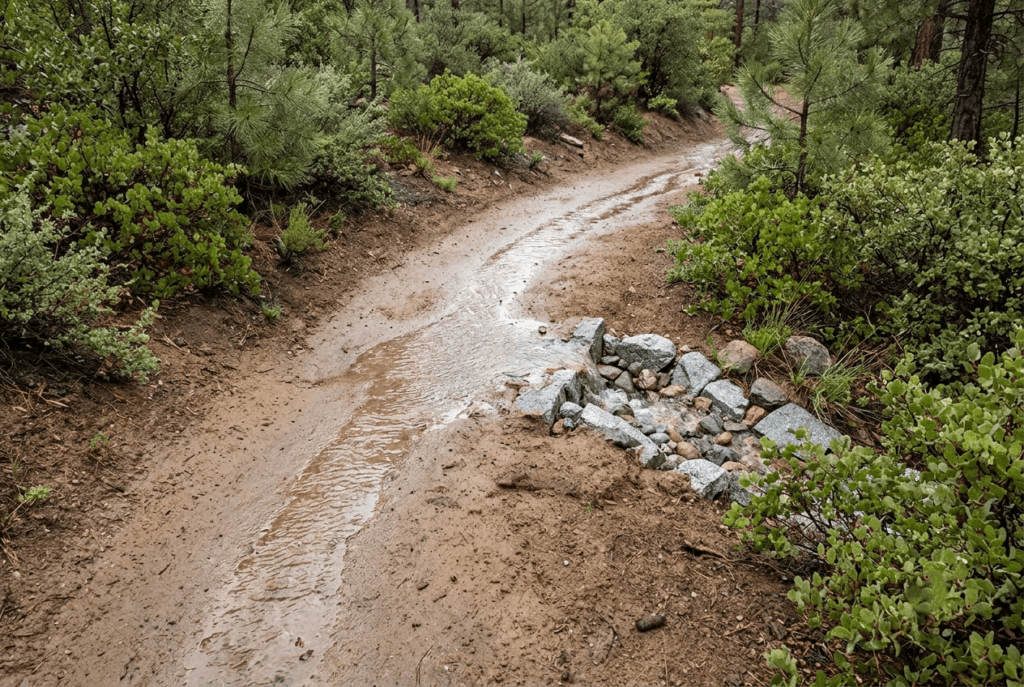
Good trail design fights this with outsloped tread, rolling dips, and rock armoring at wet crossings, the same techniques covered in more depth in our guide to how California’s trails are built. None of it eliminates erosion, but well-designed drainage is the difference between a trail that holds up for decades and one that turns into a gully within a few wet winters.
Wildlife disturbance: how hiker presence affects California’s trail animals
The most damaging wildlife impacts usually aren’t physical contact at all, they’re behavioral changes that ripple out long after a hiker has moved on.
Seasonal trail closures in California to protect nesting and breeding wildlife
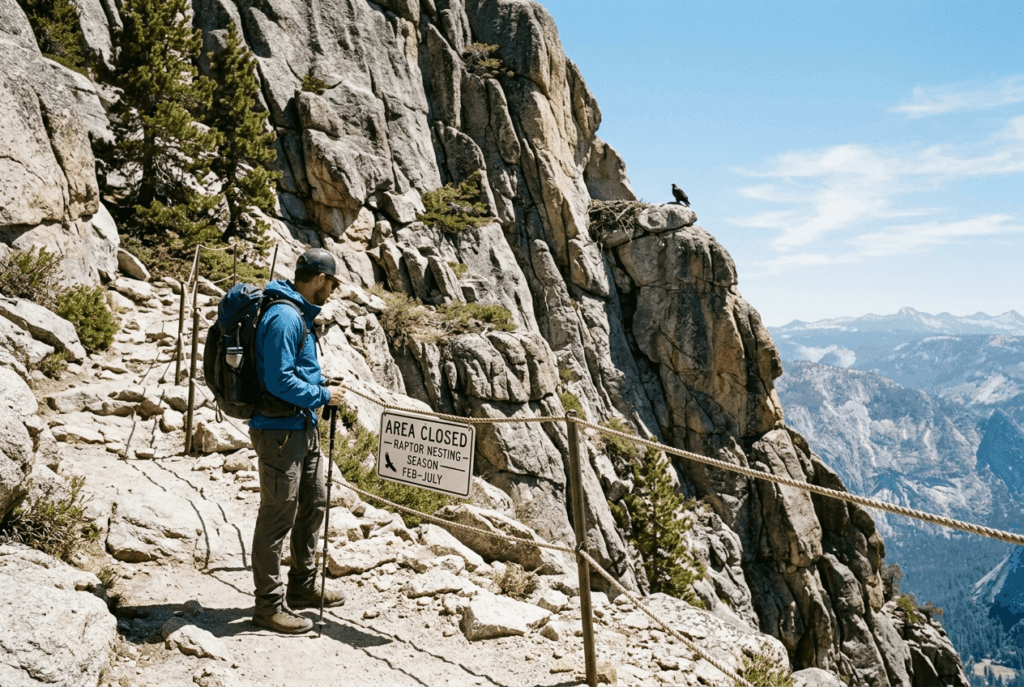
Raptor nesting closures, protecting species like Peregrine Falcons and Golden Eagles, typically run from February through July, right when cliff and rock-face nesting sites are most vulnerable to disturbance. Deer fawning season triggers similar restrictions in some areas, and coastal trails see Snowy Plover beach closures during their nesting window. These aren’t arbitrary: a single disturbance during incubation can cause a nest to fail entirely. Always consult park authorities or the National Park Service or U.S. Forest Service websites for active seasonal restrictions before departing.
The food conditioning problem: how hikers change bear behavior in California
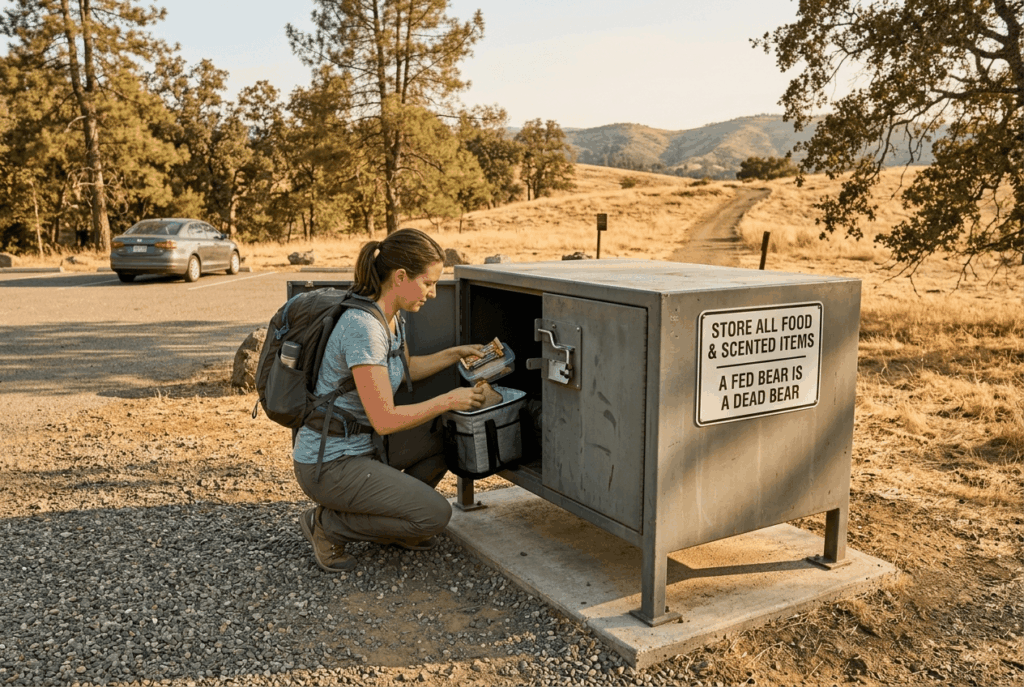
A food-conditioned bear, one that’s learned to associate humans with an easy meal, almost always ends badly for the bear, not the hiker; wildlife agencies routinely have to euthanize bears that become aggressive around food once conditioning sets in. It only takes one successful raid on an unstored food bag to start that pattern, which is why bear box compliance matters even on a trail where you’ve never personally seen a bear. This is a case where a single hiker’s shortcut has consequences that outlast that one trip by years.
Vegetation damage: trampling, trail braiding, and off-trail shortcutting
Plants take the most visible hit from hiker traffic, and the damage compounds in specific, predictable ways once a trail gets popular enough.
Cryptobiotic soil in California’s desert trails: why every footstep off-trail matters
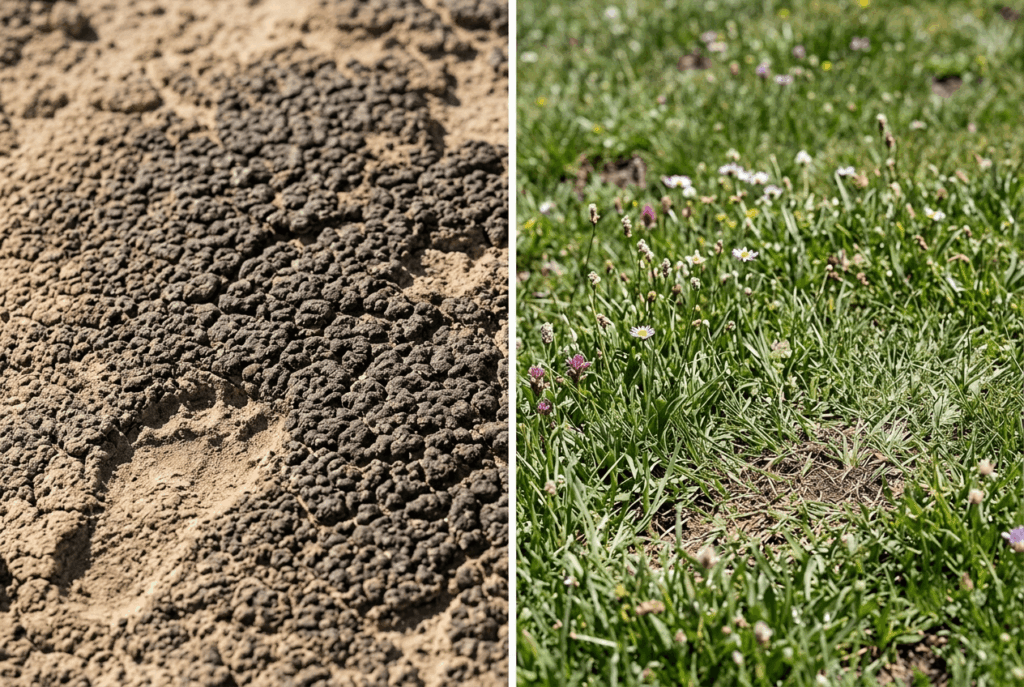
Cryptobiotic soil, the living crust of cyanobacteria, lichen, and moss that stabilizes desert ground in places like the Mojave and Anza-Borrego, can take 50 to 250 years to recover from a single off-trail footstep, and in some conditions it never fully recovers at all. It looks like ordinary dark, bumpy dirt, which is exactly why so many people damage it without realizing what they’ve stepped on.
Alpine meadows carry a similar warning, if a shorter one: trampled subalpine vegetation can take decades to recover, since the short growing season barely gives plants time to repair a single season’s damage before the next one starts.
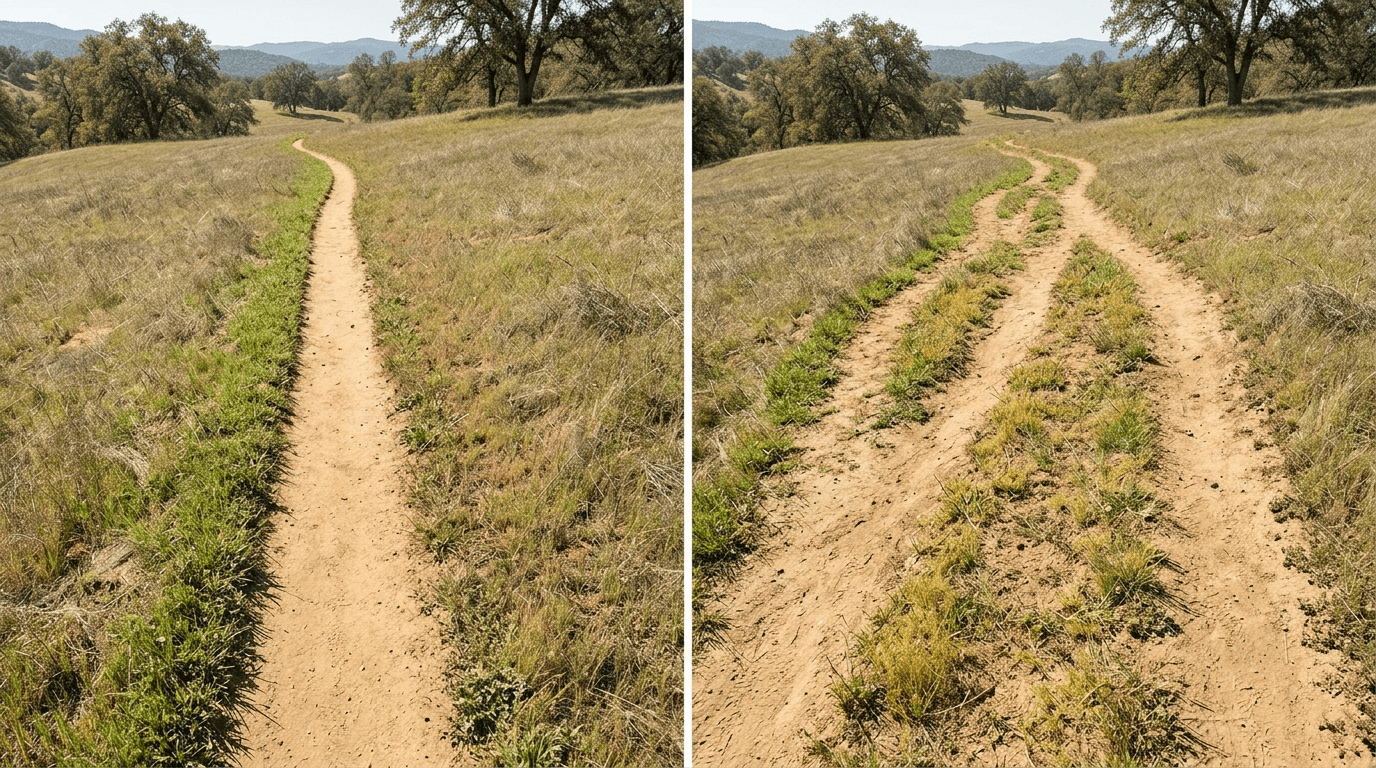
Trail braiding, the spread of multiple informal parallel tracks around a muddy or eroded section, is the visible symptom of hikers avoiding a bad patch of trail rather than a design flaw on its own. Every new braid multiplies the disturbed area without actually fixing the underlying erosion problem, which is why trail crews treat braiding as a repair priority rather than a cosmetic issue. The fix is almost always structural, a rerouted section, better drainage, or a boardwalk over the wet spot, because simply asking hikers to avoid the mud rarely works once a visible alternate path already exists.
How trail overcrowding is harming California’s most popular hiking destinations
Overcrowding compounds every impact already covered here, more feet accelerate erosion, more voices and movement increase wildlife disturbance, and more people looking for a way around a bottleneck are exactly how trail braiding starts.
How California is managing trail overcrowding through permit systems
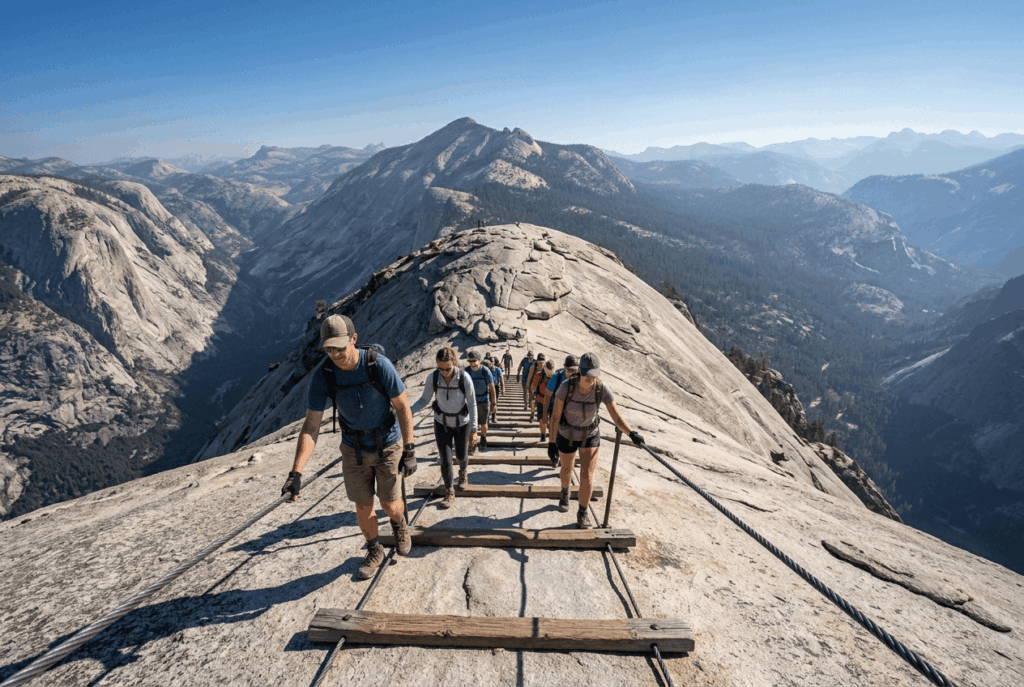
Yosemite’s Half Dome permit system caps cable access at 300 hikers a day, 225 day hikers and 75 backpackers, allocated through a preseason lottery each March plus a smaller daily lottery during the season, specifically because unmanaged crowds on that summit were a real safety and erosion problem before the cap existed. Mount Whitney runs a similar quota system for its own trail corridor, and Muir Woods now requires a parking or shuttle reservation to manage the volume of visitors on a comparatively small trail network.
These systems aren’t about restricting access for its own sake, they’re a direct response to the overcrowding impacts described throughout this piece, allocated via Recreation.gov to the specific trails where the math stopped working. Review trail difficulty ratings to see how steep climbs require structured management.
Hiking trails aren’t a neutral presence in California’s wilderness, but they’re consistently the better alternative to the impact of hikers moving without one. Stay on the hardened tread even when a shortcut looks harmless, respect seasonal closures even when the reason isn’t posted at the trailhead, and treat a permit system as a genuine conservation tool rather than a bureaucratic hurdle. Understanding the actual mechanism, concentrated impact versus dispersed impact, makes every one of those asks make sense instead of feeling like an arbitrary rule.
Frequently asked questions about the environmental impact of hiking in California
How do hiking trails impact the environment in California?
Trails cause soil erosion, vegetation loss, and wildlife disturbance, but they concentrate that impact on a hardened surface instead of spreading it across the broader landscape. That trade-off is why staying on trail is consistently the lower-impact choice, even though it isn’t a zero-impact one.
Does hiking damage wildlife habitats in California?
It can, mostly through behavioral disturbance rather than direct contact, nesting disruption during breeding season and food-conditioning in bears are the two most serious examples. Seasonal closures and proper food storage exist specifically to prevent these longer-lasting impacts.
What is cryptobiotic soil and why should I not step on it?
Idenitfying cryptobiotic soil is critical: it’s a living crust of cyanobacteria, lichen, and moss that stabilizes desert ground in places like the Mojave and Anza-Borrego, and it can take 50 to 250 years to recover from a single footstep. It looks like ordinary dirt, which is exactly why staying on the established trail matters so much in desert terrain.
Why are some California trails closed in spring and summer?
Most seasonal closures protect nesting or breeding wildlife, raptors like Peregrine Falcons and Golden Eagles typically nest February through July, and some coastal trails close for Snowy Plover nesting season. These closures target the specific window when disturbance is most likely to cause a nest or breeding attempt to fail.
How does overcrowding affect California’s most popular hiking trails?
Overcrowding accelerates every other impact covered here, more foot traffic speeds up erosion, increases the odds of wildlife disturbance, and drives the trail braiding that happens when hikers route around a crowded bottleneck. Permit systems like Half Dome’s daily cap exist specifically to bring visitor numbers back in line with what the trail and surrounding habitat can actually absorb.
What can I do to minimize my environmental impact when hiking in California?
Stay on the established tread even when a shortcut looks harmless, pack out everything you bring in, and respect seasonal closures and permit systems even when the reasoning isn’t posted at the trailhead. Our Leave No Trace guide covers the full set of practices that put this into action on an actual hike.