Best Hiking Trails in Pinnacles National Park
Pinnacles National Park is the eroded remnant of an ancient volcano, split into two entrances that aren’t connected by any road through the park, with talus caves you can walk through and wild California condors soaring overhead on a good day. Because the east and west entrances do not connect internally, planning your route ahead of time is essential; our Pinnacles National Park itinerary walks you through choosing a side, beating the midday heat, and seeing the best highlights in a single day.
Disclosure: Please note that some of the links below are affiliate links and at no additional cost to you, I may earn a commission. Know that I only recommend hiking gear I personally stand behind; when you use my affiliate links, it helps me run this blog and keep all of this content free of charge for readers (like you).
I’ve spent four-plus years cataloging trails across this state, and Pinnacles is one of the more surprising parks I send people to; most visitors have never heard of it, and the ones who go tend to come back talking about the caves and condors more than anything else on their California trip.
This guide covers the best trails, cave access, and condor-viewing details you need before you go. See how Pinnacles compares to other California parks in our national parks hiking guide.
Key takeaways:
- Pinnacles has two entrances (east and west) that aren’t connected by any road through the park, pick one before you arrive, since the drive between them takes over an hour.
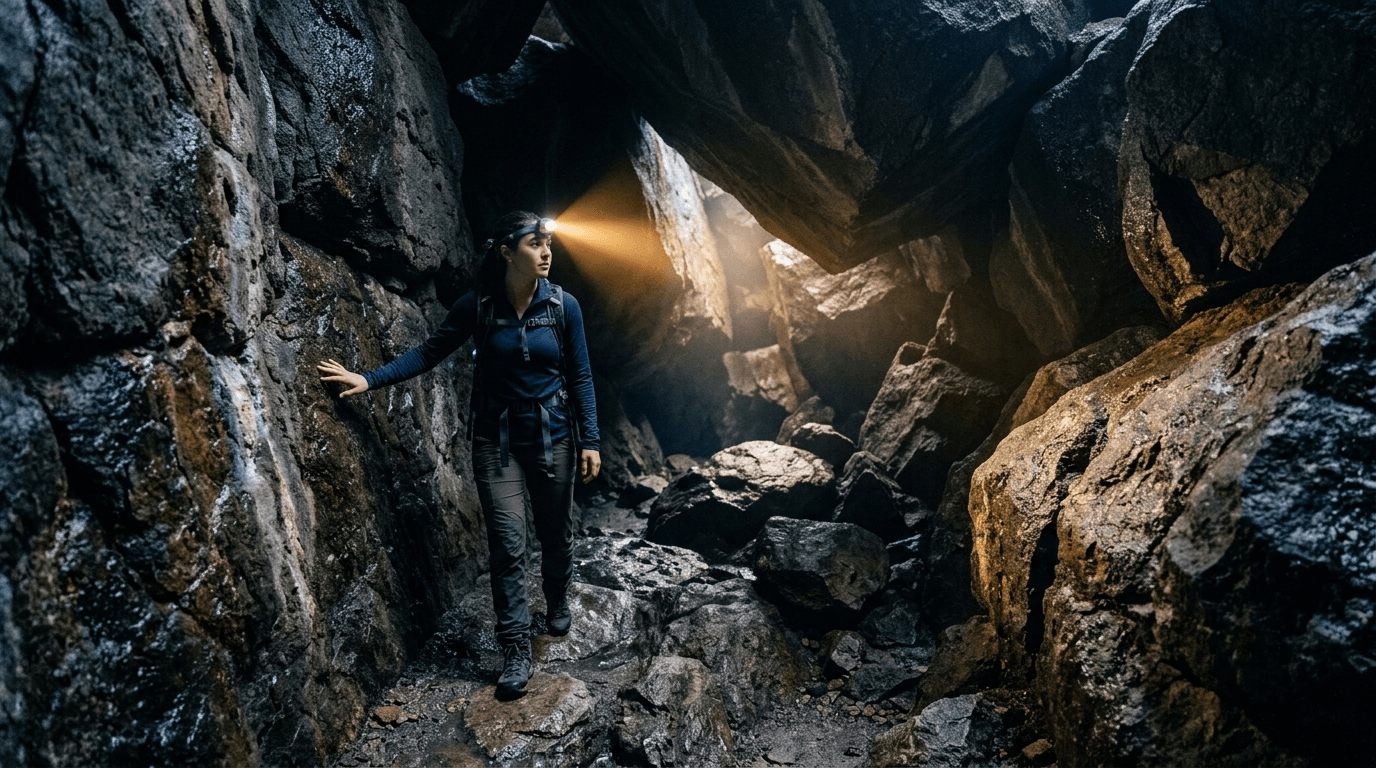
- Bear Gulch Cave (east) and Balconies Cave (west) are both walk-through talus caves; a headlamp is genuinely necessary, not optional, for either.
- Bear Gulch Cave’s upper section closes seasonally, typically mid-May through mid-July, to protect a maternal Townsend’s big-eared bat colony, always check current status before planning around it.
- Pinnacles has been an active California condor release site since 2003, and the High Peaks Trail is the single best place to spot one soaring overhead.
- Summer heat is genuinely extreme here, sometimes exceeding 100°F, plan hikes for early morning, and treat the caves as a cool-weather bonus during peak heat.
What makes Pinnacles National Park a unique hiking destination in California?
Pinnacles formed from the eroded remains of an ancient volcano that’s since been split and dragged roughly 200 miles north by the San Andreas Fault, the volcanic rock you’re hiking through here originally erupted much farther south, near what’s now the Mojave Desert.
The park’s talus caves, formed when massive boulders wedged into narrow canyons, require no climbing gear to walk through, which is genuinely unusual among national park features.
Add wild California condors soaring overhead and you get a hiking experience with almost no equivalent elsewhere in California, packed into a park small enough to see most of on a single well-planned trip.
East vs. west entrance at Pinnacles: how to choose for your hike
The two entrances aren’t connected by any road through the park, getting from one side to the other means either hiking through or driving well over an hour around the outside, so this decision genuinely shapes your entire trip, not just where you park.
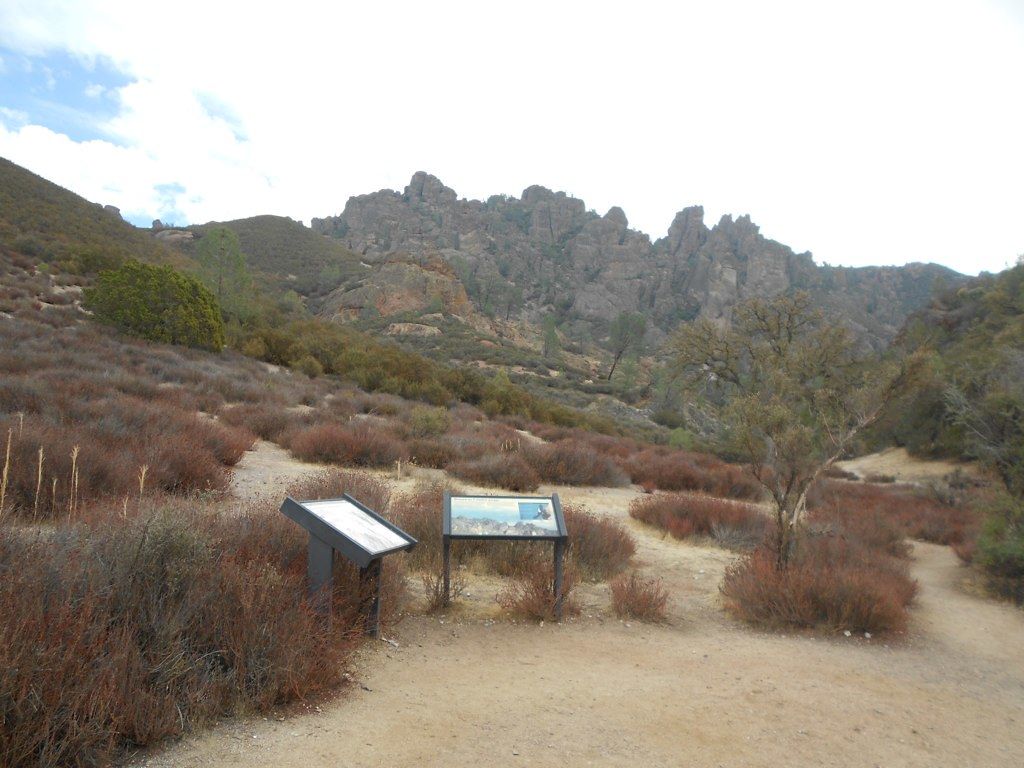
The east entrance has the visitor center, year-round camping, and access to Bear Gulch Cave and most of the High Peaks Trail, making it the better choice for most first-time visitors and anyone planning to stay overnight.
The west entrance (Chaparral trailhead) is closer to Highway 101, has no camping, and is your access point for Balconies Cave, quieter and less developed, but genuinely worth it if caves are your priority and you don’t need camping or the fuller visitor center experience.
Best easy hiking trails in Pinnacles National Park
Bench Trail: Pinnacles’ best flat and easy walk
At 2.2 miles round-trip with minimal elevation change, the Bench Trail connects the east side parking area to the base of the park’s rock formations, delivering real views without demanding much effort. It’s open year-round and holds up well for families, seniors, or anyone easing into a Pinnacles visit before tackling something harder, and it doubles as one of the better spring wildflower walks in the park when timed right.

Because it stays relatively flat and shaded in sections, it’s also a reasonable option on warmer days when the exposed High Peaks Trail would be miserable.
Best moderate hiking trails in Pinnacles National Park
Bear Gulch Cave Trail: hiking through Pinnacles’ most accessible talus cave
This roughly 2.2-mile loop from the Moses Spring trailhead takes you through a genuine talus cave, formed by massive boulders wedged together over the canyon, with a headlamp required, not optional, for the darker sections.
The upper cave closes seasonally, typically mid-May through mid-July, to protect a maternal colony of Townsend’s big-eared bats raising pups; the lower section stays open most of the year, and the exact closure window shifts based on the bats’ actual behavior each season rather than a fixed calendar date. Even when the cave itself is closed, the Moses Spring Trail above it offers good views of the geology that formed it, so the hike is still worthwhile either way.
Balconies Cave Trail: the west side cave experience at Pinnacles
At about 2.4 miles round-trip from the Chaparral trailhead, Balconies Cave offers a similar walk-through talus cave experience to Bear Gulch but sees noticeably fewer visitors, since it requires committing to the quieter west entrance. It’s open most of the year (closures here relate more to high water after storms than bat activity, so check conditions after heavy winter rain) and connects to the Balconies Cliffs Trail for hikers who want to extend the loop with more open-air scrambling.
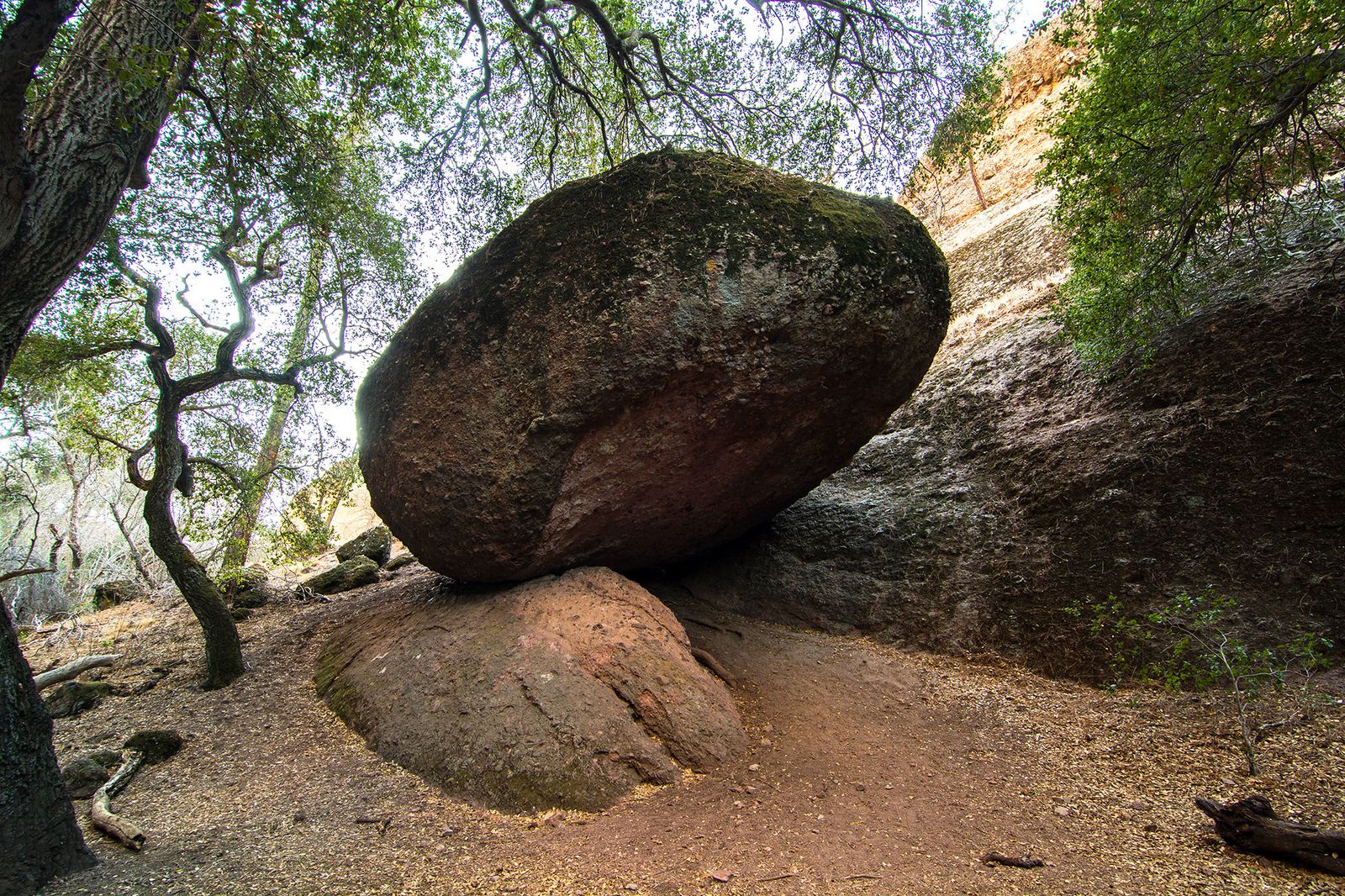
A headlamp is just as necessary here as at Bear Gulch, some sections require using both hands, so a hands-free headlamp genuinely beats a phone flashlight.
High Peaks Trail: the best full-day hike in Pinnacles National Park
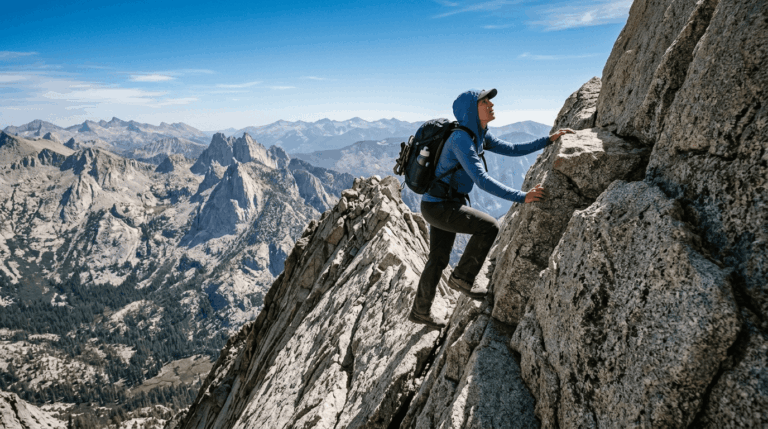
This roughly 8.4-mile loop from the east side climbs about 1,300 ft through the park’s most dramatic terrain, including a narrow, exposed section with hand-and-foot holds carved directly into the rock, not a trail for anyone with a serious fear of heights or unsteady footing. It’s widely considered Pinnacles’ best full-day hike, with spectacular volcanic spire views and a real chance of watching a California condor soar past at eye level rather than as a distant speck.
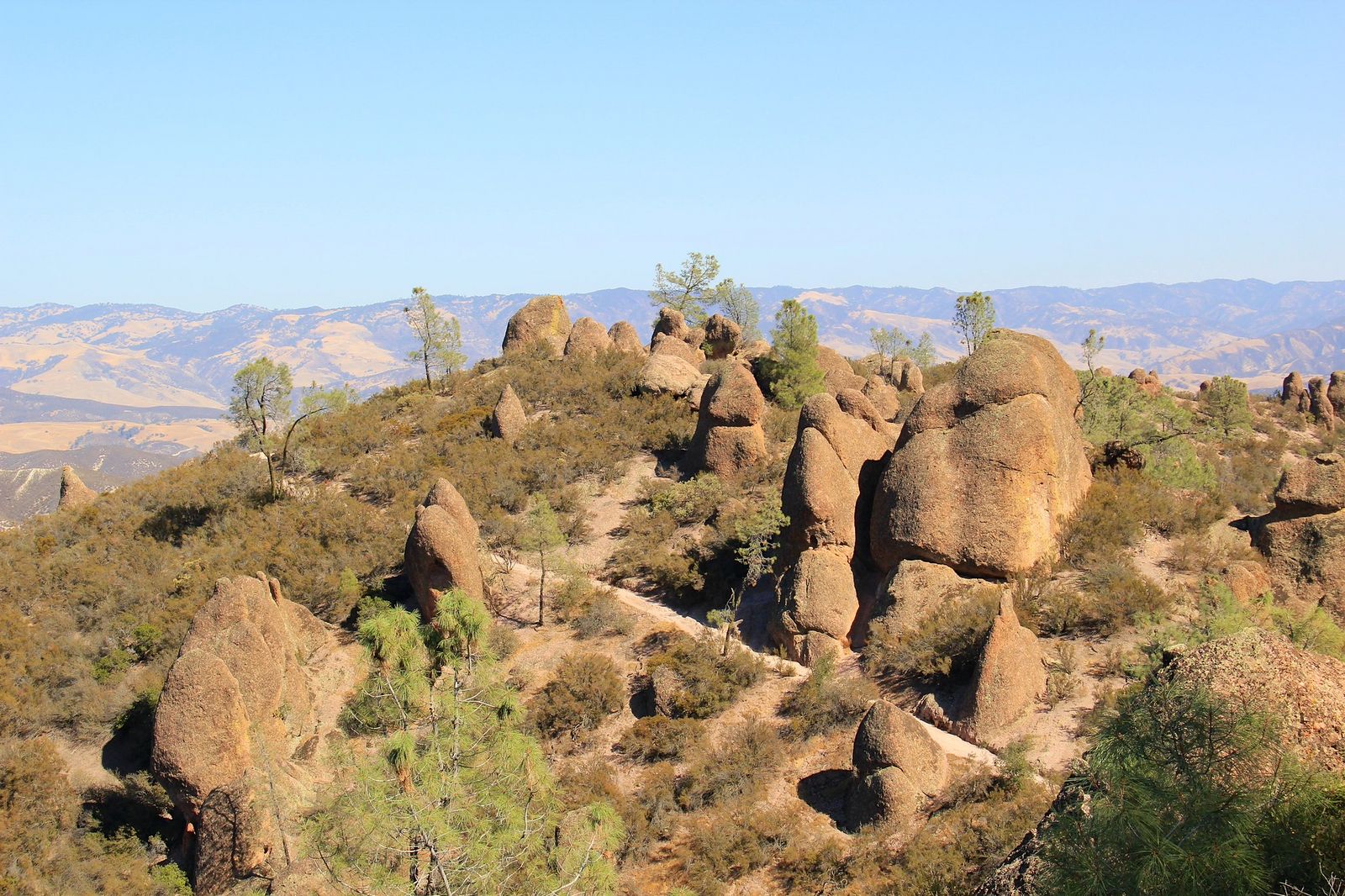
Budget most of a day for this one, start early to beat the heat, and carry more water than feels necessary given how exposed most of the route is. Before you attempt this exposed route, review our hiking difficulty levels guide to understand steep granite holds and exposure.
California condor viewing on Pinnacles hiking trails
Best trails and times to see California condors at Pinnacles
Pinnacles has been an active California condor release site since 2003, and the park now supports dozens of free-flying condors, an extraordinary recovery story for a bird that was down to just a handful of individuals in the wild in the 1980s before captive breeding programs began rebuilding the population.
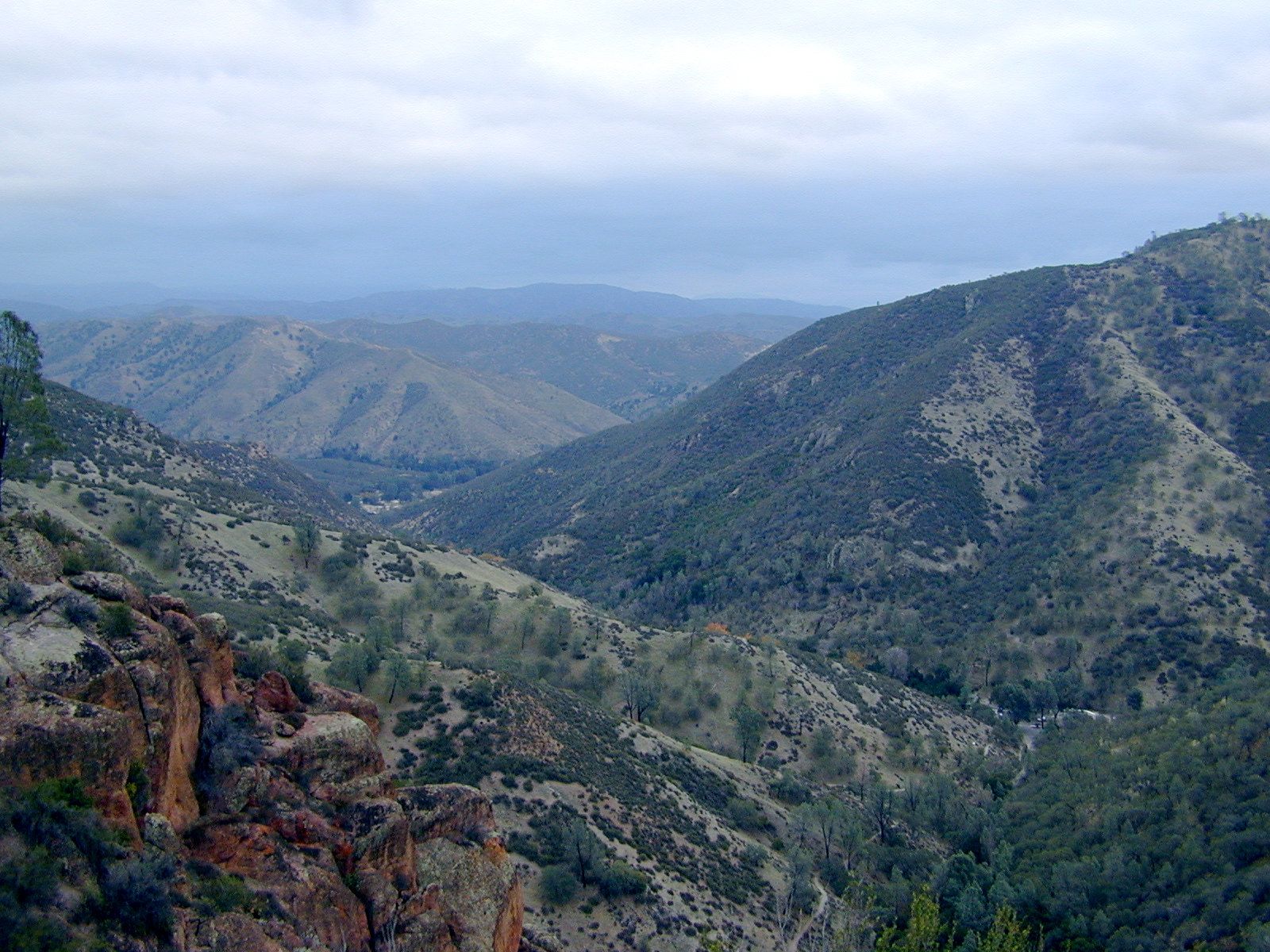
The Condor Gulch Trail (1.7 miles round-trip to an overlook) is the most reliable dedicated condor-viewing trail, while the High Peaks Trail offers your best odds of watching one soar past mid-morning, when rising thermals give the birds lift and they spend more time actively flying rather than perched out of sight.
Bring binoculars if you have them, condors are often visible as distant soaring shapes before you can make out any real detail, and many wear numbered wing tags that let researchers (and sharp-eyed visitors) track individual birds. Even without binoculars, the sheer size of a condor in flight, a wingspan among the largest of any North American bird, usually makes them unmistakable once you spot one against the sky.
When to visit Pinnacles for the best hiking
Spring (February through April) brings peak wildflowers and the most comfortable hiking temperatures, though it overlaps with the start of Bear Gulch Cave’s bat closure window. Summer is genuinely brutal, temperatures can exceed 100°F, and dawn starts aren’t optional if you’re doing anything more than a short shaded walk. Fall cools back down and both caves typically reopen, making it one of the best all-around seasons to visit.
Winter is quiet and cool, with both caves usually open, though occasional storms can trigger temporary high-water closures at Balconies.
Spring wildflower hiking at Pinnacles National Park
Wildflowers typically peak from February through April, with poppies, goldfields, phacelia, and blue dicks covering the hillsides, the Bench Trail and Condor Gulch Trail are both reliable viewing spots. Pinnacles ranks among the better spring wildflower destinations in California, and it’s a good reason to visit before summer heat makes the same trails much less pleasant.
If you’re building broader hiking skills, our hiking safety guide covers heat and hydration planning worth reviewing before a summer Pinnacles trip specifically, and practicing Leave No Trace trail etiquette is essential when exploring the park’s caves and peaks.
| Trail | Distance | Elevation gain | Difficulty | Entrance |
|---|---|---|---|---|
| Bench Trail | 2.2 mi RT | Minimal | Easy | East |
| Bear Gulch Cave | ~2.2 mi loop | Minimal | Moderate | East |
| Balconies Cave | ~2.4 mi RT | Minimal | Moderate | West |
| Condor Gulch (overlook) | 1.7 mi RT | Moderate | Moderate | East |
| High Peaks Trail | ~8.4 mi loop | ~1,300 ft | Strenuous | East |
Frequently asked questions: hiking in Pinnacles National Park
What are the best hiking trails in Pinnacles National Park?
The High Peaks Trail for the best full-day hike, Bear Gulch Cave for the park’s signature talus-cave experience, and the Bench Trail for an easy, family-friendly option cover the range most visitors are looking for.
Do I need a flashlight for the cave trails at Pinnacles?
Yes, a headlamp is genuinely necessary, not optional, for both Bear Gulch and Balconies Cave, since sections are dark enough that a phone flashlight alone is a poor substitute.
Can you see California condors at Pinnacles National Park?
Yes, Pinnacles has been an active condor release site since 2003 and now supports dozens of free-flying birds; the Condor Gulch Trail and High Peaks Trail are the best viewing spots, especially mid-morning when thermals give them lift.