15 Physical Health Benefits of Hiking California’s Trails
Hiking doesn’t get filed under “real exercise” as often as it should. It’s low-impact enough to sustain for years, but a California trail with real elevation gain can out-work a gym session most people would call intense. Here are the physical health benefits of hiking that actually hold up under the fitness science, heart, muscles, bones, balance, sleep, and beyond, and why California’s terrain specifically pushes most of these benefits further than a flat walk or a treadmill session ever could.
Disclosure: Please note that some of the links below are affiliate links and at no additional cost to you, I may earn a commission. Know that I only recommend hiking gear I personally stand behind; when you use my affiliate links, it helps me run this blog and keep all of this content free of charge for readers (like you).
Key takeaways
- Hiking sits at roughly 6.0 METs for cross-country terrain, per the Compendium of Physical Activities, nearly double a flat walk (3.5 METs), and higher still with elevation gain or a loaded pack.
- Most hikers burn 300–600 calories per hour on moderate terrain, and up to 900+ per hour on steep trails with a pack.
- Hiking builds the glutes, quads, hamstrings, and calves through elevation change alone, plus core and upper body when trekking poles are involved.
- It’s genuinely good for your knees, not bad for them, hiking’s impact forces are far lower than running’s, and stronger surrounding muscles protect the joint.
- Weight-bearing trail time builds bone density, which matters more with age, not less.
- Meeting the CDC‘s 150-minutes-a-week activity guideline through hiking is linked to meaningfully lower all-cause mortality risk in long-term studies.
Why hiking is one of the best physical exercises you can do
Hiking checks a box most single exercises don’t: real cardiovascular demand, full lower-body strength work, and low joint impact, all in the same hour. You don’t get that combination from a treadmill or a spin class; you get pieces of it. Understanding what actually makes a trail a trail gives you context on the surfaces you’ll encounter.
How hiking compares to other forms of cardio exercise
Running burns more calories per minute, but running’s MET value comes with far higher joint-impact forces. Cycling is easier on the joints but works less muscle mass overall. Hiking lands in a genuinely useful middle: moderate-to-vigorous cardio load (roughly 6.0 METs on cross-country terrain, per the Compendium of Physical Activities, versus 3.5 for a flat walk) without running’s pounding.
Why California terrain makes hiking even more effective for fitness
Flat pavement barely qualifies as a workout compared to a Sierra switchback. Elevation gain and terrain type push the MET value up fast, a steep, technical California trail with a day pack can reach 7–9 METs, approaching running-level intensity while staying lower-impact.
Cardiovascular health: how hiking strengthens your heart
Your heart doesn’t know the difference between hiking and a cardio machine, it only responds to sustained effort, and a trail with real elevation gain provides plenty of that.
What happens to your heart rate during a California hike?
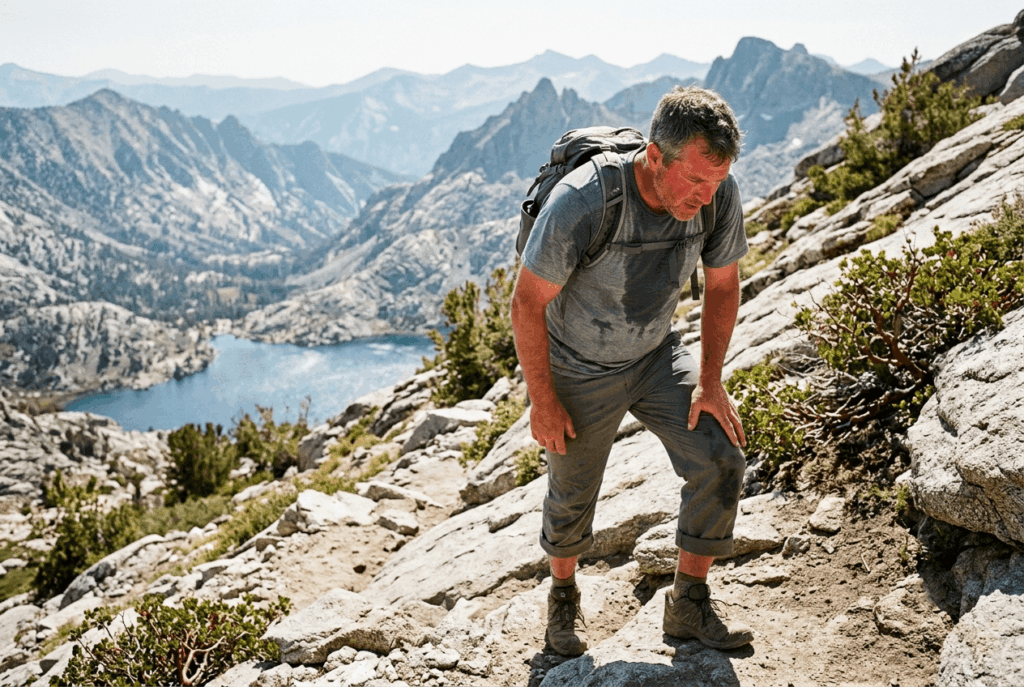
Sustained climbing pushes most hikers into a moderate-to-vigorous heart rate zone, roughly 50–70% of max heart rate on rolling terrain, climbing toward 70–85% on sustained steep grades. That’s the same zone doctors recommend for cardiovascular training, just achieved by walking uphill instead of running.
How regular hiking reduces blood pressure and cardiovascular risk
Regular moderate-intensity aerobic activity is one of the most consistently supported ways to lower resting blood pressure and improve arterial health, and hiking qualifies as exactly that kind of activity. The benefit comes from consistency, a weekly hike does more for your cardiovascular system than one big hike a month, since the heart adapts to repeated demand, not occasional peaks.
Calorie burn and weight management on California trails
Calorie burn is the number most people ask about first, and it’s also the one most affected by variables that have nothing to do with distance, incline, pack weight, and terrain surface all move the number more than mileage alone.
How many calories does hiking burn per mile in California?
Most hikers burn roughly 100–300 calories per mile, depending on incline and pack weight, flat, packed trail sits at the low end, steep or loose terrain at the high end. Per hour, that translates to about 300–600 calories on moderate terrain, and up to 900+ on steep trails with a loaded pack. That range is wide on purpose: mileage alone is a weak predictor of calorie burn compared to elevation profile.
How California’s elevation and terrain affect calorie burn
A 10% grade can raise calorie burn by 60–80% over flat terrain, which is why a Sierra Nevada climb burns dramatically more than a coastal flat. Heat adds its own cost too; desert hiking in Mojave-region temperatures pushes your body to work harder just to regulate its core temperature, on top of the trail work itself. Check our difficulty ratings guide for more on understanding these factors before you head out.
Muscle strength and tone: which muscles does hiking work?
Hiking is a lower-body strength exercise wearing a cardio costume, every uphill step is a functional squat or step-up, repeated for miles instead of sets.
Lower body muscles activated on California’s uphill and downhill trails
Ascending recruits your glutes and quads hardest, since they’re doing the lifting against gravity. Descending shifts the load to your hamstrings and calves, which control and absorb each step. On a mixed-terrain California trail, you’re training both directions in a single outing, something a treadmill’s fixed incline can’t replicate.
Core and upper body benefits of hiking with trekking poles
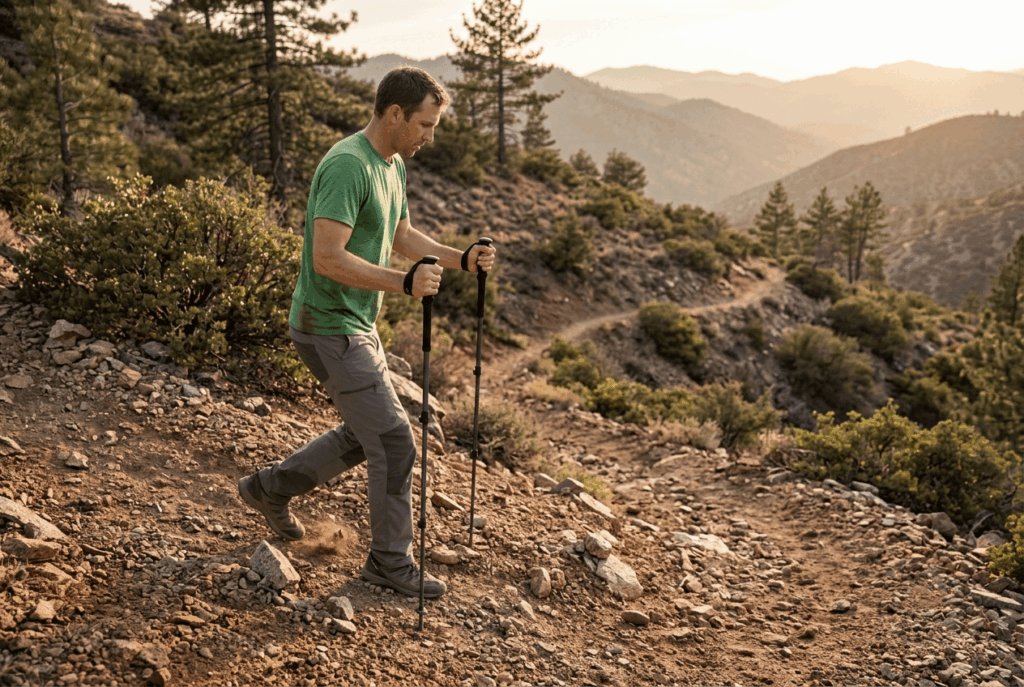
Trekking poles turn hiking into a partial upper-body workout, engaging your shoulders and arms with every plant, while your core works constantly to stabilize on uneven ground. If you’ve only ever hiked without poles, this is genuinely one of the easiest upgrades to add real strength work to the same hike. For more gear recommendations, see our hiking safety guide.
Bone density, joint health, and injury prevention
This is where hiking’s reputation and its reality diverge most, most people assume it’s rough on the body, when the evidence points the other way for both joints and bones.
Is hiking hard on your knees? The truth about joint impact
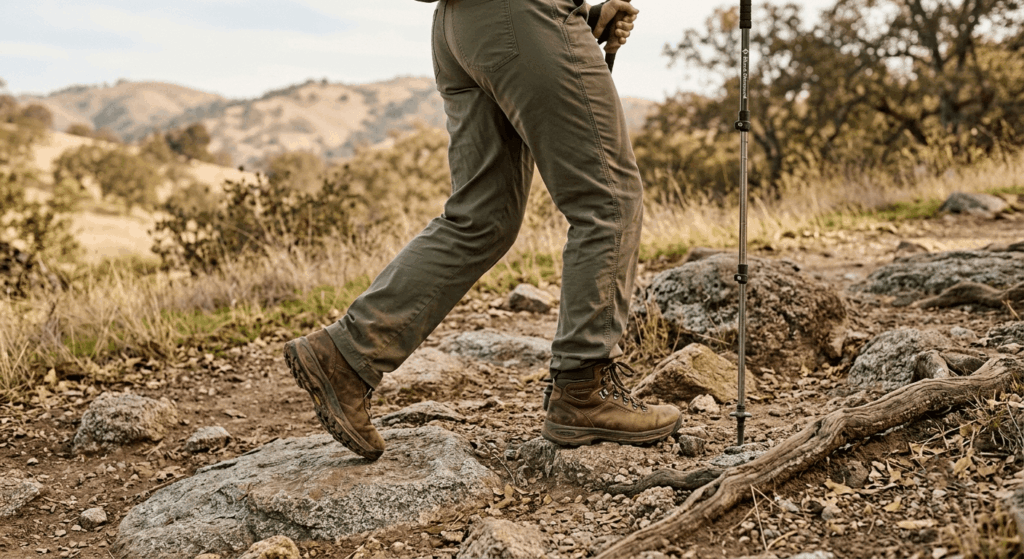
Hiking is widely misunderstood here, its impact forces are far lower than running’s, since you never have both feet off the ground at once the way you do mid-stride in a run. The bigger risk to your knees is usually a weak surrounding muscle base or worn-out footwear, not the act of hiking itself. Trekking poles reduce descent-related knee load further, especially on steep trail, by transferring some of that braking force into your arms instead.
How hiking builds bone density and reduces osteoporosis risk
Bone responds to load the same way muscle does, weight-bearing activity like hiking stimulates bone remodeling and helps offset the density loss that comes naturally with age. This makes hiking one of the more protective activities for long-term bone health, especially compared to non-weight-bearing options like swimming or cycling, which don’t load the skeleton the same way regardless of how demanding they feel.
Balance, coordination, and proprioception gains from trail hiking
Balance is trainable, and most people never train it directly, trail hiking does it as a side effect of simply staying upright.
Why California’s rocky and uneven trails train your balance better than a gym
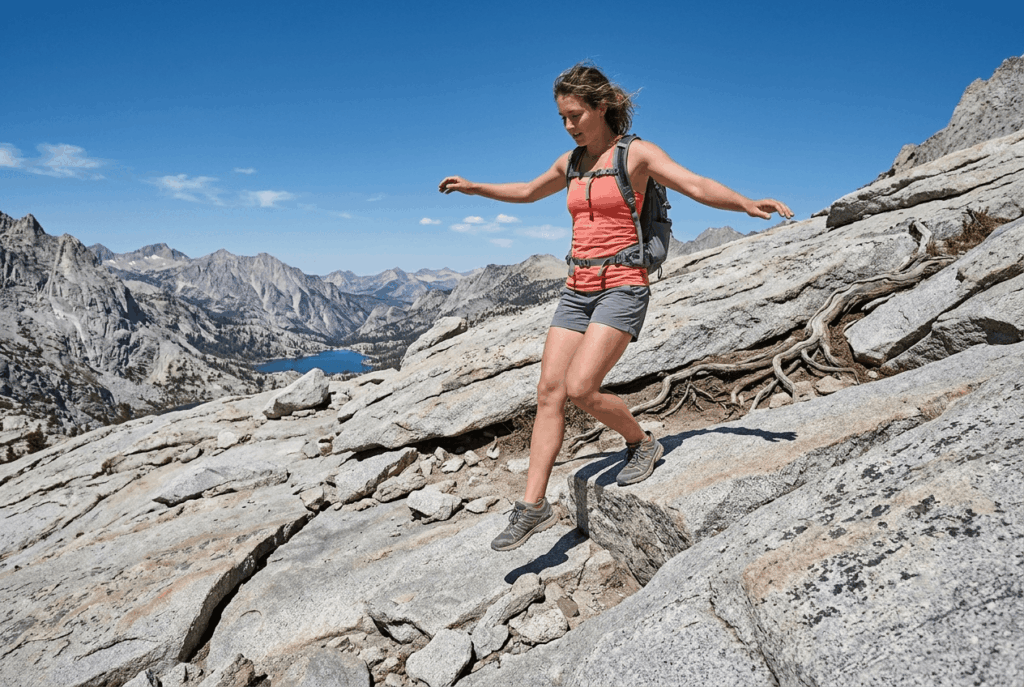
A treadmill never asks your ankles to adapt to a root, a loose rock, or a tilted granite slab, a California trail asks that of you every few steps. That constant small-scale adjustment is proprioception training: your nervous system learning, in real time, how to keep you upright on unpredictable ground. It’s one of the most underrated fall-prevention tools available, particularly as people age and balance naturally declines.
Sleep quality, immune function, and longevity benefits
The benefits that don’t show up on a fitness tracker are often the ones that matter most long-term, sleep, immune resilience, and how many healthy years you’re likely to add. For the psychological side, check out our mental health benefits of hiking guide.
How time on California trails improves sleep and recovery
Natural daylight exposure during a hike helps reset your circadian rhythm, which supports more consistent melatonin production come evening. Combine that with the physical fatigue of trail miles, and most hikers report noticeably better sleep the night after a hike than after a sedentary day.

The long-term longevity benefits of regular hiking in nature
The CDC recommends at least 150 minutes of moderate aerobic activity a week for substantial health benefits, and a large long-term American Heart Association study found adults hitting two to four times that recommended range had a roughly 26-31% lower risk of death over the study period. A weekly hike or two, done consistently, is a realistic way to land inside, or beyond, that range.
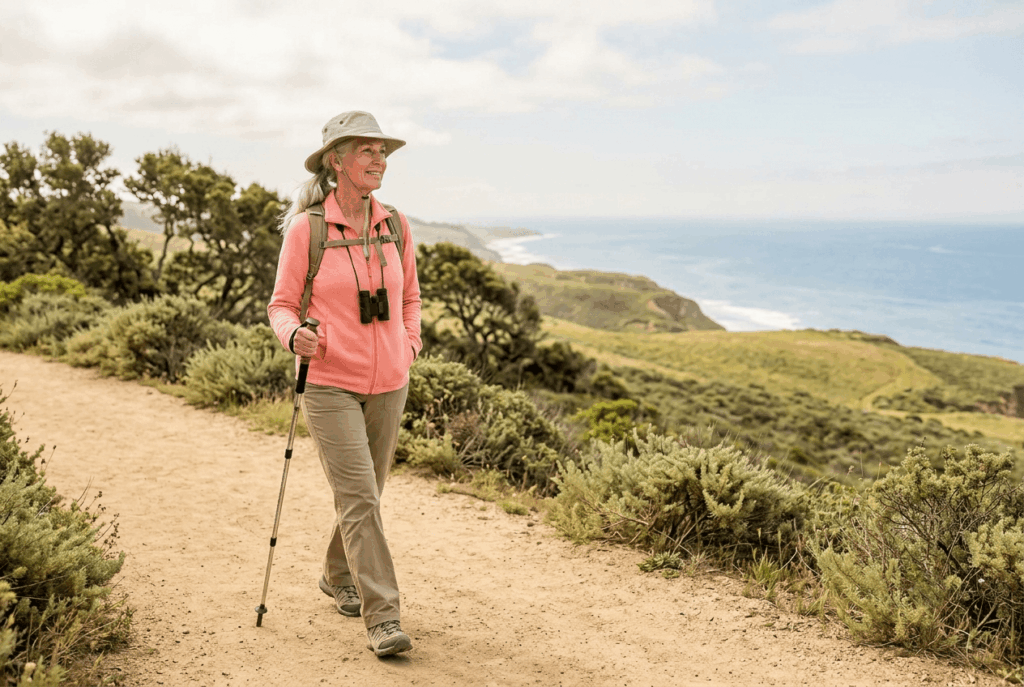
None of these benefits require a summit or a strenuous-rated trail. A regular, moderate hike does most of this work; the difficulty level you choose just determines how much you’re asking of any one system on a given day. Start with what your knees and schedule can sustain (or try an ADA-accessible trail), and the cardiovascular, muscular, and bone benefits compound from there.
Frequently asked questions about the physical health benefits of hiking
How many calories does hiking burn per hour?
Most hikers burn 300–600 calories per hour on moderate terrain, and up to 900+ on steep trails with a loaded pack. Your body weight, incline, and pack weight all move that number more than pace does.
Is hiking good for losing belly fat?
Hiking supports fat loss the same way any sustained moderate-to-vigorous cardio does, through a calorie deficit over time, but it can’t selectively target belly fat specifically. Combined with a consistent routine and diet, it’s a genuinely effective tool.
How often should I hike to see physical health benefits?
Once or twice a week, consistently, is enough to start seeing cardiovascular and strength benefits, matching the CDC‘s 150-minutes-a-week guideline. More frequent hiking accelerates the results but isn’t required to see them.
Is hiking better exercise than walking?
For fitness purposes, generally yes, elevation gain and uneven terrain push hiking’s MET value well above flat walking’s, engaging more muscle mass in the process. A flat paved walk is still valuable, just a lower-intensity version of the same activity.
Can hiking replace going to the gym?
For cardiovascular and lower-body strength, largely yes. It’s weaker at building upper-body strength unless you add trekking poles or a weighted pack, so hikers chasing serious upper-body gains still benefit from some supplemental strength training.
What muscles are sore after hiking and why?
Quads and glutes are usually sore from climbing, while calves and hamstrings often take the brunt of descents. That soreness is standard delayed-onset muscle soreness from the eccentric (lengthening) muscle work descents demand, not a sign anything went wrong.