Hiking Trail Etiquette: Rules Every California Hiker Must Follow
Nobody hands you a rulebook at the trailhead, so most hikers learn etiquette by accident, usually by breaking a rule and getting a look from a ranger or a fellow hiker. California’s trails are some of the most-visited in the country, which means the margin for “I didn’t know” is smaller here than almost anywhere else. Here’s what actually yields to what, what Leave No Trace really asks of you, and the rules that don’t show up on trailhead signs but everyone wishes you knew.
Disclosure: Please note that some of the links below are affiliate links and at no additional cost to you, I may earn a commission. Know that I only recommend hiking gear I personally stand behind; when you use my affiliate links, it helps me run this blog and keep all of this content free of charge for readers (like you).
Key takeaways
- Right of way, in order: hikers yield to horses, downhill hikers yield to uphill hikers, and cyclists yield to everyone else on multi-use trails.
- Leave No Trace has seven principles, not just “pack out your trash”: plan ahead, stay on durable surfaces, dispose of waste properly, leave what you find, minimize campfire impact, respect wildlife, and be considerate of others. Learn more at lnt.org.
- California State Park trails generally don’t allow dogs at all, even leashed, a surprise to most people, and different from county/regional parks and national forests.
- Drones are banned in every U.S. national park, full stop, with fines up to $5,000. State parks are more mixed but mostly restricted too.
- Most Sierra and SoCal wilderness areas cap group size at 12–15 people, occasionally up to 25 depending on the specific wilderness.
- The real cost of poor etiquette isn’t just annoyance: it’s trail erosion, wildlife stress, and, in crowded areas, actual trail closures.
Why trail etiquette matters on California’s busy hiking trails
California carries more trail mileage than any other state, and some of the most-visited trails in the entire national park system. On a quiet trail, sloppy etiquette barely registers. On a trail with 200 other people that day, it compounds fast, and California has a lot of those trails.
The real cost of poor trail etiquette in California
Cutting switchbacks widens trails and accelerates erosion. Loud groups and off-leash dogs stress wildlife into abandoning territory near popular trailheads. Repeated conflict between user groups, hikers and cyclists, hikers and dog owners, is a real factor in why some agencies restrict access afterward. Etiquette isn’t about being polite for its own sake; it’s the thing keeping trails open.
How trail etiquette has changed with the rise of outdoor recreation in California
Trail traffic didn’t just recover after 2020, it kept climbing, and geotagged social media posts have concentrated crowds onto the same handful of “Instagram” trails instead of spreading hikers out. The result is more strangers sharing the same narrow tread on any given weekend than California trails saw a decade ago, which is exactly why etiquette that used to be optional now isn’t.
The right-of-way rule: who yields to whom on a California trail?
This is the single most-asked etiquette question, and the order is consistent across agencies: horses first, then uphill hikers, then everyone yields to cyclists last. It sounds simple written down; it’s the rule most people actually get backwards on a narrow trail.
Hikers vs. cyclists: right of way on multi-use trails
On shared multi-use paths, cyclists yield to hikers and equestrians, not the other way around. In practice, stepping aside for a fast-moving bike is often safer and easier than insisting on the rule, but the rule itself is clear.
Hikers vs. hikers: uphill vs. downhill, who yields?
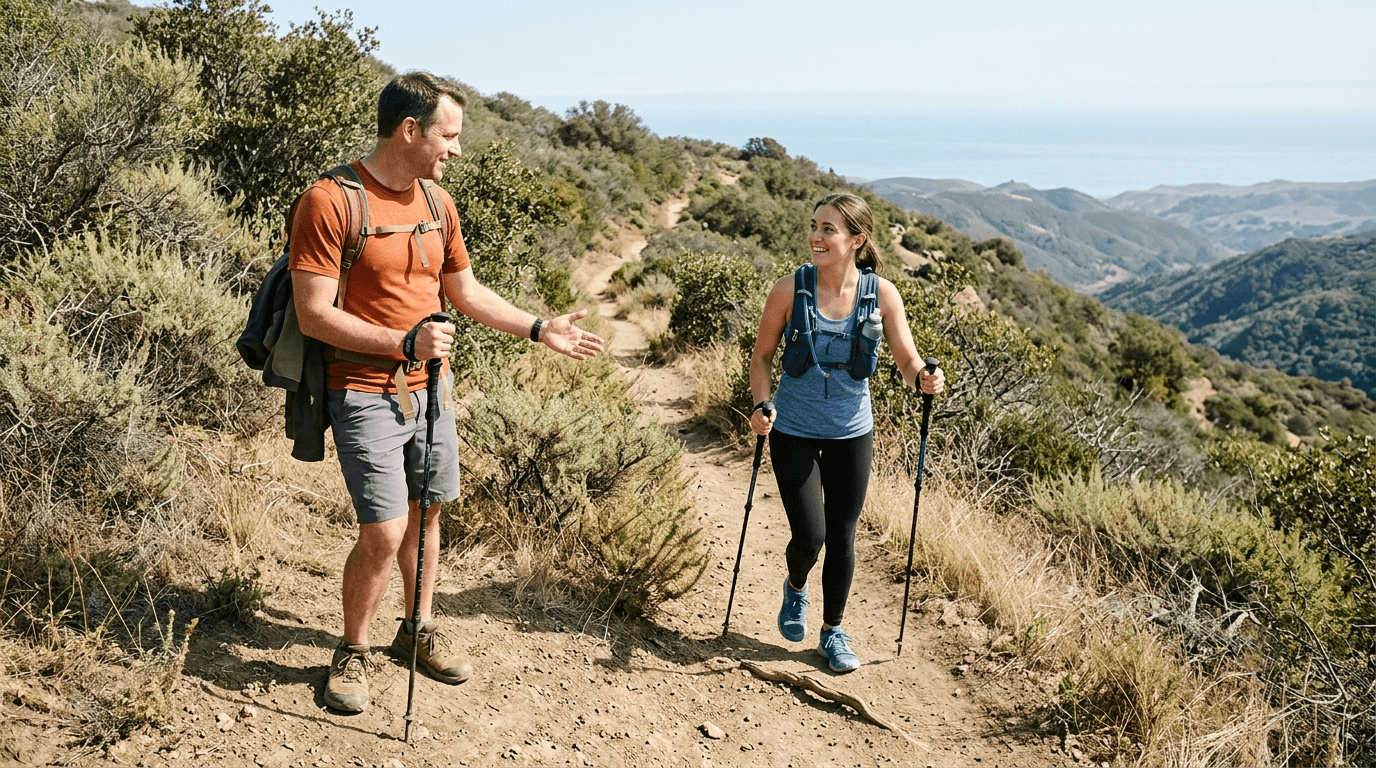
The uphill hiker has the right of way, since they’re the one who’s lost their momentum and rhythm on the climb. In practice, an uphill hiker who wants a breather will often wave a descending hiker through; that’s a courtesy, not an obligation. Read more about trail steepness in our difficulty ratings guide.
Equestrians and horse traffic on California trails: why horses always win
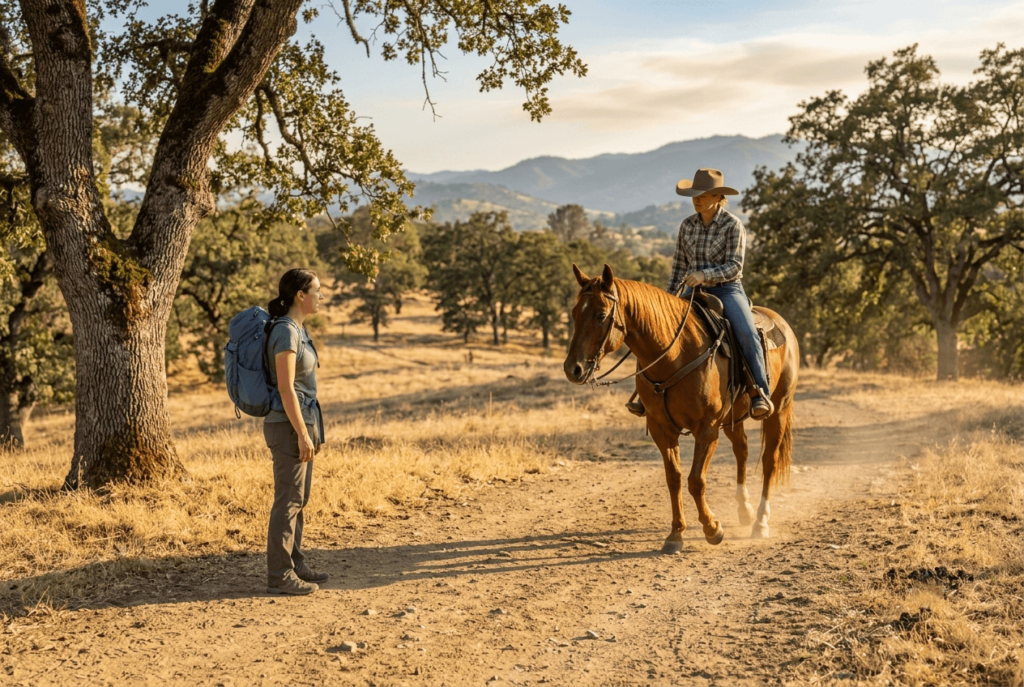
Horses spook easily, and a spooked horse on a narrow trail is dangerous for everyone involved. Step to the downhill side of the trail, stand still, and speak in a calm, normal voice so the horse can identify you as human rather than a threat.
Leave No Trace: the 7 principles every California hiker should follow
Leave No Trace has seven principles: plan ahead and prepare, travel and camp on durable surfaces, dispose of waste properly, leave what you find, minimize campfire impacts, respect wildlife, and be considerate of other visitors. The four below are the ones California hikers run into most.
Plan ahead and prepare: what LNT means for your California hike
This isn’t just a safety step; checking permits on Recreation.gov, fire restrictions on CAL FIRE, and trail conditions before you go is also how you avoid improvising in a way that damages the land, like building an unauthorized fire ring because you didn’t know one was banned. See our full hiking safety guide for prep essentials.
Stay on the trail: why going off-trail damages California’s ecosystems
Stepping around a puddle or cutting a switchback starts “trail braiding”, multiple parallel paths that fragment habitat and erode faster than a single maintained tread. In the desert, off-trail steps can crush biological soil crust that takes decades to recover.
Pack it in, pack it out: zero-waste hiking on California trails
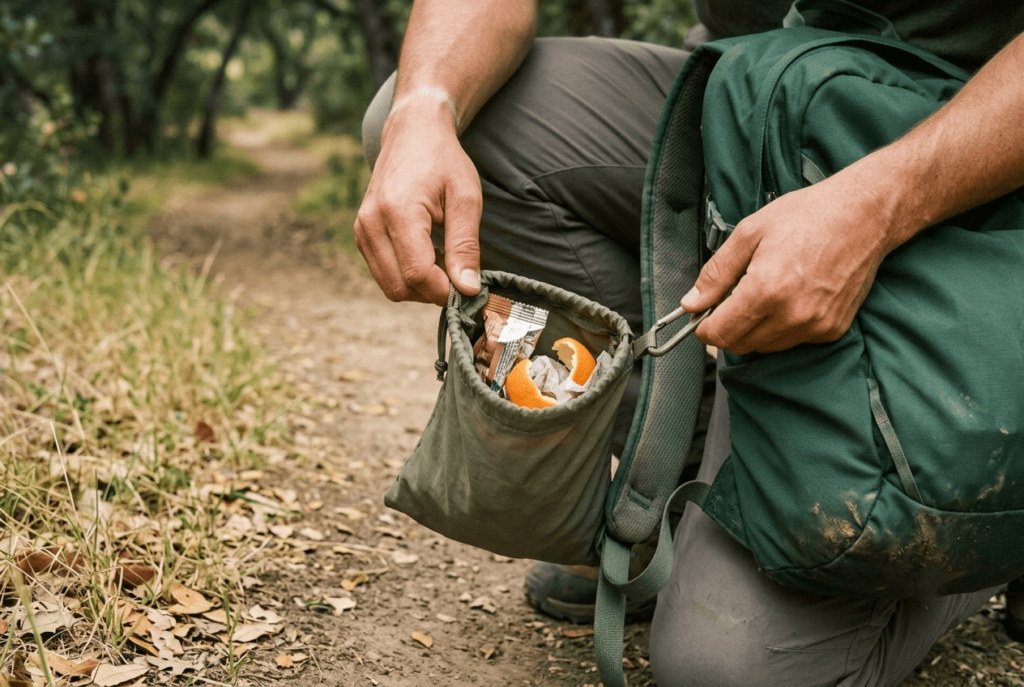
Every scrap of food waste you leave behind is a wildlife attractant, and in fire-prone California that’s a real risk, not just a mess. Orange peels and apple cores count, they don’t decompose fast enough to matter, and they still teach wildlife to associate trails with food.
Leave what you find: rocks, plants, and artifacts on California trails
Removing rocks, plants, or artifacts from National Park Service (NPS) land is illegal, not just discouraged, this is federal law, not a suggestion. Picking a wildflower on a state or county trail is a smaller offense but still against the “leave what you find” principle.
Sound and music etiquette on the trail
Noise is one of the least-regulated but most-complained-about etiquette issues on California trails, precisely because so few agencies have a clear written rule about it.
Should you wear headphones while hiking? Safety and social considerations
One ear open is the safer standard, full noise-canceling headphones block the sounds that warn you about wildlife, other trail users, or a mountain biker coming up behind you.
Bluetooth speakers on trails: what the rules actually say in California
There’s no single statewide ban, but most agencies treat speaker use as a quiet-hours or courtesy violation, and rangers will ask you to turn it off if another hiker complains. Treat trail speaker use the same as you would in a quiet library: technically not banned everywhere, but almost always unwelcome.
Photography etiquette on California’s iconic trails
California’s most-photographed trails, Half Dome, the Mist Trail, Runyon Canyon, carry an etiquette layer that has almost nothing to do with cameras and everything to do with crowd management.
Drone rules on California hiking trails: national parks, state parks, and beyond
Drones are banned in every U.S. national park under NPS Policy Memorandum 14-05, with no exceptions for “just a quick shot,” with fines up to $5,000. California State Parks technically allows drones under statewide policy, but most individual park districts have posted local orders banning them anyway, so assume “no” until you’ve confirmed otherwise with that specific park.
How to take trail photos without blocking the path or disturbing others
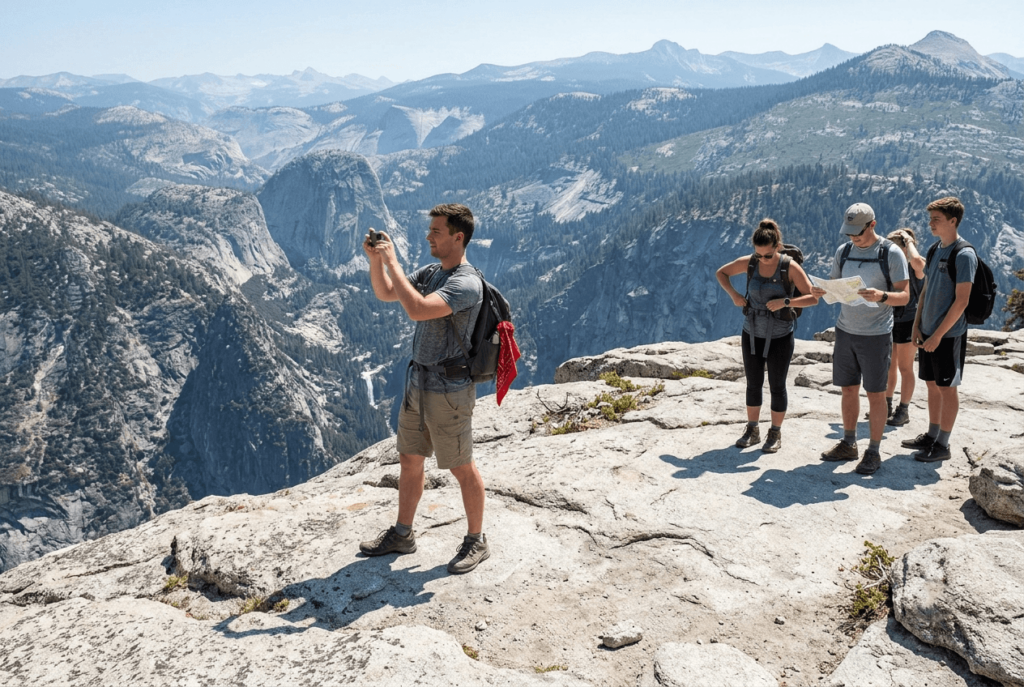
At popular overlooks, the Mist Trail, Half Dome’s sub-dome, any Instagram-famous viewpoint, get your shot and move aside within a minute or two. A long queue behind you waiting for “the” photo is the etiquette failure people complain about most.
Group hiking etiquette: rules for hiking with large parties
A group of ten moves, sounds, and impacts a trail completely differently than a solo hiker, and most group-hiking etiquette exists to manage exactly that gap.
How to hike in a group without taking over the trail
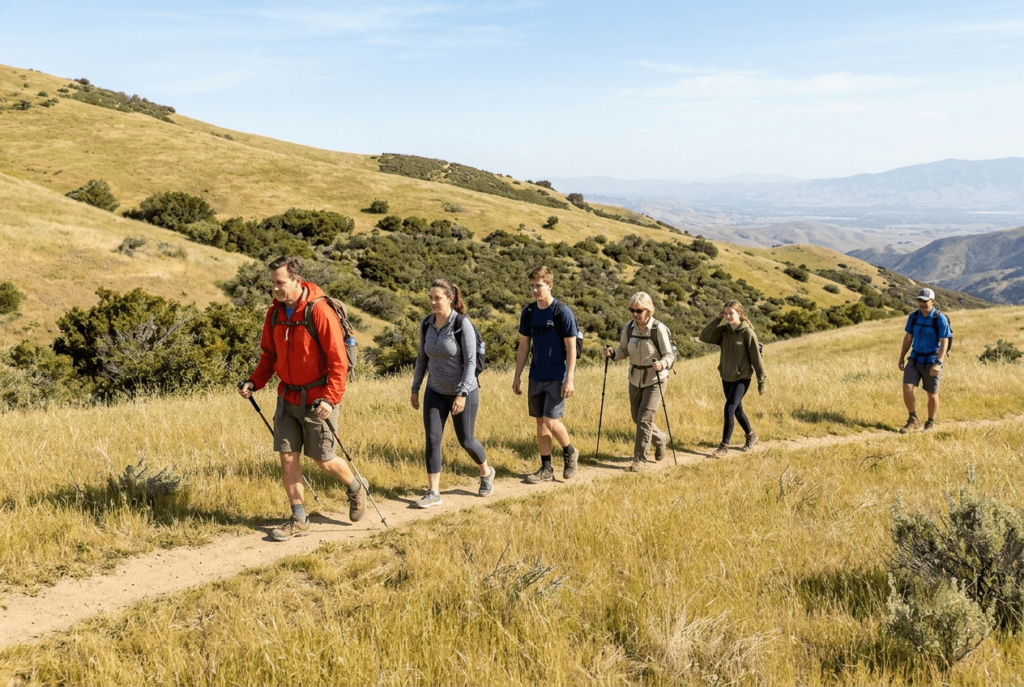
Hike single-file on narrow trails, and split into pairs to let faster hikers or other trail users pass. A group that spans the full width of a trail forces everyone else off it, which is its own etiquette violation.
Group size limits in California’s national parks and wilderness areas
Most Sierra and Southern California wilderness areas cap group size at 12–15 people, with a handful allowing up to 25 depending on the specific wilderness boundary. If you’re organizing anything larger than a casual day hike, check the managing agency’s limit before you go, some require a permit specifically because of group size.
Dog etiquette on California hiking trails
Dog rules vary more by agency than almost any other etiquette category on this list, which is exactly why so many well-meaning owners break a rule they didn’t know existed.
Leash rules on California trails: when required and where
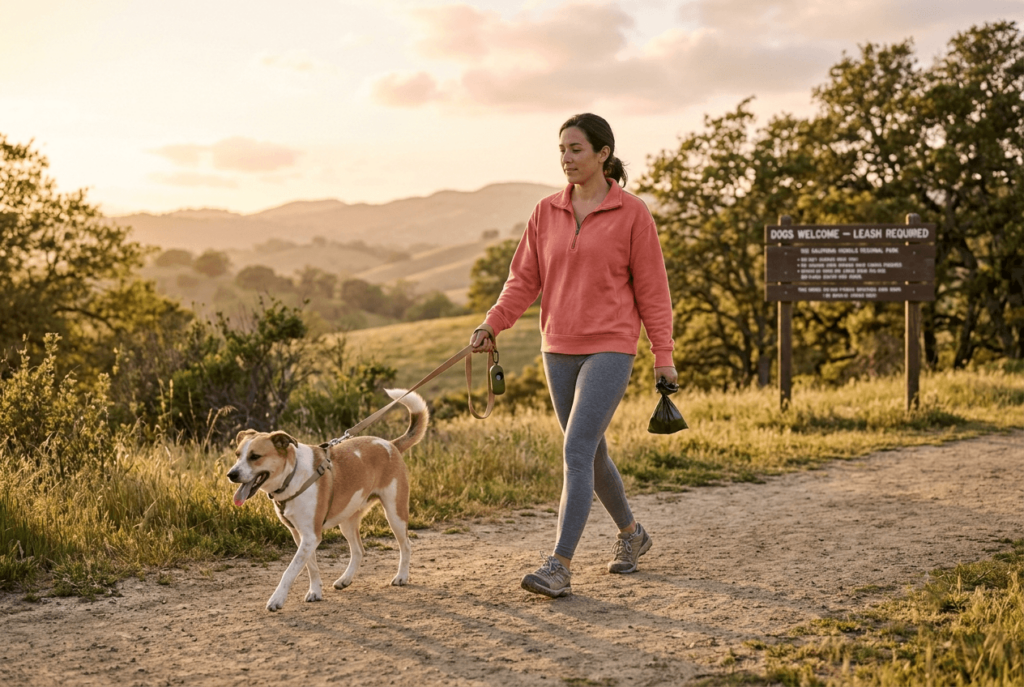
This one surprises people: California State Parks generally doesn’t allow dogs on trails at all, leashed or not, they’re restricted to campgrounds, day-use areas, and paved roads unless a specific trail is posted otherwise. National forests and most county and regional parks are more permissive, usually requiring a 6-ft leash. National park trails, with rare exceptions, don’t allow dogs. Always check the specific agency, not just the state. For a deep dive, see our hiking with dogs guide.
Dog waste on the trail: pick it up, every time
Bag it and pack it out, never bury it. In California’s watershed-heavy terrain, buried waste still reaches water sources, and it’s exactly the kind of small habit that damages trust between dog owners and everyone else sharing the trail.
Etiquette around resting, camping, and overnight use on California trails
Day hikers mostly need to know the viewpoint rule below; overnight hikers inherit a longer list, since camping compounds impact in a way a five-minute rest break never does.
How long is it polite to rest at a viewpoint or summit on a popular trail?
Long enough to eat a snack and take your photos, 10 to 15 minutes at a crowded summit like Half Dome or Moro Rock, longer only if the spot isn’t in demand. If people are visibly waiting for your spot, that’s your cue to wrap up.
Campsite etiquette for overnight hikers in California’s backcountry
Camp at least 200 ft from trails and water sources, keep quiet hours after dark, and use an existing site rather than creating a new one. These aren’t arbitrary rules, they’re the same durable-surface and wildlife principles from Leave No Trace, just applied overnight instead of during the day.
Trail etiquette isn’t a list of restrictions, it’s what keeps California’s busiest trails open, safe, and worth visiting in the first place. Learn the right-of-way rules, follow Leave No Trace, and check the specific policy for wherever you’re headed rather than assuming one rule applies everywhere. Pair this with what’s actually in your pack and you’re set for almost anything California’s trails put in front of you.