The 5 Best Hiking Trails in Sequoia National Forest, Fresno County
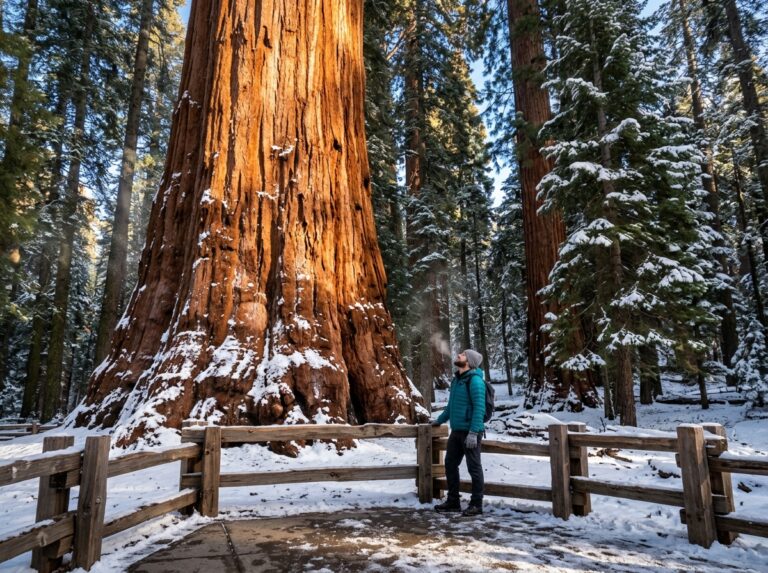
Sequoia National Forest sits directly against the western edge of Kings Canyon National Park, and the two get mixed up constantly, understandably, since the name makes it sound like an extension of Sequoia National Park rather than a separate piece of land entirely. It isn’t.
Disclosure: Please note that some of the links below are affiliate links and at no additional cost to you, I may earn a commission. Know that I only recommend hiking gear I personally stand behind; when you use my affiliate links, it helps me run this blog and keep all of this content free of charge for readers (like you).
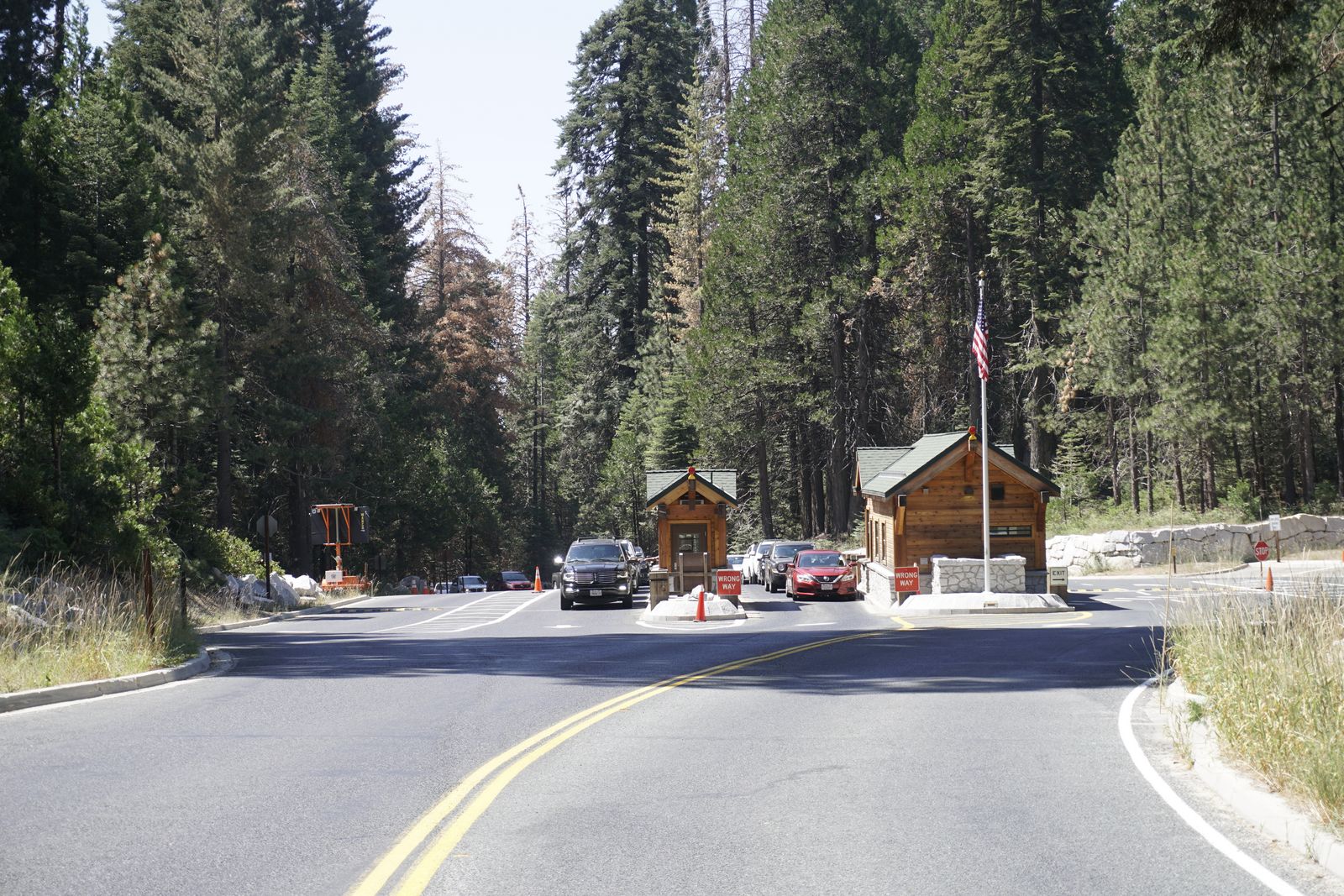
The U.S. Forest Service manages this land, not the National Park Service, and that’s exactly why most hiking trails in Sequoia National Forest are free: no entrance booth, no park-style regulations, just giant sequoias and granite wilderness lakes without the price tag next door. If you’ve been searching for a way to see trees like these without paying Sequoia National Park’s $35 gate fee, this is the answer.
This guide covers the five best trails in the forest itself. For the rest of the county, family-friendly trails, the San Joaquin River Gorge, and high-elevation options are the best; start with the Fresno County trail guide for the complete picture.
Key takeaways
- The biggest tree here: the Boole Tree, the largest known giant sequoia growing anywhere outside a national park.
- The working-history lake: Hume Lake, an 87-acre reservoir built in 1908 for a logging operation, now a summer recreation hub.
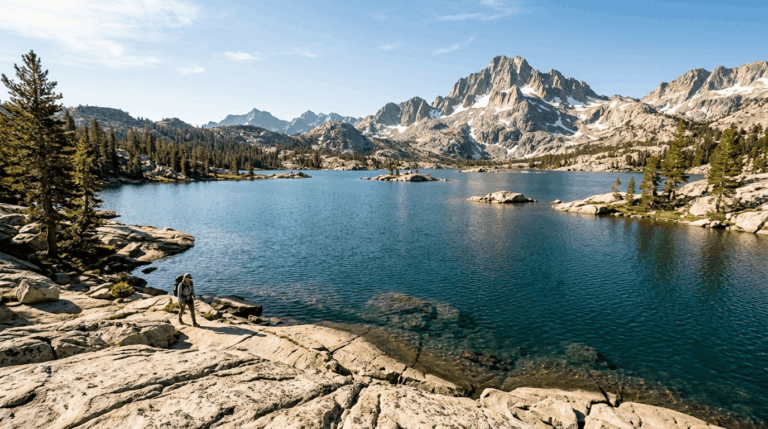
- The permit-free wilderness lake: Jennie Lake, genuine granite-basin scenery without the national park’s quota system.
- The easier lake from the same trailhead: Weaver Lake is shorter and gentler than Jennie Lake, sharing the same access point.
- The strangest history in this entire county: Chicago Stump, a sequoia section shipped to and displayed at the 1893 World’s Fair.
- Almost everything in this guide is free, unlike the neighboring national park, the one exception being a small standard amenity fee at Chicago Stump.
Quick-glance comparison
| Trail | Distance (RT) | Elevation gain | Fee |
|---|---|---|---|
| Boole Tree Trail | ~2.5 mi | ~500 ft | Free |
| Hume Lake Loop Trail | ~2.6 mi | Minimal | Free |
| Jennie Lake Trail | ~9 mi | ~1,700 ft | Free (self-issue permit for overnight only) |
| Weaver Lake Trail | 6.7 mi | ~1,233 ft | Free (self-issue permit for overnight only) |
| Chicago Stump Trail | ~0.5–0.6 mi | Minimal | Small standard amenity fee |
Boole Tree Trail (Converse Basin)
This tree survived what almost nothing else in this basin did, and the story of that survival is as interesting as the tree itself.
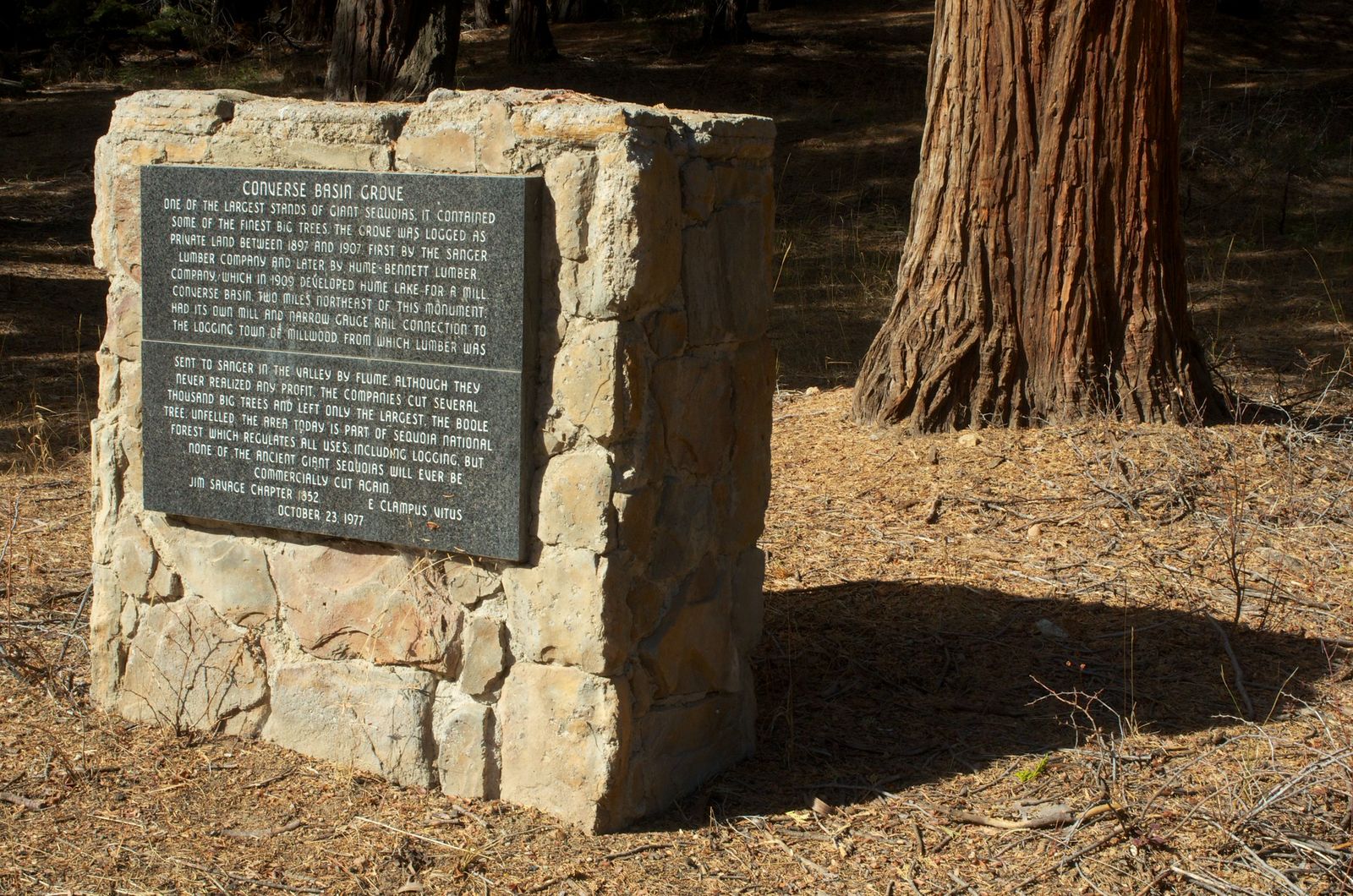
Trailhead access: free Forest Service trailhead, Converse Basin
Take Highway 180 about four miles north of Grant Grove Village to the Converse Turnoff (Forest Road 13S55), then follow it through Stump Meadow to the marked trailhead. No entrance fee. Worth knowing: this access road was closed to vehicles for a period following the 2015 Rough Fire, requiring a much longer approach on foot; current official Forest Service guidance describes normal vehicle access to the trailhead.
Difficulty, distance, and elevation gain to the Boole Tree
It’s a moderate 2.5-mile loop with about 500 feet of gain, genuinely more of a workout than any trail in my Kings Canyon guide short of Mist Falls, despite the shorter distance.
What you’ll see: the largest known giant sequoia outside a national park
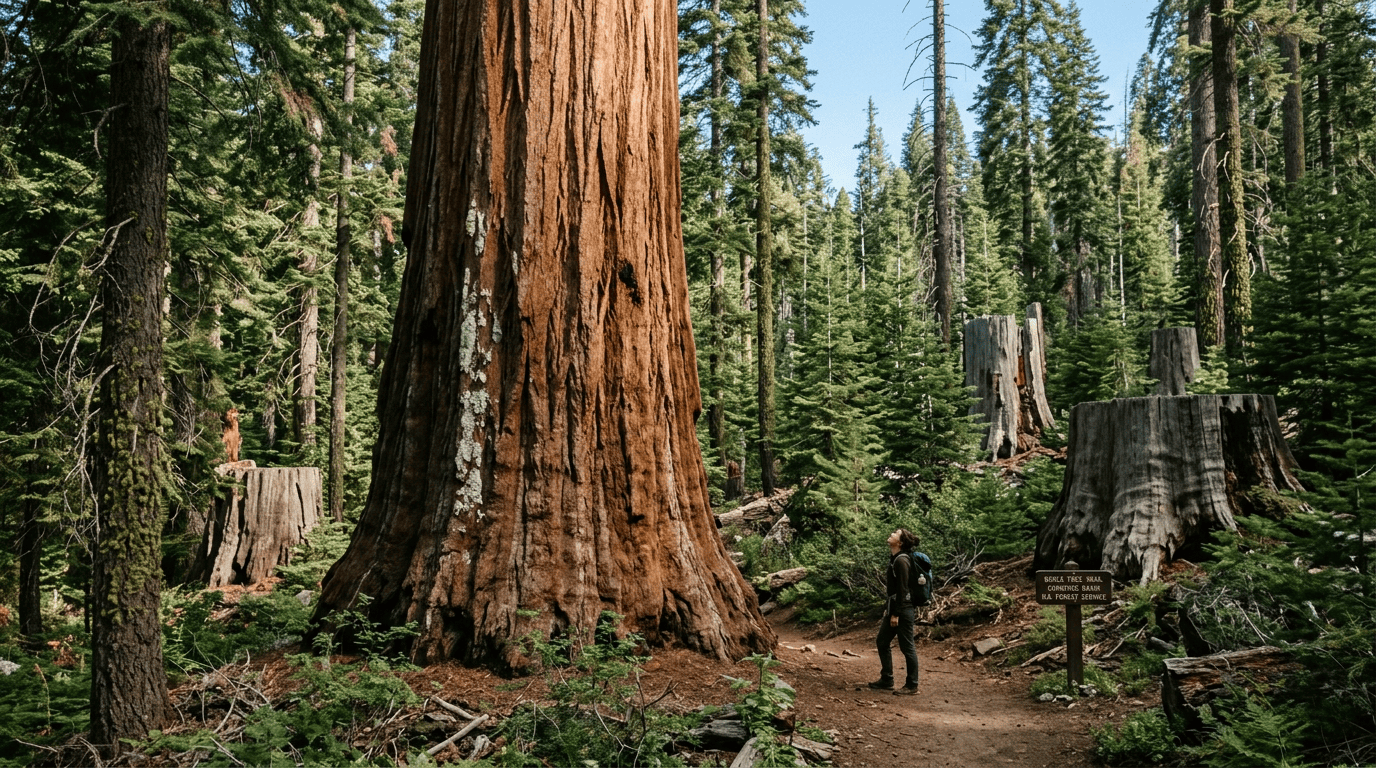
The Boole Tree stands over 2,000 years old, more than 275 feet tall, and roughly 35 feet in diameter, the largest giant sequoia known to grow on any National Forest System land. It’s named for Frank Boole, foreman of the Converse Basin logging mill, who spared this one tree while the rest of the basin was logged nearly to the ground by 1918. Along the trail, you’ll pass stumps of trees that were reportedly even larger than the Boole Tree itself, a genuinely sobering counterpoint to the survivor you’re walking toward.
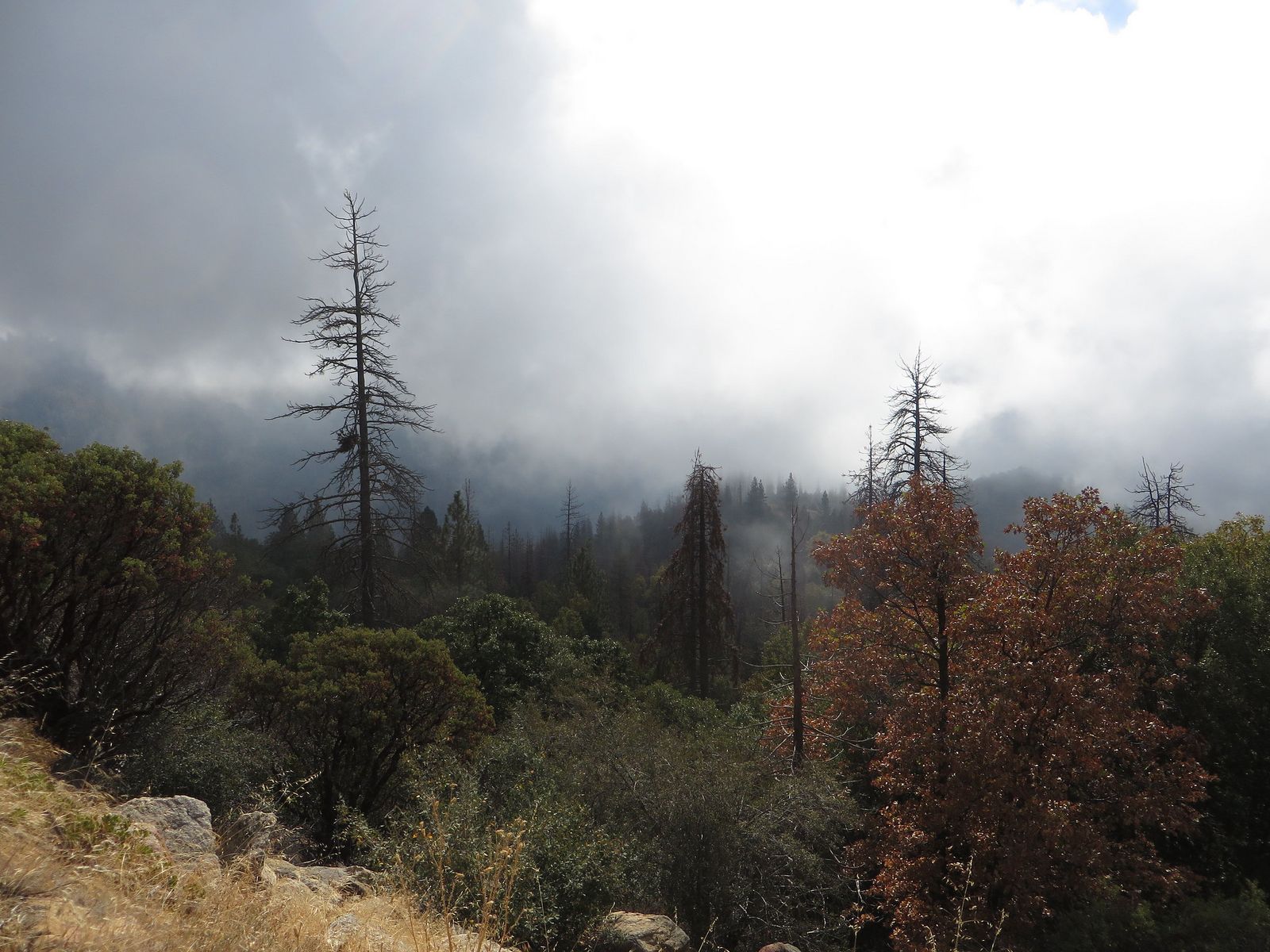
Best time to hike Boole Tree Trail: a quiet, crowd-free alternative to Grant Grove
This trail sees a fraction of the traffic that the General Grant Tree Trail does a few miles away, despite comparable scenery, worth the extra effort if crowds are what you’re trying to avoid.
Hume Lake Loop Trail
This is the trail that gives Sequoia National Forest its own distinct identity, separate from the national parks on either side, a working lake with real recreation infrastructure, not a preserved wilderness.
Trailhead access: free Forest Service day-use area
Hume Lake Recreation Area has its own free day-use lot near Hume Lake Village, which includes a general store, cafe, and boat rentals. Worth noting: the Kings Canyon Scenic Byway (Highway 180) closes for winter at the Hume Lake junction, typically in mid-November, similar to Cedar Grove Road further into the national park.
Difficulty, distance, and elevation gain around the lake
It’s an easy 2.6-mile loop with minimal elevation gain circling the entire 87-acre shoreline, with interpretive signage along the way explaining the lake’s history and ecosystem.
What you’ll see: a 1908 logging reservoir turned recreation lake
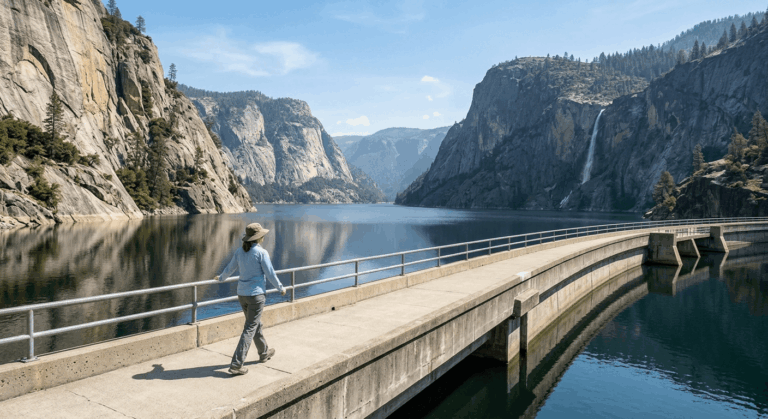
Hume Lake was built in 1908 behind a distinctive multiple-arch dam, originally supplying water to what was then the longest lumber flume ever constructed, carrying logs to the Central Valley. Today it’s a genuine summer destination for swimming, fishing, and non-motorized boating, with the well-known Hume Lake Christian Camps operating on the adjacent shoreline.
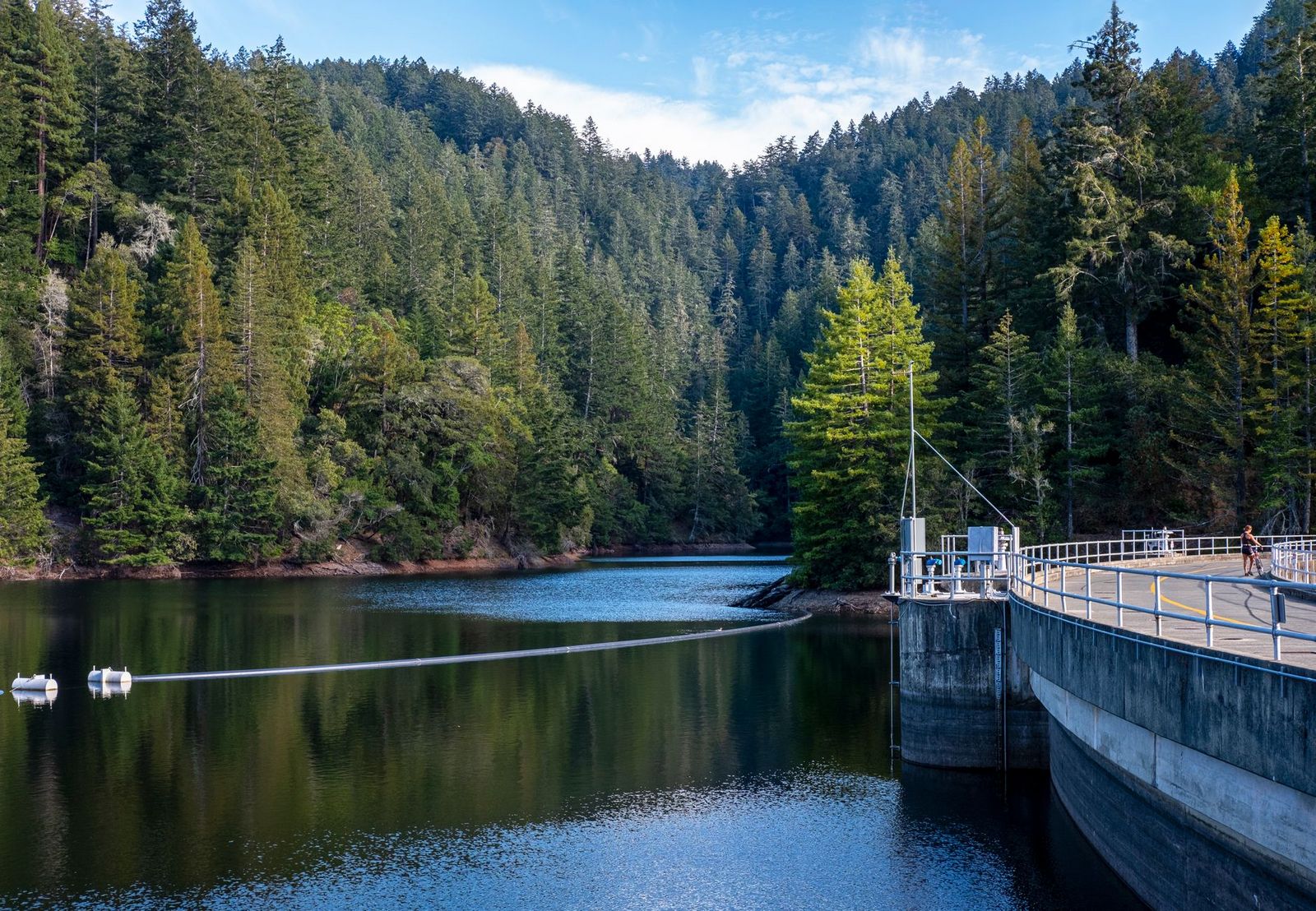
Best time to hike Hume Lake: summer, when the whole area is in full swing
This is the one trail in this guide genuinely built around a summer social scene, swimming, camp programming, and boat traffic all peak in the warmer months here.
Jennie Lake Trail (Jennie Lakes Wilderness)
If you want genuine wilderness lake scenery without a national park’s quota-permit system, this is where to find it.
Trailhead access: Big Meadows Trailhead, no fee, no day-use permit
Big Meadows Trailhead requires no fee and no permit for day use; only overnight camping requires a free self-issue wilderness permit, available at the trailhead itself. Three other trailheads (Stony Creek, Rowell Meadows, and Marvin Pass) also reach this wilderness, if Big Meadows isn’t the most convenient for your route.
One current-conditions note worth passing on: the Forest Service’s own page for the first stretch of this trail mentions that recent fire and flood damage may cause washouts, downed trees, or sections where the path briefly disappears. Every recent trip report I found still completed the hike successfully, but come prepared.
Difficulty, distance, and elevation gain to Jennie Lake
It’s about 9 miles round trip with roughly 1,700 feet of gain, the longest, most demanding trail in this guide, climbing over Poop Out Pass before descending to the lake at around 9,020 feet.
What you’ll see: a granite-ringed subalpine lake, without the crowds
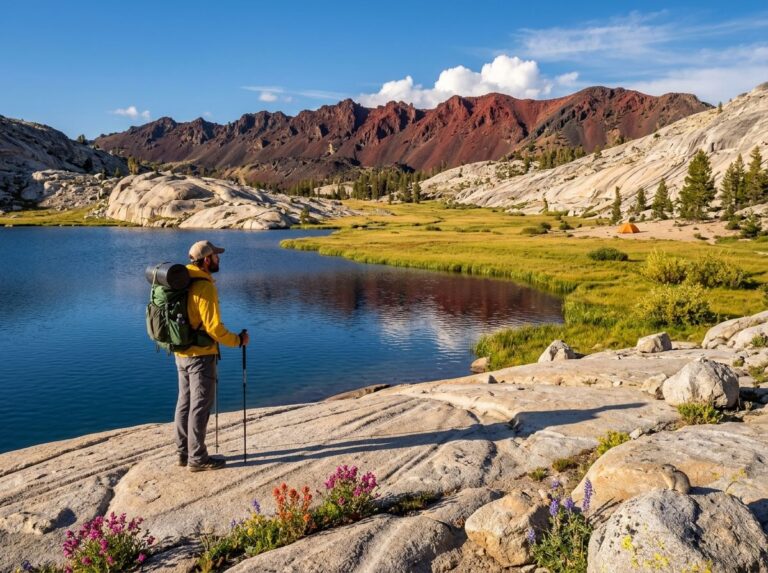
Jennie Lake is the deepest and, by most accounts, the most scenic lake in this 10,500-acre wilderness, ringed by granite and backed by Mitchell Peak, the wilderness’s high point at 10,365 feet. Established campsites with fire rings make this a genuinely good overnight option too, not just a long day hike.
Best time to hike Jennie Lake: summer, as a lower-traffic alternative to the national park backcountry
This wilderness sees meaningfully less traffic than the neighboring national park’s backcountry, despite comparable scenery, a real draw for hikers who’ve found Kings Canyon’s wilderness permits too competitive.
Weaver Lake Trail (Jennie Lakes Wilderness)
This is the easier, shorter option from the same trailhead as Jennie Lake, worth knowing about before you commit to the longer trek.
Trailhead access: shares the Big Meadows Trailhead with Jennie Lake
Same free trailhead, same no-permit-for-day-use rule as Jennie Lake; the two trails split at a signed junction roughly 2 miles in.
Difficulty, distance, and elevation gain to Weaver Lake
It’s 6.7 miles round trip with about 1,233 feet of gain to reach the lake at 8,707 feet, a notably shorter, gentler alternative to the full Jennie Lake push from the same starting point.
What you’ll see: a smaller, more easily reached wilderness lake well suited to families
Weaver Lake’s boulder-lined shore and roughly 15 established campsites make this a popular short backpacking trip for families and first-timers, without sacrificing genuine granite-basin wilderness character. Because no permit is required and it’s shorter than Jennie Lake, this can get genuinely busy on nice summer weekends.
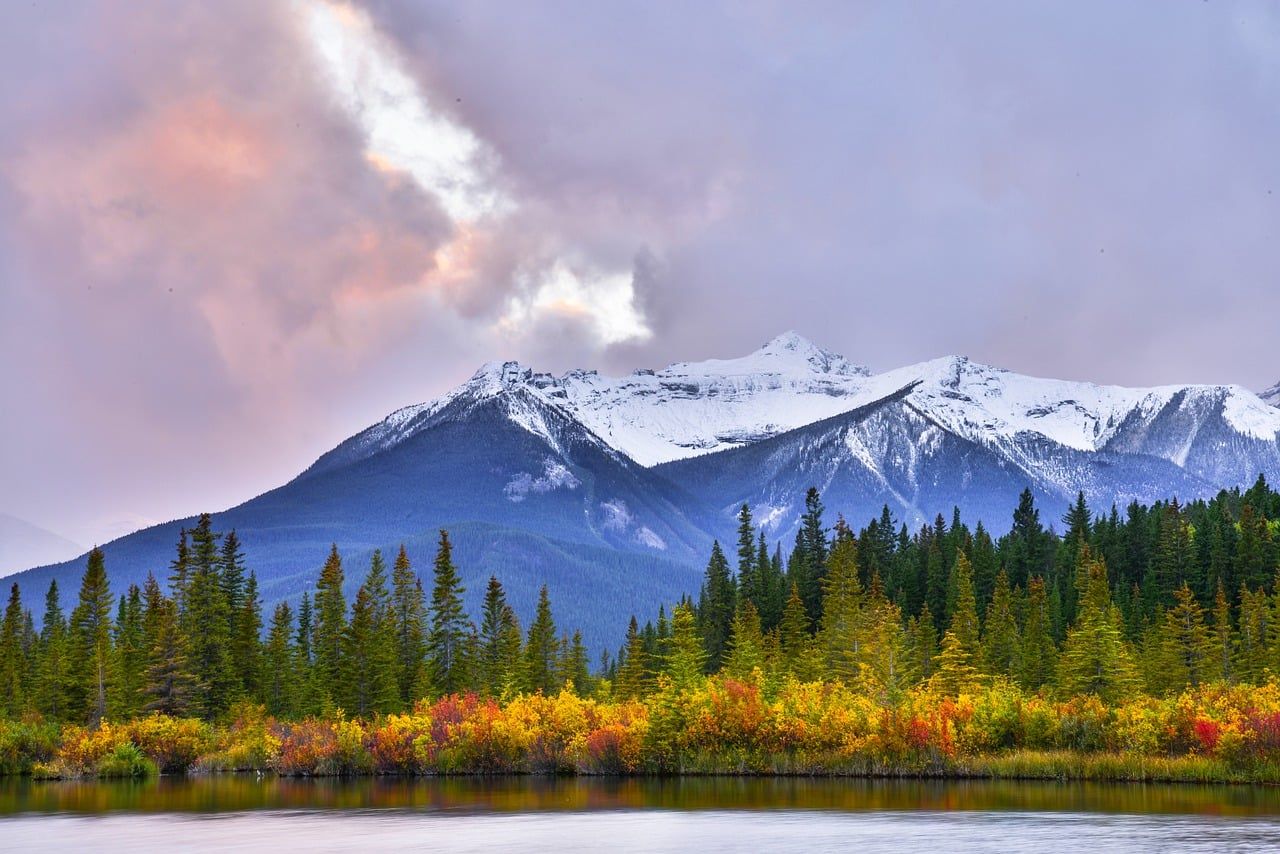
Best time to hike Weaver Lake: an easier pairing option with Jennie Lake from the same trailhead
If you’re deciding between the two from Big Meadows, Weaver Lake is the better choice for families or a shorter day; Jennie Lake is the better choice if solitude and scale matter more to you than distance.
Chicago Stump Trail (Converse Basin)
This is the strangest story in this entire Fresno County: a sequoia that was deliberately felled specifically to prove, to skeptical crowds a continent away, that it actually existed.
Trailhead access: near the Boole Tree Trailhead, small amenity fee
Take Highway 180 three miles north of Grant Grove Village to Forest Road 13S03, then 2.8 miles to the marked trailhead close enough to the Boole Tree Trailhead to easily combine both in one visit.
Low-clearance vehicles aren’t recommended on this road. A standard amenity fee applies here, collected under an interagency agreement with the National Park Service, still far less than the park’s entrance fee, but not entirely free.
Difficulty, distance, and elevation gain on the Chicago Stump Trail
It’s an easy 0.5–0.6-mile round trip with minimal elevation gain, the shortest trail in this guide, and universally accessible.
What you’ll see: the stump of a sequoia displayed at the 1893 Chicago World’s Fair
Originally called the General Noble Tree, this sequoia was felled in 1892, carefully sectioned, shipped east, and reassembled for display at the 1893 World’s Columbian Exposition in Chicago. The Department of the Interior reportedly paid a local contractor $15,000 for the job.
Many fairgoers refused to believe the reassembled tree came from a single trunk. What remains today is a roughly 20-foot stump in a meadow ringed by young sequoias, red firs, and azaleas.
Best time to hike Chicago Stump Trail: a quick add-on to a Boole Tree visit
Given the shared general trailhead area, this pairs naturally with the Boole Tree as a single Converse Basin visit, budget maybe 20 minutes here on top of the main hike.
Which of these five to hike first
If you want the single most impressive tree in this guide, the Boole Tree is unmatched, and it’s a genuine escape from Grant Grove’s crowds a few miles away. If you’re deciding between the two Jennie Lakes Wilderness options, Weaver Lake is the friendlier choice for families or a shorter day. And if you want the strangest story in this entire county, Chicago Stump delivers it in well under half a mile.
Frequently asked questions
Is Sequoia National Forest the same as Sequoia National Park?
No, they’re different agencies with different rules. Sequoia National Forest is managed by the U.S. Forest Service. It is largely free to visit; Sequoia National Park charges a $35 entrance fee.
Is there a fee to hike in Sequoia National Forest?
Mostly no. Four of the five trails in this guide are completely free; Chicago Stump collects a small standard amenity fee under an interagency agreement, still well below the neighboring national park’s entrance fee.
How big is the Boole Tree?
Over 2,000 years old, more than 275 feet tall, and roughly 35 feet in diameter, the largest known giant sequoia grows on any National Forest System land.
Do you need a permit for Jennie Lakes Wilderness?
Not for day hikes to either Jennie Lake or Weaver Lake. Overnight camping requires a free self-issue wilderness permit, available at the trailhead.
Is Hume Lake good for swimming?
Yes, it’s a popular summer swimming destination, along with fishing and non-motorized boating, genuinely one of the more recreation-focused lakes covered anywhere on this site.
What happened to the Chicago Stump tree?
It was felled in 1892 as the General Noble Tree, sectioned and shipped to Chicago, and reassembled for display at the 1893 World’s Columbian Exposition, where many visitors doubted it had come from a single tree.