Sequoia National Park Attractions & Crystal Cave Guide
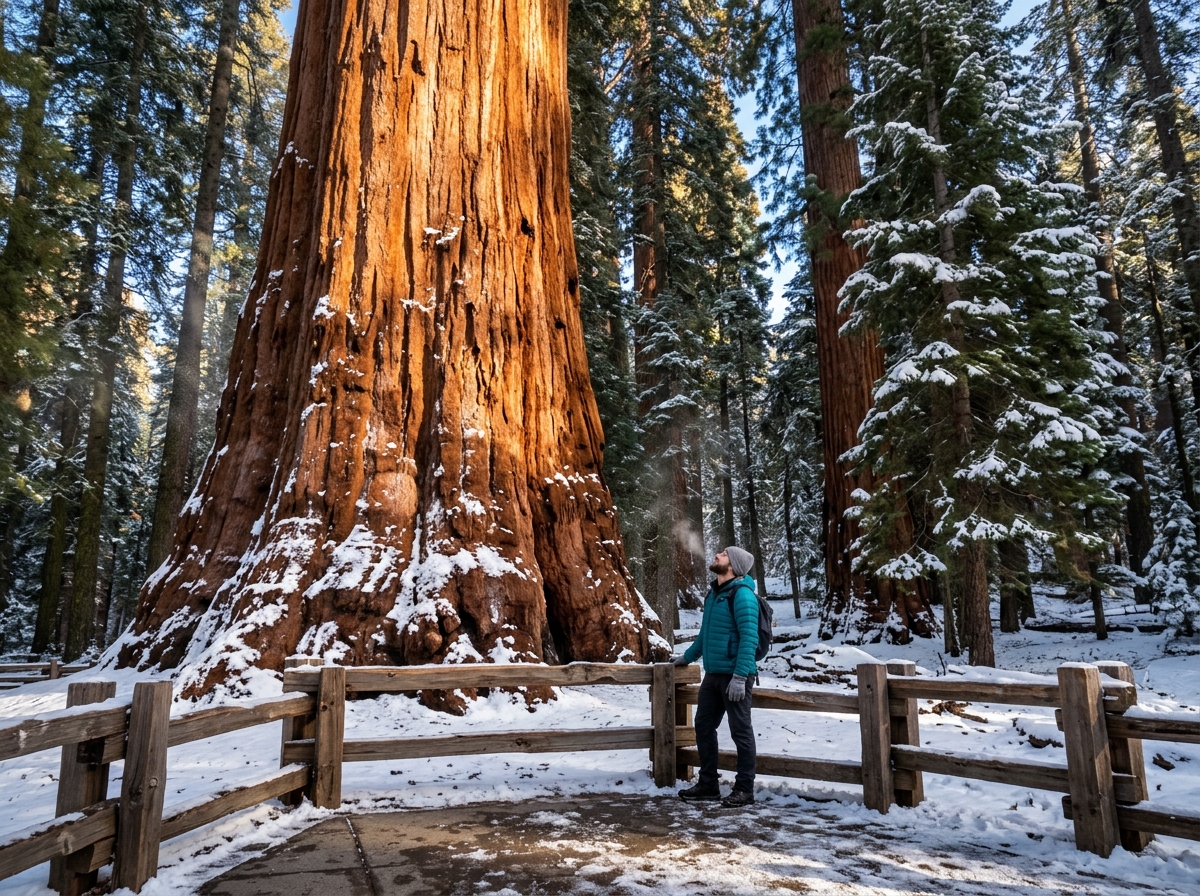
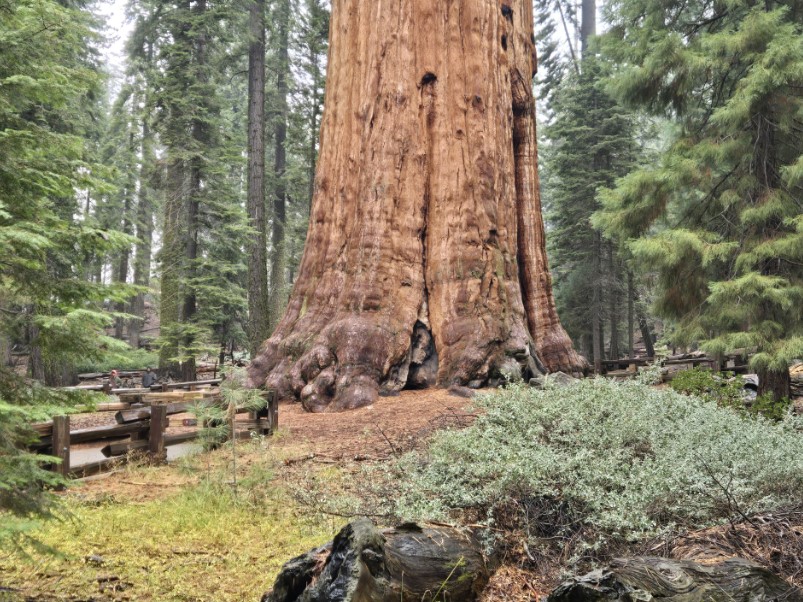
The first giant sequoia you pass in Sequoia National Park makes you ease off the gas. The trunk is wider than your car is long, the bark glows cinnamon where the light touches it, and some of those trees have stood for more than 2,000 years. The best Sequoia National Park attractions cluster in the Giant Forest at roughly 7,000 feet: the General Sherman Tree, the granite staircase up Moro Rock, the drivable Tunnel Log and the open sweep of Crescent Meadow. Farther afield, Tokopah Falls, Hospital Rock and Mineral King reward anyone willing to keep driving.
Disclosure: Please note that some of the links below are affiliate links and at no additional cost to you, I may earn a commission. Know that I only recommend hiking gear I personally stand behind; when you use my affiliate links, it helps me run this blog and keep all of this content free of charge for readers (like you).
Then there is Crystal Cave, the park’s only public cave and the one stop that needs a ticket bought weeks ahead. Its 2026 season ended early, so the booking section below explains where things stand and how to be ready next spring.
Key Takeaways
- The core sights sit close together. The General Sherman Tree, Moro Rock, Tunnel Log, and Crescent Meadow are all within a few miles of the Giant Forest Museum.
- Crystal Cave is guided-tour only. Tickets are sold online through Sequoia Parks Conservancy, never at the cave. The 2026 season closed early: the final public tours ran September 7, 2026, and the park expects Crystal Cave Road to reopen in spring 2027.
- A 2026 Crystal Cave ticket cost $22 for adults and $11 for children 10 and under. Park entry is a separate charge.
- Park entry is $35 per private vehicle for up to seven days and also covers Kings Canyon National Park. Entrance stations take cards only, and no reservation is required.
- Summer shuttles are free. On summer weekends and holidays, Crescent Meadow Road is closed to private vehicles, and the shuttle is the way in.
- Pets are not allowed on any trail, and Giant Forest sits near 7,000 feet, so walk slower than you think you need to.
Sequoia National Park Attractions at a Glance
| Attraction | Area | Plan on | Effort | Access notes |
|---|---|---|---|---|
| General Sherman Tree | Giant Forest | 45-60 min | Easy descent, uphill return | Half-mile paved trail with some stairs; snow and ice possible in winter |
| Congress Trail | Giant Forest | 1-1.5 hr | Easy | Paved 2-mile loop starting near the Sherman Tree |
| Big Trees Trail | Giant Forest Museum | 1 hr | Easy | 0.75-mile paved, accessible loop around Round Meadow |
| Moro Rock | Giant Forest | 30-60 min | Strenuous stairs | 350 steps, about 300 feet of climbing; closed to climbing when icy |
| Tunnel Log | Crescent Meadow Road | 10-15 min | None | 8-foot height limit; bypass for taller vehicles |
| Crescent Meadow | Giant Forest | 1-1.5 hr | Easy | Loop of about 1.6 miles with side trails to Tharp’s Log and Chimney Tree |
| Crystal Cave | Giant Forest area | About 2 hr on site | Steep half-mile walk each way | Advance ticket required; 2026 season has ended |
| Tokopah Falls | Lodgepole | 2-3 hr | Moderate | 1.7 miles each way; strongest in early summer |
| Hospital Rock | Foothills | 20-30 min | Easy | Pictographs and bedrock mortars beside Generals Highway |
| Mineral King | Southeast corner | Full day | Hard drive | 25 miles of narrow road; closes for winter |
Giant Forest: Where the Sequoia National Park Tourist Attractions Cluster
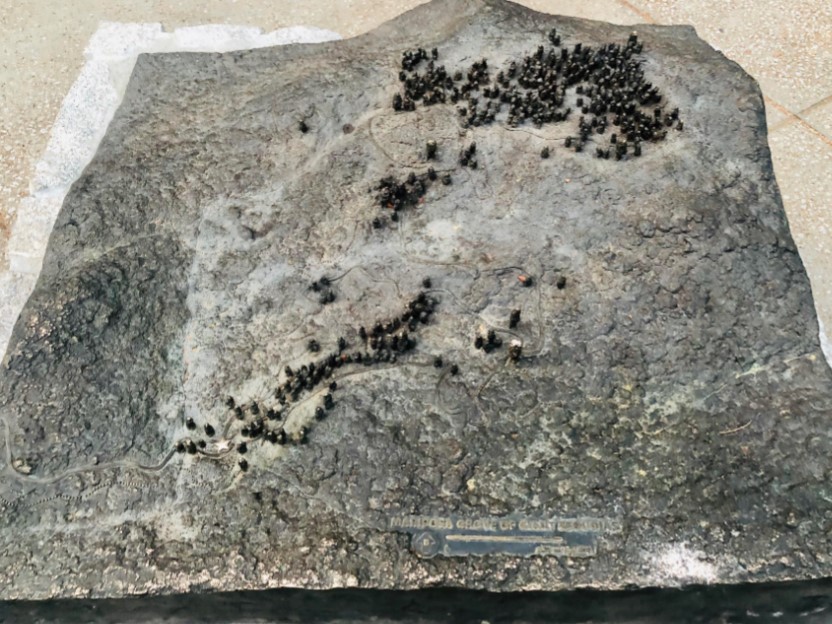
Giant Forest is the grove John Muir named, and it holds the Sequoia National Park tourist attractions that fill most itineraries. I’d start at the Giant Forest Museum, because its exhibits explain what you are about to walk among, and because it is the hub for the free summer shuttles.
General Sherman Tree
There are taller trees and wider trees, but none holds more wood than the General Sherman Tree. The National Park Service lists it at 274.9 feet tall and 102.6 feet around at ground level, with a trunk that weighs nearly 1,400 tons. In 2021, as the KNP Complex Fire closed in on Giant Forest, firefighters wrapped the base of the tree in protective foil. It came through.
The main trailhead is off Wolverton Road, between Lodgepole and the Sherman Tree. From there, a paved half-mile trail descends to the tree with some stairs along the way. The walk down is gentle, and the climb back at 7,000 feet is where first-timers slow to a crawl.
If stairs are a problem, the small accessible parking area on Generals Highway, two miles north of the Giant Forest Museum, has a shorter, accessible path, and in summer the shuttle stops there.
Congress Trail and Big Trees Trail
The Congress Trail is a paved two-mile loop that begins near the Sherman Tree and threads through some of the most impressive sequoias in the grove, including the President Tree and the clusters known as the House and Senate groups.
Trail crews rebuilt a section of the loop through the end of September 2026, which turned the circuit into an out-and-back for the summer, so confirm the current layout with the park before you plan the full loop.
For something flatter, the Big Trees Trail is a 0.75-mile paved, accessible loop around Round Meadow, with trailside panels on sequoia ecology. It starts at the Giant Forest Museum, and an hour covers it.
Moro Rock, Tunnel Log and Crescent Meadow
A spur road leaves Generals Highway at the Giant Forest Museum and strings three attractions along one scenic drive. In summer, free shuttle Route 2 serves the whole stretch, and on weekends and holidays the road is closed to private vehicles. In winter, snow closes it, and it turns into a quiet route for snowshoers and cross-country skiers.
Moro Rock
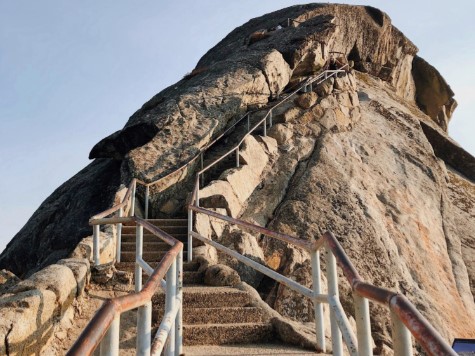
Moro Rock is a granite dome that tops out at 6,725 feet, and its staircase is the shortest serious workout in the park: about 300 feet of climbing in a quarter mile, over 350 steps that follow the dome’s natural ledges. The stairway was finished in 1931.
At the top, the Great Western Divide fills the eastern horizon, and the western half of the park falls away toward the San Joaquin Valley. The National Park Service calls it one of the best places in the park for sunset and moonrise.
Three rules: skip the climb if ice or snow is on the steps, leave quickly if thunderclouds build (the dome attracts lightning), and bring sun protection because there is almost no shade at the summit.
Tunnel Log
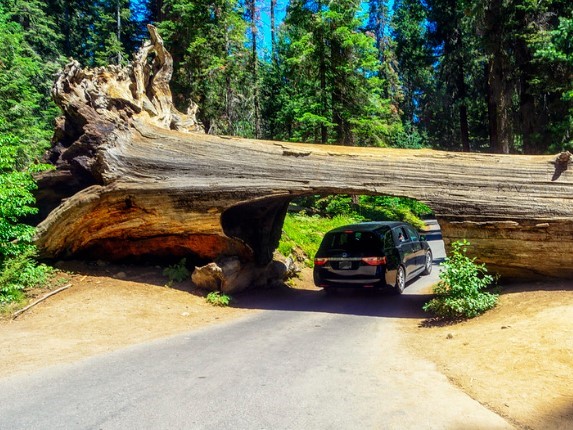
About half a mile past Moro Rock, a giant sequoia that fell across the road in the late 1930s was carved into a passage instead of being hauled away. The opening is 17 feet wide and 8 feet high, and vehicles taller than 8 feet use a bypass. This is not the famous living drive-through tree people sometimes ask about.
That was the Wawona Tree in Yosemite’s Mariposa Grove, which fell in 1969. Tunnel Log has no designated parking, only small turnouts, so on shuttle days it is easier to hop off at the stop and walk through.
Crescent Meadow and Tharp’s Log
The road ends at Crescent Meadow, which John Muir is credited with calling the “gem of the Sierra.” A loop of about 1.6 miles circles the meadow and slips into the sequoias, with spurs to two of the park’s best stories.
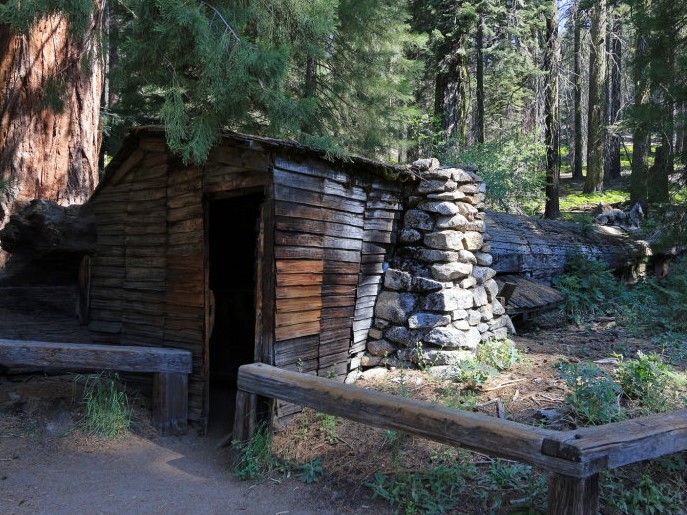
Tharp’s Log is a hollowed fallen sequoia that Hale Tharp, the Three Rivers rancher, used as a summer cabin. The Chimney Tree is a fire-hollowed sequoia you can stand inside, and it is still alive.
Crescent Meadow is also the trailhead for the High Sierra Trail, the long backcountry route that crosses the park toward Mount Whitney. If that idea tugs at you, our Mount Whitney permits and lottery guide explains how the permit system works on the mountain’s east side.
Crystal Cave Sequoia National Park Tickets: Season, Price and How to Book
Crystal Cave is a marble cavern carved by an underground creek, and park officials describe it as the only cave open to the public out of more than 275 known caves in Sequoia and Kings Canyon.
Public tours have run for more than 80 years, but the cave itself went dark for four years after the 2021 KNP Complex Fire, and the heavy storms of 2022 and 2023 damaged the road and the cave’s solar power system. It reopened for guided tours on May 23, 2025.
Where the 2026 season stands
The 2026 plan was to run tours from May 22 through November 1. Sequoia Parks Conservancy ended the season sooner: Crystal Cave Road closed on September 8, 2026, for repairs and construction, and the last public tours ran on September 7.
The park lists the road as closed for the season and expects it to reopen in spring 2027. If you are reading this in the off-season, there is no way to visit the cave until tours resume.
Crystal Cave at a glance
| Detail | What to know |
|---|---|
| Tour length | 50 minutes, guided only |
| Walk to the cave | Half-mile each way; steep and strenuous, with stairs the Conservancy compares to a 20-story building; allow 15-20 minutes down |
| Inside | About 50°F and damp; a light jacket helps |
| 2026 price | $22 adult, $11 child (10 and under) |
| Park entry | Not included in the ticket |
| Where to buy | Online through Sequoia Parks Conservancy; no tickets at the cave |
| Drive time | At least 1.5 hours from the Sequoia entrance station to the cave parking lot |
| Vehicle limit | Vehicles over 22 feet, including trailers, are not allowed on Crystal Cave Road |
| Accessibility | The trail is paved but uneven with stairs; wheelchairs cannot be accommodated |
How to buy Crystal Cave tickets
Tickets are sold only through the Sequoia Parks Conservancy Crystal Cave page, the park’s official nonprofit partner, and the proceeds fund park projects. The park recommends buying about two months ahead and no later than 36 hours before your tour, and the Conservancy notes that July and August tours often sell out.
The 2025 season sold out. Sales opened March 31 in 2025 and March 16 at 9 a.m. in 2026, so check the page and join the Conservancy’s email list in early spring. There are no refunds if you miss your tour, and a ticket does not include park entry.
The walk, the cave and the rules
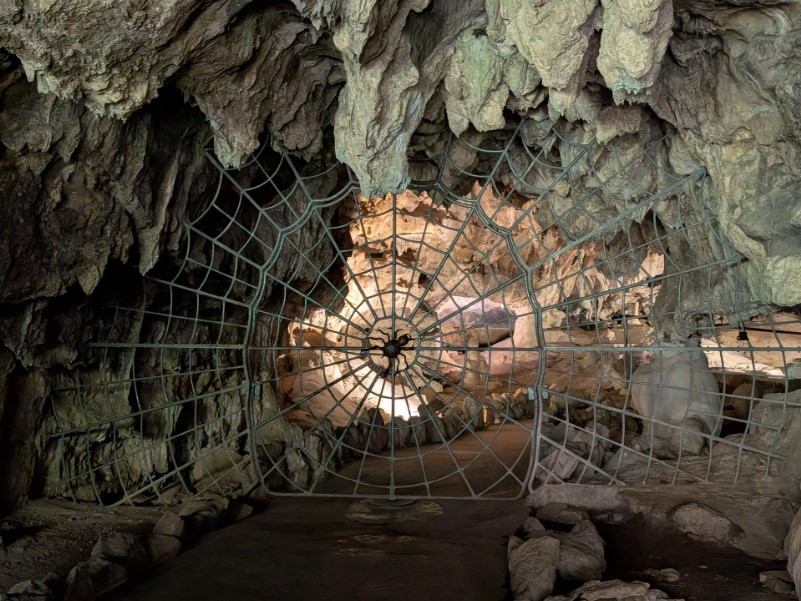
Check in at the kiosk about 15 minutes before your time, use the restroom (there are none on the tour), and lock food in the bear boxes in the parking lot. You then walk down to the cave entrance, where your guide unlocks the wrought-iron spiderweb gate. Inside, expect draperies, stalactites and stalagmites in cold, still air.
Leave backpacks, bags, hiking poles and baby carriers outside. Food, drinks, flashlights, flash photography, tripods, monopods and selfie sticks are not allowed.
Strollers and baby backpacks are not permitted. Every visitor steps through a hydrogen peroxide solution at the entrance to limit the spread of white-nose syndrome, a fungal disease that kills bats and has been detected in California. If you have worn the same shoes or clothing in caves elsewhere, wear something different.
Who should skip the tour?
The Conservancy advises against the tour for anyone with claustrophobia, difficulty walking, heart or respiratory conditions, recent surgery or illness, and for young children who cannot walk on their own.
The cave is not a quick roadside stop: with the drive in, the walk and the tour, it takes up a large part of a day.
Beyond Giant Forest: Tokopah Falls, Hospital Rock and Mineral King
Tokopah Falls
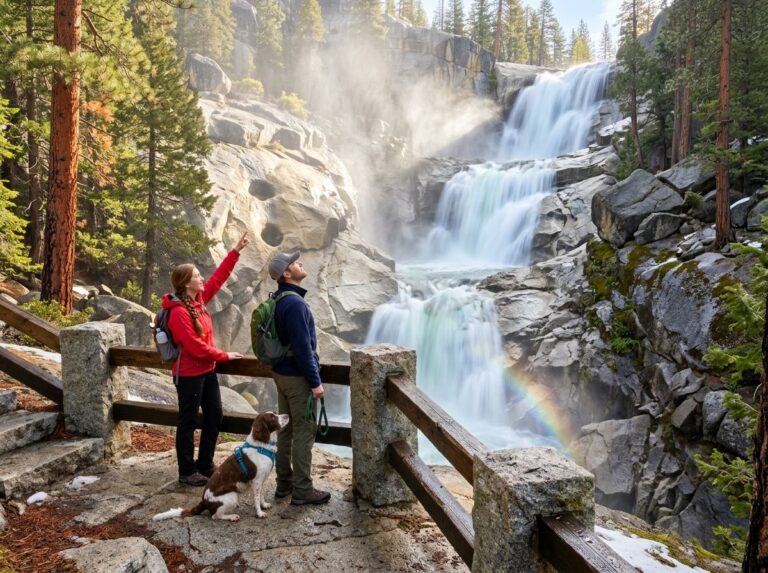
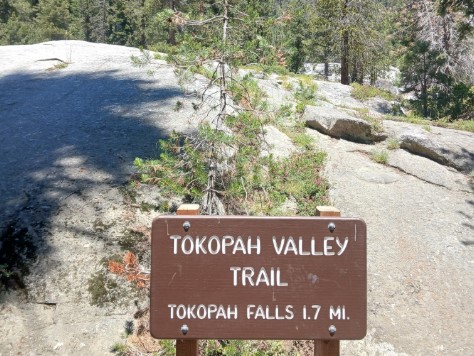
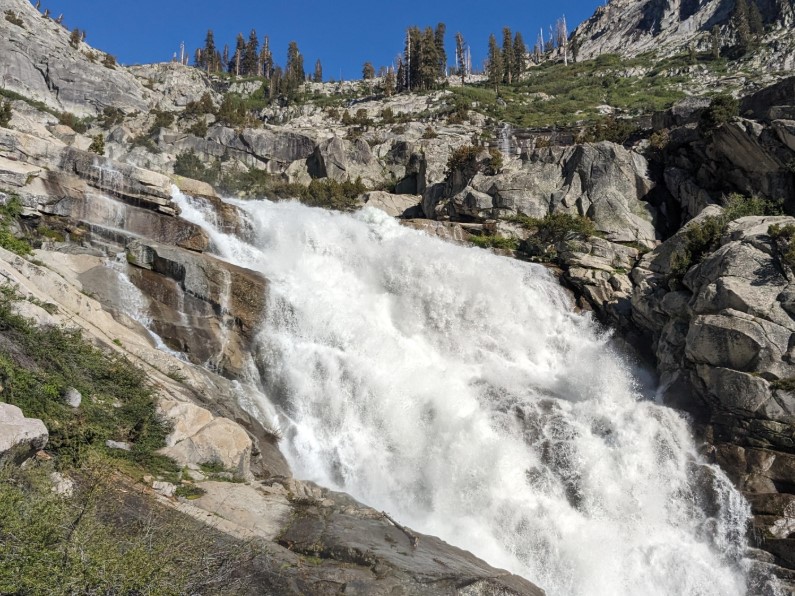
The trail starts just past the Marble Fork bridge in Lodgepole Campground and follows the Marble Fork of the Kaweah River for 1.7 miles one way, with a gradual climb. It ends at the foot of a 1,200-foot cascade pouring down a granite headwall.
The falls are strongest in early summer, and the National Park Service warns visitors to stay careful around the water. There are far fewer giant sequoias here than at Giant Forest, but the canyon walls make up for it.
If Tokopah leaves you hungry for more miles, five of the best hiking trails in Sequoia National Park pick up where this one stops, and Tokopah has company in our guide to waterfall hikes in Tulare County.
Hospital Rock and the Foothills
Most visitors pass Hospital Rock on the climb from the Ash Mountain entrance and keep going, which is a loss. The pictographs here and the bedrock mortars, where acorns were ground into meal, mark a village site of the Potwisha, a band of the Monache (Western Mono).
The National Park Service reminds visitors that the pictographs are sacred to local tribal communities: look, photograph, and never touch.
Tunnel Rock, a giant boulder perched above the road, and the Foothills Visitor Center lie lower down the same highway. Three Rivers and the Foothills belong to Tulare County, and our Tulare County hiking trails guide covers the wider area.
Mineral King
Mineral King is the opposite of Giant Forest: a glacial valley at the end of 25 miles of narrow, curving road from Three Rivers, with an upper section that is partly unpaved and often less than two lanes wide with no guardrails. RVs and trailers are not recommended. Expect the drive to take an hour or more each way.
The reward is a quiet subalpine valley and trailheads for hikes to alpine lakes such as Eagle Lake. The road closes at the park boundary for winter and generally reopens around Memorial Day weekend, and construction has brought daily delays in 2026, so check conditions before you commit.
What to See in Sequoia National Park in One Day
If you are still deciding what to see in Sequoia National Park in a single day, this order keeps driving to a minimum.
| Stop | What you’ll do | Why here |
|---|---|---|
| 1. Hospital Rock | Pictographs and bedrock mortars | A short, free history stop on the way up |
| 2. Giant Forest Museum | Exhibits, then the Big Trees Trail | Orientation and the shuttle hub |
| 3. Moro Rock | Climb the staircase | A morning climb avoids the hottest hours |
| 4. Tunnel Log and Crescent Meadow | Walk through the log, then loop the meadow | Both sit on the same spur road |
| 5. General Sherman Tree | Half-mile walk down, then the Congress Trail if time allows | Afternoon light in the grove |
| 6. Tokopah Falls (early summer) | 1.7 miles each way from Lodgepole | A cooler, shaded finish |
Sunset at Moro Rock is the better ending in good weather, but you will have to trade it for the Tokopah walk.
Planning Your Visit: Fees, Shuttles, Weather and Lodging
Entrance fees
| Pass | Price | Notes |
|---|---|---|
| Private vehicle | $35 | Valid 1-7 days; covers everyone in the vehicle, Kings Canyon, and the Hume Lake District of Sequoia National Forest |
| Motorcycle | $30 | Valid 7 days |
| On foot or bicycle (16+) | $20 per person | Valid 1-7 days |
| Annual park pass | $70 | US citizens and residents |
| America the Beautiful pass | $80 | US residents; seniors, military, 4th graders and others can get free or discounted passes |
Non-US residents aged 16 and over pay an extra $100 per person unless they enter with an annual or America the Beautiful pass. Entrance stations take cards and digital payment only; if you need to pay cash, buy a pass at the Foothills Visitor Center or the Kings Canyon Visitor Center before you enter.
Driving and shuttles
General’s Highway is the spine of the park, and its stretch from Hospital Rock to Giant Forest is full of hairpin turns that the park does not recommend for vehicles longer than 22 feet.
Allow about 45 minutes from the Foothills Visitor Center to the Giant Forest Museum, and more on weekends, when entrance lines can top an hour. There is no gas inside the park, and hazard-tree work has caused weekday delays on the highway.
The free in-park shuttles run in summer (from late May to early September) and, in some years, over Thanksgiving and the year-end holidays. For the latest alerts, use the National Park Service’s current conditions and road status page, and see our guide to checking California trail closures before you go.
Season and altitude
Lower elevations are often hot while the groves stay cool, and Sequoia National Park in winter can bring snow, ice, and chain requirements to park roads. Giant Forest sits near 7,000 feet, so breathlessness on the Sherman Tree climb is common. Our guide to high-elevation hiking in the Sierra Nevada covers pacing and water, and the best time to hike each major California national park helps you pick a season.
Accessibility
The Big Trees Trail and the accessible path to the General Sherman Tree are paved, and the park has accessible parking at Moro Rock and Crescent Meadow.
Crystal Cave and Tokopah Falls are not wheelchair accessible. For more options around the state, see our guide to ADA-friendly trails in California.
Where to stay
Wuksachi Lodge, built in 1999 near Lodgepole, is the park’s main lodge, and campgrounds such as Lodgepole and Potwisha put you inside the boundary.
Store food in bear boxes or lockers at all times. For campsite ideas near other major trails, see campgrounds near California’s top hiking trails.
Where to Go Next
The park’s next-door neighbor, Kings Canyon National Park, is reached on the same entry fee. If you are looking to expand your itinerary beyond the trees, check out our complete guide on things to do in Kings Canyon National Park, while our Kings Canyon National Park hiking trails guide picks the best walks there. For the whole region on foot, start with our Sequoia and Kings Canyon hiking guide, and for a statewide view, see hiking trails in California’s national parks.
Frequently Asked Questions
What are the top attractions in Sequoia National Park?
The General Sherman Tree, Moro Rock, Tunnel Log, Crescent Meadow, the Giant Forest Museum, and the Congress Trail, with Tokopah Falls, Hospital Rock, Mineral King, and Crystal Cave as the next tier.
Is Crystal Cave open, and how do I get tickets?
Not at the moment. The 2026 season ended on September 7, and the park expects Crystal Cave Road to reopen in spring 2027. When tours resume, tickets are sold only online through Sequoia Parks Conservancy.
How much do Crystal Cave tickets cost?
In 2026, tickets cost $22 for adults and $11 for children 10 and under. Park entry is separate.
Sequoia National Park: what to see first if I only have a day?
Start at the Giant Forest Museum, then do Moro Rock, Tunnel Log and Crescent Meadow, and finish with the General Sherman Tree.
Can you drive through a tree in Sequoia National Park?
Yes, through Tunnel Log, a fallen sequoia with a 17-foot-wide, 8-foot-high opening. Taller vehicles use a bypass.
Are dogs allowed in Sequoia National Park?
Pets are not allowed on any trail. They can ride in vehicles and stay on a leash in developed areas such as paved roads, campgrounds, and picnic areas.