Best Campgrounds Near California’s Top Hiking Trails, Region by Region
If you’re searching “hiking and camping near me,” the honest answer depends entirely on which corner of the state you mean: the top campgrounds near California hiking trails are scattered across five genuinely different regions, each with its own booking system, season, and level of difficulty.
Disclosure: Please note that some of the links below are affiliate links and at no additional cost to you, I may earn a commission. Know that I only recommend hiking gear I personally stand behind; when you use my affiliate links, it helps me run this blog and keep all of this content free of charge for readers (like you).
Treating them as interchangeable is the fastest way to miss a reservation window entirely: what works for landing a summer weekend at Lake Tahoe won’t get you anywhere near a July slot at Pfeiffer Big Sur. I’ve pulled together the campgrounds worth targeting near five of the state’s best hiking regions, plus exactly how far ahead you need to book each one. (If you are planning an offshore trip instead, you will first need to coordinate boat schedules and figure out how to get to Channel Islands National Park before booking your site).
Key takeaways:
- Toughest booking in the state: Yosemite Valley’s Pines campgrounds and Pfeiffer Big Sur, both of which routinely sell out within minutes of release, months ahead of your trip.
- Best for lakeside access: D.L. Bliss State Park at Lake Tahoe, which just reopened in May 2026 after a three-year closure and puts you steps from the Rubicon Trail.
- Best for giant sequoias without the Yosemite crowds: Lodgepole Campground in Sequoia National Park, walking distance from Giant Forest and the General Sherman Tree, which also places you right next to other major Sequoia National Park attractions.
- Freshest reopening in this guide: Limekiln State Park’s campground on the Big Sur coast, back open as of April 1, 2026, after more than a year closed for Highway 1 landslide repairs.
- Most forgiving booking window: Joshua Tree in summer, as extreme heat pushes most campers out, so last-minute sites are realistic, though daytime hiking becomes genuinely dangerous rather than just uncomfortable.
| Region | Key campgrounds | Booking window | Difficulty |
|---|---|---|---|
| Yosemite | Upper Pines, Tuolumne Meadows, Hodgdon Meadow | 5 months, monthly batch release | Very hard |
| Big Sur / Central Coast | Pfeiffer Big Sur, Limekiln State Park | 6 months, rolling | Very hard |
| Lake Tahoe | D.L. Bliss, Fallen Leaf Lake | 6 months, rolling | Hard |
| Joshua Tree | Jumbo Rocks, Ryan | 6 months, rolling | Hard (fall–spring), easy (summer) |
| Sequoia & Kings Canyon | Lodgepole, Sentinel | 1–4 months, varies by campground | Moderate |
Yosemite area campgrounds
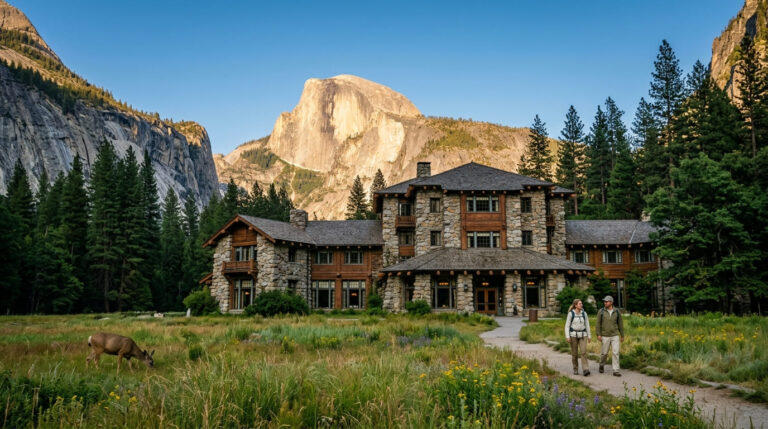
Key options: Tuolumne Meadows, Upper Pines, and Hodgdon Meadow. These three campgrounds cover genuinely different experiences inside one park: high-country Tuolumne Meadows, covered in our Tuolumne Meadows trail guide, sits along Tioga Road at over 8,600 feet with access to the high Sierra, and only opens once the seasonal road clears and facilities are prepared (typically late June or July, depending heavily on the previous winter’s snowpack).
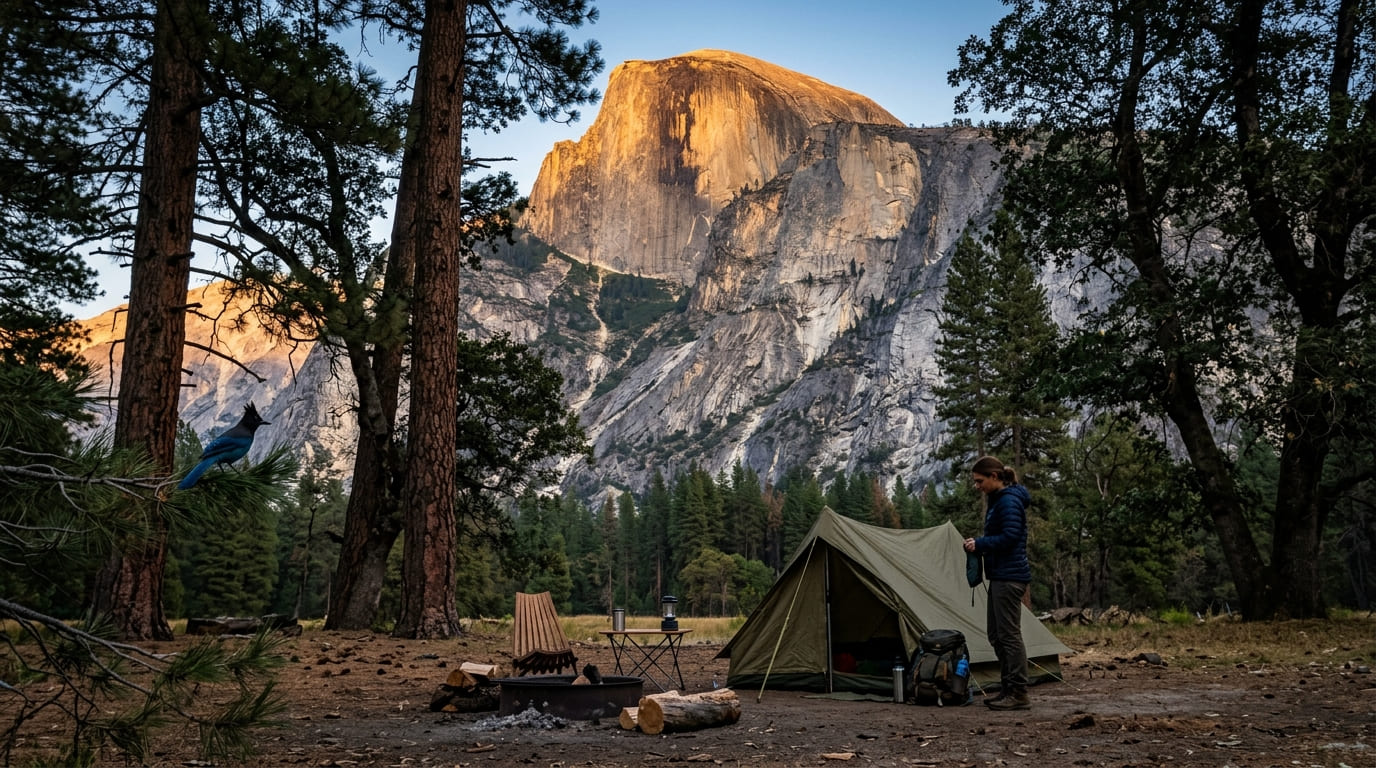
Valley-floor Upper Pines puts you within walking distance of the Mist Trail and Half Dome trailheads, with no seasonal road closure involved, and the quieter Hodgdon Meadow near the Big Oak Flat Entrance is covered alongside the rest of our Tuolumne County guide, itself part of the broader Yosemite trail guide.
Each one suits a different kind of trip: Tuolumne Meadows for alpine solitude, Upper Pines for trailhead convenience, and Hodgdon Meadow for a quieter, less competitive fallback near the western entrance. To compare booking timelines and seasonal availability across all of them, take a look at our comprehensive Yosemite camping guide.
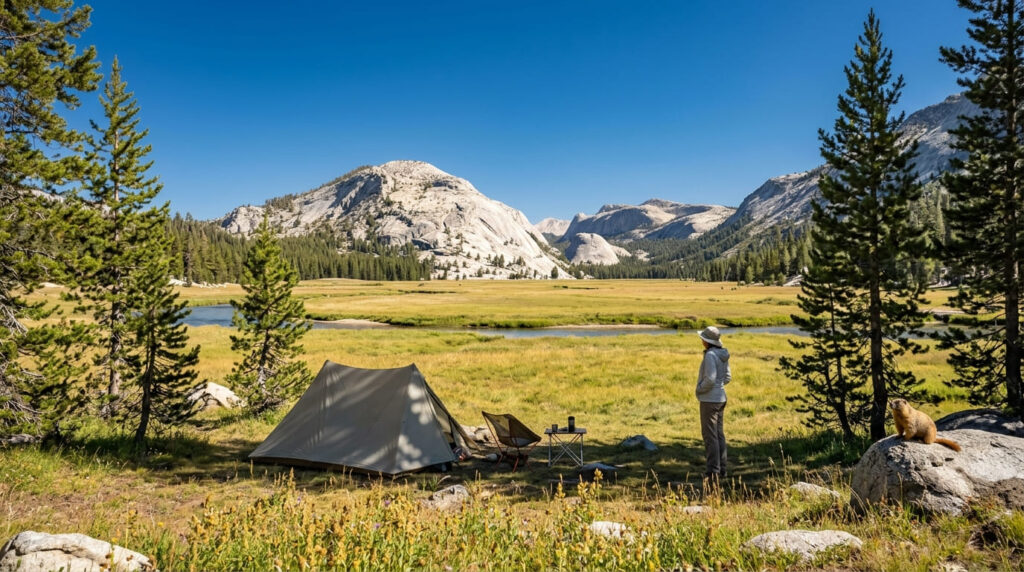
Booking difficulty and timing. Yosemite Valley’s campgrounds don’t follow the standard rolling booking window: they release 5 months out, all at once, on the 15th of each month at 7 a.m. Pacific, and July and August dates are typically gone within minutes. Full details, including the Camp 4 reservation change many older guides miss, are in our Yosemite lodging guide.
Big Sur / Central Coast campgrounds
Key options: Pfeiffer Big Sur and Limekiln State Park. Pfeiffer Big Sur’s 189 sites sit along the Big Sur River within easy reach of Julia Pfeiffer Burns State Park and McWay Falls (two genuinely different parks worth not confusing, since Pfeiffer Big Sur itself has no ocean access despite the name overlap; the beach access most people picture is actually Pfeiffer Beach, a separate, non-state-park site about a mile south with its own entrance fee).
Limekiln State Park, farther south along Highway 1, splits its 29 sites between ocean-facing bluff sites near Highway 1 and shaded redwood-canyon sites along Limekiln Creek near four historic 1880s lime kilns, with a short trail leading to the ruins themselves. If you are extending your trip further down the Central Coast, setting up camp at the Morro Bay State Park waterfront campground or checking out Central Coast Pismo Beach camping options gives you a great southern basecamp.
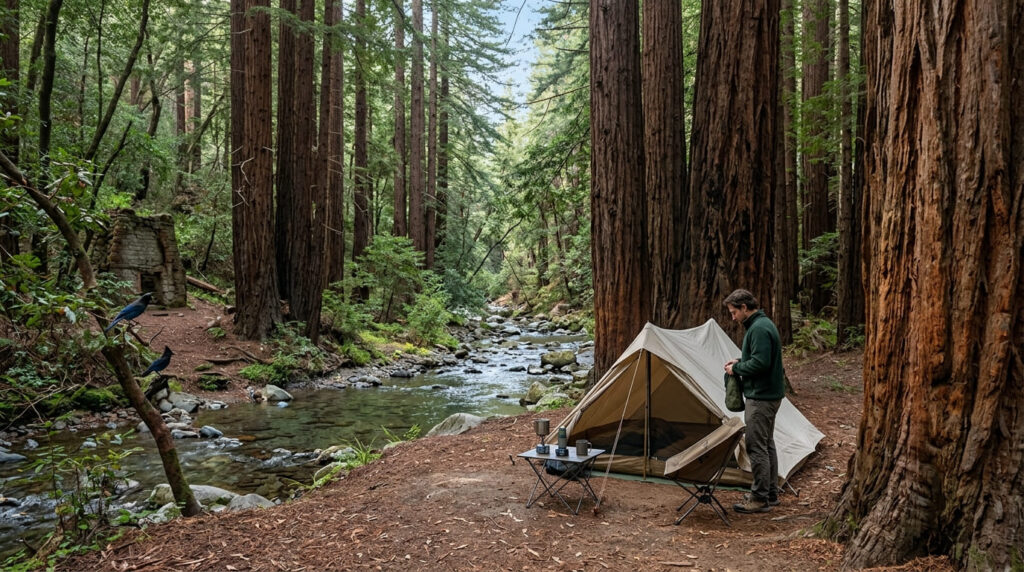
Booking difficulty and timing. Pfeiffer Big Sur is one of the hardest campgrounds in this entire guide to land: reservations open 6 months out on ReserveCalifornia and fill quickly year-round, though same-day online reservations are permitted if cancellations open up.
Limekiln adds a genuine wrinkle worth knowing before you plan around it: the campground was closed for over a year due to Highway 1 landslides and only reopened on April 1, 2026, following repairs at Regent’s Slide. Highway 1 closures in this region are frequent enough that checking Caltrans conditions before a Big Sur trip isn’t optional, regardless of season.
Lake Tahoe area campgrounds
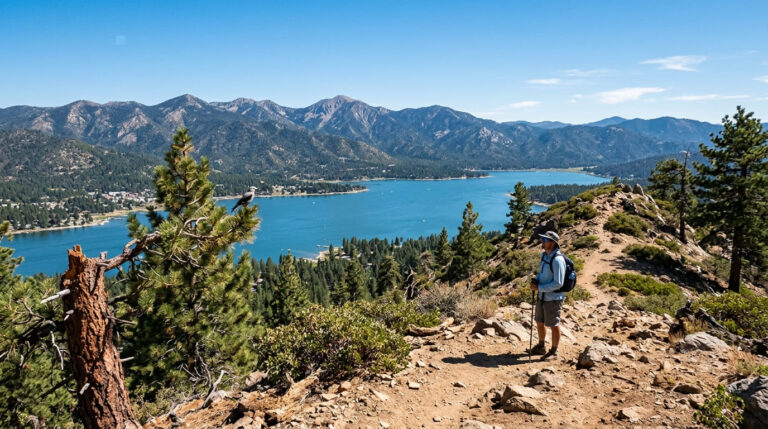
Key options: D.L. Bliss State Park and Fallen Leaf Lake Campground. Both are El Dorado County lakeside campgrounds covered in our Lake Tahoe lodging and Desolation Wilderness trail guides, while southern valley alternatives like Lake Isabella campgrounds offer year-round lakeside camping options. If you want to pair a Tahoe trip with a stop at Castle Crags State Park, D.L. Bliss puts you directly on the Rubicon Trail, which stretches roughly 4.5 miles one-way (about 9 miles round-trip) along the shoreline to Emerald Bay, and reopened in May 2026 after a three-year, multimillion-dollar water-system rebuild (worth another look if you wrote it off in recent years).
Fallen Leaf Lake, tucked just off the main basin near South Lake Tahoe, offers a quieter alternative with its own beach access and noticeably less traffic than the more famous D.L. Bliss and Emerald Bay corridor, without giving up much in the way of scenery.
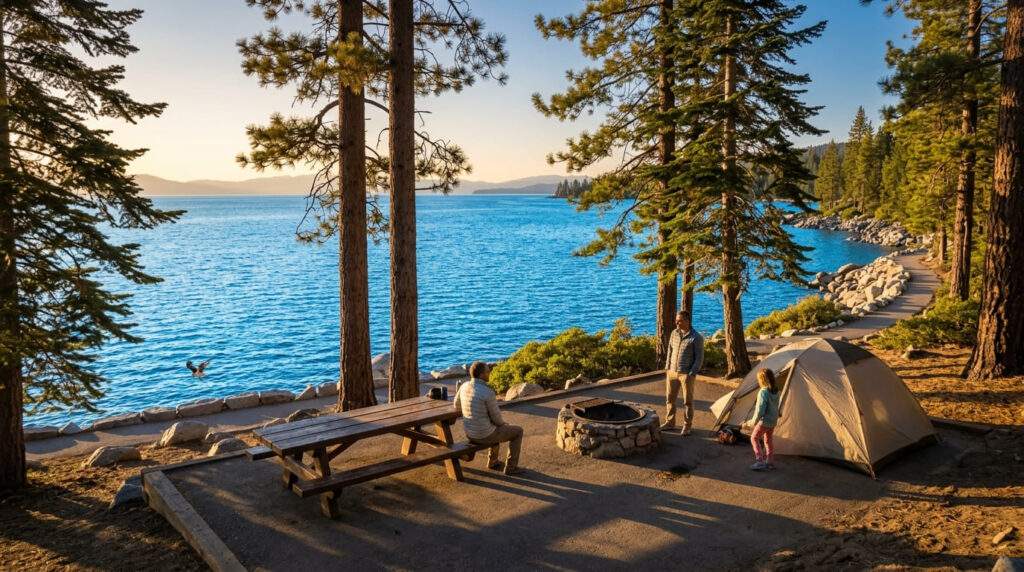
Booking difficulty and timing. Unlike Yosemite’s unusual monthly release, Lake Tahoe follows the standard 6-month rolling window on both Recreation.gov and ReserveCalifornia, and popular lakeside sites for summer weekends still disappear within minutes of opening. Mark your calendar exactly 6 months out from your target date.
Joshua Tree campgrounds
Key options: Jumbo Rocks and Ryan Campground. Both put campers directly among the park’s iconic boulder formations, covered in our Joshua Tree lodging guide.
Jumbo Rocks, the park’s largest campground at 124 sites, sits at over 4,300 feet elevation, with the Skull Rock trail leaving right from the campground and the town of Twentynine Palms about 12 miles away for supplies.
Ryan, a smaller and more intimate 31-site option near the Ryan Mountain trailhead, trades Jumbo Rocks’ scale for quiet; both require reservations during peak season (September 15 to May 15). During summer, Jumbo Rocks remains open but continues to require advance reservations year-round, while Ryan closes entirely due to extreme heat.
Booking difficulty and timing. The sharpest seasonal swing of any region in this guide: cooler-season weekends, October through May, are the park’s most comfortable hiking window and its hardest booking window, with popular sites gone within minutes of the 6-month release. Summer flips that entirely: extreme heat pushes most visitors out, so last-minute camping is realistic, but hiking during the day becomes genuinely dangerous rather than merely unpleasant.
Sequoia & Kings Canyon campgrounds
Key options: Lodgepole and Sentinel Campground. Two centrally located campgrounds covered in our Tulare County and Fresno County guides. Lodgepole, with 214 sites near the Marble Fork Kaweah River, offers the most convenient access to Giant Forest and the General Sherman Tree, plus a free shuttle to both and full amenities including a camp store and dump station; it’s tentatively open June 15 through December 1, 2026, and Dorst Creek Campground remains closed for the 2026 season, so don’t count on it as a backup this year.
Sentinel, in Kings Canyon’s Cedar Grove area, sits right along the South Fork Kings River near waterfall trails like Roaring River Falls and Mist Falls, with the Cedar Grove Visitor Center and Village (food, showers, laundry) within a quarter mile, covered in our Kings Canyon trail guide and Sequoia National Park trail guide. If you want to check out a different northern route that lets you walk right through a basalt cave behind a waterfall, take a look at our Hedge Creek and McCloud Falls hiking guide.
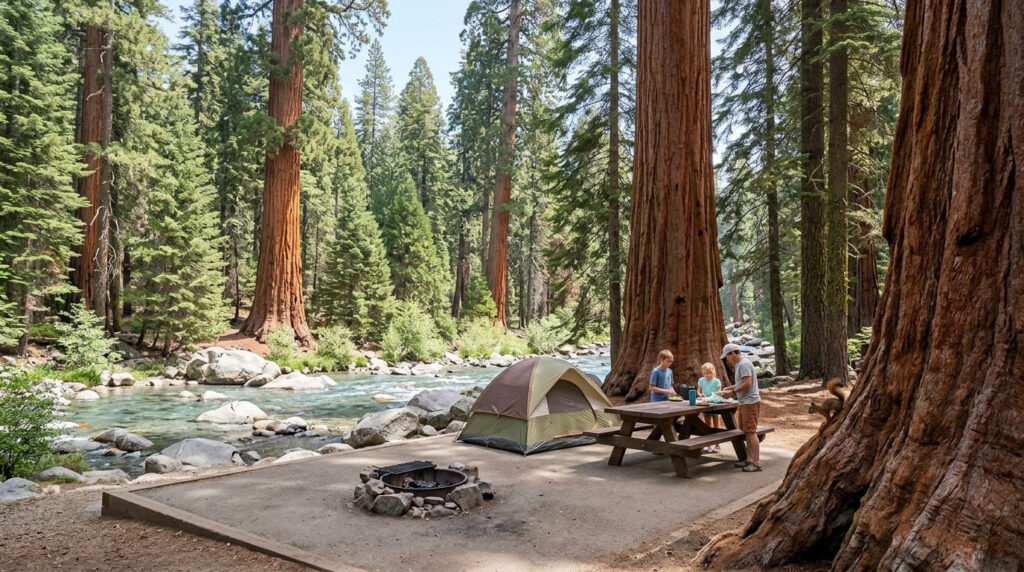
Booking difficulty and timing. This park’s overall visitation runs somewhat lighter than Yosemite’s, which can mean more last-minute availability outside of summer holiday weekends, but don’t mistake that for an easy booking process.
Cedar Grove’s campgrounds, including Sentinel, use a shorter 1-to-4-month booking window rather than the standard 6 months, and the area has a history of late-notice disruptions: a 2024 staffing shortage forced a temporary campground swap in Cedar Grove, and Highway 180 into Cedar Grove has closed for storm damage in past seasons. Check current conditions close to your trip rather than assuming last year’s schedule holds.
Across all five regions, the pattern holds: the more iconic the view from the tent, the harder the reservation. Whether you are prepping for a weekend under canvas or brainstorming present ideas for hiking partners, having the right gear elevates every campsite setup. Yosemite and Big Sur sit at one extreme, where you genuinely need to be online at the exact release moment to have a real shot.
Lake Tahoe and fall-through-spring Joshua Tree sit in the middle: hard, but not impossible with a few backup dates in mind. Sequoia & Kings Canyon is the most forgiving of the five, especially midweek, though Cedar Grove’s shorter booking window and history of late-notice changes mean it rewards checking current conditions rather than assuming last year’s calendar still applies.
If your dates are flexible, lean toward Sequoia & Kings Canyon and off-peak Joshua Tree for the best odds; if your dates are fixed to a specific weekend, set a calendar reminder for the exact release date and be logged in early rather than a few minutes late; and if you strike out everywhere, national forest land bordering nearly every one of these parks offers a genuine, if less scenic, backup plan (often first-come, first-served, and rarely full on a weeknight).
FREQUENTLY ASKED QUESTIONS ABOUT BEST CAMPGROUNDS NEAR CALIFORNIA’S TOP HIKING TRAILS
Hiking and camping near me
The right answer depends on which part of California you’re in: this guide breaks down the best trailhead-adjacent campgrounds across five major hiking regions, from Yosemite to Sequoia & Kings Canyon, so you can match a campground to whichever trails are actually nearby.
Campgrounds with hiking trails
Every campground in this guide sits within a short walk or drive of named trailheads (Lodgepole for Tokopah Falls, Upper Pines for the Mist Trail, Jumbo Rocks for Skull Rock, and so on) rather than being a generic drive-up site with no trail access.
A hiking trail that leads to a campground
Several trails in this guide connect two campgrounds directly, most notably the Rubicon Trail linking D.L. Bliss and Emerald Bay’s campgrounds at Lake Tahoe, and various Desolation Wilderness routes that end at backcountry camp zones rather than drive-in sites.
Do you need a reservation to camp in California state parks?
For the vast majority of popular sites, yes. California state park campgrounds book through ReserveCalifornia up to 6 months in advance, and truly first-come, first-served sites are increasingly rare at state parks in these regions, with most unreserved options limited to municipal sites like Lake Forest Campground (operated by TCPUD) or surrounding national forest lands.
What is the best season to avoid campground crowds?
Late fall through early spring at lower-elevation parks like Joshua Tree, or midweek visits generally, as weekday sites are meaningfully easier to land than Friday and Saturday nights at every region in this guide, sometimes by a wide margin.
Are walk-up campsites ever available at popular parks?
Rarely at the marquee campgrounds covered here. However, a few exceptions exist (like Hidden Valley at Joshua Tree, which remains first-come, first-served year-round), and cancellations do appear daily in the weeks before popular dates.