How to Plan a Multi-Day Hiking Trip Through California’s National Parks Without Wasting a Day of It
Most multi-day California national park trips fail in the planning stage, not on the trail: too few days for the park you picked, a permit deadline missed by weeks, or an itinerary that has you driving five hours and hiking twelve miles on the same day.
Disclosure: Please note that some of the links below are affiliate links and at no additional cost to you, I may earn a commission. Know that I only recommend hiking gear I personally stand behind; when you use my affiliate links, it helps me run this blog and keep all of this content free of charge for readers (like you).
If you want to plan a multi day hiking trip through California’s national parks, this is the logistics layer our road trip and lodging guides don’t cover in depth: how many days you need, which permits can’t wait, how to pace a daily plan, and how to pack for a state that can hand you desert heat and alpine snow in the same week.
None of this is complicated once it’s laid out, but skipping any one piece of it is exactly how a well-intentioned trip turns into a week of rushed mornings and missed reservations.
Key takeaways:
- One park deserves at least 3 full days. Yosemite, Sequoia, and Kings Canyon are all too large to see meaningfully in a single rushed day.
- Combining parks costs more driving than people expect. Yosemite to Sequoia & Kings Canyon runs 3 to 4 hours even by the most direct route, with no interior road connecting them; you have to exit and come back around.
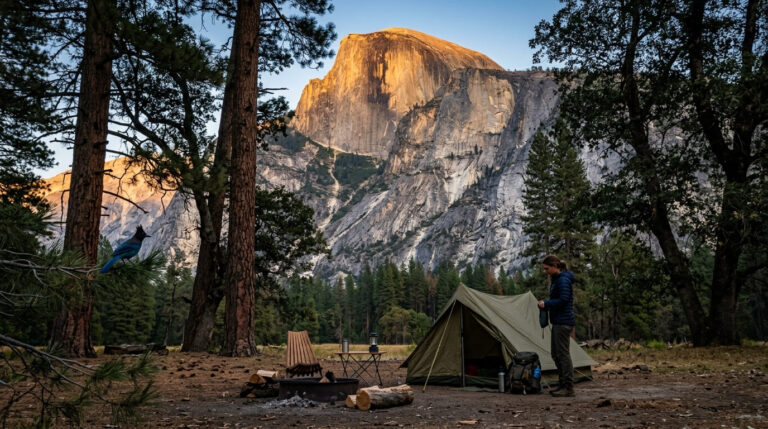
- The single highest-volume permit search in this post’s keyword data is Half Dome. The cables-permit preseason lottery runs every March, and it’s the one deadline that can reshape your entire itinerary if missed.
- Mount Whitney’s 2026 lottery runs February 1 to March 1, with results posted March 15 (a similarly hard deadline if the summit is on your list).
- Build in one buffer day per five days of the trip. Weather, closures, and simple fatigue are the norm on a demanding multi-park itinerary, not the exception.
| Permit-dependent trail | Lottery window (2026) | Results posted | Fee |
|---|---|---|---|
| Half Dome cables | Preseason lottery: March 1–31 | Mid-April | $10 application + $10/person if awarded |
| Mount Whitney Trail | February 1–March 1 | March 15 | $6 application + $15/person if awarded |
| Rae Lakes Loop (Kings Canyon backcountry) | No annual lottery (quota-based reservations via Recreation.gov) | Rolling | Standard wilderness permit fee |
How many days do you need?
A minimum for one park. The most common overplanning mistake in this post’s keyword data is squeezing a major park into a single rushed day: “yosemite national park itinerary 2 days” and similar searches suggest a lot of people are already trying to compress this, and it shows in trip reviews.
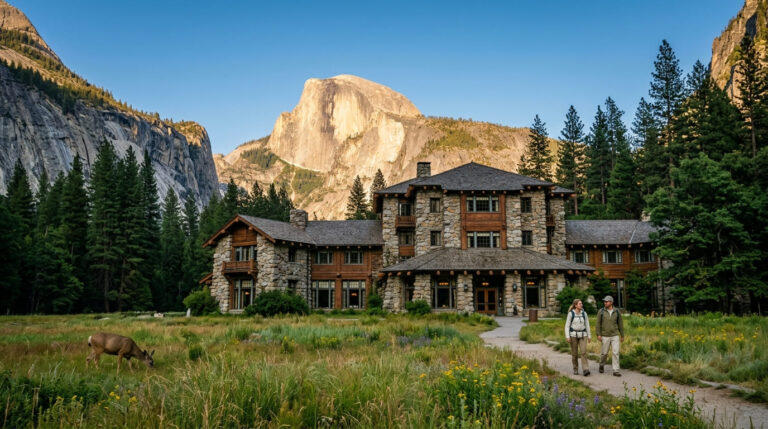
Yosemite and Sequoia & Kings Canyon are both large enough that a single day only scratches one small corner: a Yosemite day trip typically means the Valley floor and nothing else, with Tuolumne Meadows, Glacier Point, and any trail time left out entirely.
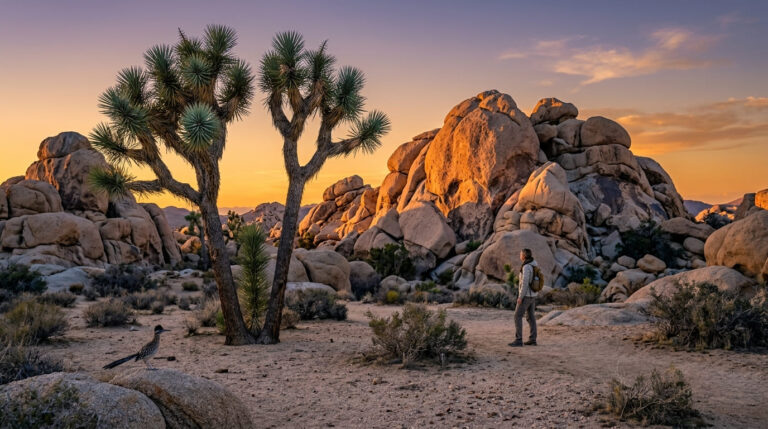
Give Yosemite at least 3 full days if you want Valley-floor icons and one high-country excursion; give Sequoia & Kings Canyon at least 2 to 3 if you want Giant Forest and a Cedar Grove day without rushing either. Smaller parks like Joshua Tree can work as a one-day visit if your goals are modest, but even there, 2 days lets you hike rather than just drive between viewpoints.
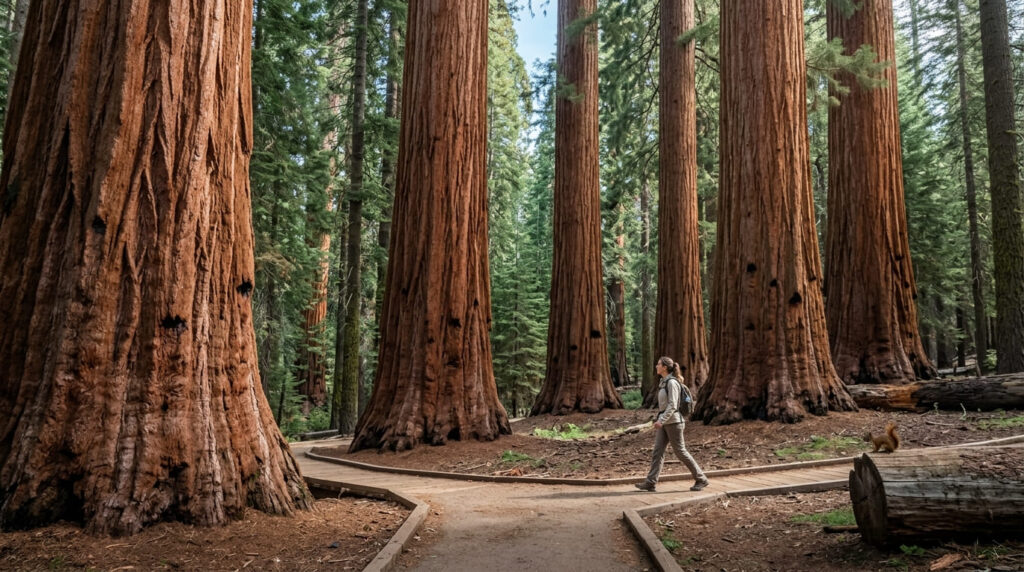
Combining multiple parks in one trip. Pairing Yosemite with Sequoia & Kings Canyon is a popular ambition, and a reasonable one, but the driving cost is real. There’s no direct interior route between the two; the standard connection runs south via Highway 41 through Fresno, roughly 3 to 4 hours depending on your exact start and end points inside each park.
Budget a minimum of 5 to 6 days total for a Yosemite-plus-Sequoia combination if you want meaningful hiking time in both rather than a drive-through visit, and resist the temptation to add a third park to the same week purely because it looks feasible on a map, as the driving adds up faster than the mileage suggests.
Booking permits and reservations in advance
Which trails need to be booked months ahead. A handful of trails covered in our bucket-list guide and permits guide can make or break a multi-day itinerary if you don’t secure them early. Half Dome’s cables permit runs on a preseason lottery every March, with results in mid-April; miss that window, and you’re relying on the much smaller daily lottery two days out, which is competitive rather than a reliable backup plan.
Mount Whitney’s 2026 lottery runs February 1 through March 1, with results posted March 15 and a claim deadline of April 21; the quota season (May 1 through November 1) is when this permit matters most, and a day hike requires going through the exact same permit lottery as an overnight attempt.
The Rae Lakes Loop and other Sequoia & Kings Canyon backcountry routes don’t run an annual lottery the same way: they use standard wilderness permit quotas reservable through Recreation.gov, generally easier to land than Half Dome or Whitney but still worth booking as early as the reservation window allows, since popular entry points fill well before the trip date approaches.
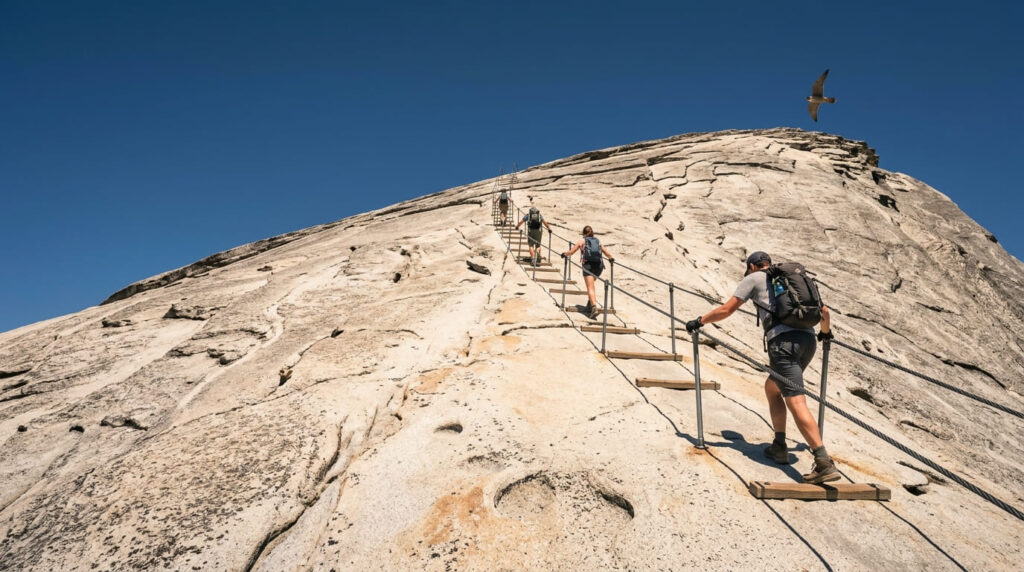
Building flexibility into a permit-dependent itinerary. The reality behind all three permits above: demand regularly outstrips supply, and a rigid single-date plan built entirely around one specific permit is fragile. Apply for your top choice, but sketch a Plan B trail into the same itinerary slot before you find out whether you won: a nearby non-quota trail you’d still be happy to spend the day on, not just “figure it out later.”
Building a daily itinerary
Balancing driving time against hiking time. The single most common pacing mistake in a California multi-park trip is scheduling a demanding hike and a long drive on the same day. Our own county guides make the scale of the state obvious: trailheads that look close together on a statewide map are routinely 2-plus hours apart by road.
As a working rule, treat any driving day over 3 hours as a non-hiking day, or plan for only a short, easy trail if you must do both. It’s tempting to arrive at a new park in the afternoon and squeeze in a demanding summit before dark; resist it, since fatigue from the drive itself is a factor in trail decision-making and injury risk, not just a cliché.
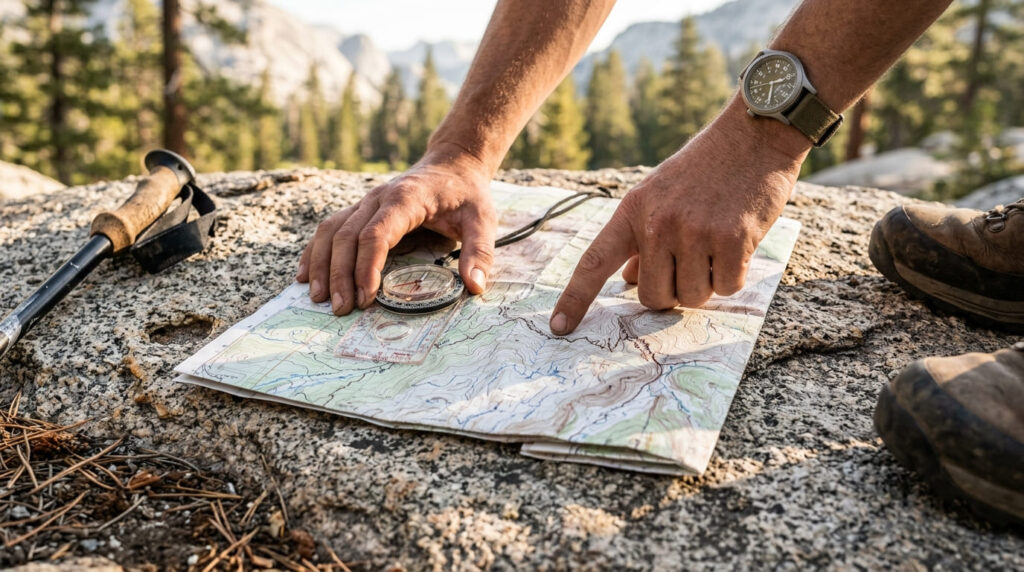
Building in rest and buffer days. At least one unscheduled day per 4 to 5 days of active hiking is the difference between a trip that survives a closed road, a permit that fell through, or a body that’s more tired than expected, and one that unravels at the first hiccup.
This isn’t a wasted day; it’s what lets weather delays or trail closures happen without collapsing the whole plan. A buffer day doesn’t have to mean total rest, either; a short, easy trail or a town day for laundry and resupply both count, and either one keeps the trip’s momentum without adding to accumulated fatigue.
Packing for multiple climate zones in one trip
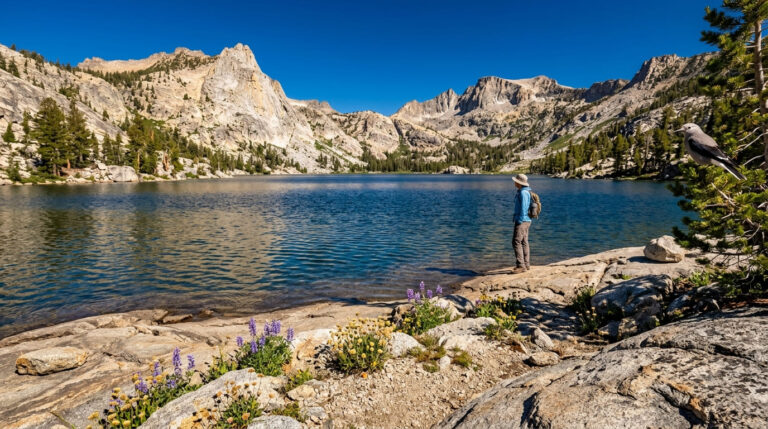
Desert heat to Sierra snow in the same week. Few states can hand you the temperature range California can offer inside a single itinerary. A day in Death Valley or Joshua Tree can mean triple-digit heat at elevations near or below sea level; a few days later, Sierra high country above 8,000 feet can drop well below freezing overnight, even in shoulder-season months.
This isn’t a hypothetical; it’s the exact contrast a Death Valley-to-Sierra or Joshua Tree-to-Yosemite itinerary delivers, and it’s easy to underpack for one end while overpacking for the other if you’re only thinking about the climate at your starting point.
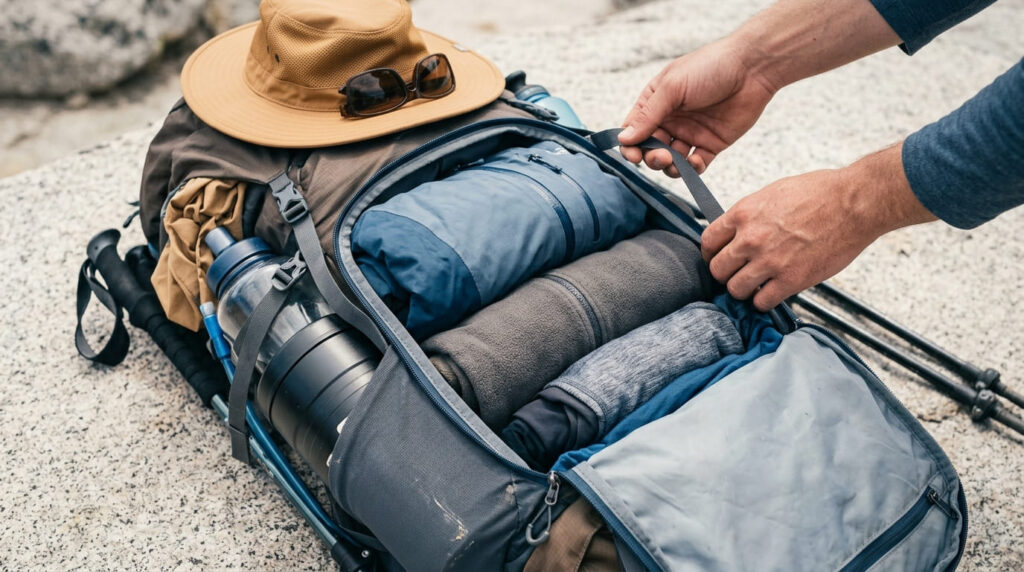
Layering strategy for elevation swings. Pack for the coldest and hottest points on the itinerary, not the average, using elevation-specific forecasts for each trailhead rather than a single regional number. A moisture-wicking base layer, a warm mid-layer, and a wind- and water-resistant shell cover the Sierra side; sun-protective, breathable layers plus electrolyte and water capacity cover the desert side.
As a rough physical rule, expect roughly 3 to 5°F of cooling for every 1,000 feet of elevation gained: a trailhead that’s 95°F at 4,000 feet can mean a summit near freezing at 12,000 feet, on the same day, with nothing more exotic than elevation to explain the swing. Pack layers you can add and remove throughout a single hike, not just a fixed outfit for each destination on the itinerary, since the temperature swing within one day’s hike can rival the swing between two entirely different parks.
Plan the calendar backward from your hardest-to-get permit, build in more buffer time than feels necessary, and pack for the extremes rather than the middle. Multi-day trips through California’s parks reward exactly this kind of unglamorous planning: the itinerary rarely fails because a trail was too hard; it fails because the permit, the drive, or the pack list wasn’t sorted out weeks before anyone laced up a boot.
None of the four pieces above are difficult in isolation, but skipping any one of them tends to compound the other three, which is why the trips that go smoothly are usually the ones planned in this order rather than tackled piecemeal a few days before departure. For the route itself, once the logistics are set, see our Highway 1 to Sierra road trip guide.
FREQUENTLY ASKED QUESTIONS ABOUT HOW TO PLAN A MULTI-DAY HIKING TRIP THROUGH CALIFORNIA’S NATIONAL PARKS
How do you plan a multi-day national park trip in California?
Start with your hardest-to-get permit (Half Dome or Mount Whitney, if either is on the list), build the calendar around its lottery deadline, then add daily driving and hiking budgets and at least one buffer day before finalizing dates.
Is it better to stay in one place or move each night?
One base per park, moved only when you change parks, almost always beats a different hotel every night, as packing and unpacking daily eats time and energy that’s better spent hiking.
How much should you budget for a multi-day national park trip?
It varies widely by lodging choice, but entrance fees, an America the Beautiful annual pass if visiting multiple parks, gas, and food are the fixed costs on top of lodging or camping, which is usually the largest single line item. Camping-based trips can run a fraction of a lodging-based itinerary covering the same parks and days.
What is the best time of year for a multi-park California trip?
Late June through September is the only window when Sierra high-country roads and trails are reliably open across every region; shoulder season (May or October) can work for lower-elevation parks like Joshua Tree or Death Valley but risks closures at higher elevations, so check current conditions rather than assuming last year’s calendar holds.
Should you rent a car for a multi-day hiking trip?
Yes, in almost every case: the parks and permit trailheads covered in this guide are spread across a large state, and public transit between them is limited or nonexistent for most of this route.
How do you handle laundry and resupply on a long trip?
Gateway towns near every major park covered on this site have at least basic grocery and laundry options; plan resupply stops around park entrances or exits rather than assuming amenities exist inside the park itself.