The 5 Best Hiking Trails in the Ansel Adams Wilderness, From an Easy Alpine Lake to the Most Photographed Reflection in the Sierra
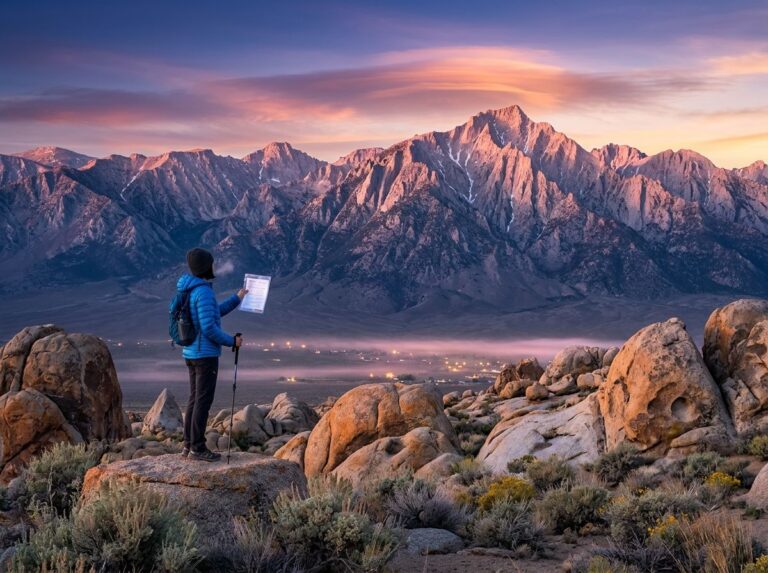
This guide covers Hiking Trails in the Ansel Adams Wilderness accessed via the June Lake Loop and Reds Meadow, deliberately distinct from the Mammoth Lakes basin trails and the higher, more remote peaks covered elsewhere in this series. Here’s the short version: Parker Lake is the easy, low-barrier entry point, Thousand Island Lake is the trail everyone’s actually chasing for that Banner Peak reflection photo, and Minaret Lake is the one to save for a full day or an overnight.
Disclosure: Please note that some of the links below are affiliate links and at no additional cost to you, I may earn a commission. Know that I only recommend hiking gear I personally stand behind; when you use my affiliate links, it helps me run this blog and keep all of this content free of charge for readers (like you).
Five trails anchor this guide: Parker Lake, Shadow Lake, Thousand Island Lake, Minaret Lake, and Gem Lake. One thing applies across all five that the breakdown for this guide got wrong in a small but meaningful way: none of them actually require a permit just to day hike, only to camp overnight. I’ll flag exactly where that distinction matters as we go.
Key takeaways
- Easiest introduction to this wilderness: Parker Lake, a short, family-friendly hike reaching a genuine alpine lake with Mono Lake views from the trailhead.
- Best waterfall-and-peaks combo: Shadow Lake, a moderate step up, set beneath the jagged Ritter Range.
- The marquee photo destination: Thousand Island Lake, famous for its mirror reflection of Banner Peak, best at sunrise.
- Most demanding single trail: Minaret Lake, 13 miles round trip directly beneath the serrated Minaret peaks, often backpacked as an overnight.
- Best June Lake Loop alternative: Gem Lake, a genuine wilderness lake without the Reds Meadow shuttle logistics, though don’t underestimate its real elevation gain.
- None of these require a permit for day hiking, only overnight stays do.
Quick-glance comparison
| Trail | Distance (RT) | Elevation gain | Access | Overnight permit needed |
|---|---|---|---|---|
| Parker Lake | ~3.6–4 mi | ~630–700 ft | June Lake Loop, free drive-up | Yes, day use free |
| Shadow Lake | ~7.6–8 mi | ~1,300–1,552 ft | Agnew Meadows, shuttle in peak season | Yes, day use free |
| Thousand Island Lake | ~13–20+ mi (route-dependent) | ~2,200–3,900 ft | Agnew Meadows, shuttle in peak season | Yes, day use free |
| Minaret Lake | ~13 mi | ~2,400–2,600 ft | Devils Postpile, shuttle in peak season | Yes, day use free |
| Gem Lake | ~6.6–7 mi | ~1,300–1,882 ft | Silver Lake, June Lake Loop, free drive-up | Yes, day use free |
Parker Lake Trail: the easiest introduction to this wilderness
This is the trail I’d send someone attempting their first Ansel Adams Wilderness hike, genuinely accessible, no shuttle logistics, no permit needed for the day trip itself.
Trailhead access and parking at Parker Lake, June Lake Loop
A 2.5-mile dirt road off Highway 158 (passable for standard passenger cars) leads to a small trailhead parking area near Grant Lake. Day use does not require a permit, only overnight stays do, and even then it’s a free self-issue or recreation.gov reservation.
Difficulty, distance, and elevation gain to Parker Lake
A genuine 3.6 to 4-mile round trip with 630 to 700 ft of gain, most of the climbing comes in the first stretch, easing off as you parallel Parker Creek toward the lake.
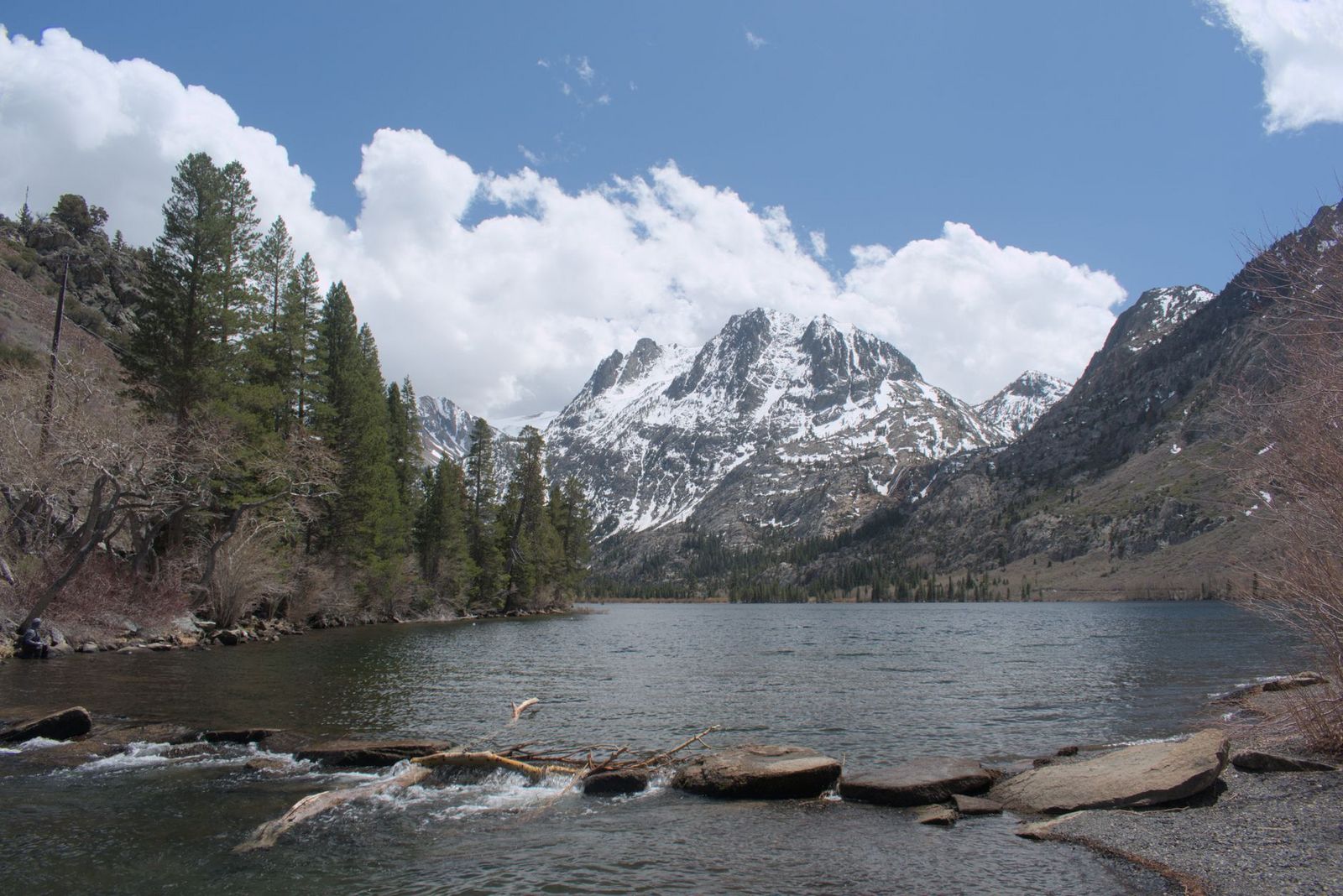
What you’ll see: an accessible alpine lake just inside the wilderness boundary
Parker Lake sits in a small canyon beneath 12,000-ft peaks, reached through a shift from open chaparral to aspen and pine forest, genuinely alpine scenery for minimal effort. Looking back toward the trailhead, Mono Lake is visible across the sagebrush.
Best time to hike Parker Lake: an easy introduction to the Ansel Adams Wilderness
Accessible whenever the access road is clear of snow, typically late spring through fall, with early morning or fall color both genuinely good reasons to time a visit.
Agnew Meadows to Shadow Lake Trail: a step up beneath the Ritter Range
Once Parker Lake has you comfortable with this wilderness, this is the natural next step.
Trailhead access and parking at Agnew Meadows (Reds Meadow shuttle required in peak season)
The same mandatory summer shuttle system used for Rainbow Falls in my Mammoth Lakes guide, but dropping hikers at a different Reds Meadow Valley stop. Outside shuttle hours (before 7 a.m. or after 7 p.m. in peak season, or entirely outside the shuttle’s operating months), private vehicles can drive in directly.
Difficulty, distance, and elevation gain to Shadow Lake
Expect about 7.6 to 8 miles round trip with roughly 1,300 to 1,552 ft of gain, most of it concentrated in the final two miles, a genuinely moderate-to-demanding step up from Parker Lake.
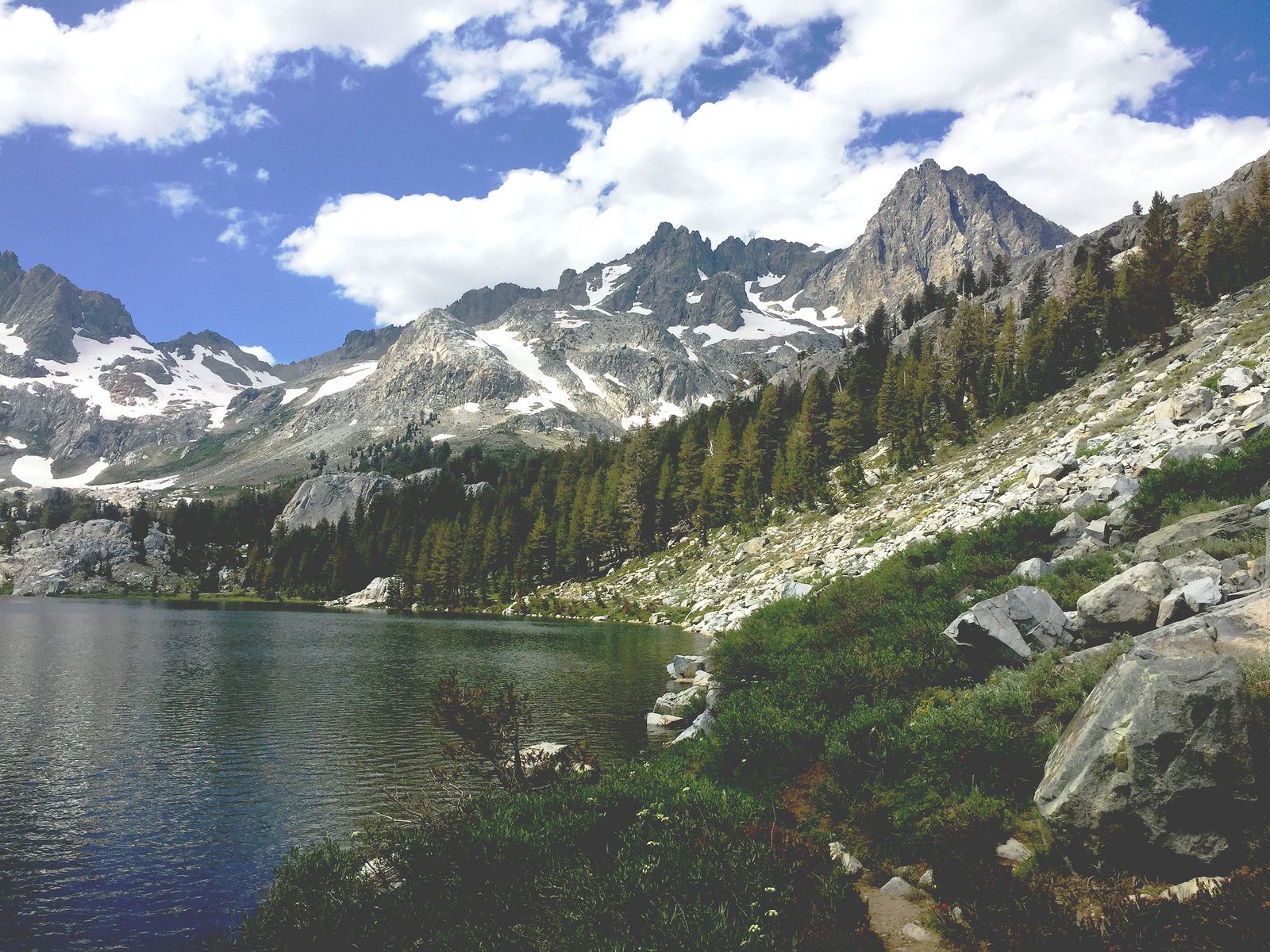
What you’ll see: a waterfall-fed lake beneath the Minarets
Shadow Lake sits in a hanging valley with a waterfall feeding it and the jagged Minarets, Mount Ritter, and Banner Peak all visible from the approach, no camping is permitted directly around the lakeshore itself.
Best time to hike Shadow Lake: a mandatory shuttle runs daily in summer
The shuttle’s operating hours are the real planning constraint here during peak season, check current times before your visit, since arriving outside them without a shuttle ticket or overnight reservation means you can’t drive in.
Thousand Island Lake Trail: the most photographed reflection in the Sierra
This is the trail everyone’s actually chasing when they picture the Ansel Adams Wilderness, and the one where route choice genuinely changes your day.
Trailhead access and parking at Agnew Meadows, via the River Trail
Same shuttle stop as Shadow Lake, but continuing considerably farther along the River Trail/John Muir Trail corridor rather than branching off early.
Difficulty, distance, and elevation gain to Thousand Island Lake
This genuinely depends on your route: the more direct River Trail is commonly cited around 13 miles round trip, the popular High Trail alternative extends this to about 16.4 miles with roughly 2,900 ft of gain, and combining with Shadow Creek for a full loop pushes the trip past 20 miles. Pick your route deliberately rather than assuming one figure applies.
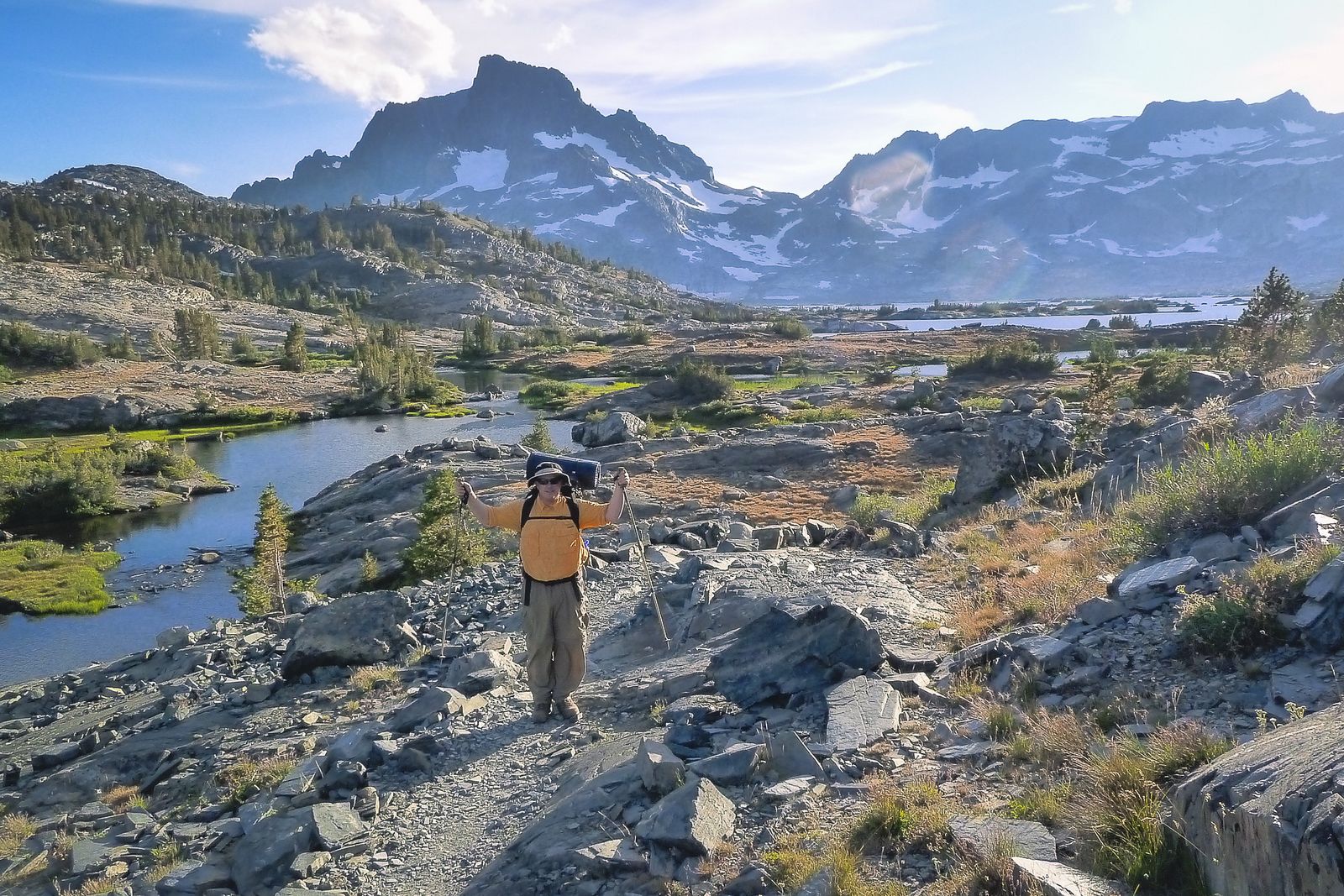
What you’ll see: one of the most photographed lakes in the Sierra Nevada
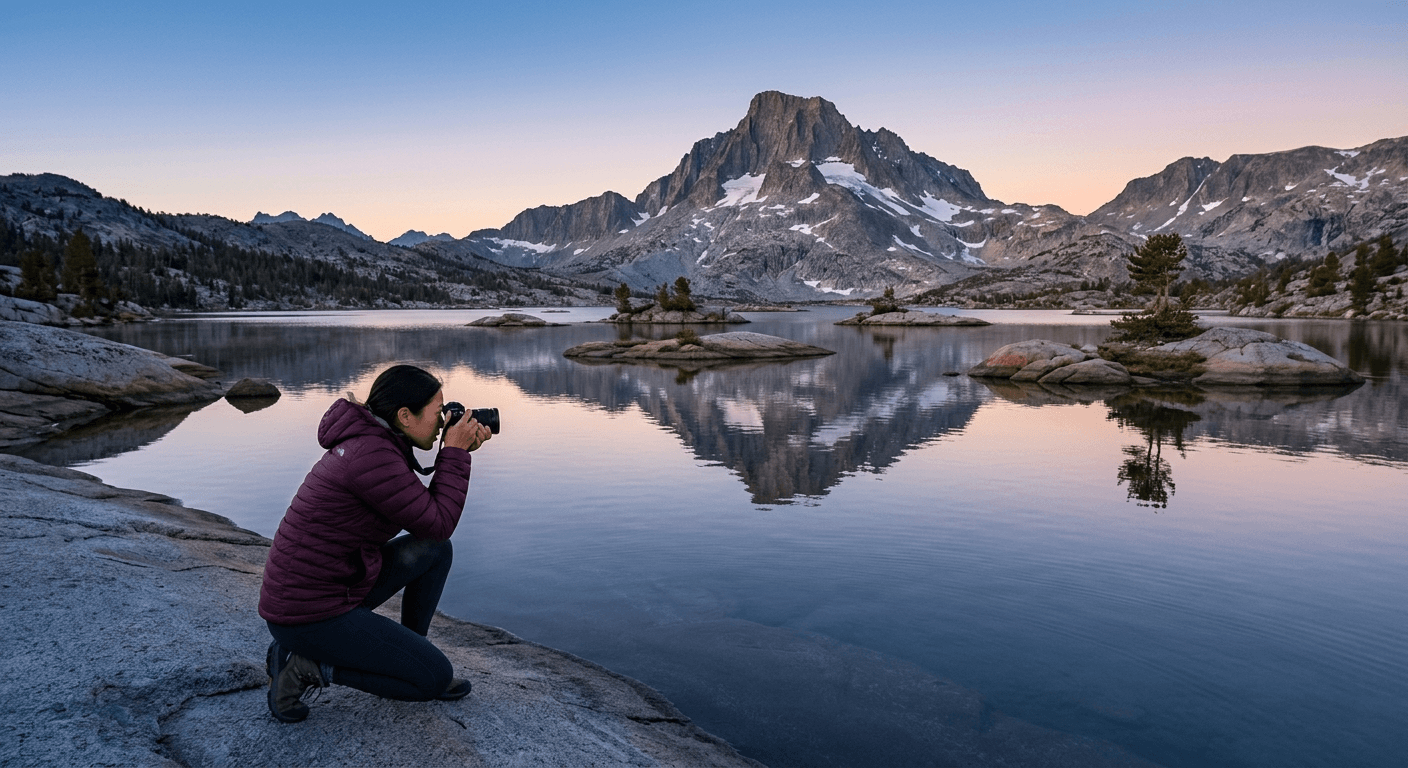
At 9,840 ft, Thousand Island Lake’s still morning water reflects Banner Peak directly, widely regarded as one of the single most photographed alpine lake scenes anywhere in the Sierra Nevada, with a genuine scattering of small rocky islands giving the lake its name.
Best time to hike Thousand Island Lake: sunrise for the classic Banner Peak reflection
Wind picks up as the day goes on, breaking up the mirror-calm water the reflection photo depends on, sunrise is a real, not just aesthetic, planning consideration here.
Minaret Lake Trail: the single most demanding day hike in this guide
This is the trail to save for a day you’re genuinely ready to commit to, or better yet, an overnight.
Trailhead access and parking at the Devils Postpile Ranger Station
Same general Reds Meadow Valley shuttle zone used for Rainbow Falls and Shadow Lake, but heading up a separate drainage along Minaret Creek.
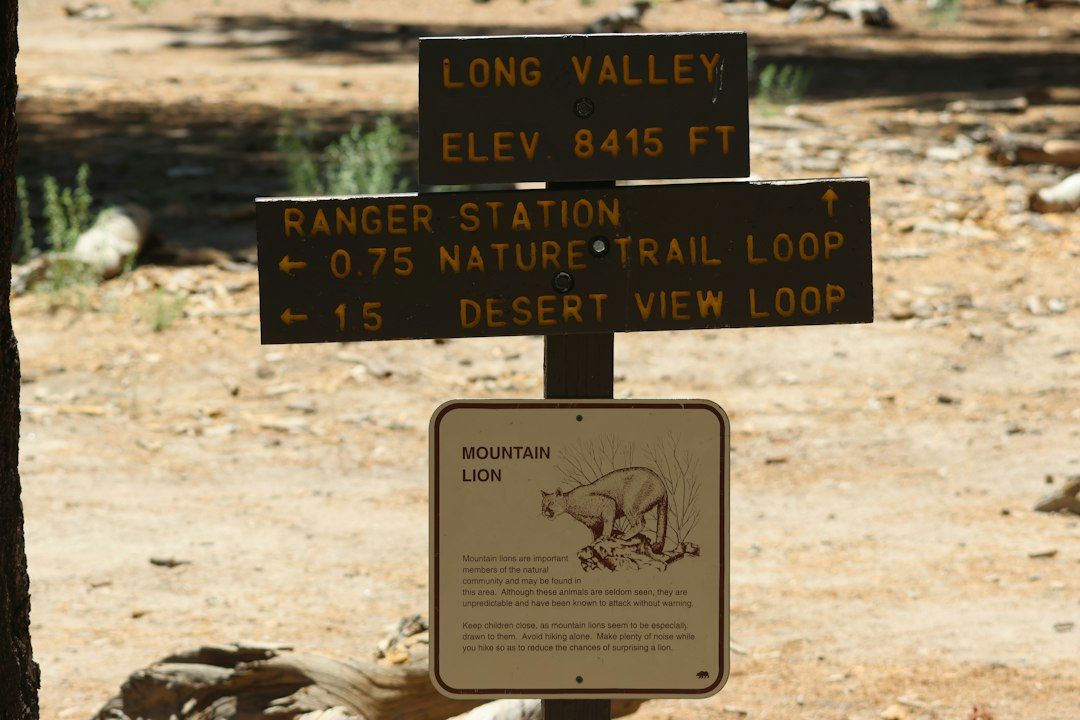
Difficulty, distance, and elevation gain to Minaret Lake
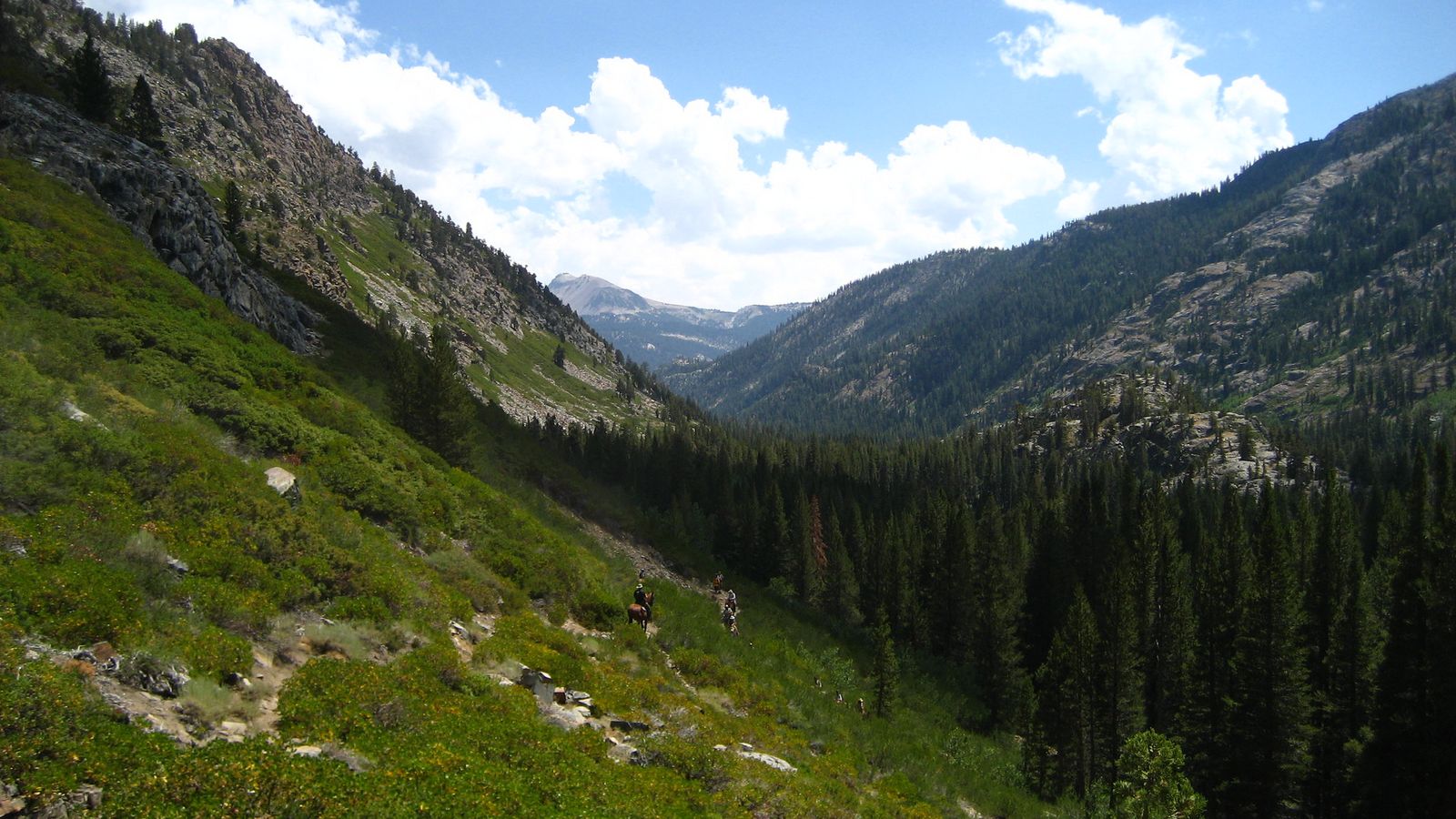
Multiple consistent sources put this at about 13 miles round trip with 2,400 to 2,600 ft of gain, a genuinely demanding day, past waterfalls and through dense forest before opening into alpine terrain.
What you’ll see: a lake directly beneath the jagged Minaret peaks
Minaret Lake sits almost directly at the base of the serrated Minaret spires, the closest, most dramatic peak-to-lake proximity of any trail in this guide, with genuinely good campsites at the northern end for those staying overnight.
Best time to hike Minaret Lake: a long day hike or overnight trip
This is realistically an early-start full day or an overnight, not a trail to underestimate based on its “moderate” rating in some trail databases.
Gem Lake Trail: a June Lake Loop alternative without the shuttle
This closes out the guide on its most practically different entry, a genuine wilderness lake reachable without any Reds Meadow shuttle logistics at all.
Trailhead access and parking at Silver Lake, June Lake Loop
A different access corridor entirely from the three Agnew Meadows/Devils Postpile trails above, free drive-up parking near Silver Lake Resort on the June Lake Loop.
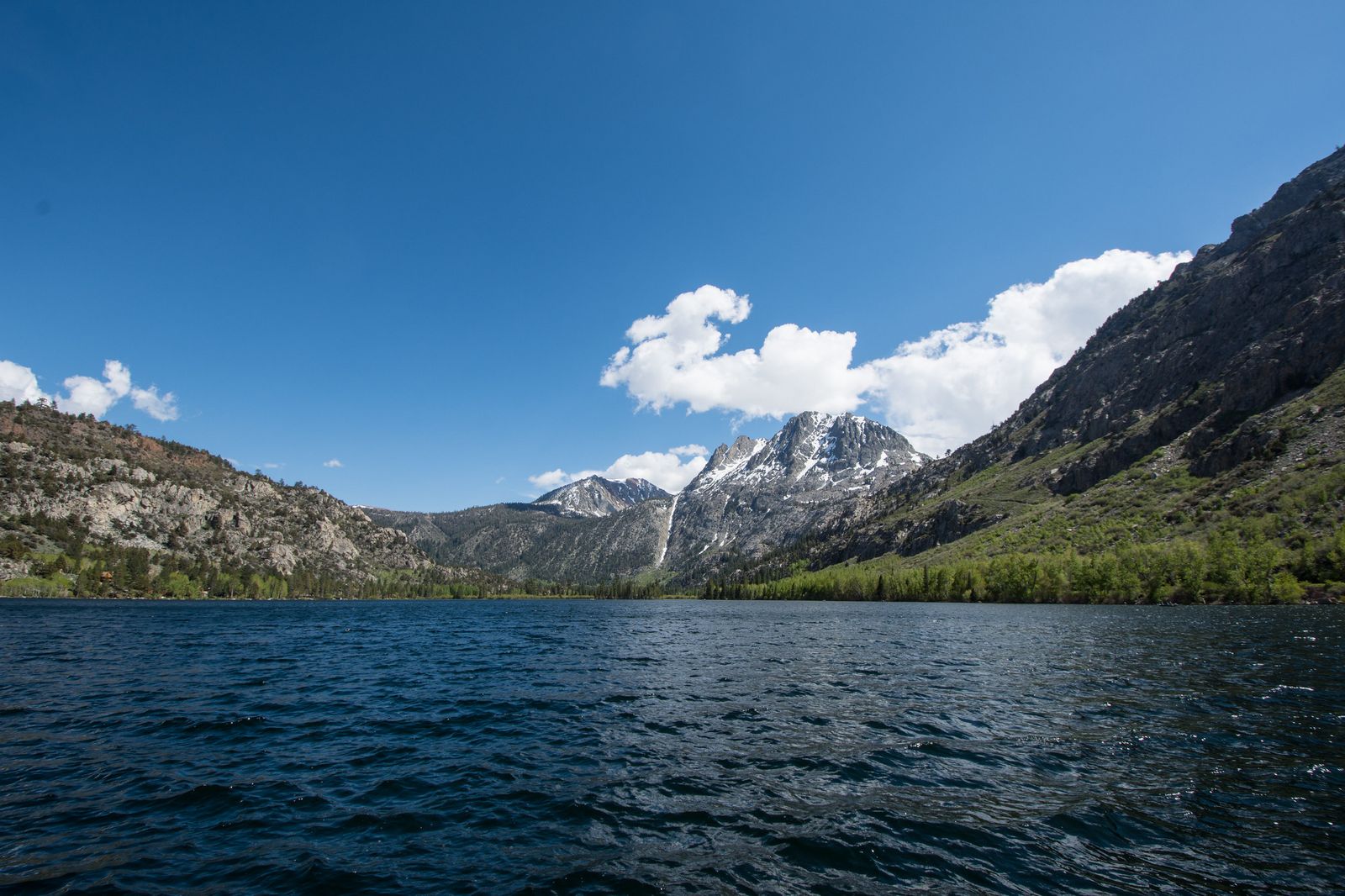
Difficulty, distance, and elevation gain to Gem Lake
Expect about 6.6 to 7 miles round trip, and don’t underestimate the climb: a detailed elevation profile shows 1,882 ft of gain, considerably more than casual trail descriptions sometimes suggest.
What you’ll see: a reservoir lake along the Rush Creek drainage
Gem Lake is a dammed reservoir used for hydroelectric power, set within otherwise wild granite scenery along Rush Creek, genuine working infrastructure inside wilderness terrain, distinct from the fully natural lakes elsewhere in this guide. The approach passes a cascading waterfall on Rush Creek with panoramic views back over the June Lake area.
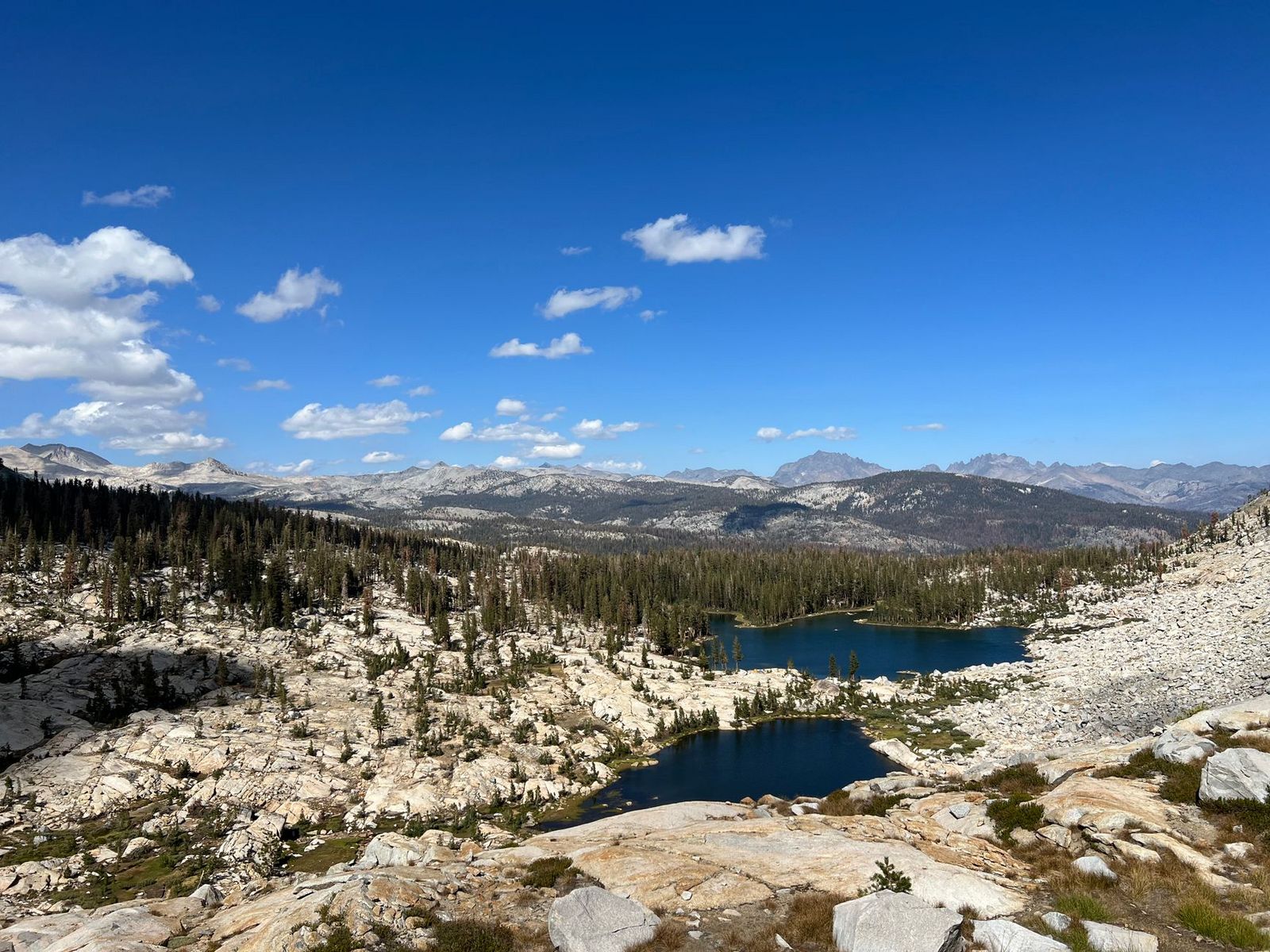
Best time to hike Gem Lake: a moderate alternative to the longer Reds Meadow treks
Late spring and early summer bring heavy runoff and flooded trail sections in places, check current conditions, since some stretches can turn into genuine creek crossings during snowmelt.
The trail I’d actually start with
If you’ve only got one hike in this wilderness, make it Parker Lake, it’s the easiest way to understand this landscape without any shuttle logistics or serious elevation. Shadow Lake is the natural next step once you want real mountain scenery, and Thousand Island Lake is worth planning around specifically for a sunrise arrival. Minaret Lake deserves a full day or an overnight, not a rushed add-on, and Gem Lake is the pick if you want genuine wilderness without dealing with Reds Meadow at all.
For the higher, more remote peaks bordering this wilderness, my Eastern Sierra high-altitude trails guide covers Mount Dana, which shares a boundary with the Ansel Adams Wilderness. And after a demanding day at any of these trails, my guide to Mono County’s hot springs and hiking combos is worth reading for genuinely good recovery options nearby. For everything else the county has to offer, see the full Mono County hiking guide.
Frequently asked questions
Do you need a permit to hike in the Ansel Adams Wilderness?
Only for overnight stays. Day hiking any of the five trails in this guide is free and permit-free; overnight backpackers need a wilderness permit, either reserved in advance through recreation.gov or picked up as a walk-in at a local ranger station, subject to daily quotas.
Is the Ansel Adams Wilderness named after the photographer?
Yes, it was renamed in 1984 in honor of Ansel Adams, the photographer famous for his black-and-white images of the Sierra Nevada, several of which were taken in this exact area.
Do you need the Reds Meadow shuttle to reach Shadow Lake?
Only during peak summer season, when the road into Reds Meadow Valley is closed to private vehicles roughly between 7 a.m. and 7 p.m. Outside those hours, or outside the shuttle’s operating season, you can drive directly to Agnew Meadows.
Is Thousand Island Lake the most photographed lake in the Sierra?
It’s among the most photographed, thanks to its calm-water reflection of Banner Peak, a scene famously associated with Ansel Adams himself. Whether it’s the single most photographed is hard to verify definitively, but it’s consistently named among the top handful of Sierra Nevada lake photographs.
Is Parker Lake a good first hike in the Ansel Adams Wilderness?
Yes, genuinely one of the best in this guide for a first-timer, short, accessible by regular car, no permit needed for the day trip, and a real payoff at the lake itself.
How do you get a wilderness permit for the Ansel Adams Wilderness?
For overnight stays, reserve in advance through recreation.gov, or try for a walk-in permit at a local Inyo National Forest ranger station, a portion of each trailhead’s daily quota is held back specifically for walk-ups. Day hiking doesn’t require a permit at all.