Where to Stay Near Joshua Tree: A Hiker’s Guide to Every Gateway Town
Stay in the town of Joshua Tree if you’re headed for the West Entrance: it has the shortest drive and the largest concentration of independent motels and inns of any gateway town. Stay in Twentynine Palms if you want more chain hotel options and services near the North Entrance. Stay in Yucca Valley if budget and room inventory matter more than proximity.
Disclosure: Please note that some of the links below are affiliate links and at no additional cost to you, I may earn a commission. Know that I only recommend hiking gear I personally stand behind; when you use my affiliate links, it helps me run this blog and keep all of this content free of charge for readers (like you).
And stay in Pioneertown if you want something different; just book early, because there isn’t much of it. Unlike a single-entrance park where the lodging decision is mostly about price, Joshua Tree rewards matching your town to your entrance; picking the wrong one can mean 20 extra minutes each way for the whole trip. To figure out where to stay near Joshua Tree, here’s how I’d split the decision.
Key takeaways:
- Closest to the West Entrance: The town of Joshua Tree itself, with the highest concentration of independent motels, inns, and vacation rentals among the gateway towns (some properties sit less than a mile from the gate).
- Closest to the North Entrance: Twentynine Palms, a larger town with more chain hotels (Fairfield Inn, Holiday Inn Express) and services, partly thanks to the nearby Marine Corps base.
- Best for budget and room inventory: Yucca Valley, the largest of the gateway towns, with the widest selection of budget chains along Highway 62.
- Most distinctive, most limited: Pioneertown, a former 1940s Western movie set with a handful of boutique stays and the legendary Pappy & Harriet’s (about 25 minutes from the park entrance, so book well ahead).
- Counterintuitive but true: Palm Springs is not the cooler option. At roughly 400 feet of elevation versus Joshua Tree’s 2,700-plus, Palm Springs typically runs 10 to 15°F hotter than the high desert towns around the park.
| Where to stay | Closest to | Drive to park entrance | Price tier | Best for |
|---|---|---|---|---|
| Joshua Tree (town) | West Entrance | 5–15 min | $$–$$$ | First-time visitors, iconic photo spots |
| Twentynine Palms | North Entrance | 5–15 min | $–$$ | More chain hotels and services |
| Yucca Valley | West Entrance (farther out) | 15–25 min | $–$$ | Budget travelers, larger groups |
| Pioneertown | West Entrance | ~25 min | $$–$$$ | Distinctive, boutique, book far ahead |
| Camping (in-park) | Varies by campground | 0 min | $ | Tightest budgets, dark skies |
Joshua Tree (town): closest to the West Entrance
Key features. The town of Joshua Tree offers the shortest access to the park’s most-visited entrance and the highest concentration of independent motels, vacation rentals, and small inns among the desert gateway towns.
Boutique properties like Sacred Sands, in the Monument Manor neighborhood, sit about a mile from the West Entrance; the historic Joshua Tree Inn has hosted musicians and artists for decades and still trades on that legacy; and AutoCamp Joshua Tree offers a higher-end camping-adjacent option if you want something between a hotel and a tent.
The town itself has an artsy, low-key desert character (galleries, coffee shops, and a rock shop or two along the main strip) that the larger gateway towns don’t quite replicate. This is covered directly alongside our guide to the best hiking trails in Joshua Tree National Park.
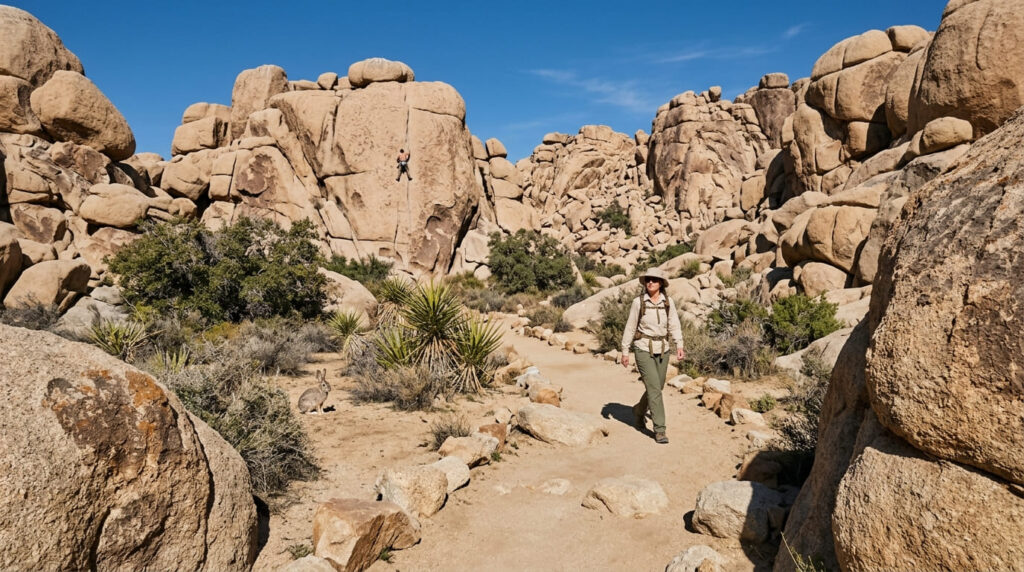
Best for. First-time visitors focused on the park’s most iconic, heavily photographed areas near the West Entrance (Hidden Valley, Skull Rock, Barker Dam), where staying in town minimizes daily drive time and puts you in position for an early start before parking lots at the popular pullouts fill. Before heading out to explore these areas, reviewing a detailed Joshua Tree trail and map overview will help you navigate the park’s layout efficiently. Covered further in our Joshua Tree gateway trail guide, part of the broader Riverside County hiking guide.
Twentynine Palms: closest to the North Entrance
Key features. Twentynine Palms is a larger town than Joshua Tree, with more chain hotel inventory (Fairfield Inn & Suites, Holiday Inn Express, and others sit within about 5 to 9 miles of the North Entrance and Oasis Visitor Center), plus more of the everyday services (groceries, gas, pharmacies) that come with hosting the nearby Marine Corps Air Ground Combat Center.
It’s a less atmospheric base than Joshua Tree town or Pioneertown, but a practical one, and the Oasis of Mara right by the visitor center is a worthwhile easy walk if you’re staying nearby and want a low-effort first evening.
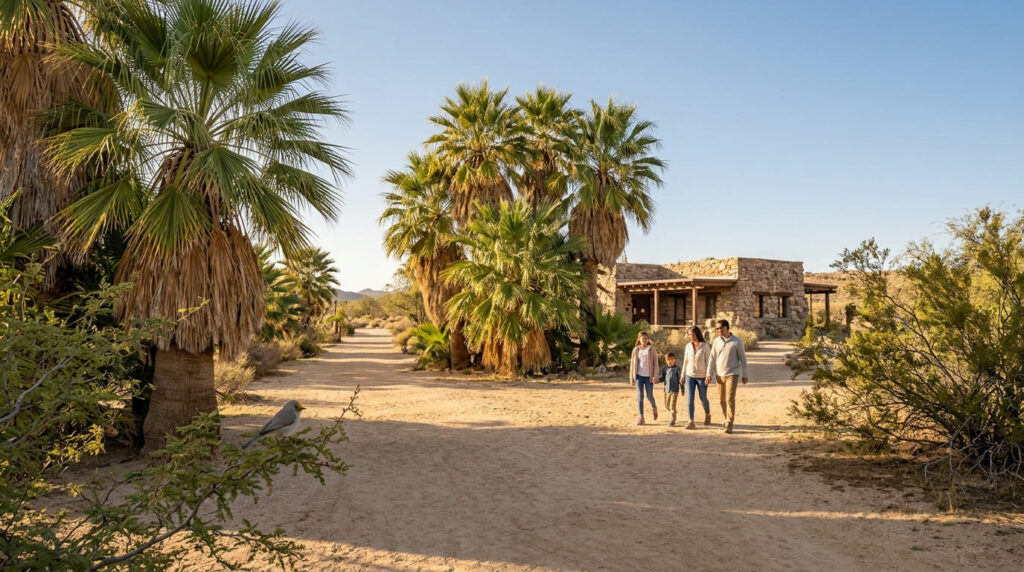
Best for. Visitors who want more hotel chain options and everyday services than the smaller town of Joshua Tree offers, without sacrificing much drive-time convenience to the park. It’s also the natural base if your plan leans toward the North Entrance side of the park rather than the West Entrance cluster.
Yucca Valley: budget-friendly with more services
Key features. Yucca Valley is the largest of the desert gateway towns and typically the most budget-friendly, with a wider selection of chain motels (Super 8 and similar) strung along Highway 62.
It sits a bit farther from the West Entrance than Joshua Tree town itself, but the gap in price and room availability is usually worth the extra 10 to 15 minutes of driving for budget-conscious visitors.
It’s also worth knowing about even if you’re staying elsewhere: Yucca Valley has the area’s largest grocery stores and pharmacies, so it’s the practical stop for resupply before heading into town or the park.
Best for. Budget-conscious travelers or larger groups who need more room inventory than the smaller towns can offer, and who don’t mind trading a bit of extra drive time for meaningfully lower rates and easier last-minute availability during busy weekends.
Pioneertown: a unique, boutique alternative
Key features. Pioneertown started life as a movie set, built in the 1940s for Western films and TV, and it still looks the part: false-front buildings, a Wild West main street, and the legendary Pappy & Harriet’s roadhouse for barbecue and live music.
Lodging here is intentionally small-scale: a handful of boutique stays like the Pioneertown Motel, rather than a strip of hotels. It sits about 25 minutes from the park’s West Entrance, more removed from downtown Joshua Tree than the other towns in this guide.
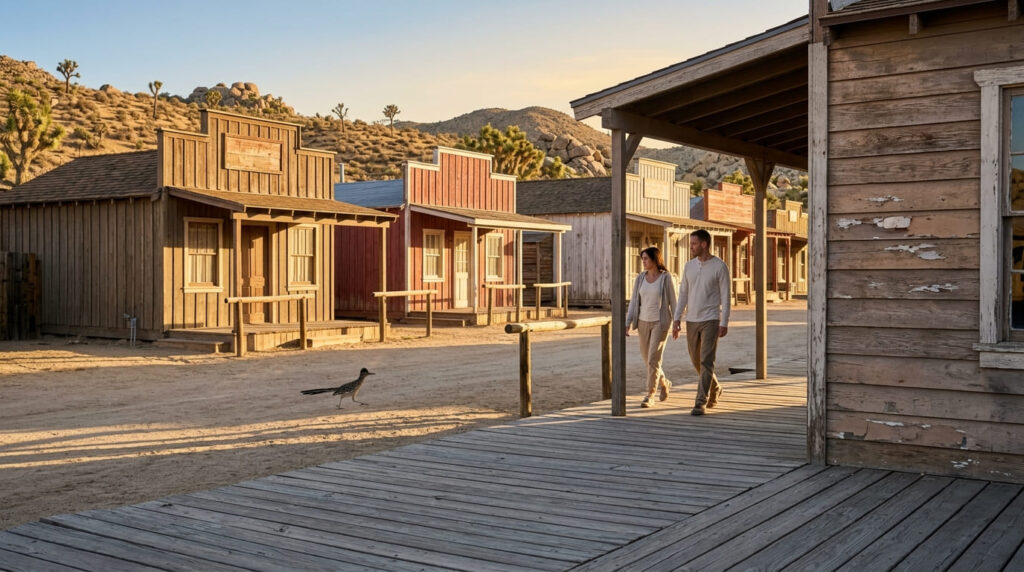
Best for. Travelers who want a distinctive, photogenic base rather than a standard hotel experience, and who are willing to book well ahead (this area’s room inventory is the smallest of any option here, and it fills fast on weekends with a Pappy & Harriet’s show on the calendar).
Camping inside the park
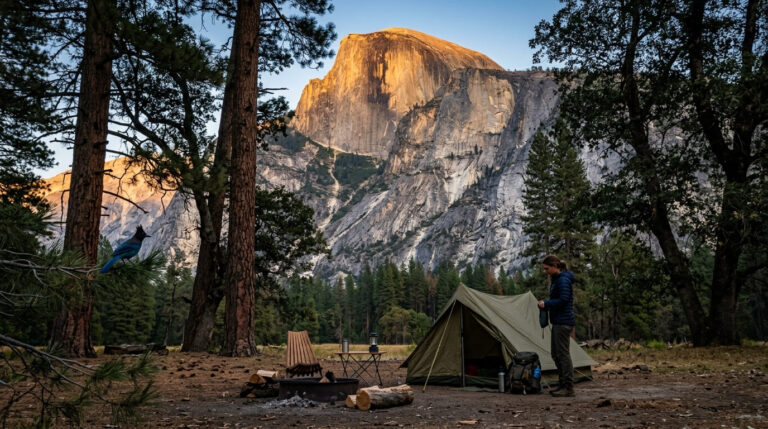
In-park campgrounds vs. staying in a gateway town. Camping directly inside Joshua Tree puts you steps from trailheads like Hidden Valley or Ryan Mountain, with none of the commute the gateway towns require. Jumbo Rocks, the park’s largest campground at 124 sites, requires a reservation year-round; Ryan Campground’s 31 sites are entirely reservable too, with no first-come option.
Black Rock and Cottonwood, at the park’s edges, are the two campgrounds with potable water and flush toilets, which makes them the more comfortable pick for families or anyone not interested in roughing it completely.
Belle and White Tank remain the park’s smallest, first-come-first-served campgrounds if you’re flexible and arrive early. The trade-off against a gateway town is straightforward either way: no showers at most sites, no restaurant down the street, and summer heat that makes camping risky rather than just uncomfortable.
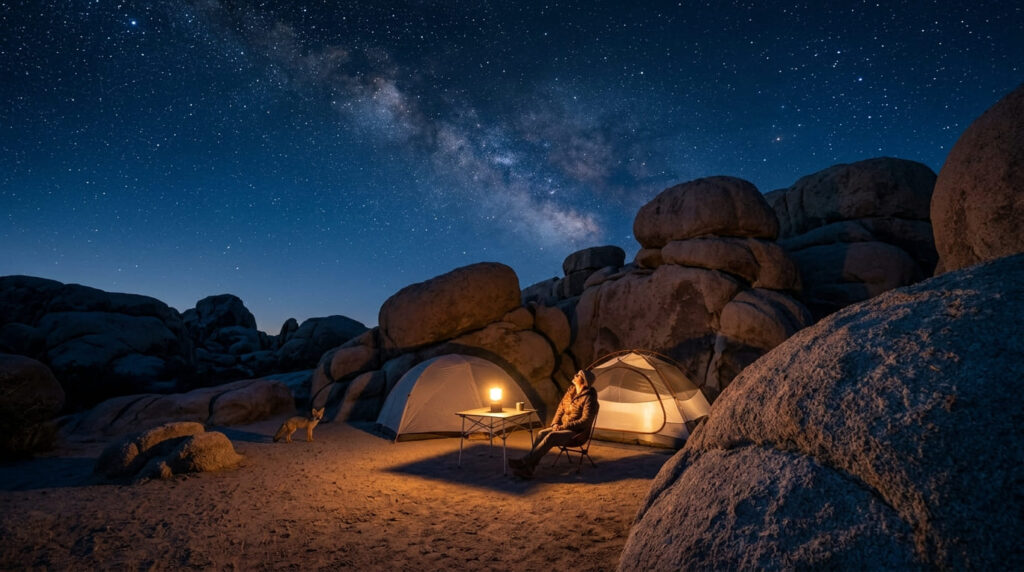
When to book. Reservations open on Recreation.gov exactly 6 months in advance at 7:00 a.m. Pacific Time, and popular sites for the park’s best weather (October through May) routinely disappear within minutes for weekend and holiday dates.
Summer is the one season where this isn’t a battle: extreme heat pushes most visitors out, so last-minute camping is realistic, but daytime hiking becomes dangerous rather than just unpleasant. Our guide to the best campgrounds near California’s top hiking trails covers Jumbo Rocks and Ryan in more depth alongside campgrounds at other parks.
My recommendation
Stay in Joshua Tree town for your first visit; it’s the shortest drive, the most character, and gives you the best shot at an early start before the popular pullouts fill. If you are celebrating a special occasion during your desert trip, pairing your stay with special adventure gear items for couples makes the getaway even more memorable. Save Pioneertown for a return trip once you know you’ll book far enough ahead to actually get a room, and lean on Yucca Valley or Twentynine Palms whenever the closer options are sold out or your group needs more beds than one small inn can offer.
One more logistics note worth knowing before you book: Joshua Tree is also a realistic weekend trip from Los Angeles, roughly 2.5 to 3 hours out; see our weekend getaways from Los Angeles guide for a suggested two-day itinerary if you’re coming from that direction rather than staying multiple nights. And whichever town you choose, the park itself doesn’t care where you slept, only how early you’re at the trailhead before the heat or the crowds catch up with you.
Frequently asked questions about where to stay near Joshua Tree: Best lodging for hikers
What town should you stay in near Joshua Tree?
The town of Joshua Tree itself for the shortest drive to the West Entrance and the most character; Twentynine Palms if you want more chain hotels near the North Entrance; Yucca Valley for the best budget options.
Is Joshua Tree town or Twentynine Palms better for hikers?
Joshua Tree town is closer to the park’s most iconic, heavily hiked areas near the West Entrance. Twentynine Palms is a better fit if your plan focuses on the North Entrance or you simply want more hotel and service options.
How far is Palm Springs from Joshua Tree?
About 35 to 40 miles from the West Entrance, roughly 45 to 50 minutes depending on traffic through the Coachella Valley.
Is lodging near Joshua Tree expensive?
It varies widely by town: Joshua Tree town and Pioneertown run higher for their boutique character, while Twentynine Palms and Yucca Valley offer more budget chain options at meaningfully lower rates.
Do you need a reservation to camp inside Joshua Tree National Park?
For most of the park’s campgrounds, yes: Jumbo Rocks and Ryan are reservation-only year-round via Recreation.gov, though Belle and White Tank remain small, first-come, first-served options.
Is it cooler to stay in Palm Springs and drive to Joshua Tree?
No, it’s the opposite. Palm Springs sits at roughly 400 feet of elevation and typically runs 10 to 15°F hotter than Joshua Tree and Yucca Valley, which sit above 2,700 feet. The high desert gateway towns are the cooler option.