Snowshoeing vs Winter Hiking in California: Which Should You Choose?
The gear question sounds simple, snowshoes or just boots?, but the real answer has nothing to do with preference and everything to do with what’s actually under your feet that day. Fresh, deep snow and hard-packed icy snow are two completely different surfaces, and California’s winter trails serve up both, sometimes on the same route a few hours apart as elevation and sun exposure change the snowpack underfoot. When it comes to snowshoeing vs winter hiking, Here’s how to actually tell which one you’re dealing with, and what gear each one calls for.
Disclosure: Please note that some of the links below are affiliate links and at no additional cost to you, I may earn a commission. Know that I only recommend hiking gear I personally stand behind; when you use my affiliate links, it helps me run this blog and keep all of this content free of charge for readers (like you).
Key takeaways
- The real decision factor is snow condition, not preference, deep, soft, unconsolidated snow calls for snowshoes; compacted or icy snow calls for microspikes and normal hiking technique.
- Snowshoeing is genuinely slower and more demanding, typically 1–2 mph with a higher calorie burn per mile than winter hiking on packed snow.
- California’s snowshoe season runs roughly December through April, shifting earlier or later depending on elevation and snowpack.
- Tree wells are a real, underrated hazard in forested deep-snow terrain, the loose snow pocket around a tree trunk base can trap a hiker who falls in, and it’s a genuine entrapment risk, not just an inconvenience.
- Renting beats buying for most casual California winter hikers, given how few weekends a typical Californian actually spends in real snowshoe conditions each year.
- Slopes over roughly 25° call for crampons, not microspikes or snowshoes, both tools have a real limit once terrain gets genuinely steep and icy.
What is the difference between snowshoeing and winter hiking?
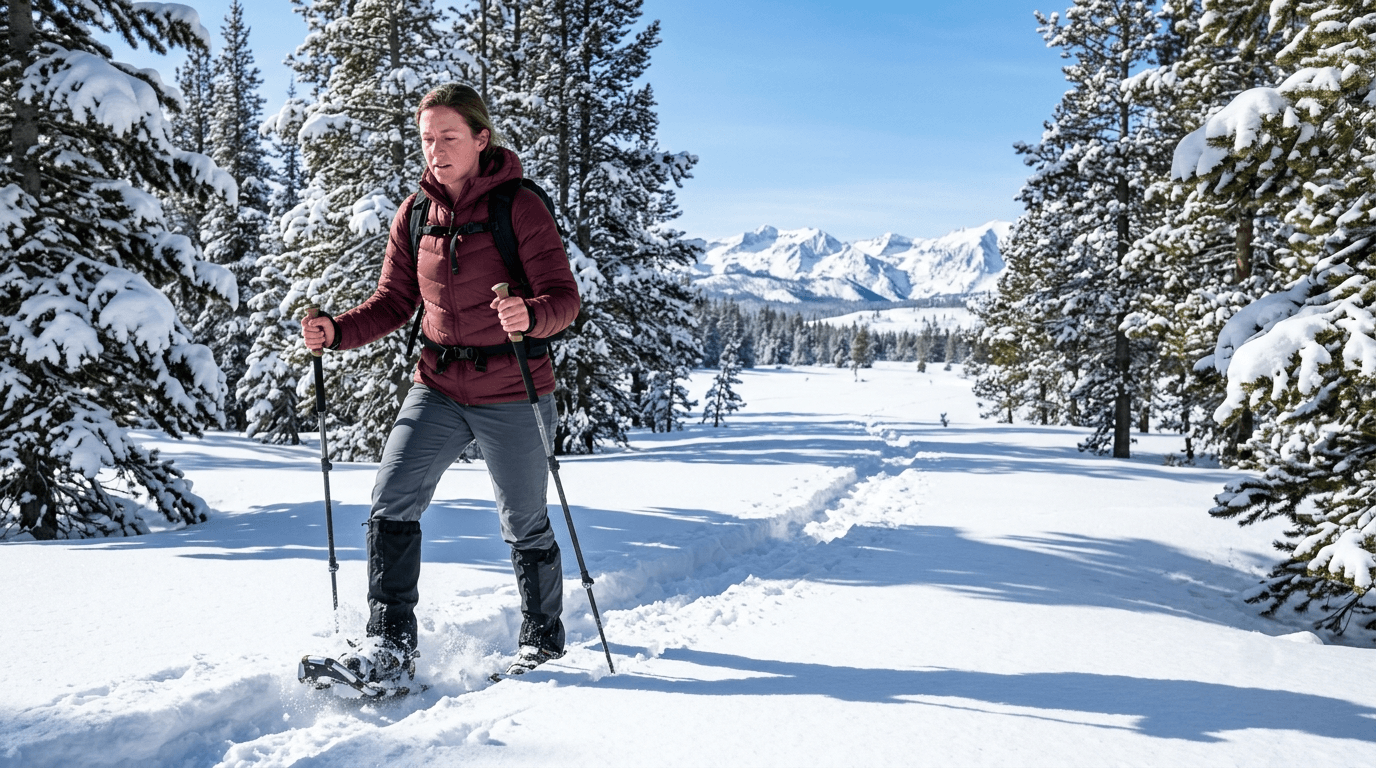
Snowshoeing uses a flotation device strapped to your boot to keep you from sinking into deep snow; winter hiking is just regular hiking technique, sometimes with traction aids, on snow that’s firm enough not to need flotation at all. They’re solving two different problems, not two versions of the same activity, and bringing the wrong tool for the actual snow condition is the most common beginner mistake in both directions.
When snow conditions determine which activity you should choose in California
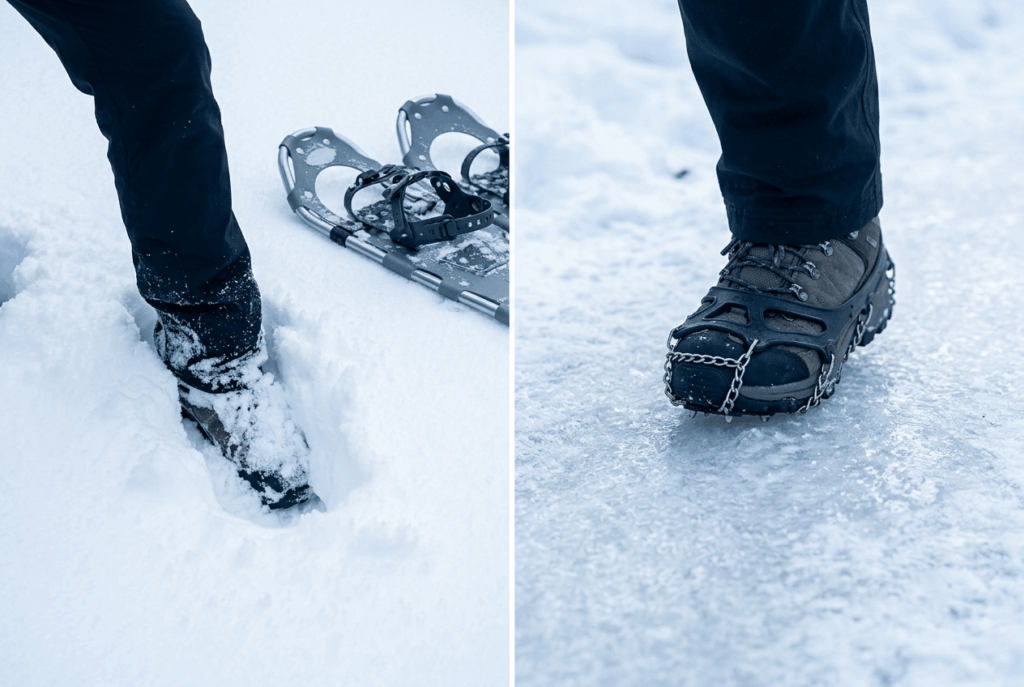
Fresh, unconsolidated snow of 6 inches or more is snowshoe territory, without flotation, you’ll posthole (sink through) with every step, turning a short hike into an exhausting slog. Compacted or icy snow, common on popular trails after other hikers have packed it down, is winter hiking territory, where microspikes handle the traction problem better than snowshoes would and let you move at close to a normal pace.
California’s snow type varies dramatically by region and elevation, so the same week can mean snowshoes at Tahoe and bare boots on a lower-elevation trail two hours away, check trip reports for the specific trail, not just the regional forecast. For winter trail details across different California parks, check out our comprehensive winter hiking guide.
Snowshoeing vs. winter hiking: speed, effort, and distance compared
Snowshoeing typically runs 1–2 mph, noticeably slower than normal hiking pace, and burns meaningfully more calories per mile due to the higher leg lift each step requires. Winter hiking on compacted snow moves close to your normal hiking pace, since the surface itself isn’t adding the same resistance.
Budget your trip time accordingly, a “3-mile hike” reads very differently in snowshoes than it does on a packed trail, and underestimating that gap is a common reason winter hikers get caught out after dark. You should assess route risks and exposure levels beforehand using our hiking difficulty levels guide.
Snowshoeing in California: where, when, and how
Best snowshoeing destinations in California
The Tahoe area offers some of the state’s most reliable snowshoeing, including trails around Royal Gorge and Kirkwood’s meadows, both of which combine marked routes with easy rental access. Yosemite’s Badger Pass area maintains extensive marked snowshoe trails, over 90 miles of them, including guided trips to Dewey Point with sweeping valley views. Mount Shasta’s lower flanks and the Mammoth Lakes area round out solid options in the Eastern Sierra and far north, both offering scenic terrain without requiring backcountry avalanche skills.
How to snowshoe: basic technique for California’s varied snow terrain
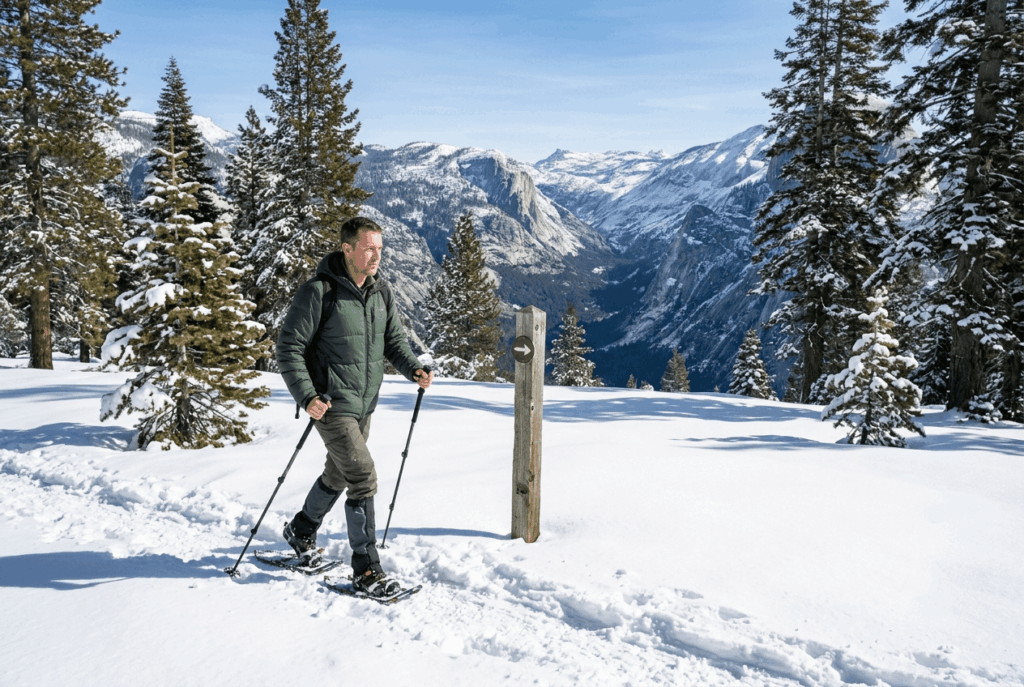
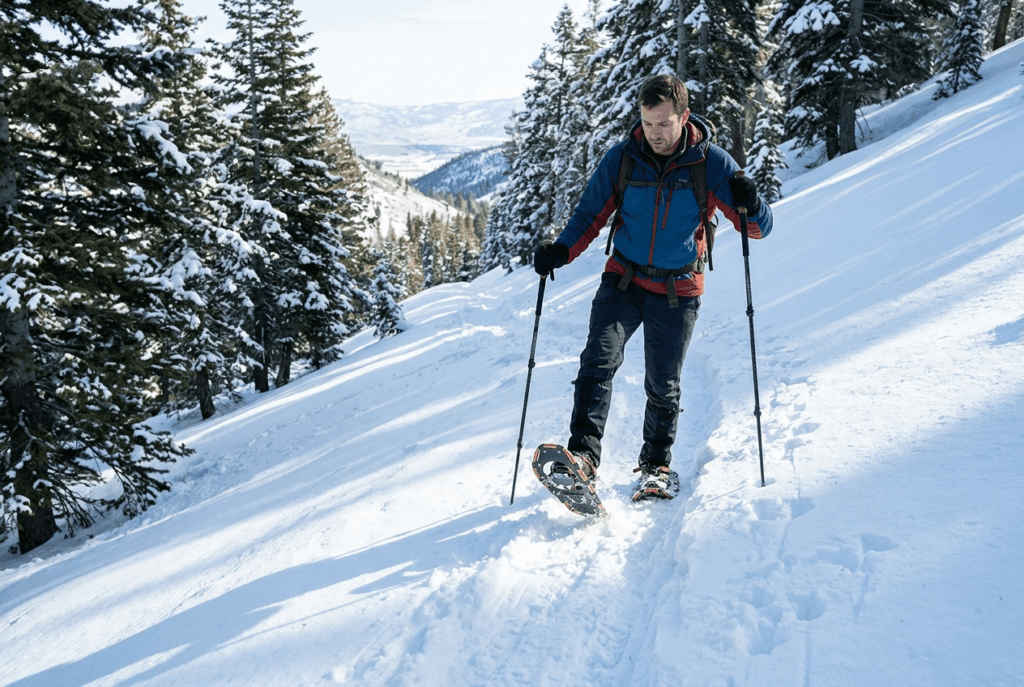
Widen your stance slightly to accommodate the snowshoe’s width, and use a rolling heel-to-toe motion on ascents rather than a normal hiking stride. Descending calls for a kick-step technique, driving your heel into the snow with each step for traction, and traction cleats built into most modern snowshoes help on icy patches without needing separate gear.
Snowshoe gear: what you need for California winter trails
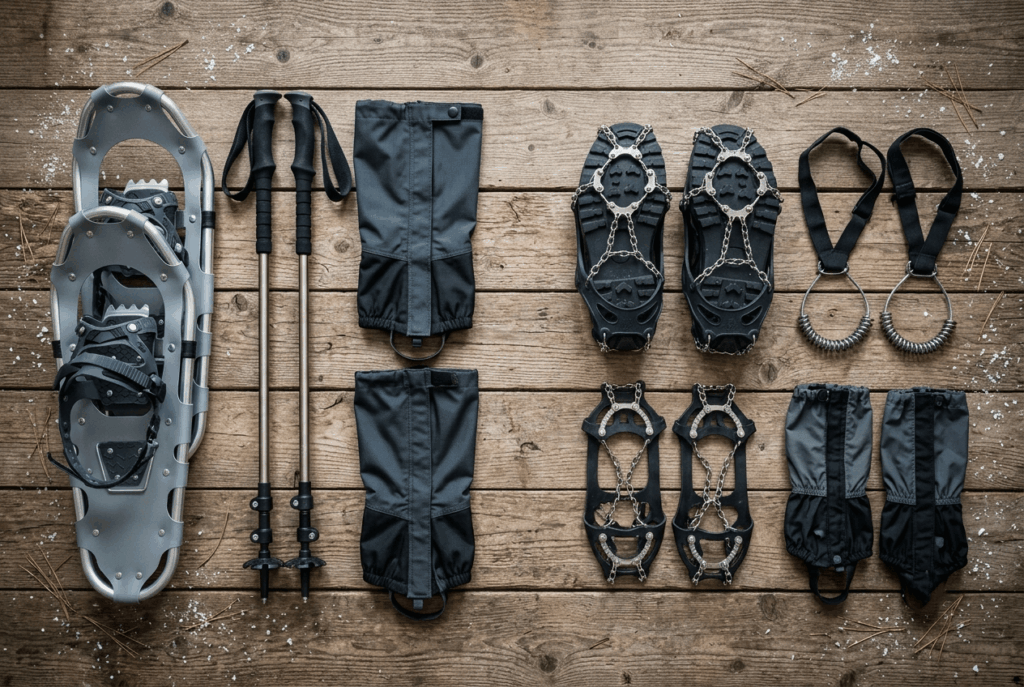
Snowshoes are sized by your body weight plus gear and by snow type, deeper, softer snow needs more flotation surface. Binding systems range from simple strap systems to faster step-in bindings, and trekking poles with snow baskets for snowshoeing run slightly longer than standard hiking poles to account for the added snow depth. Gaiters keep snow out of your boots regardless of which binding system you choose. To ensure you have packed all safety gear, consult the hiking gear checklist.
Winter hiking in California: when you don’t need snowshoes
Microspikes vs. snowshoes: choosing the right traction for California winter trails
| Condition | Right tool |
|---|---|
| Compacted or icy trail | Microspikes |
| Deep, fresh snow (6+ in) | Snowshoes |
| Mixed conditions | Microspikes plus gaiters |
| Slopes over ~25° | Crampons, neither microspikes nor snowshoes are built for this |
Casual packed snow on a well-traveled trail sometimes only calls for something as simple as Yaktrax traction coils, a lighter traction option than full microspikes for hiking for mild conditions.
Best winter hiking trails in California that don’t require snowshoes
Joshua Tree, Death Valley, the Marin coast, and the Bay Area’s low-elevation hills all stay snow-free through winter, making them reliable options when Sierra conditions are too deep or too icy to enjoy without technical gear. These are also a smart backup plan any winter weekend when Sierra road conditions look unreliable.
Cost and commitment: renting vs. buying snowshoes in California
Where to rent snowshoes near California’s top winter hiking destinations
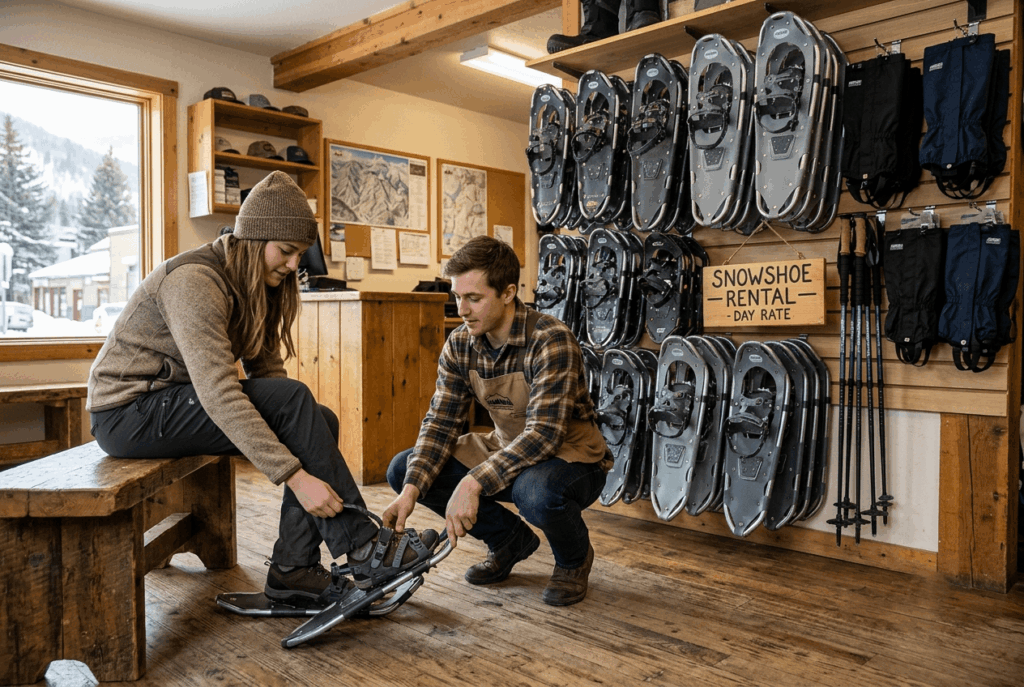
Tahoe-area sports shops, REI locations throughout the state, Yosemite’s Badger Pass Cross Country Center, and Mammoth Mountain’s resort rental shop all offer snowshoe rentals, typically in the $20–$30 per day range. For most Californians who snowshoe only a handful of weekends a year, renting is the more sensible call than buying $60–$300 gear that spends most of the year in a closet though if you are searching for outdoor gear gifts tailored for women, dedicated presents can make all the difference. Buying only really pays off once you’re snowshoeing regularly enough that rental costs would exceed a purchase within a season or two.
Safety considerations specific to snowshoeing in California
Tree wells and soft snow hazards for snowshoers in California’s forest zones
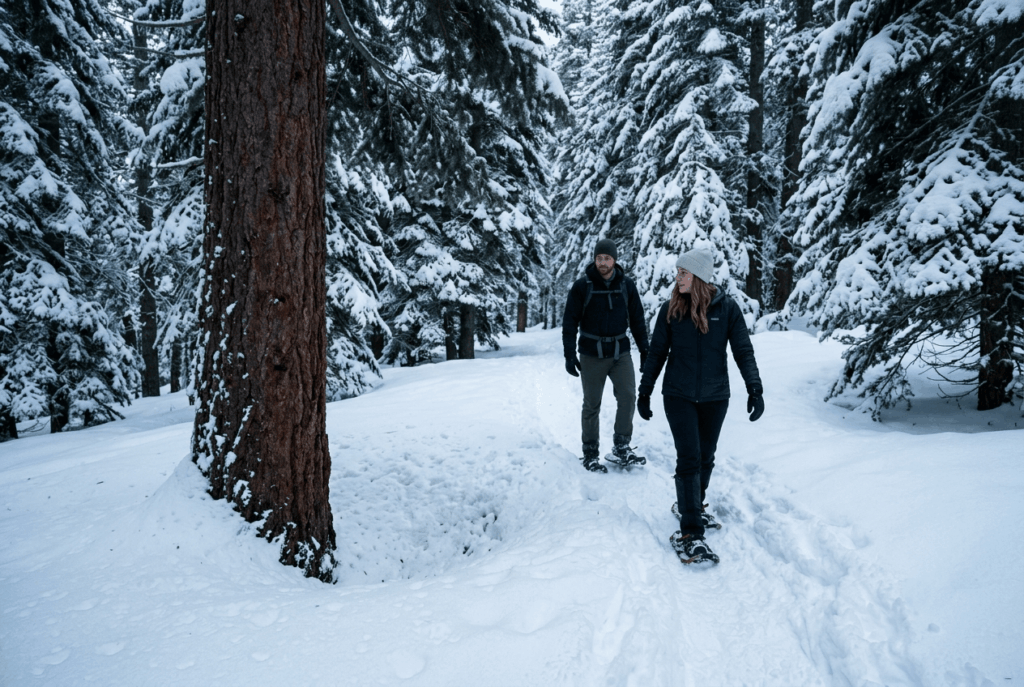
A tree well is the loose, unconsolidated pocket of snow that forms around a tree trunk’s base, where branches block snow from compacting the way it does in open terrain. Falling into one headfirst is a genuine entrapment risk, the loose snow makes self-rescue difficult even for strong hikers, since there’s often nothing solid to push against, which is exactly why the buddy system matters more in forested deep-snow terrain than almost anywhere else on a California trail. Stay within sight of your partner near trees, and avoid traveling directly beneath low branches loaded with snow that could dump onto the trail unexpectedly.
Beyond tree wells, avalanche terrain awareness applies to snowshoers exactly the way it does to backcountry skiers, and whiteout conditions can erase a marked route fast, stick to established trails and carry a map and compass as backup to any GPS device, since cold drains batteries faster than you’d expect. Review the complete list of mountain snow and route risks in our terrain hazards guide.
Winter trail sharing etiquette between skiers, snowshoers, and hikers is also critical for safety. Learn more in our hiking trail etiquette guide.
Snowshoes and microspikes solve different problems, and if you are shopping for winter adventure presents, the right gear makes all the difference. Rent before you buy, respect tree well and avalanche terrain the same way you’d respect any other serious hazard, and let conditions, not the calendar, decide which gear goes in your pack.
Frequently asked questions about snowshoeing vs. winter hiking in California
What is the difference between snowshoeing and winter hiking?
Snowshoeing uses a flotation device to keep you on top of deep, soft snow; winter hiking is standard hiking technique, sometimes with traction aids like microspikes, on snow firm enough not to need flotation.
When should I use snowshoes instead of microspikes in California?
Use snowshoes when snow is fresh and deep enough to posthole through without them, typically 6 inches or more of unconsolidated snow. Use microspikes on compacted or icy trails where flotation isn’t the problem but traction is.
Where can I go snowshoeing near Lake Tahoe in California?
The Tahoe area has some of California’s most reliable snowshoe terrain, including trails around Royal Gorge and Kirkwood’s meadow network, both of which offer marked routes and rental access.
Can I rent snowshoes near Yosemite or Lake Tahoe?
Yes, Yosemite’s Badger Pass Cross Country Center and numerous Tahoe-area sports shops both rent snowshoes, typically for $20–$30 a day, making rental the practical choice for most casual winter hikers.
Is snowshoeing hard for beginners in California?
The technique itself is easy to pick up in a few minutes, but the pace and effort surprise most first-timers, expect a noticeably slower, more tiring outing than the same distance on a normal trail.
What gear do I need to start snowshoeing in California?
Properly sized snowshoes, poles slightly longer than your standard hiking poles, gaiters to keep snow out of your boots, and layered clothing you can adjust as your effort level changes throughout the hike.