River Trekking in California: How to Follow the State’s Best Water-Carved Trails
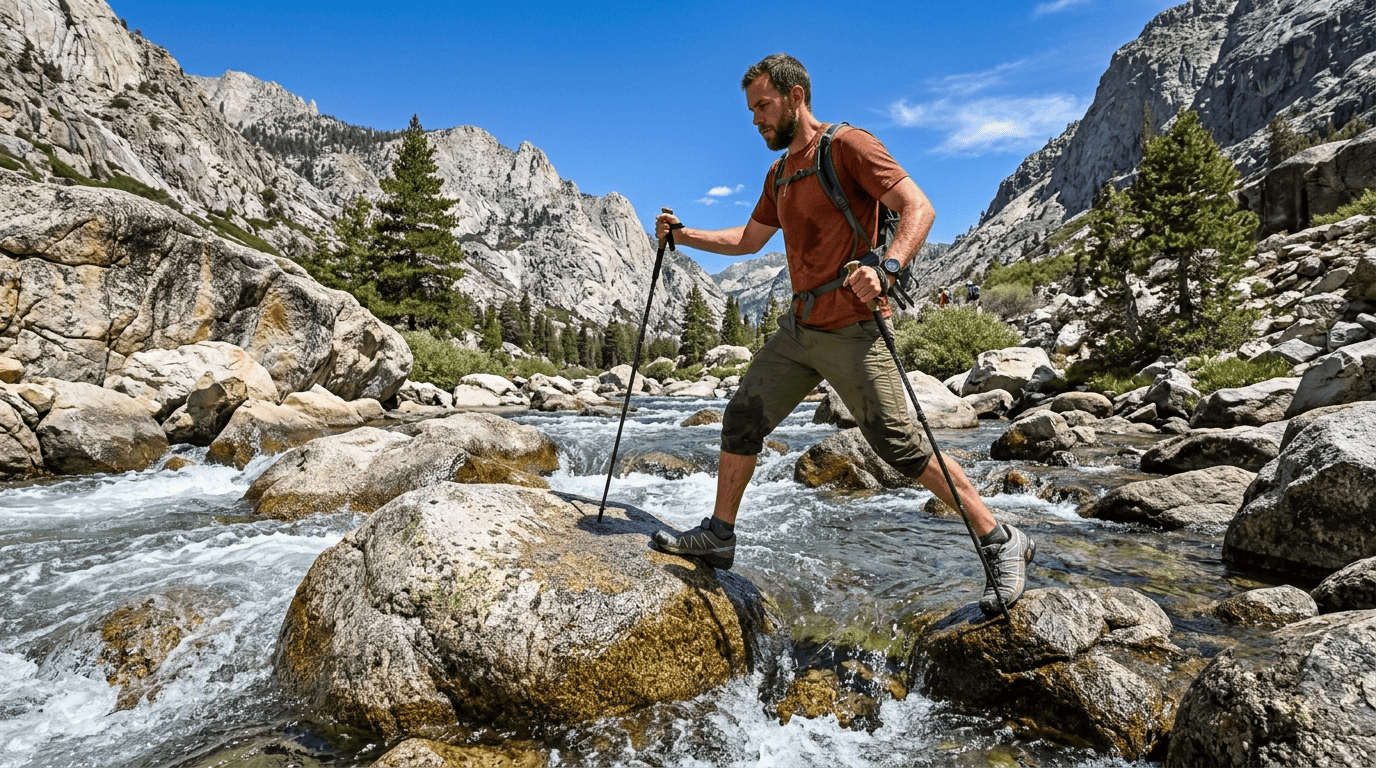
River Trekking in California is hiking that follows, crosses, or fully integrates a river corridor as the main feature of the route; wading, boulder-hopping, and reading water are part of the trail, not a detour from it. California’s rivers cut through nearly every kind of terrain the state has, from granite Sierra gorges to Southern California canyon creeks, and each one demands a slightly different skill set and season.
Disclosure: Please note that some of the links below are affiliate links and at no additional cost to you, I may earn a commission. Know that I only recommend hiking gear I personally stand behind; when you use my affiliate links, it helps me run this blog and keep all of this content free of charge for readers (like you).
Key takeaways:
- River trekking stays mostly on foot and dry; that’s what separates it from canyoneering (technical descents, rappelling) and swimhiking (deliberate swimming sections).
- Timing is regional, not statewide: Sierra river treks peak late July–October after snowmelt drops, SoCal canyon creeks are best fall through winter after rain but before flood season, and NorCal’s wild rivers stay hikeable year-round with caution.
- Poison oak thrives in the exact riparian corridors river trekking follows; it’s a near-guaranteed encounter on shaded, brushy river trails.
- Footwear is a real trade-off: water shoes drain fast but protect less; approach shoes grip technical rock better but stay wet longer.
- Some of California’s best river routes are genuinely remote. Kern Hot Spring and the Grand Canyon of the Tuolumne are multi-day backcountry commitments, not casual day hikes.
What is river trekking and how is it different from regular hiking?
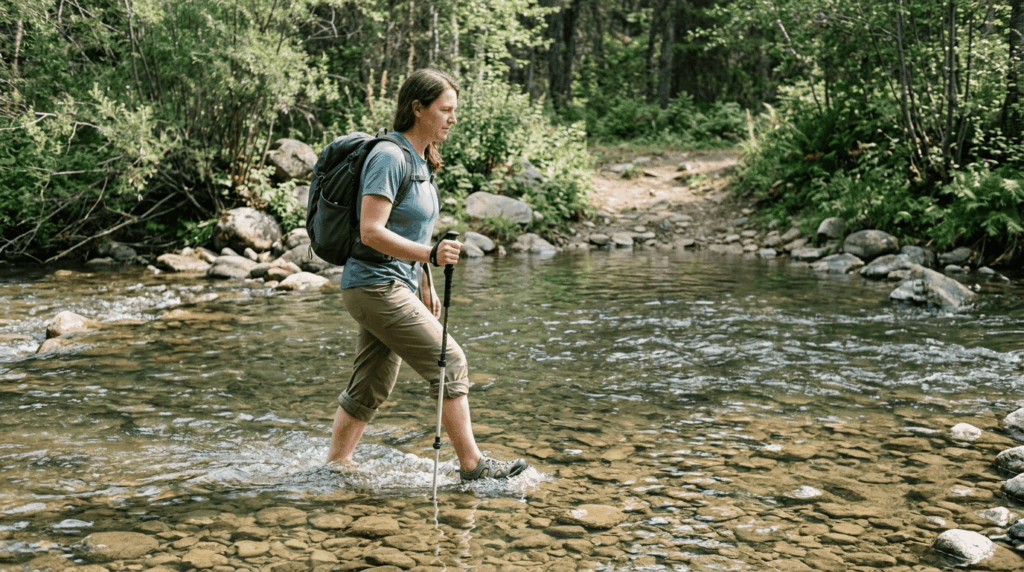
River trekking treats the river itself as the trail’s organizing feature: you’re following its banks, crossing it repeatedly, or picking a route through its boulders rather than just hiking alongside it on a maintained path. It demands a different kind of attention than regular hiking: reading current speed and depth becomes as important as reading the trail tread, and the “trail” itself can shift from one season to the next as water levels rise and fall.
River trekking vs canyoneering vs swimhiking: understanding the differences
| Activity | Core method | Typical gear |
|---|---|---|
| River trekking | Follows the river on foot, mostly dry with wading | Sturdy footwear, trekking poles |
| Canyoneering | Technical descents, often with rappelling | Ropes, harness, wetsuit |
| Swimhiking | Deliberately swims sections of a route | Dry bag, swim-capable footwear |
These overlap constantly in practice; a single California river route might ask you to wade one stretch, swim a pool, and scramble around a third, but the label depends on which of those three is the defining challenge of the route. For routes that cross over into swimming territory, check out our swimhiking guide.
California’s best river trekking environments
California’s geography gives river trekking three genuinely different flavors: Sierra granite gorges, wild undammed NorCal rivers, and steep SoCal canyon creeks.
Sierra Nevada river corridor treks: Kern, Kings, and Merced rivers
The Kern River drainage holds one of the most remote rewards in the Sierra: Kern Hot Spring, a genuine backcountry soak at around 6,900 ft reached only via a multi-day approach through Kern Canyon on the High Sierra Trail corridor. This is a serious trip measured in days, not a roadside stop like the shorter hot springs walks further down the Kern near Kernville. For safety guidelines specific to these higher-elevation routes, consult our high-elevation hiking guide.
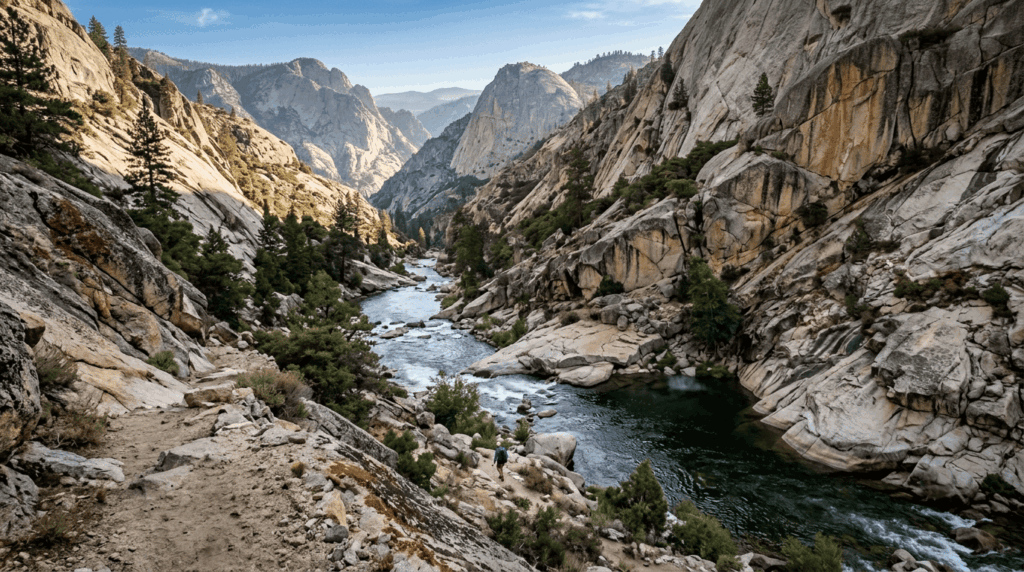
Further north, the Grand Canyon of the Tuolumne follows the Tuolumne River through a dramatic granite canyon, detouring around the narrow, impassable Muir Gorge via a steep switchback climb, a well-known technical pinch point on an otherwise river-hugging route. The Kings River confluence area near Fresno County adds a lower-elevation, more accessible option for a shorter river-corridor day.
Northern California wild river treks: Trinity, Klamath, and Eel river trails
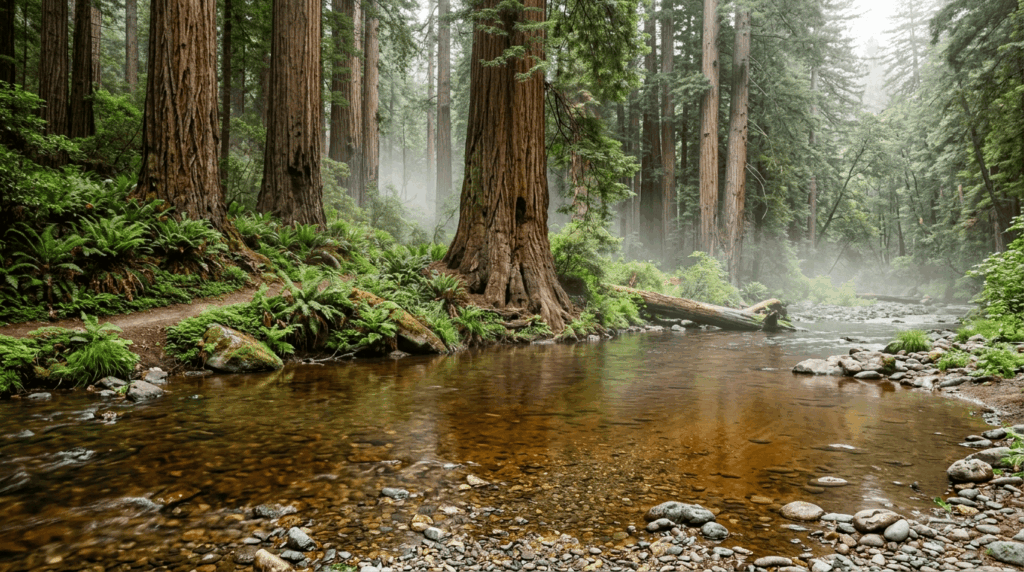
Trinity County’s Trinity River trail winds through USFS land as a genuine multi-day proposition, following one of California’s last major undammed river systems. The Klamath River Trail in Siskiyou County threads through steelhead water, with the river’s fishing culture as much a part of the experience as the trekking. Down in Humboldt, pairing a walk through the Avenue of the Giants with the adjacent Eel River gives you old-growth redwoods and river corridor in the same outing.
Southern California canyon creek treks: San Gabriel and Big Tujunga
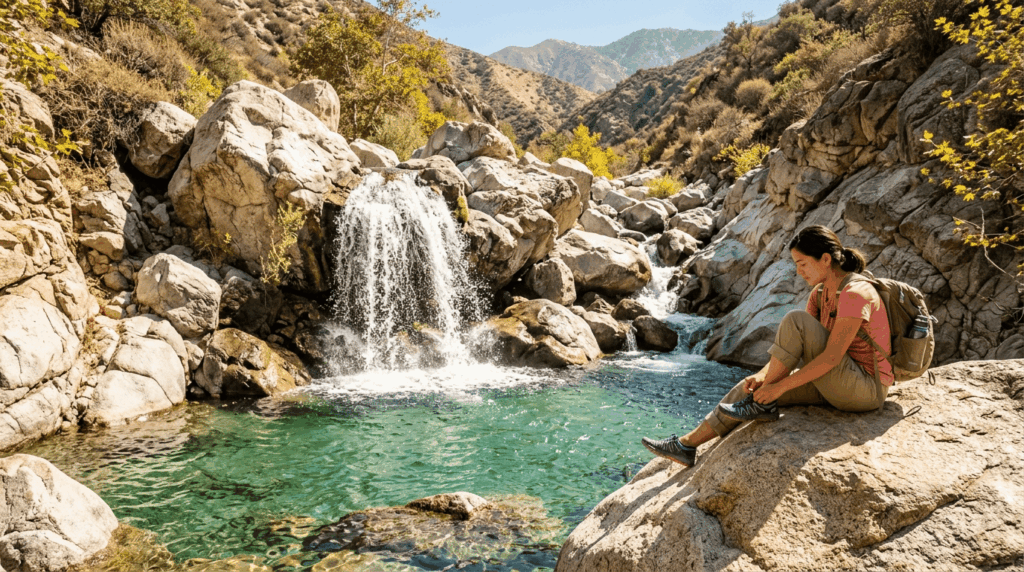
Rubio Canyon above Altadena packs a surprising amount of waterfall-chasing into a short approach. The East Fork San Gabriel River is the region’s classic combination of swimming holes and boulder-hopping, and it’s busy for exactly that reason; go early or on a weekday if you want the pools to yourself. Big Tujunga Canyon rounds out the LA County river-trekking options with a longer, less crowded corridor for the same style of trip.
River trekking safety in California: water hazards and seasonal timing
Water changes character by region and season in ways that matter more for river trekking than for standard hiking, where the trail tread doesn’t move underneath you.
When to go river trekking in California: seasonal water level guide
Sierra River treks are safest late July through October, once spring snowmelt has dropped enough that crossings aren’t a genuine hazard. Go too early and a knee-deep ford in August becomes a dangerous, fast-moving crossing in June, when snowmelt can turn a calm-looking stretch into a real hazard within hours of a warm afternoon. SoCal canyon creeks flip the calendar: fall and winter, after the rains have refilled the pools but before flood season turns them dangerous, is the sweet spot.
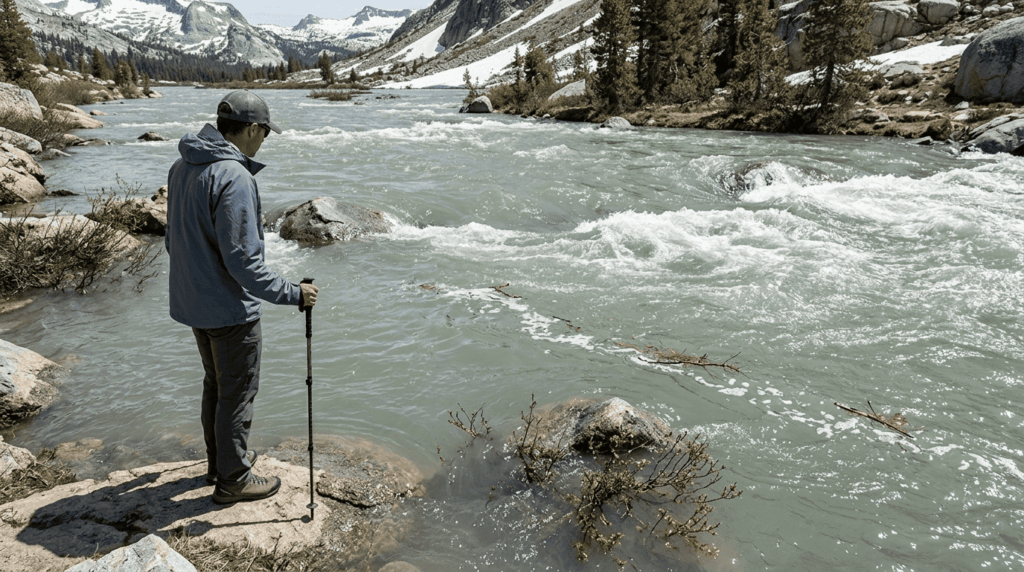
NorCal’s wild rivers stay hikeable year-round, but cold water temperatures and sudden rain-driven rises are a real, ongoing risk even outside the obvious flood months. Check current water conditions or flow levels through the USGS WaterWatch portal before you commit to any crossing you can’t easily reverse. Be sure to study our comprehensive water hazards guide for details on undercurrents, water temperature shock, and fording safety.
Poison oak on California river trails: identification and avoidance
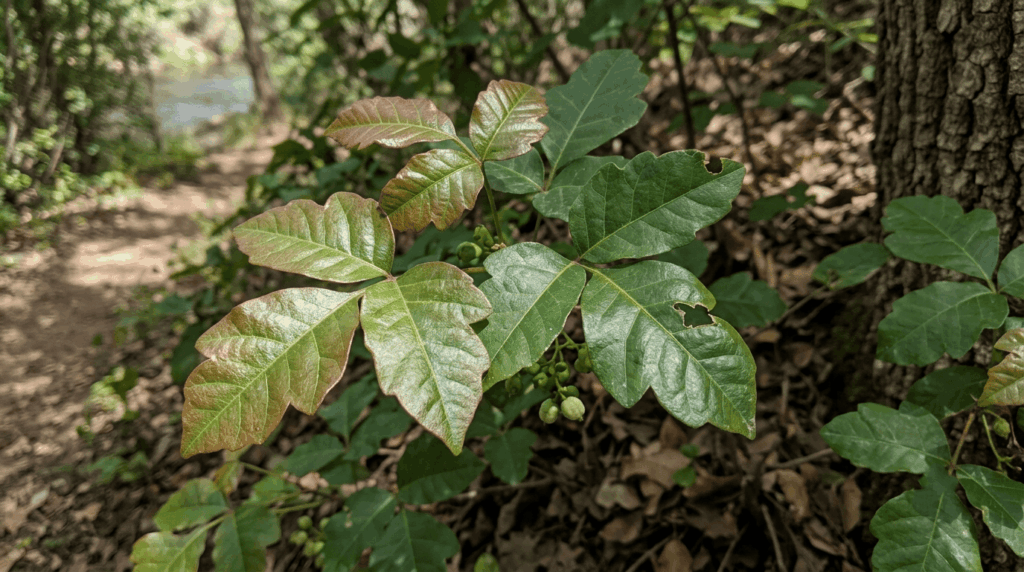
Riparian corridors, the shaded, brushy strips right along a riverbank, are poison oak’s favorite habitat in California, which makes river trekking one of the activities most likely to put you in contact with it. Learn “leaves of three” as a starting point, not a guarantee, since poison oak’s leaf shape and color shift by season. If you brush against it, a Tecnu-style wash within a couple of hours meaningfully cuts your odds of a reaction, and long sleeves through brushy sections beat identifying and avoiding every single leaf.
Gear for river trekking in California
Gear here is less about weight than about how a piece of equipment behaves when it’s wet, since staying dry usually isn’t an option.
Best footwear for California river trekking: water shoes vs approach shoes
Water shoes are light, drain almost instantly, and are the obvious choice for routes that are mostly wading with soft footing. Approach shoes grip technical rock better but stay wet longer. For a full breakdown of trail footwear, including trail runners vs. boots, see our best hiking shoes guide.
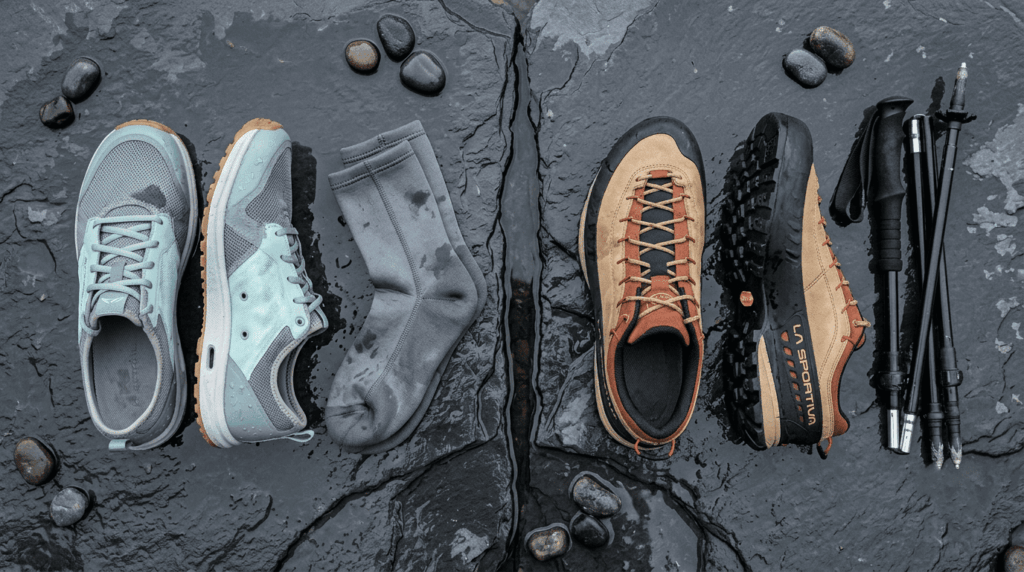
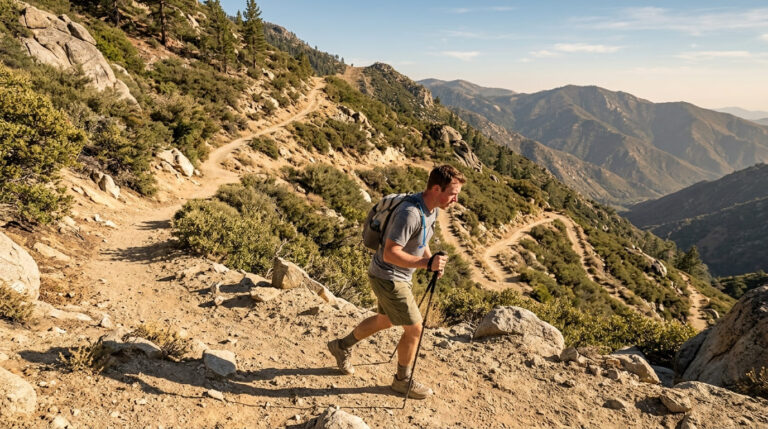
In the colder Sierra gorges, neoprene socks under either option buy you real comfort once you’re fording anything longer than a quick crossing. Trekking poles are worth carrying on almost any river trek; a third and fourth point of contact in moving water is the difference between a stumble and a fall.
River trekking rewards matching your route to the season and your footwear to the terrain, more than any other hiking style in this series. Check the seasonal water-level guide before you commit to a Sierra gorge or a SoCal canyon creek, expect poison oak on nearly every riparian trail in the state, and pick approach shoes over water shoes the moment scrambling enters the picture. Get that right, and California’s rivers turn into some of the most rewarding trail corridors in the state instead of the most unpredictable ones.
Frequently asked questions about river trekking in California
Where can I hike near a river in California?
Nearly every region has a strong option: the Kern and Kings rivers in the Sierra, the Trinity, Klamath, and Eel in Northern California, and the San Gabriel River and Big Tujunga Canyon in Southern California. Pick based on season: Sierra rivers want late summer; SoCal canyon creeks want fall and winter.
What is river trekking and how is it different from regular hiking?
River trekking follows, crosses, or integrates a river corridor as the main feature of the route, requiring wading and boulder-hopping alongside standard trail walking. Regular hiking may run near water, but the river isn’t dictating the route the way it does in river trekking.
When is the best time for river trekking in California?
It depends on region: Sierra treks are safest late July through October after snowmelt drops, SoCal canyon creeks peak in fall and winter after rain but before flood season, and NorCal’s wild rivers stay hikeable year-round with caution. Check current flow and weather before any river trip regardless of season.
Is there poison oak on California river hiking trails?
Yes, and riparian corridors are actually its preferred habitat in the state, so expect to encounter it on nearly any shaded river trail. Long sleeves through brushy sections and a prompt wash if you do brush against it are your best defenses.
What shoes should I wear for hiking in and near rivers in California?
Water shoes work best for routes that are mostly wading on soft footing, while approach shoes are the better call once real rock scrambling enters the picture. Neoprene socks are worth adding in colder Sierra gorge crossings regardless of which shoe you choose.
Are river gorge hikes in California safe for beginners?
Shorter, well-established routes like the East Fork San Gabriel River or Rubio Canyon are reasonable beginner options with some caution around water levels. Remote multi-day routes like Kern Hot Spring or the Grand Canyon of the Tuolumne demand real backcountry experience and aren’t a good starting point.