Economic Value of Hiking Trails to California’s Mountain Towns
A hiking trail looks like simple recreation, but the economic value of hiking trails makes them function closer to an essential utility for many California mountain towns, the thing that keeps the lights on in the gear shop, the motel, and the diner between ski seasons. The economics of trails rarely make it into the trip-planning conversation, but they explain a lot about why some small towns thrive, and others quietly struggle once a trailhead loses its draw. Here’s how that actually works, and why the trail you hike for free is rarely free to the town it passes through.
Disclosure: Please note that some of the links below are affiliate links and at no additional cost to you, I may earn a commission. Know that I only recommend hiking gear I personally stand behind; when you use my affiliate links, it helps me run this blog and keep all of this content free of charge for readers (like you).
Key takeaways:
- California’s outdoor recreation economy adds tens of billions of dollars to state GDP annually, per the U.S. Bureau of Economic Analysis’s Outdoor Recreation Satellite Account, with hiking as one of its highest-participation activities.
- “Trail towns” are a real economic category of communities whose local economy meaningfully depends on trail-based tourism, not just a marketing label.
- Every dollar a hiker spends circulates further than the initial purchase through a local economic multiplier effect, typically estimated at $1.50–$2.50 in total local activity per dollar spent.
- Overnight hikers commonly spend $100–$200 a day across lodging, food, gear, and services in trail-adjacent towns.
- Trail investment studies commonly show a strong return of multiple dollars of economic benefit for every dollar spent on construction and maintenance, though the exact ratio varies widely by project and study.
- Homes near trails often carry a measurable price premium, though the size of that premium varies significantly by market and study methodology.
How hiking trails drive economic growth in California
Hiking sits within a much larger outdoor recreation economy, and it’s consistently among the highest-participation activities in it. More people hike than ski, climb, or whitewater raft in any given year.
California’s outdoor recreation economy: the numbers behind the trails
The U.S. Bureau of Economic Analysis (BEA) tracks outdoor recreation’s economic contribution through its Outdoor Recreation Satellite Account, and California consistently ranks among the largest state contributors, with value-added GDP in the tens of billions of dollars annually. Hiking falls under what BEA calls “conventional” outdoor recreation, a category that also includes camping, boating, and cycling and that made up roughly 30% of the sector’s total value nationally in recent data.
Trail proximity itself carries real economic weight too, showing up in everything from local retail sales to the property value effects covered further down. This isn’t a niche accounting category; it’s a measurable slice of the state’s actual economy. Beyond the commercial benefits, public trails yield immense value in wellness and disease prevention, which we trace in our physical health benefits of hiking guide.
Trail towns: how small California communities depend on hiking tourism
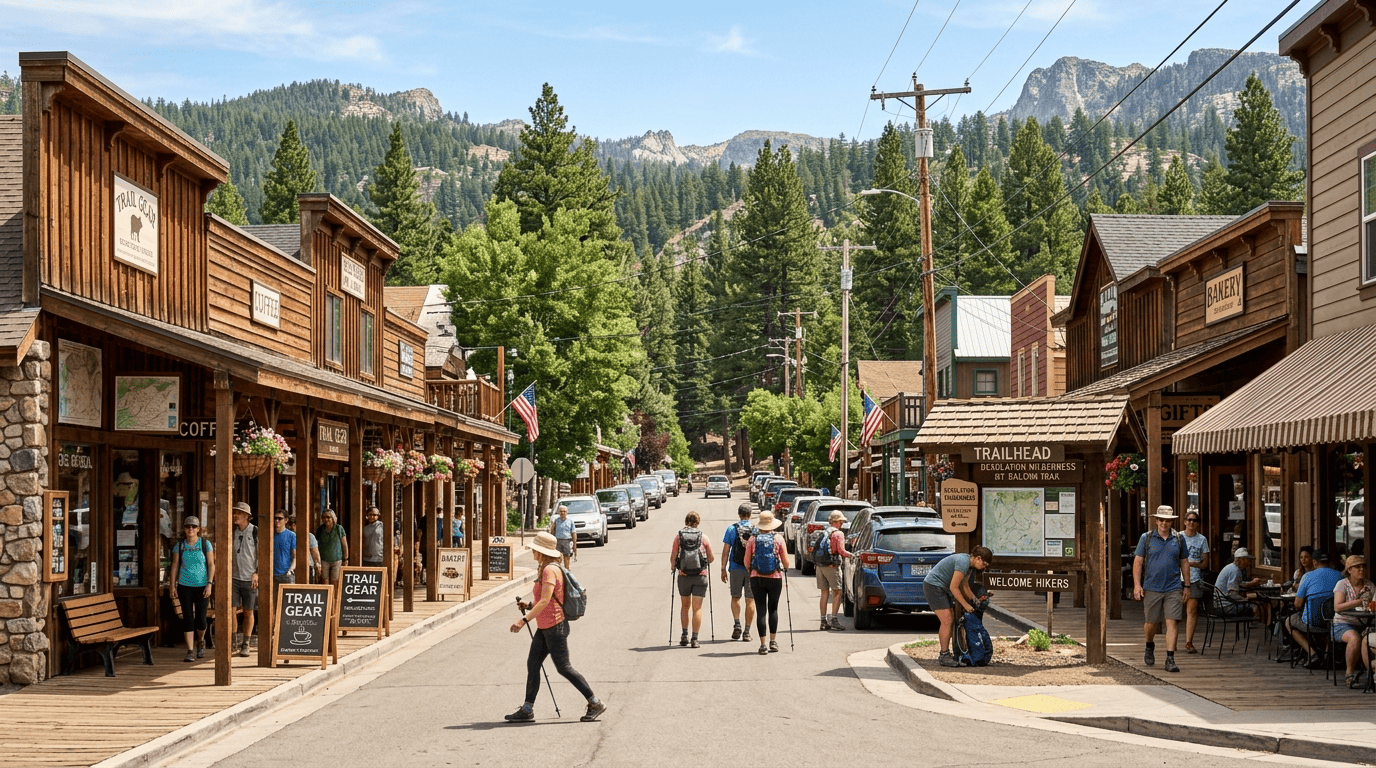
A trail town is a community whose local economy meaningfully depends on trail-based tourism. Not every town near a trailhead qualifies, but the ones that do build entire seasonal business cycles around hiker traffic.
Category A trail towns: Mammoth Lakes, Bishop, and Lone Pine
These Eastern Sierra towns in Mono and Inyo Counties sit directly on the resupply and access corridor for the John Muir Trail and Pacific Crest Trail, and summer hiker traffic is a major driver of local business; grocery stores, outfitters, and lodging all see a substantial share of annual revenue concentrated into the hiking season.
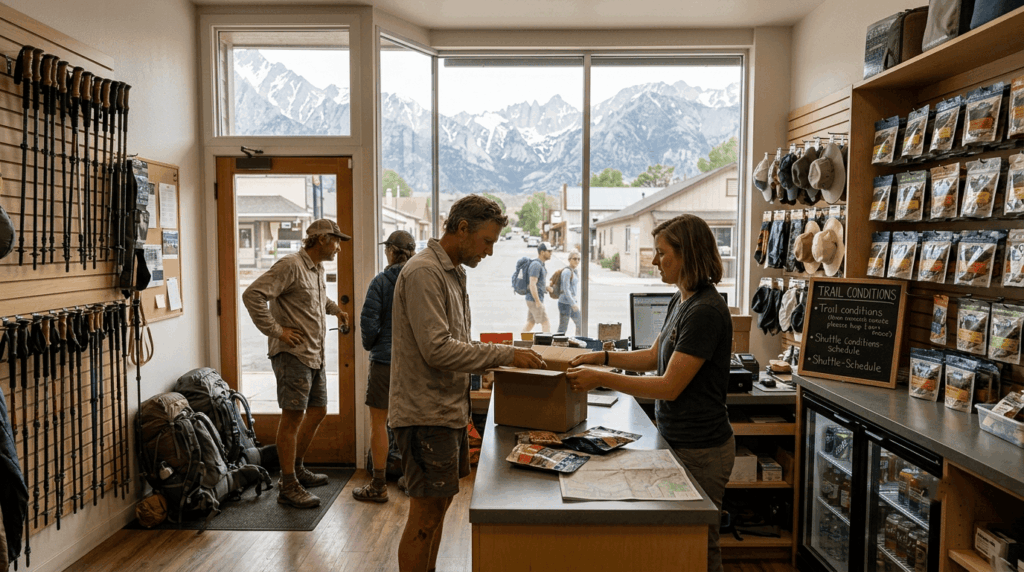
The tradeoff is a pronounced shoulder-season dip once snow closes high-country access and before ski season fills the gap, which is exactly the kind of seasonal volatility that makes trail-dependent towns economically distinct from towns with a steadier, more diversified visitor base.
Category B trail towns: Idyllwild, Julian, and Ojai
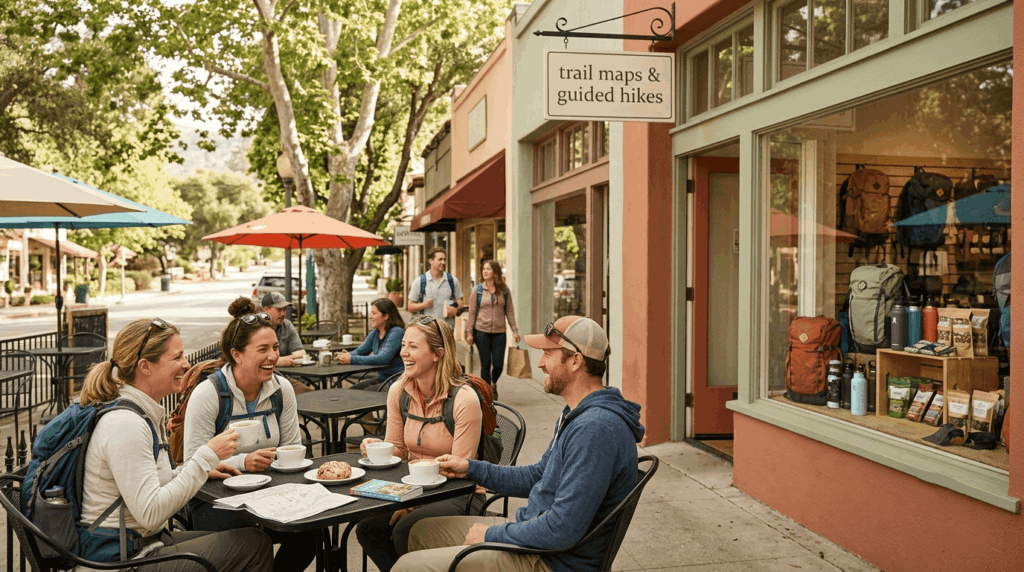
These Southern California gateway towns lean on weekend hiking tourism rather than a single long-distance trail corridor, with lodging occupancy and a small ecosystem of boutique gear shops and cafes tracking closely with trail difficulty levels and trailhead traffic. Idyllwild and Ojai in particular draw heavily from nearby Los Angeles and San Diego weekend visitors.
Category C trail towns: Truckee, South Lake Tahoe, and Nevada City
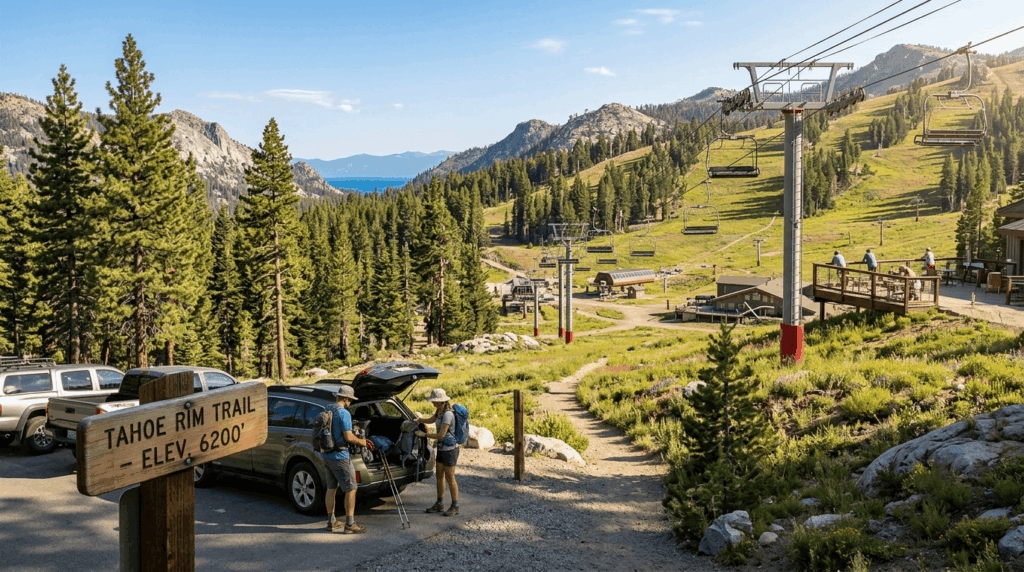
These towns run a genuine multi-season economy, combining summer hiking with winter skiing rather than depending on a single peak season, which smooths out much of the seasonal volatility Eastern Sierra trail towns experience. That year-round trail and recreation infrastructure has also become a real draw for remote workers and new residents choosing where to relocate, adding a second economic layer beyond tourism spending alone. Trail access is increasingly a factor in relocation decisions, not just vacation planning.
The multiplier effect: how every hiking dollar circulates through California communities
Money a hiker spends at a trailhead town doesn’t stop moving after the first transaction; it keeps circulating through the local economy as that business pays its own employees and suppliers, who then spend a share of that income locally too. Economists estimate this effect at roughly $1.50 to $2.50 in total local economic activity for every dollar a visitor spends directly, though the exact multiplier varies by how self-contained a local economy is.

What hikers actually spend money on in California trail communities
Overnight hikers commonly spend in the range of $100–$200 a day across lodging, food, gear, guide services, and shuttle transport, with day hikers spending considerably less but still contributing to local fuel and food sales. Gear shops, permit processing fees, and campsite revenue round out the local spending categories that trail tourism directly supports, and the decision to backpack rather than day hike tends to meaningfully raise per-visitor spending given the added lodging or gear involved.
Trail infrastructure as public investment: the case for California trail funding
Trails aren’t just recreation spending from a budget standpoint; they’re regularly evaluated the way any other public infrastructure investment would be.
How trail investment decisions are made in California: grants, bonds, and partnerships
California voters approved Proposition 68 in 2018, a bond measure that included significant funding for parks, water, and trail infrastructure across the state. The federal Land and Water Conservation Fund and the California Coastal Conservancy both provide additional funding streams specifically for trail and outdoor access projects, and partnerships with organizations like REI have supplemented public funding with grant programs of their own.
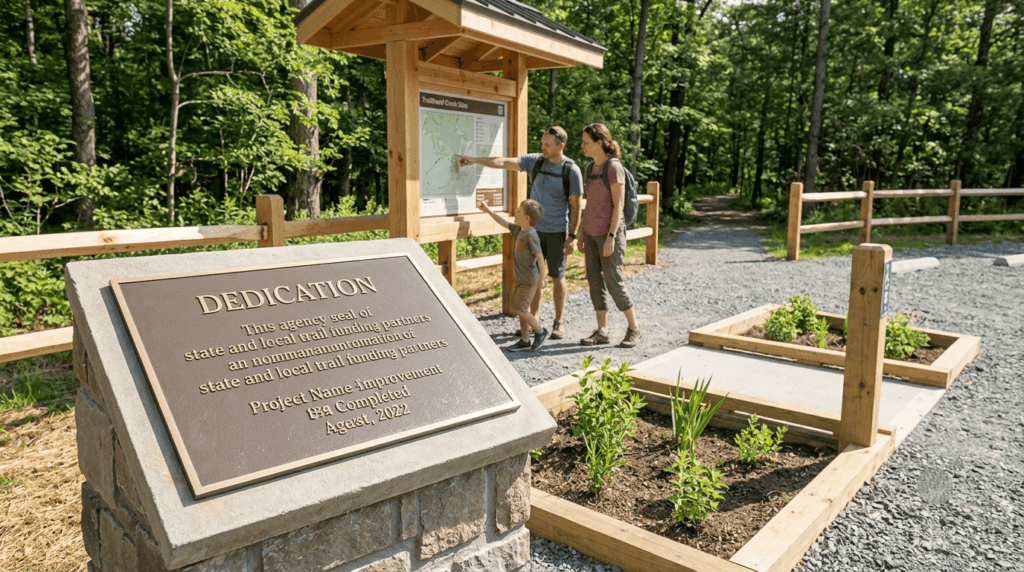
How those funded projects actually get built still has to clear the same planning and environmental review process regardless of the funding source.
How hiking trails affect California property values and local tax revenue
Property proximity and the trail premium
Multiple studies on trail proximity and home values have found a measurable price premium for homes near well-maintained trails, though the exact percentage varies significantly by market, trail quality, and study methodology. Treat any single specific number with some skepticism rather than as a universal rule. Beyond individual home values, trail infrastructure expands the local tax base over time as trail-adjacent property becomes more desirable, giving mountain towns a genuine economic development argument for trail investment database statistics.
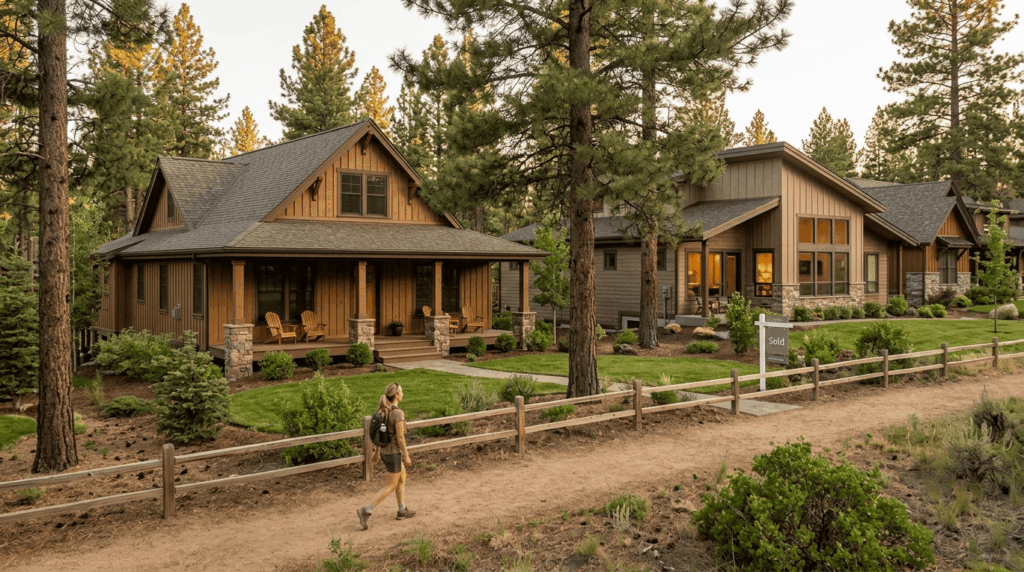
That argument matters most in town budget discussions, where trail maintenance sometimes competes with other infrastructure priorities for limited public funds. Hikers can do their part by buying high-quality local trail maps or gear locally to directly support these communities.
The trail you hike for free is rarely free to the town it passes through; someone funded its construction, and a whole local economy often depends on you showing up. Understanding that economic layer doesn’t change how you hike, but it’s worth knowing how much is actually riding on that trail staying open, funded, and well maintained.
Frequently asked questions about the economic value of hiking trails in California
What is a trail town, and how does hiking tourism help small California communities?
A trail town is a community whose local economy meaningfully depends on trail-based tourism and hiker spending on lodging, food, gear, and services. Towns like Mammoth Lakes, Idyllwild, and Truckee all fit this model in different ways, from long-distance trail resupply hubs to weekend gateway destinations.
How much does the average hiker spend per day when visiting California?
Overnight hikers commonly spend $100–$200 a day across lodging, food, gear, and services; day hikers spend considerably less but still contribute through fuel, food, and incidental purchases in trail-adjacent towns.
Do hiking trails increase property values in nearby California communities?
Often, though the size of the effect varies significantly by market and methodology. Multiple studies have found a measurable premium for homes near well-maintained trails, but there’s no single universal percentage that applies everywhere.
How are hiking trails funded and built in California?
Through a mix of public and private sources: state bond measures like Proposition 68, the federal Land and Water Conservation Fund, the California Coastal Conservancy, and grant partnerships with organizations like REI, alongside the agency and volunteer labor that actually builds and maintains the trail.
Which California mountain towns depend most on hiking tourism?
Eastern Sierra towns like Mammoth Lakes, Bishop, and Lone Pine depend heavily on JMT and PCT resupply traffic; Southern California gateway towns like Idyllwild and Ojai depend more on weekend visitor tourism; and multi-season towns like Truckee and South Lake Tahoe combine hiking with winter recreation for a more balanced year-round economy.
How much does hiking contribute to California’s economy each year?
Precisely isolating hiking’s share is difficult since it’s tracked within the broader outdoor recreation category, but California’s overall outdoor recreation economy contributes tens of billions of dollars in state GDP annually, according to BEA’s Outdoor Recreation Satellite Account, with hiking as one of the category’s highest-participation activities.