History of Hiking Trails in California: From Native Footpaths to National Parks
Every trail you hike in California sits on top of a longer story than most people realize: footpaths first established by Indigenous peoples thousands of years ago, layered over by Spanish mission routes, Gold Rush supply trails, and eventually the deliberate, government-funded trail-building of the 20th century. I’ve spent four-plus years cataloging trails across this state, and studying the history of hiking trails in California changes how a hike feels: the switchback you’re climbing might follow a route someone walked long before written record began. This guide traces that arc from the earliest footpaths to today’s trail network.
Disclosure: Please note that some of the links below are affiliate links and at no additional cost to you, I may earn a commission. Know that I only recommend hiking gear I personally stand behind; when you use my affiliate links, it helps me run this blog and keep all of this content free of charge for readers (like you).
Key takeaways:
- California’s oldest trails were established by Indigenous peoples, including the Ohlone, Chumash, Miwok, Mojave, and Yurok, for trade, seasonal migration, and spiritual purposes.
- The Portolá Expedition of 1769 produced the first written European documentation of California travel routes, largely guided along paths Indigenous guides already knew.
- The Gold Rush (1848–1855) rapidly expanded California’s trail network as supply routes raced to reach mining camps.
- The Civilian Conservation Corps (1933–1942) built and rebuilt an enormous share of California’s national park trail infrastructure, including major work still visible today.
- The Pacific Crest Trail took over 60 years from the first proposal (1932) to full completion (1993).
The first trails in California: Native American footpaths before European contact
How California’s Indigenous peoples built and used the state’s earliest trails
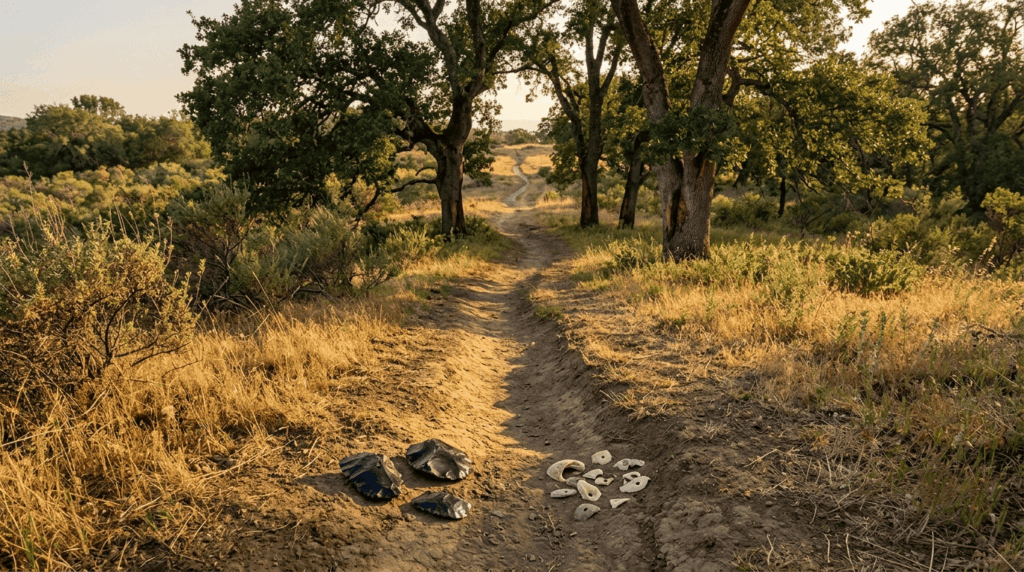
Long before any written record, California’s Indigenous people, including the Ohlone, Chumash, Miwok, Mojave, and Yurok, among many others, established extensive trail networks for seasonal migration between coastal and inland territory, trade (obsidian from sources like Glass Mountain moved hundreds of miles along these routes, as did shells from the coast), and spiritual pilgrimage.
These weren’t casual paths; many were maintained deliberately, including through controlled burning that kept corridors clear and encouraged the specific plant growth many communities relied on. Some of these routes are genuinely ancient trade paths in parts of the state that show evidence of use going back over 10,000 years. If you’re new to the basic definitions and layout of trail surfaces, see our What Are Hiking Trails guide.
How Indigenous trail routes became the foundation for California’s modern hiking network
Later arrivals didn’t start from scratch; they followed what already worked. Spanish missionaries traveling El Camino Real relied on existing Native routes and, in many documented cases, Native guides. Gold Rush miners pushing into the Sierra foothills and beyond frequently used established Native trade paths rather than cutting new ones through unfamiliar terrain.
Today, a meaningful share of USFS trail corridors trace back to these original Indigenous routes, even where the official trail name and modern signage give no indication of that history.
The Spanish colonial period: El Camino Real and the mission trail system
The Portolá Expedition of 1769: California’s first documented trail survey
Gaspar de Portolá led the first major overland Spanish expedition through Alta California in 1769, traveling from San Diego north toward San Francisco Bay and producing the first written European documentation of California travel routes. Portolá’s party didn’t discover these routes so much as follow them. Chumash and Ohlone guides who already knew the terrain led the way through much of the journey, and the expedition’s own diaries acknowledge relying on Native knowledge of water sources, passable terrain, and existing paths rather than navigating blind.
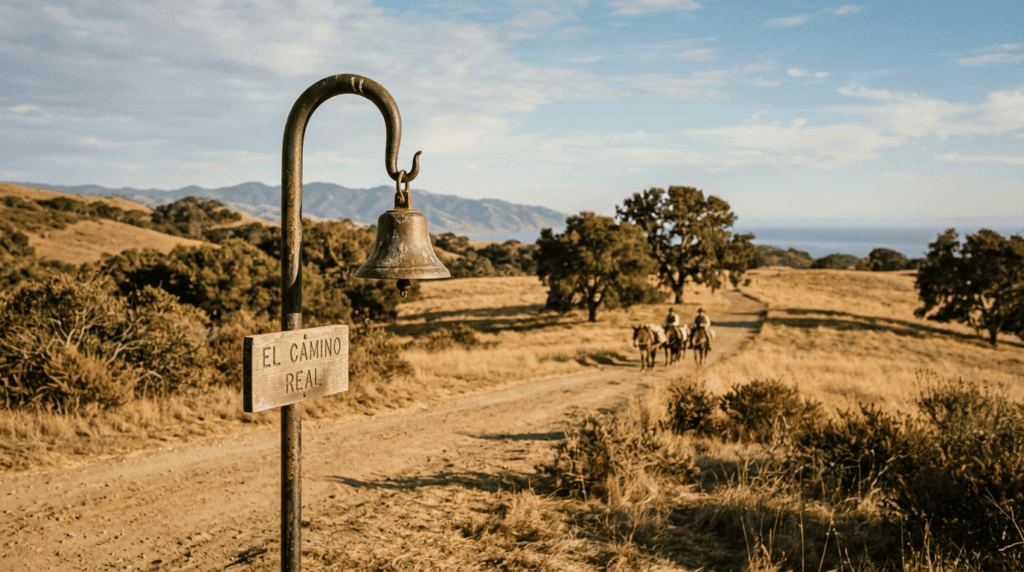
This expedition effectively marked the starting point of El Camino Real, which would eventually connect all 21 California missions along roughly 600 miles of coastal route; our historic and mission trails guide covers that fuller story, including which sections are still hikeable today.
The Gold Rush era: mining trails and the opening of California’s interior
The 1848–1855 Gold Rush triggered explosive, unplanned trail growth as supply routes raced from Sacramento into Sierra Nevada mining camps almost overnight, prioritizing speed over durability in ways that shaped and often damaged the terrain they crossed. Entire trail networks appeared within a few short years to serve boomtowns that, in many cases, would be abandoned again just as quickly once a particular claim played out.
John Frémont and the mapping of California’s mountain passes
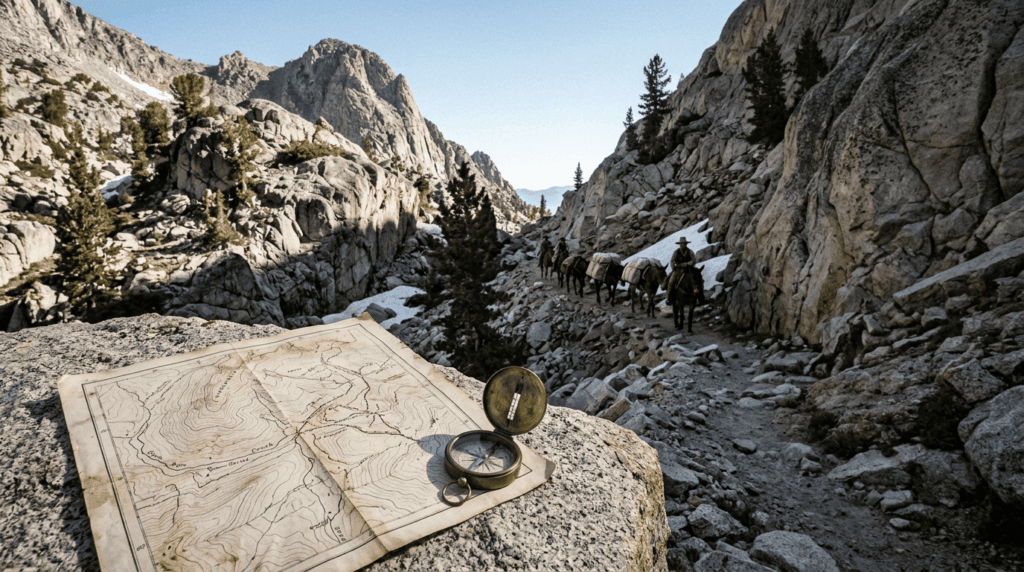
John C. Frémont’s 1844 crossing of the Sierra Nevada, including his route over what’s now known as Carson Pass, produced some of the first accurate maps of California’s mountainous interior, based on genuine survey work rather than secondhand rumor.
Those maps mattered enormously once the Gold Rush hit a few years later; migrants pouring into California by the tens of thousands leaned on Frémont’s documented routes to actually find their way through mountain terrain that had previously existed only as vague, often inaccurate accounts to most Americans back east. Several of today’s Sierra trail and road corridors still roughly trace the passes his expeditions first mapped in detail.
The national park era: how California’s scenic trails were formalized
The Yosemite Grant, signed by President Lincoln in 1864, ceded Yosemite Valley and the Mariposa Grove to California as protected land predating the National Park Service itself by more than 50 years. The NPS wasn’t formally established until 1916, and it took the Great Depression-era Civilian Conservation Corps to actually build out most of the scenic trail infrastructure still in use today.
The Civilian Conservation Corps: the greatest trail builders in California history
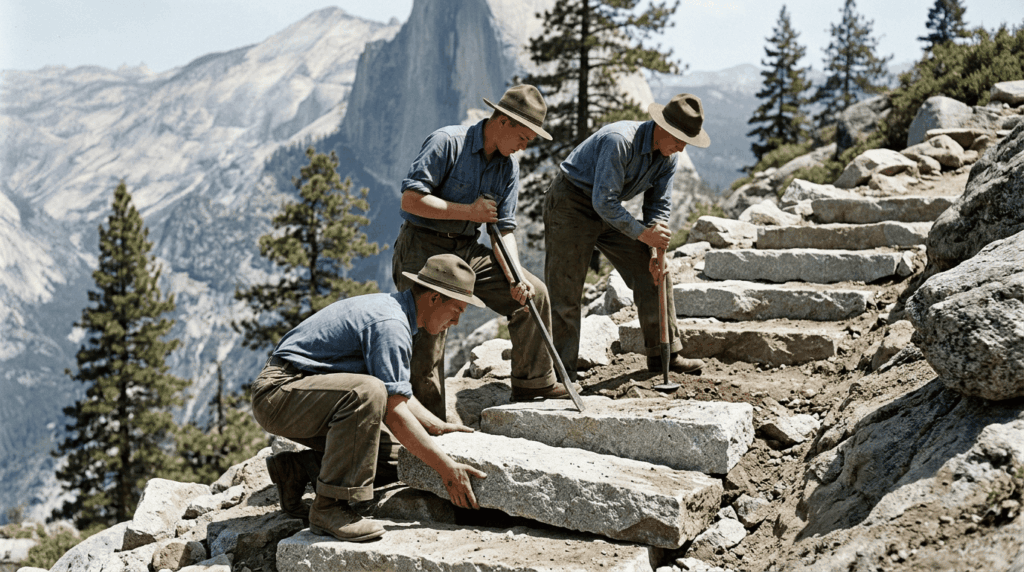
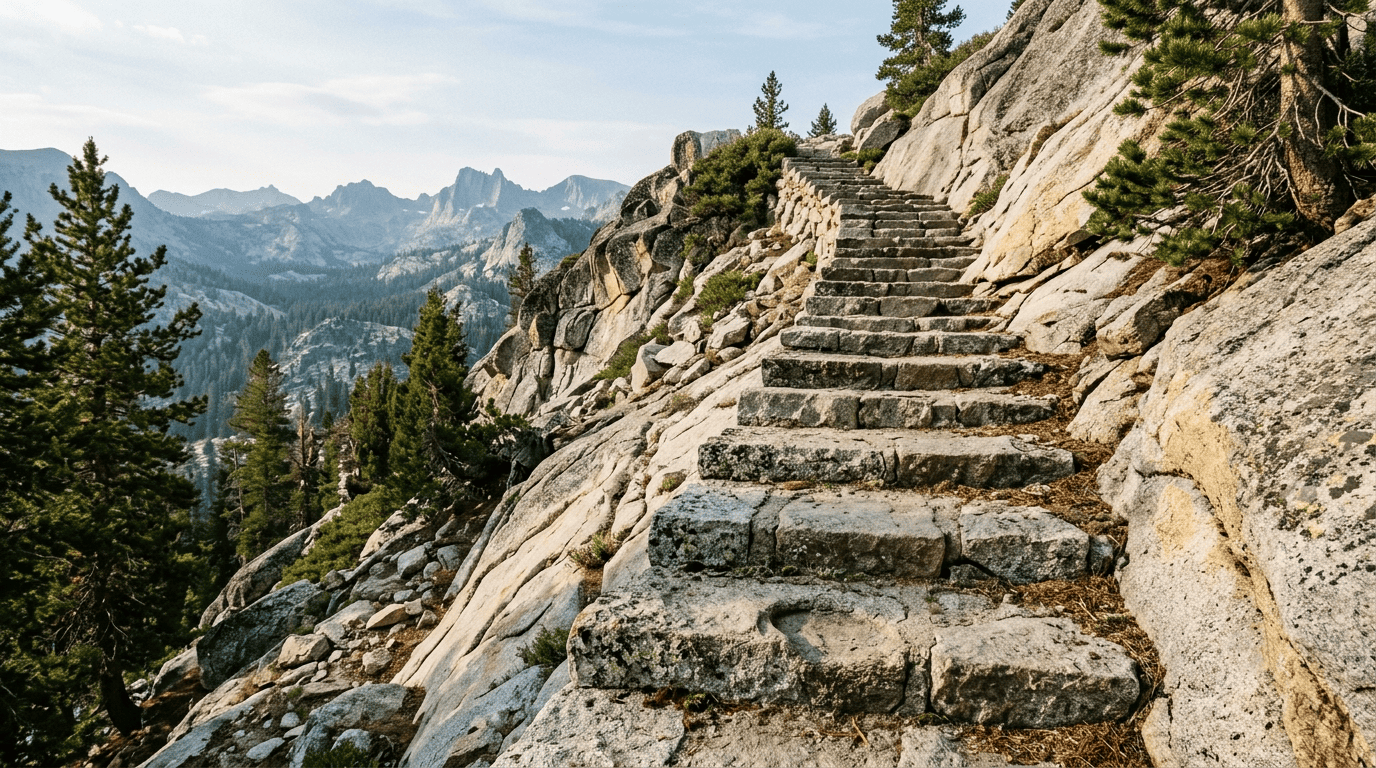
Between 1933 and 1942, CCC crews transformed California’s national park trails, and their work is still visible if you know where to look: they rebuilt and strengthened the Half Dome cables and stairway in 1934 (the cables themselves were originally installed by the Sierra Club in 1920), and the stonework on the Mist Trail and near Yosemite Falls that hikers still climb today is largely CCC-era craftsmanship.
Yosemite alone hosted 10 CCC camps with over 6,800 enrollees passing through during the program’s run, young men, many from struggling Depression-era families, building trail infrastructure by hand that has outlasted nearly a century of foot traffic. For modern details on switchback and tread construction, check out our trail construction guide.
How John Muir shaped California’s trail conservation philosophy
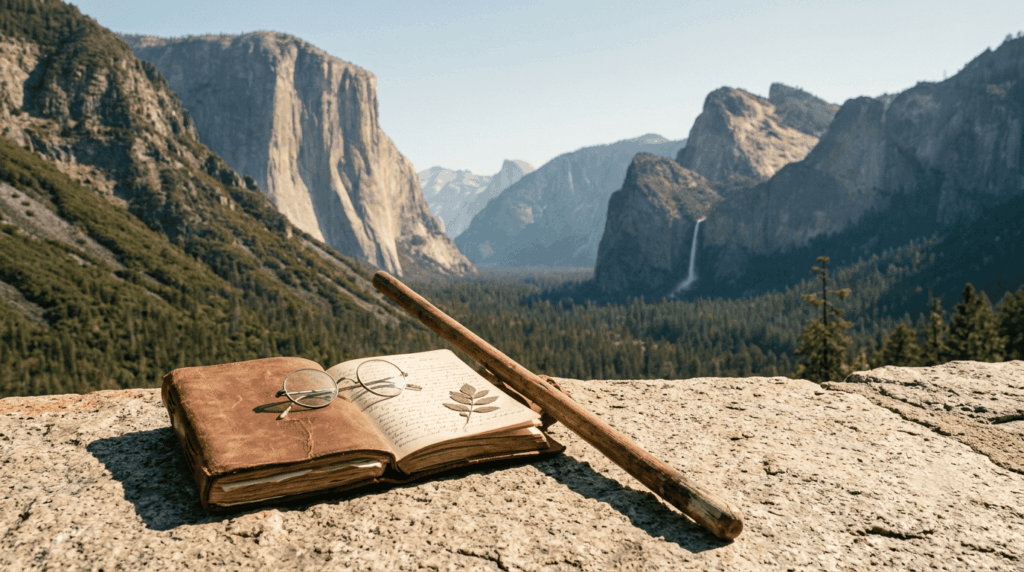
John Muir (1838–1914) reframed how Americans thought about trails and wild land generally, not as extraction corridors for timber or minerals, but as something worth protecting and experiencing directly. His advocacy, channeled through the Sierra Club (which he co-founded in 1892), directly shaped Yosemite’s protection and helped establish the conservation philosophy that later guided how the CCC and NPS approached trail-building: work with the landscape rather than simply carve through it. Modern hikers continue to protect these corridors by practicing Leave No Trace trail etiquette.
The modern trail era: the Pacific Crest Trail and California’s trail network today
How the Pacific Crest Trail was planned and built through California
Clinton Clarke first proposed a continuous Mexico-to-Canada trail in 1932, founding the Pacific Crest Trail System Conference with members that included the Boy Scouts, YMCA, and photographer Ansel Adams. From 1935 to 1938, teams of YMCA teenagers led by a young outdoorsman named Warren Rogers physically scouted and logged the route in relay hikes, carrying a logbook north from the Mexican border, much of which the modern PCT still closely follows today.
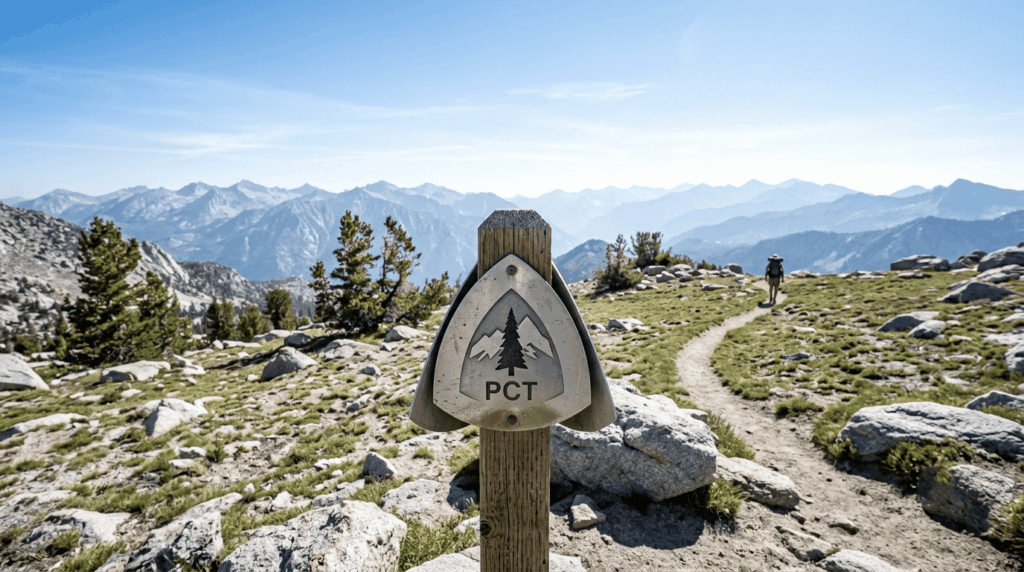
Six major trail segments, including the John Muir Trail and the Tahoe-Yosemite Trail, both in California, already existed and were stitched together as connecting sections, with the Civilian Conservation Corps recruited to help build the links between them.
The trail gained official federal status under the National Trails System Act, signed by President Johnson on October 2, 1968, alongside the Appalachian Trail as the country’s first two National Scenic Trails, but it took another 25 years of volunteer and agency construction before the PCT was finally completed as a continuous trail in 1993, marked by a golden spike ceremony in Soledad Canyon, California. For the practical side of hiking it today, permits, costs, and route planning, our thru-hiking guide covers that ground in detail.
Frequently asked questions: history of hiking trails in California
Who built the first hiking trails in California?
California’s Indigenous peoples, including the Ohlone, Chumash, Miwok, Mojave, and Yurok, established the state’s earliest trail networks for trade, seasonal migration, and spiritual purposes, long before any European contact.
What did the Civilian Conservation Corps build in California?
Between 1933 and 1942, CCC crews built and rebuilt major national park trail infrastructure, including rebuilding the Half Dome cables and stairway in 1934 and constructing much of the stonework still visible on trails like the Mist Trail today.
What is the oldest hiking trail in California?
There’s no single documented “oldest” trail, but some Indigenous trade routes in the state show evidence of use going back over 10,000 years, making them far older than any trail with a formal modern name.
When was the Pacific Crest Trail built through California?
The trail was first proposed in 1932, gained official federal status in 1968 under the National Trails System Act, and wasn’t fully completed as a continuous route until 1993, over 60 years from proposal to completion.
Who was John Muir and what did he do for California hiking?
John Muir (1838–1914) was a naturalist and writer whose advocacy for Yosemite and wild land generally helped shape modern conservation philosophy; he co-founded the Sierra Club in 1892, which remains influential in California trail advocacy today.
Did Native American trails become modern California hiking routes?
Yes, a meaningful share of today’s USFS and park trail corridors trace back to original Indigenous trade and travel routes, even where modern signage and trail names do not indicate that origin.