The 5 Best Hiking Trails at Point Lobos, From a Rare Cypress Grove to a 19th-Century Whaling Cabin
Often called the “crown jewel” of the California State Park system, Point Lobos packs an outsized amount of scenery into a genuinely small footprint- 1,325 acres, with most of its five best trails well under a mile each. Here’s the short version: Cypress Grove is the trail everyone means when they picture this reserve, Sea Lion Point delivers wildlife with essentially no walking required, and Whalers Cove is worth slowing down for specifically because of its history, not just its water. Exploring the premier Point Lobos hiking trails is the ultimate way to experience this rugged coastline up close.
Disclosure: Please note that some of the links below are affiliate links and at no additional cost to you, I may earn a commission. Know that I only recommend hiking gear I personally stand behind; when you use my affiliate links, it helps me run this blog and keep all of this content free of charge for readers (like you).
This is a dedicated deep-dive on Point Lobos State Natural Reserve itself, a natural pairing with my Big Sur trails guide, since the reserve sits just north of that stretch of Highway 1. Every trail here is short enough to combine two or three in a single morning, and I’ll flag the reserve-wide rules- no dogs, no swimming outside reserved dive spots- that catch a lot of first-time visitors off guard.
Key takeaways
- The iconic walk: Cypress Grove Trail, one of only two places on Earth with a naturally occurring native Monterey cypress grove.
- Wildlife with the least effort: Sea Lion Point Trail, a short paved loop with sea lions and otters visible essentially year-round.
- Best nesting-season payoff: Bird Island Trail, seabirds above China Cove’s strikingly turquoise water.
- Best solitude and tide pools: South Shore Trail, the reserve’s quieter, more rugged stretch.
- Best human history: Whalers Cove, a restored 1850s whaling cabin turned museum, on a cove still used by kayakers and divers today.
- Two rules apply across this entire reserve, not just one trail: no dogs anywhere, and no swimming except for reserved scuba divers. Plan around both before you go.
Cypress Grove Trail
Trailhead access and parking at the Point Lobos Entrance Station (day-use fee)
A $10 per-vehicle fee applies at the entrance station; the reserve’s roughly 150-space lot system fills by 9 to 9:30 a.m. on weekends. Parking is free along Highway 1 outside the gate if you arrive early, though a small donation is appreciated. Hours run 8 a.m. to 7 p.m. in the summer (closing at 5 p.m. off-season); last entry is 30 minutes before closing.
What you’ll see: one of only two native Monterey cypress groves on Earth
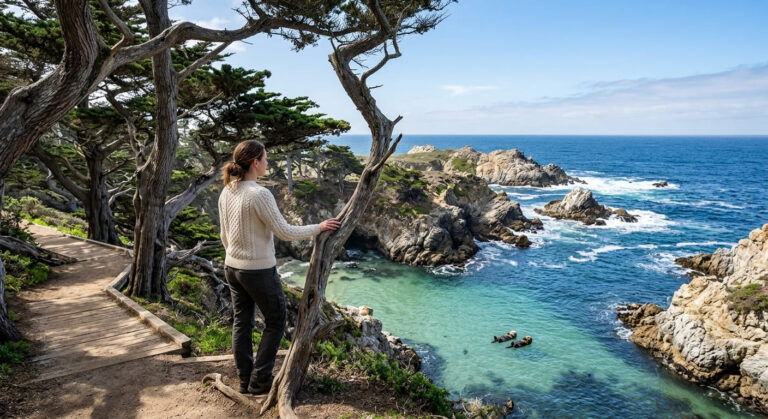
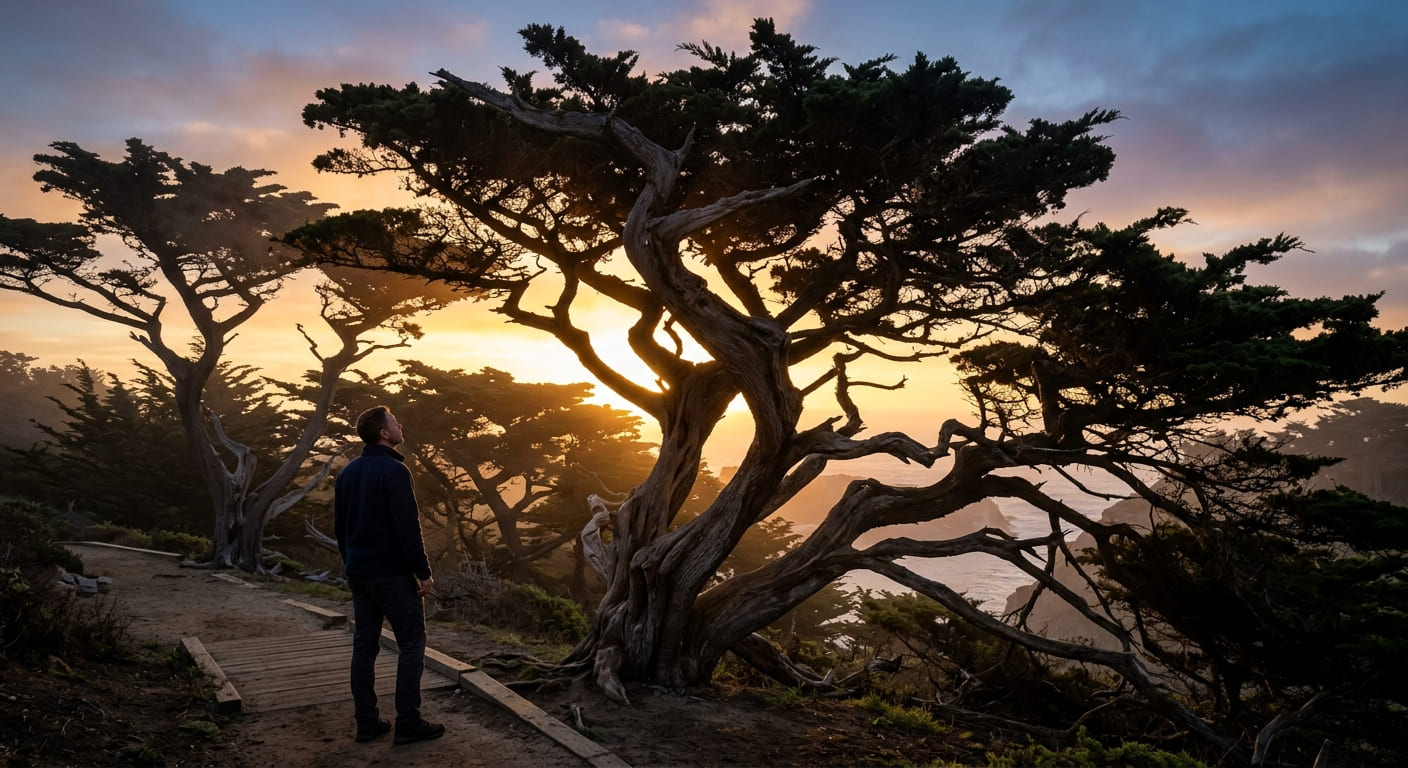
A short 0.8-mile loop (about 50 to 125 ft of gain, depending on exact route) through one of just two naturally occurring native stands of Monterey cypress left anywhere in the world, genuinely globally rare, not just locally scenic. Wind-sculpted trees frame dramatic ocean views the entire way.
Best time to hike Cypress Grove Trail: morning light through the cypress canopy
Morning light filtering through the wind-bent canopy is a real photography consideration here, and arriving early also means beating both the crowds and the parking crunch.
Sea Lion Point Trail
Trailhead access and parking at the Sea Lion Point lot
A separate lot within the reserve, reached via the main entrance road, one of several distinct parking areas serving different sections of Point Lobos.
What you’ll see: barking sea lions and resting sea otters just offshore
A short paved loop, about 0.4 to 0.6 miles, delivers close-up sea lion colonies (audible before you see them) and frequent sea otter sightings in the kelp beds just offshore, the strongest close-range marine wildlife payoff of any trail in this guide.

Best time to hike Sea Lion Point: any season; sea lions are present year-round
Unlike the seasonal draws elsewhere in this guide, this trail’s wildlife doesn’t require timing around a migration window; tides and crowd levels matter more here than the calendar.
Bird Island Trail
Trailhead access and parking near China Cove
A parking area near China Cove, one of the reserve’s most visually striking, most photographed coves.
What you’ll see: nesting seabirds above a turquoise cove
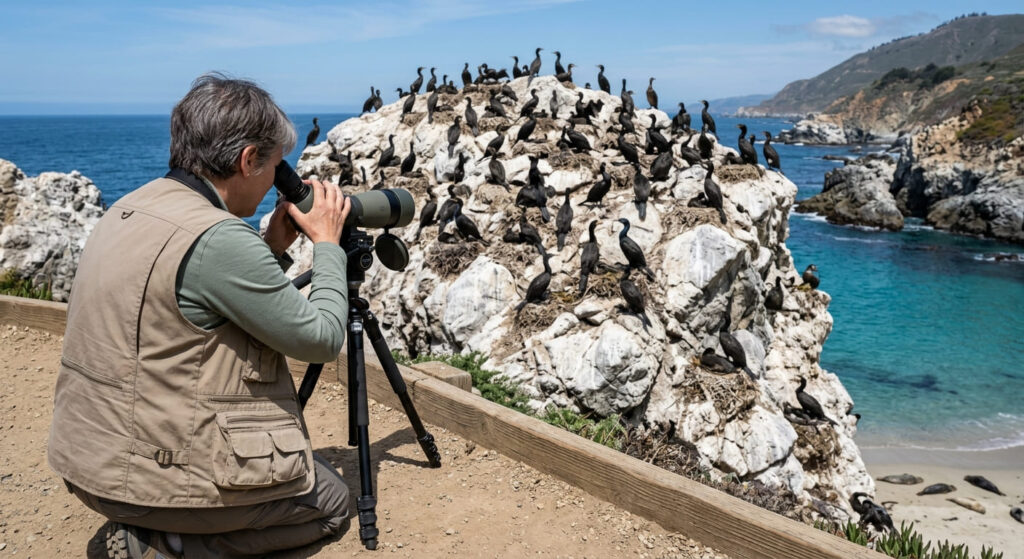
An easy 0.8 to 0.9-mile out-and-back with a short loop section, passing nesting Brandt’s cormorants on a small offshore rock, all above China Cove’s strikingly turquoise water, a genuine two-for-one of wildlife and color.
Best time to hike Bird Island Trail: spring for nesting season
Spring nesting activity is the central seasonal draw here; harbor seals nursing pups in China Cove below add another reason to time a visit for that window.
South Shore Trail
Trailhead access and parking at the Point Lobos South Shore lot
A lot serving the reserve’s more rugged southern coastline, generally quieter than the more famous Cypress Grove and Sea Lion Point areas.
What you’ll see: rugged coves, tide pools, and weather-sculpted cypress
A 2.2-mile out-and-back (about 90 ft of gain) along undeveloped coastline, with accessible tide pools and dramatically wind-bent cypress trees, more solitude than the reserve’s more famous stops, on genuinely rugged, exposed terrain.
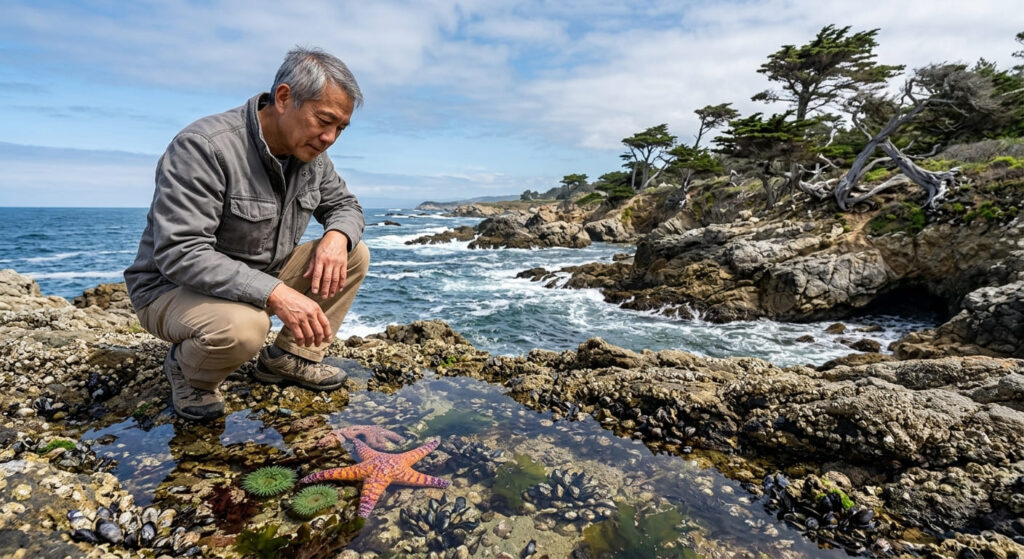
Best time to hike South Shore Trail: low tide for the best tide pool access
Tide, not season, is the real variable here; check a tide table before you go if the tide pools themselves are the goal.
Whalers Cove Trail
Trailhead access and parking at Whalers Cove
A sheltered cove with its own dedicated lot, a short, easy 0.2-mile walk from the entrance station, popular with kayakers and scuba divers as much as hikers.
What you’ll see: a restored 1850s whaling station and cabin museum
A restored whaling-era cabin, now a small museum, documents the cove’s layered history: a 19th-century Chinese fishing village first, then a whaling station later in the 1800s. This is the strongest human-history entity anywhere in this guide, distinct from the natural-scenery focus everywhere else.
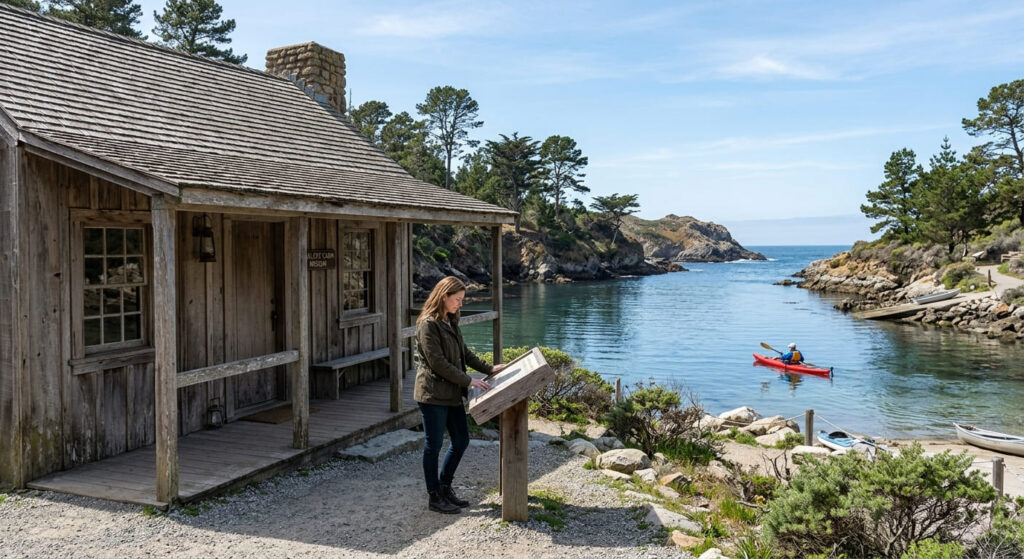
Best time to hike Whalers Cove: calm days, popular with kayakers and divers too
Calm weather brings out kayakers and scuba divers alongside hikers, since the cove’s sheltered water is genuinely good for both. Diving here requires an advance reservation, one of only two spots in the reserve where swimming is permitted at all.
The trail I’d actually start with
If you’ve only got a couple of hours, combine Cypress Grove, Sea Lion Point, and Bird Island; together they cover the reserve’s three most iconic stops in about two hours and match how most visitors actually experience Point Lobos. South Shore is the pick once you want quiet and tide pools over crowds, and Whalers Cove deserves unhurried time specifically for the museum, not just a drive-by.
Point Lobos sits right at the northern edge of the Big Sur coastline, so the two make a natural single-trip pairing. For more of California’s best coastal hiking beyond this stretch. Given the reserve’s rules are stricter than most parks- no dogs, no swimming outside reserved dive spots- my hiking safety guide is worth a quick read beforehand, and my Monterey County hiking guide covers the rest of what this county offers.
Frequently asked questions
Is there a fee to enter Point Lobos?
Yes, $10 per vehicle at the entrance station. Free parking along Highway 1 outside the reserve is possible if you arrive early enough to find a spot.
Does Point Lobos parking fill up?
Yes, regularly, especially on weekends, the reserve’s roughly 150-space lot system typically fills by 9 to 9:30 a.m. Arriving right at the 8 a.m. opening is the most reliable way to guarantee a spot.
Are there sea otters at Point Lobos?
Yes, frequently, especially in the kelp beds near Sea Lion Point and Whalers Cove, sightings are common enough that most visitors see at least one otter during a typical visit.
Is Bird Island Trail good for bird watching?
Yes, nesting Brandt’s cormorants are the headline species, with spring being the peak nesting season for the best activity.
What is the history of Whalers Cove?
The cove was first a Chinese fishing village, then a whaling station starting in the 1860s. The restored cabin from that era now serves as a small museum documenting both chapters of the cove’s history.
Is Point Lobos good for scuba diving?
Yes, Whalers Cove and Bluefish Cove are both open to certified divers, though a reservation is required in advance, since swimming is otherwise prohibited throughout the reserve.