California State Parks vs National Parks: What’s the Difference for Hikers?
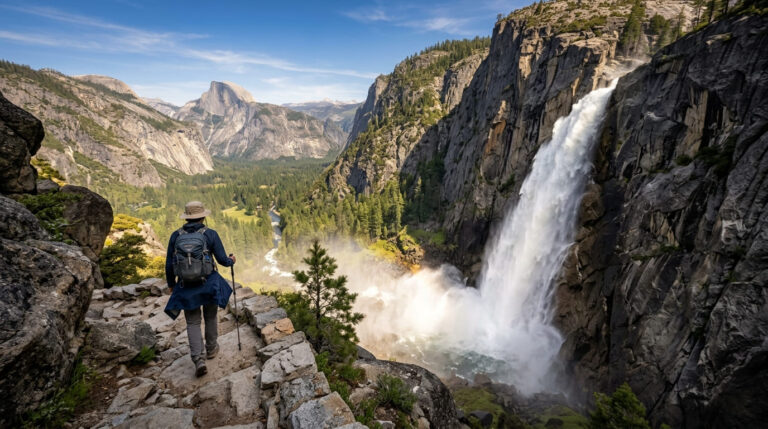
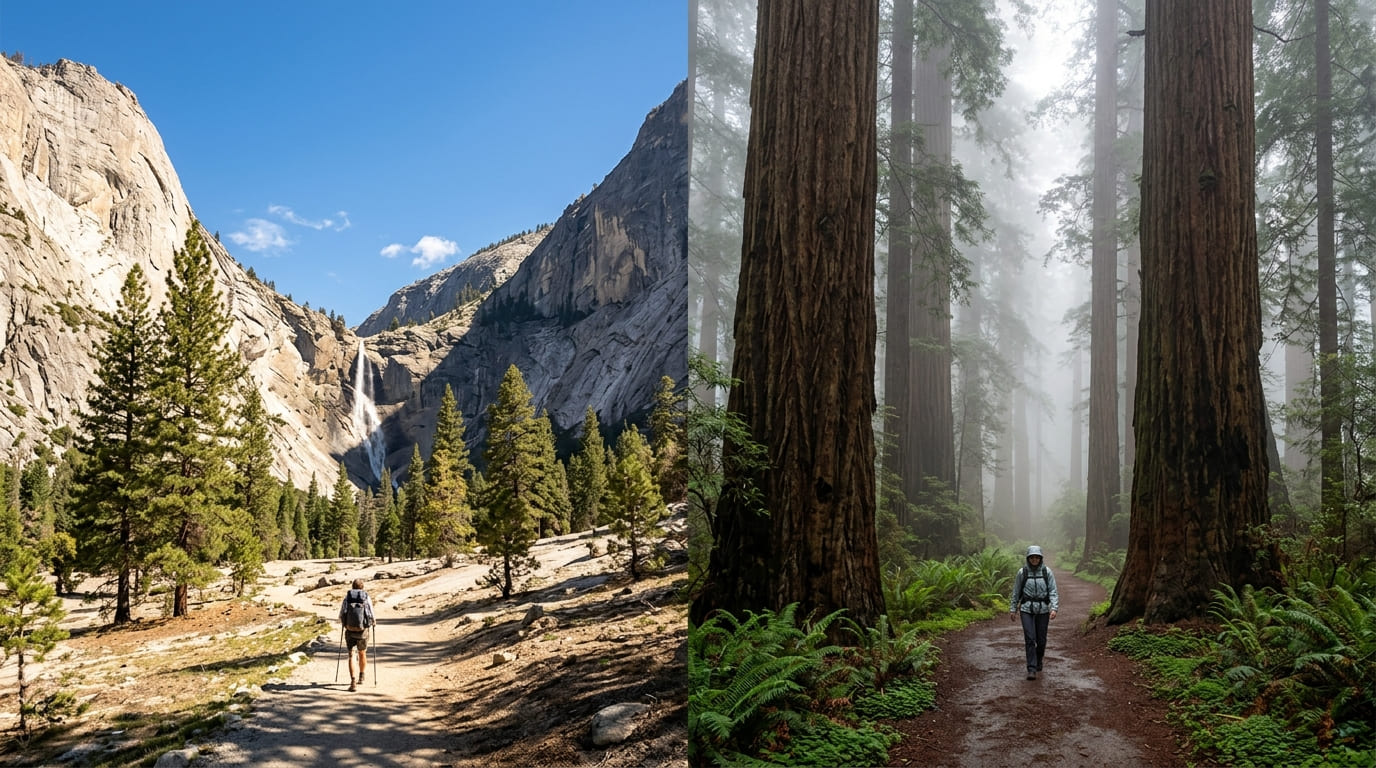
Yosemite and Big Basin Redwoods both have redwoods, granite, and waterfalls within a few hours of each other, and I still meet hikers who assume they’re run by the same people. They’re not, and the difference isn’t just bureaucratic trivia; it changes which pass you need, whether you’re fighting for a parking reservation, and how crowded your trailhead is going to feel on a Saturday morning. This guide untangles all of it.
Disclosure: Please note that some of the links below are affiliate links and at no additional cost to you, I may earn a commission. Know that I only recommend hiking gear I personally stand behind; when you use my affiliate links, it helps me run this blog and keep all of this content free of charge for readers (like you).
I’ve spent years cataloging trail data across this state, and the confusion regarding State Parks vs National Parks comes up constantly, often from people who’ve hiked both without ever realizing they were dealing with two entirely separate agencies.
Key takeaways before we dive in:
- Two completely separate agencies run these systems: the federal National Park Service and the state-run California Department of Parks and Recreation, and a pass for one doesn’t work at the other.
- National parks lean on developed infrastructure and name recognition; state parks lean on solitude and sheer numbers (280 units versus 9).
- Timed-entry reservations are far more of a national park phenomenon, though even that’s shifted recently at Yosemite itself.
- A typical national park is enormous compared to a typical state park, even though the state system has vastly more individual units.
Who Manages Each System
National Park Service vs. California State Parks
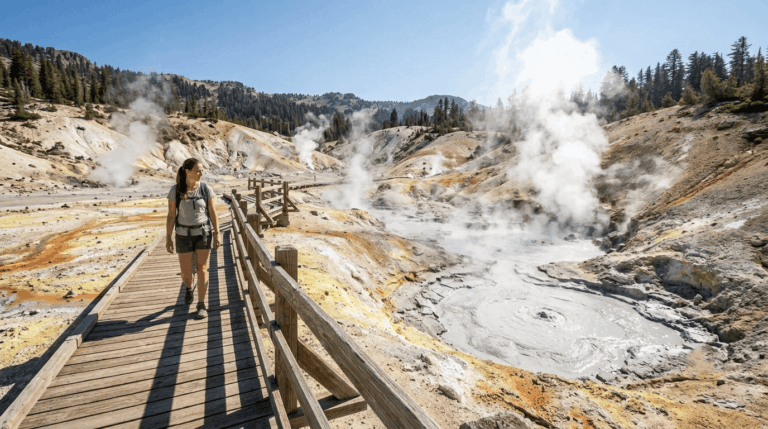
California has nine national parks, more than any other state, including Yosemite, Joshua Tree, Death Valley, Kings Canyon, Sequoia, Redwood, Channel Islands, Lassen Volcanic, and Pinnacles, all managed by the federal National Park Service and spanning a combined 6.3 million-plus acres.
Separately, the California Department of Parks and Recreation, better known as California State Parks, runs 280 individual park units across roughly 1.4 million acres, from Torrey Pines State Natural Reserve on the San Diego coast to Big Basin Redwoods in the Santa Cruz Mountains, the oldest state park in California.
It’s the largest state park system in the country, and it’s also entirely separate from the federal system in staffing, funding, and rules.
There’s one wrinkle worth knowing: a handful of California sites are jointly managed by both agencies at once.
Redwood National and State Parks, up in Humboldt and Del Norte Counties, combines one federal national park with three separate California state parks (Jedediah Smith, Del Norte Coast, and Prairie Creek Redwoods) under a single cooperative agreement, different rangers, different funding streams, one seamless-feeling visitor experience.
It’s the exception, not the rule, but it’s a useful reminder that “who manages this trail” isn’t always a clean single answer.
If you’re picturing a more typical example of each: our guide to the best hiking trails in Joshua Tree National Park covers a classic NPS unit, while our guide to the best hiking trails in Big Basin Redwoods State Park covers a classic state park, one that’s also an interesting case study, since it’s still rebuilding its trail network years after the 2020 CZU Lightning Complex Fire burned roughly 97% of the park.
Fees, Passes, and Reservations
America the Beautiful Pass vs. California State Parks Pass
These are two completely separate products, and neither covers the other system. The America the Beautiful pass costs $80/year for U.S. residents (as of a January 2026 pricing update, non-residents now pay $250/year, with an $20 senior annual option and $80 senior lifetime option for U.S. residents 62 and older), and it covers entrance at all nine California national parks plus other federal recreation land nationwide, national forests, wildlife refuges, and Bureau of Land Management sites among them.
California State Parks sells its own Golden Poppy Annual Pass for $125/year, covering vehicle day-use entry at roughly 112 of the state’s 280 park units, notably not all of them, so it’s worth checking a specific park’s participation before assuming coverage.
A separate $50 Historian Passport covers admission to state historic sites specifically, which the Golden Poppy pass doesn’t include.
If you’re regularly hiking both systems, budget for two separate passes; there’s no combined option, and no discount for holding both. I go deeper into the full permit landscape, including wilderness permits layered on top of these entrance passes, in our statewide permits guide.
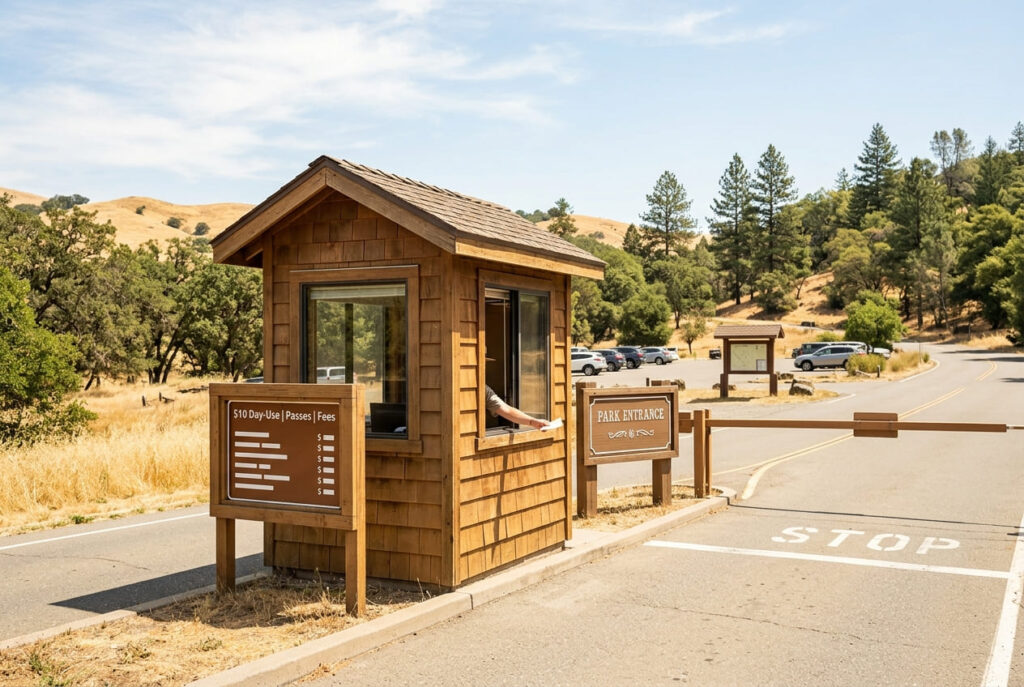
Timed-Entry Reservations: Which System Uses Them More
Historically, this has been almost entirely a national park pattern; Yosemite ran a vehicle timed-entry system on and off from 2020 through 2025, and Rocky Mountain National Park (outside California but a useful comparison point) still runs one seasonally. California’s state park system has never adopted anything comparable at scale.
But even this pattern isn’t fixed: Yosemite officially dropped its timed-entry requirement after park data suggested it wasn’t the most effective tool for managing the 2025 season’s traffic, a decision that’s proven controversial, with California’s own senators publicly pushing for its return amid reports of gridlock during peak summer weekends.
The entrance fee and any wilderness or Half Dome permits are unaffected either way; only the vehicle reservation requirement changed.
The lesson here isn’t “national parks always require reservations”; it’s that this is a fluid policy area on both sides, so check current status before you go rather than assuming last year’s rules still apply.
Trail Development and Amenities
Which System Tends to Have More Developed Trails
This is a real pattern, though not a universal rule. Larger, heavily visited national parks tend to invest in more developed trail infrastructure simply because of visitor volume.
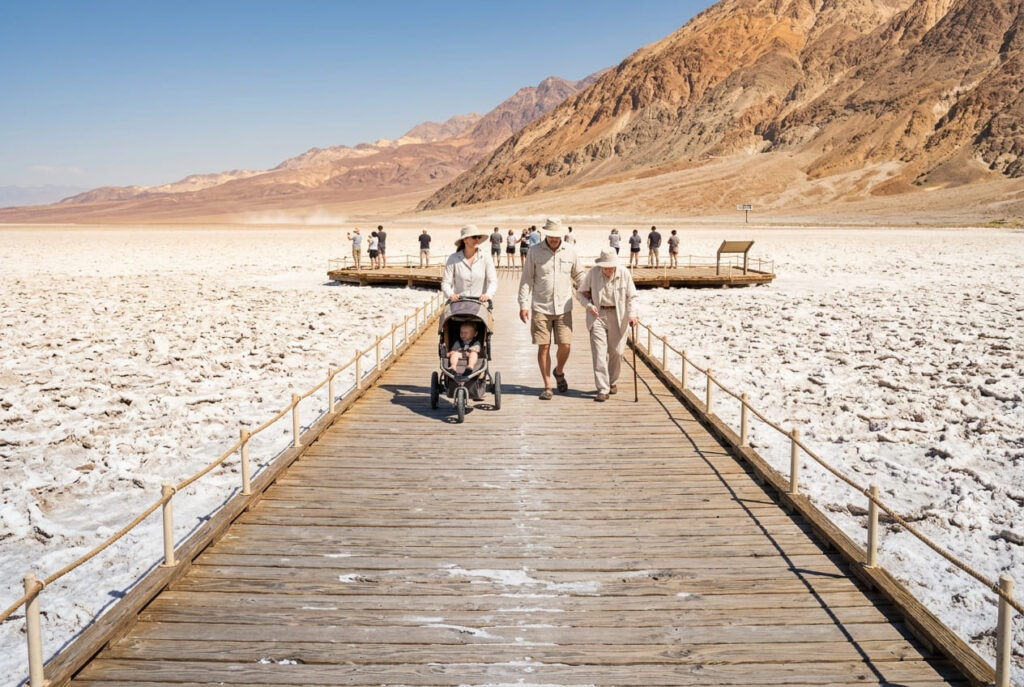
Yosemite Valley’s paved path network around Lower Yosemite Fall, or the fully accessible boardwalk sections near Badwater Basin in Death Valley, are good examples of trails built to handle thousands of daily visitors, many of them first-timers with no hiking-specific gear.
That level of investment tends to track directly with a park’s visitation numbers and federal funding, not with some inherent national-park advantage. State parks vary enormously by size and funding, and that variance is the real story.
A well-funded, high-traffic unit like a coastal state beach park can have trail infrastructure that rivals any national park; a smaller, less-visited unit covered across this site’s county guides might be a single unmarked dirt track with no signage at all.
Neither is objectively better; a heavily developed trail is easier and more accessible, but a lightly developed one often means fewer people and a more solitary experience. It depends on whether you want infrastructure or you’re actively trying to avoid it.
Which Type of Park Is Better for Which Kind of Hiker
Best for First-Time Visitors: National Parks
If you’re new to California hiking or visiting from out of state, national parks are the more forgiving starting point, with stronger name recognition, more built-out visitor centers, ranger programs, and well-marked, well-trafficked trails that are hard to get meaningfully lost on. Our guide for first-time California visitors rounds up exactly this kind of approachable starting-point trail.
Best for Solitude and Fewer Crowds: State Parks
If you’ve already done the national park circuit, or crowds are actively what you’re trying to avoid, state parks and smaller preserves are usually the better bet.
Search interest in “how crowded is Yosemite right now” isn’t a coincidence; a state park drawing a fraction of a comparable national park’s foot traffic is common across this site’s county guides.
Anza-Borrego Desert State Park, one of the largest state parks in the country, routinely offers vast, empty desert trail mileage that a national park of comparable size simply doesn’t; our guide to the best desert trails in San Diego County covers that region.
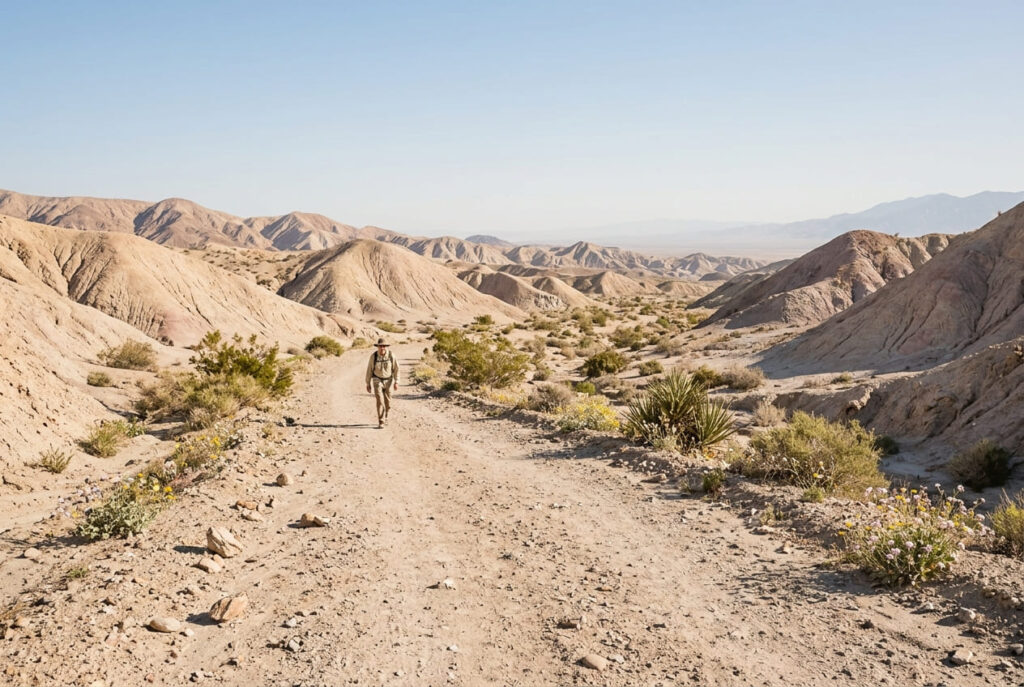
The honest bottom line: neither system is “better” in the abstract; they’re built for different things. Start with a national park if you want the postcard version of California hiking with the infrastructure to match; branch into state parks once you know what kind of trail experience you actually prefer.
Frequently asked questions about California state parks vs national parks
Do I need a National Parks pass for a state park?
No. The America the Beautiful pass only covers federal land, national parks, national forests, and similar federal sites. California State Parks requires its own separate Golden Poppy pass or individual day-use fees; the two systems don’t recognize each other’s passes.
Are state parks free to enter in California?
Not universally, though many are cheaper than national parks. Day-use fees at individual state parks typically run lower than a national park’s per-vehicle entrance fee, and some smaller units are free, but the majority charge some day-use fee unless you’re using the Golden Poppy pass at a participating park.
Which is bigger, a typical state park or national park?
A typical national park, often dramatically so. California’s 9 national parks span a combined 6.3 million-plus acres; Death Valley alone covers more than 3.3 million, while all 280 state park units combined total roughly 1.4 million acres. There are far more state park units, but national park land is concentrated in a handful of massive parks.
Do state parks allow dogs on more trails than national parks?
Generally, yes. National parks are notably restrictive, typically limiting dogs to paved roads, parking areas, and campgrounds rather than actual trails. State parks vary by unit but far more commonly allow leashed dogs on at least some trails. If you’re specifically looking for dog-friendly hiking trails, checking a state park’s individual pet policy is usually a better bet than assuming a national park will work.
Is Big Basin Redwoods a state or national park?
State park, California’s oldest, in fact, established in 1902. It’s run by California State Parks, not the National Park Service, and it’s still actively rebuilding trail access years after the 2020 CZU Lightning Complex Fire.
Are national parks more expensive to visit than state parks?
Usually, per visit. A national park’s standard vehicle entrance fee typically runs $20–35 for seven days, while many state park day-use fees are lower, and some units are free. Frequent visitors to either system generally come out ahead buying the relevant annual pass rather than paying per visit.