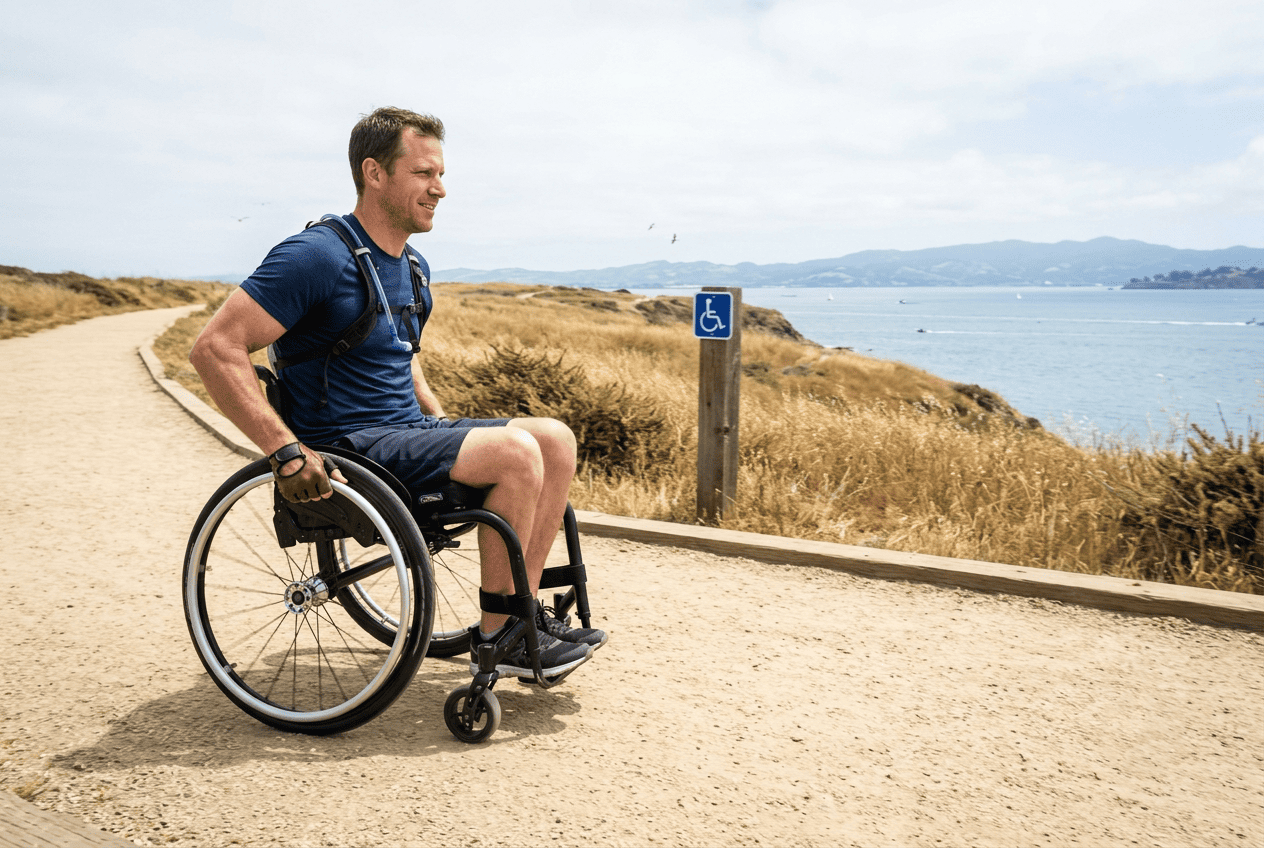
Hiking as Accessible Recreation: ADA-Friendly Trails in California
“Accessible” gets used loosely enough in hiking that it barely means anything by the time you reach a trailhead and find out otherwise. There’s a real, regulated definition behind it, and knowing that definition is the difference between a trip that works and one that ends at a locked gate or an impassable grade. Here’s what actually makes accessible hiking trails in California, who it serves beyond wheelchair users, and where to actually go.
Disclosure: Please note that some of the links below are affiliate links and at no additional cost to you, I may earn a commission. Know that I only recommend hiking gear I personally stand behind; when you use my affiliate links, it helps me run this blog and keep all of this content free of charge for readers (like you).
Key takeaways
- “ADA trail” has a real technical definition: running slope under 5%, cross slope under 2%, and a firm, stable surface, not just “flat-looking” or “paved.”
- Accessible hiking serves a wider group than most people assume: wheelchair users, but also people with visual or cognitive disabilities, aging adults, stroller users, and anyone recovering from a temporary injury.
- California has accessible trails in every major region: redwood boardwalks in the north, coastal boardwalks in the Bay Area, and firm desert paths in Joshua Tree and Death Valley.
- Team-assisted devices like the TrailRider and Joëlette open up trails that a standard wheelchair can’t reach, but they require trained volunteers, not solo use.
- BORP (Bay Area Outreach & Recreation Program) runs actual guided hikes and publishes its own accessibility database for Northern California trails.
- Always call ahead: trail conditions change with weather and maintenance faster than most accessibility listings update.
What makes a hiking trail accessible? The ADA standards explained
“Accessible” isn’t a vibe; it’s a measurable standard, and most trails marketed as accessible don’t actually meet it once you check the numbers.
ADA trail grade and surface requirements in California’s parks
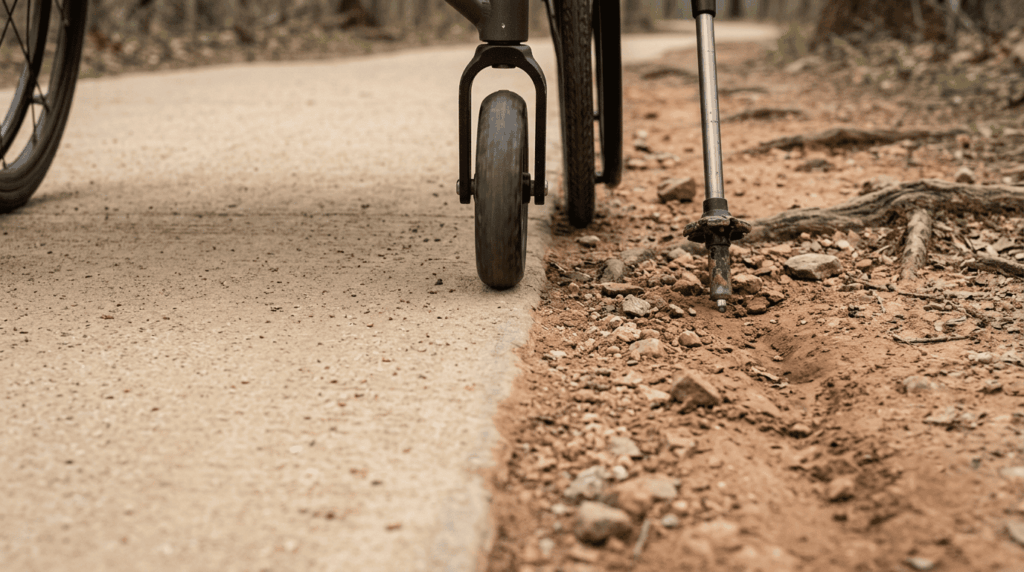
Federal accessibility standards for outdoor trails come from the Architectural Barriers Act (ABA) Outdoor Developed Areas guidelines, enforced through the U.S. Access Board: running slope under 5% (with required rest intervals wherever it exceeds that), cross slope under 2%, and a surface that’s firm and stable, loose gravel and wood chips typically don’t qualify, while packed crushed stone or compacted soil often does. California State Parks applies this same framework in its own accessible trail design standards, which is why a “CA State Parks accessible” label carries more weight than a generic “accessible” tag from an app.
The difference between ADA-compliant, accessible, and universally designed trails
These three terms get used interchangeably and shouldn’t be. “ADA-compliant” is a strict legal standard tied to specific slope and surface numbers. “Accessible” is a looser, informal term a park might use without meeting the full standard. “Universal design” goes further than either, designed from the start to work for the widest possible range of visitors, not just to clear a regulatory bar. To better understand general trail design, read what makes a trail a trail.
Who benefits from accessible hiking trails in California?
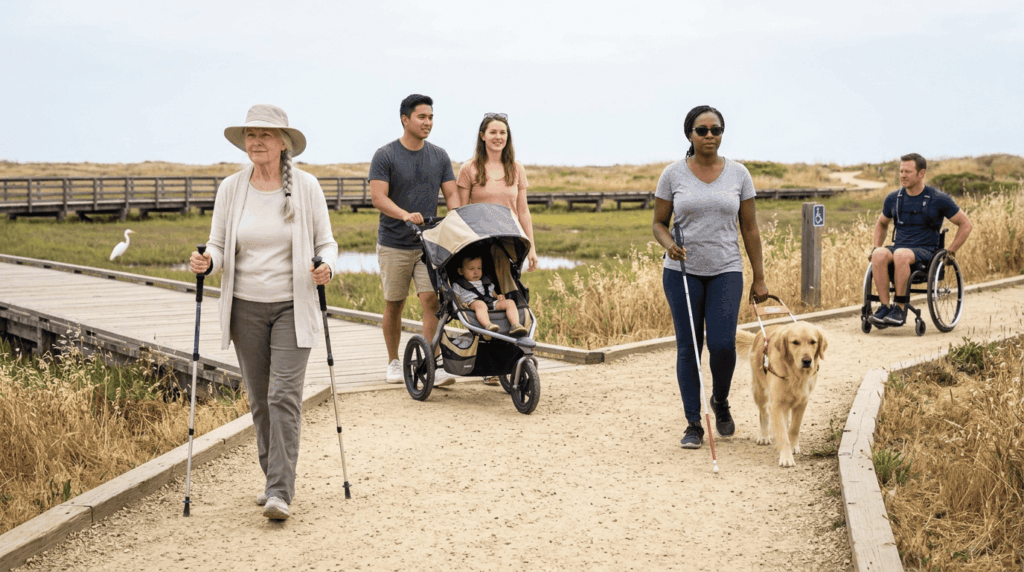
Wheelchair users are the group people picture first, but they’re one of several groups an accessible trail actually serves, including ageing adults who find that the physical benefits of hiking remain within reach when the terrain is properly graded and surfaced.
Accessible trails for wheelchair users: what to look for before you go
Beyond grade and surface, check trail width, turning radius at overlooks, and how close accessible restrooms and parking sit to the trailhead. A trail can meet the slope requirement and still fail in practice if there’s nowhere to turn a chair around at the halfway point, or if the accessible parking is a quarter-mile from the actual trailhead.
Adaptive hiking programs and organizations in California
BORP (Bay Area Outreach & Recreation Program), based in Berkeley, runs guided nature outings including hiking and birding, and maintains its own accessibility database covering trails and campsites across Northern California. Move United, the national network that absorbed Disabled Sports USA in 2020, connects to regional adaptive sports chapters across the state, and Disabled Hikers is a disability-led nonprofit that organizes group hikes and pushes for better trail-access information nationally. None of these require you to own adaptive gear yourself before joining a group outing.
Best ADA-accessible hiking trails in California by region
Accessible trails exist in every part of the state; you don’t have to trade scenery for accessibility.
Accessible trails in Northern California: redwoods and beyond
The Lady Bird Johnson Grove Trail in Redwood National Park and the Prairie Creek accessible trail both offer paved or hard-packed routes through old-growth redwood groves, which is about as scenic as accessible hiking gets anywhere in the country. Both sit close to accessible parking and restrooms, which matters as much as the trail surface itself.
Accessible trails in the Bay Area and Central Coast
Coyote Hills Regional Park has multiple accessible trail segments with bay views, Año Nuevo offers accessible viewing areas near its elephant seal colony, and the Elkhorn Slough boardwalk provides a fully accessible route over wetland habitat near Moss Landing. All three combine a firm, level surface with genuinely worthwhile scenery, not just a token paved loop near the parking lot.
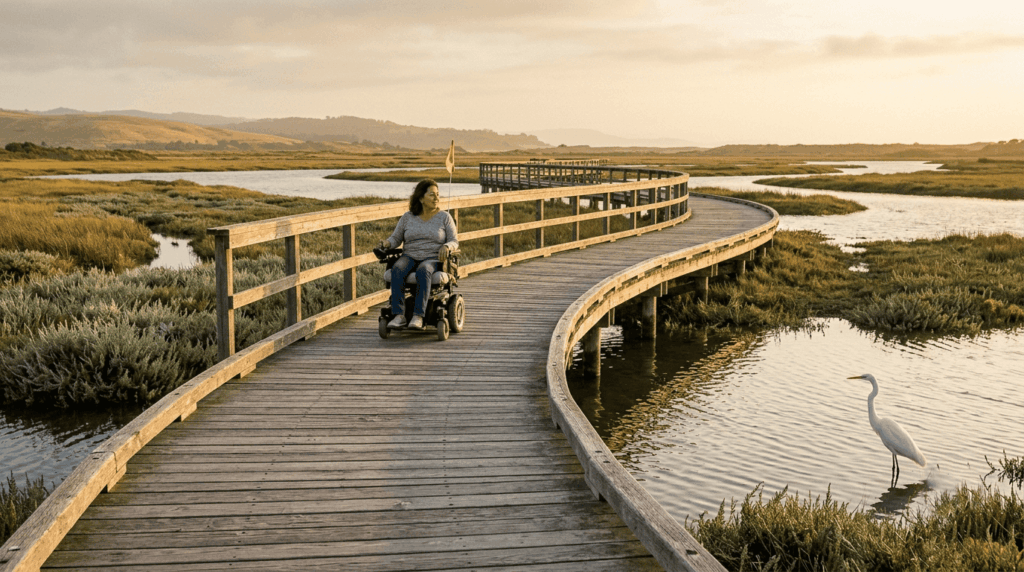
Accessible trails in Southern California and the deserts
Oasis of Mara in Joshua Tree, Furnace Creek-area trails in Death Valley, and select accessible areas of Anza-Borrego Desert State Park all offer firm, graded paths, proof that desert terrain doesn’t automatically rule out accessibility. Heat management matters more here than surface conditions, though; plan desert-accessible hikes for early morning or cooler months, regardless of how short the trail is.
Adaptive hiking gear and equipment for California trails
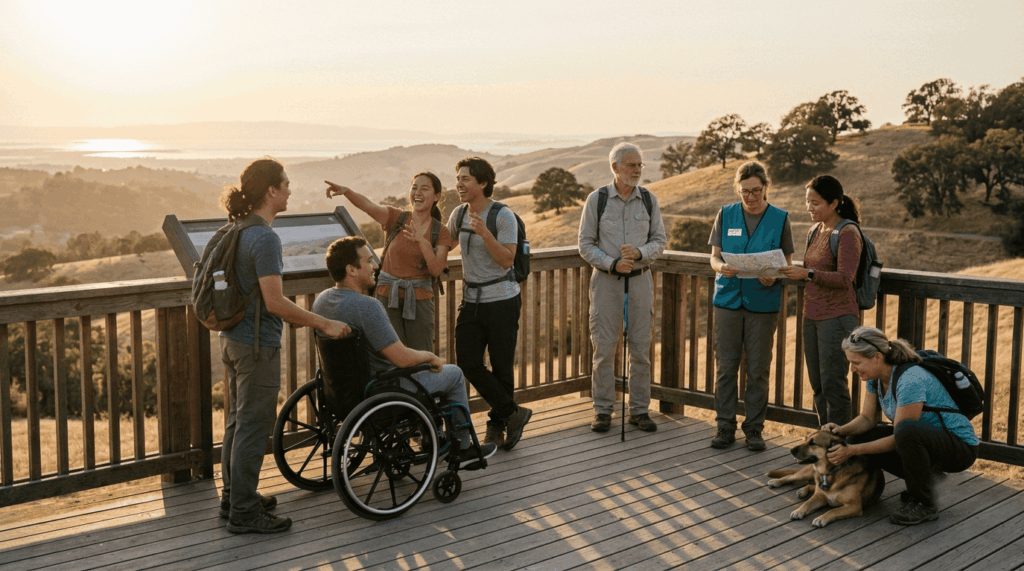
Gear closes the gap between “the trail is accessible” and “the trail actually works for me”, and the right equipment depends heavily on what kind of mobility support you need.
All-terrain wheelchairs and off-road mobility devices for California trails
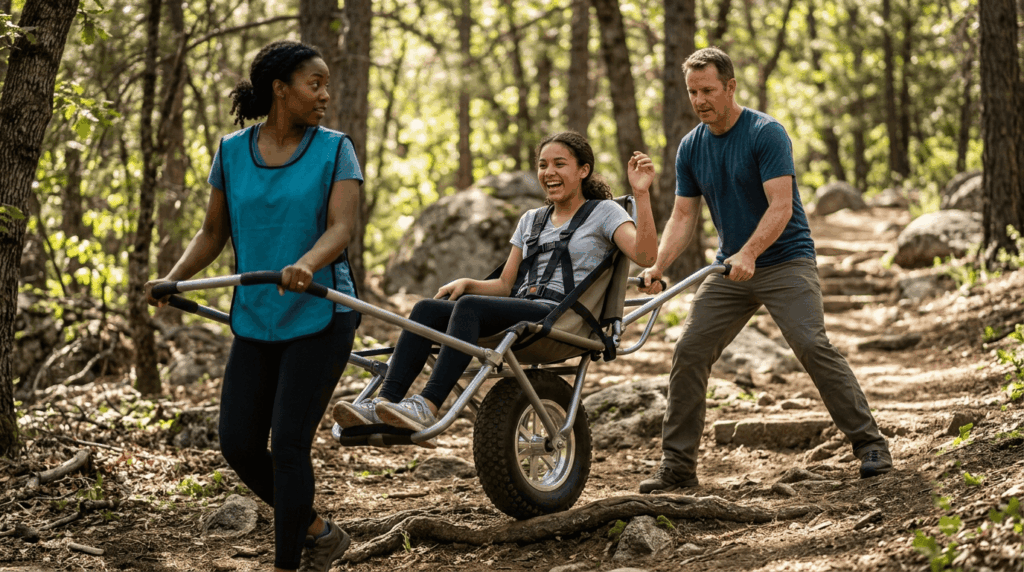
Devices like the TrailRider and the Joëlette are single-wheel, team-assisted vehicles, not solo-operated wheelchairs, designed to be guided by two or more trained volunteers over terrain a standard chair can’t handle. They’re most commonly available through adaptive sports programs and gear-lending libraries rather than retail purchase, since the cost and training involved make renting or borrowing far more practical for most hikers. Some California state beaches also loan free beach wheelchairs for sand access; call the specific park ahead of time to confirm availability, since not every beach stocks them.
Trekking poles, orthotics, and support gear for limited mobility hikers
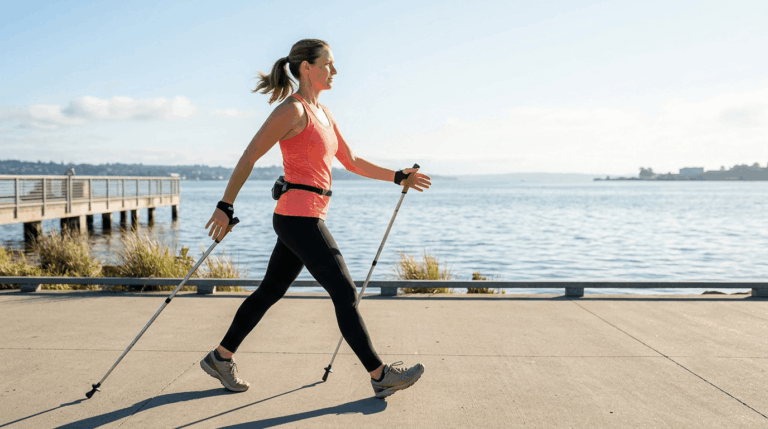
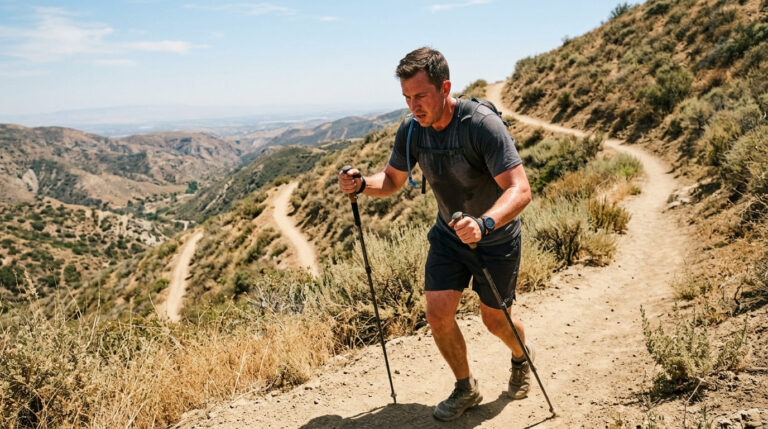
For hikers who don’t need a full mobility device, trekking poles (read more in our hiking safety guide), supportive orthotics, and stable footwear can make a meaningful difference on trails with minor grade or surface irregularities. The physical benefits of hiking apply across all fitness and mobility levels.
Planning your first accessible hike in California: a step-by-step guide
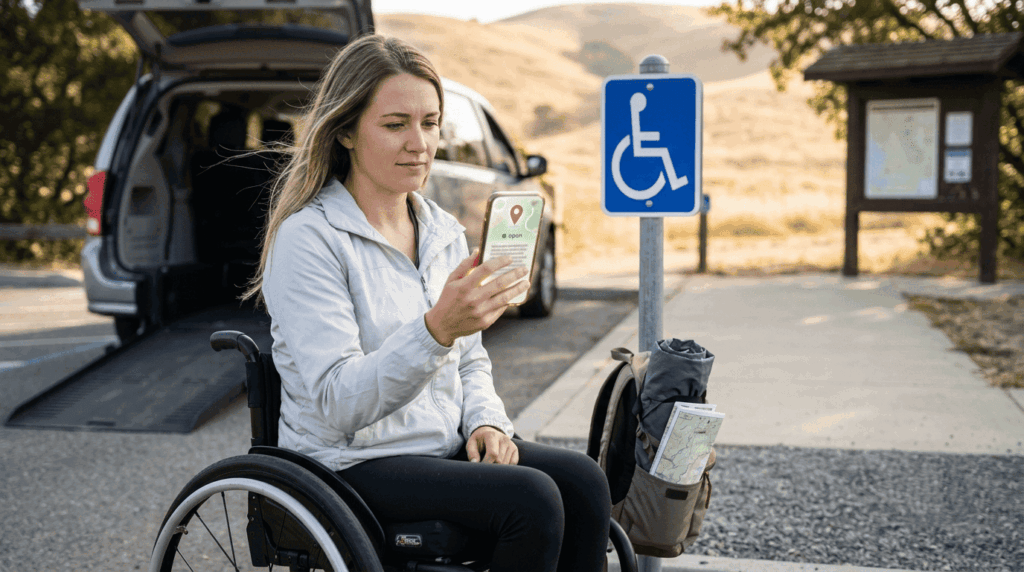
A little more upfront research pays off disproportionately here, since the cost of a wrong assumption is higher than just an annoying detour.
- Confirm grade, surface, and current conditions directly with the managing agency. An app or old blog post is a starting point, not a guarantee; trail surfaces erode, and grades get reassessed after storm damage.
- Check restroom and parking proximity to the trailhead, not just the trail itself. A perfectly accessible trail with inaccessible parking still isn’t a workable trip.
- Call ahead if you’re bringing an adaptive device. Some trails and boardwalks have width or weight limits that don’t show up in a general trail listing.
- Build in extra time. Accessible trails are often shorter in mileage, but rest intervals, turning spaces, and photo stops add up more than a standard difficulty rating accounts for.
- Have a backup trail in mind. Accessibility listings lag behind real-world trail conditions more than standard difficulty ratings do, so a fallback option saves the day if the first choice falls through.
Accessible hiking in California isn’t a consolation version of the real thing; some of the state’s most scenic terrain, from redwood groves to desert oases, is fully within reach once you know what “accessible” actually requires. Confirm the specifics before you go, and the trail itself does the rest.
Frequently asked questions about accessible hiking in California
How many wheelchair accessible hiking trails are in California?
There’s no single statewide count, since accessibility is tracked separately by the NPS, California State Parks, and county park systems. The most reliable approach is to check each agency’s own accessibility page rather than relying on a single master list.
How do I find accessible hiking trails near me in California?
Start with the managing agency’s own accessibility page. NPS parks and California State Parks both publish accessibility details per trail, then cross-check with a resource like BORP‘s Northern California accessibility database or AllTrails‘ accessible-trail filter.
Are trails in Yosemite wheelchair accessible?
Some are. Yosemite Valley has several paved, accessible routes near the valley floor, though most backcountry and high-country trails are not accessible by design due to terrain. Check the park’s specific accessibility guide before planning a valley-floor visit.
What is the best app for finding accessible hiking trails?
AllTrails lets you filter by “wheelchair friendly,” though listings aren’t always verified firsthand; cross-check with the managing agency’s own site before relying on it fully.
Can I take a baby stroller on California hiking trails?
Many stroller-friendly trails overlap with ADA-accessible ones, since both need a firm, graded surface, but not all accessible trails have narrow boardwalks or turnstiles that block strollers. Check trail width specifically if you’re stroller-bound rather than assuming “accessible” covers it.
Do accessible trails allow dogs in California?
It depends on the managing agency, not the trail’s accessibility status. The same leash and access rules that apply to standard trails apply here too, so check the specific park rather than assuming accessible automatically means dog-friendly.
Clear, concise and well written
Thank you so much! I really appreciate the kind words.