Trans-Catalina Trail & Catalina Island Backpacking Guide
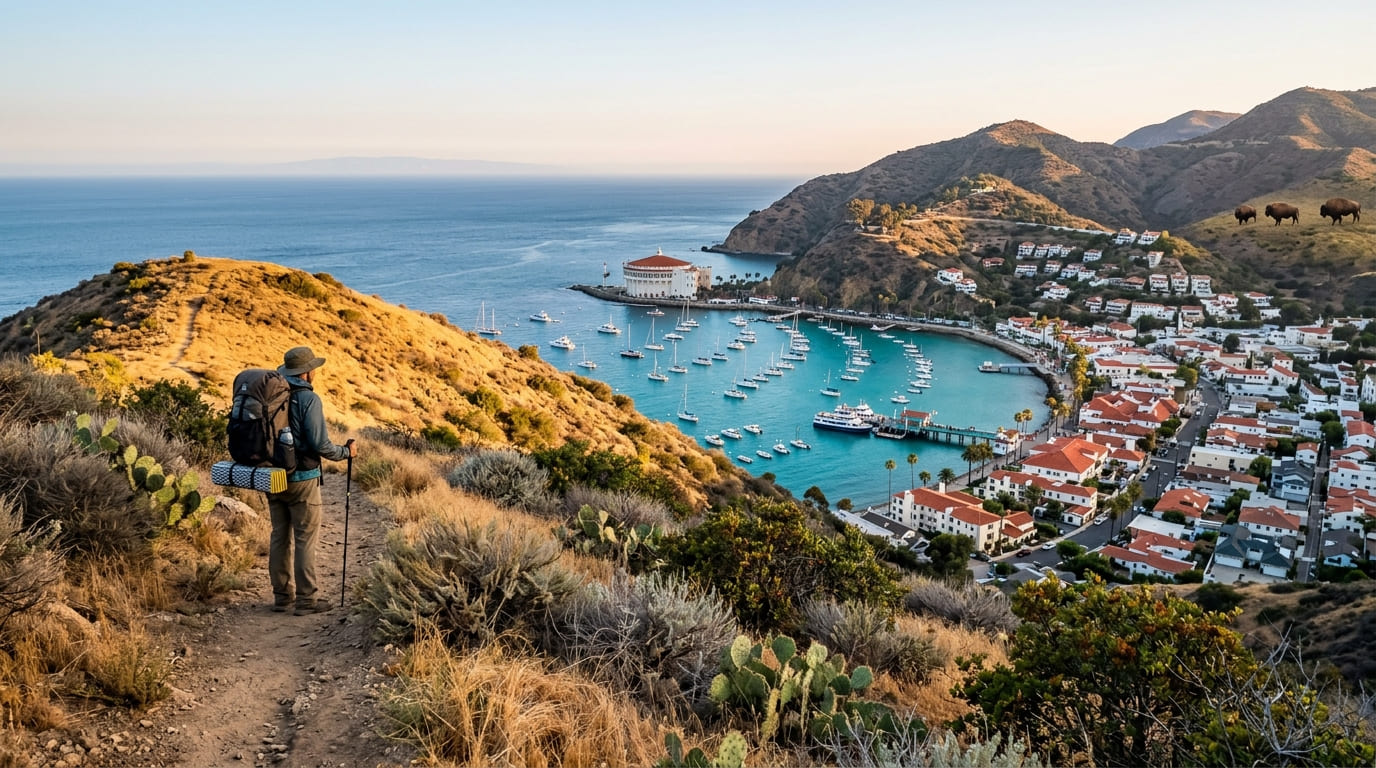
You step off the ferry in Avalon with a full pack, a town of golf carts and harbor cafés at your back, and the island’s brown, folded interior rising above the rooftops. In about an hour, you left the mainland behind. Over the next few days, the trans catalina trail will carry you across Santa Catalina Island, 38.5 miles from Avalon’s edge to the far west end, past a herd of bison, an airport with a diner, empty beaches, and a night sky with almost no city in it. The island is roughly 22 miles long and 8 miles wide at its broadest point, and the Catalina Island Conservancy protects 88 percent of it.
Disclosure: Please note that some of the links below are affiliate links and at no additional cost to you, I may earn a commission. Know that I only recommend hiking gear I personally stand behind; when you use my affiliate links, it helps me run this blog and keep all of this content free of charge for readers (like you).
This guide covers the Trans-Catalina Trail from the first permit form to the last ferry: the free hiking permit, how Trans Catalina Trail permits and campsite reservations differ, the trail map and mile markers, 3-, 4-, and 5-day itineraries, water, bison, and the logistics of Catalina backpacking. It is one of the signature trips in our Los Angeles County hiking trails guide, because Catalina sits in Los Angeles County.

Trans-Catalina Trail at a Glance
| Detail | What to know |
|---|---|
| Length | 38.5 miles, Avalon to Parsons Landing, looping back to Two Harbors |
| Typical time | 3 to 5 days |
| Elevation gain | More than 6,000 feet in total, according to the Conservancy |
| Land manager | Catalina Island Conservancy, a nonprofit land trust |
| Hiking permit | Mandatory and free |
| Camping | Designated campgrounds only; reservations required |
| Campgrounds | Hermit Gulch, Black Jack, Little Harbor, Two Harbors, Parsons Landing |
| Getting there | Ferry from San Pedro, Long Beach, Dana Point or Newport Beach |
| Best seasons | Spring and fall |
| Cell service | Limited or unavailable on much of the trail |
What the Trans Catalina Trail Covers
The route follows the island’s spine. From the Conservancy’s Trailhead Visitor Center in Avalon, it climbs out of town and along ridgelines to Haypress Reservoir, Black Jack Campground and the Airport in the Sky, then drops toward Little Harbor on the island’s windward side. From there it climbs again and descends to the isthmus at Two Harbors, then continues west to Parsons Landing at the island’s far end before looping back to Two Harbors.
Nothing here is Sierra-scale. But the island’s geography stacks its elevation into short, sharp climbs and drops, and shade is limited. The Conservancy warns that many hikers underestimate the total gain, and recommends packing as light as possible.
Trans Catalina Trail Permits and Reservations
Two things are required, and they are separate.
The free Catalina hiking permit. The Conservancy requires a hiking permit for everyone on the trail, and it costs nothing. The permit lets rangers contact you if wildfire, damaging wind, or heavy rain threatens the island. You complete it online through the Conservancy, and it is the same permit used for hiking the island’s other interior trails.
Campsite reservations. Camping is by reservation only, with fees charged per person, per night at each campsite. Pricing changes with the season, and Conservancy members get 50 percent off Conservancy campsites. The Conservancy’s Trans-Catalina Trail page links to the booking system, and for midweek stays at Hermit Gulch from November through March it asks you to call the Catalina Island Company at 310-510-4205.
Book early. The Conservancy recommends booking as early as possible, ideally in January, because campsites fill fast and the nights have to line up: Black Jack, then Little Harbor, then Two Harbors, then Parsons Landing. If your dates are full, try hiking the trail in reverse. Our guide to California hiking trail permits explains how Catalina’s system differs from federal land.
Getting to Catalina
You can’t start the trail without a boat. Catalina Express runs year-round ferries from San Pedro, Long Beach, and Dana Point, with up to 30 departures a day, and the Catalina Flyer sails from Newport Beach. The Conservancy prefers that Trans-Catalina hikers use San Pedro, because the ferry from Two Harbors returns only to San Pedro. Another boat, the Cyclone, runs from Two Harbors to Avalon between May and October, and needs a reservation. If you arrive from Long Beach, plan a taxi or rideshare back to San Pedro afterward, because ground transport from Two Harbors to Avalon is expensive.
Mind the baggage rules. Each passenger gets two pieces of luggage up to 50 pounds each, plus a carry-on, and campers can bring a sleeping bag as an extra piece. Fuel is the trap: the Conservancy says camp fuel such as propane, butane, and white gas isn’t allowed on the ferry, so buy it in Avalon or Two Harbors. Read the Catalina Express baggage guidelines and their camper travel tips before you pack.
For more on boat-access trips along this coast, our guide to getting to Channel Islands National Park covers a similar ferry-and-camp routine, and our guide to hiking trails in Channel Islands National Park covers the islands to the north.
Trans Catalina Trail Map and Navigation
The trail is signed with mile markers, and the Conservancy publishes a trail map (a PDF linked from its Trans-Catalina page) along with a mile-by-mile list of what’s at each stop. Take a printed copy. Cell service is limited or unavailable across much of the trail, and the Conservancy suggests carrying a satellite transmitter and hiking with a companion. Hiking after dark isn’t allowed.
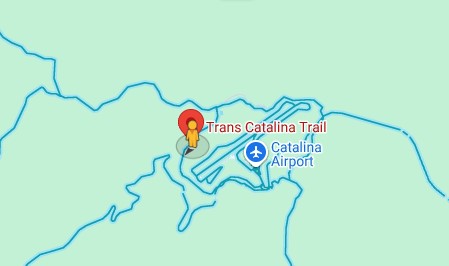
The mile markers tell you where the resources are:
- Mile 3: a sun shelter and bathroom at the top of Hermit Gulch Trail.
- Mile 5.6: Haypress Reservoir, the first water after Avalon, with bathrooms and a picnic area.
- Mile 10.7: Black Jack Camp, with water, bathrooms, and an outdoor shower.
- Mile 12.75: The Airport in the Sky, with a restaurant (open daily, 8:30 a.m. to 4 p.m.), water, and bathrooms.
- Mile 24.2: Two Harbors, with coin-operated showers and bathrooms.
- Mile 30.8: Parsons Landing, with no running water and only a pit toilet.
If you also want a phone app, our guide to free versus paid hiking trail maps helps you choose between the Conservancy’s PDF and paid navigation apps.
Trans Catalina Trail Itineraries
The Conservancy lays out three schedules. Its mileages are rounded, so expect small differences from GPS tracks.
| Schedule | Daily mileage | Difficulty |
|---|---|---|
| 3 days, 2 nights | 11 / 13 / 14.3 | Very challenging |
| 4 days, 3 nights | 11 / 8 / 11.5 / 6.5 | Moderately challenging |
| 5 days, 4 nights | 11 / 8 / 5 / 6.5 / 6.5 | Moderately challenging, with leisure time |
The three-day plan is only for experienced, fit hikers. Most people choose four or five days.
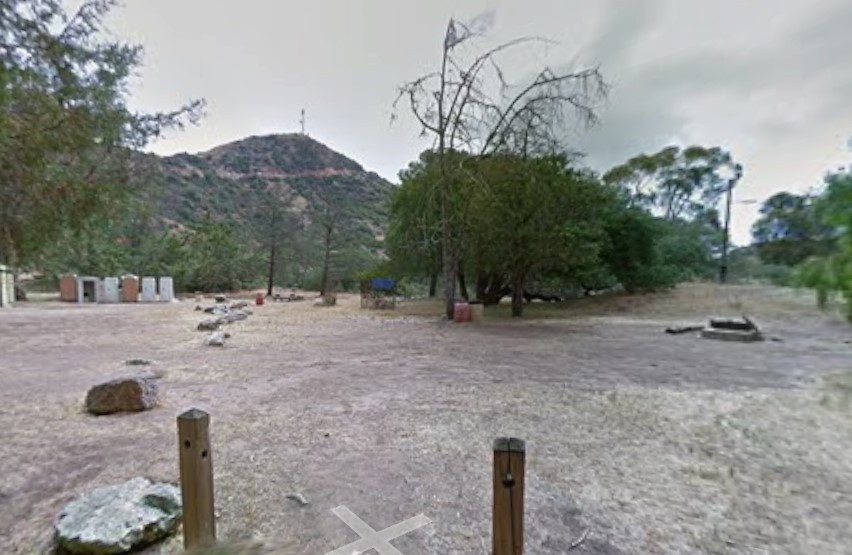
Day 1: Avalon to Black Jack (about 11 miles). The longest early day. You climb from the Trailhead Visitor Center to the ridge, stop at Haypress Reservoir for water, and arrive at Black Jack in the island’s interior. Nights here can drop to about 40°F, and campfires aren’t allowed.
Day 2: Black Jack to Little Harbor (about 8 miles). The route passes a soapstone quarry and the Airport in the Sky, where a hot breakfast or lunch is the best reward on the trail, then descends to Little Harbor on the island’s windward side. Fires are allowed here.
Day 3 (five-day plan): Little Harbor to Two Harbors (about 5 miles). A short day to a camp with showers and one of only two places on the trail where you can buy a meal.
Day 4: Two Harbors to Parsons Landing (about 6.5 miles). Fill every bottle before you leave. There is no water station between Two Harbors and Parsons Landing, and the camp’s water comes from a locker.
Day 5: Parsons Landing back to Two Harbors (about 6.5 miles). Then the ferry home.
Campgrounds on the Trail
| Campground | Water | Campfires | Notes |
|---|---|---|---|
| Hermit Gulch | Yes | Not listed | At the Avalon end; midweek winter bookings by phone |
| Black Jack | Yes | Not allowed | Outdoor shower; coldest nights |
| Little Harbor | Yes | Allowed | Bathrooms and water station |
| Two Harbors | Yes | Allowed | Coin showers, bathrooms, meals |
| Parsons Landing | No running water | Allowed | Locker with water and firewood; pit toilet |
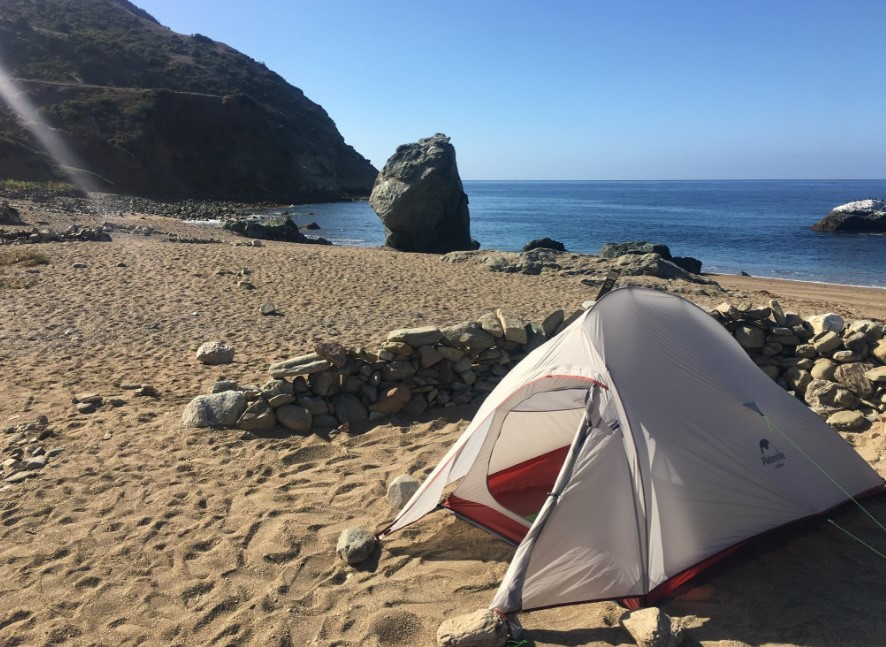
At Parsons Landing, you buy a locker key that opens a locker holding two gallons of water and a bundle of firewood, so book water when you book the campsite. Overnight stays are limited to these designated campgrounds. Foxes and ravens will raid unattended food, so use animal-proof storage.
Water, Food and Resupply
Plan to carry up to three liters. The Conservancy suggests a two-liter hydration system plus a one-liter bottle, and our guide to water and electrolytes for California hikers covers how much to drink in heat. For food, pack lightweight camp meals and high-energy snacks. The only meals you can buy on the trail are in Two Harbors and at the airport. Some hikers stash food in a Two Harbors locker for the next night to carry less.
Best Time for Catalina Backpacking
The trail is open year-round, and the seasons differ. Spring and fall are the most temperate, though spring can bring rain. Summer gives you more daylight, but the heat raises the risk of dehydration and sunburn, so start early. Winter brings a higher chance of rain, muddy trails, and closures, with nighttime lows near 40°F. Daytime highs can reach the 70s, so pack layers.
Bison, Foxes and Other Neighbors
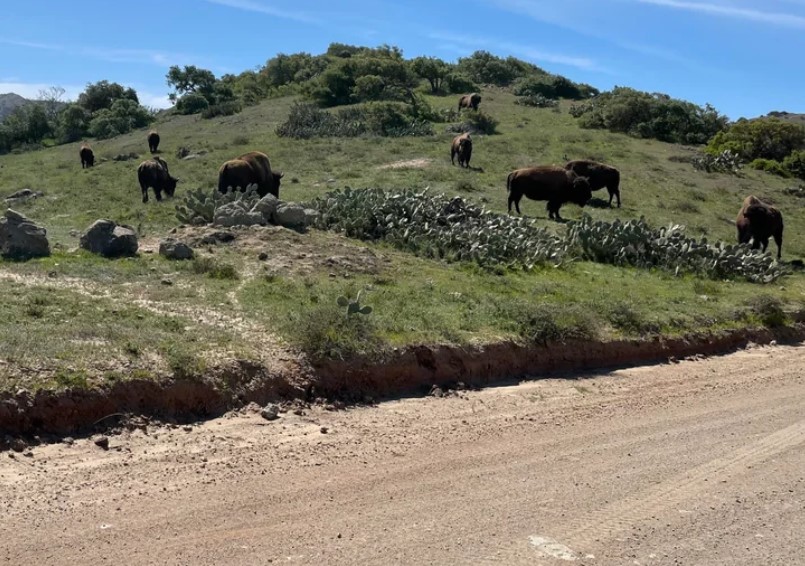
Catalina’s wildlife is part of the draw and part of the risk. Bison arrived in 1924, when 14 animals were brought over for film shoots, and the Conservancy manages the herd today. They are wild animals. The Conservancy says bison can accelerate to 35 mph and jump more than six feet, and asks you to stay at least 125 feet away. Never approach, touch or feed them, and keep an escape route in mind.
The island fox lives nowhere else on Earth, and bald eagles have returned. Rattlesnakes are present year-round and more common from April to October, poison oak grows in canyons and creek beds, and ticks are present. Stay on established trails, wear long sleeves in brushy areas, and read our guide to wildlife hazards on California trails.
What to Pack
- Sun protection. A hat, sunscreen, and covering clothes. Shade is rare.
- Water capacity of 3 liters.
- A warm layer. Nights can be cold, especially at Black Jack.
- Camp meals and snacks. Fuel is bought on the island.
- Long pants and sleeves for poison oak and ticks.
- A satellite messenger, if you want a safety margin.
Gear Haul and Guided Treks
If carrying a full pack sounds daunting, the Conservancy lists Catalina Back Country as a drop-off service for hikers who’d rather not carry their backpacks. The Conservancy also runs the Trans-Catalina Trek, a five-day guided hike that includes gear transportation, campsite reservations, and prepared meals.
More Backpacking and Weekend Trips
- New to overnight trips? Start with our beginner’s guide to backpacking trails in California.
- Curious how this compares with other long routes? See our guide to thru-hiking in California.
- Want more multi-night routes? Browse the best multi-day backpacking loops in California.
- Only have a weekend? Our guide to weekend hiking getaways from Los Angeles has shorter options. On Catalina, even a day hike needs the free hiking permit.
The Honest Bottom Line
The trans catalina trail isn’t a wilderness expedition in the Sierra sense. You are never far from a road, a town, or a ferry. But it asks for planning most trails don’t: a permit, four coordinated campsite reservations, a boat, fuel bought on the island, and water carried across dry stretches. Do that homework in January, go in spring or fall, give the bison their 125 feet, and you’ll get something rare in Southern California: a multi-day walk across an island, with a beach campfire at the end.
Trans Catalina Trail FAQ
How long is the Trans Catalina Trail?
38.5 miles, according to the Conservancy.
How many days does it take?
Most people take four or five days. Three days is very challenging.
Do I need a permit for the Trans Catalina Trail?
Yes. Everyone needs the free hiking permit, and campsite reservations are required for overnight stays.
Is the Catalina hiking permit free?
Yes. The Conservancy’s hiking permit costs nothing.
When should I book campsites?
As early as possible. The Conservancy suggests January.
Can I camp anywhere along the trail?
No. Camping is limited to the five designated campgrounds.
Is there water on the trail?
Yes, at several points, but none between Two Harbors and Parsons Landing, and none running at Parsons Landing.
Are there bison on the trail?
Yes. Stay at least 125 feet away.
What’s the best time of year?
Spring and fall.