Best Hydration Packs for Hot-Weather California Hikes
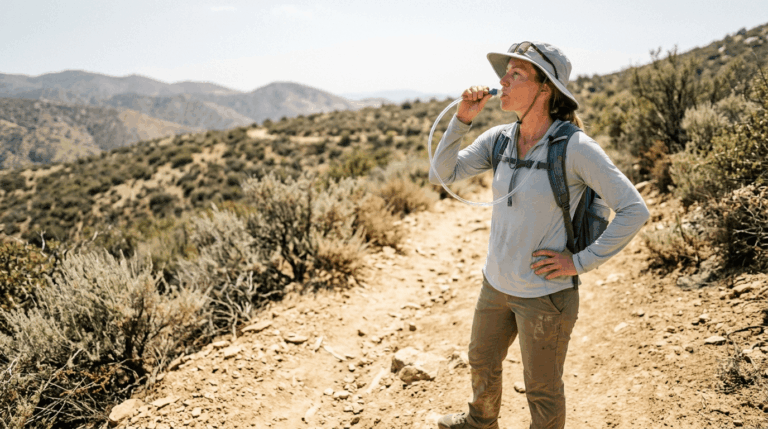
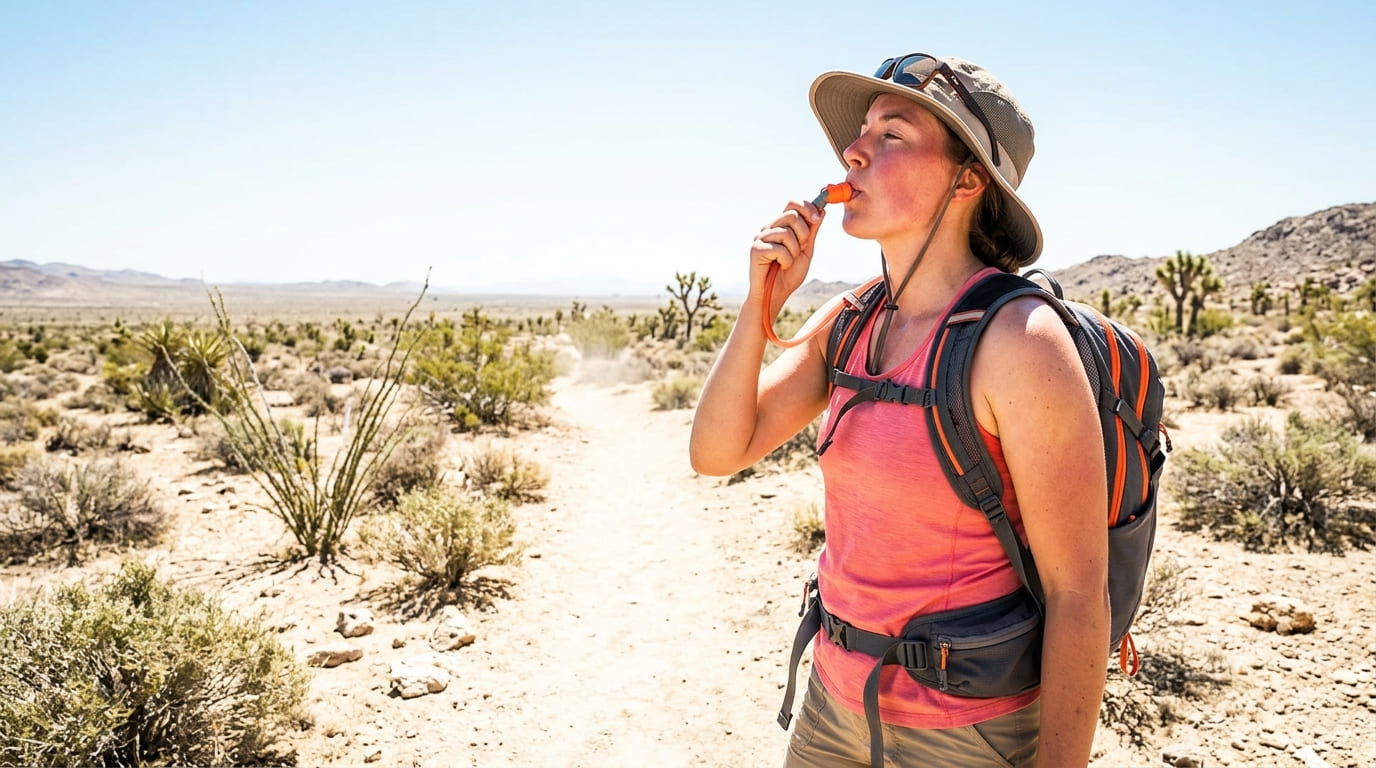
A water pack for hiking isn’t optional gear once temperatures climb into California’s summer desert range; it’s the difference between a comfortable day and an emergency. I’ve hiked shadeless miles enough in Joshua Tree and the Anza-Borrego backcountry to know that reaching for a bottle in a side pocket every twenty minutes isn’t realistic once you’re moving; a hands-free reservoir with a bite valve is what gets you drinking enough, often enough, without breaking stride.
Disclosure: Please note that some of the links below are affiliate links and at no additional cost to you, I may earn a commission. Know that I only recommend hiking gear I personally stand behind; when you use my affiliate links, it helps me run this blog and keep all of this content free of charge for readers (like you).
This isn’t a one-size-fits-all category, though. How much water you need to carry, and how you want to carry it, changes based on trip length, pace, and how much gear you’re bringing along beyond water itself. If you are putting together a practical package for a desert explorer, be sure to browse our useful presents for hikers guide.
A four-hour coastal hike and an all-day desert push through terrain with no shade or water source call for different setups, not just different sizes of the same pack. Here are four options that each solve a different version of that problem.
Key takeaways:
- Best for full-day desert commitments: CamelBak Fourteener, a large reservoir option for trails where 2–3 liters isn’t enough.
- Best minimalist option: Salomon ADV Skin 5, a close-fitting vest for fast-paced hikes where bounce and bulk are the enemy.
- Most affordable full pack: Platypus Duthie, a capable, no-frills hydration pack that undercuts the other two by a modest margin.
- Best add-on: CamelBak UnBottle Insulated 3L Reservoir, adds insulated capacity to a pack you already own, rather than replacing it.
- The real baseline: in hot, dry conditions, plan on roughly 1 liter of water per hour of hiking; the pack matters less than carrying enough.
| Pack | Best for | Price | Reservoir | Capacity |
|---|---|---|---|---|
| CamelBak Fourteener | Full-day desert hikes | $154 | 3L (100 oz) | 18–26L gear |
| Salomon ADV Skin 4 | Fast, minimal-bounce hikes | $140–145 | Sold separately | 4L |
| Platypus Duthie | Budget-conscious full pack | $139.95–149.95 | 3L (100 oz) | 10–15L |
| CamelBak UnBottle Insulated 3L | Add-on for any pack | $59.95 | 3L, insulated | N/A (external) |
CamelBak Fourteener: best high-capacity hydration pack for desert hikes
Key features
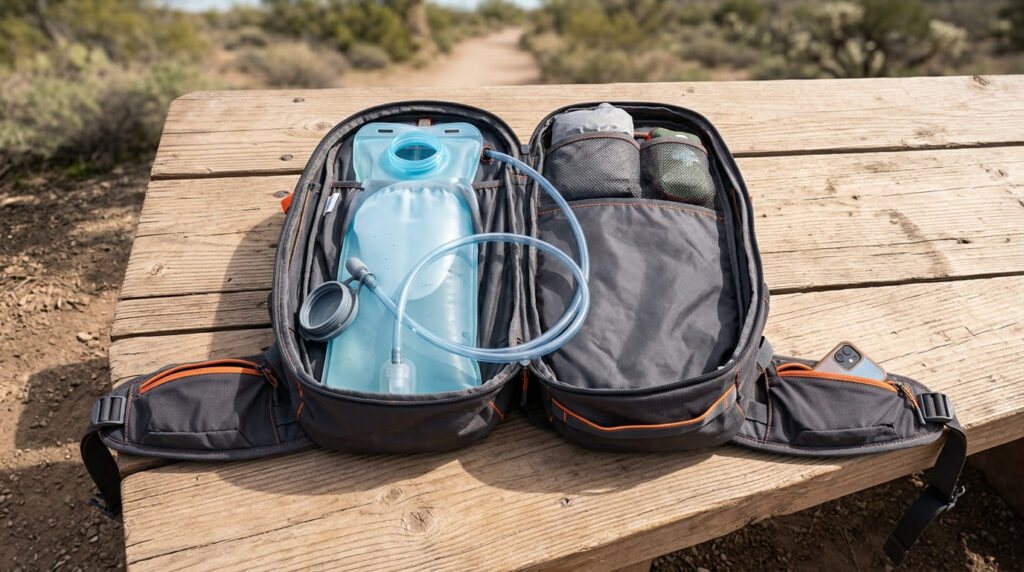
The Fourteener is built around a full 3-liter (100 oz) Crux reservoir, noticeably more water than the 1.5–2L reservoirs standard in most hydration packs, paired with a large gear compartment for extra layers, food, and a first aid kit.
The Air Support™ back panel adds real ventilation with a full inch of airspace between the pads and the internal frame, and the dual-wing hip belt puts phone-sized cargo pockets within easy reach without breaking stride.
Clamshell main compartments make packing and finding gear mid-hike far easier than digging through a single top-loading pocket, which matters when you’re stopping briefly in direct sun rather than lingering to reorganize. This is a full hiking backpack that happens to prioritize hydration, not a stripped-down water carrier.
Best for
Full-day desert commitments where a single 2–3L reservoir isn’t enough, long, shadeless treks through our Joshua Tree hiking guide or an all-day push through our Palm Springs trail guide, including routes like Cactus to Clouds where you’re gaining thousands of feet with no water source along the way.
For a shorter coastal or forest trail, this is more capacity than you need; save it for the trips where running dry is a real risk.
Salomon ADV Skin 4: best minimalist hydration vest
Key features
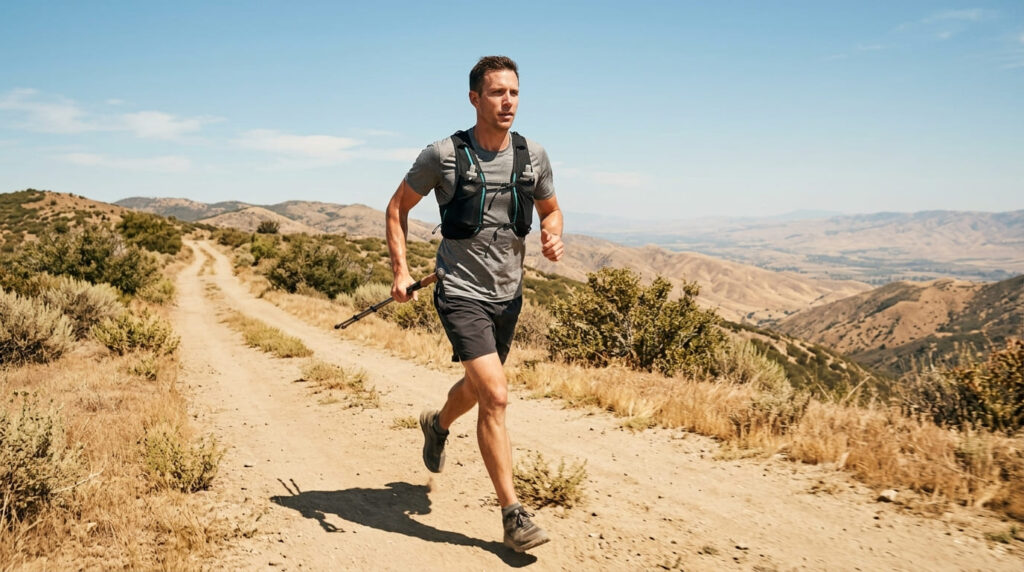
The ADV Skin 4 trades a backpack’s structure for a close-fitting, running-style vest that essentially disappears once it’s dialed in; Salomon’s SensiFit construction keeps it bounce-free even at a fast pace.
It comes with two 500ml soft flasks rather than a bladder by default, though it’s reservoir-compatible if you prefer a hands-free setup. At 4 liters of capacity, there’s room for a light layer, snacks, and a phone, but this isn’t the pack for carrying a full day’s desert water supply.
Best for
Fast-paced day hikes where hikers move quickly and want minimal gear bounce; think a quick out-and-back through our Los Angeles guide covering Runyon Canyon and Griffith Park or a brisk climb covered in our San Diego guide covering every skill level– the kind of trail where a bouncing backpack becomes annoying at pace.
This is the pick for hikers who move more like trail runners than backpackers, or anyone who’s tried a full-size daypack on a fast hike and found themselves constantly cinching straps to stop it from shifting around.
Platypus Duthie: most affordable full hydration pack
Key features
The Duthie ships with a full 3-liter Big Zip EVO reservoir, Platypus’s own premium bladder design, with a wide-mouth opening and quick-disconnect hose, inside a FloatAir back panel that uses a tensioned mesh-over-wire-frame design for ventilation.
This pack originated as a mountain-biking design: features like the full-face helmet carry system and dedicated pump sleeves are MTB-specific and go unused on foot, but the core pack, hydration system, and back panel cross over to hiking just fine.
Best for
Occasional hikers working through our beginner trails guide who want reliable hydration without paying premium prices for features they may not need yet. It’s not a dramatic budget pick; expect to pay within about $15 of the Salomon or CamelBak options here, but it’s a capable pack at the lowest price point of the three full packs in this comparison.
CamelBak UnBottle Insulated 3L Reservoir: best add-on for keeping water cool
Key features
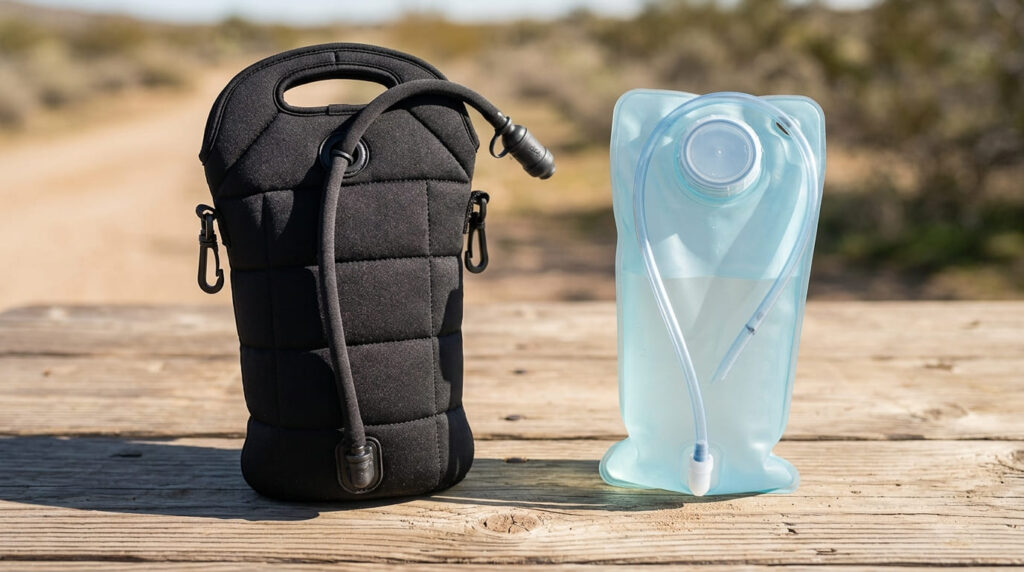
Rather than replacing your existing daypack, the UnBottle is an insulated Crux reservoir sleeve with its own carry handle and external attachment points, letting you add 3 liters of insulated water capacity to almost any pack, or lash it externally if your current pack doesn’t have room.
The insulation slows how fast water warms up on a hot trail- not ice-cold by afternoon, but a meaningful step up from an uninsulated bladder baking against your back in direct sun.
Best for
Any of our slot canyon and desert trail guide destinations: Anza-Borrego, Death Valley, Joshua Tree, where warm drinking water becomes a comfort and, by midday, a safety issue. If you already own a daypack you like and just need more insulated water capacity rather than a whole new pack, this is the more sensible $60 upgrade over a $150 replacement.
Frequently asked questions about the best hydration packs for hot-weather California hikes
How much water should you carry on a hot hike?
As a baseline, plan on roughly 1 liter (about 1 quart) of water per hour of hiking in hot, dry conditions. Mojave National Preserve’s own safety guidance recommends hikers carry up to two gallons per person, per day, in extreme desert heat. Your actual need depends on pace, body size, and how exposed the trail is, so treat this as a floor, not a ceiling, and always carry more than you think you’ll need. Pair water with salty snacks or an electrolyte supplement on longer hot-weather hikes; plain water alone won’t replace the sodium you’re losing to sweat, and that gap is part of what makes heat illness sneak up on otherwise well-hydrated hikers.
Are hydration bladders hard to clean?
Not with modern wide-mouth designs like the ones covered here, CamelBak’s and Platypus’s current reservoirs open fully for hand-washing and air-drying, which is a real improvement over older narrow-neck designs that trapped mold. Rinse with warm water after every trip, let it dry completely with the reservoir open, and clean more thoroughly with a diluted bleach or specialized cleaning tablet solution every few weeks of regular use. Storing a reservoir even slightly damp between trips is the single most common cause of the mildew smell that eventually forces people to replace one early.
Do hydration packs freeze in cold weather?
Yes, the drink tube in particular is prone to freezing well before the reservoir itself does, since it’s thin and often runs along the outside of your shoulder strap. Insulated tube covers help meaningfully, and blowing air back into the tube after each sip clears residual water that would otherwise freeze in the line. This is much more of a Sierra winter-hiking concern than a desert one.
Is a water bottle better than a hydration bladder?
Neither is objectively better; bottles are easier to gauge remaining water at a glance, simpler to clean, and don’t require dedicated pack space, while bladders make it far easier to drink consistently while moving, which matters most in the heat conditions this guide focuses on. Plenty of experienced desert hikers carry both: a bladder for steady sipping and a bottle as a backup or for electrolyte mixing. If you’ve ever caught yourself skipping water because reaching for a bottle felt like too much friction mid-stride, that’s usually the tell that a bladder is the better fit for how you actually hike.
How often should you replace a hydration reservoir?
Most quality reservoirs last 1–3 years of regular use before the bite valve, tubing, or bladder material starts to degrade, though this varies widely based on how often you clean it and whether you store it fully dried between trips. Cloudy material, a persistent plastic taste that cleaning doesn’t fix, or any cracking at the seams are all signs it’s time to replace rather than repair.
Can you add electrolytes to a hydration bladder?
Yes, though it’s worth checking your specific reservoir’s care instructions first, since some manufacturers recommend against putting sports drinks or electrolyte mixes directly in the bladder because sugary residue is harder to clean and can encourage bacterial growth over time. A safer middle ground many hikers use: plain water in the bladder, electrolyte tablets or powder in a separate bottle, so how much water hiking requires doesn’t get complicated by cleaning maintenance on top of it.