Best Trekking Poles for California’s Steep, Rocky Trails
Trekking poles are one of the more polarizing pieces of hiking gear; some hikers wouldn’t touch a steep trail without them, others see them as unnecessary weight for anything short of a mountaineering trip. Both camps have a point, and finding the Best Hiking Poles or deciding whether to use them at all depends entirely on the terrain you’re hiking, not a blanket rule either way.
Disclosure: Please note that some of the links below are affiliate links and at no additional cost to you, I may earn a commission. Know that I only recommend hiking gear I personally stand behind; when you use my affiliate links, it helps me run this blog and keep all of this content free of charge for readers (like you).
I’ve spent enough miles on California’s granite descents to have a firm opinion here, so this guide covers both sides: when poles earn their place in your pack, and which three pole options are actually worth buying if you decide you want them.
The gap between “worth it” and “waste of money” for trekking poles comes down almost entirely to elevation profile; the same pair of poles that feels like dead weight on a flat coastal trail can be the single best decision you made on a steep granite descent three weeks later.
Key takeaways:
- Poles help most on: steep, loose-granite descents, think Half Dome’s cables approach or the Mist Trail, where the knee-saving benefit is real and measurable.
- Poles are optional on: flat, well-graded trails where they add more hassle than benefit.
- Best overall: Black Diamond Trail Ergo Cork, durable, comfortable, and the most recognized name in trekking poles for good reason.
- Best budget pick: Cascade Mountain Tech, a fraction of the price of premium poles, and good enough that many long-distance hikers use them by choice, not just necessity.
- Best for long-distance and multi-day trips: Black Diamond Distance Carbon FLZ, ultralight without giving up length adjustability.
| Poles | Best for | Price | Material | Weight (pair) |
|---|---|---|---|---|
| Black Diamond Trail Ergo Cork | All-around durability | $140 | 7075 aluminum | ~1 lb 2 oz |
| Cascade Mountain Tech | Budget, first-time buyers | $25–50 | Aluminum or carbon fiber | ~15 oz–1.5 lb |
| Black Diamond Distance Carbon FLZ | Long-distance, multi-day | $239.95 | 100% carbon fiber | ~12 oz |
Do you even need trekking poles?
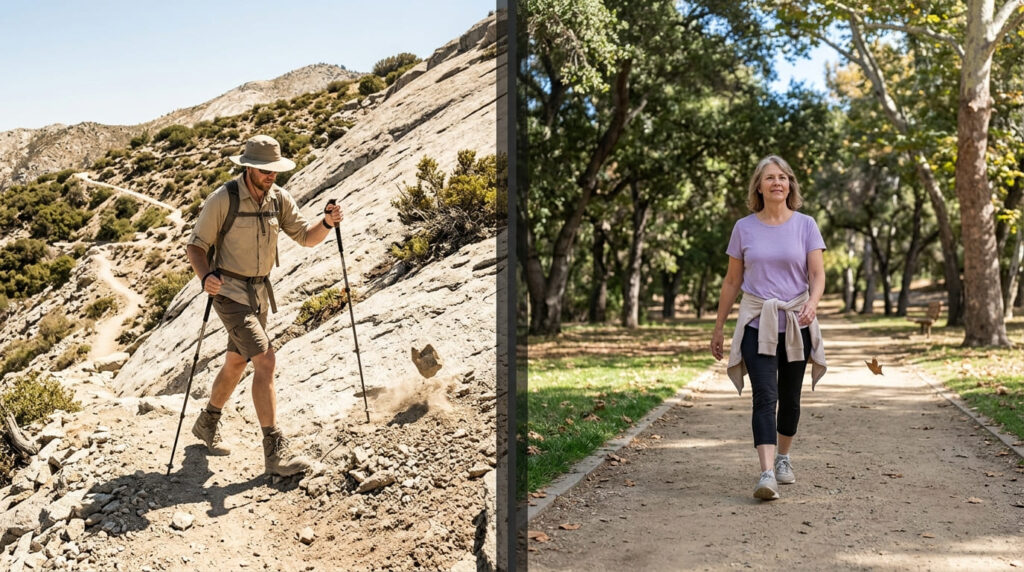
When poles help most: steep descents and rocky granite terrain
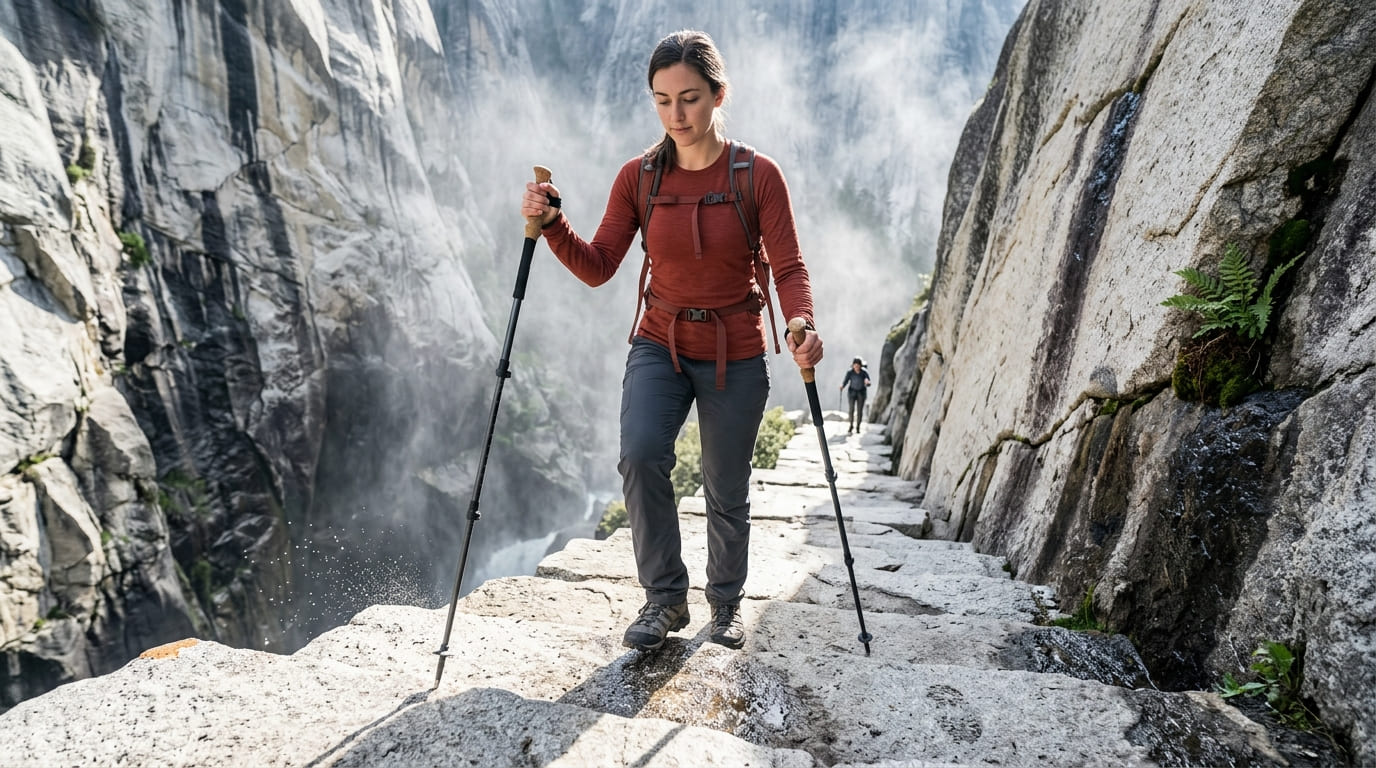
This is where trekking poles earn their reputation. Biomechanics research on downhill walking consistently shows poles reduce knee joint loading; figures range from 12% to as much as 25% depending on the study and the decline angle, with the effect most pronounced on steep, sustained descents.
That’s exactly the profile of trails like Half Dome’s cables approach, the Mist Trail’s granite steps, or the long, sustained descent off the trails around Mount Whitney, all covered in our guide on how to train for a hike like Half Dome or Mount Whitney.
Beyond the knee benefit, poles improve stability on loose granite scree, where a single slip can mean a hard fall rather than a minor stumble.
When you can skip them
Flat, well-graded trails are a different story. On a maintained loop with minimal elevation change, a flat park path, or an easy family loop like the ones in our Marin family-friendly trail guide, poles mostly add weight to your hands and one more thing to manage- swinging, stowing, adjusting- without a meaningful stability or joint-load benefit. If you’re mostly hiking easier terrain, don’t feel obligated to buy poles just because they show up on every gear list.
Save the investment for the trips where the terrain actually calls for them, and don’t let the sight of other hikers carrying poles on a flat trail talk you into thinking you’re missing something essential. If you are looking for more gear recommendations or present ideas for trail lovers, check out our holiday and birthday gifts for hikers guide.
Black Diamond Trail Ergo Cork: best overall trekking poles
Key features
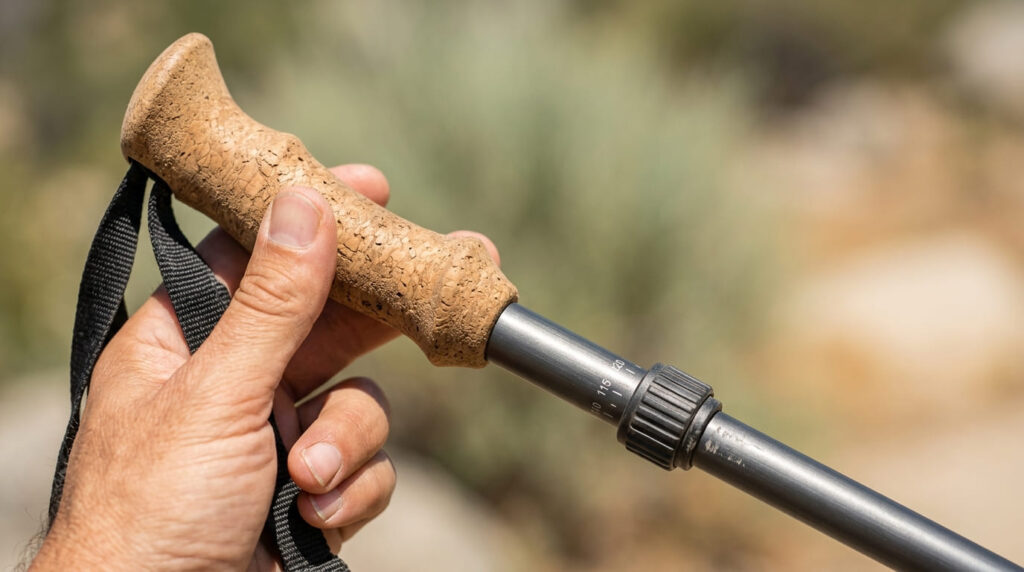
Black Diamond is the most consistently recognized name in trekking poles, and the Trail Ergo Cork explains why. The natural cork grip sits at a 15-degree forward angle, which places the pole tip behind your foot at the optimal point in your stride for power transfer, a small design detail that adds up over a long day.
Dual FlickLock adjusters are Black Diamond’s patented locking mechanism, and they hold up reliably even after years of use, with a wide usable length range (74–140 cm) that fits nearly any hiker. Interchangeable carbide tech tips handle most trail surfaces, with rubber tips available separately for pavement or bare rock.
Best for
Demanding, elevation-heavy trails like the approach to Cactus to Clouds in our Palm Springs trail guide, or a climb through our high-elevation Fresno County trail guide, where reliable, durable poles matter more than shaving every possible ounce.
These aren’t the lightest poles on this list, but their sturdy aluminum build is designed to take repeated abuse on rocky terrain without complaint, and unlike some ultralight poles, you don’t need to babysit them on loose scree or worry about a hard sideways plant snapping the shaft.
Cascade Mountain Tech: best budget trekking poles
Key features
Cascade Mountain Tech sells both an aluminum version (around $25–30) and a carbon fiber version (around $45–50), and the surprising part is how competent both actually are. Quick lever-lock adjustment, tungsten carbide tips, and cork or foam grip options cover the same basic feature set as premium poles at roughly a fifth of the price.
Long-term reviewers, including thru-hikers who’ve put hundreds of miles on these poles across the Appalachian and Pacific Crest Trails, consistently report they hold up far better than the price suggests, with replacement parts available if something does wear out.
The aluminum version is the more durable choice if you’re hard on gear or plan to lean heavily on the poles; the carbon version shaves real weight but, like most budget carbon poles, is more prone to snapping under sideways stress than a name-brand carbon pole.
Best for
Occasional or beginner hikers working through our Yosemite hiking guide or any trail where you’re not yet sure poles will become a permanent part of your kit. This is a reasonable way to try trekking poles without a premium investment, not just a compromise you’ll regret and replace in a season, making them a great starting point if you are browsing male hiker gift ideas.
Black Diamond Distance Carbon FLZ: best ultralight poles for long-distance hikes
Key features
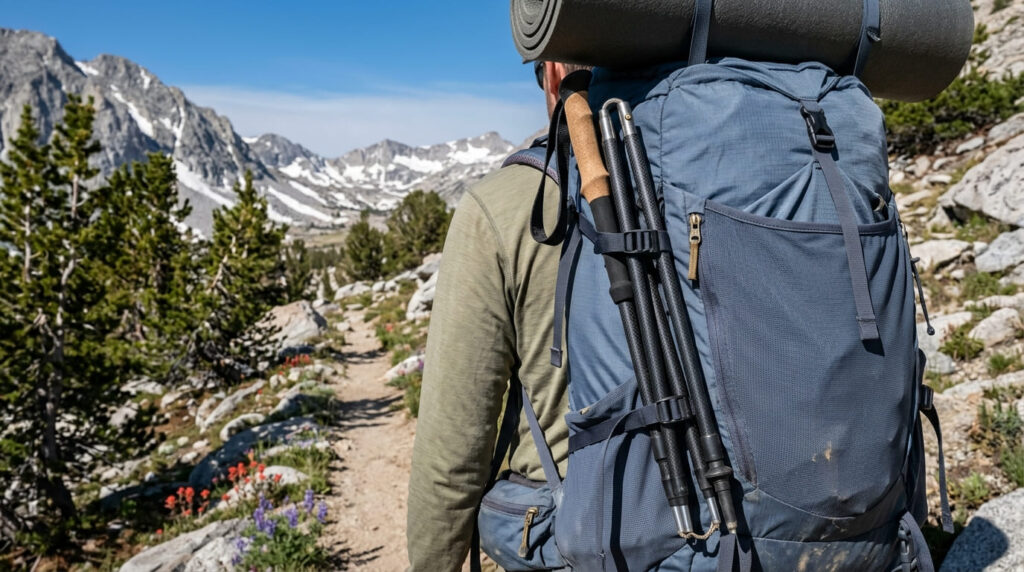
The Distance Carbon FLZ uses a 100% carbon fiber shaft in a foldable Z-pole design, weighing roughly 12 ounces per pair, a meaningful drop from the Trail Ergo Cork’s aluminum build.
Unlike Black Diamond’s even lighter fixed-length Distance Carbon Z, the FLZ keeps FlickLock Pro adjustability, so you can fine-tune the length for a steep climb versus a descent rather than being locked into one setting. The trade-off for that carbon build is fragility under sideways stress; these aren’t the poles to lean on while scrambling over boulders.
Best for
Multi-day backpacking routes where cumulative weight savings matter more than on a single-day hike, the kind of trips covered in our guide to the best multi-day backpacking loops in California. Shaving a few ounces off gear you’re swinging thousands of times a day adds up over a multi-day trek in a way it simply doesn’t on a four-hour hike, which is exactly the calculation that makes this pole worth the premium for the right trip.
Frequently asked questions about the best trekking poles for California’s steep and rocky trails
Do you need hiking poles for a moderate hiking trail?
Not necessarily. Moderate trails with manageable grades and stable footing don’t demand poles the way a steep granite descent does. They can still help with rhythm and endurance on longer moderate hikes, but they’re a comfort upgrade here rather than a necessity.
How do you adjust trekking pole height correctly?
For flat terrain, your elbow should form roughly a 90-degree angle when the pole tip touches the ground. Shorten poles by a few centimeters for uphill sections so you’re not overreaching, and lengthen them slightly for descents to maintain that same elbow angle and get the most support from each plant. Most hikers set their poles once at the trailhead and never touch them again, but adjusting for a sustained climb or descent, rather than leaving them at one length for the whole hike, is where you actually get the biomechanical benefit poles are known for.
Do trekking poles help with knee pain?
Yes, particularly on descents, this is one of the better-supported claims in hiking gear, not just marketing. Multiple biomechanics studies measure meaningful reductions in knee joint loading with pole use on downhill terrain, which lines up with the broader physical benefits of hiking when the activity doesn’t beat up your joints in the process. The effect is most noticeable on long, sustained descents rather than short downhill stretches, which is exactly why granite trails like the Mist Trail are where hikers report the biggest difference.
Should you use one pole or two?
Two poles for the vast majority of hiking situations; they provide balanced support and let you maintain a natural, symmetrical stride. A single pole (or a wooden hiking staff) can work for light, casual use, but you lose most of the stability and knee-load benefits that come from having support on both sides.
Are trekking poles allowed in national parks?
Generally yes, with no permit or restriction for standard trail use. A small number of specific, highly sensitive sites, like Carlsbad Caverns’ cavern trail, restrict recreational walking sticks, but that’s the exception rather than the rule. On sensitive granite terrain, like some of Yosemite’s popular domes, using rubber tip covers instead of bare carbide tips helps avoid scratching the rock; Yosemite’s own Leave No Trace guidance covers this kind of low-impact trail etiquette in more detail.
Can trekking poles be used as tent poles for ultralight shelters?
Yes, and this is standard practice for a lot of ultralight backpacking gear. Many single-wall and trekking-pole-supported tents are specifically designed to pitch using your hiking poles instead of dedicated tent poles, which saves the weight of carrying both. If this matters to you, check your shelter’s required pole length against the usable length range of whichever poles you buy before you’re standing at a campsite finding out they don’t match.