The 5 Best Hiking Trails in Calaveras Big Trees State Park, From a Felled Giant to a Living Grove Ten Times Its Size
This is a dedicated deep-dive on a single park, and it’s worth being upfront about something first: Calaveras Big Trees State Park is not Sequoia National Park. They’re both giant sequoia destinations, but different parks, in different parts of the Sierra Nevada, a genuinely common mix-up. Here’s the short version for this one specifically: North Grove is the easy, historic, must-see loop, South Grove is the one to hike if scale and solitude matter more to you than convenience, and River Canyon and Lava Bluffs give you a reason to stay past the trees themselves.
Disclosure: Please note that some of the links below are affiliate links and at no additional cost to you, I may earn a commission. Know that I only recommend hiking gear I personally stand behind; when you use my affiliate links, it helps me run this blog and keep all of this content free of charge for readers (like you).
Five Best Hiking Trails in Calaveras Big Trees State Park anchor this guide, all within one 6,498-acre park about four miles northeast of Arnold, California. I’ll flag real fees, distances, and one structural correction to how these trails actually connect to each other.
Key takeaways
- The historic must-see: North Grove Big Trees Trail, an easy, nearly level loop past the Discovery Tree stump, the first giant sequoia widely reported by non-Native explorers.
- The bigger, quieter grove: South Grove Trail, roughly ten times as many sequoias as the North Grove, with genuinely lower visitation.
- A loop, not a connector: Bradley Grove Trail, branches off South Grove near Beaver Creek, not a direct link between the park’s two main groves.
- Best summer cooldown: River Canyon Trail, swimming holes along the North Fork Stanislaus River.
- Best geologic contrast: Lava Bluffs Trail, volcanic rock and a canyon overlook, a different landscape entirely from the sequoia groves.
- Both main groves have real, distinct seasonal access rules, the South Grove road specifically closes in winter, while the North Grove stays accessible for more of the year. My guide to wildlife hazards on California trails is worth a look too, since black bear sightings here are genuinely common.
North Grove Big Trees Trail
Trailhead access and parking at the North Grove Visitor Center (day-use fee)
A day-use fee applies at the park entrance ($10 per vehicle, $9 for seniors), though I’d confirm the current figure directly with California State Parks. The visitor center here is the park’s most developed, accessible entry point.
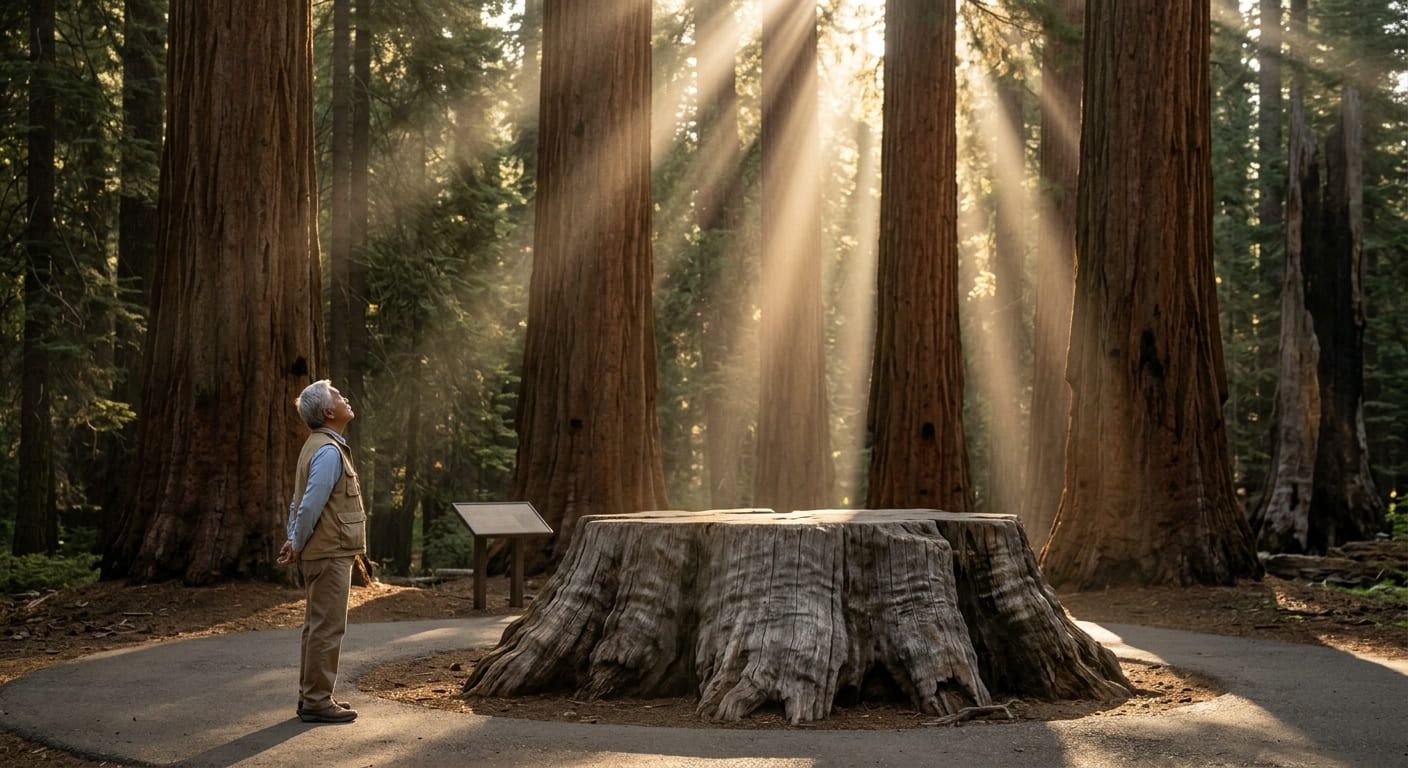
What you’ll see: the Discovery Tree stump and a self-guided sequoia loop
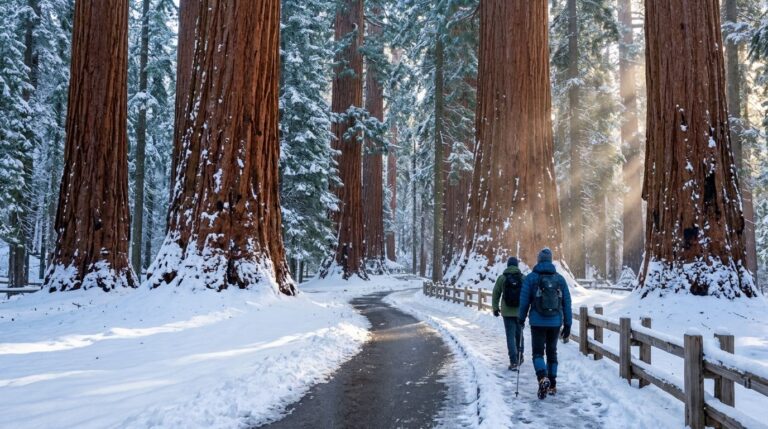
A nearly level 1.5 to 1.7-mile paved loop through roughly 100 giant sequoias, passing the Discovery Tree stump, the remains of a tree first widely reported by non-Native explorers in 1852 and felled a year later, in 1853, by a crew that took 22 days to bring it down. Ring counts later determined it was 1,244 years old when cut, with a base 24 ft in diameter.
A second historic tree nearby, the “Mother of the Forest,” was stripped of its bark in 1854 in a similar bid to convince skeptical audiences these trees were real, only a fire-blackened snag remains of it today.
Best time to hike the North Grove Trail: a shaded year-round option
Dense sequoia canopy keeps this loop comfortable in nearly any season, and it stays accessible later into the year than the South Grove’s more weather-exposed access road.
South Grove Trail
Trailhead access and parking at the South Grove trailhead (additional drive from North Grove)
A separate trailhead requiring its own drive from the main North Grove visitor area, the access road here closes seasonally in winter, unlike the North Grove.
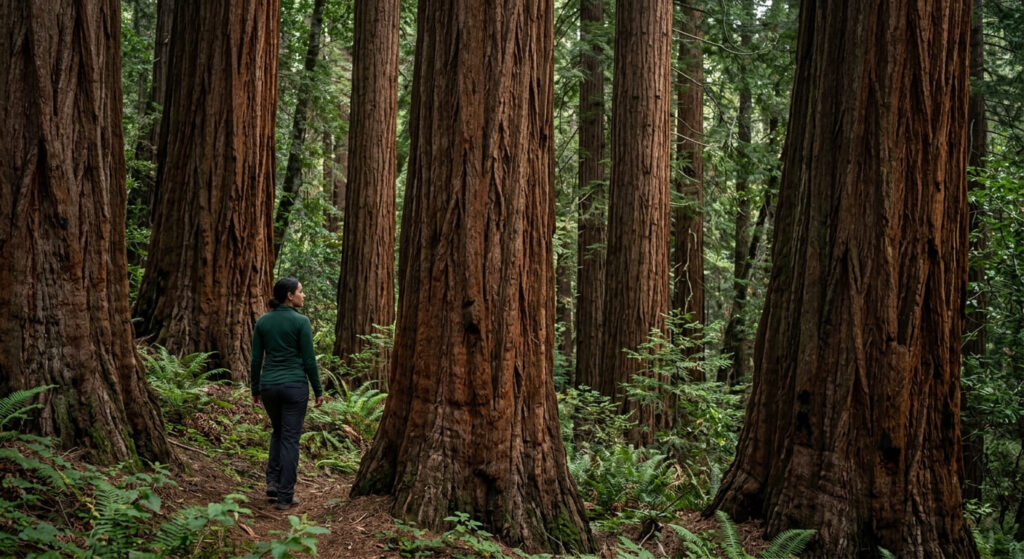
What you’ll see: a larger, less-visited grove of old-growth giant sequoias
This grove holds roughly ten times as many sequoias as the North Grove, around 1,000 trees compared to about 100, genuinely earning its reputation as the more untouched, natural-setting option. The loop runs 3.5 to 5 miles depending on your route, with a moderate uphill climb early on, leading to the Agassiz Tree: at 250 ft tall and 25 ft in diameter, the largest tree in either Calaveras grove.
Best time to hike the South Grove: a quieter alternative to the North Grove
Lower visitation here holds regardless of season, thanks largely to the extra drive and longer, more strenuous trail, a genuine solitude-seeking alternative any time the road is open.
Bradley Grove Trail
Trailhead access and parking near the South Grove Trail, Beaver Creek Bridge
Rather than a standalone connector between the two main groves, this trail actually branches off the South Grove Trail itself, just past the Beaver Creek Bridge.
What you’ll see: a mix of natural sequoias and a younger planted grove
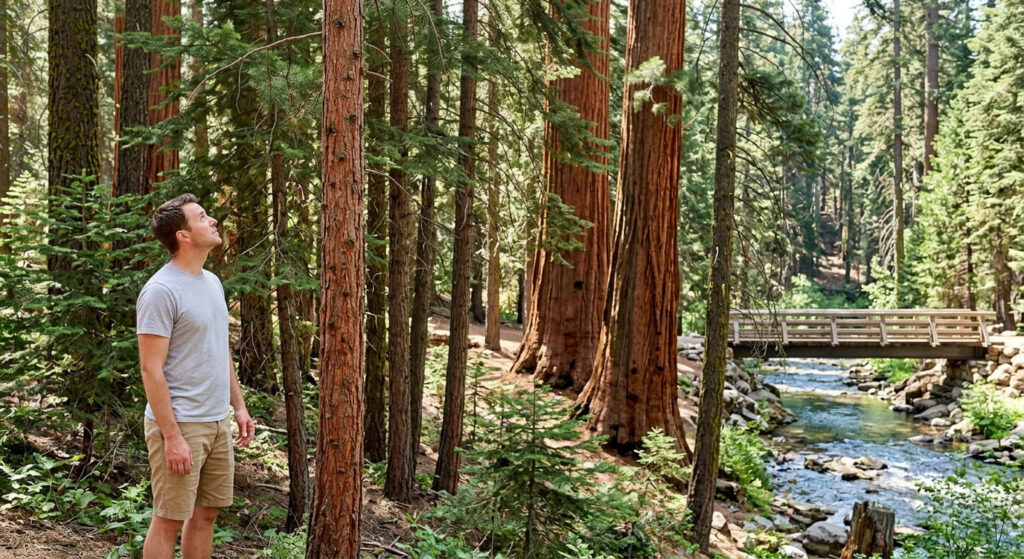
A 2.5-mile loop featuring both natural ‘outrigger’ giant sequoias and younger trees planted in the 1950s by conservationists Owen and Adrienne Bradley, a genuinely different, more mixed-age forest character than the pure old-growth focus of the North and South Grove trails.
Best time to hike Bradley Grove Trail: an add-on once you’re already at the South Grove
Since this branches directly off South Grove rather than linking it to North Grove, it’s best treated as an extension of a South Grove visit rather than a separate full-day itinerary connecting both groves.
River Canyon Trail
Trailhead access and parking near the Stanislaus River day-use area
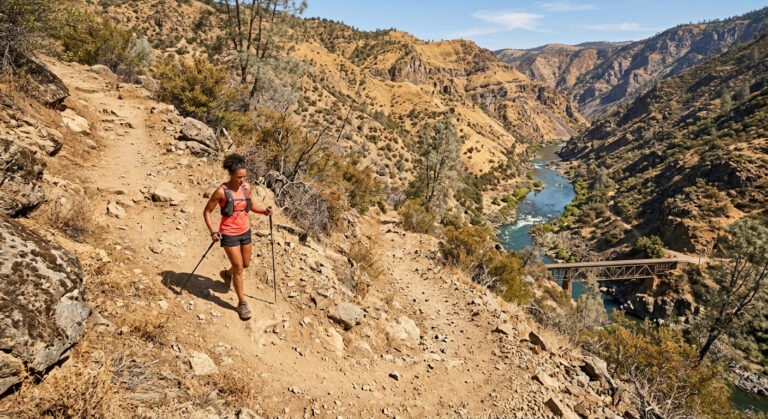
A day-use area trailhead descending from the North Grove area toward the North Fork Stanislaus River, a genuinely different river-canyon setting from the grove-focused trails elsewhere in this park.
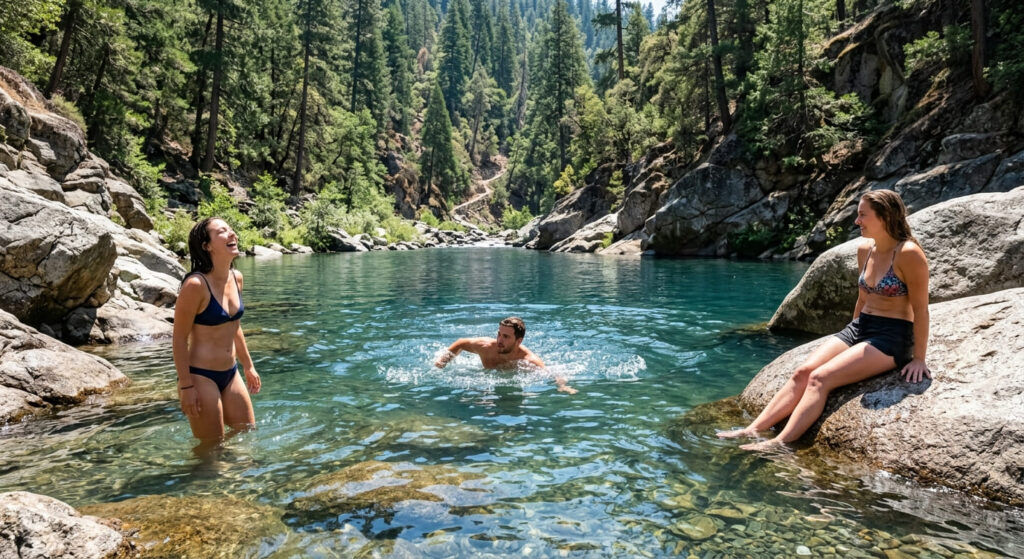
What you’ll see: swimming holes along the North Fork Stanislaus River
A steep descent leads to accessible swimming holes along the river, the park’s clearest recreational draw beyond pure forest hiking, and a popular midsummer destination.
Best time to hike River Canyon Trail: summer for swimming, spring for flow
Summer brings the most comfortable swimming temperatures, while spring delivers the strongest river flow if scenery matters more to you than getting in the water.
Lava Bluffs Trail
Trailhead access and parking near the park’s eastern boundary
The least-developed, most remote-feeling trailhead in this guide, toward the park’s eastern edge.
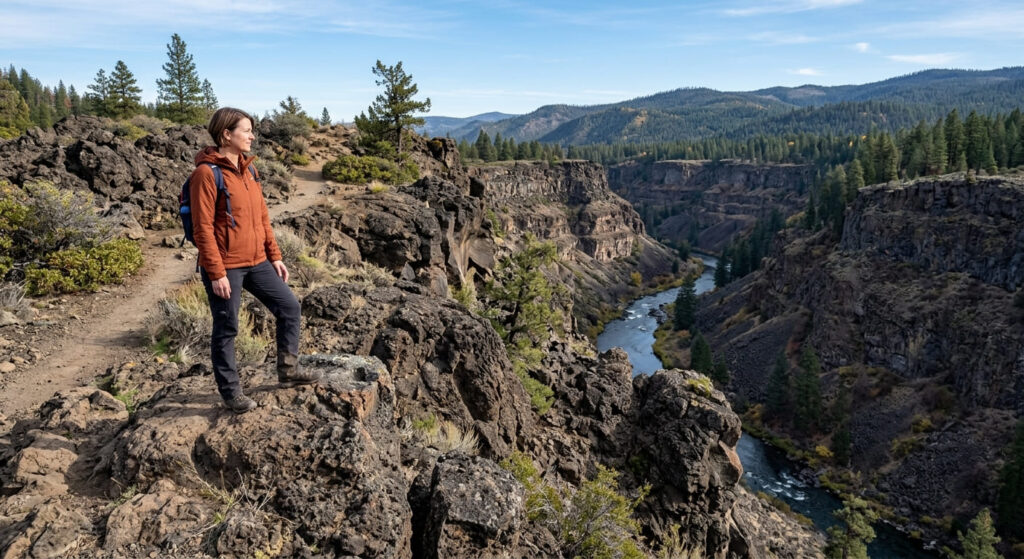
What you’ll see: volcanic rock formations and a canyon overlook
Exposed volcanic bluffs deliver river-canyon views distinct from anything else in this park, a genuinely different geologic story from the sequoia groves and river terrain covered elsewhere in this guide.
Best time to hike Lava Bluffs: cooler months for the exposed terrain
Minimal tree cover across this volcanic landscape makes a cooler-season visit considerably more comfortable than a summer midday attempt.
The trail I’d actually start with
If you’ve only got time for one grove, make it North Grove, it’s the historically significant, easiest, most representative introduction to why this park exists at all. South Grove is the natural next step once scale and solitude matter more than convenience, and Bradley Grove Trail is worth the short add-on once you’re already there rather than a separate trip.
River Canyon and Lava Bluffs both round out the park nicely if trees alone aren’t reason enough to stay a full day.
For this county’s Gold Rush-era history rather than its sequoias, my Calaveras County Gold Country trails guide covers a deliberately different focus, and my Calaveras County hiking guide rounds out the rest of what the county offers.
Frequently asked questions
Is there a fee at Calaveras Big Trees State Park?
Yes, a day-use fee applies at the entrance, commonly cited around $10, worth confirming the current exact amount directly with California State Parks.
What is the Discovery Tree?
The stump of the first giant sequoia widely reported by non-Native explorers, found in 1852 and felled the following year by a crew that took 22 days to bring it down. Ring counts later showed it was 1,244 years old.
Is the South Grove bigger than the North Grove?
Yes, considerably, the South Grove holds roughly ten times as many giant sequoias as the North Grove, around 1,000 compared to about 100, and includes the park’s largest tree, the 250-ft Agassiz Tree.
Can you swim in the Stanislaus River at Big Trees?
Yes, the River Canyon Trail descends to accessible swimming holes along the North Fork Stanislaus River, a popular summer destination within the park.
Is Calaveras Big Trees State Park open year-round?
The North Grove stays accessible for most of the year, but the South Grove’s access road closes seasonally in winter, so a South Grove visit specifically depends on the season.
Which grove should you visit if you only have time for one?
The North Grove, it’s easier, more historically significant thanks to the Discovery Tree, and accessible without the extra drive the South Grove requires.