Best Hiking Boots & Trail Shoes for California Terrain
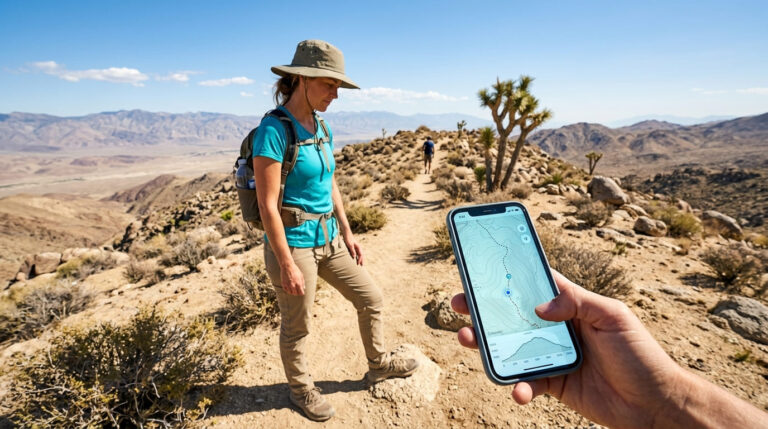
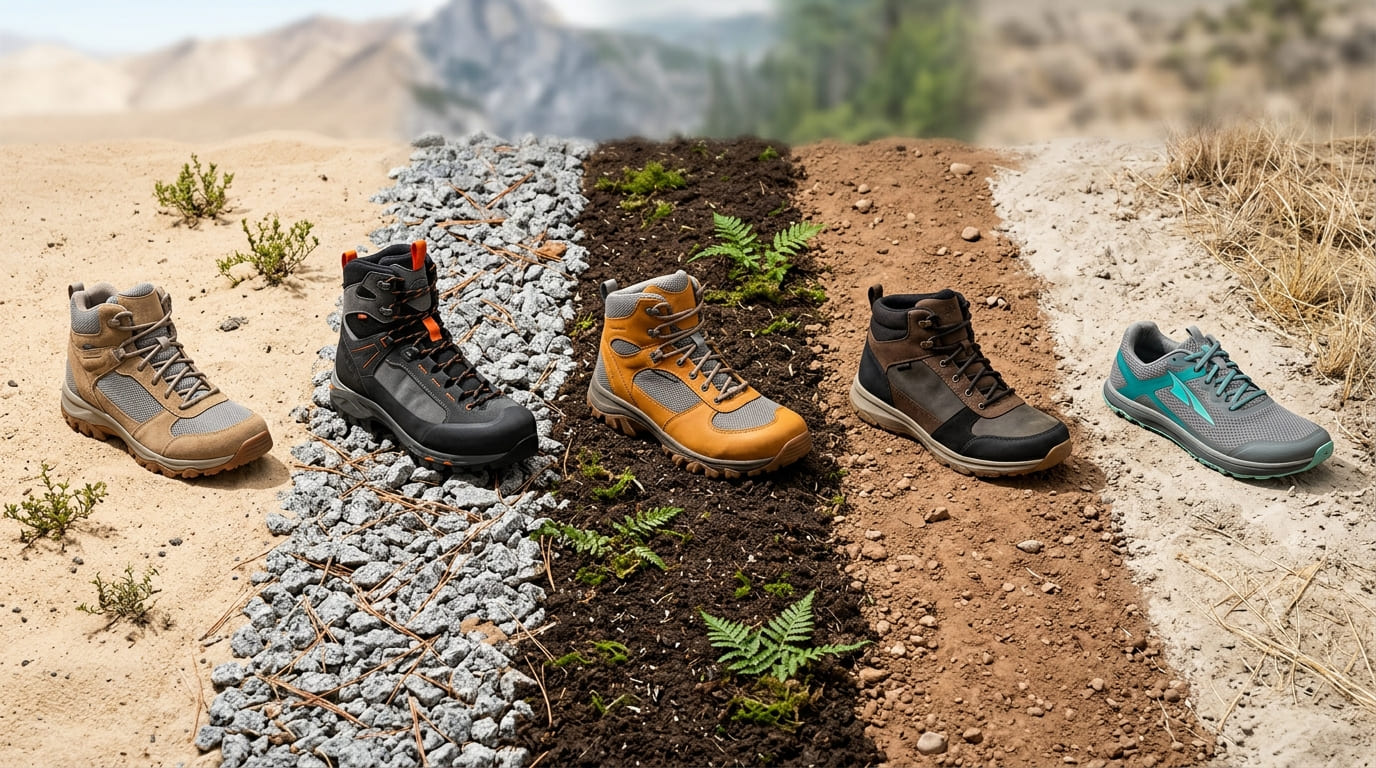
If yIf you’re shopping for the best hiking trail shoes or boots for California specifically, the honest answer is that no single pair covers this state well. California doesn’t have one terrain, it has four or five, sometimes on the same trail. I’ve wrecked a pair of trail runners on Joshua Tree’s decomposed granite, sweated through a boot that was never meant for a summer desert approach, and watched a hiking partner’s “waterproof” shoes fail on a muddy Santa Cruz redwood trail within the first mile. Whether you are buying boots for yourself or searching for present ideas for male backpackers, the right boot depends entirely on where you’re headed, not which one has the best star rating.
Disclosure: Please note that some of the links below are affiliate links and at no additional cost to you, I may earn a commission. Know that I only recommend hiking gear I personally stand behind; when you use my affiliate links, it helps me run this blog and keep all of this content free of charge for readers (like you).
This guide breaks down five boots and trail runners that each earn their spot for a specific kind of California terrain, a choice that comes down to how terrain hazards factor into boot choice as much as personal comfort, plus the explainer I wish someone had given me years ago on what actually separates a trail shoe from a hiking boot from a trail runner.
Key takeaways:
- Best all-around for desert and moderate terrain: Merrell Moab 3 Vent, highly breathable and comfortable out of the box, reliable for warm, lower-elevation trails like our Joshua Tree gateway trails.
- Best for alpine and high-elevation terrain: Salomon Quest 4 GTX, a stability-first boot built for loaded packs and technical ground, the boot I’d trust around the Desolation Wilderness or the trails around Mount Whitney.
- Best for coastal and wet-weather terrain: Keen Targhee IV, a wide toe box and good wet traction, suited to muddy, root-crossed trails like our Santa Cruz coastal trail guide.
- Best budget option: Columbia Newton Ridge Plus II, around $100, solid for first-timers working through our beginner trails guide on maintained, moderate trails.
- Best trail runner for long miles: Altra Lone Peak 9, zero-drop, wide toe box, and light enough that long-distance and thru-hikers keep coming back to it.
| Boot / shoe | Best for | Price | Waterproofing | Weight (pair) |
|---|---|---|---|---|
| Merrell Moab 3 Mid Vent | Desert, moderate terrain | ~$150–175 | None (Mesh) | ~2 lb 2 oz |
| Salomon Quest 4 GTX | Alpine, high-elevation, heavy packs | ~$230 | Gore-Tex | ~2 lb 14 oz |
| Keen Targhee IV Mid WP | Coastal, wet-weather, mud | ~$170–180 | KEEN.DRY (PFAS-free) | ~2 lb 8 oz |
| Columbia Newton Ridge Plus II | Budget, beginner, moderate trails | ~$100 | Columbia membrane | ~2 lb 12 oz |
| Altra Lone Peak 9 | Long-distance, thru-hiking | ~$140–$145 | None (non-WP model) | ~1 lb 6 oz |
Trail shoes vs. hiking boots vs. trail runners: what’s the difference?
These three categories get used almost interchangeably in casual conversation, and that’s part of why boot shopping gets confusing fast. Here’s the actual distinction, in plain terms.
Trail shoes vs. trail runners: are they the same thing?
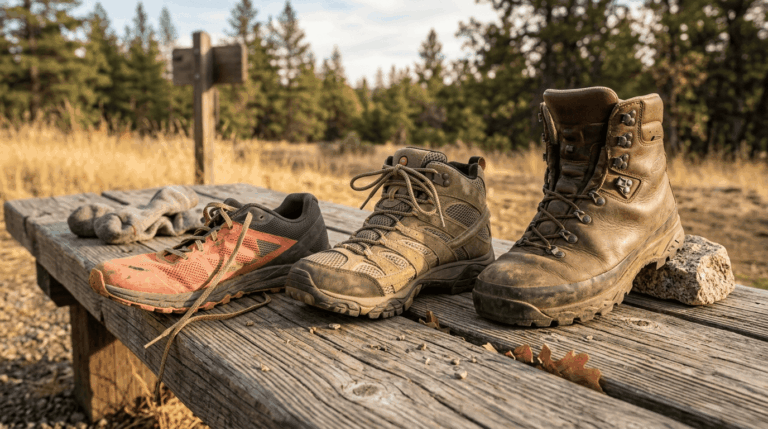
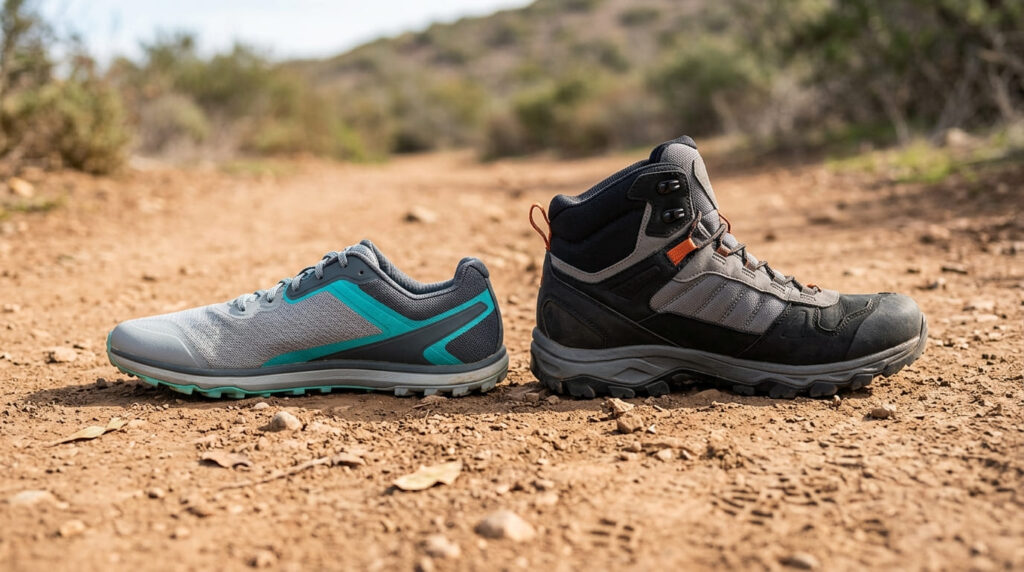
Mostly, yes, “trail shoe” and “trail runner” describe the same low-cut, athletic-style shoe built for off-road terrain, just with different marketing depending on the brand. Both sit below the ankle, weigh far less than a boot, and use aggressive rubber lugs for grip instead of a stiff leather upper for support. The Altra Lone Peak 9 covered below is a trail runner in this sense, built for movement and speed, not maximum ankle protection.
When to choose full-ankle hiking boots instead
Boots earn the extra weight and break-in time when you’re carrying a loaded pack, crossing loose scree or talus, or covering technical, uneven ground where a rolled ankle would end your trip.
The mid-to-high collar on a boot like the Salomon Quest 4 GTX physically limits how far your ankle can twist sideways, something no trail shoe, however good its outsole, can replicate.
If you’re day-hiking a maintained trail with a light pack, that extra ankle support usually isn’t buying you much; if you’re on a multi-day trip in the Desolation Wilderness with 25+ pounds on your back, it matters.
Merrell Moab 3 Vent: best all-around shoe for desert and moderate terrain
Key features
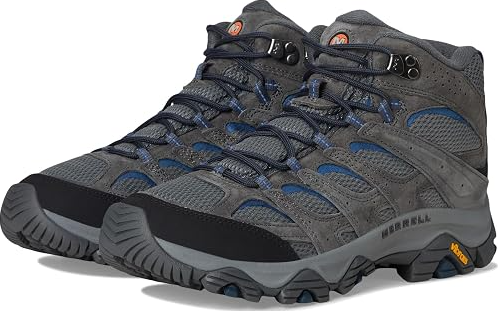
The Merrell Moab 3 Vent uses an unlined mesh upper designed to dump heat quickly and dry out fast if submerged, making it ideal for hot desert hikes where waterproof membranes trap sweat.
A Vibram TC5+ outsole handles most surfaces well, though independent testers consistently note it’s not the stickiest option on wet rock. What sells this boot is comfort: reviewers across the board mention it needs almost no break-in, which matters if you’re buying boots the week before a trip rather than months ahead.
Best for
Warm, lower-elevation, moderate terrain, exactly what you’ll find on our Joshua Tree gateway trails or a desert day hike through Riverside or San Bernardino County. I wouldn’t reach for the Moab 3 on a wet coastal trail or a technical alpine scramble; the traction and waterproofing both have limits, and this boot is best understood as a comfortable generalist rather than a specialist.
Salomon Quest 4 GTX: best boot for alpine and high-elevation terrain
Key features
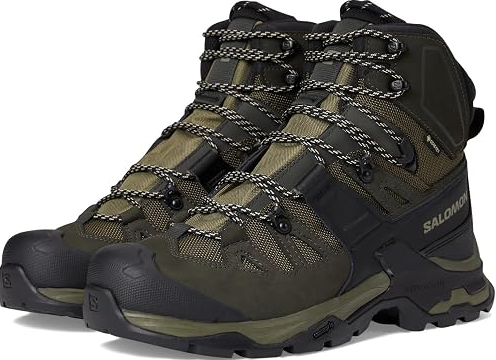
This is a stability-first backpacking boot from Salomon built around a 4D Advanced Chassis, a firm EVA midsole, and a Gore-Tex membrane rather than a generic waterproof liner.
The nubuck leather and textile upper resists abrasion from talus and brush, and the boot is specifically tuned for carrying 20+ pounds over rugged, uneven ground rather than moving fast and light. That stability comes at a real cost in breathability; this isn’t the boot for a hot, exposed desert approach.
Best for
Technical, high-elevation terrain where ankle support and load-bearing stability matter more than weight: the trails around Mount Whitney, the granite basins of the Desolation Wilderness, or any multi-day trip where you’re carrying real weight over uneven ground.
If you’re only ever day-hiking flat, maintained trails, this boot is more than you need; save it for the trips where a twisted ankle four miles from the trailhead is a problem.
Keen Targhee IV: best boot for coastal and wet-weather terrain
Key features
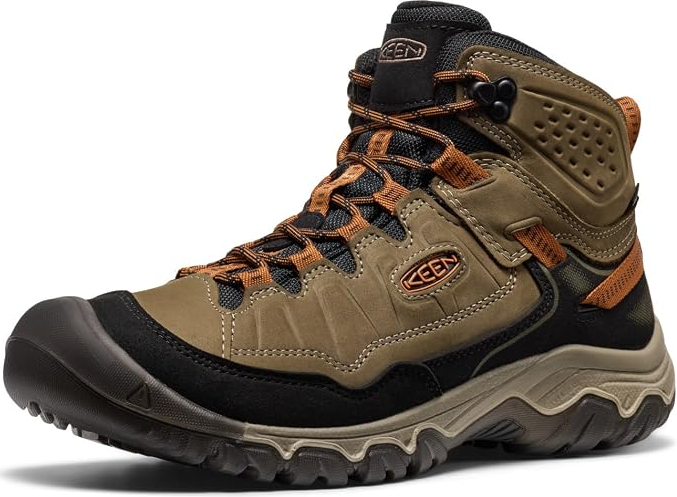
Keen’s signature move is the wide toe box, and the Targhee IV delivers it more generously than either the Merrell or the Salomon, a real difference-maker on long days or for anyone whose feet swell on the trail.
The KEEN.DRY waterproof membrane is PFAS-free and holds up well across mud, snow, and shallow stream crossings, and the traction on wet, root-crossed ground is consistently rated ahead of the Moab 3’s. The trade-off is weight and a short break-in period; this isn’t a boot built for speed.
Best for
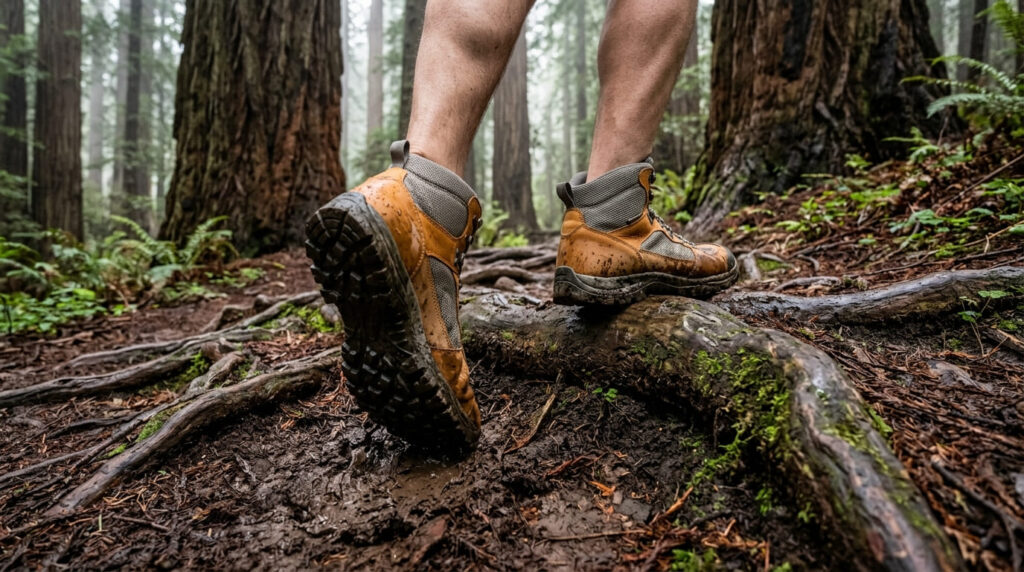
Coastal and wet-weather California terrain, muddy switchbacks, root systems, and the kind of conditions you’ll find in our Santa Cruz coastal trail guide or on a redwood trail after a storm. It’s also a strong pick right after our guide to California trails with waterfalls after rain, since that’s exactly the wet, slick terrain this boot was built to handle.
Columbia Newton Ridge Plus II: best budget-friendly all-terrain boot
Key features
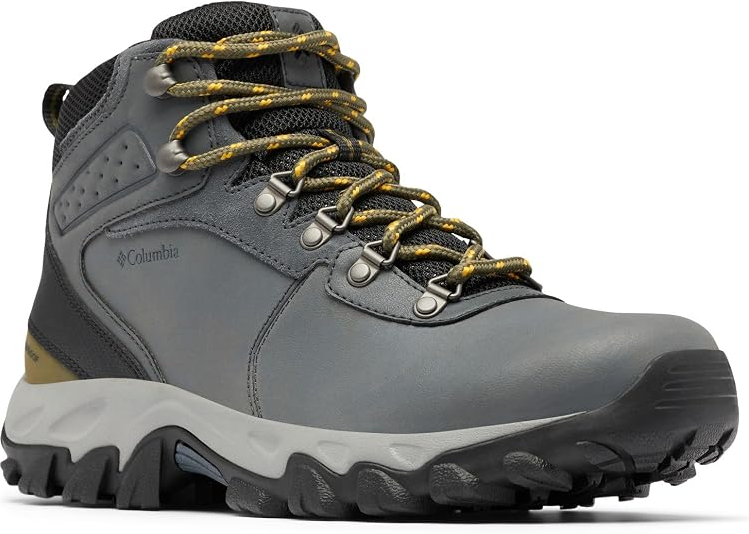
At around $100, the Newton Ridge Plus II is the clear budget pick here, and it doesn’t pretend to be anything more than that. A PU-coated leather and suede upper, Columbia’s own waterproof membrane, and a Techlite cushioned midsole cover the basics competently.
Reviewers consistently note it won’t hold up to heavy, frequent use the way the pricier options will, and traction and cushioning are both a step below the Merrell or Keen, but for occasional hikers, that trade-off is reasonable at less than half the price of the Salomon.
Best for
First-time hikers and occasional day-hikers working through our Santa Cruz beginner trails or any maintained, moderate trail where you don’t need technical performance. It’s a good starter boot, not a compromise you’ll regret; just don’t expect it to be your only pair if hiking turns into a regular habit.
Altra Lone Peak 9: best trail runner for long-distance California hikes
Key features
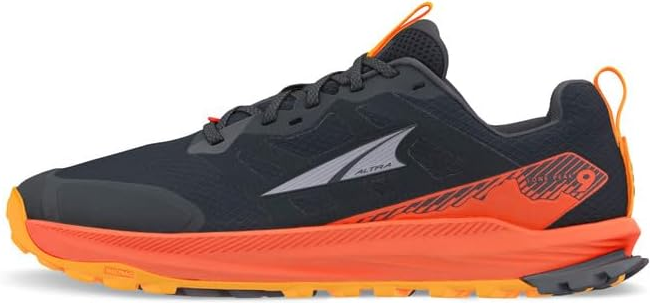
The Lone Peak 9 is a zero-drop trail runner with Altra’s wide FootShape toe box, a 25mm stack height, and grippy multi-directional lugs, built for covering serious mileage without the weight of a boot.
At roughly 1 pound 6 ounces per pair, it’s a fraction of the weight of any boot on this list, which matters enormously once you’re logging 15+ miles a day. Because it’s zero-drop, expect an adjustment period if you’re used to a standard heel-to-toe drop; ease into it rather than starting with a 20-mile day.
Best for
Long-distance and thru-hiking style trips where weight and natural stride matter more than ankle support, the kind of high-mileage days this site’s long-distance and multi-day trail guides cover. It’s a poor choice for loose scree or a heavy overnight pack; save the Salomon or the Keen for those trips and bring the Lone Peak for the miles where speed and comfort win out.

Frequently asked questions about the best hiking boots for California terrain
What is the difference between trail shoes and hiking shoes?
“Trail shoes” and “hiking shoes” are largely used interchangeably in casual conversation, though “hiking shoes” sometimes implies a slightly sturdier build closer to a low-cut boot, while “trail shoes” leans toward the lighter, running-shoe-style construction. Neither term is standardized across brands, so check the actual specs, weight, upper material, and ankle height, rather than relying on the name alone.
Are trail runners good for hiking?
Yes, for the right terrain. Trail runners like the Altra Lone Peak 9 work well on maintained trails and moderate off-trail terrain where you’re not carrying a heavy pack or crossing loose, technical ground. They fall short once ankle support becomes the priority; a loaded overnight pack on scree is where a boot’s stiffer platform earns its keep.
How often should you replace hiking boots?
As a rough guide, traditional hiking boots hold up for 500–800 miles, whereas lightweight zero-drop trail runners like the Altra Lone Peak typically last 300–500 miles before midsole cushioning compresses. Budget options like the Newton Ridge Plus II also tend toward the lower end of that range. Watch for compressed midsole foam, smoothed-out lug traction, and any separation at the sole; all signal it’s time for a new pair, not another repair.
Do you need to break in new hiking boots?
It depends on the boot. Softer, mesh-heavy options like the Merrell Moab 3 need almost no break-in, while stiffer, leather-heavy boots like the Salomon Quest 4 GTX or Keen Targhee IV benefit from a few short local walks before a long trip. Never wear a new pair of boots for the first time on a long hike; blisters on day one of a backpacking trip are entirely avoidable.
Are waterproof boots too hot for summer hiking?
They run warmer than a non-waterproof shoe, yes, since the membrane that keeps water out also limits airflow. For a hot, dry desert hike, a breathable trail shoe or a non-waterproof version often makes more sense than a fully waterproof boot; save the waterproofing for coastal, alpine, or wet-season trails where it’s actually solving a problem you’ll encounter.
What size should you buy for hiking boots?
Most hikers size up half a size from their everyday shoe size to leave room for thicker socks and natural foot swelling on long days, though this varies by brand; Keen and Altra both run roomy in the toe box, while Salomon’s Quest 4 tends to fit true to size or slightly large. Try boots on in the afternoon when your feet are already slightly swollen, and always try them with the socks you actually plan to hike in.