Best Hiking Trails in California for Kids and Toddlers
A three-year-old doesn’t care about a summit view. Ask any parent who has tried to sell a toddler on “just ten more minutes to the good part”, whether on a local trail or tackling short walks in Yosemite, and they’ll tell you the good part needs to show up fast, or the hike is over. That’s the logic behind this list of hiking trails in California for kids: every entry has a payoff a small kid can understand (a cave, a waterfall, a lake full of ducks), and none ask for more than a couple of miles or a couple hundred feet of climbing.
Disclosure: Please note that some of the links below are affiliate links and at no additional cost to you, I may earn a commission. Know that I only recommend hiking gear I personally stand behind; when you use my affiliate links, it helps me run this blog and keep all of this content free of charge for readers (like you).
I picked these seven the way I’d pick them for my own family: short enough that a bad mood doesn’t end the day, with a clear turnaround point, and a specific thing to look at that isn’t just “nature.” A few charge a small entrance fee; one needs a forest pass; I’ll flag exactly what to bring for each.
Key Takeaways
- All seven trails run under three miles round trip, and most are closer to one.
- Every trail ends at a specific destination (a cave, a waterfall, a lake, a labeled tree grove) and not just a viewpoint.
- Three of the seven charge a small day-use or parking fee ($3–$10); one requires a National Forest Adventure Pass.
- Flat footing and shade matter more here than mileage; several picks were chosen because they stay cool and even underfoot.
- Every entry works as an out-and-back, so you can turn around the moment a toddler’s patience runs out.
A Glance: Kid-Friendly Trail Comparison
| Trail | County | Round-Trip Distance | The Payoff |
|---|---|---|---|
| Bronson Canyon “Bat Cave” Trail | Los Angeles | ~0.6 mi | Walk-through movie cave |
| China Camp Shoreline Trail | Marin | Flexible, flat | Bay views, 1880s fishing village |
| Monrovia Canyon Falls Trail | Los Angeles | ~1.5 miles (shortest route) | Year-round 30-ft waterfall |
| Avocado Lake Loop | Fresno | ~2.3 miles | Calm lake, close-up wildlife |
| Lake Skinner Vista Point Loop | Riverside | ~1 mile | Open grassland, lake views |
| Old Mill Park Trail | Marin | Under 0.5 mi of paths | Redwoods, creek, playground |
| Heaps Peak Arboretum Loop | San Bernardino | ~0.75 mi | Labeled sequoia grove |
Bronson Canyon “Bat Cave” Trail (Los Angeles County)
Why It’s Great for Kids: A Cave to Walk Into at the End of a Ten-Minute Walk
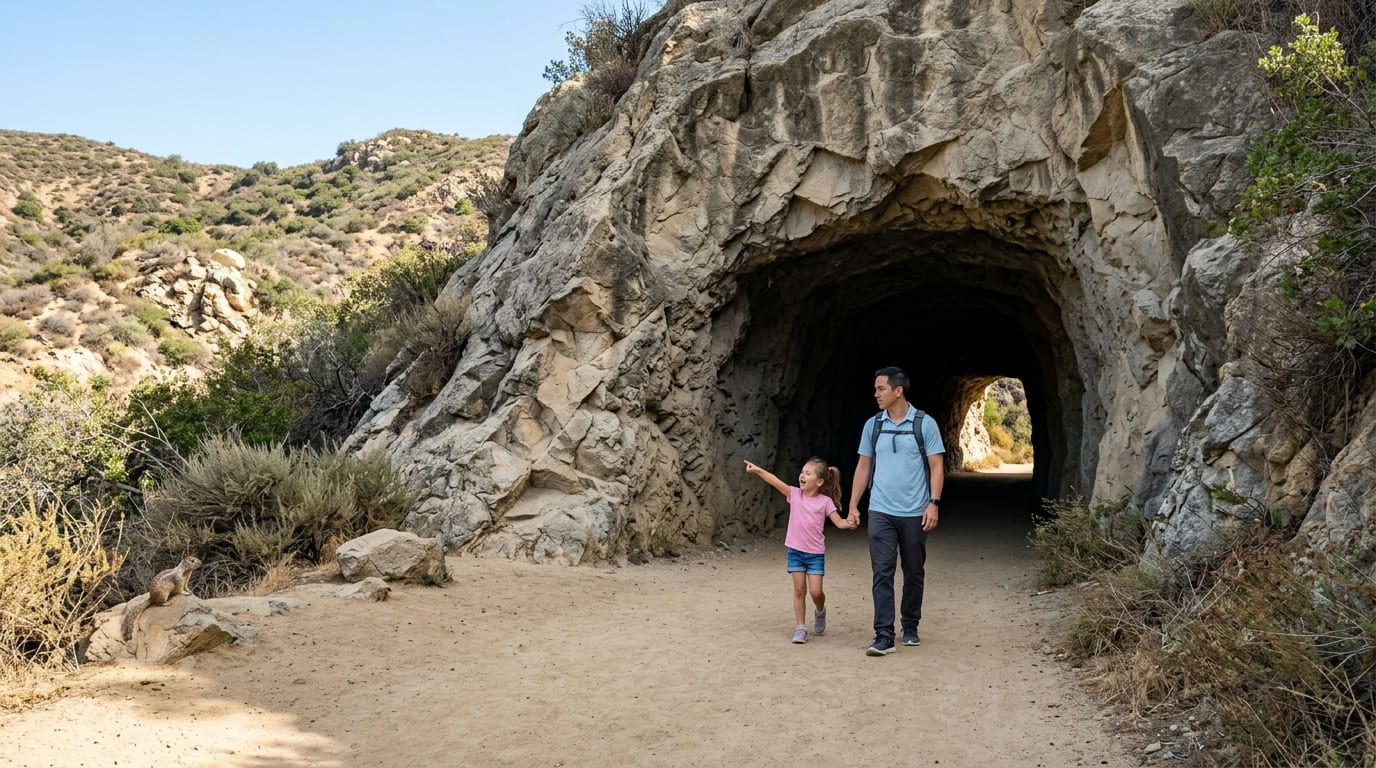
Griffith Park has dozens of trails, but nothing sells a first hike to a skeptical kid like a cave you can walk straight into. Bronson Canyon, known as Bronson Caves to most Angelenos, is a hollowed-out quarry tunnel that’s stood in for the Batcave entrance and roughly a hundred other film shoots since the 1920s. Enough daylight reaches through the far openings that you won’t need a flashlight. It’s part of the same stretch of park covered in our Griffith Park and Runyon Canyon guide, a good second stop if the cave alone doesn’t fill the morning.
Practical Tips: What to Know Before You Go
The walk to the cave and back is about six-tenths of a mile on a flat fire road, with only about 50 feet of elevation change. Parking at the end of Canyon Drive is free; there’s no entrance fee or permit, and dogs are welcome on leash. Weekends draw crowds near sunset for Hollywood Sign photos, so a mid-morning visit is quieter.
China Camp Shoreline Trail (Marin County)
Why It’s Great for Kids: A Flat Bay Walk with an 1880s Village at the End
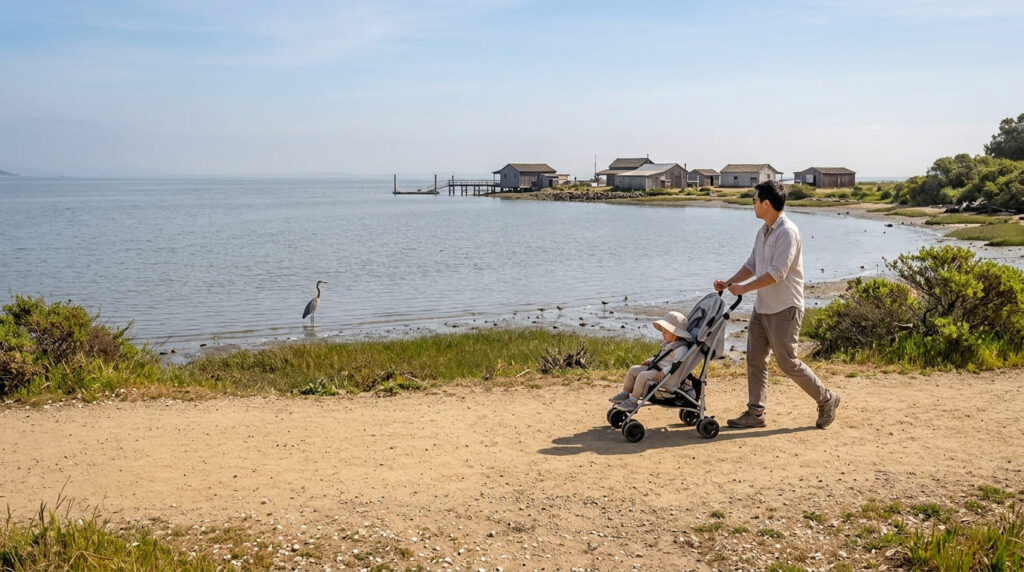
China Camp sits on San Pablo Bay, and its Shoreline Trail runs flat and wide along the water with no climbing, no exposure, and just packed dirt with the bay on one side. It’s long enough to go as far as legs allow and short enough to turn back whenever they don’t. At the far end sits China Camp Village, the remains of an 1880s Chinese shrimp-fishing settlement that once housed hundreds of people, with a small museum that gives the walk a destination. It’s one of the easier stops in our Marin County family-friendly trail guide.
Practical Tips: What to Know Before You Go
China Camp receives no state funding and runs on fees collected by the nonprofit Friends of China Camp; expect a $3 trail-only pass per person or a $5 parking-and-trail pass per vehicle at one of the pay stations posted around the park. The bay’s steady breeze keeps this trail cooler than inland Marin on a warm day. Restrooms sit near the main parking areas; dogs aren’t permitted on the trails.
Monrovia Canyon Falls Trail (Los Angeles County)
Why It’s Great for Kids: A Waterfall Kids Can Hear Before They See
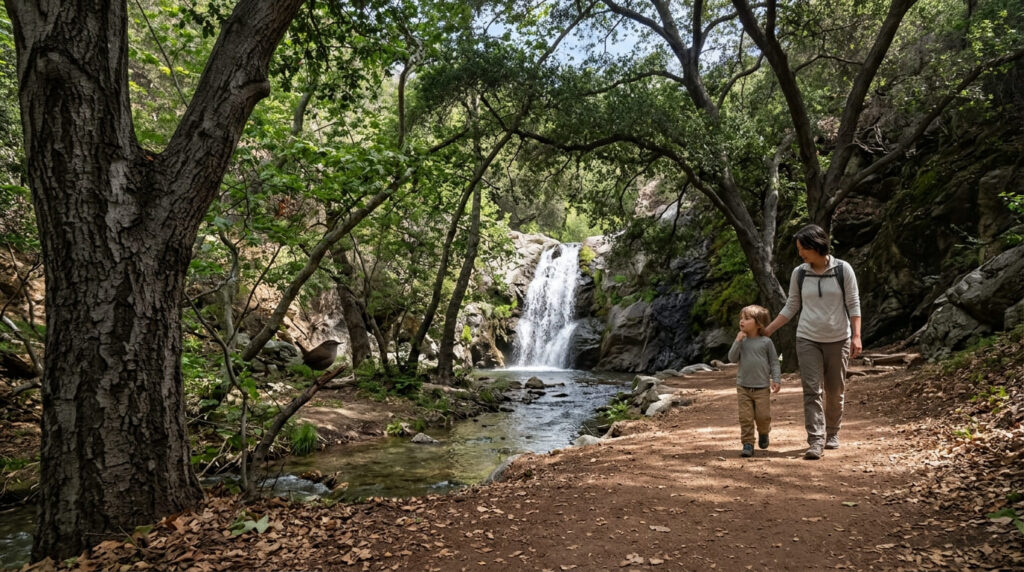
Monrovia Canyon Park hides a shaded, creek-filled canyon a few minutes off the 210 freeway, ending at a 30-foot waterfall that runs year-round. Starting from the Nature Center lot (the shortest of the park’s three trailheads), it’s about three-quarters of a mile of gently climbing trail to the falls, with enough oak and sycamore cover to stay comfortable in summer. Hearing the water before seeing it keeps small legs moving through the last stretch. It’s one of the picks in our Los Angeles County waterfall trail guide.
Practical Tips: What to Know Before You Go
Note: Monrovia Canyon Park is currently closed indefinitely due to damage from the Bobcat Fire and mudslides. When it reopens, starting from the Nature Center lot keeps the round trip to about 1.5 miles. Always check the city’s official website for current reopening status, fees, and hours before planning a trip. Once open, watch for poison oak and keep an eye on kids near the creek.
Avocado Lake Loop (Fresno County)
Why It’s Great for Kids: A Calm Lake Where Kids Can Watch Fish and Ducks Up Close
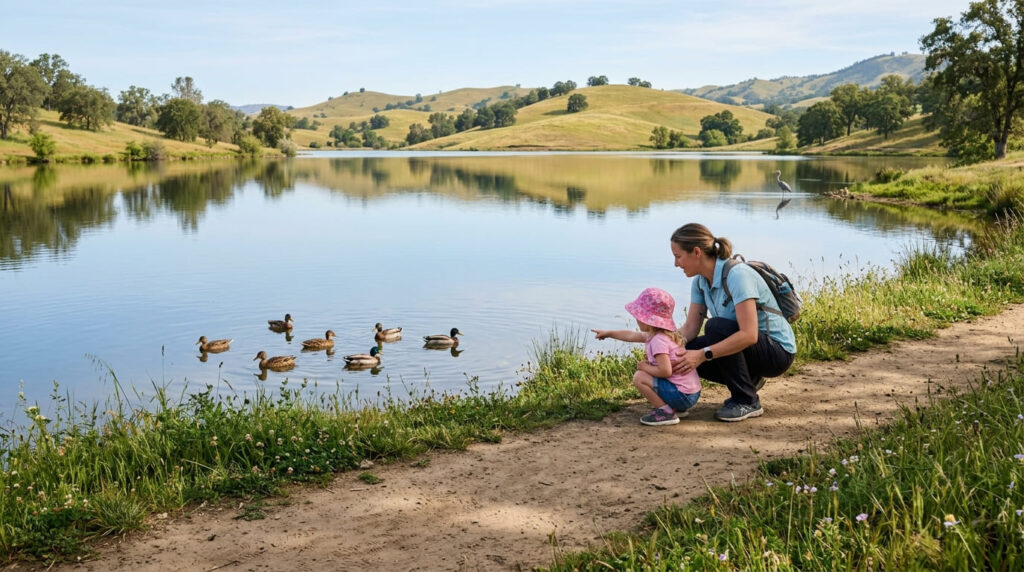
East of Fresno on the Kings River, Avocado Lake Park wraps a small, calm lake with a loop trail that stays level the whole way around. The water’s stillness makes it easy to spot fish, ducks, and the occasional heron without much of a wait. It’s covered alongside other easy options in our Fresno County family-friendly trail guide.
Practical Tips: What to Know Before You Go
The full loop runs about 2.3 miles, but the lake’s shape means a shortcut back to the parking area is never far off if a toddler’s pace slows. There’s a $5 per-vehicle day-use entrance fee, and the park includes a playground and picnic tables for a full afternoon.
Lake Skinner Vista Point Loop (Riverside County)
Why It’s Great for Kids: Open Grassland Where Kids Can Run Ahead Safely
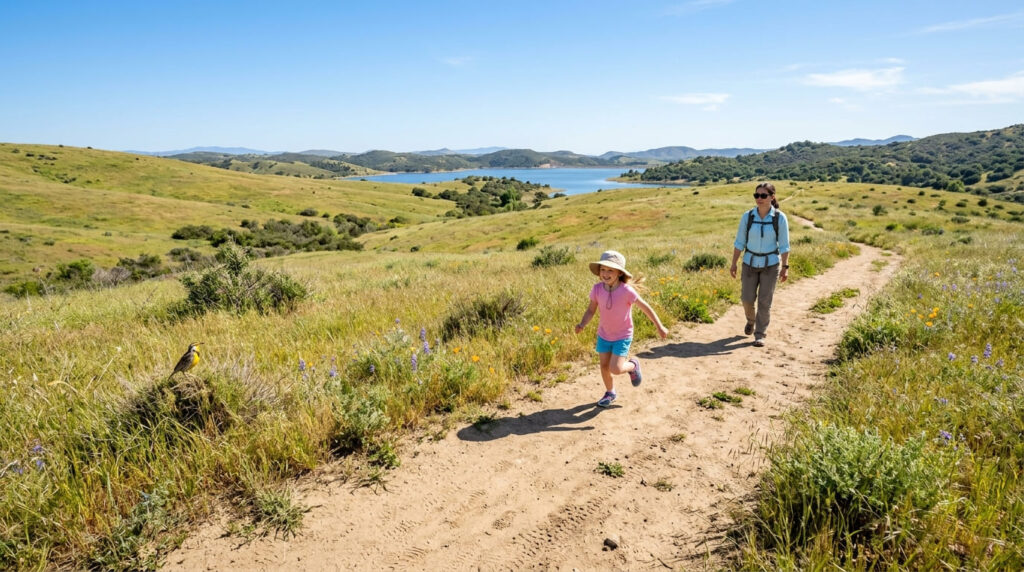
Lake Skinner Recreation Area near Temecula has a longer trail looping around the park boundaries, but the shorter loop near the Vista Point day-use area is built for families: a shorter stretch of open, rolling grassland with wide sightlines that let you keep an eye on kids even if they sprint ahead.
Practical Tips: What to Know Before You Go
Stick to the shorter loop near the day-use area rather than the park’s main loop trail, which runs closer to four miles with noticeable climbing. There’s a vehicle fee at the gate, a little higher on weekends, and picnic areas and restrooms near the day-use lot make it easy to pair the walk with lunch.
Old Mill Park Trail (Marin County)
Why It’s Great for Kids: A Playground and a Redwood Grove in the Same Visit
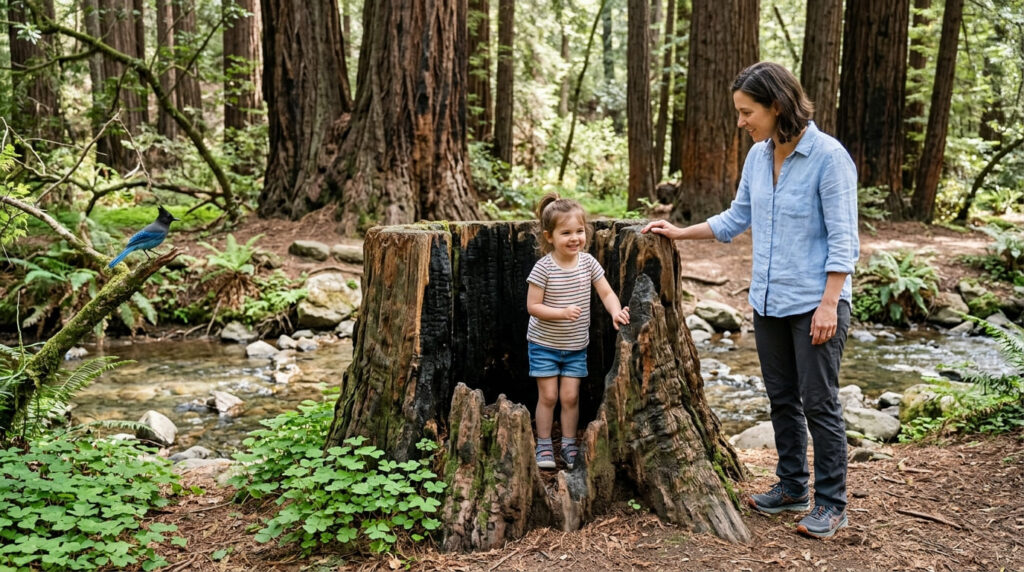
Old Mill Park sits a few blocks from downtown Mill Valley, wrapped around the remains of an old lumber mill and threaded by Cascade Creek. Kids can climb inside hollowed redwood stumps, wade at the creek’s edge, and hit the on-site playground, all within a grove of redwoods old enough to rival nearby Muir Woods. It’s a rare stop that pairs a nature walk with a burst of active play, no negotiating required.
Practical Tips: What to Know Before You Go
The park’s paths add up to well under a mile total, so distance is barely a factor, as redwood-stump climbing tends to run out of patience before the trail does. It’s free to visit, parking on Throckmorton Avenue fills up on weekends since the park sits next to the Mill Valley Public Library, and the creek runs shallow enough for supervised wading most of the year.
Heaps Peak Arboretum Loop (San Bernardino County)
Why It’s Great for Kids: A Self-Guided Nature Loop with Trees Kids Can Identify
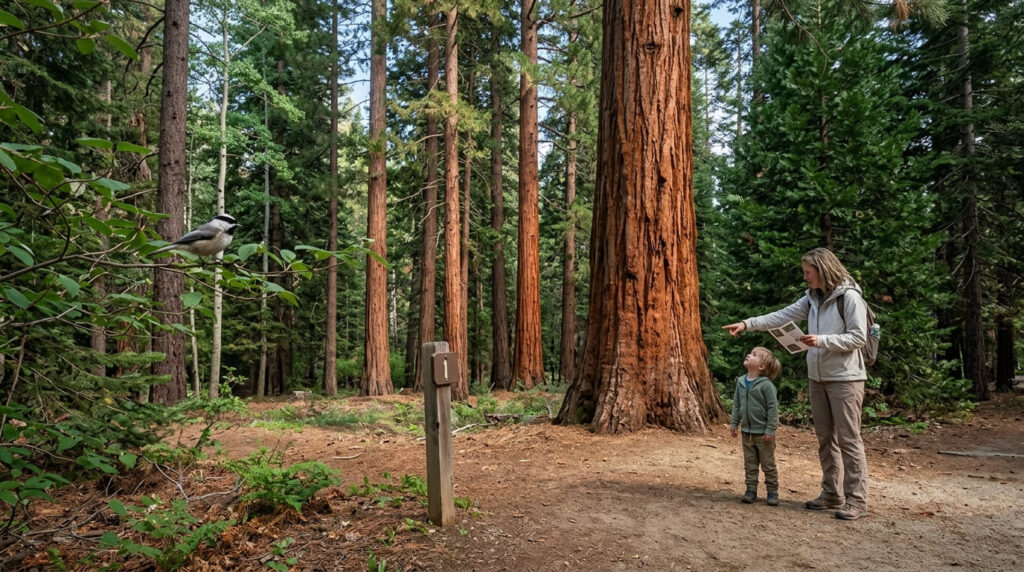
Just past Skyforest on the Rim of the World Highway, Heaps Peak Arboretum threads a numbered, self-guided loop through a planted grove of giant sequoias alongside pines, dogwoods, and quaking aspen. A trail guide from the entrance booth matches numbered posts to plant descriptions, turning the walk into a scavenger hunt that keeps curious kids moving from one marker to the next. It pairs naturally with a stop in our Lake Arrowhead trail guide.
Practical Tips: What to Know Before You Go
The loop covers about three-quarters of a mile with roughly 90 feet of elevation change, though the 6,000-foot elevation keeps it cooler than the valley below in summer. A National Forest Adventure Pass is required to park here, sold at ranger stations and local outfitters for about $5 a day or $30 a year, so pick one up before driving up the mountain.
Where to Go Next
If this list has you thinking about trails your whole family can grow into, our beginner-friendly trail guide applies the same flat-grade, forgiving-distance logic to first-time adult hikers, and works well for grandparents joining the trip. For multi-generation outings, our guide to easy, scenic trails for seniors picks trails with benches, restrooms, and reliable parking, often the same features that make a trail work for a stroller.
The Bottom Line
None of these seven trails test anyone’s fitness, and that’s the point. What they test is patience for a slower pace and a lot of stopping to look at rocks and bugs along the way. Start with whichever one is closest to home, pack more snacks than you think you need, and let the destination carry the day.
Frequently Asked Questions About Hiking Trails for Kids and Toddlers
What age can kids start hiking?
Most toddlers handle short, flat walks by around 18 months to 2 years old, especially with breaks and a carrier for the tired stretches. By age 4 or 5, many kids cover a mile or two on their own feet, as long as there’s a destination to walk toward.
How far can a toddler hike?
Plan on a quarter- to a half-mile of toddler-powered walking before energy runs out, even if the full trail is longer. Every trail here lets you carry a tired toddler the rest of the way.
What should you pack for hiking with kids?
Water and snacks matter more than gear, so bring more of both than you think you’ll need. A carrier or a lightweight stroller where terrain allows it, a change of clothes, sunscreen, and a small first-aid kit cover most of what comes up on a short family trail.
How do you keep kids motivated on a hike?
Give them a job: spotting a specific animal, counting bridges, or racing to the next trail marker turns a walk into a game. Naming the destination early, such as “we’re going to see a waterfall,” helps more than describing the trail itself.
Are baby carriers better than strollers for hiking trails?
Carriers handle uneven or narrow terrain that strollers can’t, which covers most of the trails on this list once you’re off a paved path. Strollers work well on flat surfaces like the China Camp Shoreline Trail or a paved arboretum loop, but a carrier is the safer default anywhere the ground gets uneven.
What snacks are good for a family hike?
Stick to snacks that survive a warm backpack without much cleanup; crackers, dried fruit, cheese sticks, and trail mix all travel well. Save anything messy for the picnic table at the trailhead rather than the trail itself.