Best Hiking Trails in California Near Hot Springs
A word before the list, because it matters more here than on most of these guides: Hiking Trails in California Near Hot Springs has had a rough couple of years, with closures and deaths at more than one of the state’s most famous soaking spots. I’m including all seven of the destinations most people expect on a list like this, but two of them come with a current status you need to know before you plan around them. The rest range from a five-minute walk off a highway to a multi-day backcountry trip.
Disclosure: Please note that some of the links below are affiliate links and at no additional cost to you, I may earn a commission. Know that I only recommend hiking gear I personally stand behind; when you use my affiliate links, it helps me run this blog and keep all of this content free of charge for readers (like you).
Key Takeaways
- Currently closed, plan around it, not toward it: Deep Creek Hot Springs is under an official Forest Service closure through June 7, 2027, following repeated drownings and near-daily rescue calls.
- Serious safety history; verify before you go: Remington Hot Springs has seen multiple deaths in recent years and was placed under an indefinite closure at one point; check current Forest Service status directly before driving out.
- Most demanding true backcountry soak: Sespe Hot Springs, reached only by a multi-day hike with several river crossings.
- Easiest roadside soak: Travertine Hot Springs, a short dirt-road drive from Bridgeport with an ADA-accessible pool.
- Most remote, most rewarding for the effort: Saline Valley Hot Springs, a desert expedition deep inside Death Valley National Park.
- Best combined stargazing-and-soaking spot: Wild Willy’s Hot Springs, open enough to double as one of the better night-sky stops in this part of the Eastern Sierra.
1. Deep Creek Hot Springs Trail (San Bernardino County)
Why it made this list: California’s most famous natural hot springs hike
Deep Creek has long had a claim to being the single most-visited natural hot springs destination in the state, six or seven geothermal pools set along granite boulders in the San Bernardino National Forest, historically reached via a roughly 2-mile hike from the Bowen Ranch trailhead.
Practical tips: access and current status
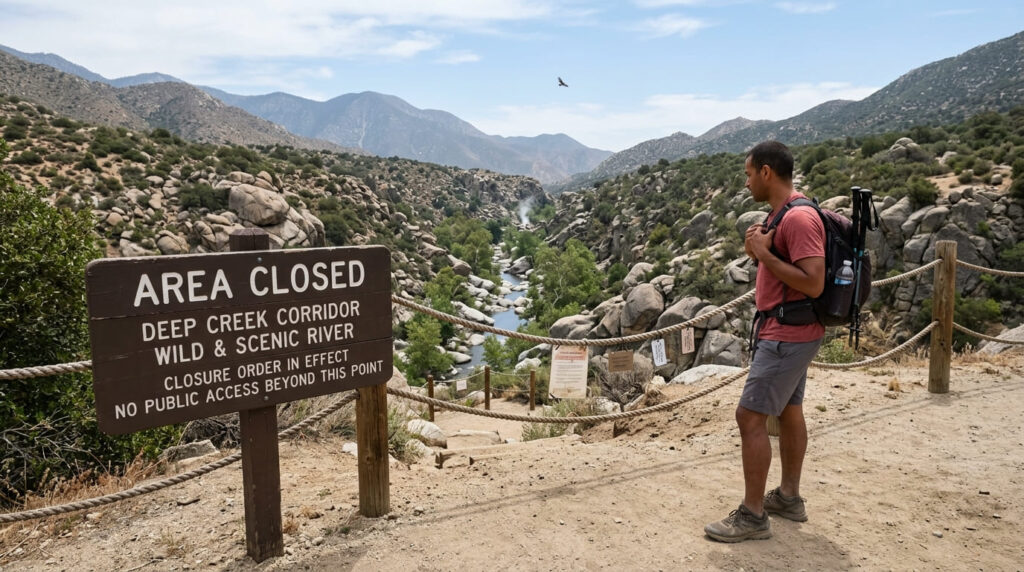
Here’s what actually matters right now: Deep Creek Hot Springs is closed. The Forest Service signed an official closure order covering Deep Creek Hot Springs, the surrounding creek corridor, and several connecting trails, effective July 2, 2025, through June 7, 2027.
The reasoning is documented and serious: a long history of drowning fatalities at nearby Aztec Falls, near-daily search-and-rescue calls in the canyon, and unsustainable pressure on a federally designated Wild and Scenic River corridor.
I wouldn’t plan a trip here before the closure lifts; our guide to checking trail closures before you go walks through how to verify status like this for any destination on this site, and it’s worth bookmarking given how much can change year to year in this specific area.
2. Sespe Hot Springs (Los Padres National Forest, Ventura County)
Why it made this list: one of the hottest and most remote natural hot springs in the state
Sespe Hot Springs is a backcountry destination, not a drive-up soak; the source water runs close to boiling, and reaching it means a commitment. Our Ventura County Ojai trail guide covers gentler day-hike options in the same general area if a multi-day trip isn’t what you’re after right now.
Practical tips: access and best timing
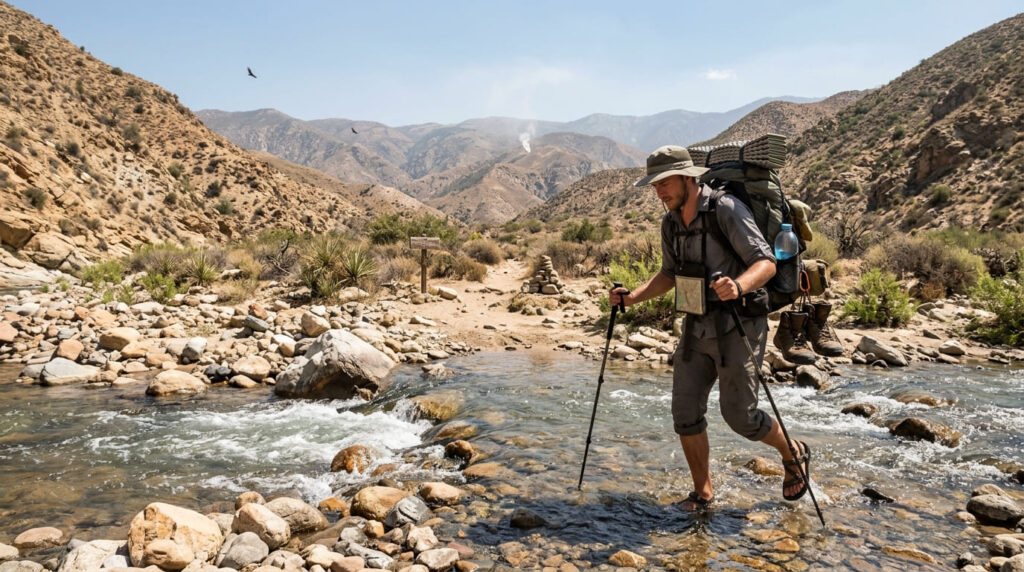
Plan on a multi-day backpacking trip rather than a day hike. The standard approach from the Piedra Blanca trailhead off Highway 33 crosses the Sespe River repeatedly; the first crossing comes at roughly 4.5 miles in, and there’s little shade or reliable water along long stretches of the route.
A free wilderness fire permit is required for any overnight camping in Los Padres National Forest; pick one up in advance or at a ranger station before you head out.
3. Remington Hot Springs (Kern River, Kern County)
Why it made this list: riverside soaking pools along the Kern River
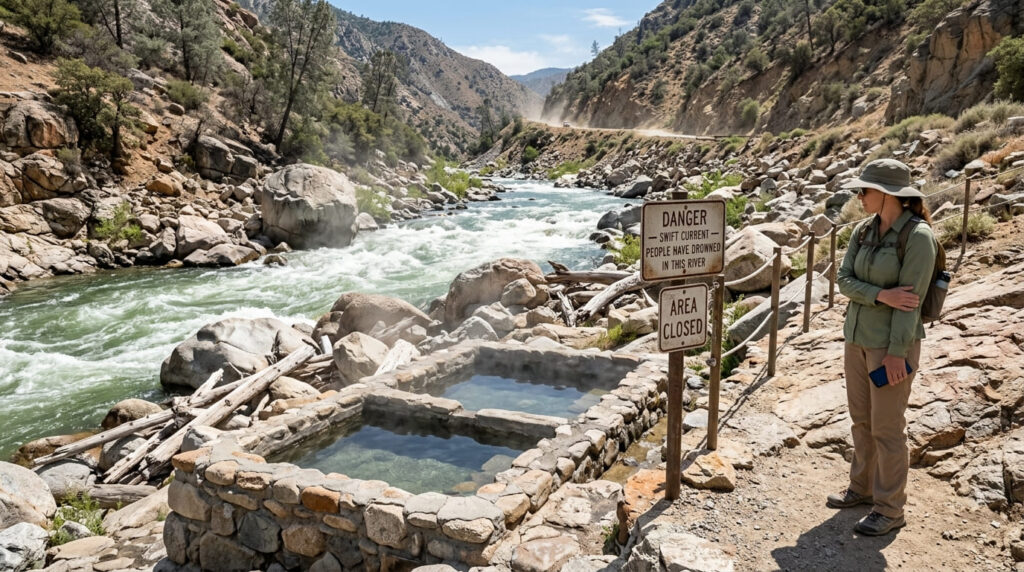
Remington is a set of volunteer-built stone soaking tubs directly above the Kern River, historically one of the shortest, easiest approaches on this entire list, a steep quarter-mile trail dropping about 300 feet from a dirt pullout on Kern Canyon Road. Our Kern County southern Sierra trail guide covers more of this same river canyon.
Practical tips: access and current status
I want to be straightforward about this one rather than write around it: Remington Hot Springs has a safety history.
The Forest Service ordered an indefinite closure here in 2024 after a second death at the site in under two years, and reports on its current reopening status conflict: some current sources describe it as open and unchanged for 2026, while the underlying safety concerns that triggered the closure haven’t gone away.
I’d verify current status directly with the Kern River Ranger District before making the drive, rather than trusting any single source, including this one.
4. Saline Valley Hot Springs (Death Valley National Park, Inyo County)
Why it made this list: an oasis-like soaking destination in one of the most remote corners of Death Valley
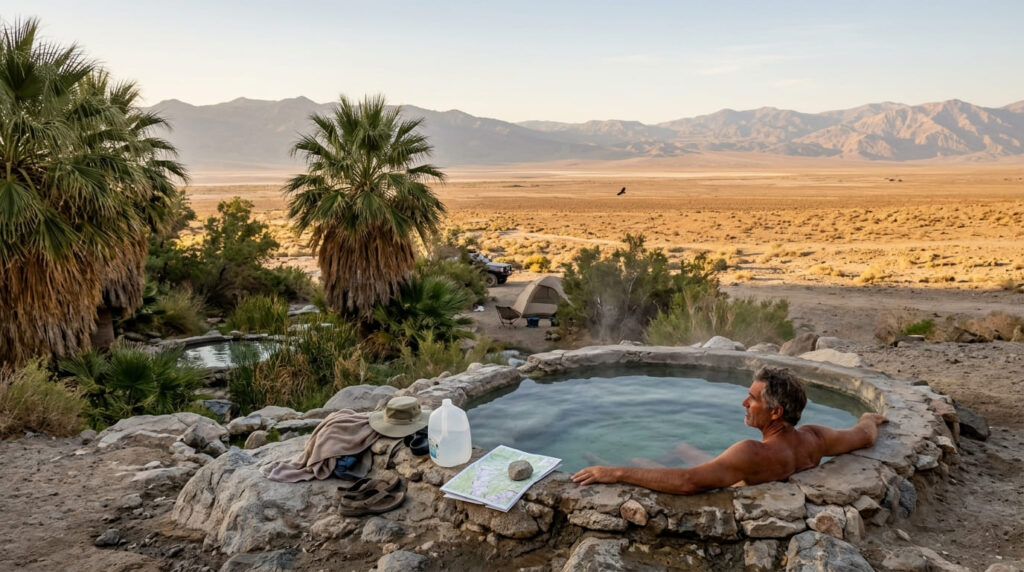
Saline Valley is the deal for anyone chasing solitude: three separate spring areas with primitive rock-and-concrete soaking pools, deep in a valley most Death Valley visitors never see. Our Inyo County Death Valley trail guide covers more accessible corners of the same park if this one’s more remote than you’re ready for.
Practical tips: access and best timing
This is the most logistically demanding entry on this list. Both approach routes, the North Pass from Big Pine (about 55 miles, cresting around 7,300 feet) and the South Pass from Panamint Springs (about 50 miles, cresting around 6,100 feet), are long, rough, high-clearance roads, and both are prone to snow and ice in winter. Check current road status before you commit to either route.
A standard Death Valley National Park entrance pass covers your visit, and free camping is permitted up to 30 days a year at the springs. There’s no cell service anywhere in the valley, so tell someone your plan before you go.
5. Wild Willy’s Hot Springs Trail (Mono County)
Why it made this list: the most accessible developed hot spring in the Eastern Sierra
Wild Willy’s is BLM land near Mammoth Lakes (Crowley Lake), reached by a short boardwalk that keeps the fragile ground around the spring intact, with a large soaking pool where you can actually adjust your own water temperature. Our Mono County hot springs and hiking combo trail guide covers this and the next entry together in more depth, as two of Mono County’s premier Eastern Sierra soaking spots (located about 60 miles apart along Highway 395).
Practical tips: access and best timing
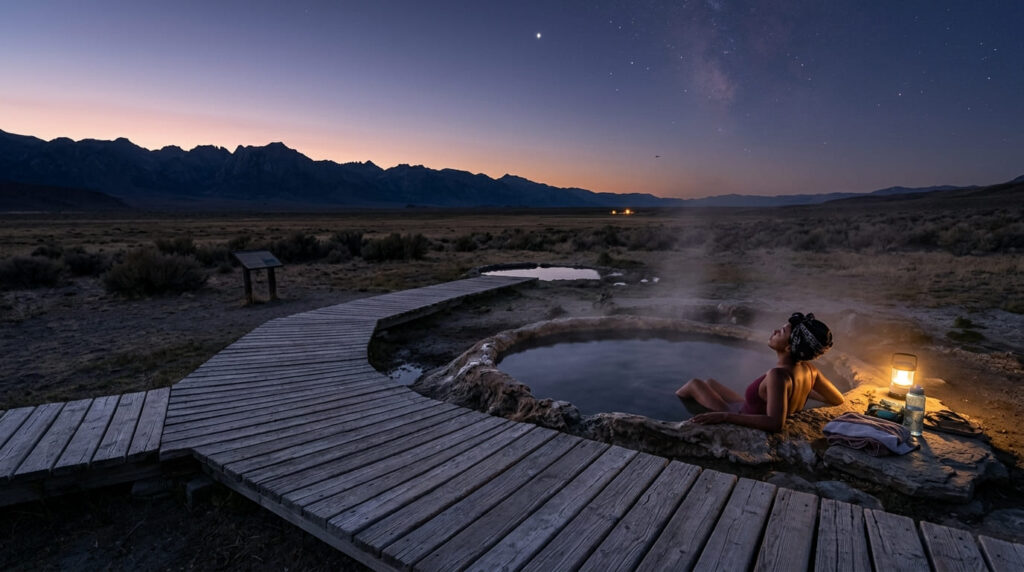
The open valley setting here does double duty; it’s a good stargazing spot once the sun goes down, not just a daytime soak. If a night visit is part of your plan, our best stargazing and night hike trails in California guide covers more Eastern Sierra dark-sky spots in the same general region.
6. Travertine Hot Springs Trail (Mono County)
Why it made this list: colorful mineral terraces with Sawtooth Range views
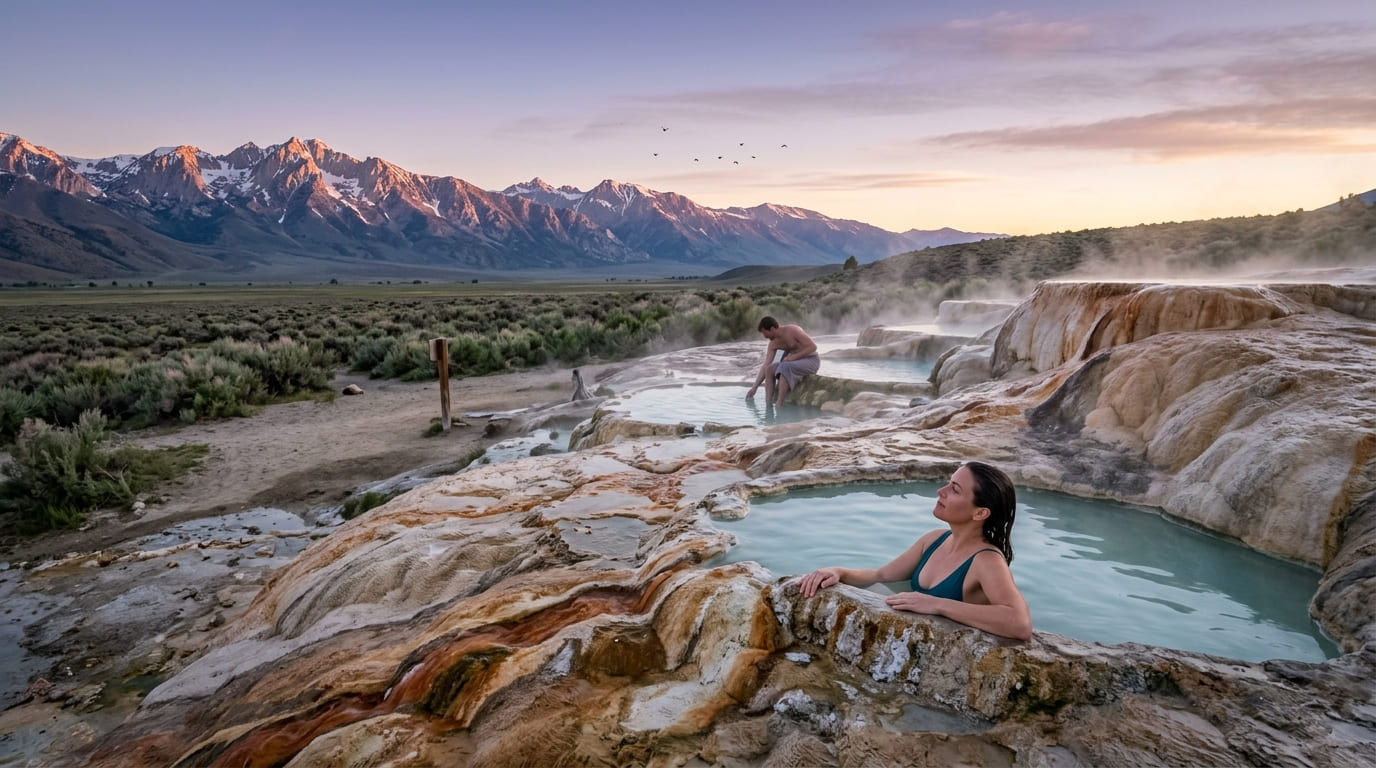
Travertine is the easiest true hot springs experience on this list short of a parking-lot soak, with orange- and white-banded mineral terraces holding four to six pools of varying temperature, with the Sawtooth Range rising behind them.
Practical tips: access and best timing
Sunrise here is worth the early start, when the Sawtooth Range catches first light behind the steaming pools. The access road is only about a mile of dirt off Highway 395 and is usually fine for a standard car when dry, but it turns to mud and can become impassable after rain or snow, so check conditions if you’re visiting outside summer.
7. Jordan Hot Springs (Golden Trout Wilderness, Tulare County)
Why it made this list: a true backcountry hot spring deep in the Golden Trout Wilderness
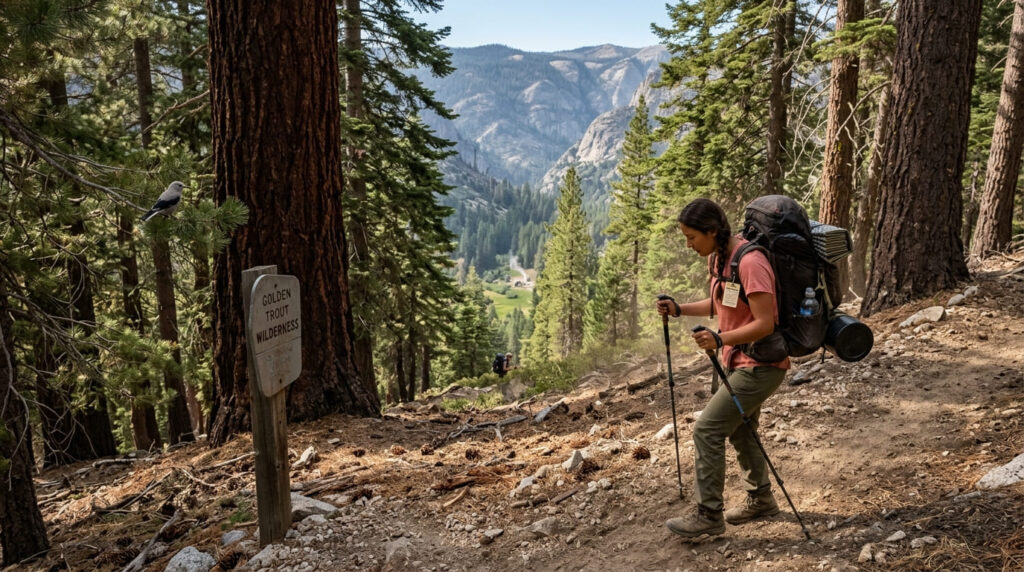
Jordan Hot Springs closes out this list as its most physically demanding entry, a National Historic Landmark set of roughly a dozen thermal pools reached only by trail, deep in the Golden Trout Wilderness.
Practical tips: access and best timing
The route from the Blackrock Trailhead runs just under 6 miles one-way with about 3,000 feet of elevation drop, which makes the hike in deceptively easy and the hike out a climb; most people treat this as an overnight rather than a day trip.
A free wilderness permit is required for overnight camping, available at the Blackrock Ranger Station on your way in with no reservation needed. The access road typically opens around Memorial Day and closes with the first snow each winter.
Quick comparison: all 7 hot springs hikes at a glance
| Hot Spring | Access | Distance | Current Status |
|---|---|---|---|
| Deep Creek Hot Springs | Day hike (when open) | ~2 mi one-way | Closed through June 7, 2027 |
| Sespe Hot Springs | Backpacking trip | Multi-day, several river crossings | Open; verify wilderness permit |
| Remington Hot Springs | Day hike | ~0.25 mi, steep | Verify current status, safety history |
| Saline Valley Hot Springs | High-clearance drive + short walk | 50–55 mi rough road | Open; road-condition dependent |
| Wild Willy’s Hot Springs | Short boardwalk walk | Under 0.5 mi | Open |
| Travertine Hot Springs | Short dirt-road drive + walk | ~1 mi road, short walk | Open; road impassable when wet |
| Jordan Hot Springs | Backpacking trip (best overnight) | ~6 mi one-way | Open; road closed in winter |
Before you go, a few honest notes
Two of these seven need a status check before you build a trip around them, and I’d encourage you to make that call rather than just trusting whatever you read, including this guide. Conditions at both Deep Creek and Remington have changed multiple times in the past few years.
Of the remaining five, Travertine pairs naturally with other Bridgeport-area springs (like Buckeye Hot Springs) for a single day trip, while Wild Willy’s fits into a Mammoth Lakes itinerary; Saline Valley, Sespe, and Jordan each deserve their own dedicated trip given the distances and elevation involved.
Frequently Asked Questions About Best Hiking Trails in California Near Hot Springs
Are California hot springs free to visit?
Most of the ones on this list are: Sespe, Remington, Saline Valley, Wild Willy’s, Travertine, and Jordan all have no entry fee, though Saline Valley requires a standard Death Valley National Park pass. Deep Creek historically charged a small trailhead fee at Bowen Ranch, but it’s currently closed regardless.
Is it safe to soak in natural hot springs?
Generally yes with basic precautions, but this list has two counterexamples worth taking seriously: Deep Creek and Remington have both seen serious incidents in recent years, which is part of why I’ve flagged their current status so directly rather than glossing over it.
What is the easiest hot springs hike in California?
Wild Willy’s and Travertine, located near Mammoth Lakes and Bridgeport, respectively, both offer short boardwalk or dirt-road access with minimal elevation change. Deep Creek was historically an easy-to-moderate hike too, but it’s currently closed.
Are California hot springs clothing-optional?
Many of the undeveloped, natural ones on this list follow a long-standing clothing-optional custom, including Remington, Wild Willy’s, Travertine, and Deep Creek historically. That said, they sit on federal land where swimsuits are technically required by regulation, so expect a mix of both among other visitors.
What is the best season for hot springs hiking?
It depends on elevation and location. Desert entries like Saline Valley are best October through April; high-elevation ones like Jordan Hot Springs and the Sespe approach are only accessible once seasonal roads and passes clear, typically late spring through fall.
Which hot springs require a backpacking trip rather than a day hike?
Sespe Hot Springs and Jordan Hot Springs both realistically require an overnight commitment given their distance and elevation change. Saline Valley is technically a long day trip for some, but most people camp given the remote access.