Day Hiking in California: How to Plan the Perfect One-Day Trip
A day hike is any hike completed in a single day without an overnight stay, no shelter, no sleep system, just a day pack and a return to your car or a shuttle pickup by evening. It’s the format most California hiking actually happens in, and it’s also where most planning mistakes happen. When you plan a California Day Hike, it feels simple enough that people skip steps they’d never skip for a backpacking trip.
Disclosure: Please note that some of the links below are affiliate links and at no additional cost to you, I may earn a commission. Know that I only recommend hiking gear I personally stand behind; when you use my affiliate links, it helps me run this blog and keep all of this content free of charge for readers (like you).
I’ve spent four-plus years cataloging trails across this state, and this guide walks through the same five-step process I use for planning any day hike here, from picking the trail to handling the parking crisis at popular trailheads. None of these steps take long individually, but skipping even one, checking a permit requirement, say, or not accounting for sunset, is exactly how an easy day hike turns into a genuinely bad one. For a comparison of day hiking vs. overnight trips, see our backpacking vs. day hiking guide.
Key takeaways:
- A realistic day hike pace is roughly 2–3 mph on moderate terrain, use Naismith’s Rule (1 hour per 3 miles, plus 1 hour per 2,000 ft of gain) and add a 30–50% buffer for stops and photos.
- Not every day hike needs a permit, but the ones that do (Half Dome, Muir Woods) will turn you away without one, check before you drive.
- Always plan backward from sunset, not forward from your start time, and build in a real safety buffer.
- Popular California trailheads routinely fill by 8–9 a.m. on weekends, arriving early isn’t optional at places like Yosemite or Emerald Bay.
- Post-hike recovery (protein, electrolytes, a blister and tick check) matters more than most day hikers treat it.
What is a day hike, and how is it different from other hiking in California?
A day hike is completed entirely within a single day, you carry only a day pack, need no overnight shelter, and return to the same trailhead or a planned shuttle endpoint by evening. It’s the most common trail format in California by a wide margin, and it’s genuinely a different planning exercise than backpacking, not just a shorter version of it.
How long is a day hike in California? Setting realistic time expectations
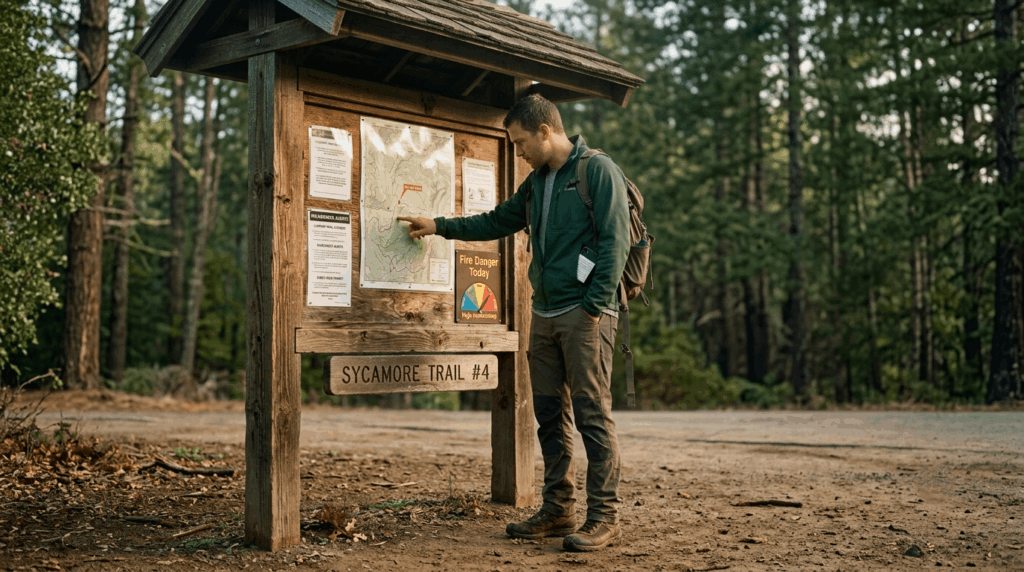
Most California day hikes run 4–10 miles and take 2–6 hours of actual moving time. Naismith’s Rule gives a reasonable baseline: 1 hour per 3 miles of distance, plus 1 hour for every 2,000 ft of elevation gain. Then add a real buffer, 30–50% on top of that estimate, for photo stops, water breaks, and California-specific terrain that’s often rockier or steeper underfoot than the mileage alone suggests.
Step 1: choosing your California day hike
Four variables actually decide whether a trail is right for your day: distance, elevation gain, terrain type, and how realistic the trailhead parking situation is. Get any one of these wrong and the whole day can go sideways.
How to use AllTrails to find and plan a California day hike
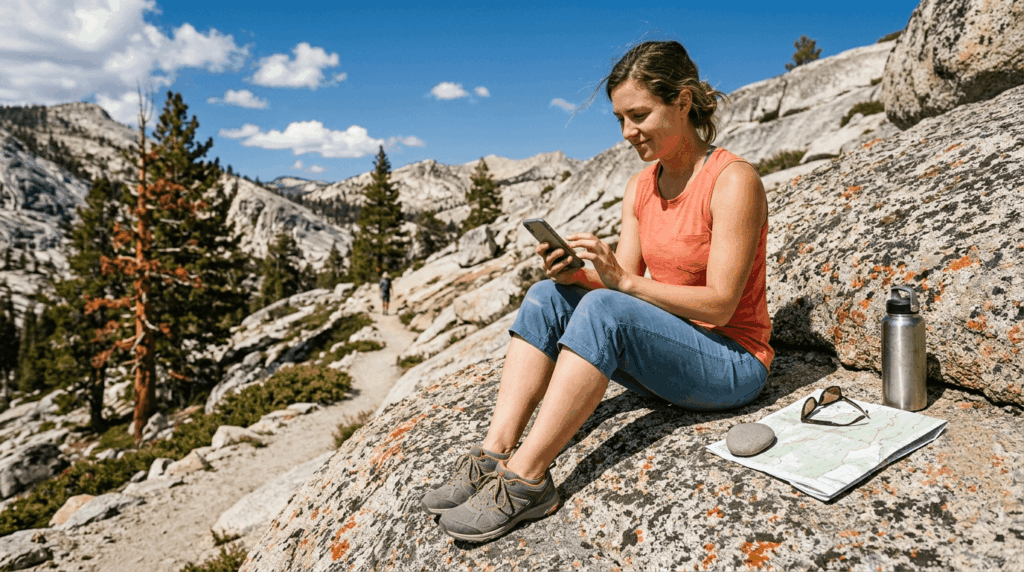
Filter by state (California), then narrow by length range, elevation gain, and difficulty before you even look at individual trail names. Feature filters, waterfall, dog-friendly, paved, help further, and reading reviews from the last two weeks specifically (not the trail’s overall rating) tells you about current, not historical, conditions. Download the map offline before you leave home; cell service disappears fast once you’re off the highway in most of California’s best hiking terrain.
Checking trail conditions before your California day hike
Beyond AllTrails’ recent reviews, check the managing agency’s own alert page (NPS or USFS trail alerts), CAL FIRE’s incident map during fire season, Caltrans QuickMap for highway access if a storm or fire has closed a route in, and the specific county or state park website for anything hyperlocal that a national database wouldn’t catch. For more on how seasonal hazards affect trails, see our seasonal hazards guide.
Step 2: permits and reservations, what you need before you leave home
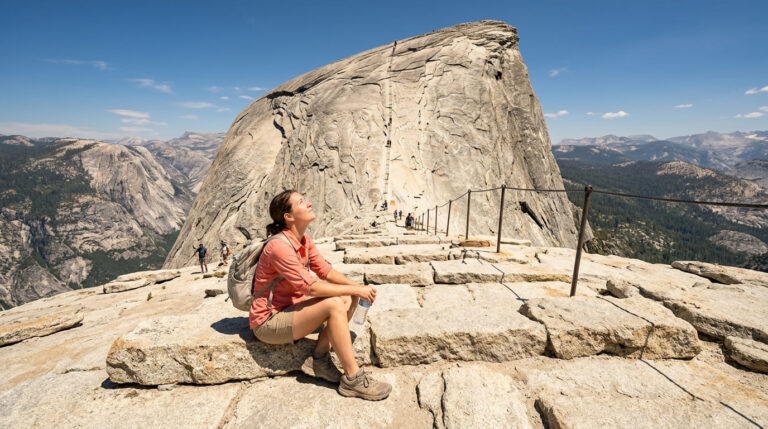
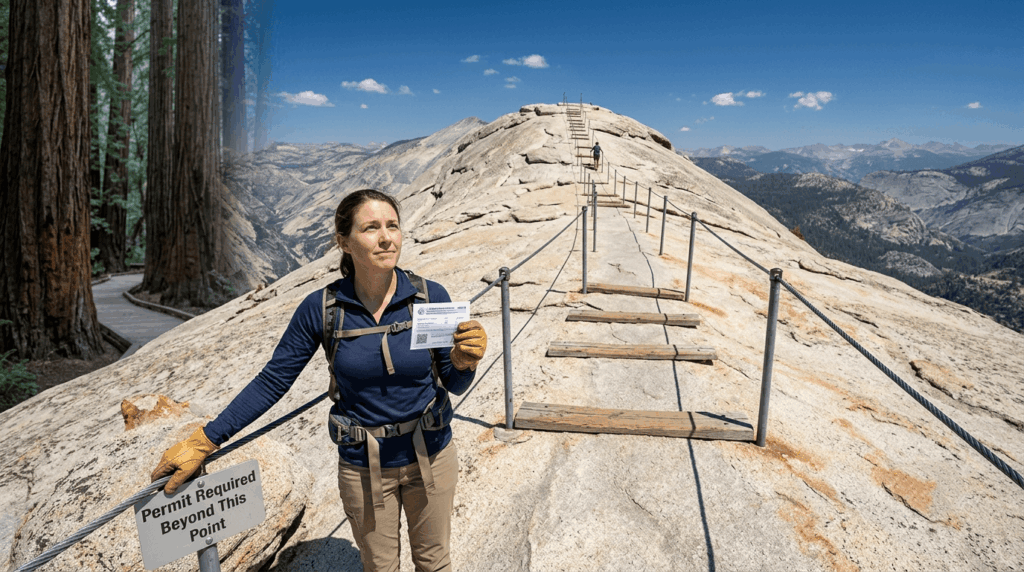
California’s day-use permit landscape is genuinely inconsistent trail to trail: Half Dome requires a lottery permit (application in March, results mid-April), Muir Woods requires a parking and/or shuttle reservation year-round through GoMuirWoods.com, and many state parks use ReserveCalifornia for both parking and day-use access during peak season. As of 2026, Yosemite itself no longer requires a timed-entry vehicle reservation to drive in, a real change from recent years, though specific in-park permits like Half Dome’s remain fully in effect.
How to check if your California day hike requires a permit
Check Recreation.gov for NPS and USFS wilderness day permits, ReserveCalifornia for state park day-use and parking reservations, and the specific park or trailhead’s own website for anything trailhead-specific that a general search might miss. When in doubt, check twice, a wasted drive to a trailhead you can’t legally access is a worse outcome than five extra minutes of research the night before.
Step 3: planning your day hike timeline in California
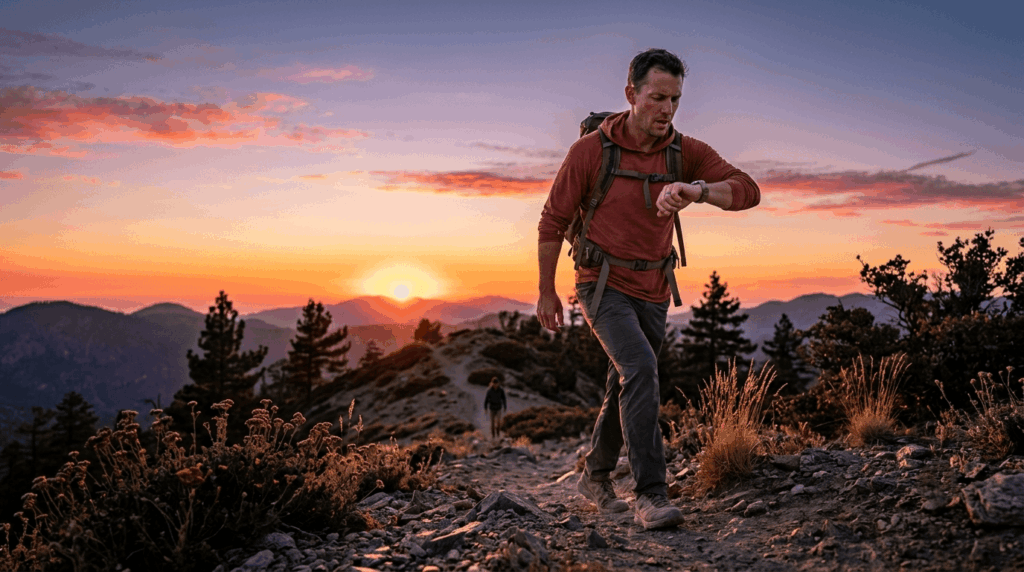
Always calculate your timeline backward from sunset, not forward from whenever you happen to wake up. California sunset ranges from around 4:47 p.m. in December to about 8:13 p.m. in June, which meaningfully changes how late a winter hike can safely run. Add a full hour of safety buffer beyond your estimated finish time, and plan to arrive at the trailhead 15–30 minutes before you actually start hiking to account for parking and gear checks.
The California day hike timeline: a start-to-finish planning template
- Wake up with enough margin to eat, not rush
- Eat a protein-rich breakfast before you leave
- Depart for the trailhead with buffer for traffic or a wrong turn
- Arrive and park, budget real time for this at popular trailheads
- Do a final gear check before you start walking
- Start the hike
- Treat the halfway point in time (not distance) as your turnaround decision point
- Return, tracking your pace against the original estimate
- Handle post-hike food and recovery before driving home tired
Step 4: day hike gear, what to pack for a California one-day trail
At minimum: 2 liters of water (more in desert or summer heat), sun protection, trail-appropriate shoes, a snack providing roughly 200–300 calories per hour of hiking, an offline map, basic first aid supplies, an emergency whistle, and a rain layer if you’re anywhere near the coast or Sierra where weather shifts fast. None of this needs to be expensive or elaborate, the point is having a real answer for “what if this takes longer than planned,” not building a full backpacking kit for a four-hour walk. For a complete gear list see our hiking gear checklist. A good lightweight daypack and a collapsible water bottle are the two most versatile day hike investments.
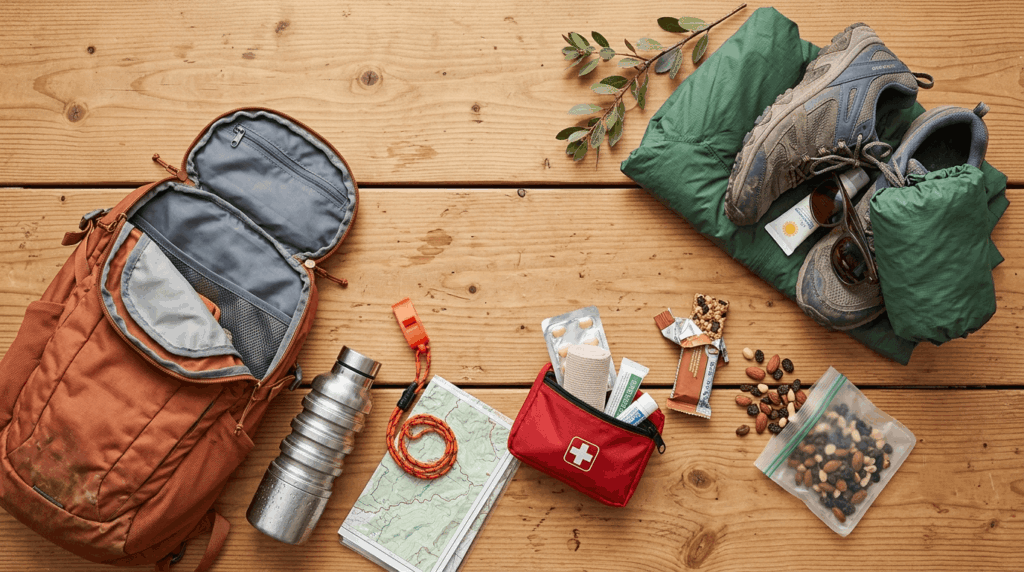
The California day hike packing list: essentials by terrain type
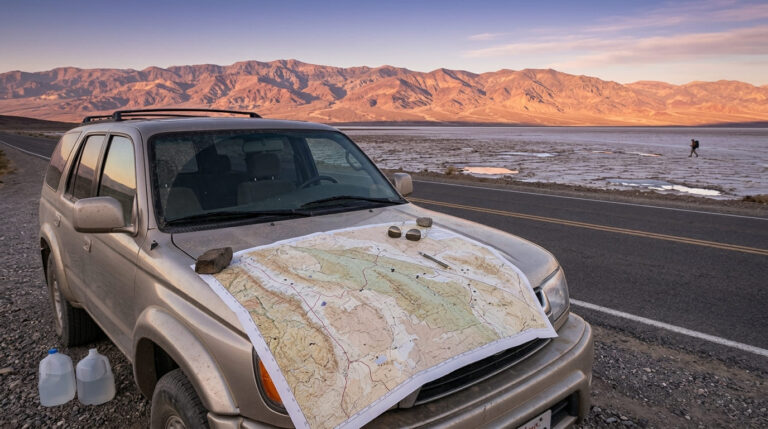
- Desert hikes: add 3+ liters of water, electrolytes, a wide-brim hat, and skip cotton entirely, it holds sweat and cools you down dangerously in dry heat; see specific gear notes in our Death Valley guide
- Sierra Nevada hikes: add a warm layer even in summer, microspikes if hiking May–June when snow can linger, and stronger sun protection given the altitude; see our high-elevation hiking guide
- Coastal hikes: add a windproof shell and extra layers for marine layer fog, which can drop temperatures fast even on a forecasted warm day; this matters especially on Big Sur and Channel Islands trips
Step 5: trailhead parking, the most overlooked day hike planning step
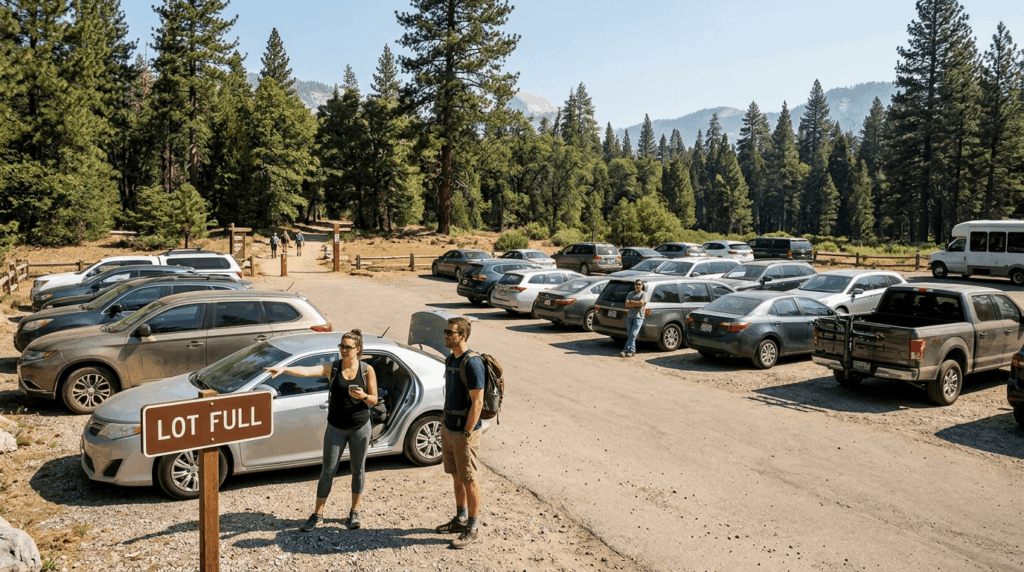
California’s most popular trailheads routinely fill to capacity by 8–9 a.m. on weekends, and once a lot is full, most don’t have a practical overflow option nearby, you’re looking at a long walk-in or a wasted trip.
How to handle trailhead parking at California’s most popular day hike destinations
Arrive before 8 a.m. on weekends at any genuinely popular trailhead, full stop. Where shuttle systems exist, YARTS into Yosemite, the Muir Woods shuttle, the Emerald Bay shuttle that runs seasonally starting mid-June, use them instead of fighting for a parking spot, since they’re often more reliable than hoping for a last-minute space. Emerald Bay specifically uses pay-on-arrival parking ($10/vehicle) with real capacity limits rather than an advance reservation, so early arrival there matters even more than at reservation-based sites like Muir Woods. For an in-depth look at Lake Tahoe trailhead parking, see our Lake Tahoe hiking guide.
What to do after your California day hike: recovery and reflection
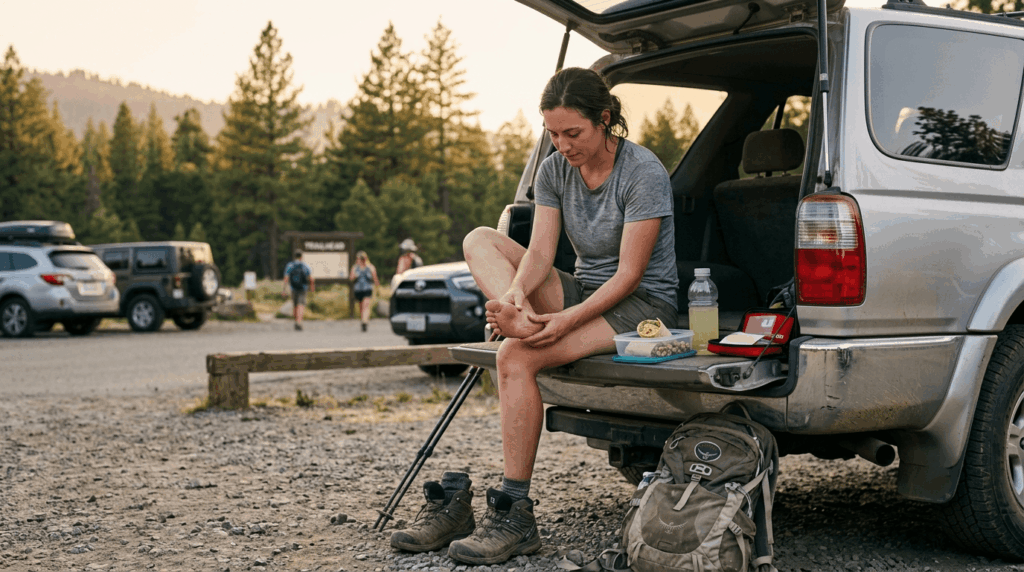
Eat protein within 30 minutes of finishing, and replenish electrolytes if you sweated heavily, especially on a hot or high-mileage day, this window matters more for recovery than most casual hikers realize. Check your feet for blisters before they get worse overnight, and if you hiked anywhere in Northern California’s grassy or wooded terrain, do a full tick check, including scalp and behind the ears where they’re easy to miss.
Logging the hike, in AllTrails, Gaia, or Strava, builds a useful record of what pace and distance actually felt like for you, which makes planning your next hike more accurate than guessing from scratch again. Over time, that log becomes the single best tool you have for calibrating your own Naismith’s Rule buffer instead of relying on a generic estimate.
If you’re building toward bigger trips, our hiking safety guide covers preparation that scales up from day hikes, and matching a trail’s difficulty rating to your fitness is the single best predictor of whether a day hike actually goes well.
Frequently asked questions: day hiking planning in California
Which day hiking trails in California require permits?
Half Dome (lottery permit) and Muir Woods (parking/shuttle reservation) are the most prominent; many state parks also require day-use reservations during peak season through ReserveCalifornia.
How many miles a day should I plan for a California day hike?
Most day hikers comfortably manage 4–10 miles depending on elevation gain and fitness; use Naismith’s Rule as a time estimate and add a 30–50% buffer rather than relying on distance alone.
What time should I start a day hike in California?
Calculate backward from sunset (as early as 4:47 p.m. in December, as late as 8:13 p.m. in June), add a full hour of safety buffer, and start earlier than feels necessary, especially in winter.
How do I check trail conditions before a California day hike?
Check recent AllTrails reviews (filtered to the last two weeks), the managing agency’s own alert page, and CAL FIRE’s incident map during fire season for the most current picture.
What should I pack for a day hike in California?
At minimum: 2+ liters of water, sun protection, appropriate shoes, a calorie-dense snack, an offline map, basic first aid, and a rain layer, then adjust for desert, Sierra, or coastal conditions specifically.
How early should I arrive at a popular California trailhead to find parking?
Before 8 a.m. on weekends at any genuinely popular trailhead, lots at places like Yosemite and Emerald Bay routinely fill by 8–9 a.m., and there’s often no practical overflow option once that happens.