California Hiking Trail Permits, Passes, and Fees: The Complete Guide
Most California day hikes need nothing more than a parking spot. But four permit systems come up constantly across this site’s trail guides (wilderness permits, national park entrance fees, National Forest Adventure Passes, and Half Dome’s notoriously competitive lottery), and mixing them up is the fastest way to show up at a trailhead unprepared, or to plan an entire trip around a half dome hike that a permit lottery ultimately decides for you. This guide to California hiking trail permits covers all four systems in one place, with current 2026 pricing and policy, so you can figure out in a few minutes which of them apply to your trip.
Disclosure: Please note that some of the links below are affiliate links and at no additional cost to you, I may earn a commission. Know that I only recommend hiking gear I personally stand behind; when you use my affiliate links, it helps me run this blog and keep all of this content free of charge for readers (like you).
Key takeaways:
- Free but reservation-heavy: Most wilderness permits themselves cost little to nothing, but the popular ones require booking up to 6 months ahead through Recreation.gov.
- Yosemite’s reservation situation changed for 2026: timed-entry is not required this year, but Half Dome and wilderness permits are separate systems and still fully in effect.
- Cheapest fix for Southern California hikers: the National Forest Adventure Pass is only $5 for a full day, and often isn’t required at all if you’re not parking at a developed site.
- Hardest permit on this list by far: Half Dome’s cable permit; both the preseason and daily lotteries hover around a 1-in-5 success rate per application.
| Permit / Pass | Where it applies | Cost | How to get it | Lead time |
|---|---|---|---|---|
| Wilderness permit (quota season) | Desolation, Ansel Adams, John Muir, Emigrant & other CA wilderness areas | ~$6 reservation fee + variable per-person recreation fees (varies by forest) | Recreation.gov | Up to 6 months ahead, or walk-up |
| National park entrance fee | All CA national parks | $30–35/vehicle (varies by park) | At the gate or Recreation.gov digital pass | Same day |
| Yosemite timed-entry reservation | Not required in 2026 | N/A | N/A | N/A |
| America the Beautiful Annual Pass | All national parks + federal day-use sites | $80/yr (US resident, 2026 pricing) | Recreation.gov, park entrances | Anytime |
| National Forest Adventure Pass | Angeles, Cleveland, Los Padres, San Bernardino NFs (developed sites only) | $5/day, $30/yr ($15 for a second vehicle) | Ranger stations, REI/Big 5, myscenicdrives.com | Anytime |
| Half Dome cable permit | Half Dome, Yosemite | $10 application fee + $10/person if won | Recreation.gov preseason lottery (March) or daily lottery | March (preseason) or 2 days before (daily) |
Wilderness Permits: When You Need One and How to Get It
Which California trails require a wilderness permit
Federally designated wilderness areas require a permit regardless of day-use or overnight status in some cases, though the rule that trips most people up is this: day hikes usually don’t need one, but any overnight stay inside a wilderness boundary does.
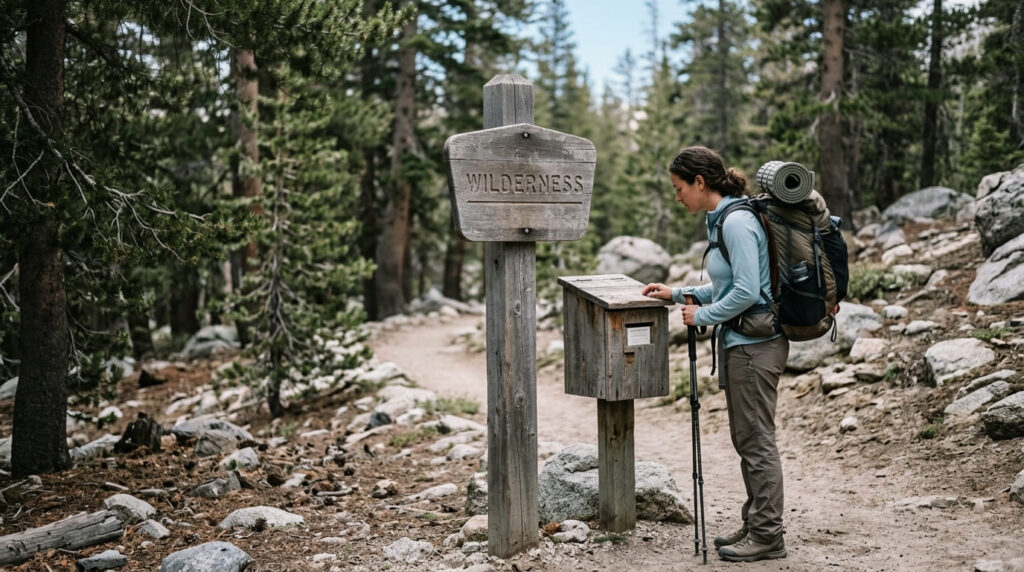
This covers Desolation Wilderness permit requirements, Ansel Adams Wilderness, John Muir Wilderness, the Emigrant Wilderness backcountry, and dozens of others referenced throughout this site’s county guides, including the Desolation Wilderness trails near Lake Tahoe and the Ansel Adams Wilderness trails in Mono County.
Quota systems exist to protect the same resources covered in our trail etiquette guide: permits aren’t bureaucracy for its own sake; they’re how agencies track and limit overnight impact on fragile terrain.
How to reserve a wilderness permit in advance (Recreation.gov)
Most quota-season permits open on Recreation.gov in a rolling window up to 6 months before your entry date, typically released in the first week of January for the earliest summer dates. Expect a small non-refundable reservation fee (often around $6) plus a per-person recreation fee that varies by wilderness area.
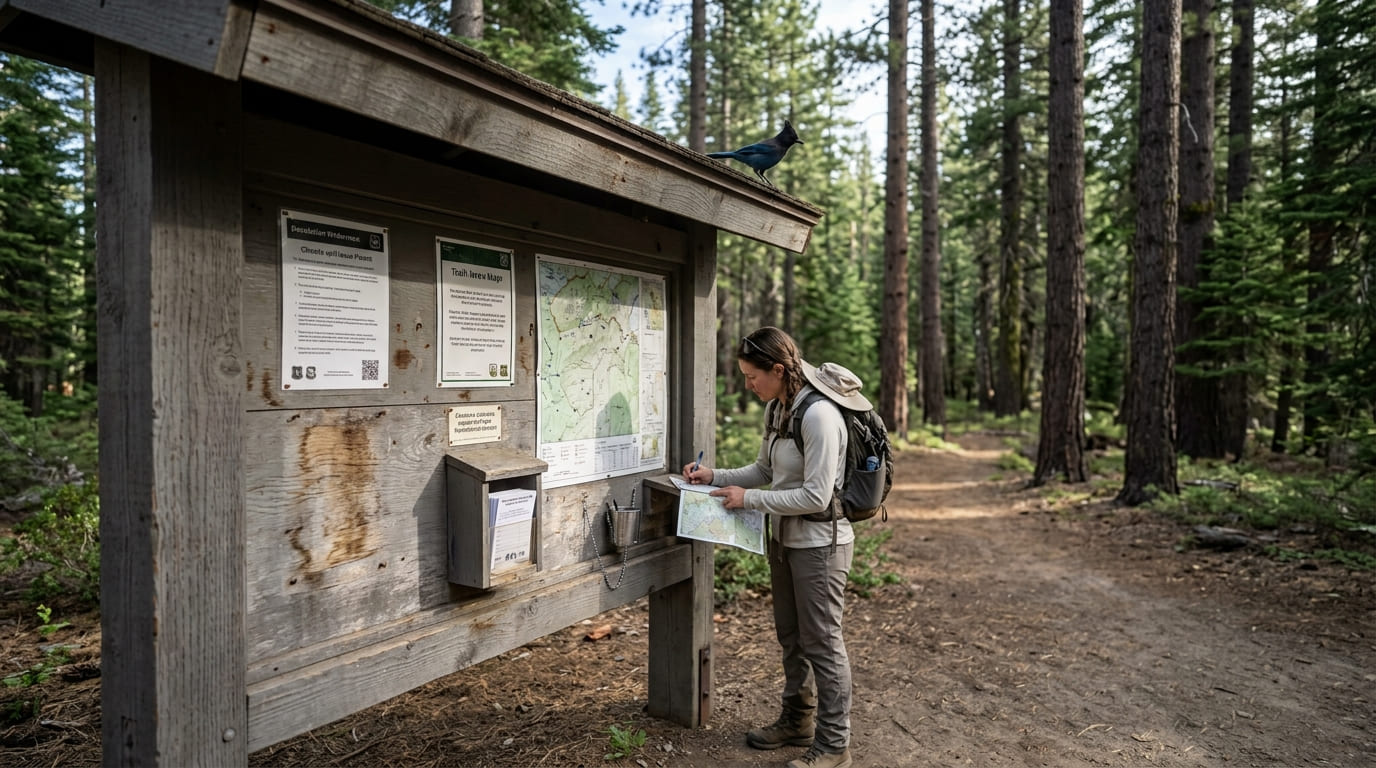
Outside the quota season (roughly November through April at most trailheads), permits are typically self-issued for free at trailhead boards or ranger stations: no reservation needed, but you still need a permit in hand.
Walk-up and last-minute permit options
Most quota trailheads hold back a chunk of their daily allotment (commonly 30–60% depending on the forest) for walk-up, first-come issuance one to two days before entry. This is a fallback if the reservation window has already filled for your dates: arrive early at the relevant ranger station, since popular trailheads can claim their entire walk-up allotment before 8 a.m. on a busy summer morning.
National Park Entrance Fees and Timed-Entry Reservations
Yosemite’s timed-entry reservation system
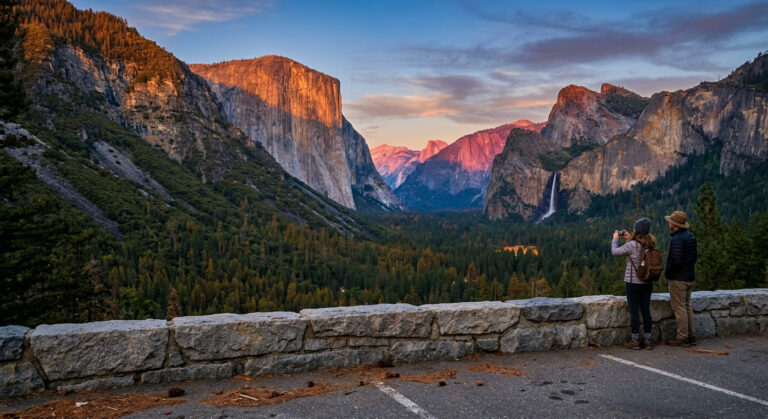
Yosemite does not require a timed-entry reservation in 2026. The park announced in February 2026 that it would not use a season-wide reservation system this year, based on 2025 traffic data.
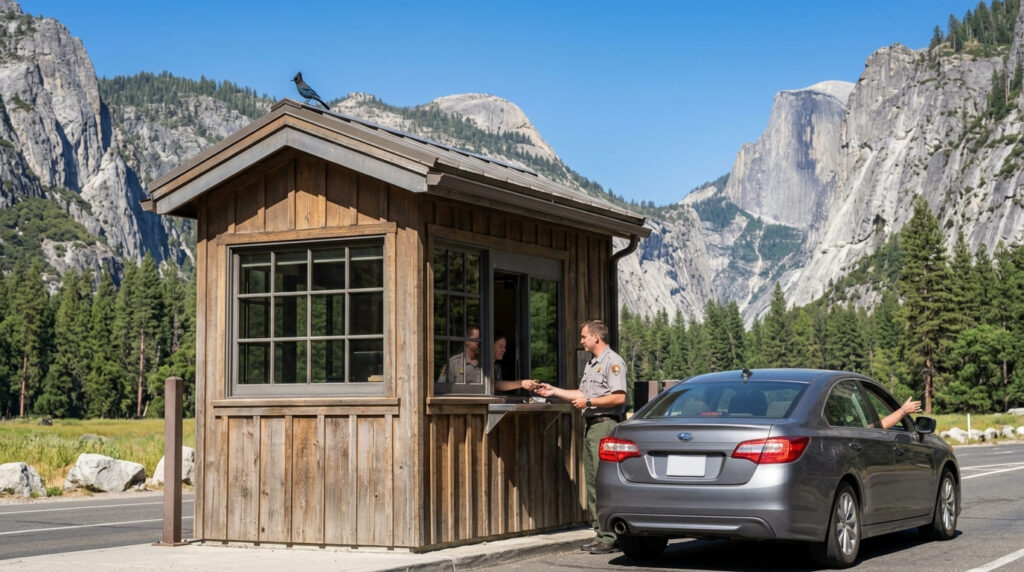
You still need to pay the standard entrance fee or show a valid pass at the gate; that hasn’t changed, and this is a completely separate system from Half Dome and wilderness permits, both of which remain fully in effect. To plan ahead for your trip, read our dedicated Yosemite National Park permit guide. Because Yosemite has reversed this policy multiple times in recent years, treat “no reservation needed” as this year’s rule, not a permanent one, and check current status before a trip.
Timing still matters even without a reservation requirement: arriving before 8 a.m. or visiting midweek makes a difference to parking and crowding, a pattern our guide to the best time to visit each national park covers in more depth across all of California’s parks. If Yosemite Valley itself is congested, the park’s own guidance now actively promotes Tuolumne Meadows, Wawona, and Hetch Hetchy as quieter alternatives within the same park.
Is an America the Beautiful annual pass worth it?
The America the Beautiful Interagency Annual Pass covers entrance fees at every U.S. national park plus standard day-use fees at many National Forest, BLM, and Army Corps sites, including, notably, National Forest Adventure Pass requirements.
As of January 1, 2026, it costs $80 for U.S. residents (unchanged from the historical price) and $250 for non-residents, a new two-tier pricing structure. For a California trip alone, it pays for itself after visiting roughly two to three fee-charging parks: Yosemite plus Sequoia/Kings Canyon and Joshua Tree, for example, already clears that math at $35 per vehicle each.
Adventure Passes for National Forest Trailheads
Which national forests require an Adventure Pass
The National Forest Adventure Pass applies to exactly four Southern California national forests: Angeles, Cleveland, Los Padres, and San Bernardino, including trailheads covered in our San Bernardino Mountains trail guide. It is not required anywhere in Northern California.
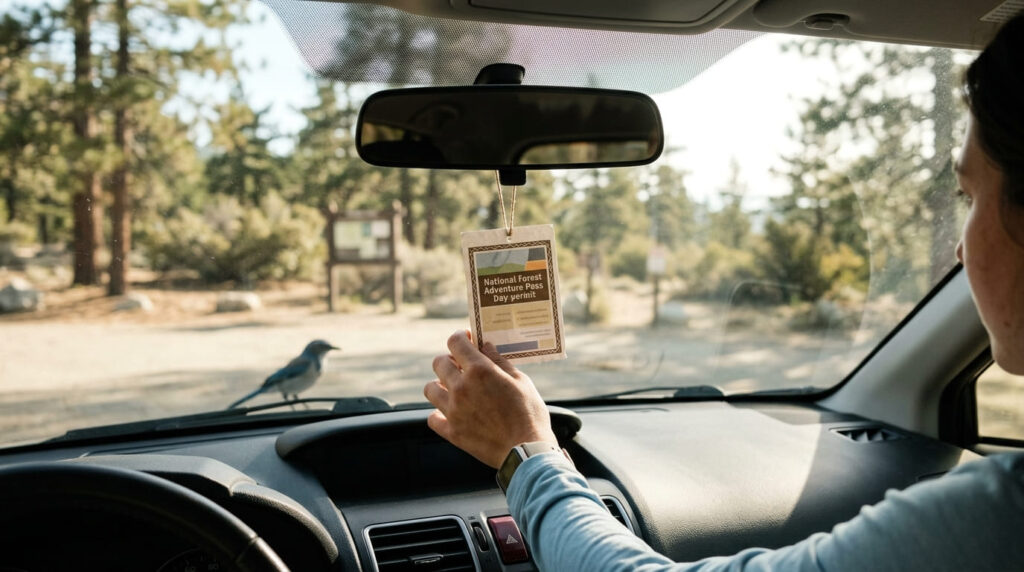
Since a 2016 policy change, the pass is required only if you’re parking at a designated recreation site with amenities (like picnic tables or restrooms). If you park along a roadside pullout and just hike in without using site amenities, no pass is required, though checking signage at your specific trailhead is still worth doing.
Where to buy a National Forest Adventure Pass
A day pass runs $5, an annual pass $30, and a second-vehicle annual pass (for a household’s extra car) is another $5. Passes are sold at ranger stations, many outdoor retailers like REI and Big 5, and online through MyScenicDrives.com, with most orders shipping within 24 hours. An America the Beautiful pass covers the same requirement, so if you already own one, you don’t need a separate Adventure Pass.
Day-Use Lottery Permits for High-Demand Trails
Half Dome cable permits: how the lottery works
Half Dome’s cable permit is the single most competitive hiking permit covered in this guide, and the search demand around Half Dome permits dwarfs every other topic in this guide, which tracks, since it’s one of the hardest day-hiking permits to win in the country.
There are two paths, both through Recreation.gov: the preseason lottery, open March 1–31 with results announced mid-April, and the daily lottery, which opens applications two days before each hike date (midnight to 4 p.m. Pacific, with results sent that evening).
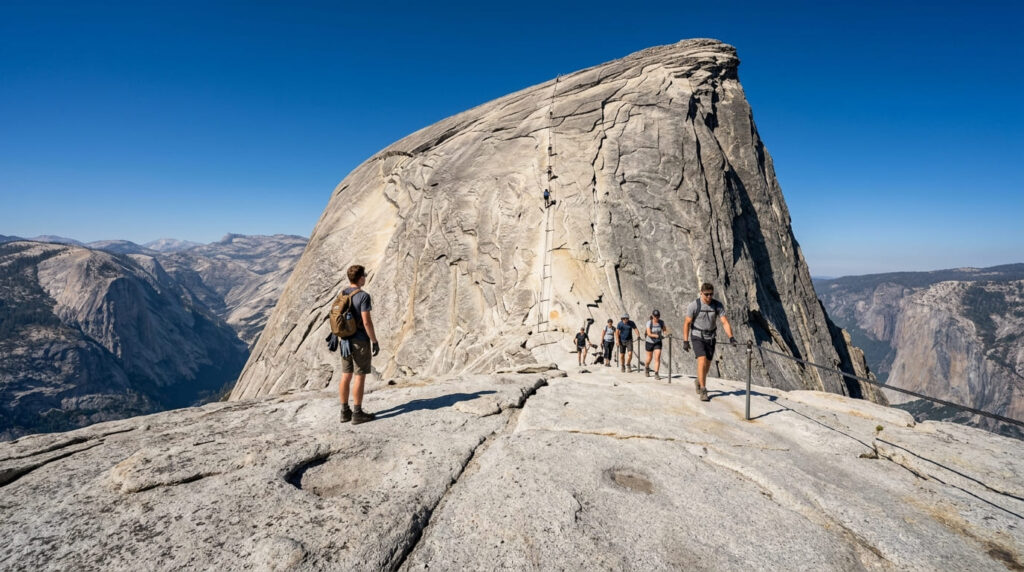
Per NPS’s own published Half Dome lottery statistics, the 2024 season saw 35,289 preseason applications with a 22% success rate, and 35,561 daily lottery applications with a 19% success rate, though your odds on any single specific date are considerably lower than the headline number, since each application can request up to seven dates and the stated success rate reflects the whole application, not one date.
The application fee is $10 (non-refundable), plus $10 per person if you win. Cables are typically up from late May through mid-October, snowpack permitting; these are planning targets, not guarantees, so check current status before booking travel around a specific date.
Backpackers already holding a wilderness permit from an eligible trailhead can request a Half Dome permit at pickup for the same $10-per-person fee, often with better odds than either lottery. This is a strenuous hike either way (14.2 miles round trip with about 4,800 feet of gain), so if you land a permit. For more about the park generally, see our Yosemite trail guide.
Other California trails that require a day-use permit
Half Dome gets the attention, but it’s not the only permit system worth knowing across the state; securing a Mount Whitney permit or planning a Trans-Catalina backpacking route involves coordinating a free online hiking permit through the Conservancy alongside advance campsite reservations.
If a specific trail elsewhere on this site requires one, that guide’s practical tips section will mention it; when in doubt, check the trail’s Recreation.gov listing before you go, since day-use quotas are far less consistently publicized than Half Dome’s.
Frequently asked questions about California hiking trail permits
Which day hiking trails require permits for Yosemite Valley floor?
None: easy Valley floor walks like Cook’s Meadow and Lower Yosemite Fall require no permit at all; only Half Dome’s cables and any overnight wilderness travel require one.
Do you need a permit to hike in California?
For the vast majority of day hikes, no: permits are the exception, required mainly for overnight wilderness trips, Half Dome’s cables, and a handful of other quota-controlled day-use trails.
Are wilderness permits free?
Not entirely: most charge a small non-refundable reservation fee (often around $6) plus a modest per-person recreation fee, though self-issued permits outside the quota season are typically free.
What happens if you hike without a required permit?
You risk a citation and fine from rangers who patrol popular trailheads specifically for this, and in the case of Half Dome, being turned back at the cables checkpoint entirely; it’s not worth the risk on a hike you’ve already traveled for.
Do permit requirements change by season?
Yes: most wilderness areas only enforce quotas during the busy season (roughly late spring through fall) and shift to free, self-issued permits the rest of the year, while systems like Half Dome’s cables aren’t even up outside the same general window.
Is there one single permit that covers all California trails?
No: there’s no universal pass. The America the Beautiful pass comes closest, covering national park entrance fees and National Forest day-use fees, but it doesn’t include wilderness permit reservation fees or Half Dome’s lottery fee.