Your First California Backpacking Trip: A Complete Beginner’s Guide
California might be the best state in the country to take your first backpacking trip, mostly because of how much variety sits within a few hours of nearly anyone: alpine lakes in the Sierra Nevada, such as those found across the Emigrant Wilderness, redwood coastline in the north, desert canyons in the south.
Disclosure: Please note that some of the links below are affiliate links and at no additional cost to you, I may earn a commission. Know that I only recommend hiking gear I personally stand behind; when you use my affiliate links, it helps me run this blog and keep all of this content free of charge for readers (like you).
I’ve spent years researching trail conditions across every one of these regions, often supplementing field research by diving into top-rated outdoor and backpacking literature and the beginners who have the best first trip all do the same handful of things right: they pick a short, well-marked route, they get their permit sorted early, and they don’t try to buy every piece of gear at once.
This guide walks through exactly that process for finding and navigating the best backpacking trails in California, step by step.
Key Takeaways
- Pick a short first route, under 15 miles round trip, with established campsites and decent cell coverage, before you worry about anything more ambitious.
- Yosemite wilderness permits run through a rolling lottery on Recreation.gov, opening 24 weeks before your start date, so plan your application date before you plan your gear.
- The “Big Three”- shelter, sleep system, and pack– are worth spending real money on; everything else can be borrowed or bought cheap for your first trip.
- A bear canister is required in most Sierra wilderness areas, not optional, and rangers do check.
- Never rely solely on your phone for navigation once you’re in the Sierra backcountry; cell dead zones are the norm, not the exception.
- Solo backpacking is fine for a first-timer on the right route, but pick a popular, well-traveled trail for your first solo trip, not a remote one.
What Is Backpacking and Why California Is One of the Best Places to Start
Backpacking means carrying everything you need- shelter, food, water treatment, sleep system- on your back and walking to a camp far enough from any trailhead that you’re spending at least one night out. California is genuinely one of the best places to learn this, since the state has hundreds of wilderness areas ranging from easy, well-marked entry-level routes to genuine multi-week traverses, all within driving distance of most of the population.
How Backpacking Differs from Camping and Day Hiking: A Clear Breakdown
Car camping means you drive to your site and unload from your trunk, with no distance limit on what you bring. Day hiking means no overnight stay at all, just a lighter pack and a return to the car by dark. Backpacking sits in between: you’re carrying everything on foot, sleeping out, and typically covering real mileage to get there. If you want the fuller comparison between backpacking and day hiking specifically, I’ve broken that down in the backpacking vs. day hiking guide.
Planning Your First Backpacking Trip in California: Step-by-Step
Every first trip goes more smoothly with the same basic sequence: pick a destination, get the permit, then train your body for the specific demands of that route.
How to Choose Your First Backpacking Destination in California
Look for a route under 15 miles round trip, with established campsites, moderate elevation gain, and at least partial cell coverage for peace of mind. Avoid anything requiring a stream ford, off-trail navigation, or a summit push for your first trip; save those for once you’ve got one or two trips of real experience behind you. Review the terrain hazards guide before picking a route with any exposed ridgeline or stream crossing.
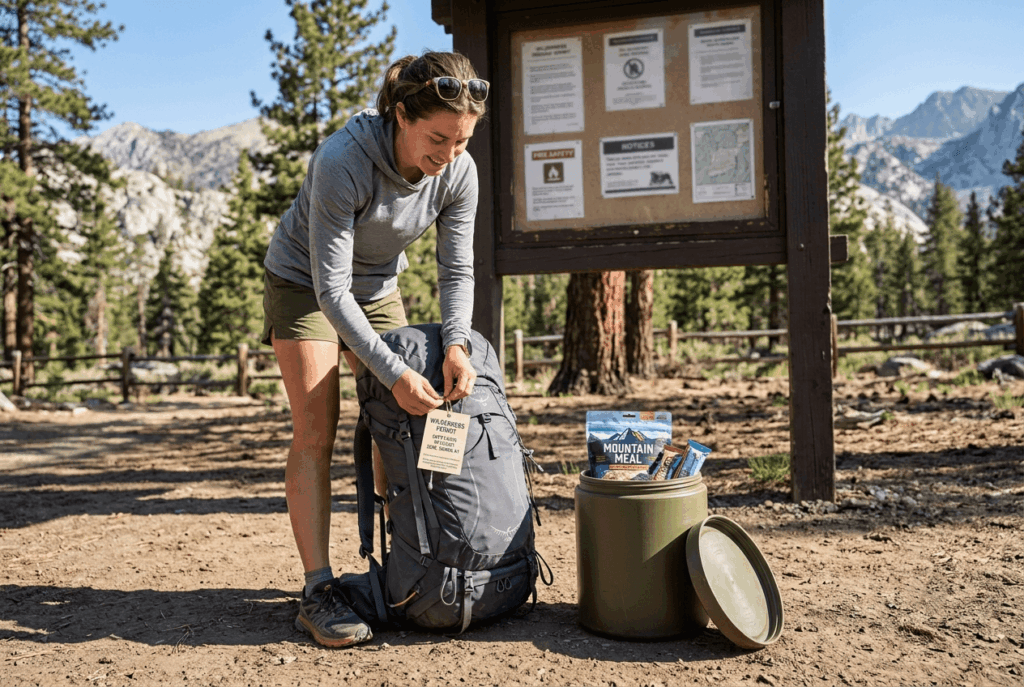
How to Get a Wilderness Permit for California Backpacking Trips
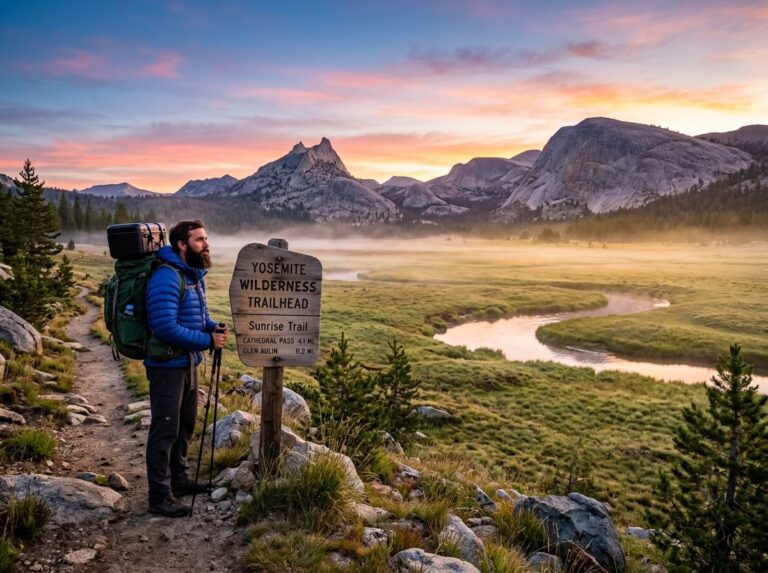
Yosemite’s wilderness permit system runs on a rolling weekly lottery through Recreation.gov, opening 24 weeks before your desired start date; results come back the following Monday, and you have until Thursday at 11:59 p.m. Pacific to accept. Permits currently run $10 per permit plus $5 per person, with an additional $10 per person if you’re adding Half Dome to your itinerary. If you miss the lottery window, 40% of each trailhead’s quota releases seven days out at 7 a.m. Pacific, and walk-up permits are available the day before your trip at a ranger station; arrive early, since popular trailheads do run out.
For other national forests and wilderness areas, consult the local USFS ranger district website directly.
How to Train Your Body for a California Backpacking Trip
Start with progressive loaded hikes, walking your local trails with a weighted pack roughly matching what you’ll carry, a few weeks before your trip. Stair climbs and steady weekly mileage increases build the specific endurance backpacking demands better than general cardio alone, and if your trip involves real heat, a few heat-acclimatized training hikes go a long way. Review the physical health benefits of hiking for training strategies.
Essential Gear for Beginner Backpacking in California
You don’t need to buy everything before your first trip; borrowing or renting the expensive items is a completely reasonable way to test whether backpacking is for you before you invest.
The Backpacker’s Big Three: Shelter, Sleep System, and Pack
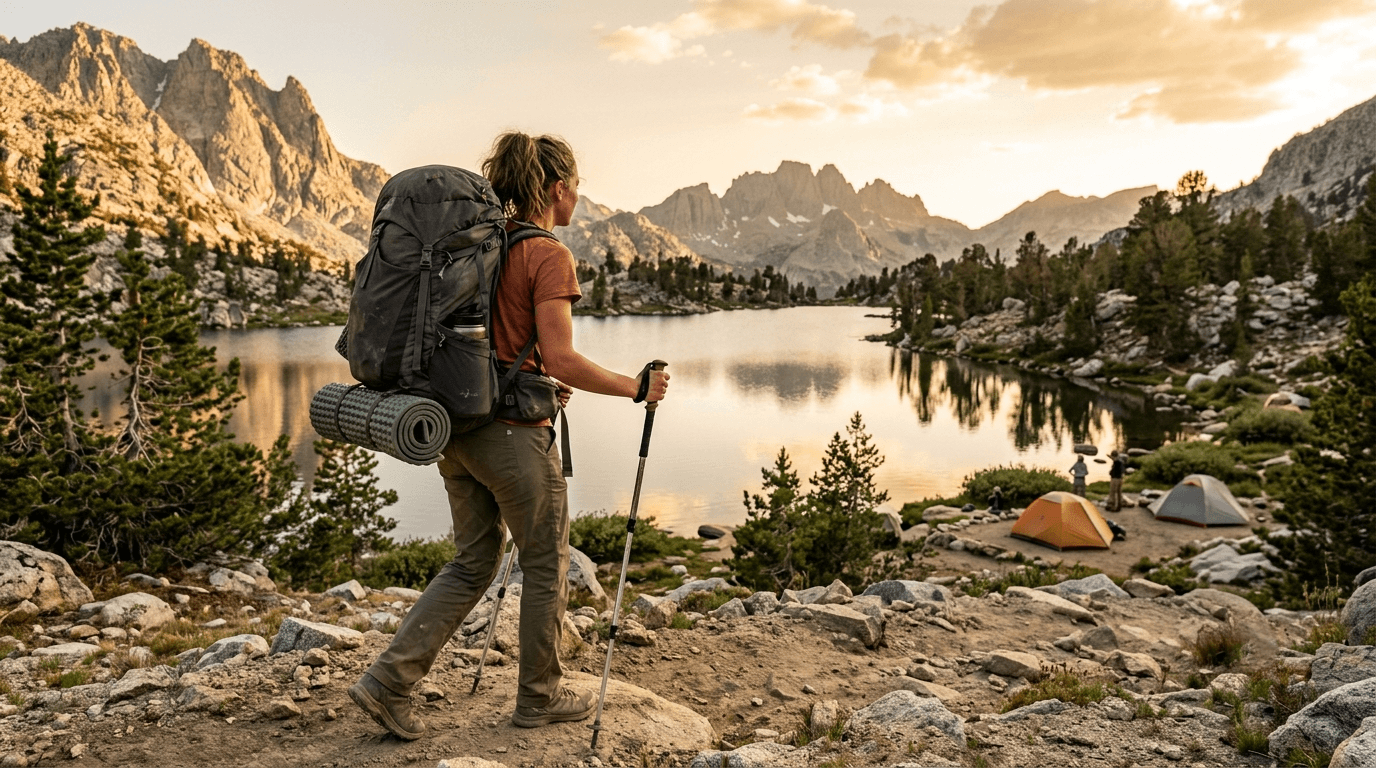
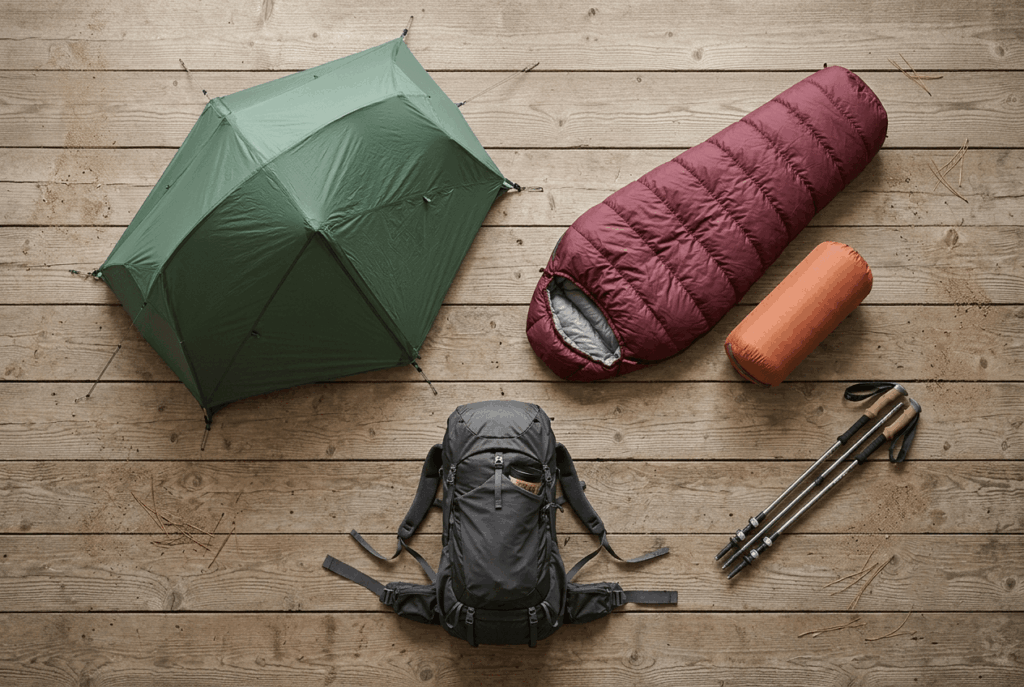
Your tent, sleeping bag, and backpacking pack are worth the most attention and, eventually, the most money, since they affect your comfort and safety more than anything else you carry. For most beginners, a 50–65 liter pack fits a full first-trip kit without being oversized, and a sleeping bag rated for temperatures at least 10°F below what you expect covers you for a cold night. A pair of solid trekking poles– Black Diamond makes some of the most reliable ones on the market- takes real weight off your knees on descents, especially with a loaded pack.
Food, Water, and Bear Canisters: California-Specific Gear Requirements
A bear canister is required, not optional, in most Sierra wilderness areas; rangers do check at trailheads, and you can be turned away or fined without one. Plan on a water filter or purification method rather than carrying every liter you’ll need, and aim for freeze-dried or dehydrated meals for a lighter food bag, supplemented with high-calorie snacks for the trail itself.
How to Pack a Backpacking Pack Correctly for a California Trail
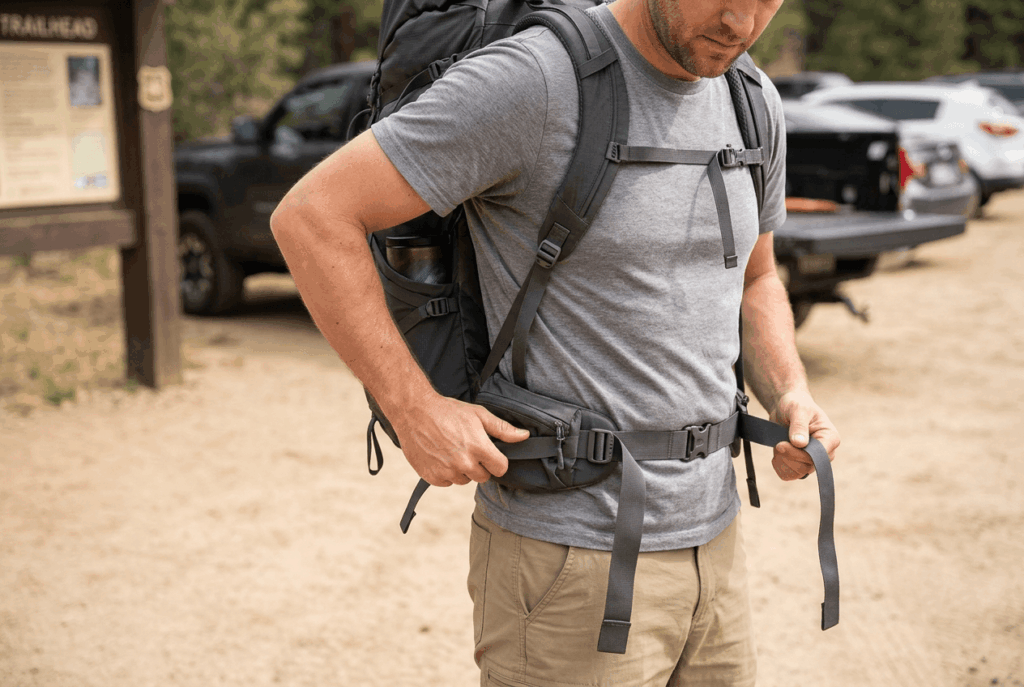
Keep your heaviest items, food, water, bear canister, close to your spine and centered between your shoulder blades, not riding low or bouncing away from your back. Your hip belt should carry the bulk of the weight, not your shoulders, so take the time to adjust it properly before you start walking. Waterproof anything that can’t get wet, even if the forecast looks dry, since a single stream crossing or surprise shower can ruin an unprotected sleeping bag fast.
Leave No Trace and Wilderness Ethics for California Backpackers
Leave No Trace isn’t a suggestion in California’s backcountry; it’s the standard every backpacker is expected to know before their first trip, not learn after making a mistake. Review the full trail etiquette guide before heading out.
Campfire Rules for Backpacking in California’s Wilderness Areas
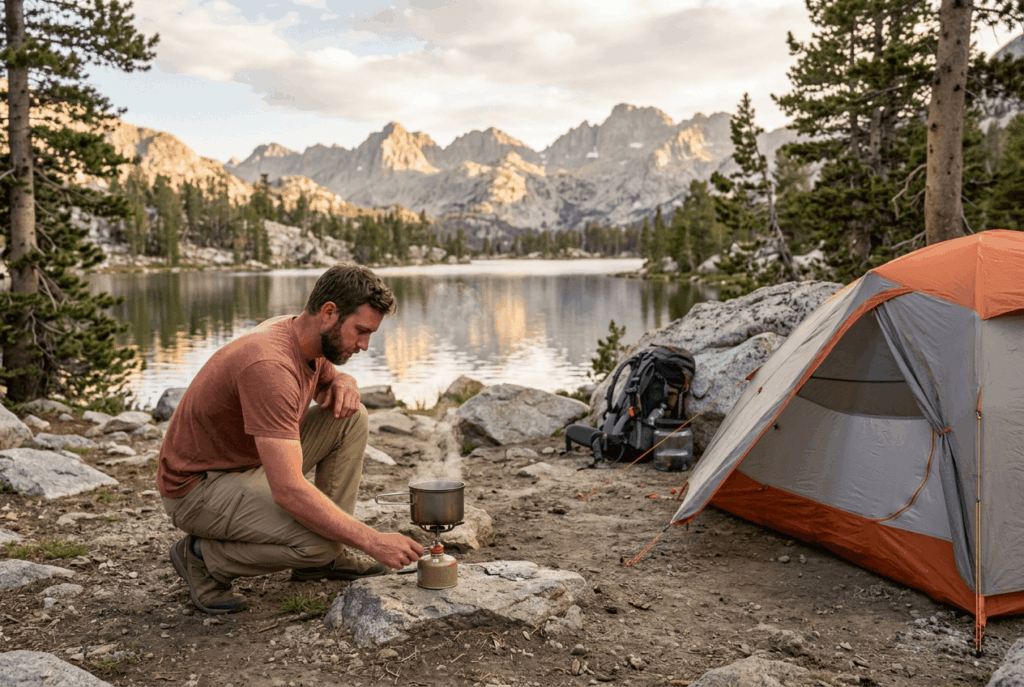
Most California wilderness areas ban fires above 10,000 ft entirely, and many popular zones restrict them well below that during dry season. Check your specific wilderness area’s current fire rules before you go, since they shift with drought conditions and fire risk. A backpacking stove covers your cooking needs regardless of fire restrictions, which is exactly why most experienced backpackers don’t rely on a campfire in the first place.
Human Waste Disposal on California Backpacking Trails
The cathole method, digging 6 to 8 inches deep, at least 200 ft from water, trails, and camp, is standard practice across most California backcountry. Some high-traffic corridors, including parts of the Mount Whitney zone, require WAG bags instead during peak season, since cathole density in popular areas has become a real sanitation problem. Check your specific permit’s requirements before you go.
Navigation and Safety for Beginner Backpackers in California
Why Beginners Should Never Rely Solely on Cell Service While Backpacking in California
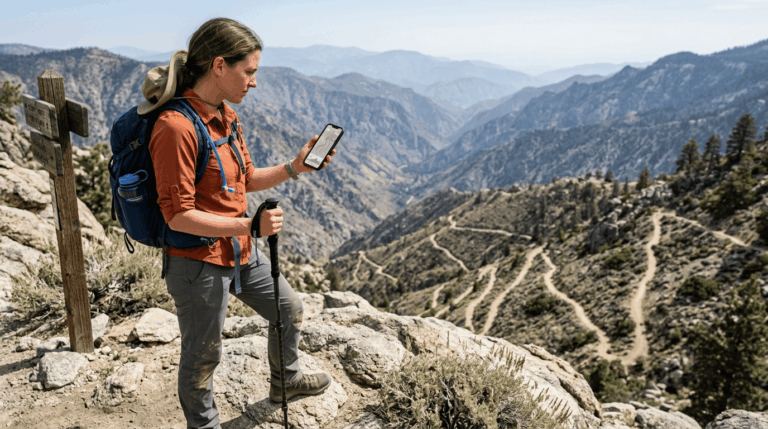
Cell dead zones are the norm across most of the Sierra Nevada backcountry and much of Northern California’s wilderness, not an edge case you might get unlucky with. Download offline maps in an app like Gaia GPS before you lose signal, and carry a paper topo map as backup; a dead phone battery shouldn’t be the reason you can’t find your way back. I’ve gone deeper on exactly this in the navigation hazards guide. Also review the seasonal hazards calendar before committing to dates.
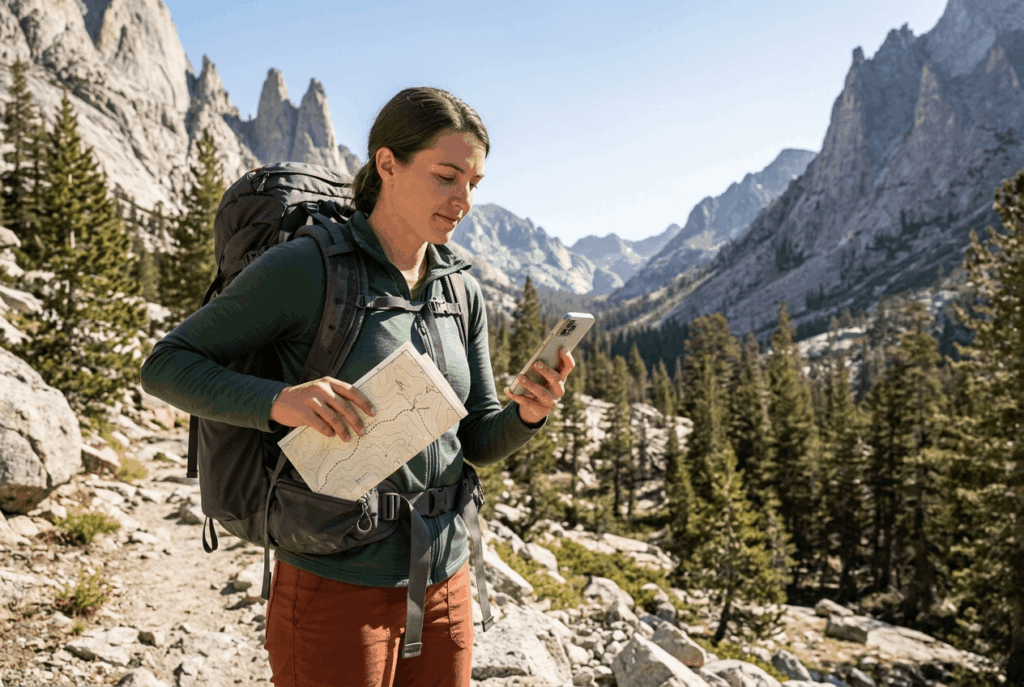
Is Solo Backpacking Safe for a First-Timer in California?
Solo backpacking is genuinely fine for a first-timer, as long as you pick a popular, well-traveled route rather than a remote one; you’ll have other hikers around if something goes wrong, and cell coverage tends to be better on popular corridors too. The tradeoff is real: solo means no one to help with an injury or split gear weight, but it also means total flexibility on pace and schedule. My honest take: a busy solo trip beats a group trip to somewhere genuinely remote, risk-wise.
Best Beginner Backpacking Trails in California: Where to Start
Beginner Backpacking Trails in Northern and Southern California
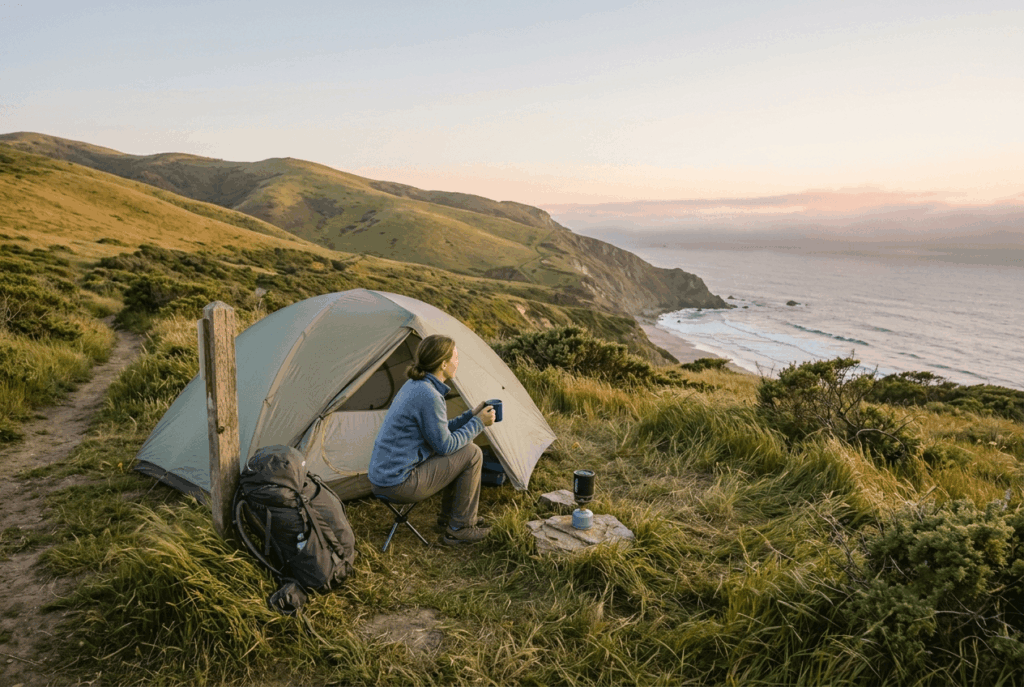
Point Reyes’ Coast Camp gives you an easy coastal first trip with a real campground-style site at the end. Big Basin’s Skyline-to-Sea corridor mixes redwood forest with a manageable, well-marked route. In the south, Anza-Borrego is a strong winter-only option, while taking on a Catalina Island multi-day route provides an established island-crossing adventure with designated campgrounds.
Your first backpacking trip doesn’t need to be ambitious to be a real success; a short, well-planned route with the right permit and a borrowed piece of gear or two teaches you more than an overly hard trip that ends early. If you’re shopping for someone preparing for their first overnight trek, our roundup of thoughtful gifts for backpackers highlights practical gear items. Once you’ve got one trip under your belt, the essential gear checklist is worth another look for dialing in what’s actually worth buying versus what you can keep borrowing.
Frequently Asked Questions: Backpacking in California for Beginners
How do I find backpacking trails in California?
Start with the managing agency’s own trip planner; Yosemite, Sequoia-Kings Canyon, and most national forests publish trailhead-specific trail descriptions and quota info directly. AllTrails and Gaia GPS both work well as a second pass for recent conditions and photos.
What should I pack for my first backpacking trip in California?
Beyond your Big Three, tent, sleeping bag, pack, bring a water filter, a stove and fuel, a bear canister where required, a headlamp, and layers for a temperature swing well below what the daytime forecast suggests. Borrow the expensive items for your first trip if you don’t already own them.
Do I need a bear canister for backpacking in California?
Yes, in most Sierra wilderness areas it’s required, not optional, and rangers do check at trailheads. Check your specific wilderness area’s current requirement before you go, since it varies by zone.
How do I get a wilderness permit for backpacking in California?
For Yosemite specifically, apply through the rolling weekly lottery on Recreation.gov, which opens 24 weeks before your start date. If you miss that window, a smaller batch releases seven days out, and walk-up permits are available the day before your trip at a ranger station.
What are the best beginner backpacking trails in California?
Jennie Lakes Wilderness, Cottonwood Lakes, and Ten Lakes Basin are strong Sierra Nevada starting points, while Point Reyes’ Coast Camp and Big Basin’s Skyline-to-Sea trail work well for a first coastal trip. All five have established camps, reliable water, and manageable mileage for a first-timer.
Can I make a campfire while backpacking in California?
Often no; most wilderness areas ban fires above 10,000 ft, and many popular zones restrict them further during dry season. Check your specific permit or wilderness area’s current fire rules before you go, and plan to cook on a stove regardless.