Best Hiking Trails for Seniors in California
Hiking doesn’t have an age limit; it has a pace limit, and most of the advice aimed at seniors gets that distinction wrong. The trails below aren’t “easy” in a condescending sense; they’re specifically chosen for even footing, real rest points, and terrain that respects joints without cutting off the scenery that makes hiking worth doing in the first place. Finding the best Hiking Trails for Seniors in California is all about matching great views with accessible terrain.
Disclosure: Please note that some of the links below are affiliate links and at no additional cost to you, I may earn a commission. Know that I only recommend hiking gear I personally stand behind; when you use my affiliate links, it helps me run this blog and keep all of this content free of charge for readers (like you).
Age doesn’t disqualify anyone from real trail experiences, it just changes which specific trails and pacing make sense. Here’s where to go, what to bring, and how to adjust expectations without lowering your standards.
Key takeaways
- Hiking benefits seniors specifically: bone density preservation, cardiovascular health, balance and proprioception training, and measurable cognitive and social benefits from time outdoors with others.
- Senior-friendly doesn’t mean short, it means under 4 miles round trip, under 400 ft of gain, even footing, shade, nearby restrooms, and reliable cell coverage.
- Trekking poles are the single best gear investment for senior hikers, reducing knee joint force by up to 25% on descent according to biomechanics research.
- Torrey Pines has no timed-entry ticket, it’s demand-priced parking that fills early, not a reservation system. The reserve’s main trails reopened in early 2026 after a construction closure.
- Muir Woods requires both a parking and shuttle reservation every day of the year, with no walk-up option ever, regardless of season.
- Guided programs exist specifically to make hiking more social and less intimidating, Sierra Club, REI Adventures, and free NPS ranger-led walks all offer built-in community.
Why hiking is one of the best activities for seniors in California
Hiking checks boxes few other activities can match for older adults: weight-bearing exercise for bone density, genuine cardiovascular work, balance training on uneven terrain, and the kind of social, outdoor time that measurably supports cognitive and physical health as much as the exercise itself. Time in nature specifically has been linked to reduced rumination, which matters as much for mental wellbeing as the physical exercise.
How hiking difficulty changes with age: adjusting expectations realistically
The honest framing here matters: seniors often benefit from longer rest intervals, lower elevation gain tolerance, more frequent hydration, and a reduced pace, none of which is a limitation so much as an adjustment. The same trails younger hikers enjoy are often still accessible; the difference is how you pace them, not whether you can do them at all.
Reframing this as a pacing strategy rather than a limitation changes how the whole hike feels; there’s no rule that says a 2-mile loop has to take 40 minutes instead of 90. Reference our hiking difficulty levels guide to understand realistic grade expectations before choosing a trail.
What makes a trail senior-friendly in California?
The real criteria: under 4 miles round trip, under 400 ft of elevation gain, even footing (paved or compacted gravel rather than loose rock), available shade, nearby restrooms, bench availability for rest stops, good cell coverage, and ideally some ranger or staff presence in case help is ever needed. No single factor disqualifies a trail on its own, but a trail that fails on three or more of these is worth reconsidering for a genuinely senior-friendly outing. For trails meeting ADA standards, see our accessible hiking trails guide.
Senior hiking and joint health: trails that are easy on knees and hips
Flat or gently rolling terrain reduces knee impact far more than distance does, and soft, packed-dirt surfaces are genuinely easier on joints than rock or scree. Trekking poles work as a real knee-offloading strategy, not just a balance aid, and avoiding long, sustained descents specifically, the single highest-stress movement for knees, matters more than avoiding elevation gain on the way up. If a trail’s return trip involves the same descent as the climb, that’s usually the harder half of the hike on your joints, not the ascent itself.
Best senior-friendly hiking trails in the Bay Area and Northern California
Muir Woods Main Loop: California’s best senior hiking destination
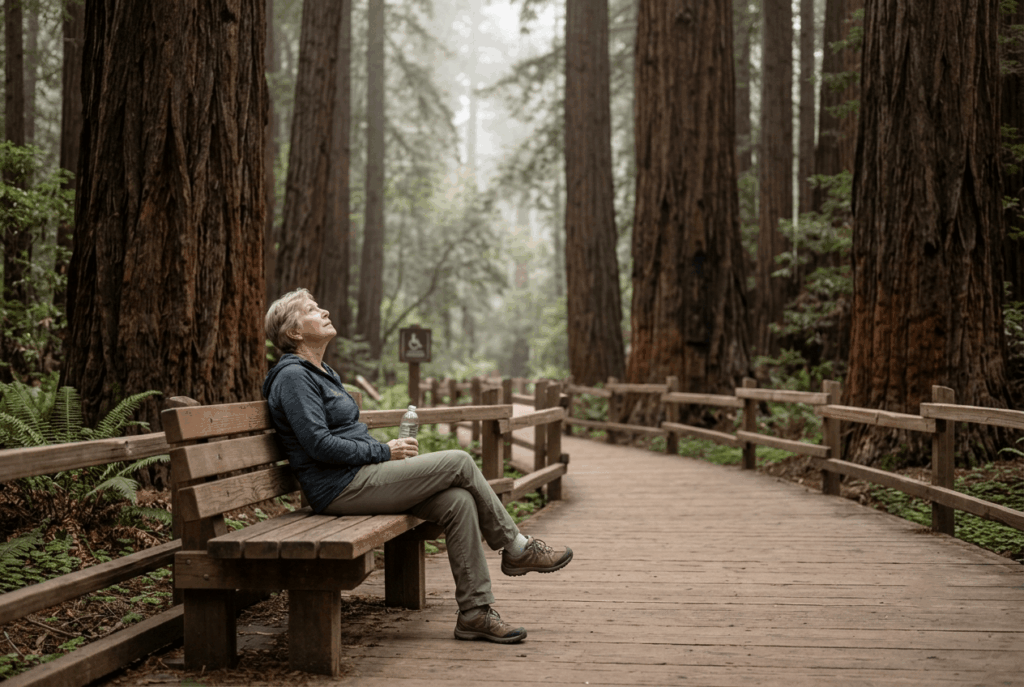
A 1-mile paved boardwalk loop, completely flat, with benches throughout and ancient redwood canopy overhead, plus accessible restrooms at the trailhead and regular ranger interpretive talks that add real context to the walk. Both a parking reservation and a shuttle reservation are required every single day of the year, no walk-up option exists at any time, so book ahead through the official reservation site regardless of season. This is worth planning around specifically, since it’s the one detail on this list most likely to catch a first-time visitor off guard.
Lady Bird Johnson Grove: the best senior hike in Redwood National Park
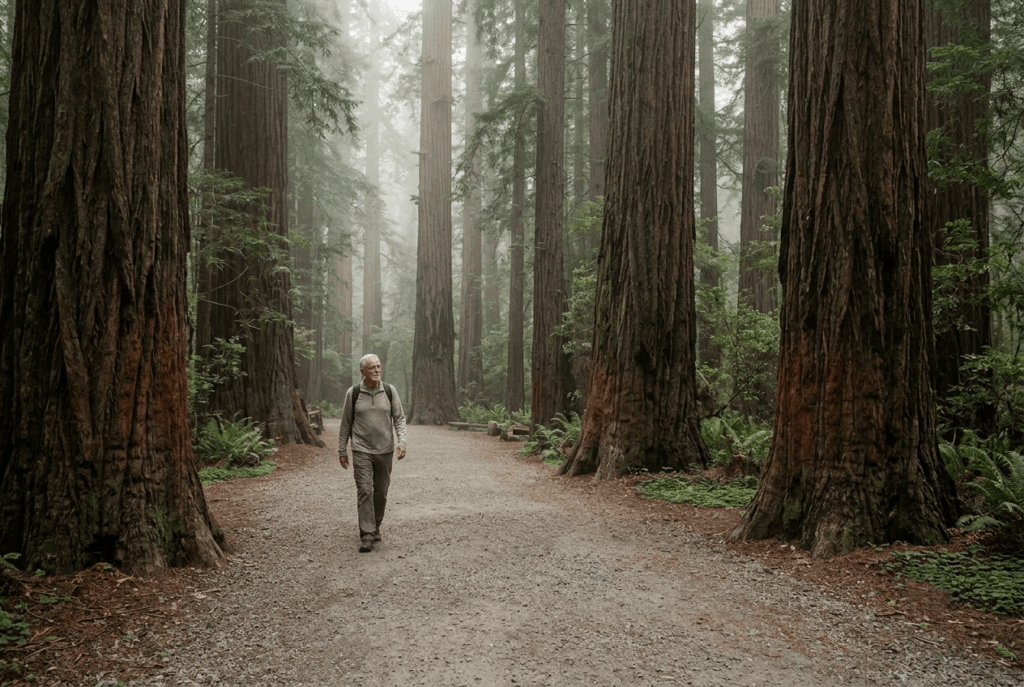
A 1.4-mile loop on a wide gravel path, completely flat with no stairs, winding through old-growth redwoods with accessible parking right at the trailhead. It’s quieter than Muir Woods and requires no reservation, with year-round access from Bald Hills Road, a genuinely underrated alternative for anyone who wants the redwood experience without the crowds or the booking hassle. For the full Redwood park network overview, see our Redwood National Park trails guide.
Coyote Hills Regional Park in the East Bay and the paved loop around Stow Lake in San Francisco round out two more flat, accessible Bay Area options worth knowing about for a shorter, closer-to-home outing that doesn’t require a full-day trip out to Marin or the North Coast.
Best senior-friendly hiking trails in Southern California
Torrey Pines State Reserve: San Diego’s best senior coastal hike
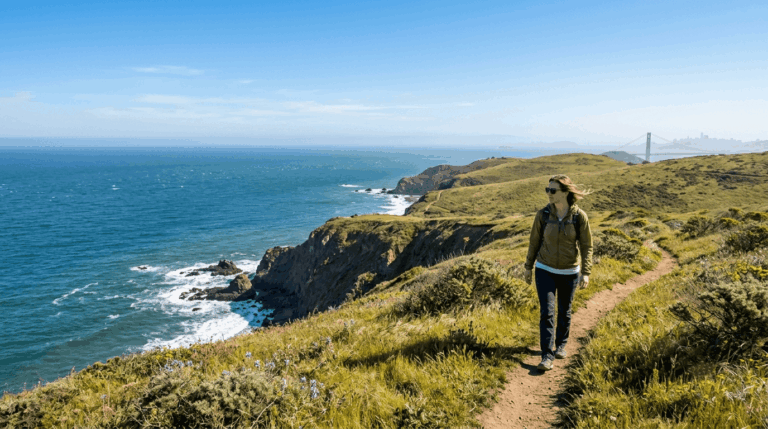
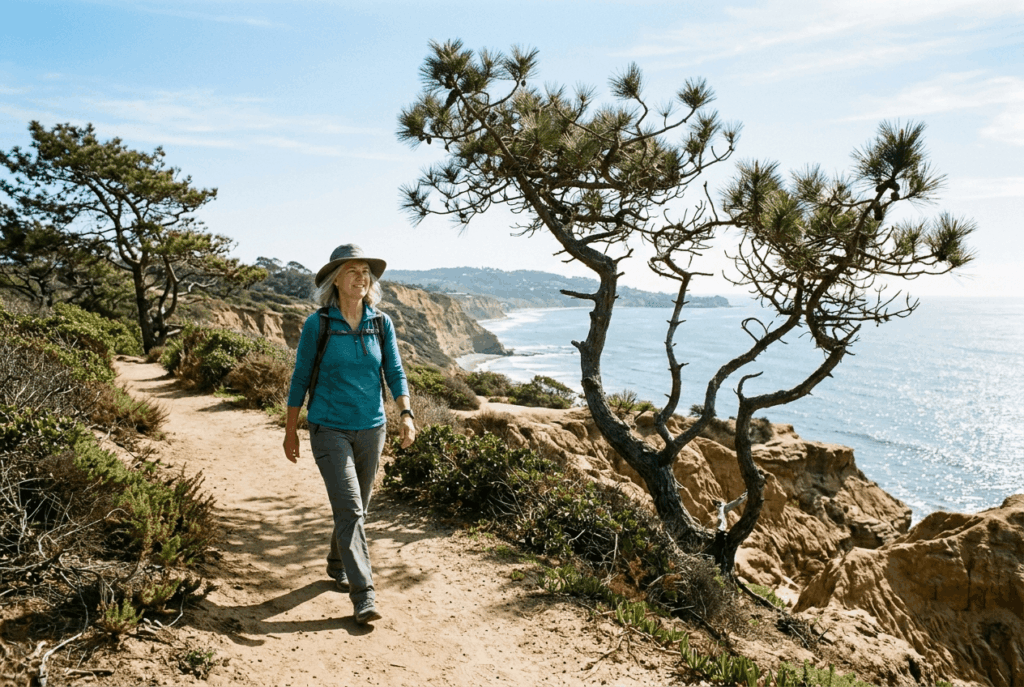
The Beach Trail runs 1.5 miles one-way, relatively flat with real ocean views and rare Torrey pine trees along the way, ending near the shoreline for those who want to extend the outing. There’s no timed-entry ticket, parking uses demand-based pricing ($10–$25 per vehicle) and fills early on weekends, so arrive before mid-morning if you want a reasonable spot. The reserve’s main trails reopened in early 2026 following a construction closure that ran through the winter, so check current trail status before planning your visit rather than assuming everything is open. Dogs are prohibited throughout the entire reserve and beach, even inside a parked vehicle.
Best senior hiking trails in California’s national parks
Congress Trail in Sequoia: California’s best senior national park hike
A 2-mile paved loop with no elevation change, passing the General Sherman Tree, the largest tree on Earth by volume, with accessible restrooms at the trailhead and benches at key viewpoints along the way. A shuttle is required from Lodgepole in summer season, which also helps manage parking during the park’s busiest months. For more trail options in Sequoia, see our Sequoia & Kings Canyon hiking guide.
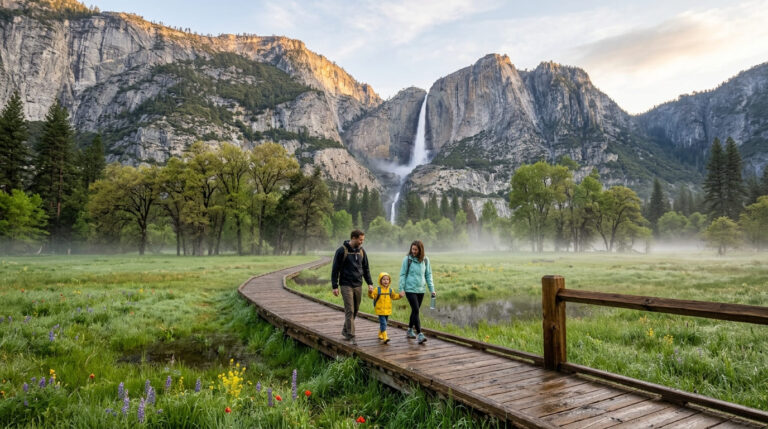
Manzanita Lake Loop in Lassen, the Lower Yosemite Falls path, and optimal-season desert walks around Furnace Creek in Death Valley round out solid national park options for seniors elsewhere in the state, each offering a genuinely different landscape without demanding real hiking fitness. See our individual park guides for Lassen Volcanic, Yosemite, and Death Valley for specific trail details.
Gear recommendations for senior hikers in California
Why trekking poles are essential for senior hiking in California
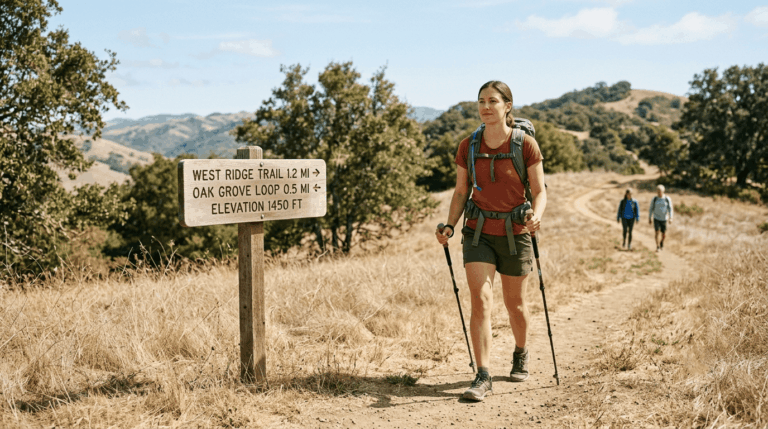
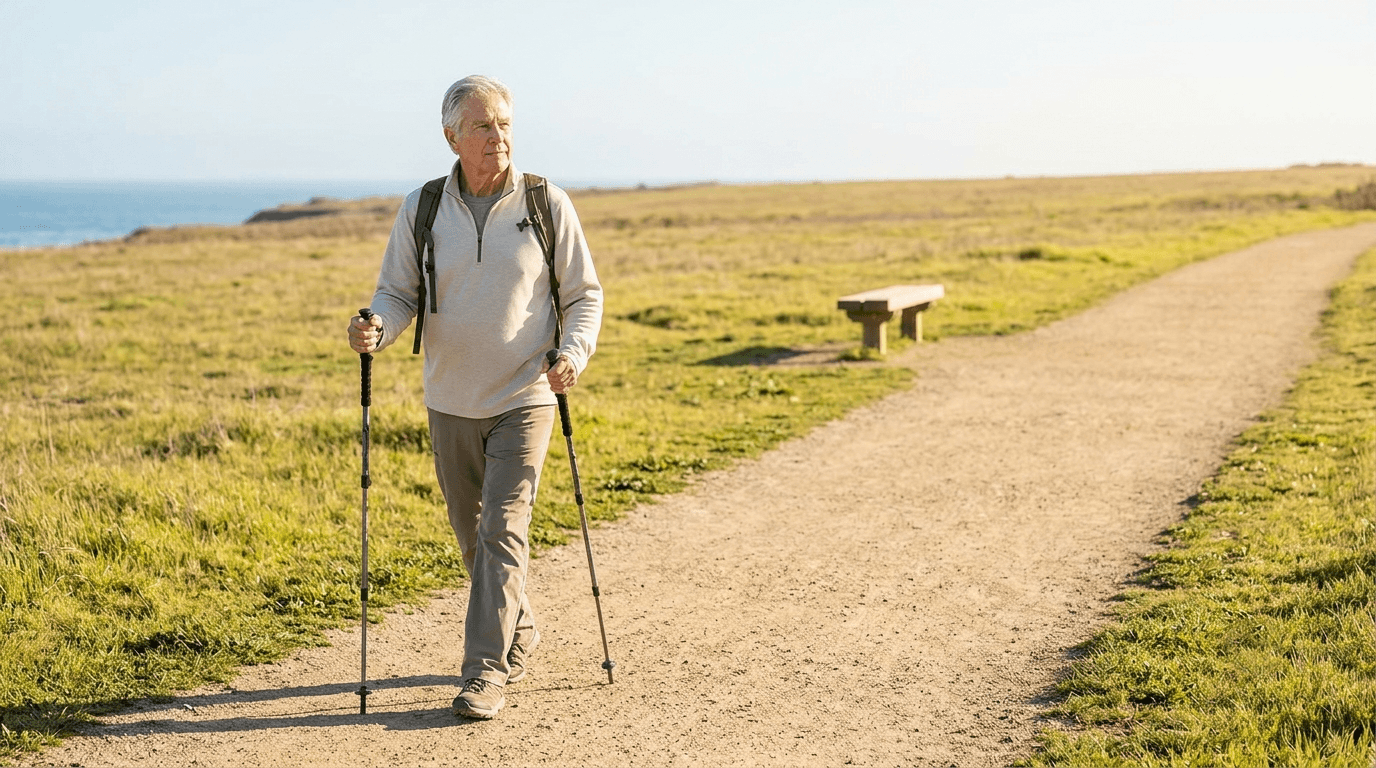
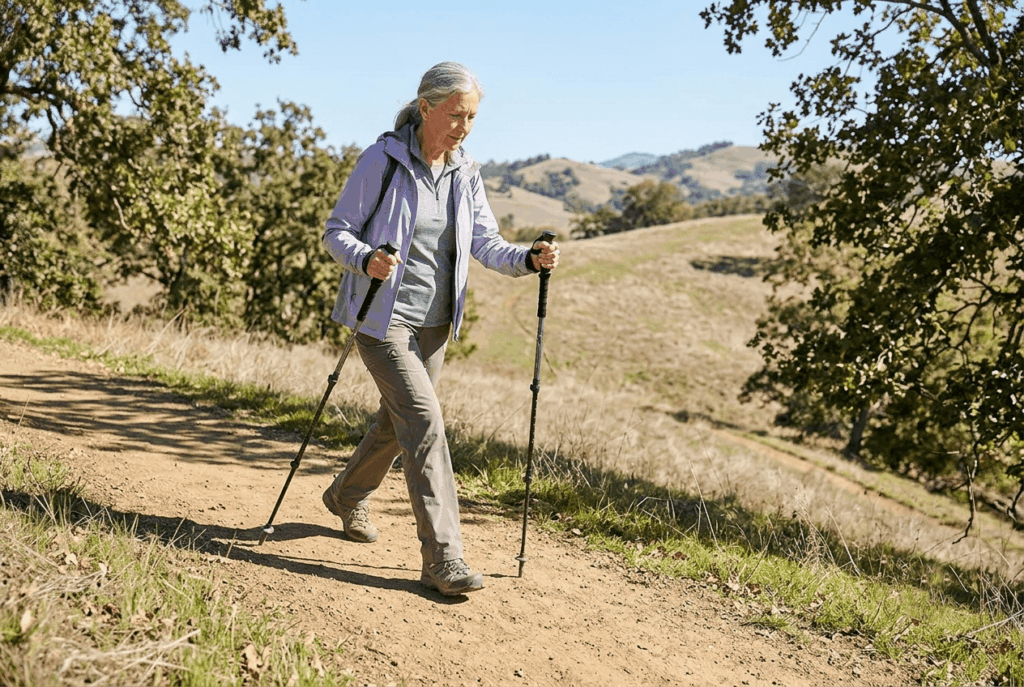
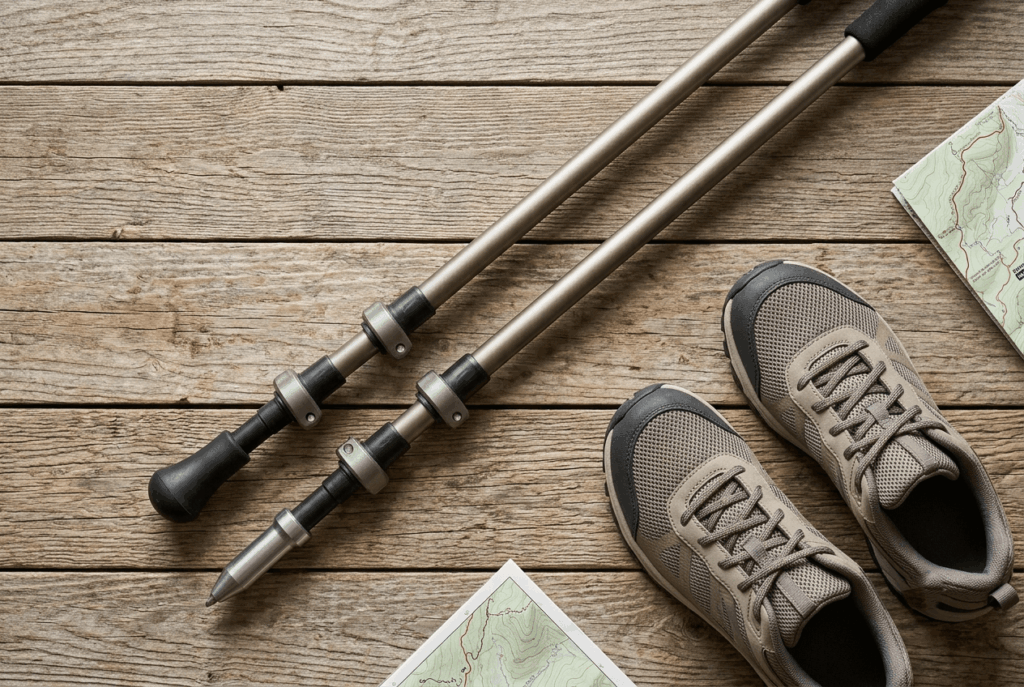
Trekking poles reduce knee joint force by up to 25% on descent, according to biomechanics research going back to a foundational 1999 study, while also improving balance on uneven terrain and adding real stability on wet or sandy surfaces. They’re arguably the single highest-value gear purchase a senior hiker can make, and the benefit compounds the more regularly you hike.
Use rubber tips on pavement and swap to tungsten tips on dirt for better grip, and choose a cushioned hiking shoe over a stiff boot unless you’re tackling real elevation gain; most senior-friendly trails simply don’t demand a boot’s rigidity, and a lighter, more flexible shoe is genuinely more comfortable for most of the trails on this list. You can find trekking pole brands and sizing guidance in our hiking gear checklist. Pick up a pair of quality adjustable trekking poles and trail-running shoes for comfortable, low-impact walks.
Guided hiking programs for seniors in California
Hiking alone is completely fine for many seniors, but guided and group options genuinely lower the barrier for anyone who wants company or a built-in safety net rather than heading out solo. The Sierra Club organizes hikes graded by ability level through local chapters, REI Adventures runs dedicated senior-paced trips with a guide handling logistics, and National Park Service ranger-led walks are free in every California national park, a genuinely underused resource that pairs a knowledgeable guide with a built-in group pace. Outdoor Afro and Latino Outdoors both run broader inclusive outdoor programs that welcome hikers of all ages, including seniors looking for a more diverse hiking community than they might find in a typical trail parking lot.
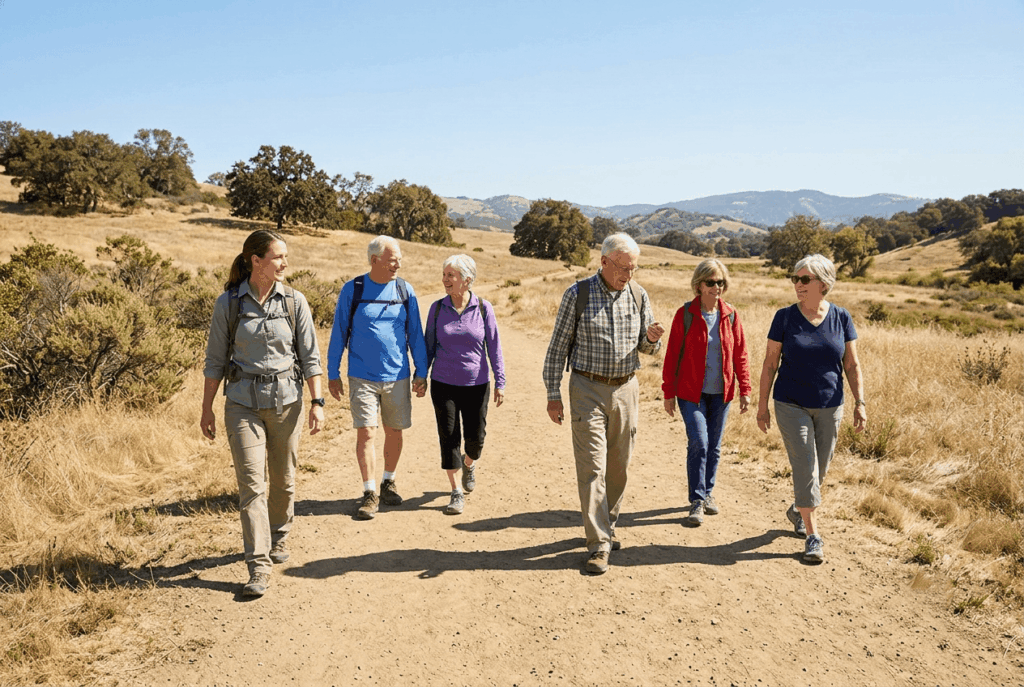
None of this requires giving up real scenery for accessibility; some of California’s best short hikes happen to also be its most senior-friendly. Match the trail to your actual pace, bring trekking poles, and treat guided programs as a genuine option rather than a last resort if hiking solo isn’t your preference. The goal isn’t finding the easiest possible trail; it’s finding the right trail for where you actually are right now. Always practice Leave No Trace trail etiquette to preserve these accessible trails for future visitors.
Frequently asked questions about senior hiking in California
Is hiking good for seniors and older adults in California?
Yes, it supports bone density, cardiovascular health, balance, and cognitive function, with the added benefit of social connection when done in a group. The key is matching trail difficulty to current fitness rather than avoiding hiking altogether, since even a short, flat trail delivers real benefits.
What are the best easy hiking trails for seniors in California?
Muir Woods Main Loop and Lady Bird Johnson Grove for flat redwood walks, Torrey Pines’ Beach Trail for coastal scenery, and Sequoia’s Congress Trail for an easy, paved route to the world’s largest tree.
Are trekking poles necessary for senior hiking in California?
Not strictly necessary, but genuinely one of the highest-value gear investments available, they reduce knee joint force by up to 25% on descent and meaningfully improve balance on uneven terrain.
Are California national parks accessible for elderly hikers?
Many are, particularly Sequoia’s Congress Trail, Lassen’s Manzanita Lake Loop, and the paved path to Lower Yosemite Falls. Accessibility varies by trail, so check specific trail conditions rather than assuming a whole park is uniformly accessible.
Are there guided hiking groups for seniors in California?
Yes, the Sierra Club offers ability-graded hikes through local chapters, REI Adventures runs senior-paced trips, and NPS ranger-led walks are free at every California national park.
What hiking trail is easiest on the knees for senior hikers in California?
Flat, paved or packed-gravel trails like Muir Woods Main Loop or Sequoia’s Congress Trail put the least stress on knees, especially compared to anything with a long, sustained descent, descents cause more joint stress than climbs do.