Best Dog Friendly Hiking Trails in California
Dog-friendly” gets used loosely online, so I built this list of dog friendly hiking trails in California around one question: does this trail work for a dog, not just a person with a dog? That means leash policy (off-leash where it’s allowed, leashed where it’s enforced), shade or water access for cooling off, and no surprises about where dogs are and aren’t allowed once you’re already there.
Disclosure: Please note that some of the links below are affiliate links and at no additional cost to you, I may earn a commission. Know that I only recommend hiking gear I personally stand behind; when you use my affiliate links, it helps me run this blog and keep all of this content free of charge for readers (like you).
Key takeaways
- Best true off-leash trail: Runyon Canyon, Los Angeles (one of the only major off-leash hiking areas in the city, but zero shade).
- Best swimming access: Fallen Leaf Lake, El Dorado County (frequent lake-access points, leash required).
- Best cool-weather alpine pick: TJ Lake, Mono County (a short, high-elevation hike ending at a lake dogs can wade into).
- Best low-commitment local walk: Tecolote Canyon, San Diego (a repeatable neighborhood trail, not a major day hike).
- Quietest pick: Arana Gulch, Santa Cruz (an open grassland loop with solitude, leashed dogs welcome).
How the 7 compare
| Trail | County | Distance | Dog Policy | Water/Shade |
|---|---|---|---|---|
| Runyon Canyon | Los Angeles | ~2–3 mi | Off-leash in designated areas | No shade, water fountains only |
| Fallen Leaf Lake | El Dorado | ~3.5 mi | Leashed | Frequent lake access |
| TJ Lake (Mammoth Lakes Basin) | Mono | ~1.5 mi | Leashed | Lake access, high-elevation cool air |
| Tecolote Canyon | San Diego | ~1.6–1.9 mi (short loop) | Leashed | Some shade, no water on trail |
| Arana Gulch | Santa Cruz | ~1 mi loop | Leashed (most trails) | Open, minimal shade |
| Kenneth Hahn Recreation Area | Los Angeles | ~0.25 mi paved path | Leashed, paved path only | Lake view, some shade |
| Deer Park to Bald Hill | Marin | ~2.5–3.7 mi | Leashed | Mixed shade and open grassland |
Runyon Canyon Park Loop Trail (Los Angeles County)
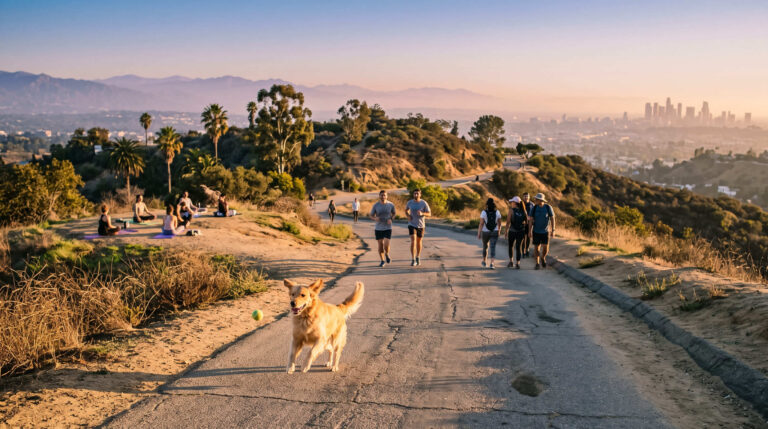
Why it’s great for dogs: one of the only major off-leash hiking trails in Los Angeles
More than half the park is designated off-leash, which is why it’s one of the most reliably dog-heavy hiking spots in the city on any given morning. For a complete breakdown of routes and parking, check out our Runyon Canyon Hiking Guide. It’s also LA’s single most-visited hike, so your dog will have plenty of company. After you hike it, our Los Angeles trails guide to Runyon Canyon and Griffith Park covers a few nearby options.
Practical tips: what to know before you go
There’s no shade anywhere on the upper trails, and dogs overheat faster than people do on hot pavement and exposed dirt, so go at sunrise in summer, not midday. There are no restrooms and only a few water fountains, so bring your own water for both of you. The park’s West Trail is closed as of this writing, per the official city parks listing, so check LA Parks’ official Runyon Canyon page before you go.
Fallen Leaf Lake Trail (El Dorado County)
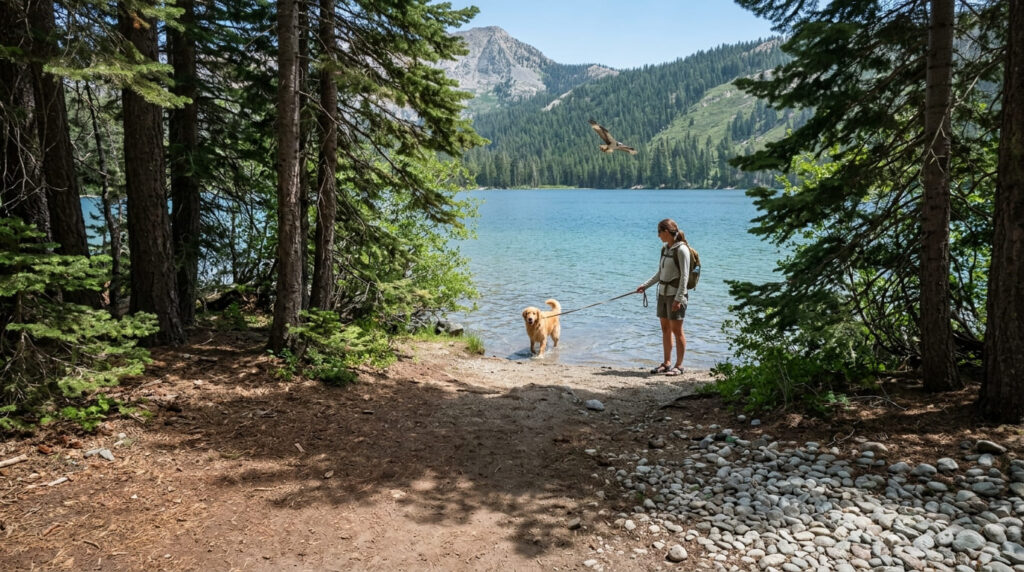
Why it’s great for dogs: a flat lakeside trail with constant swimming access
This shoreline trail near South Lake Tahoe runs about 3.5 miles with frequent access points down to the water, so a dog can cool off every mile or so instead of just at the very end. The forest cover along most of the route adds shade, which is rare for a lake trail at this elevation.
Practical tips: what to know before you go
Leash rules apply here despite the lake access, and it’s actively enforced: as of a June 2026 community notice, El Dorado County requires dogs to be restrained by a leash no longer than 10 feet anywhere off private property. Roads to the trailhead close seasonally in winter, and cell coverage is spotty, so download a map beforehand. For more Tahoe-area options, see our El Dorado County Lake Tahoe trails guide.
TJ Lake Trail, Mammoth Lakes Basin (Mono County)
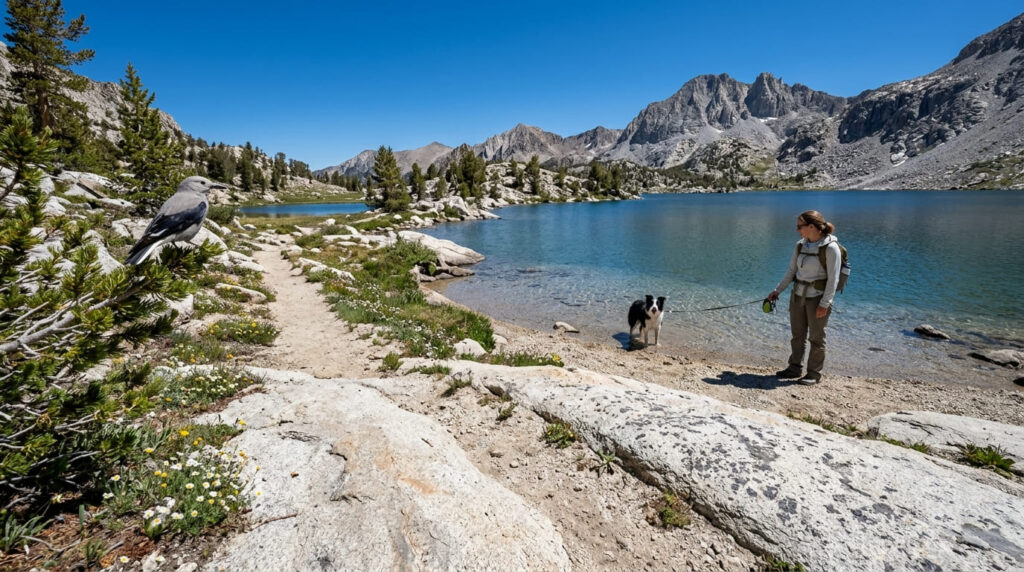
Why it’s great for dogs: a short, cool alpine hike with water access at the end
TJ Lake Trail from the Lake George trailhead: about 1.5 miles round-trip with roughly 300 ft of gain, climbing past Barrett Lake to TJ Lake, where dogs can wade in at the shallow beach when water levels are low. (If you want a flatter, even shorter option, Twin Lakes has its own separate 0.3-mile lakefront path nearby.) Our Mono County guide to hiking near Mammoth Lakes covers both options and more.
Practical tips: what to know before you go
The altitude here (over 9,000 ft) means both you and your dog will tire faster than expected, so pace accordingly. It’s mountain terrain, so keep dogs leashed and alert; black bears and coyotes are present in the basin, even if sightings are uncommon on this particular trail. The lake stays cold year-round.
Tecolote Canyon Natural Park Trail (San Diego County)
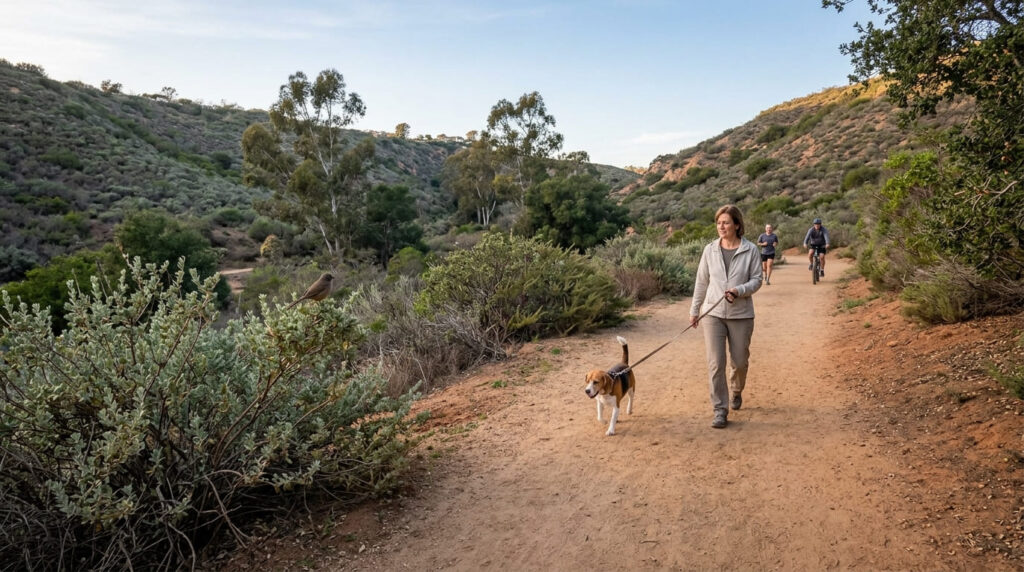
Why it’s great for dogs: a convenient, frequently visited neighborhood trail dogs can get to know well
Tecolote Canyon has over 6.5 miles of trails total, but the easy loops near the nature center, about 1.6 to 1.9 miles, are the better fit for a regular dog walk rather than a major day hike. It’s the kind of easy, everyday walk that works into a weekly routine rather than a special trip.
Practical tips: what to know before you go
Leashes are required throughout; this is a busy neighborhood trail shared with joggers, cyclists, and other dog walkers. Some sections are currently affected by an ongoing sewer improvement project, so check the City of San Diego’s official Tecolote Canyon page for current closures before you go.
Arana Gulch Loop Trail
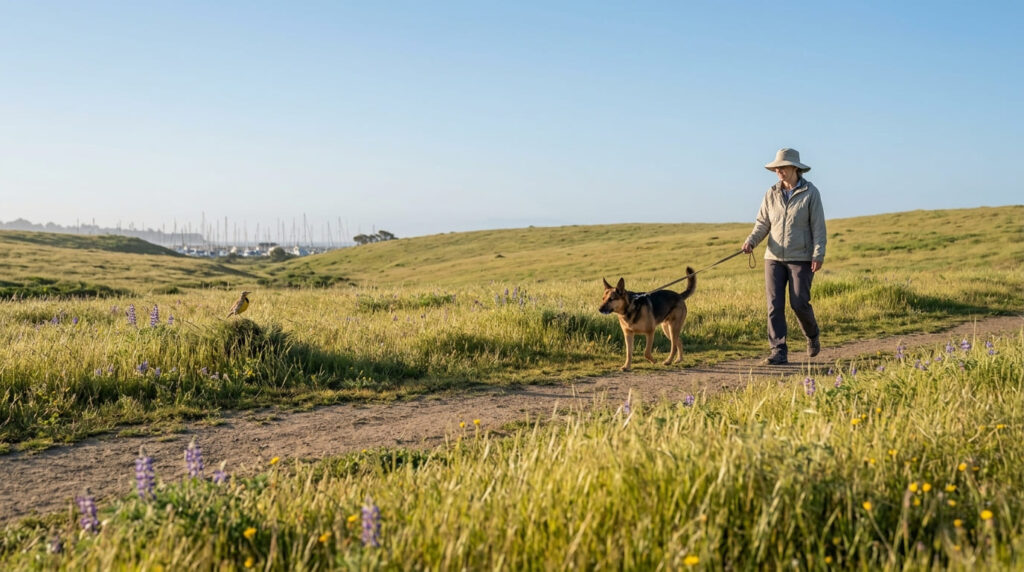
Why it’s great for dogs: a quiet, open grassland loop with solitude
A roughly 1-mile loop through coastal terrace prairie near Santa Cruz Harbor, with leashed dogs welcome on every trail except the separate Marsh Vista Trail. Reviewers consistently note you’re unlikely to run into many other people, useful if your dog is still working on leash manners around strangers.
Practical tips: what to know before you go
Free street parking is available on Agnes Street. There’s minimal shade across the open meadow, so an early visit beats midday in summer. Watch for ticks in the grass after wading off-trail.
Kenneth Hahn State Recreation Area Loop Trail (Los Angeles County)
Why it’s great for dogs: a quieter urban alternative to Runyon Canyon
Dogs must stay leashed here, and per the official county park listing, they’re restricted to the paved path rather than the dirt trail network that climbs through the park.
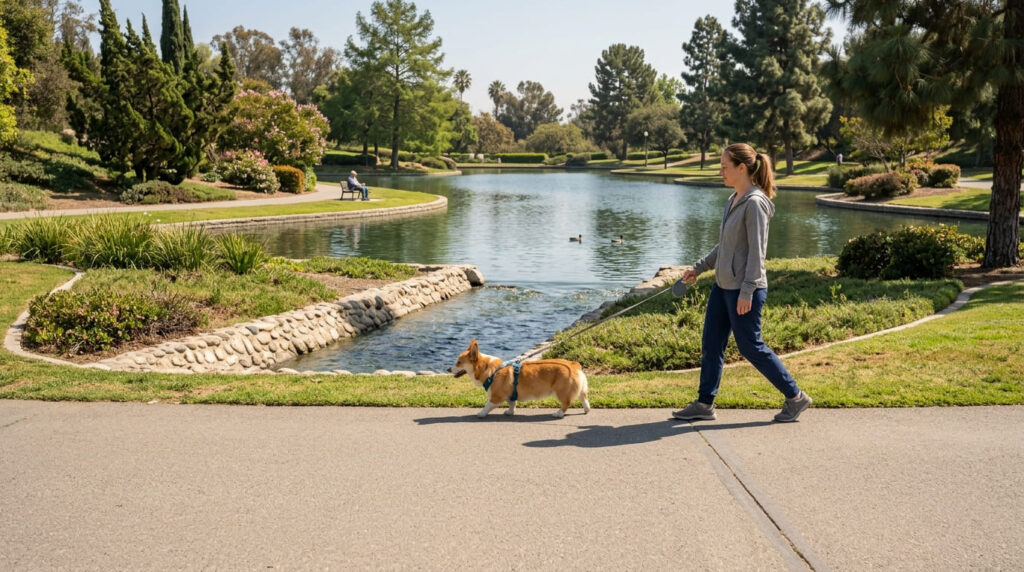
What it does offer is a quieter alternative: a paved, roughly quarter-mile walk along an artificial creek and lake, with far fewer crowds than Runyon. For more low-key LA options, our Los Angeles hidden gem trails guide rounds out a few more.
Practical tips: what to know before you go
There’s a $6 vehicle fee on weekends and holidays; weekdays are free. The park is closed Mondays and Tuesdays. Dogs must be leashed and under control at all times.
Deer Park to Bald Hill Loop Trail (Marin County)
Why it’s great for dogs: an open, well-loved loop with local dog owners
This Fairfax-area loop is a local favorite for dog walking, mixing shaded woods with open grassland sections that give dogs and owners alike long sightlines.
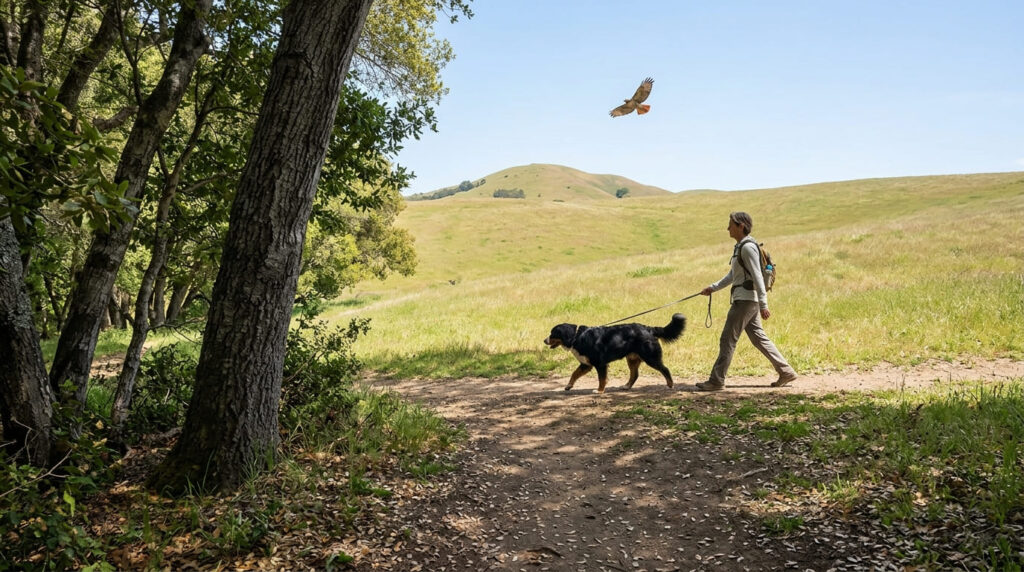
Distance varies by which connecting trails you take, from about 2.5 miles on the shorter loop up to nearly 4 miles if you continue to the Bald Hill summit. Our Marin County family-friendly trail guide covers a few nearby alternatives.
Practical tips: what to know before you go
Dogs must stay leashed throughout. The open grassland sections offer little shade, so cooler weather or an early start makes a difference on warm days. Parking at the Deer Park lot is limited; arrive early on weekends.
Planning around the heat
Several of these trails, Runyon Canyon and Arana Gulch especially, have almost no shade, which matters more for a dog than for you. Our guide to California hiking trails for beating the summer heat covers timing strategies that apply just as much to a dog on pavement as to a person. And if you’re planning a trip that includes a national park, our guide to the difference between California State Parks and National Parks for hikers is worth reading first, since pet rules differ sharply between the two.
My recommendation
If your dog needs to run off-leash, Runyon Canyon is the only trail on this list built for that; just go early. If you want a calmer, leashed walk with water access, Fallen Leaf Lake is the better fit. When exploring other dog friendly hiking trails in CA, always check the official source. And if a trail’s dog policy looks too good to be true, like Moore Creek did, check the official source before you drive there.
Frequently asked questions about dog friendly hiking trails in California
How do you find dog-friendly hiking trails?
Check the official park or land manager’s website directly rather than relying on trail apps alone; leash policy and dog access change more often than review sites get updated, as two entries on this list show.
Do dogs need to be on a leash on California trails?
On the large majority of California trails, yes. True off-leash hiking areas like Runyon Canyon are the exception, not the norm.
How much water should a dog drink on a hike?
As a rough guide, about half an ounce to one ounce of water per pound of body weight per hour of activity, more in heat. Offer water every 15 to 20 minutes on hot trails rather than waiting until your dog seems thirsty.
What are signs of heat exhaustion in dogs?
Heavy panting that doesn’t slow down, bright red gums, stumbling, and lethargy are early warning signs. If you see any of these, stop, get your dog into shade, offer water, and head back immediately. The American Veterinary Medical Association’s guide to heatstroke in pets covers what to watch for in more detail.
Are dogs allowed in national parks?
Generally not on most national park trails, though they’re usually fine in parking areas, campgrounds, and on paved roads. Rules vary sharply by park, so check the National Park Service’s official pet policy page before you go.
Can dogs get sore paws from hot trail surfaces?
Yes, and it happens faster than most owners expect. If pavement or dirt is too hot for you to hold your bare hand on for five seconds, it’s too hot for your dog’s paws.