7 Best California Hikes Where Fall Color Shows Up
California fall color doesn’t happen all at once; it moves down the state and down in elevation over about six weeks, starting with Eastern Sierra aspens in mid-September and finishing with Yosemite Valley oaks in November. The hiking trails in California for fall color below cover everything from high-elevation Eastern Sierra aspen groves to lower-elevation oak and dogwood displays as the season runs its course. Aspen hiking trails dominate the early entries; oak and dogwood color takes over as the season runs its course.
Disclosure: Please note that some of the links below are affiliate links and at no additional cost to you, I may earn a commission. Know that I only recommend hiking gear I personally stand behind; when you use my affiliate links, it helps me run this blog and keep all of this content free of charge for readers (like you).
Key takeaways:
- Earliest color: Bishop Creek Canyon’s North Fork often turns first in the state, typically late September.
- Best single hike: Lundy Canyon combines aspens, multiple waterfalls, and beaver ponds in one trail: the quintessential Eastern Sierra fall hike.
- Latest color: Cook’s Meadow in Yosemite Valley and Cleo’s Bath near Pinecrest both run into late October and November, well after the Eastern Sierra has faded.
- Easiest access: Cook’s Meadow is a flat, wheelchair-accessible mile, which is good to know if you’re building a trip around trails of different difficulty levels.
- Honest trade-off to know upfront: peak fall color windows shift by one to three weeks depending on the prior winter’s snowpack and the current season’s rain, so treat every date below as a typical range, not a guarantee.
| Trail | County | Distance | Typical peak | Fee |
|---|---|---|---|---|
| Lundy Canyon | Mono | 4.6 mi RT | Early–mid October | Free |
| Bishop Creek Canyon (Lake Sabrina) | Inyo | 2.2–6 mi RT | Late Sept–mid Oct | Free |
| Parker Lake, June Lake Loop | Mono | 3.6 mi RT | Early–mid October | Free |
| Cleo’s Bath, near Pinecrest | Tuolumne | 6.8 mi loop | Late October | Free |
| McCloud River Falls | Siskiyou | 3.8 mi RT | October | Free |
| Cook’s Meadow, Yosemite Valley | Mariposa | 1 mi loop | Late Oct–early Nov | $35/vehicle (park entry) |
| Zumwalt Meadow + Grant Grove, Kings Canyon | Fresno | 1.5–2.1 mi combined | Early–mid October | $35/vehicle (park entry) |
Lundy Canyon (Mono County)
Why it made this list: widely considered the best aspen color in the Mono Basin
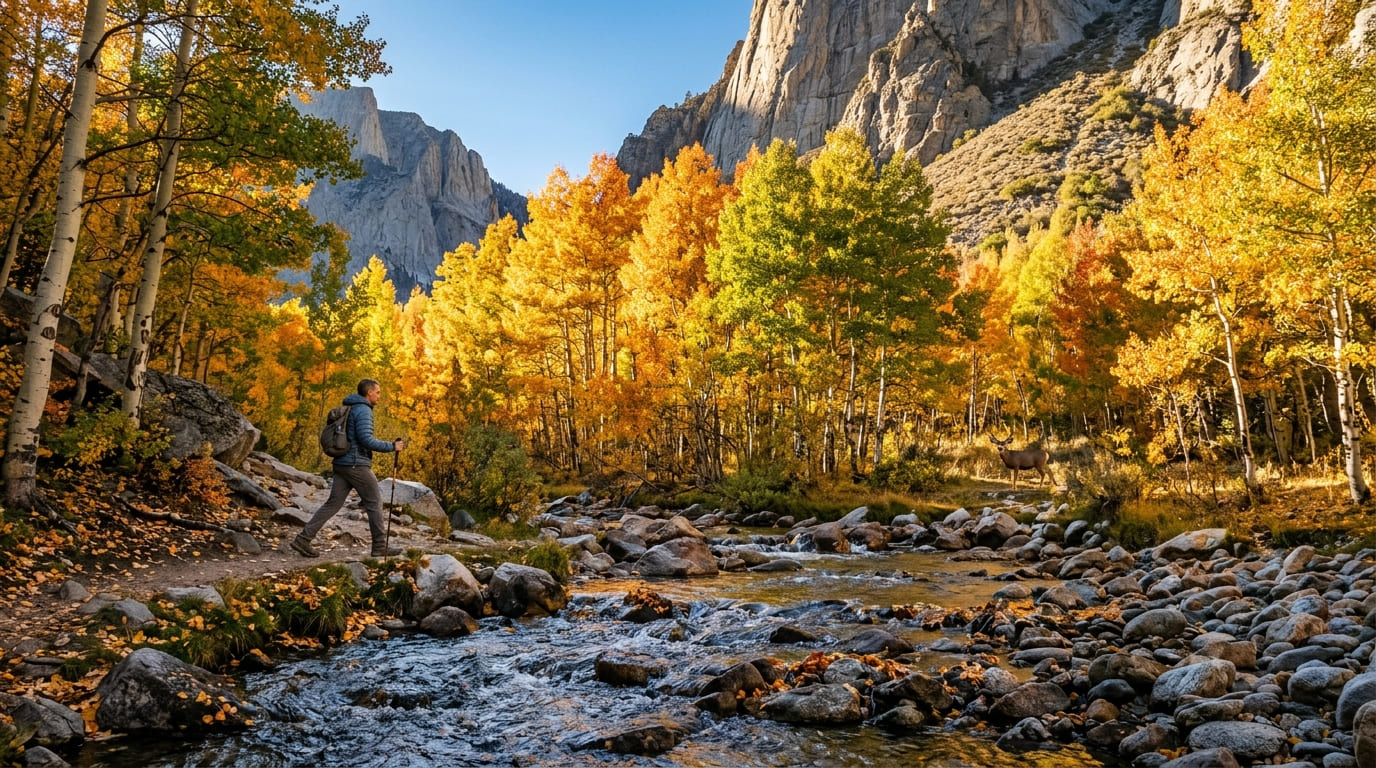
Lundy Canyon packs more into one trail than almost anywhere else on this list: dense aspen groves, multiple spectacular waterfalls, a beaver pond, and a historic miner’s cabin, all inside a 4.6-mile round trip.
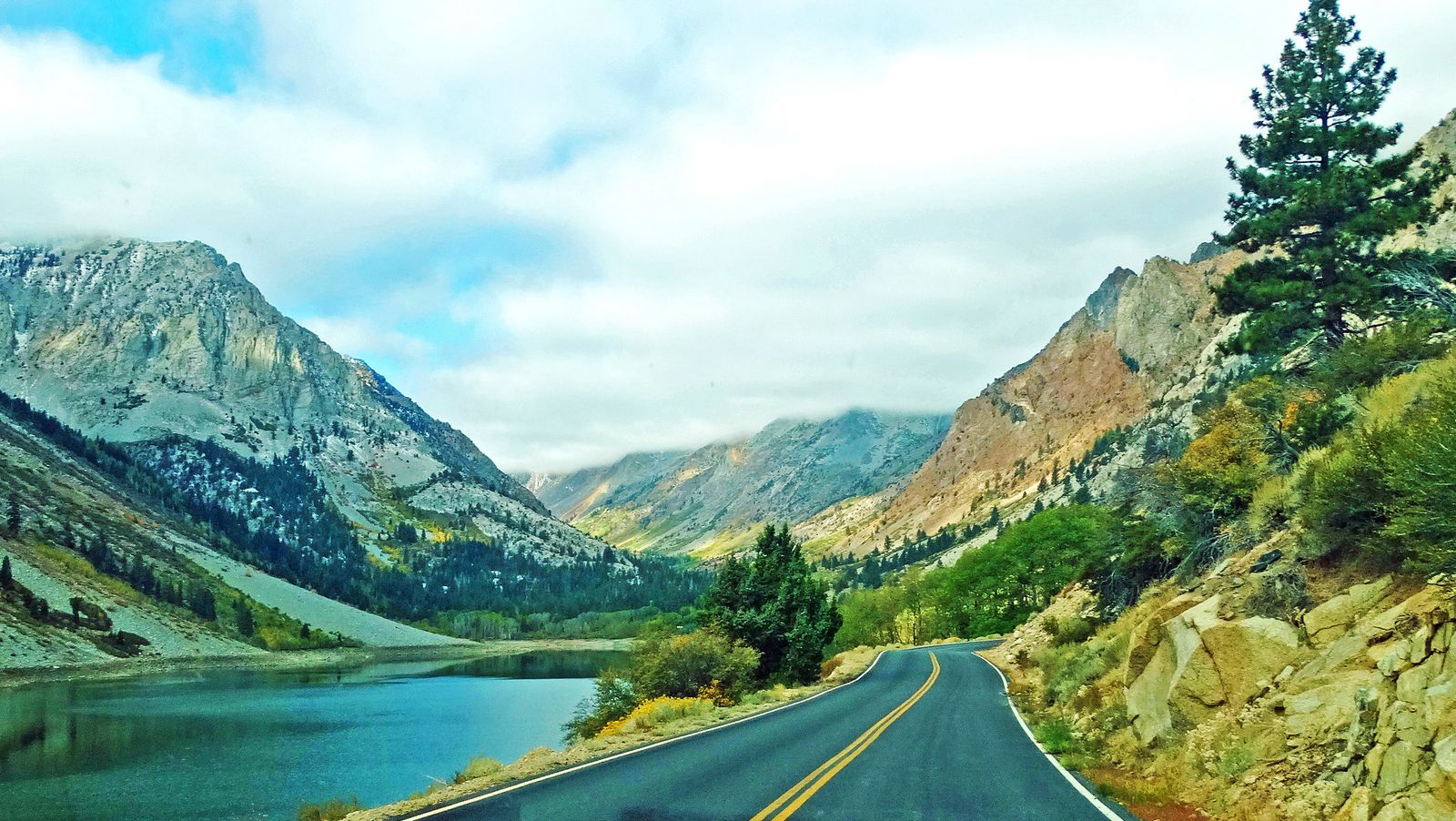
The trail follows Mill Creek up-canyon, with color building the higher you climb, and it’s routinely called the “grand finale” of Mono County’s fall season by local outfitters.
Practical tips: access and best timing
The trailhead sits at the end of Lundy Lake Road, a paved-then-dirt road off US 395 about 7 miles north of Lee Vining. Peak color generally runs from the first to third week of October, developing gradually from mid-September. There’s no fee and no permit for the day hike itself. The Inyo National Forest alerts page is worth a check beforehand, since this is a remote, high-elevation canyon and early-season snow can arrive before the color fully fades. For more of the immediate area, see our Mono Lake trail guide.
Bishop Creek Canyon (Inyo County)
Why it made this list: one of the most photographed aspen corridors in the Sierra
Bishop Creek’s three forks (North, Middle, and South) pack an enormous concentration of aspens into a compact area, and North Fork (Lake Sabrina and North Lake) is usually one of the very first spots in the state to turn, often by late September.
The easy Lake Sabrina Trail is a 2.2-mile round trip along the lake’s west shore; hikers wanting more can continue toward Blue Lake for a 6-mile round trip with about 1,430 feet of gain.
Practical tips: access and best timing
Highway 168 out of Bishop is paved the whole way, about 18 miles to Lake Sabrina. North Fork peaks earliest (late September into early October); South Fork, at slightly lower elevation, usually runs mid-to-late October, so this canyon alone can stretch your fall-color trip by several weeks if you time both forks right. This corridor’s fame is a trade-off: expect significant weekend traffic during peak color weeks, so a weekday visit is worth the extra planning.
June Lake Loop Trails (Mono County)
Why it made this list: a scenic drive-and-hike loop with multiple color stops
The June Lake Loop (Highway 158) is a 15.8-mile paved detour off US 395 that strings together four lakes and several short trailheads, which makes it easy to turn one drive into three or four short fall hikes.
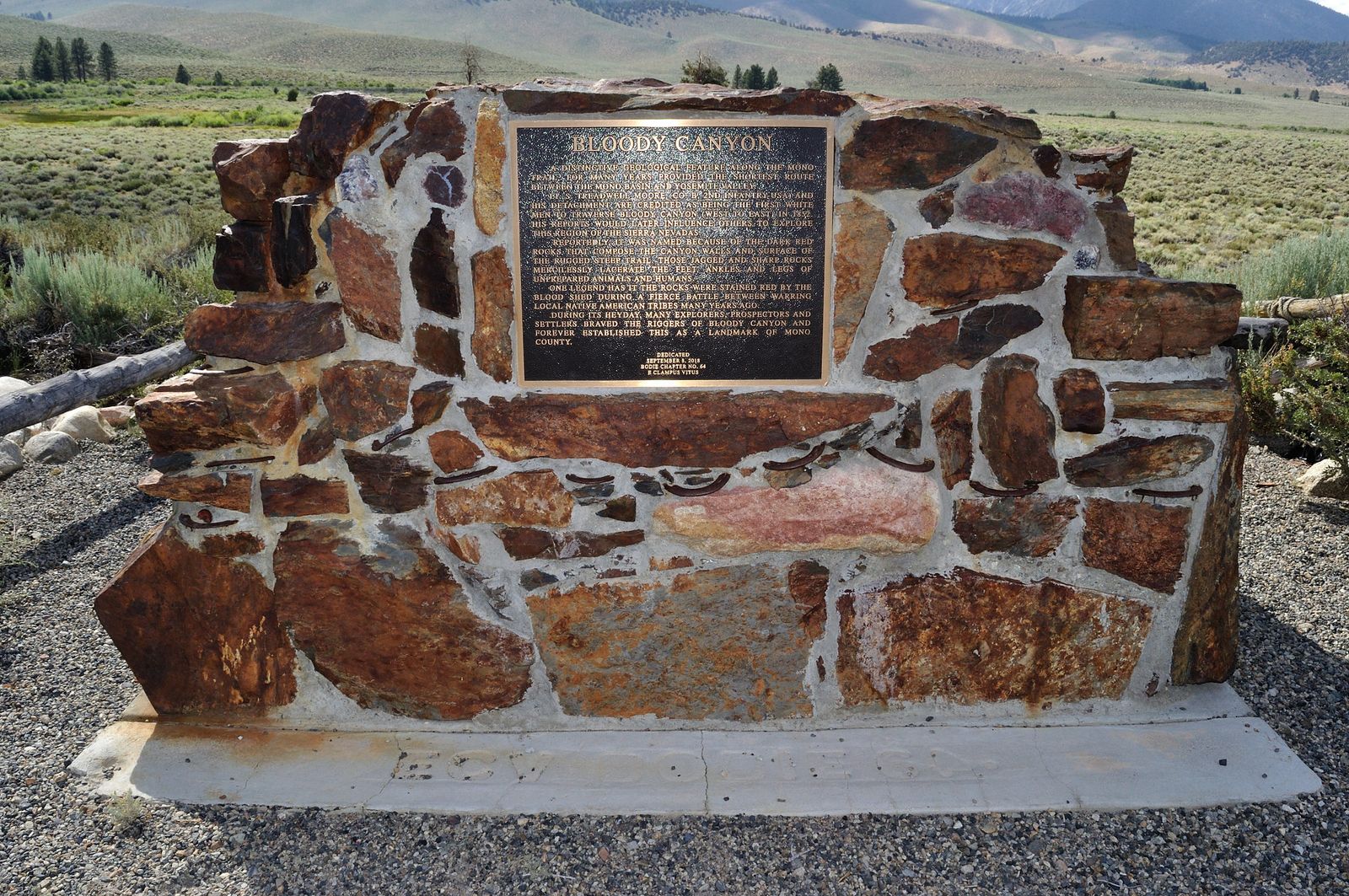
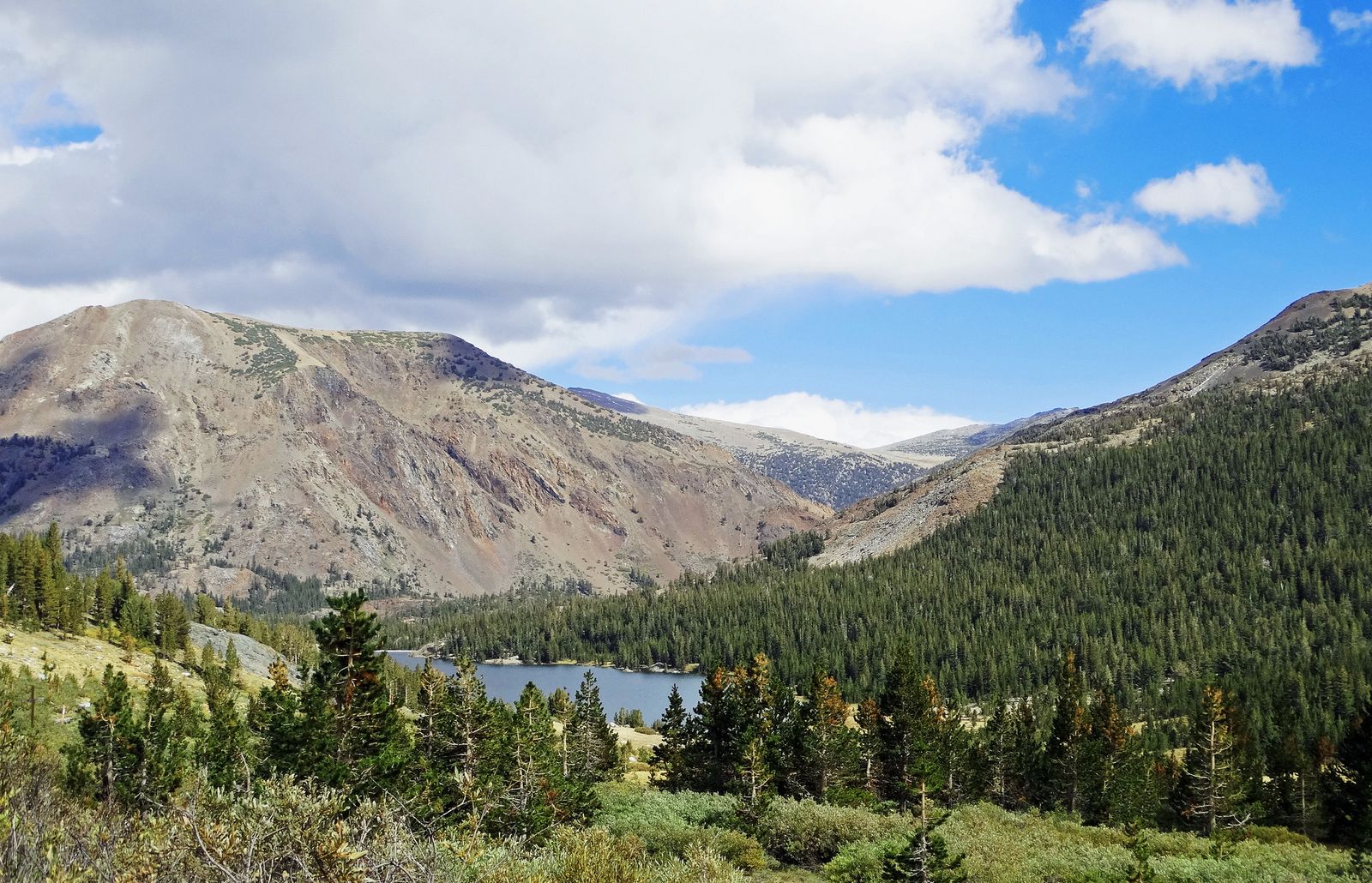
Parker Lake Trail is the standout: 3.6 miles round trip with about 550–640 feet of gain, following an aspen-lined creek to a lake framed by 12,000-foot peaks.
Practical tips: access and best timing
The Parker Lake trailhead is reached via a rough 2-mile dirt road off Highway 158, passable for most sedans, but not built for speed. Fall hikes near me searches for this area peak in late September through mid-October. The Loop’s other short trailheads (Fern Lake, Yost Lake, Gull Lake Shore) make it simple to combine this stop with Lundy Canyon in a single Mono County day trip. For more of the region, see our Mammoth Lakes trail guide.
Cleo’s Bath, near Pinecrest (Tuolumne County)
Why it made this list: black oak color framing granite swimming pools
Cleo’s Bath swaps the aspen theme for black oak, and it runs later in the season than every Eastern Sierra entry on this list, usually a few weeks behind Mono County’s peak.
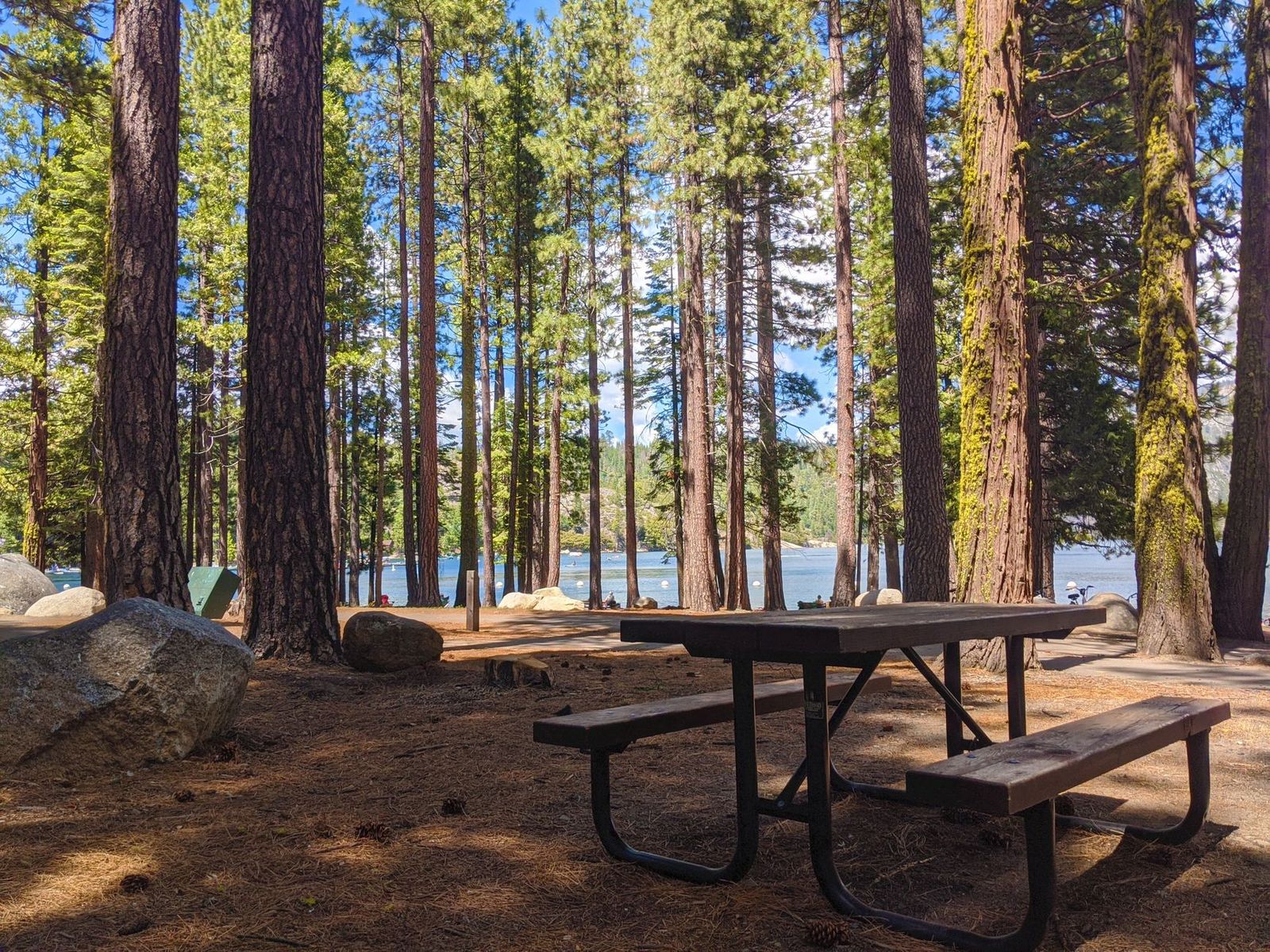
The 6.8-mile loop follows Pinecrest Lake’s shoreline before climbing to a granite river valley and a swimming hole (though by fall the water’s more scenic than swimmable; the pools run low by late summer).
Practical tips: access and best timing
No fee, no permit needed for the day hike, and the trail is accessible year-round from the Pinecrest Lake parking lot in Stanislaus National Forest. Because black oak turns later than the high-elevation aspens, late October is typically the best window here, which is a useful extension if you’ve already missed peak color farther east. Our Tuolumne County fall foliage guide covers more options in the immediate area.
McCloud River Falls (Siskiyou County)
Why it made this list: black oak, vine maple, and dogwood color along a waterfall trail
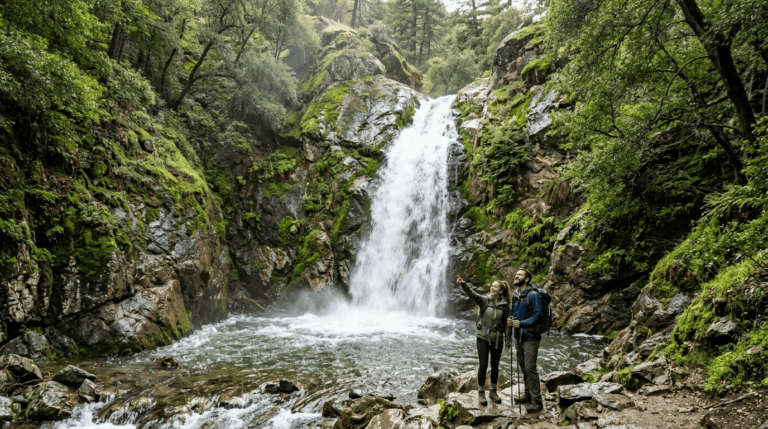
This is the northernmost trail on the list, offering a classic Shasta-Cascade display that peaks throughout October. The 3.8-mile round trip links three named waterfalls (Lower, Middle, and Upper McCloud Falls) along a mostly flat, partly paved and ADA-accessible route through a canyon of Douglas fir, incense cedar, and understory color. Per the Forest Service’s own plant-viewing page for this exact trail, the reliable fall color here comes from black oak, vine maple, and Pacific dogwood, not big leaf maple, which some other write-ups mistakenly credit.
Practical tips: access and best timing
The trailhead is off Highway 89, about 6 miles from the town of McCloud in Shasta-Trinity National Forest. There’s no fee and no permit for the day hike. Fall color here is best in October; the access road can close after the first significant snowfall, so this is one to visit earlier rather than later in the season. For more of the Mount Shasta area, see our Siskiyou and Shasta County trail guide.
Cook’s Meadow, Yosemite Valley (Mariposa County)
Why it made this list: black oak and elm color on the valley floor
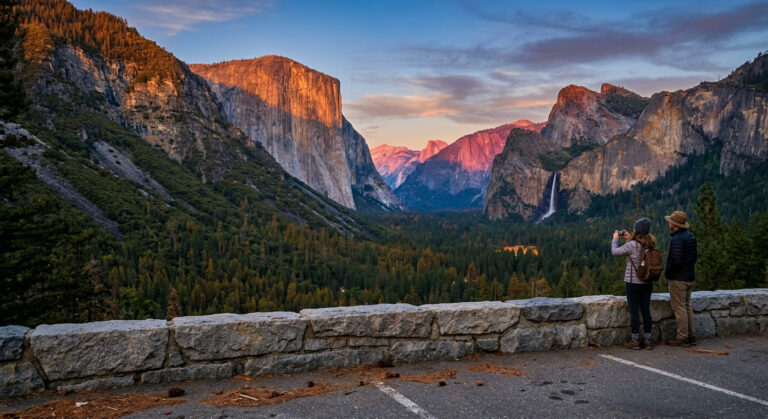
Cook’s Meadow trades waterfalls for a totally different kind of fall payoff: an easy, flat, mile-long loop with Half Dome, Yosemite Falls, and Glacier Point all visible at once, framed by a meadow that turns golden as the black oaks and the historic elm tree lose their leaves, per the National Park Service’s own Cook’s Meadow page, not the big leaf maple some other write-ups credit. It’s one of the only entries on this list that’s wheelchair accessible, and fall visits also dodge the summer crowds that pack Yosemite Valley the rest of the year.
Practical tips: access and best timing
The loop starts at the Yosemite Valley Visitor Center (shuttle stop #5) and is fully flat and paved or boardwalked. Yosemite’s standard $35 per-vehicle entrance fee applies; no separate permit is needed for this trail.
Color typically peaks late October into early November, which is later than everywhere else on this list except Cleo’s Bath. If you’re timing a broader Yosemite trip around this window, our guide to the best time to visit each national park goes deeper on seasonal planning.
Kings Canyon Dogwood Groves (Fresno County)
Why it made this list: sequoia groves paired with river-corridor fall color
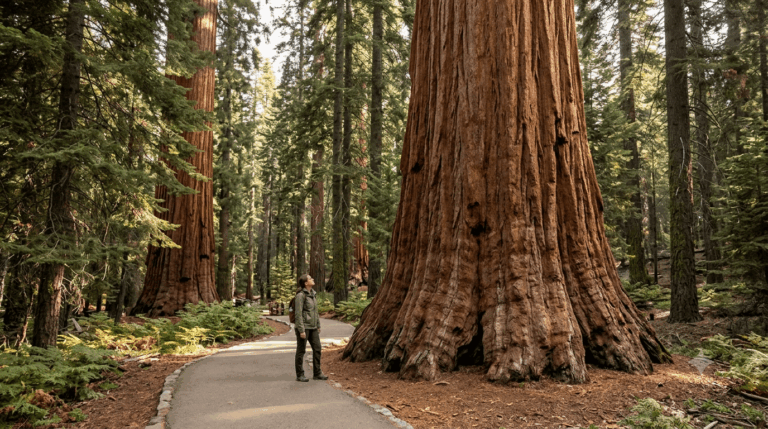
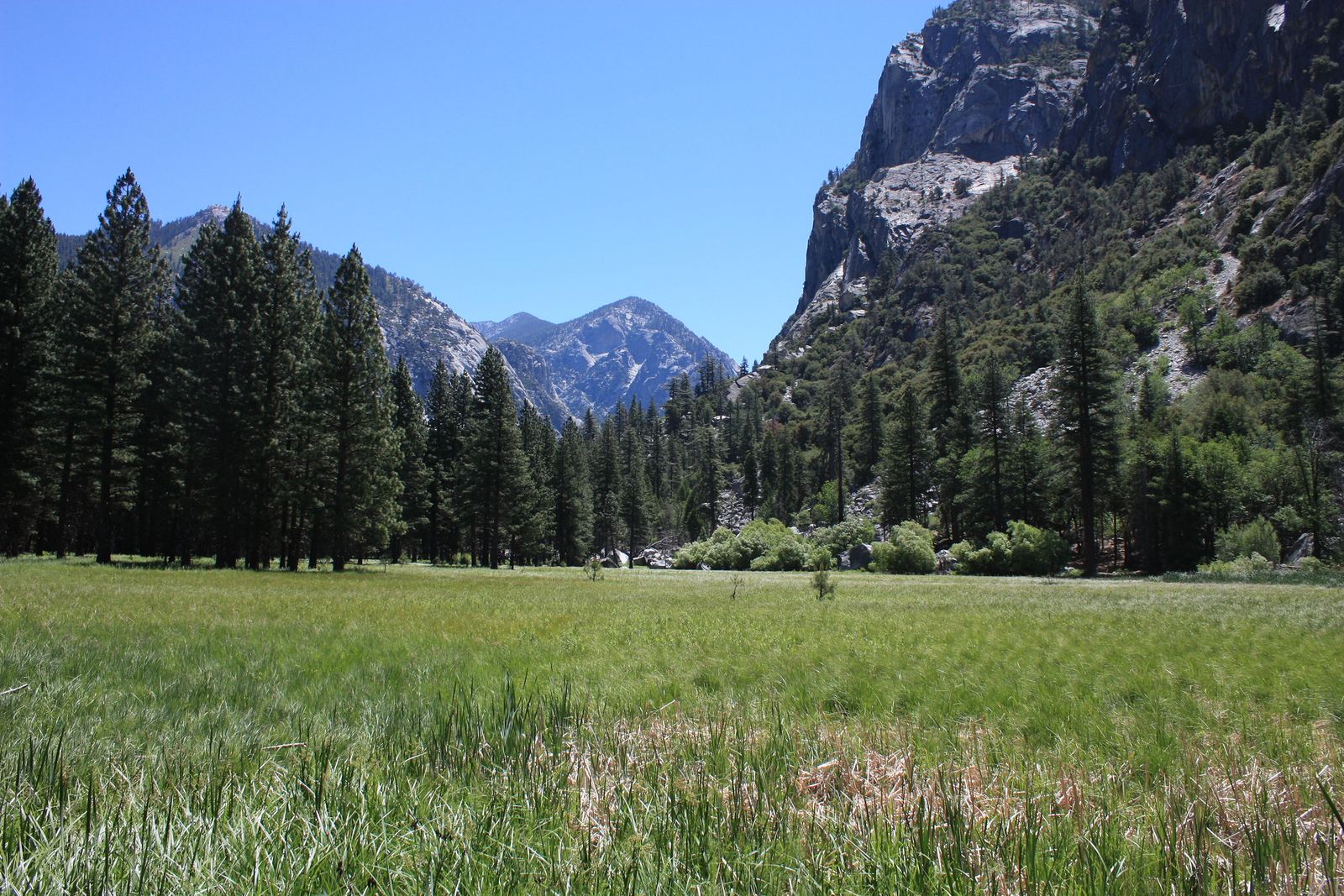
This entry pairs two short trails rather than one: Grant Grove’s General Grant Tree Trail (a paved, 0.5–0.8-mile loop through giant sequoias, including a dogwood grove near the Tennessee Tree) with Cedar Grove’s Zumwalt Meadow Trail, a 1.5-mile out-and-back trail along the Kings River (which now requires navigating a rocky boulder field due to a washed-out boardwalk) where black oaks and aspens add fall color against granite canyon walls.
Practical tips: access and best timing
Grant Grove is open year-round via Generals Highway from the south. Cedar Grove, reached via Highway 180, is a different story: the road was closed for over a year after 2023 storm damage and is confirmed open for the 2026 season, but it still closes every year in mid-November regardless of conditions, so don’t plan a late-fall trip around it without checking first. The NPS Cedar Grove trails page has current dates, and our trail closures guide is a good general habit for any Sierra trip with a seasonal road involved. Color here typically runs early-to-mid October. The park entrance fee is $35 per vehicle. For more of the park, see our Kings Canyon trail guide.
The honest bottom line
Treat this list as a moving target, not a fixed itinerary: start in Bishop Creek and Lundy Canyon in late September, work through June Lake, McCloud River Falls, and Kings Canyon in early-to-mid October, and finish at Cleo’s Bath and Cook’s Meadow in late October or November. None of these dates are guaranteed; snowpack, rain, and wind all shift the window by a week or two in either direction, so check a current color report before you drive out, especially for the Eastern Sierra entries.
Frequently asked questions about the best hiking trails in California for fall color
When does fall color peak in California?
It varies enormously by elevation and region: Eastern Sierra aspens above 7,000 feet often peak in late September to mid-October, while lower-elevation oaks and dogwoods in places like Yosemite Valley peak in late October to November.
Does California have real fall color like the East Coast?
Yes, though it’s concentrated in specific pockets rather than spread evenly across the state; the Eastern Sierra’s aspen groves in particular rival New England for intensity, just on a shorter, more localized display.
Do aspens turn color before oaks in California?
Generally yes; high-elevation quaking aspens in the Sierra typically turn in late September and October, while lower-elevation black oaks and other deciduous trees often peak two to four weeks later.
Is Northern California’s fall color earlier than Southern California’s?
Not necessarily by latitude alone; elevation matters more than north-south position, which is why a high Eastern Sierra canyon can turn weeks before a low-elevation Northern California trail like McCloud River Falls.
What trees have the best fall color in California?
Quaking aspen delivers the most dramatic single-species show, typically gold and orange; black oak, Pacific dogwood, and vine maple provide the state’s best color at lower and mid elevations.
How do you track fall color conditions before a trip?
County tourism sites like Visit Mono County publish weekly fall color reports during the season, and independent sites like California Fall Color post crowd-sourced, location-specific updates; both are more current than a fixed calendar date.