Half Dome Permit & Cables Planning Guide
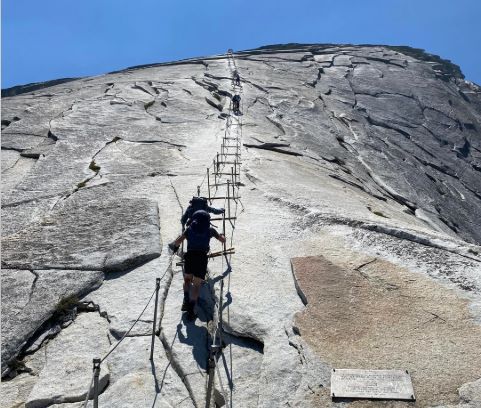
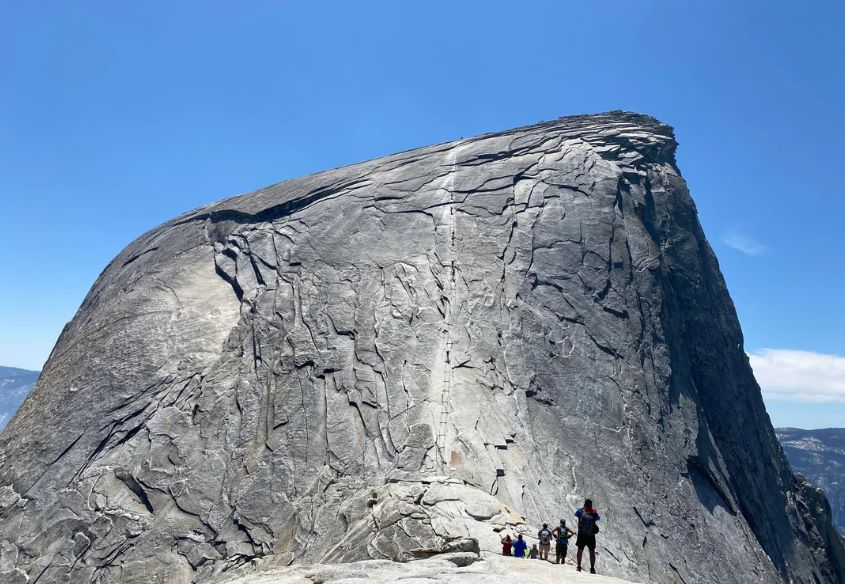
A Half Dome hike permit stands between you and the last 400 feet of the most famous climb in Yosemite National Park. The permit is not for the long walk up from the valley floor. It is for the granite beyond the base of the subdome, where two steel cables raised on posts guide hikers up the steep east face, and Yosemite caps the number of people on that stretch at 300 a day. Day hikers get one the same way: a lottery on Recreation.gov, with a main drawing in March and a smaller one two days before each hike.
Disclosure: Please note that some of the links below are affiliate links and at no additional cost to you, I may earn a commission. Know that I only recommend hiking gear I personally stand behind; when you use my affiliate links, it helps me run this blog and keep all of this content free of charge for readers (like you).
This guide walks you through both lotteries, the odds, the backpacker shortcut, the cables season, alongside our Yosemite National Park maps guide for orientation, and what the day itself asks of your legs, your lungs, and your judgment.
Key Takeaways
- A permit is required seven days a week while the cables are up, and it covers the subdome steps as well as the cables.
- Day hikers apply by lottery on Recreation.gov: the preseason lottery runs March 1 to 31, and a daily lottery opens two days before each hike.
- Fees are $10 per application plus $10 per person if you win. The per-person fee is refundable if you cancel in time.
- NPS allows 300 hikers a day beyond the subdome: about 225 day hikers and 75 backpackers.
- Backpackers skip the lotteries by adding Half Dome to a wilderness permit from an eligible trailhead.
- The hike is 14 to 16 miles round trip with 4,800 feet of gain, and most people need 10 to 12 hours.
- Wet rock is the danger. NPS says the leading cause of fatal falls on the cables is being on them when the rock or cables are wet.
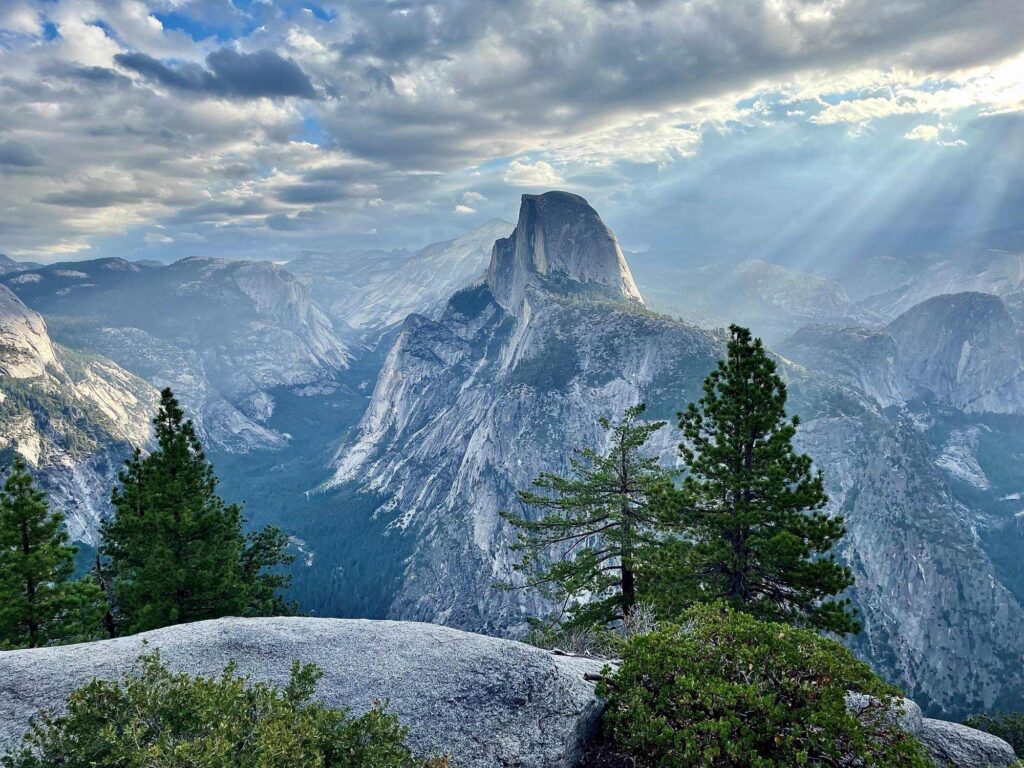
Do You Need a Half Dome Hike Permit?
Yes, a Yosemite Half Dome hike permit is required whenever the cables are up. The park requires a permit 24 hours a day, seven days a week, to ascend the subdome steps or the Half Dome cables, and rangers check permits at the base of the subdome.
Going up without one violates federal regulation 36 CFR 1.6 and can bring a fine of up to $5,000 and up to six months in jail.
Everything below the subdome is open to anyone. You can hike past Vernal Fall and Nevada Fall without a permit, because Yosemite requires no permit for day hikes other than Half Dome.
| Your situation | Permit needed |
|---|---|
| Day hike to the summit, cables up | Half Dome day-hike permit (lottery) |
| Overnight trip that includes the summit, cables up | Wilderness permit with Half Dome added, from an eligible trailhead |
| Hike to Nevada Fall or Vernal Fall only | None |
| Cables down for the season | No permit, but NPS says do not attempt the ascent |
When Are the Half Dome Cables Up?
The cables usually go up the Friday before Memorial Day weekend and come down the day after the second Monday in October.
NPS calls those dates subject to change, and a heavy snow year can delay installation, so confirm status on the NPS conditions page before you commit to a date.
The season matters for your odds, because NPS notes that early and late season dates draw fewer permit requests. It matters for your safety too: NPS lists cables that are down for the winter among the reasons not to attempt the ascent. For valley temperatures and storm patterns around these dates, see our Yosemite weather by month guide.
How to Get a Yosemite National Park Half Dome Permit
Two lotteries feed day-hiker permits, and both run through Recreation.gov.
| Preseason lottery | Daily lottery | |
|---|---|---|
| Application window | March 1 to March 31 (Eastern time) | Two days before your hike, midnight to 4 p.m. Pacific |
| Permits available | 225 per day for the whole cables season | A limited number per day, based on estimated no-shows and cancellations |
| Results | Emailed in mid-April | Late that same night |
| Group size | Up to six permits per application | One permit holder, no alternate |
| Alternate permit holder | Yes, added during the application | No |
Fees. Two charges apply. The first is $10 per application, charged when you submit, which is non-refundable. The second is $10 per person, charged only if you receive a permit. That second fee is refundable if you cancel by 11:59 p.m. Pacific Time the day before your hike, or if the cables are not up on your date.
How the Preseason Lottery Works
You apply once, for specific dates or a range of dates, and you can request up to six permits. The application only succeeds if enough permits are open for your whole group on at least one requested date, and when more than one date works, the system awards the highest-priority date you listed. NPS says an application can include up to seven dates.
Details that catch people:
- Name an alternate if you can. The permit holder or the alternate must be with the group at the base of the subdome. You can only add an alternate while applying, and names cannot be changed afterward.
- Appear on one application only. Each person may be a permit holder or an alternate on a single application. If you appear more than once, every application with your name is canceled.
- Bring ID and the email confirmation showing the permit is paid. Permits are not transferable.
- A Half Dome permit is not a bed. It includes no camping or lodging, so arrange your night before and night after separately. Our guide to where to stay near Yosemite covers the options.
How the Daily Lottery Works
Think of the daily lottery as a second chance with a short fuse. To hike on Saturday, you apply on Thursday and learn the result that night. Permits in this pool come from the park’s estimate of under-use and cancellations, so the supply moves from day to day, and a day permit is valid only on the date printed on it. It suits hikers who are already in the valley and watching the forecast.
Your Odds, and How to Improve Them
NPS publishes lottery statistics, and the latest full-season figures on its page are for 2024:
| 2024 NPS figures | Preseason lottery | Daily lottery |
|---|---|---|
| Applications | 35,289 | 35,561 |
| Application success rate | 22% | 19% |
| Weekday vs weekend | About 1.0% per weekday date, 0.8% per weekend date | 22% weekday, 14% weekend |
Those percentages describe different things. The 22 percent is the chance that at least one of the dates on an application came through, while the 1 percent is the chance for any single date. That is why listing more dates helps. NPS also notes that the statistics do not predict this year’s results.
Practical ways to tilt the odds:
- List up to seven dates, ordered by preference, and include weekdays.
- Avoid Saturdays. About 21 percent of preseason applications are for Saturday, and the daily lottery success rate is lower on weekends.
- Consider early or late season dates. NPS says early and late season dates draw fewer requests.
- Apply in both lotteries. A March loss does not stop you from entering the daily lottery.
- Keep a smaller group. A request for six permits needs six openings on one date.
Half Dome Hike Permits for Backpackers
If you would rather sleep on the way, there is a back door. Add Half Dome to a wilderness permit when you pick it up, for $10 per person, as long as your trip starts from one of these trailheads:
- Happy Isles to Little Yosemite Valley
- Glacier Point to Little Yosemite Valley
- Happy Isles past Little Yosemite Valley (Donohue Pass eligible)
- Sunrise Lakes
- Cathedral Lakes
- Rafferty Creek to Vogelsang
- Mono Meadow
You do not reserve the Half Dome portion in advance, and it is valid for all the dates on your wilderness permit. About 75 backpacker permits a day are set aside.
The trade-off is that the wilderness permit itself is hard to win, and Happy Isles to Little Yosemite Valley is among the most competitive in the park. We cover the lottery, quotas, and pickup in our Yosemite permits and wilderness access guide.
Three rules to remember:
- Day permits and backpacker permits are not interchangeable. A Half Dome permit attached to a wilderness permit is not valid for a day hike.
- A wilderness permit issued outside Yosemite does not count. If your trip starts outside the park, enter the day-hiker lotteries instead, much like entering the competitive Mount Whitney lottery.
- Camping partway up needs a wilderness permit. Little Yosemite Valley is a backpackers’ campground about 2,000 feet above the valley floor and just under four miles from the trailhead. If you win a wilderness permit for it, you can use a Half Dome day permit you already hold with it.
What the Hike Asks of You
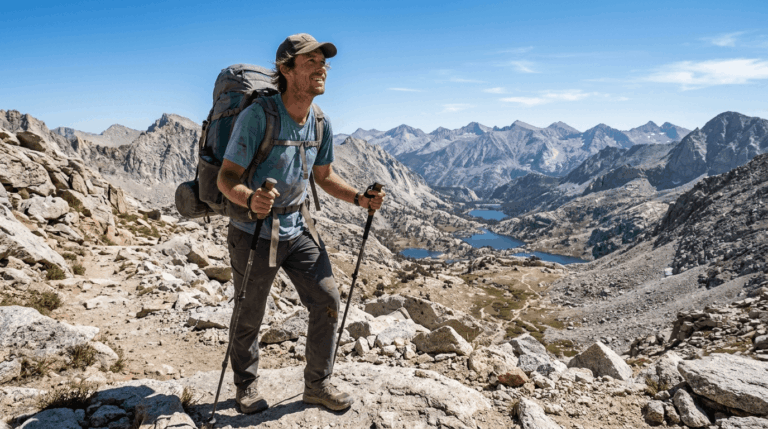
Picture the first hour of hiking Half Dome with a permit in your pocket. Most hikers start from Happy Isles, shuttle stop #16, in the dim blue light before sunrise, with the Merced River loud beside the trail. Within a mile, you reach the Vernal Fall Footbridge, and the climbing has barely started.
The numbers are plain. Round trip is 14 to 16 miles depending on the route, and the total gain is 4,800 feet. Most people take 10 to 12 hours, and some take longer. Half Dome rises nearly 5,000 feet above the valley floor and tops out near 8,800 feet above sea level. You have two ways in:
| Route | Round trip | Character |
|---|---|---|
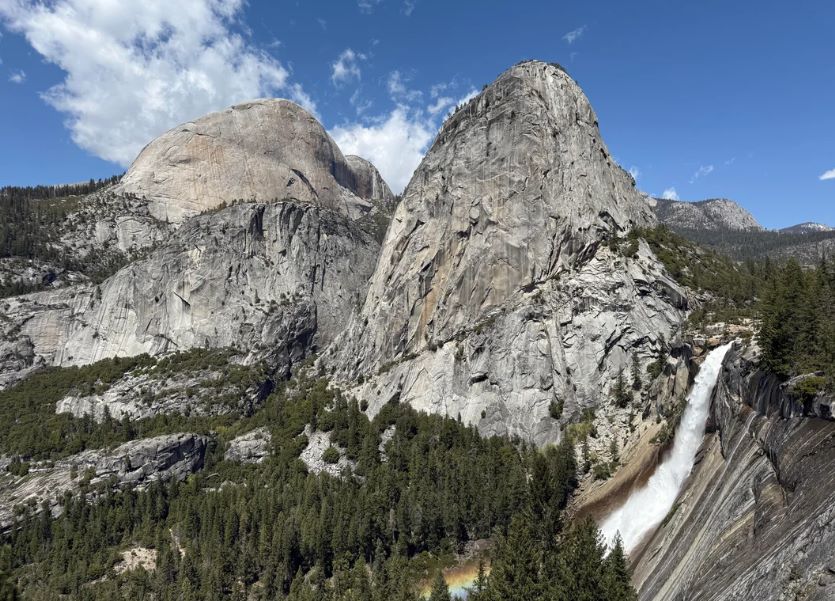
| Mist Trail | About 14 miles | Shorter and steeper, passing close to Vernal and Nevada Falls |
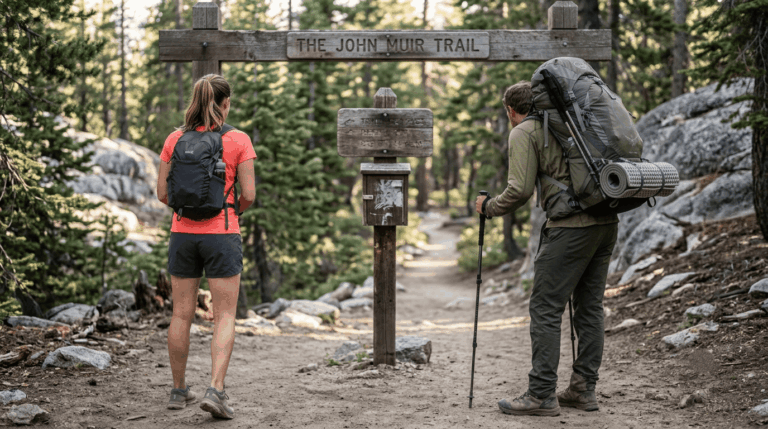
| John Muir Trail | About 16.3 miles | Longer and gentler |
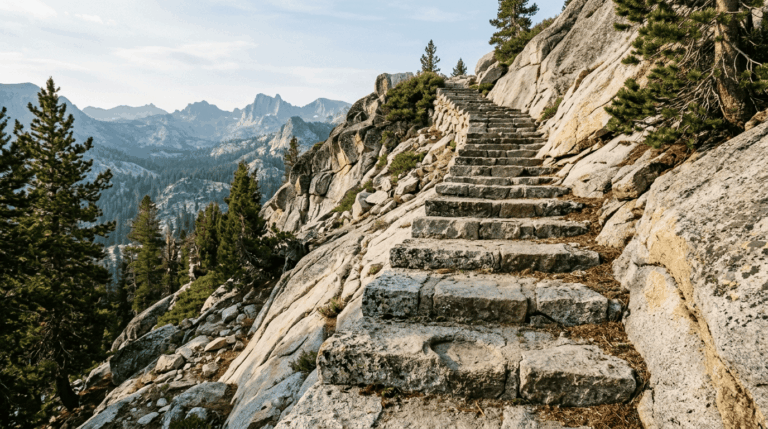
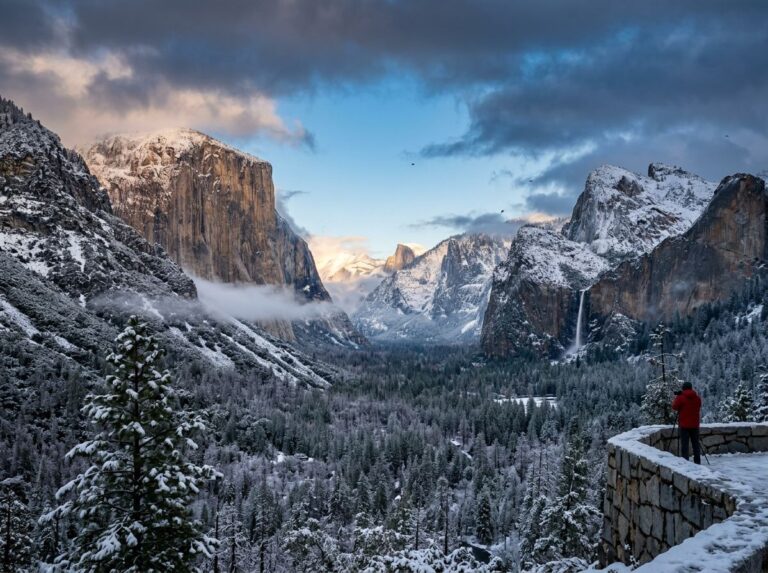
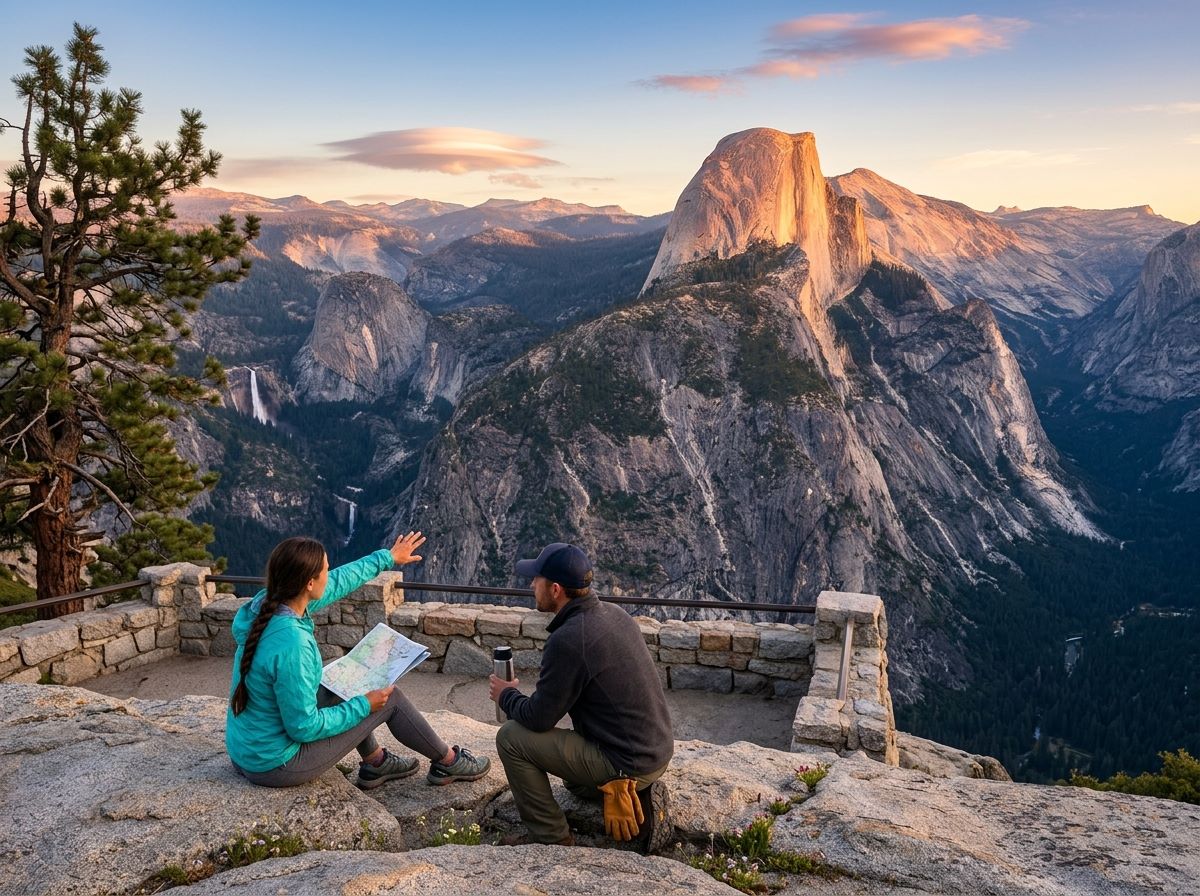
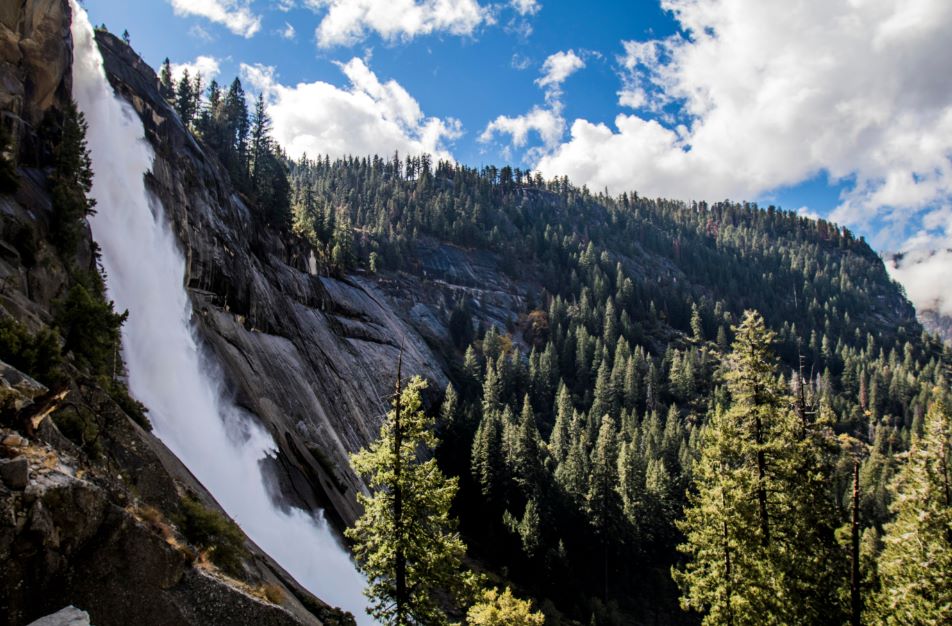
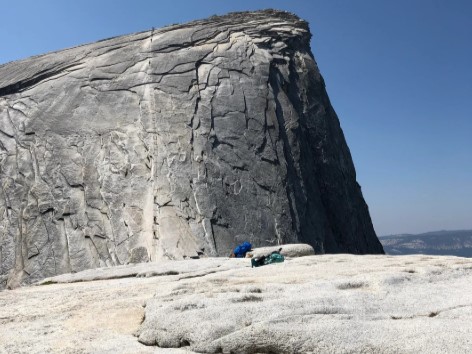
The stages run in order: Vernal Fall, Nevada Fall, Little Yosemite Valley, the long forest climb, the subdome, and finally the cables. At the base of the subdome, a ranger checks your permit. Beyond that, the cables take over: two metal lines let you climb the last 400 feet without rock-climbing gear. From the summit, the views run across Yosemite Valley and the High Sierra.
Trail repair work has at times restricted parts of the Mist Trail and pushed hikers onto the John Muir Trail. Check current conditions before you pick a route. For a full training plan, see our guide on how to train for a difficult hike like Half Dome. Since Half Dome sits just off the John Muir Trail, our John Muir Trail planning guide shows where the two routes overlap.
Cables Rules and Safety
The NPS Half Dome page states the limits more bluntly than anyone else, so treat them as rules.
Do not start up the cables if:
- Storm clouds are in the area.
- The rock is wet. NPS says nearly all fatal falls from the cables have happened when the rock was wet.
- The cables are down for the winter.
On the cables, stay on the inside, take your time, be patient with slower hikers, and let faster hikers pass when it is safe.
Set a turnaround time before you leave. My rule is to say the time out loud at the trailhead so everyone in the group has heard it. NPS gives an example: if you have not reached the top by 3:30 p.m., turn around. Carry a headlamp with spare batteries, because phone lights do not count, and many hikers struggle down the trail after dark without one.
Weather. The summit is typically 15°F to 20°F cooler than Yosemite Valley, and windy conditions are common. Thunderstorms are more likely in the afternoon but can occur at any time.
If a storm is nearby, do not continue to the summit. Our weather hazards guide for California trails covers heat, fog, and sudden storms.
Water. NPS suggests at least one gallon (4 liters) per person for the top. The only treated water on the trail is a summer-only drinking fountain at the Vernal Fall Footbridge, and river water up to Little Yosemite Valley must be treated by boiling, iodine, or a Giardia-rated filter. Eat salty snacks too, because hyponatremia is a risk. Our guide to water and electrolytes for hikers explains the balance.
Gear. NPS recommends well-broken-in boots with ankle support and good traction, plus sturdy gloves with a good grip. If you bring gloves up, pack them out. Our California hiking gear checklist covers the rest.
Other hazards. Entering Emerald Pool and the Silver Apron is prohibited, and entering pools above waterfalls is strongly discouraged. Keep food within arm’s reach, because bears take backpacks. Altitude sickness appears for a few visitors each summer, and the only cure is to descend.
Getting to the Trailhead
Trailhead parking is just beyond Curry Village. Happy Isles is about a half-mile from that lot, and about three-quarters of a mile from Curry Village.
The shuttle does not begin until 7 a.m., so an early start means walking the closed road. The nearest campgrounds are Upper, Lower, and North Pines, and Camp 4 may also be an option, but both are hard to reserve in summer.
Happy Isles and Half Dome sit in Mariposa County, and our guide to the best hiking trails in Yosemite National Park maps the rest of the valley.
If You Do Not Win a Permit
Losing the lottery does not close the door to the high granite. The trails below need no permit for a day hike.
| Hike | Round trip | Notes |
|---|---|---|
| Top of Vernal Fall | 2.4 miles | Mist Trail; rocks near the water are slick |
| Top of Nevada Fall | 5.4 miles | About 5 to 6 hours |
| Clouds Rest from Sunrise Lakes Trailhead | 14 miles | 2,300 feet of gain, 8 to 10 hours, summit at 9,926 feet |
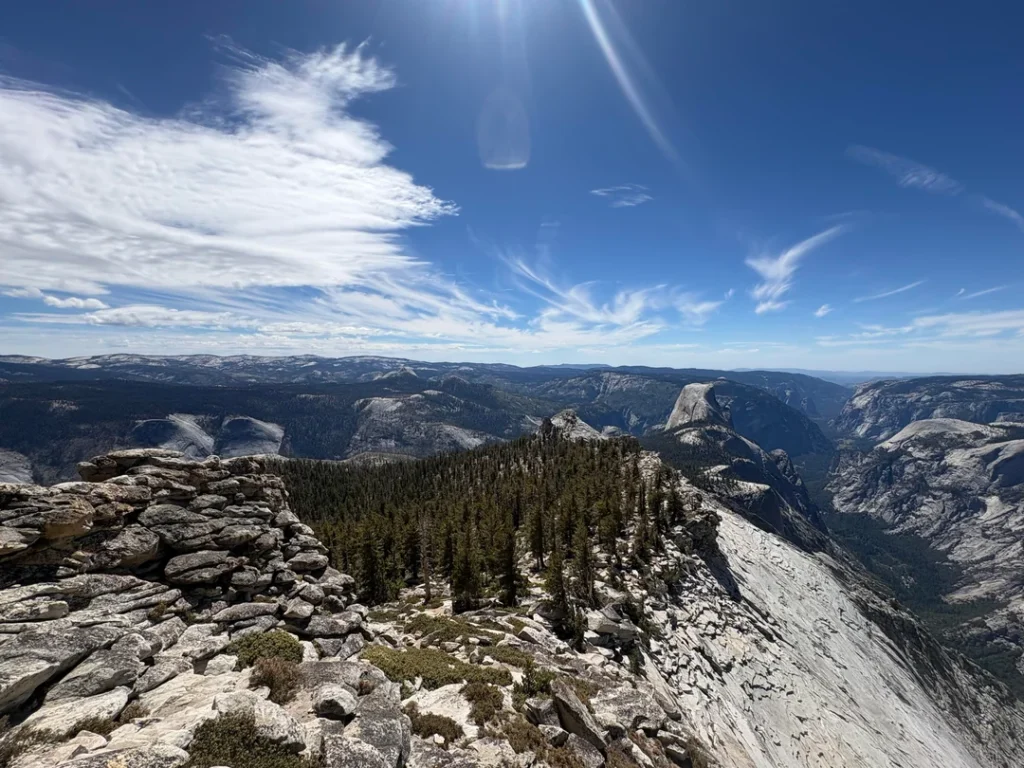
If you are looking for another major endurance test on the valley floor, our Upper Yosemite Falls hiking guide covers a strenuous 7.2-mile trail with incredible panoramic views. Clouds Rest is the usual consolation prize. NPS describes a 360-degree view over Tenaya Canyon, Yosemite Valley, and the High Sierra, with a final ascent along a narrow granite ridgeline.
The Sunrise Lakes Trailhead is reachable by car only when Tioga Road is open, and overnight parking on Tioga Road ends October 15. For more high-country options along that road, see our guide to hiking in Tuolumne Meadows.
A Planning Timeline
| When | What to do |
|---|---|
| Winter | Build fitness and pick three weekday date options for the lottery |
| March 1 to 31 | Apply in the preseason lottery, with an alternate and up to seven dates |
| Mid-April | Check results and pay for any permit you win |
| Late May to mid-October | Cables season. Enter the daily lottery two days ahead if you lack a permit |
| Two days before | Check the forecast. Cancel by 11:59 p.m. the day before for a refund of the $10 per-person fee |
| Hike day | Start near sunrise or earlier. Carry ID and the permit email. Hold to your turnaround time |
For permits and rules that apply beyond Half Dome, see our overview of California hiking trail permits.
Final Thoughts
Half Dome rewards the hikers who plan as they train. Apply in March with weekday dates, keep the daily lottery in your back pocket, and treat the weather as the final judge. When a storm builds, when the rock is wet, when your turnaround time arrives, the right call is the one that lets you walk down on your own. The summit will be there next year.
Frequently Asked Questions
How much does a Half Dome hike permit cost?
A $10 non-refundable fee per application, plus $10 per person if you receive a permit. The per-person fee is refundable if you cancel by 11:59 p.m. Pacific Time the day before your hike or the cables are not up on your date.
When is the Half Dome permit lottery?
The preseason lottery runs March 1 through March 31, with results emailed in mid-April. Daily lotteries open two days before each hike during the season, from midnight to 4 p.m. Pacific.
How many people can hike Half Dome each day?
NPS allows a maximum of 300 hikers a day on the Half Dome Trail beyond the base of the subdome: about 225 day hikers and 75 backpackers.
Can I hike Half Dome without a permit?
Not while the cables are up. You need a permit to ascend the subdome steps or the cables, and doing so without one can bring a fine of up to $5,000 and up to six months in jail. You can hike the trail up to the base of the subdome without a permit.
How long does the Half Dome hike take?
Most people take 10 to 12 hours for the 14- to 16-mile round trip with 4,800 feet of elevation gain. Some take longer, so start at sunrise or earlier and keep a firm turnaround time.
Can I transfer or share my permit?
No. Permits are not transferable, and the permit holder or alternate named on the application has to be with the group at the base of the subdome. Bring photo ID and the confirmation email.