Yosemite Weather by Month: Winter, October, January & More
Yosemite National Park in winter is a different park from the one on the postcards. Tioga Road and Glacier Point Road shut behind snow gates; the valley floor sits around 4,000 feet and swings between rain, frost, and fresh powder, and the crowds thin to a fraction of their summer size. Yosemite Valley stays open year-round by road, making it ideal for easy valley walks, with daytime highs from the mid-40s to low 50s °F between December and February, and January as the wettest month.
Disclosure: Please note that some of the links below are affiliate links and at no additional cost to you, I may earn a commission. Know that I only recommend hiking gear I personally stand behind; when you use my affiliate links, it helps me run this blog and keep all of this content free of charge for readers (like you).
This guide walks through the weather month by month, from the last warm days of October to the first thaw in March, complete with our Yosemite map and trailhead guide, and covers what stays open, what closes, and what to do when the snow arrives.
Key Takeaways
- Yosemite Valley stays open all year. Highways 41, 140, and 120 West lead in, along with the road to Hetch Hetchy, though chains may be required.
- Tioga Road and Glacier Point Road close for the season, usually sometime in November, and reopen around late May or June.
- January is the wettest month in the valley (7.0 inches on average), while December has the lowest average high (46°F).
- October is the shoulder month. Highs reach 71°F in the valley, fall color builds toward late October, and an early storm can still close the high roads.
- Carry tire chains from November through March. Chain controls come less often in October and April.
- Winter fun is weather-dependent: Badger Pass skiing, the Curry Village ice rink, snowshoeing near Crane Flat, and the February Horsetail Fall “firefall.”
Yosemite National Park Winter at a Glance
Picture the park as a stack of three climates. At the bottom sit the Hetch Hetchy basin and the foothill gateways, under 4,000 feet. Above them is Yosemite Valley and Wawona, near 4,000 feet. Above those lie Glacier Point, Crane Flat, and Tuolumne Meadows at 6,000 to 8,600 feet, where winter brings deep snowpack.
The park spans roughly 2,000 to 13,000 feet in elevation, according to the National Park Service weather page, and it receives 95 percent of its precipitation between October and May, with more than 75 percent falling from November through March.
That elevation ladder explains almost every winter question. Why can the valley get rain on the day Tuolumne Meadows gets snow? Because the two sit about 4,600 feet apart in altitude. Why can you walk to Lower Yosemite Fall in sneakers while Glacier Point needs skis? Same reason.
Yosemite Weather by Month: Valley Averages
The numbers below come from NPS averages for 1991 to 2020 at the Yosemite Valley station (4,000 feet).
| Month | Avg. High | Avg. Low | Precipitation | What it feels like |
|---|---|---|---|---|
| January | 48°F (9°C) | 29°F (-2°C) | 7.0 in | Wettest month, cold mornings, quiet trails |
| February | 51°F (11°C) | 30°F (-1°C) | 6.5 in | Storms mixed with sunny breaks; firefall season |
| March | 57°F (14°C) | 34°F (1°C) | 5.5 in | Snowmelt starts, waterfalls build |
| April | 63°F (17°C) | 38°F (3°C) | 3.2 in | Spring flow, jackets by evening |
| May | 71°F (21°C) | 45°F (7°C) | 1.9 in | Waterfalls near peak |
| June | 81°F (27°C) | 51°F (11°C) | 0.5 in | Dry, warm days |
| July | 89°F (32°C) | 57°F (14°C) | 0.3 in | Hottest stretch |
| August | 89°F (32°C) | 57°F (14°C) | 0.2 in | Driest month |
| September | 83°F (28°C) | 51°F (11°C) | 0.4 in | Warm days, cooler nights |
| October | 71°F (22°C) | 41°F (5°C) | 1.6 in | Crisp, fall color builds |
| November | 56°F (13°C) | 33°F (0°C) | 4.1 in | First big storms |
| December | 46°F (8°C) | 28°F (-2°C) | 5.6 in | Coolest highs, holiday traffic |
Treat these as averages, not promises. A valley day in January can reach the 60s under clear skies and drop to a snowstorm the next afternoon.
The High Country Is a Different Place
Tuolumne Meadows sits at 8,600 feet, and its averages read like another season entirely:
| Month | Avg. High | Avg. Low | Precipitation |
|---|---|---|---|
| October | 57°F (14°C) | 26°F (-3°C) | 1.8 in |
| November | 47°F (8°C) | 20°F (-7°C) | 3.1 in |
| December | 40°F (4°C) | 12°F (-11°C) | 4.6 in |
| January | 41°F (5°C) | 13°F (-11°C) | 6.2 in |
| February | 39°F (4°C) | 12°F (-11°C) | 4.0 in |
| March | 42°F (6°C) | 15°F (-10°C) | 4.2 in |
| April | 45°F (7°C) | 22°F (-6°C) | 2.0 in |
Those are the same months with lows that fall well below zero Celsius for most of the winter, which is why Tioga Road stays closed until late spring.
What Is Open and Closed in Yosemite Park Winter
The cleanest way to plan a winter trip is to sort the park into what you can reach by car, what you can reach only on skis, and what is shut.
| Area | Winter status | How you get there |
|---|---|---|
| Yosemite Valley | Open all year | Highway 140, 41 or 120 West |
| Wawona and Mariposa Grove | Open all year; grove trails are snowy | Highway 41; walk the Washburn Trail to the grove |
| Crane Flat | Open all year | Big Oak Flat Road (Highway 120 West) |
| Hetch Hetchy | Open sunrise to sunset; closes when it is snowing or snow is forecast overnight | Hetch Hetchy Road |
| Glacier Point Road | Plowed only to Badger Pass, from mid-December to early April | Beyond that, ski or snowshoe |
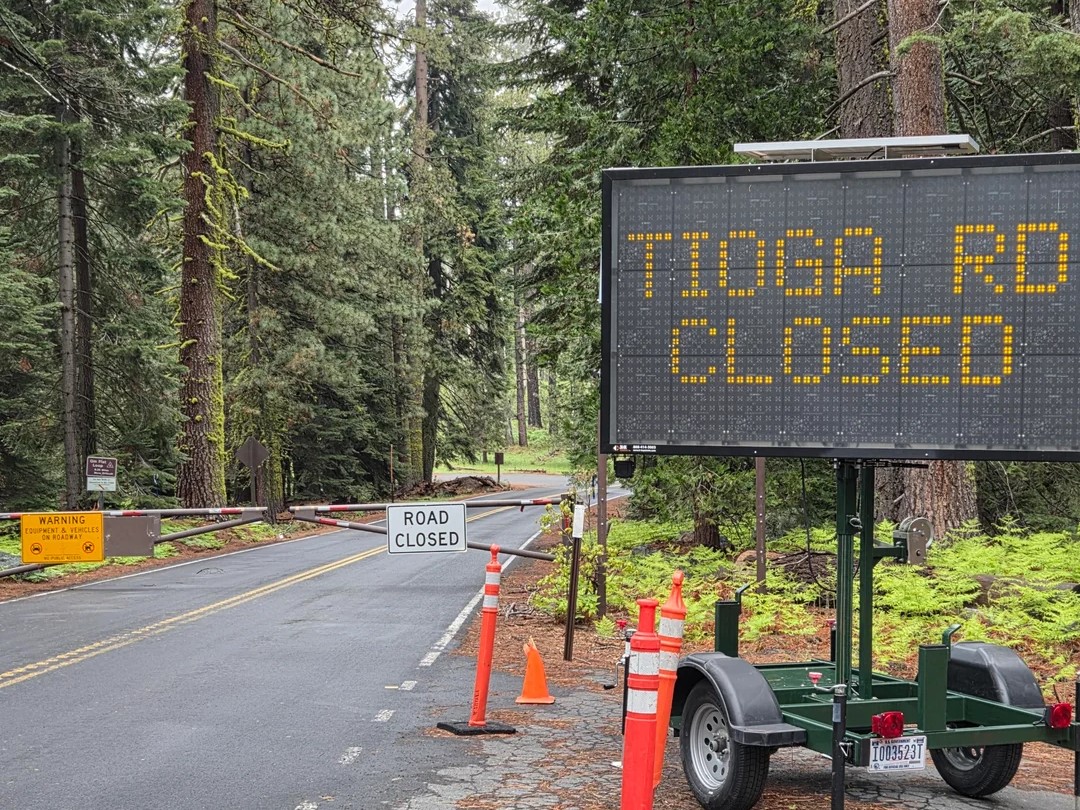
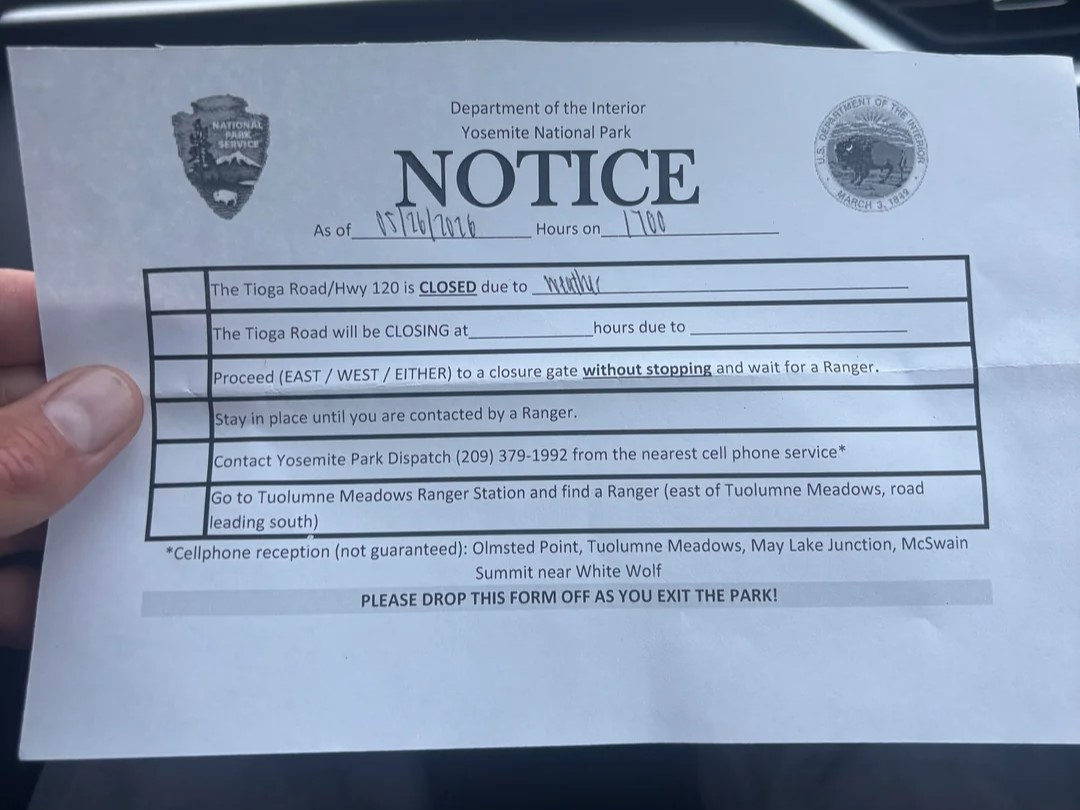
| Tioga Road and Tuolumne Meadows | Closed to vehicles, usually from sometime in November until late May or June | No car access |
The Tioga Pass entrance closes with the road, and there is no vehicle route to or from the east side of the park until it reopens. If you are driving from Mammoth or Lee Vining, the detour around the Sierra takes much longer.
Four campgrounds stay open all winter: Upper Pines and Camp 4 in the valley, Hodgdon Meadow near the Big Oak Flat entrance, and Wawona. For more cold-weather preparation and site amenities, review our Yosemite National Park camping resources.
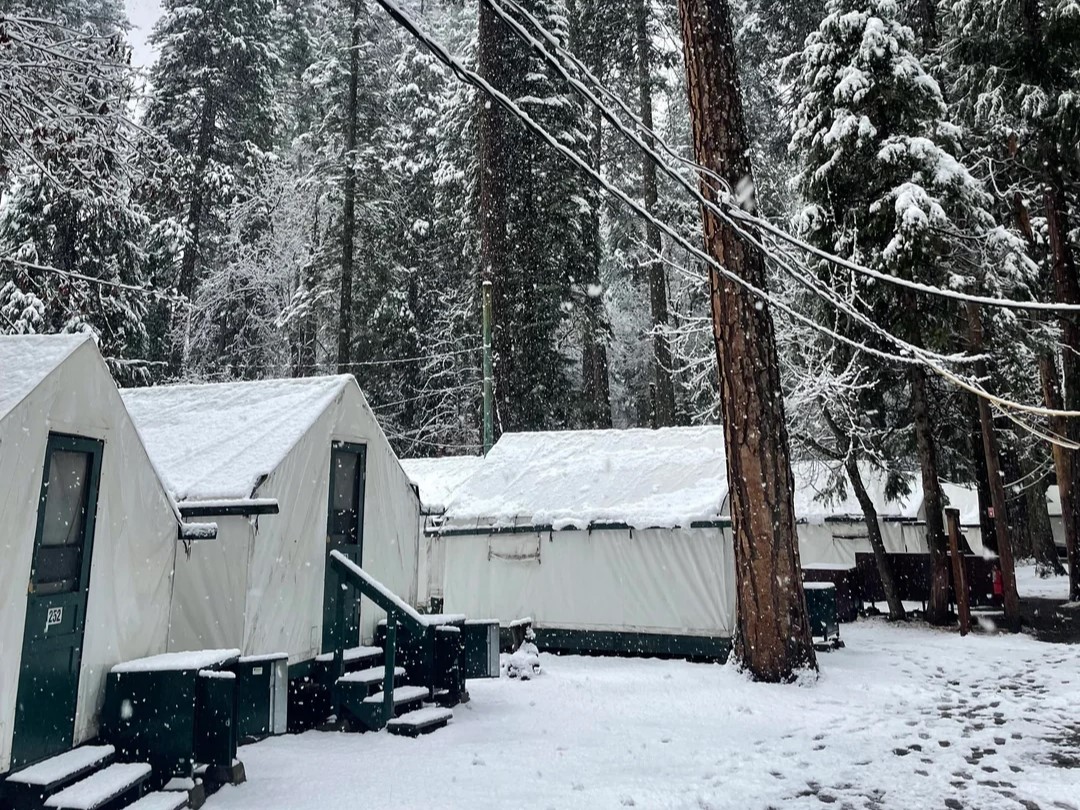
Lodging inside the valley (The Ahwahnee, Yosemite Valley Lodge and Curry Village) is open too, and the gateway towns offer rooms that are often easier to book and cheaper than in summer. For a breakdown by budget and trail access, see our guide on where to stay near Yosemite.
Tire Chains and Winter Driving
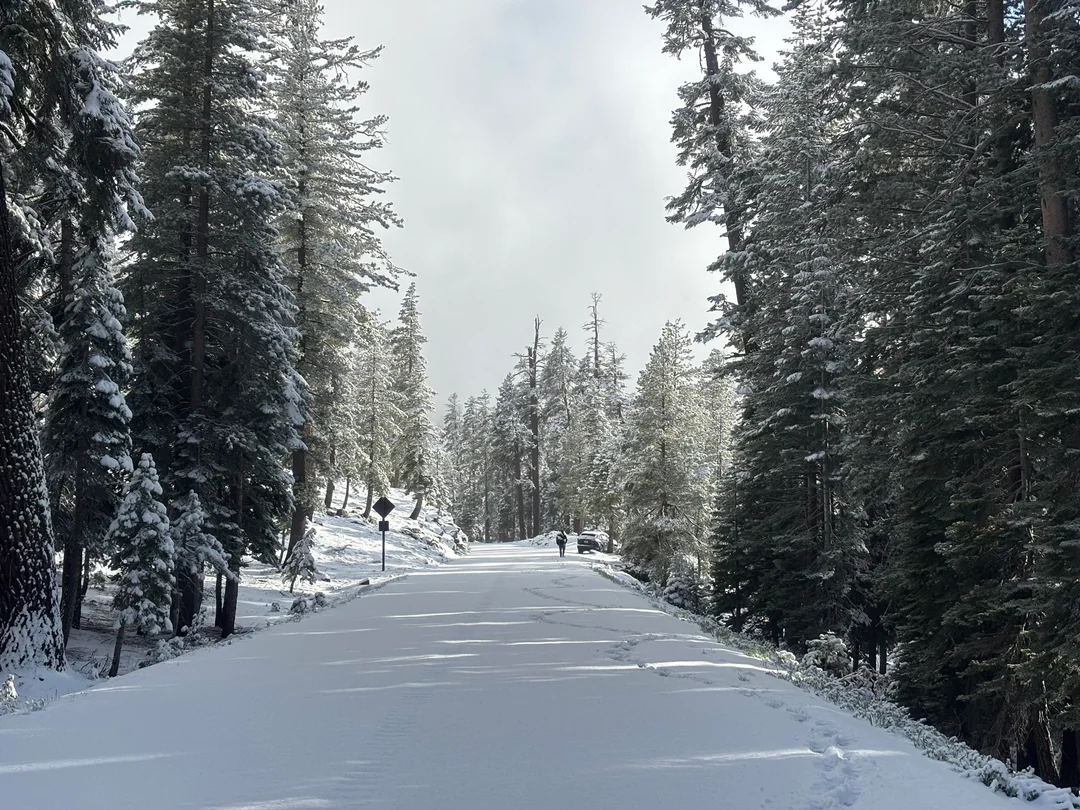
Chains are the first thing people forget. The NPS says chains are often required on roads inside and outside the park from November through March, less often in October and April, and rarely in September or May. California uses three levels of chain control:
- R1: chains or snow tires required.
- R2: chains required unless you have snow tires and all-wheel or four-wheel drive.
- R3: chains required on all vehicles.
My rule is to carry chains on every drive between November and March and to practice fitting them in a dry driveway first. Highway 41 climbs to roughly 6,000 feet near the Glacier Point Road turnoff, so it sees snow more often than Highway 140, which stays lower and is the usual choice when a storm is forecast.
If winter driving is not your thing, NPS points visitors to the YARTS bus system (Yosemite Area Regional Transportation System) as a way to skip the road entirely. Before you leave, check the live Yosemite current conditions page or call 209-372-0200.
Yosemite National Park Month by Month
Yosemite National Park in October
October is the month that tests every plan. The valley is mild, with a 71°F average high and a 41°F average low, and only 1.6 inches of average rain. The Merced River runs low, and the waterfalls are at their weakest of the year: Upper Yosemite Falls can be dry, and Vernal, Nevada, and Bridalveil run low.
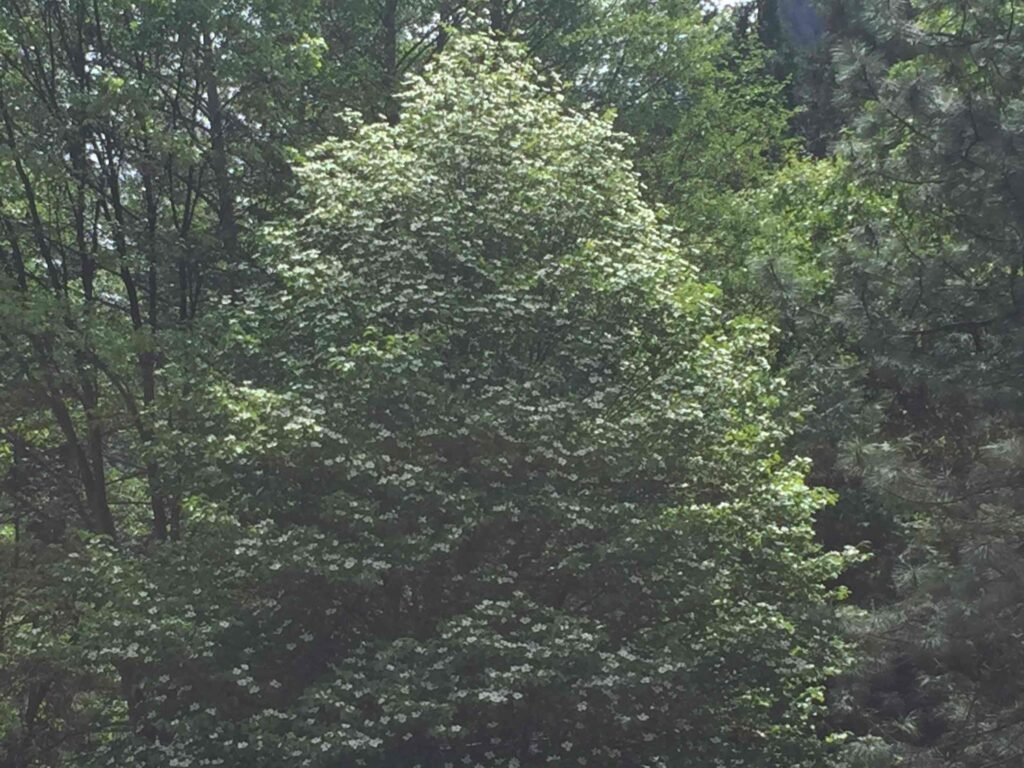
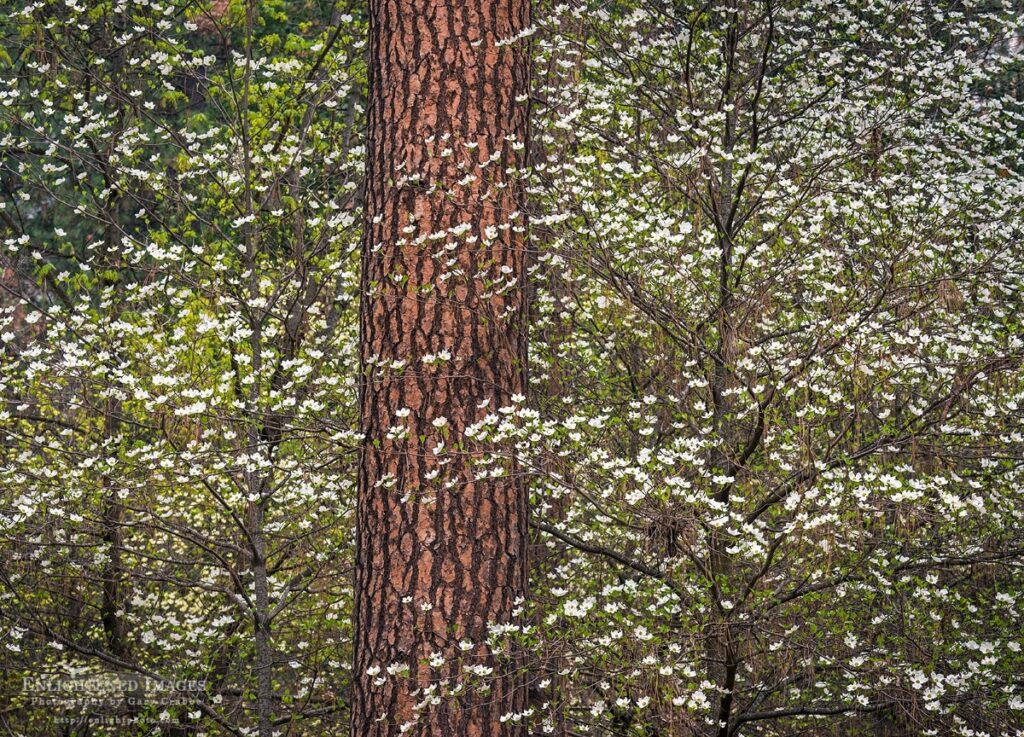
What October gives back is color. NPS describes dogwood leaves turning red, bigleaf maples glowing bright yellow along the south wall of the valley, black oaks shifting from orange-brown to golden yellow, and a non-native sugar maple near the Yosemite Chapel that burns red.
Valley color often peaks from late October into early November, and clear, dry, cool weather without hard freezes gives the best show. If you want more color-hunting ideas across the state, our guide of the best hiking trails in California for fall color covers other parks.
Three October details to plan around:
- The high roads can close early. Tioga Road and Glacier Point Road usually shut in November, but a storm can end the season sooner. In October 2025, a forecast snowstorm closed Glacier Point Road on October 12 and Tioga Road on October 13.
- The Half Dome cables come down. They are typically taken down after the second Monday in October, and Half Dome permit requirements dictate that a permit is only required while they are up.
- Smoke is possible. NPS notes that hazy or smoky conditions can occur in any season, and fall fire activity can close roads and trails with little notice.
If you want the high country in October, aim for the first half of the month while Tioga Road is likely still open, and use our guide to hiking in Tuolumne Meadows to pick your trails.
November: The First Big Storms
November is when the park changes its mind. The valley average high drops to 56°F, lows hover near freezing at 33°F, and precipitation jumps to 4.1 inches.
Tioga Road and Glacier Point Road usually close sometime this month. Chain controls begin to appear, and snow on the valley floor can come and go within days.
The Mariposa Grove shuttle runs approximately late April through November, so a November Mariposa Grove visit is one of the last chances to ride it.
The Curry Village ice rink typically opens in mid-November, weather permitting, and its 2025 to 2026 season was listed from November 14 to March 2.
Yosemite National Park in December
December has the lowest average high in the valley (46°F) and a 28°F average low, with 5.6 inches of precipitation. Snow is more likely to stick on the valley floor than in November, and the mornings can feel like the quietest hours in the park. The waterfalls that sagged in autumn pick up again as storms feed the creeks.
December is also the month with an event calendar. The Ahwahnee Hotel has hosted its Bracebridge Dinner, a Christmas pageant and seven-course feast, since 1927, and reservations are required. The 2026 dates run on select evenings from December 8 through 18. From mid-December, Glacier Point Road is plowed to Badger Pass so the ski area can run.
The caution for December is the holiday crush. NPS warns the park can be very busy in late December and early January, with traffic congestion and limited parking. Arrive early in the day, or ride the free valley shuttle after you park.
Yosemite National Park in January
Yosemite National Park in January is the wettest stretch of the year, averaging 7.0 inches of precipitation in the valley, with a 48°F average high and a 29°F average low. It is also one of the quietest times to visit once the New Year’s crowds clear out.
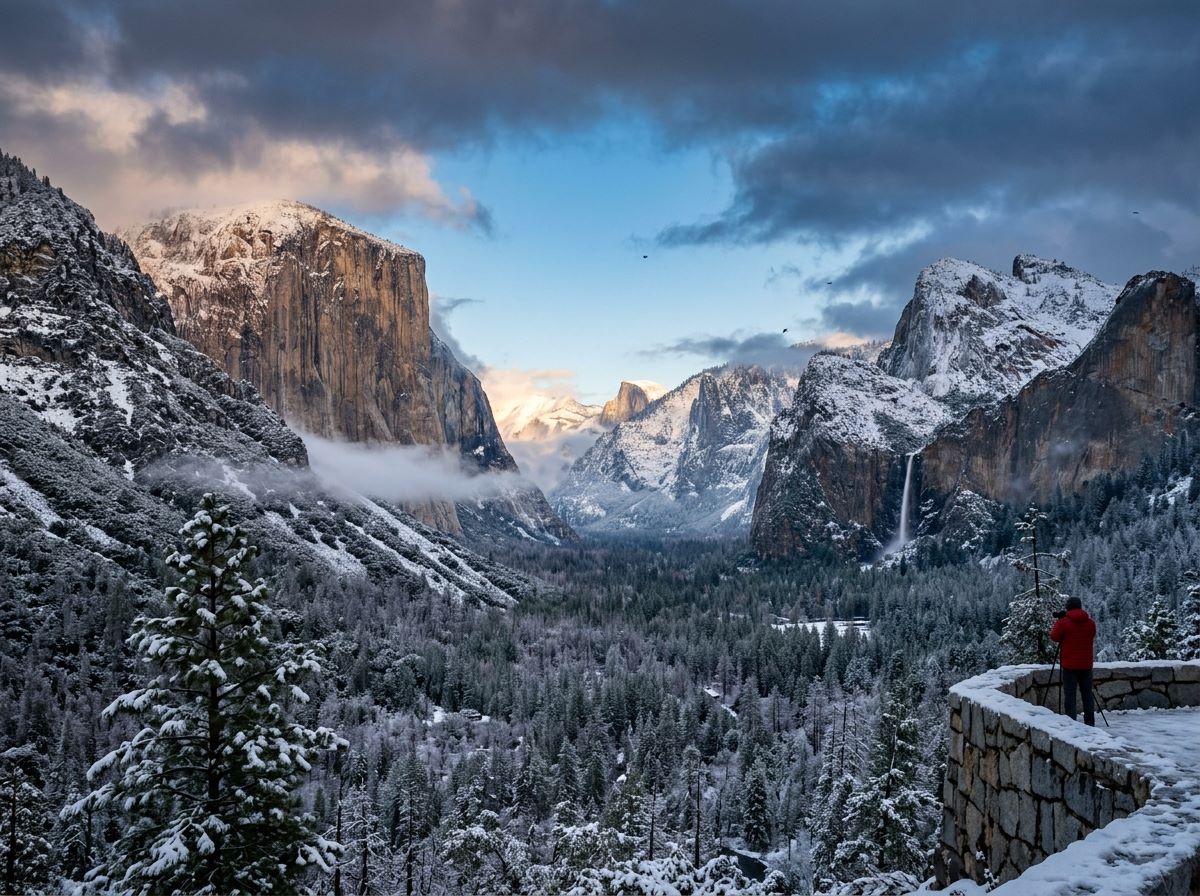
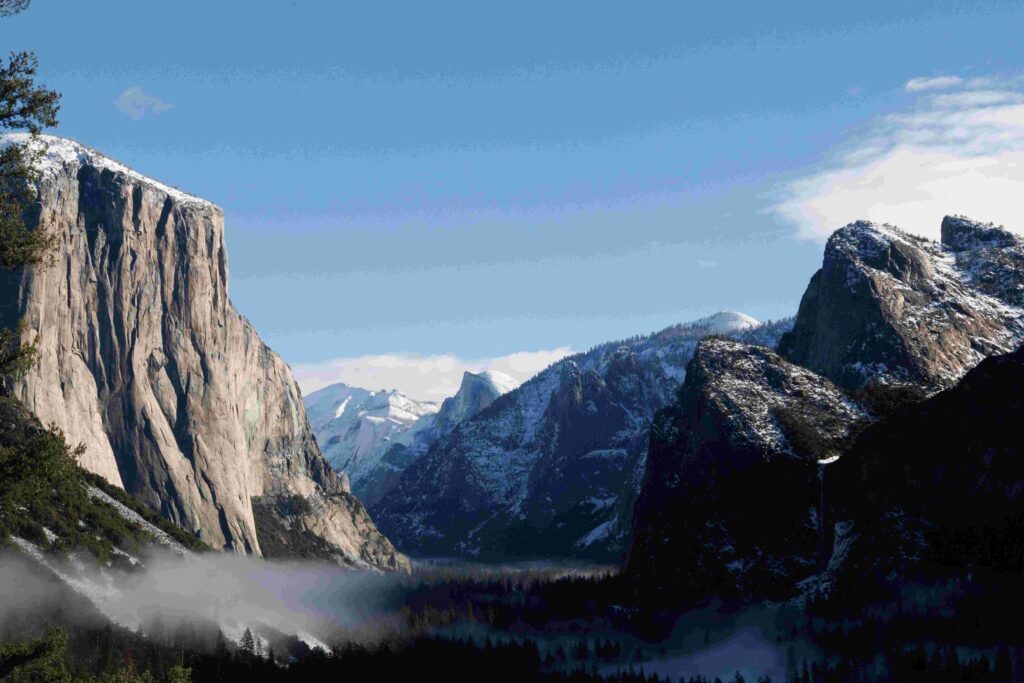
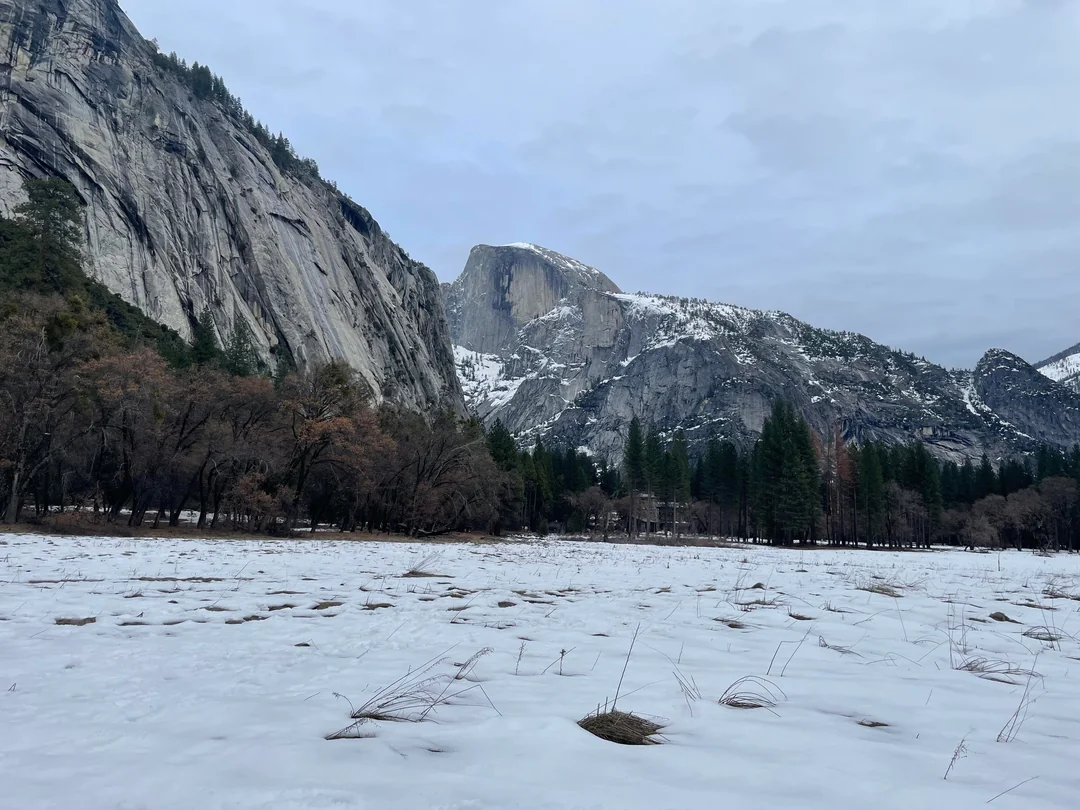
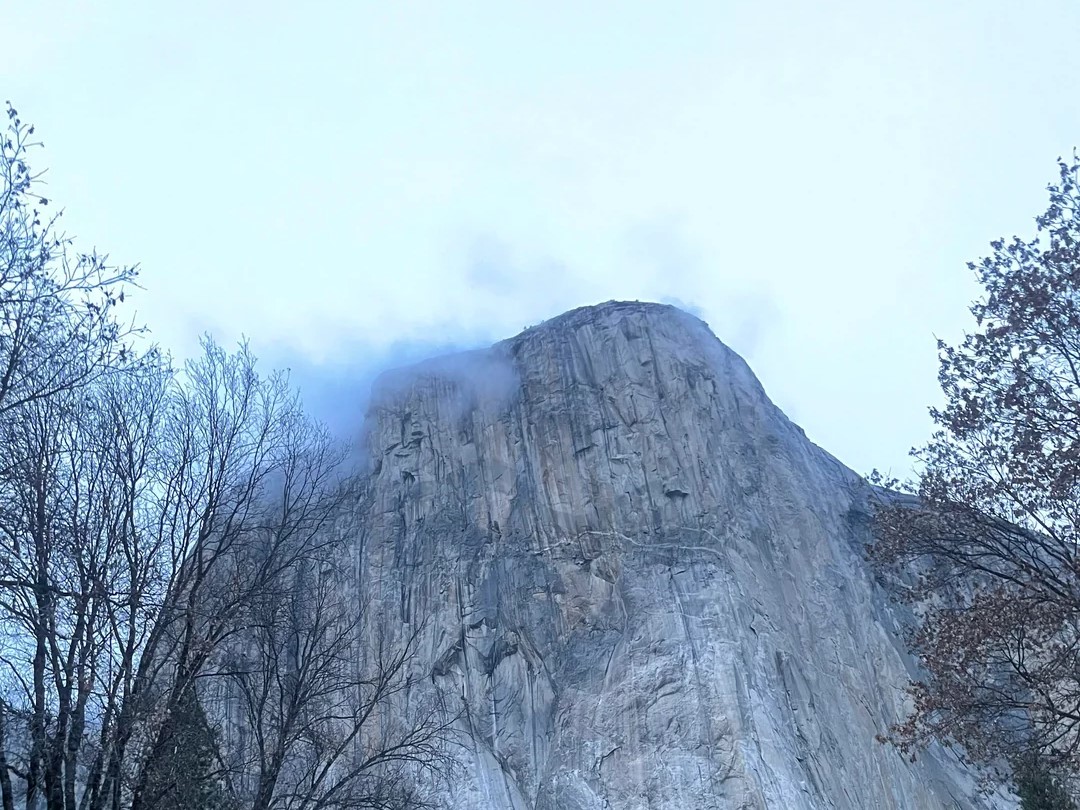
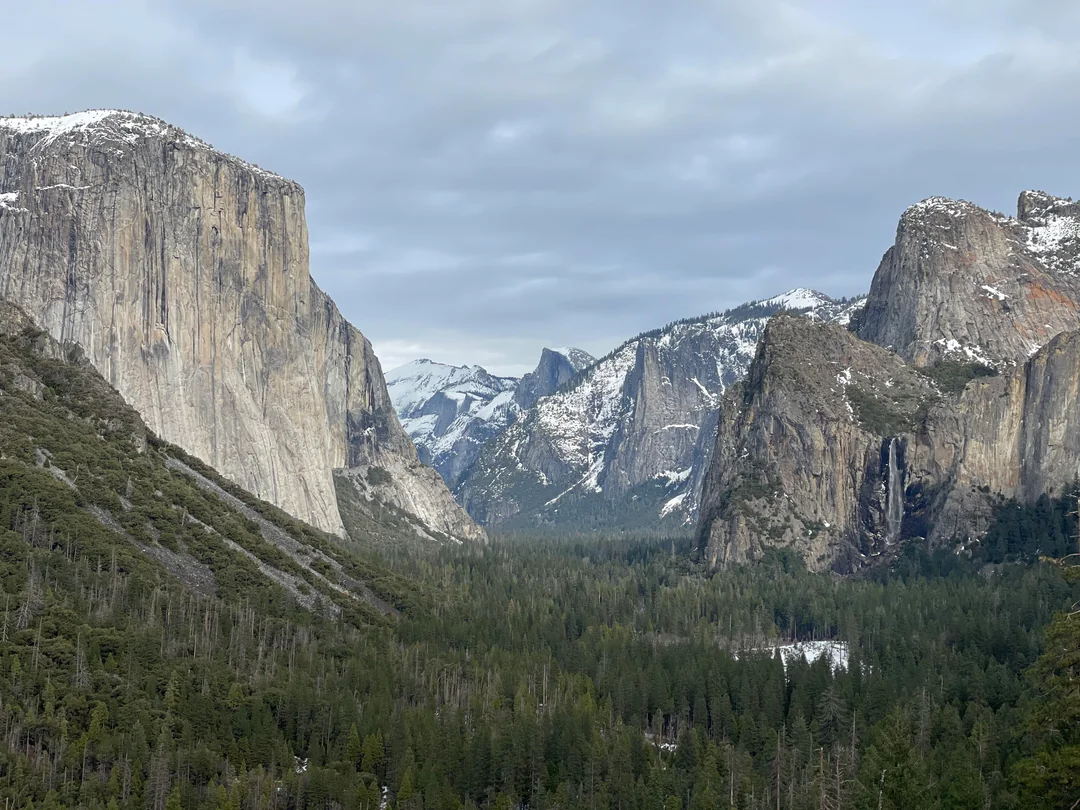
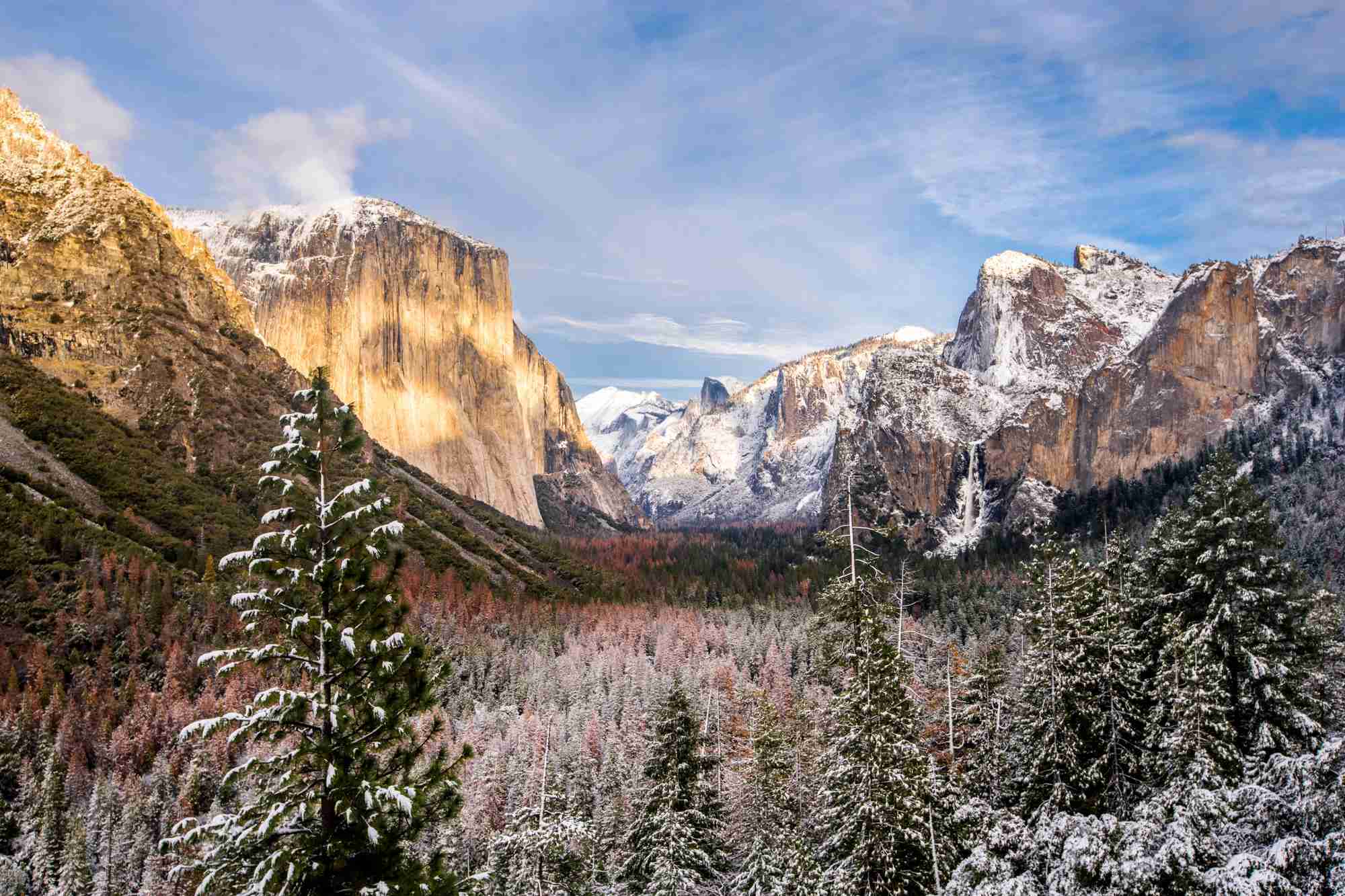
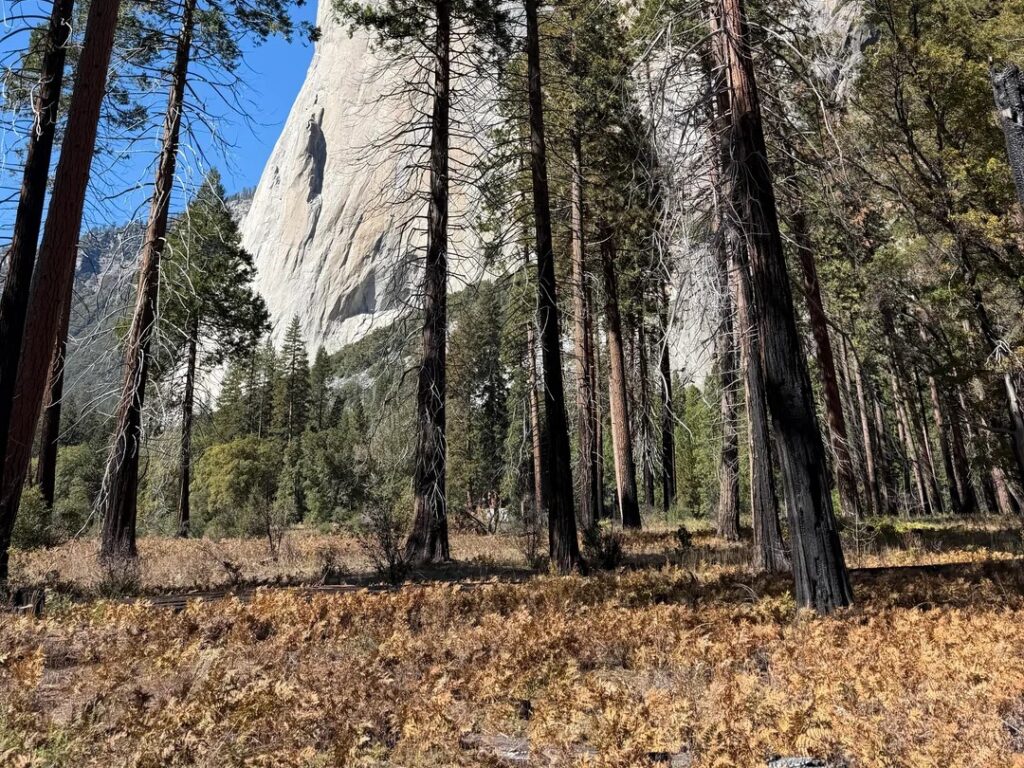
The valley can be rain one day and snow the next, and the NPS says some waterfalls are nearly always flowing at least a little in winter. On clear days after a storm, snow outlines the ledges of El Capitan and Half Dome, the Merced River runs cold and dark, and the meadows hold frost until midmorning.
Daylight runs only about ten hours in January, and the canyon walls shorten the usable light further, so I start walks by 9 a.m. and aim to be done by mid-afternoon.
Badger Pass depends on natural snow, and its seasons swing. The ski area did not open at all in the 2024 to 2025 winter because of poor early-season snow, and in 2025 to 2026 downhill skiing started in mid-January after several delays. Check its status before you build a trip around skiing.
February: Firefall and Stormy Skies
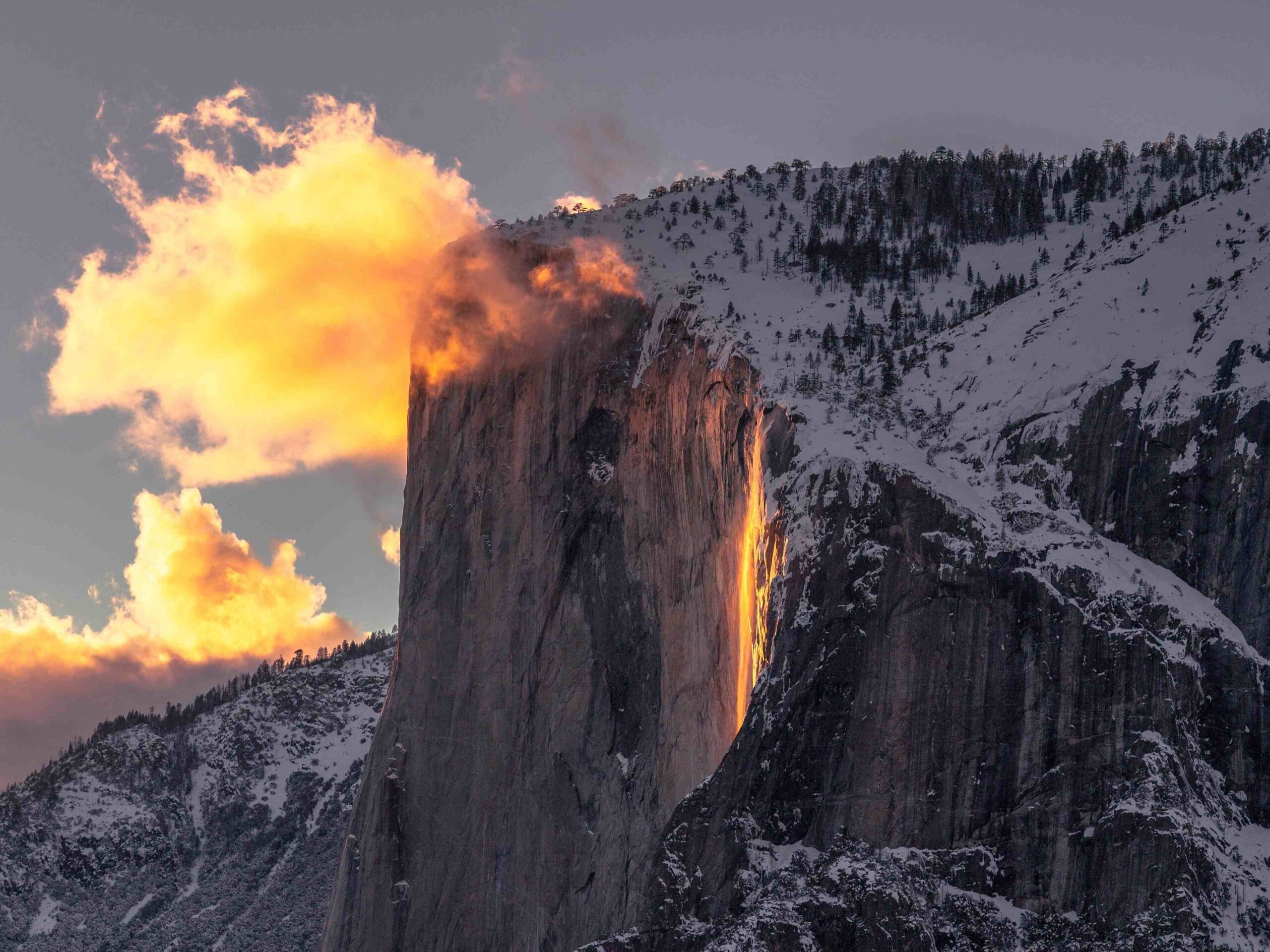
The valley averages 51°F for a high and 30°F for a low, with 6.5 inches of precipitation. February is when Horsetail Fall makes the news. Flowing over the eastern edge of El Capitan, it can glow orange and red at sunset when water flow, clear skies, and the sun’s angle align in mid to late February.
The NPS projected a viewing window of February 10 to 26 for 2026, and the glow arrives just before sunset, which falls around 5:30 to 5:50 p.m. that month.
For 2026, the park did not require entry reservations for the firefall. It ran a traffic and parking plan instead: park at Yosemite Falls parking and walk about 1.5 miles each way to the viewing area near the El Capitan Picnic Area, or, if that lot is full, park at Yosemite Village or Curry Village and take the free shuttle to Yosemite Falls.
When I wrote this guide in October 2026, I could not find a published 2027 plan, so check the NPS Horsetail Fall page before you book anything. Evenings sit near freezing, so pack warm layers and bring a headlamp for the walk back.
March: The Thaw Begins
March brings a 57°F high, 34°F low, and 5.5 inches of precipitation. Snowmelt starts feeding the waterfalls, and the valley feels like it is exhaling. If cascades are your goal, our list of waterfall hiking trails in Mariposa County shows where to go as the flow builds.
Badger Pass usually closes in mid-March, but Glacier Point Road stays plowed to the ski area through early April. Valley precipitation can fall as rain or snow, and trails can turn muddy and icy in the same hour.
Winter Hiking in Yosemite: What Stays Walkable
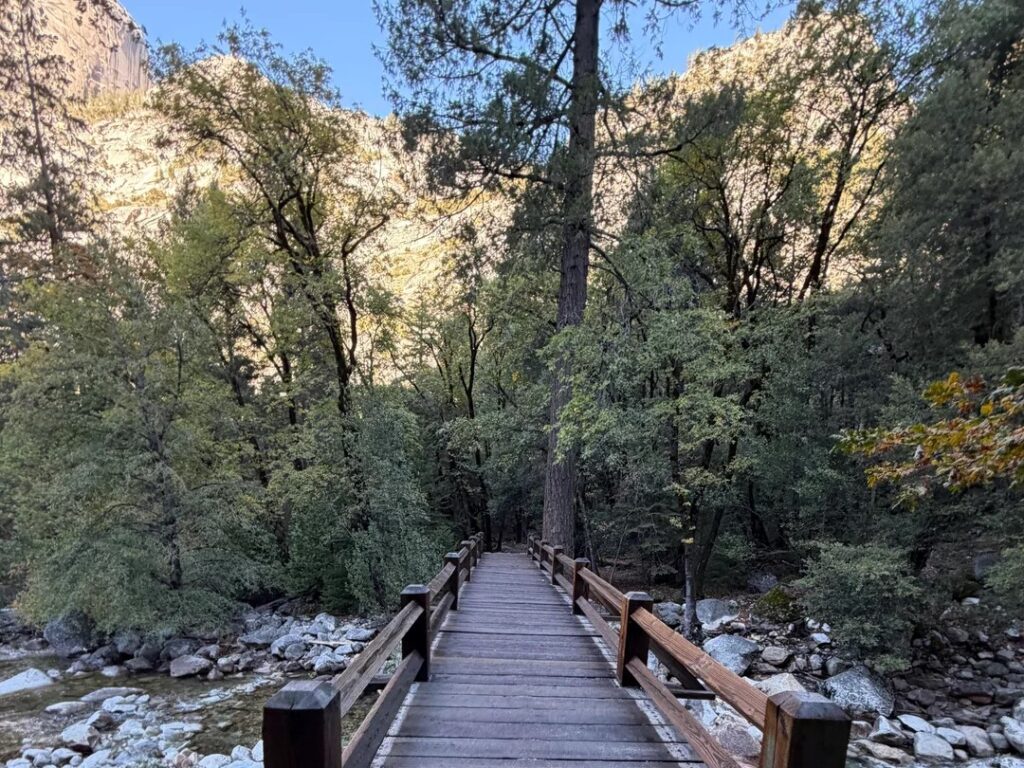
Most of the valley floor stays walkable in winter. NPS and local guides agree that trails on the valley floor tend to be clear or lightly iced, while trails that climb the walls are harder to predict.
| Trail | Where | Distance | Difficulty | Winter note |
|---|---|---|---|---|
| Lower Yosemite Fall Trail | Valley | 1 mi loop | Easy | Paved; open year-round |
| Bridalveil Fall Trail | Valley | 0.5 mi round trip | Easy | Spray can ice the rocks near the base |
| Cook’s Meadow Loop | Valley | 1 mi loop | Easy | Flat; views of Half Dome and Yosemite Falls |
| Columbia Rock (Yosemite Falls Trail) | Valley | 2 mi round trip | Moderate | About 1,000 feet of climbing; shaded stretches ice over |
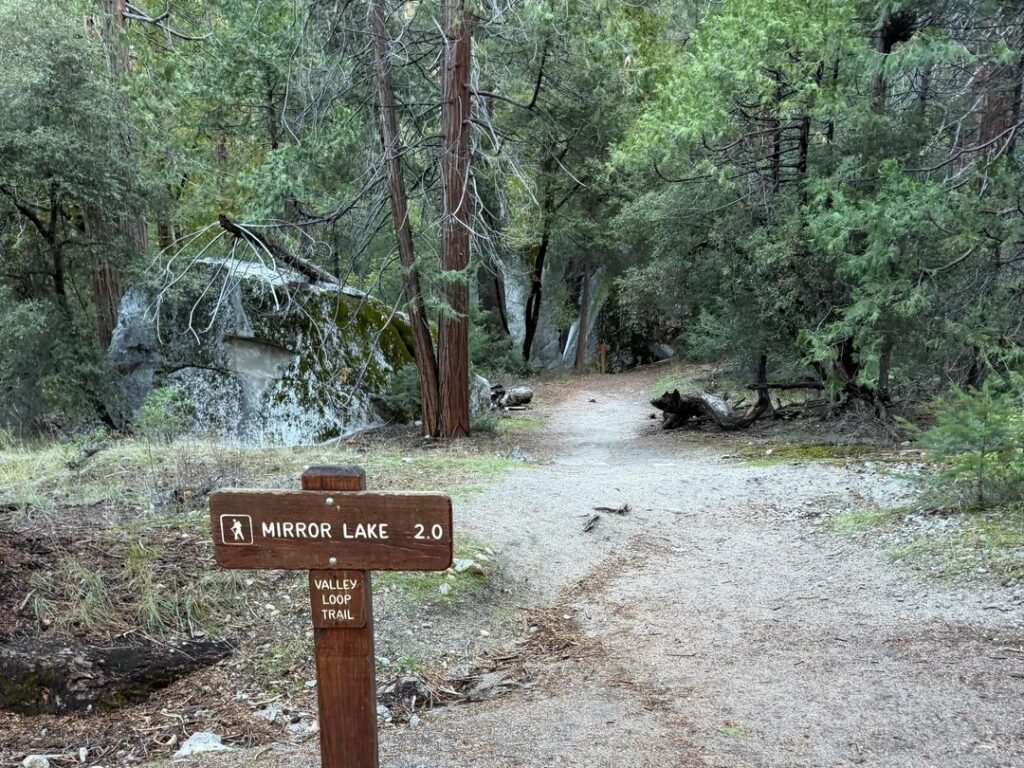
| Valley Loop Trail | Valley | 6.5 mi half loop, 13 mi full loop | Moderate | Mostly flat; expect icy patches on the south side |
| Wapama Falls | Hetch Hetchy | About 5 mi round trip | Moderate | Stays below 4,000 feet, so it is often snow-free |
| Washburn Trail to Mariposa Grove | Wawona | About 2 mi to the grove, 500 ft gain | Moderate | Snowy or icy; open to hikers, snowshoers and skiers |
Past the Vernal Fall footbridge, the Mist Trail and the John Muir Trail pick up ice, and portions often close in winter.
I treat the footbridge as a turnaround from November through March. For a broader look at cold-weather technique, our guide to winter hiking in California covers traction, layering, and how to read snow conditions.
Hetch Hetchy is the winter hiker’s backup plan. It is on the park’s northwest side in Tuolumne County, below 4,000 feet, and the walk across O’Shaughnessy Dam and through the tunnel to Wapama Falls puts you beside a fall that drops more than 1,000 feet. If you want more trails in this corner of the park, our Tuolumne County hiking trails guide lists the rest.
On the southern side, Wawona and Mariposa Grove sit in Mariposa County, and the Mariposa County hiking trails guide maps out what else is nearby. NPS says all trails inside the grove stay open, and some are marked for winter use with reflectors on trees.
For the south gate’s wider trail list, see our Yosemite south entrance hiking trails guide. And when the valley hikes are done, and you want the full picture, our guide to the best hiking trails in Yosemite National Park covers the classics for every season.
Winter Activities Beyond Hiking
- Downhill skiing at Badger Pass. Badger Pass Ski Area, also listed as the Yosemite Ski & Snowboard Area, is California’s original ski area, with 10 runs and five lifts. It usually runs from mid-December through mid-March, weather permitting.
- Cross-country skiing and snowshoeing. NPS marks winter trails around Glacier Point Road, Mariposa Grove, and Crane Flat. The route from Badger Pass to Glacier Point is about 21 miles round trip, a trip for strong, experienced skiers. If you are weighing gear, snowshoeing vs winter hiking is a good next read.
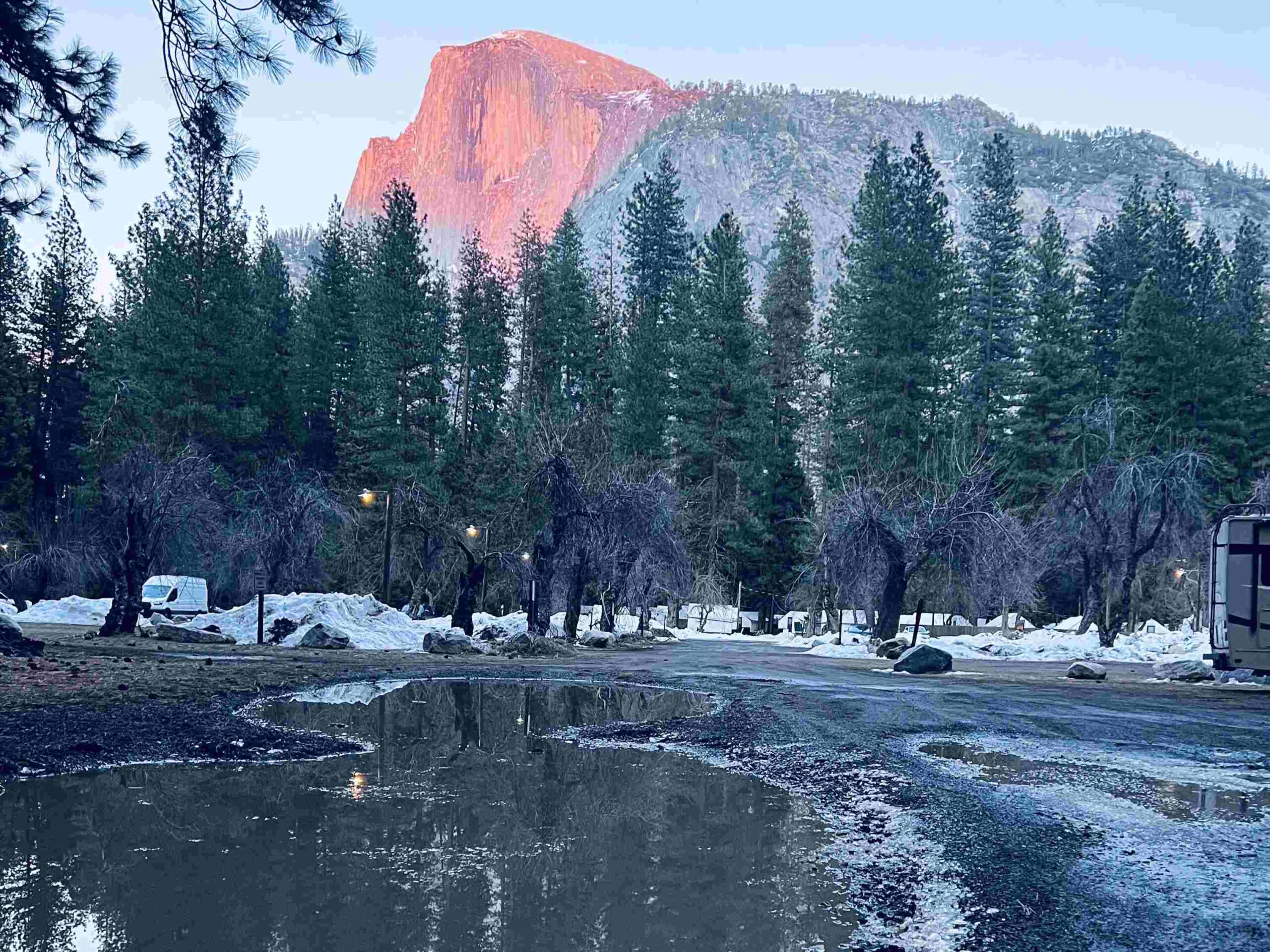
- Ice skating at Curry Village. An outdoor rink beneath Half Dome and Glacier Point, open from mid-November into early March when conditions allow.
- The Bracebridge Dinner. A December tradition at The Ahwahnee, by reservation only.
- Winter photography. Tunnel View, Valley View and the Merced River at sunrise after a storm.
What to Pack for Yosemite in Winter
Dress for a range of 25°F to 55°F in one day. I pack a base layer, a fleece, a waterproof shell, insulated gloves, a warm hat, microspikes for icy paths, and trail shoes with deep tread. Chains go in the trunk. A headlamp matters more than you expect, because daylight is short and the canyon walls steal the last hour.
The rest of the checklist lives in our California hiking gear checklist. Before you commit to a particular trail, run it through how to check California trail closures too.
Final Thoughts
Pick your month, check the road conditions, pack chains, and arrive early in the day. If you are exploring other southern Sierra destinations, checking out Sequoia National Park in winter offers helpful parallels for chain controls and cold-weather prep.
Yosemite National Park winter rewards flexibility: the plan you make in the driveway may change at Oakhurst, and the day you did not plan for may be the one with fresh snow on every ledge of El Capitan. Keep the valley as your anchor and the rest as a bonus.
Frequently Asked Questions
Is Yosemite National Park open in winter?
Yes. The park is open year-round. Yosemite Valley, Wawona, Crane Flat, and Hetch Hetchy are reachable by car, although chains may be required, and Tioga Road and Glacier Point Road close for the season.
Does it snow in Yosemite Valley?
Yes, but the valley sits at 4,000 feet and can get rain or snow in the same storm. Snow often melts within days, while higher areas like Crane Flat and Badger Pass hold a deeper pack.
What is the coldest month in Yosemite?
In the valley, December has the lowest average high at 46°F and the lowest average low at 28°F, with January only slightly warmer. At Tuolumne Meadows, December and February both average a 12°F low.
Are the waterfalls flowing in winter?
Some of them nearly always are. NPS notes that at least a little water runs over some falls even in dry winters. After storms, Yosemite Falls and Bridalveil Fall flow more strongly, and Horsetail Fall lights up in February when conditions align.
Do I need a reservation to visit Yosemite in winter?
Yosemite required no vehicle entry reservation at any point in 2026, and the standard fee is $35 per vehicle for seven days. Non-U.S. residents age 16 and older pay an added $100 surcharge unless they hold an annual pass. Policies can change, so make sure to review the latest Yosemite National Park permit requirements before you go in 2027.
What is the best month for Yosemite in winter?
For mild weather and open trails, October and March are the easy picks. For quiet, January. For ice skating and holiday events, December. For the firefall, mid to late February. October is also the best month if you want fall color and access to the high roads.